Overview
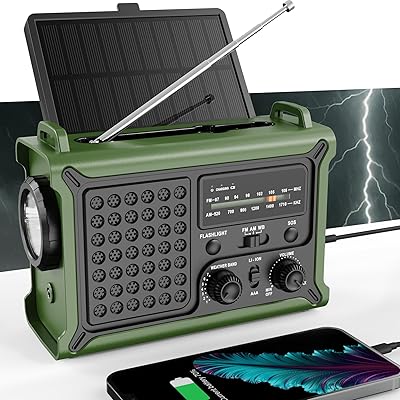
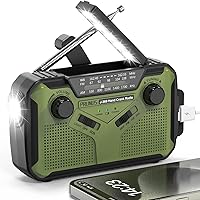
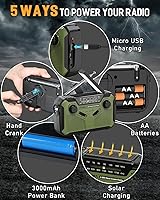
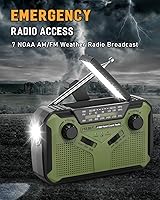
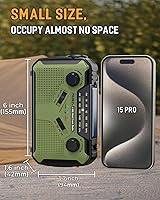
The PRUNUS J-369 Emergency Weather Radio is a compact, no-frills preparedness tool that punches well above its price point. Weighing just 3.52 ounces and small enough to slip into a jacket pocket or go-bag, it is built around one practical idea: keep you informed and powered when everything else fails. Five power sources — AA batteries, hand crank, solar panel, Micro USB, and a built-in Li-ion battery — give it genuine flexibility in real emergencies. It ranks #21 in the Weather Radio category on Amazon, which says something about how many buyers have actually put it to use. Just be clear going in: this is an emergency companion, not a high-fidelity receiver.
Features & Benefits
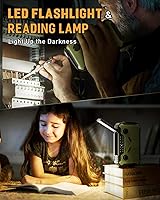
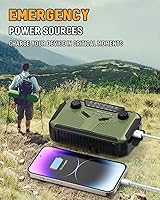
This hand-crank weather radio covers NOAA weather bands, AM, and FM via an American-made DSP chip paired with an extended antenna — solid reception for the price. But the power system is where things get interesting. AA batteries keep the radio running; only the built-in Li-ion cell can charge your phone, and you must manually switch to Li-ion mode first. Miss that step and the USB output does nothing. Beyond radio, a directional LED flashlight handles dark hallways or campsites, while the pop-out solar panel doubles as a broader reading lamp. An SOS alarm rounds things out — blasting sound and flashing light together when you need to signal for help.
Best For
This emergency radio fits neatly into a few specific situations. If you are assembling a home emergency kit on a budget, it covers most of the bases in one small package. Campers and day hikers will appreciate how little space it takes — at under four ounces, it is barely noticeable in a pack. It also makes a thoughtful gift for older relatives or anyone in a rural or storm-prone area where cell service gets spotty. The straightforward button layout means no real learning curve. That said, if you have reliable city infrastructure and strong cell coverage, you will probably only reach for it during serious weather events.
User Feedback
Most buyers come away satisfied with the reception quality relative to what they paid, and the multiple power options earn consistent praise for providing real peace of mind. Build quality also gets positive mentions, with many noting the device feels sturdier than expected. On the flip side, some recurring complaints are worth knowing: the hand crank and solar panel charge the internal battery slowly — think trickle, not top-up — so do not lean on them as a primary source. Some users find the speaker quieter than expected. The mode-switching step for phone charging trips up a fair number of people initially. The reading lamp earns appreciation as a useful extra, though rarely as a standout highlight.
Pros
- Five power sources give you real options when the grid goes down and spare batteries run out.
- Genuinely compact and light — easy to tuck into a go-bag, glove box, or bedside drawer.
- NOAA weather band reception works reliably, which is the most critical function in an actual emergency.
- The DSP chip and extended antenna help pull in weaker signals that cheaper radios often miss.
- Built-in USB output lets you push some charge to a smartphone when you need it most.
- The LED flashlight is bright enough to be genuinely useful, not just a token feature.
- The pop-out solar panel doubles as a reading lamp, adding practical value beyond emergency use.
- SOS alarm combines loud audio and a flashing light — a smart combination for signaling in low-visibility conditions.
- Button-based controls make it accessible for older users without any learning curve.
- Comes with a USB charging cable and documentation included, so it is ready to use out of the box.
Cons
- Hand cranking builds charge very slowly — do not expect more than a few minutes of radio use per minute of cranking.
- Solar charging is similarly sluggish and only practical in direct, strong sunlight over extended periods.
- Phone charging requires manually switching to Li-ion mode first, a step that confuses many users initially.
- AA batteries are not included, so the radio is not fully ready to use straight out of the packaging.
- The built-in Li-ion battery is non-removable, meaning it cannot be swapped out if it degrades over time.
- Speaker volume can feel underwhelming in loud environments like a storm or a crowded shelter.
- No waterproofing or weather-resistance rating means you should keep it away from rain and moisture.
- AM and FM reception quality is adequate but noticeably average compared to dedicated portable radios.
- The 3000mAh power bank capacity offers only a partial charge for most modern smartphones.
- No shortwave band, which limits usefulness for those wanting broader international or amateur radio coverage.
Ratings
The scores below reflect an AI-driven analysis of verified global buyer reviews for the PRUNUS J-369 Emergency Weather Radio, with spam, bot-generated, and incentivized feedback actively filtered out before scoring. Each category is weighted against real-world usage patterns reported by confirmed purchasers, so both the strengths that earned repeat recommendations and the frustrations that generated returns are transparently reflected. No score has been rounded in favor of the brand.
Value for Money
NOAA Reception
Power Versatility
Phone Charging Speed
Hand Crank Efficiency
Solar Panel Performance
Build Quality
LED Flashlight
Reading Lamp Mode
SOS Alarm
Speaker Volume
AM/FM Reception
Portability
Ease of Use
Suitable for:
The PRUNUS J-369 Emergency Weather Radio is a strong fit for anyone building a practical emergency kit without spending a lot. Households in hurricane zones, tornado belts, or areas prone to winter storms will find it genuinely useful — it pulls in NOAA weather alerts even when cell towers go down, and the multiple power options mean you are rarely stuck with a dead device. Older adults and less tech-savvy users tend to get along with it well, since the controls are straightforward and there is no app pairing or complicated setup involved. Backpackers and car campers will appreciate how little it weighs and how small it packs; at 3.52 ounces, it barely registers in a bag. It also makes a thoughtful, practical gift for relatives living alone in rural areas where reliable cell coverage is not something you can count on.
Not suitable for:
Anyone looking for a primary communication device or a serious shortwave radio will want to look elsewhere — this hand-crank weather radio covers NOAA, AM, and FM, but there is no shortwave band, and the speaker output is modest. If your main goal is charging your phone during an outage, manage your expectations: the built-in Li-ion battery holds 3000mAh, which is enough for a partial charge on most smartphones, but it is not a replacement for a dedicated power bank. The solar panel and hand crank are genuinely useful as backup top-up options during an extended emergency, but neither will charge the internal battery quickly. This is also not a device you should expose to heavy rain or submerge — no waterproof or weather-resistance rating is listed, so treating it like rugged outdoor gear would be a mistake. Buyers who want premium audio quality or long-range FM reception on par with a dedicated portable radio will likely be underwhelmed.
Specifications
- Dimensions: The unit measures 3.7″ long by 6.1″ wide by 1.7″ deep, making it compact enough to fit in a jacket pocket or small go-bag.
- Weight: At 3.52 ounces, this emergency radio is light enough to carry on a day hike without adding meaningful bulk to a pack.
- Built-in Battery: A non-removable 3000mAh lithium-ion cell is integrated into the unit and serves as both the primary rechargeable power source and the phone-charging power bank.
- External Power: Three AA batteries (not included) can be inserted to power the radio independently, though they cannot charge the internal Li-ion battery or any connected device.
- Radio Bands: The radio receives NOAA weather band (162.40–162.55MHz), AM (530–1700kHz), and FM (87–108MHz) signals.
- Tuner Chip: Reception is handled by an American-made DSP (Digital Signal Processing) chip paired with an extended external antenna for improved signal clarity.
- Charging Inputs: The internal Li-ion battery can be recharged via Micro USB (primary), hand crank, or the built-in solar panel.
- Phone Charging: A USB output port allows the unit to act as an emergency power bank, but only when the device is switched to Li-ion mode; AA battery power does not feed this output.
- Lighting: A directional LED flashlight provides focused illumination, while the pop-out solar panel activates a broader reading lamp mode for wider area coverage.
- SOS Alert: A dedicated SOS function simultaneously triggers a loud alarm and a flashing LED light to help signal rescuers in emergency situations.
- Model Number: The official model number is URADIO369CO, as listed by manufacturer PRUNUS.
- In the Box: Each unit ships with the emergency radio, a Micro USB charging cable, an owner manual, and a quick start guide.
- Battery Type: One lithium-ion battery is required and is included with the unit; AA batteries for backup power are not included.
- Power Sources: The device supports five power methods in total: AA batteries, internal Li-ion cell, Micro USB charging, hand crank, and solar panel.
- BSR Ranking: The unit holds a Best Sellers Rank of #21 in the Weather Radios category on Amazon, indicating consistent and broad consumer adoption.
Related Reviews
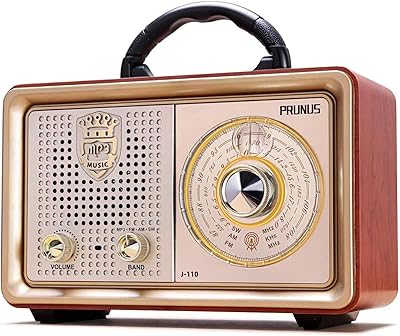
PRUNUS J-110 Portable AM/FM Bluetooth Radio
TFTDOUP Emergency Weather Alert Radio
Sttfaishen F20 Emergency Hand Crank Weather Radio
PRUNUS J-130 Portable AM/FM Bluetooth Radio
PRUNUS J-618 Portable AM FM Radio
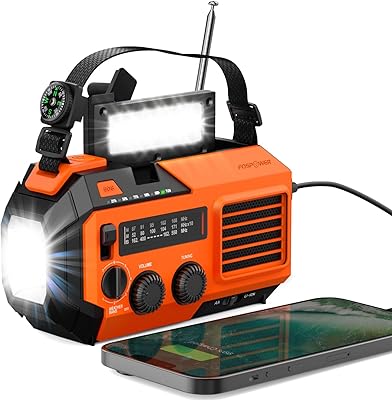
FosPower A6 5200mAh Emergency Weather Radio
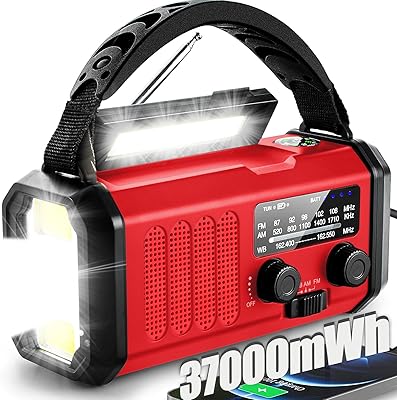
QAUYYW Emergency Weather Radio XSY330
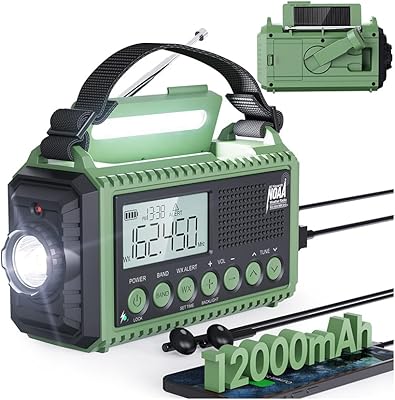
Roxicosly CR1009Ultra 12000mAh Emergency Weather Radio
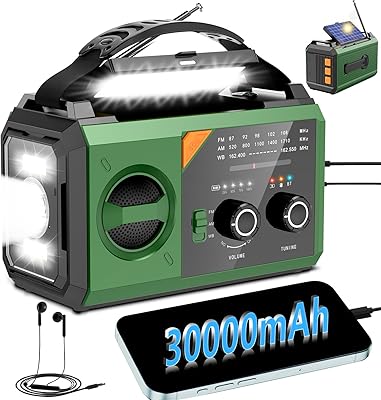
RAOUOEN H27 30000mAh Emergency Weather Radio