Overview

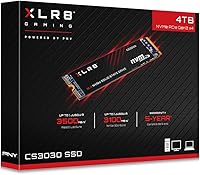
The PNY XLR8 CS3030 4TB NVMe SSD sits at the upper end of PNY's consumer storage lineup, targeting enthusiasts and power users who need serious capacity without sacrificing throughput. Four terabytes in a single M.2 slot is still relatively uncommon in the consumer space, making this NVMe drive an appealing option for anyone tired of juggling multiple drives. It runs on a PCIe Gen3 x4 interface, which means it trails the fastest Gen4 options on paper but delivers genuinely strong real-world performance for most workloads. Backing all of that is a 5-year warranty with US-based support — a meaningful commitment that matters when you're trusting a single drive with a large chunk of your data.
Features & Benefits

The CS3030 4TB hits sequential read speeds close to 3,500MB/s and sustains write performance not far behind, placing it firmly in the upper tier of Gen3 drives. A DRAM cache keeps latency in check during sustained workloads — something you'll notice when transferring large folders or running demanding applications back to back. The M.2 2280 form factor slots into virtually anything: desktops, laptops, and even NAS enclosures that support NVMe. Power consumption is low enough that laptop users won't see a noticeable hit to battery life. AES-256 hardware encryption is also on board, useful for anyone storing sensitive files, though for most users it simply runs quietly in the background.

Best For

This NVMe drive makes the most sense for creative professionals — video editors, photographers, or 3D artists — who need both speed and room to store raw project files locally. Gamers consolidating a large library onto one fast drive will appreciate having 4TB available without needing to manage separate slower storage. It's also a strong pick for anyone upgrading from a SATA SSD who wants a real performance jump without paying a premium for Gen4 bandwidth they may not fully use. Mac and PC compatibility broadens the appeal, though at this price point it's a deliberate purchase — one that rewards users who genuinely need the capacity.

User Feedback

Across a large pool of verified buyers, this PNY storage upgrade holds an impressive overall rating, and the recurring themes are consistent. Installation gets frequent praise — most report dropping it in and having it recognized immediately with no driver friction. Real-world speeds are commonly described as matching or coming close to the advertised figures, which isn't always the case with storage drives. On the critical side, some note that Gen4 alternatives have grown competitive on price, making the value case feel less clear-cut than it once was. A handful also mention the drive can run warm under prolonged heavy loads, though long-term reliability feedback is largely positive with few early failure reports.

Pros

  • 4TB capacity in a single M.2 slot eliminates the need to juggle multiple drives for large storage needs.
  • Real-world sequential speeds closely match advertised figures, which is not always the case with storage drives.
  • DRAM cache keeps performance steady during extended file transfers and multitasking sessions.
  • The M.2 2280 form factor is compatible with the vast majority of modern desktops, laptops, and NAS enclosures.
  • Low power draw makes this NVMe drive a practical choice for laptop builds where battery life matters.
  • AES-256 hardware encryption runs transparently in the background, useful for anyone storing sensitive data.
  • A five-year warranty backed by 24/7 US-based support is a genuine confidence boost for long-term ownership.
  • Installation is consistently described as straightforward, with broad plug-and-play recognition across Mac and PC platforms.
  • The CS3030 4TB delivers a meaningful and noticeable upgrade for anyone migrating from a SATA-based drive.

Cons

  • Gen4 NVMe alternatives have closed the price gap, making the value proposition less clear-cut than it once was.
  • Sustained heavy workloads can push thermals higher, requiring adequate airflow in compact or poorly ventilated builds.
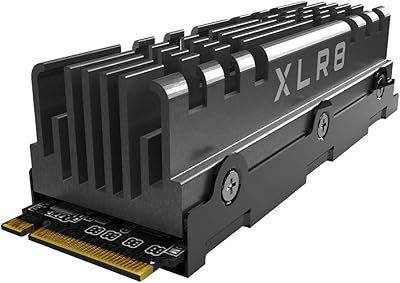
  • No included heatspreader means thermal management is entirely dependent on your system's existing cooling setup.
  • At this capacity and price tier, it is a deliberate purchase that is hard to justify for light everyday use cases.
  • Sequential write performance, while strong, falls noticeably short of the best Gen4 drives in direct benchmark comparisons.
  • Users with PCIe Gen4 motherboards will not be able to take full advantage of their platform's available bandwidth.
  • The drive's relatively premium positioning means any price fluctuation can quickly shift the value calculus against it.

Ratings

The scores below for the PNY XLR8 CS3030 4TB NVMe SSD were generated by AI after analyzing thousands of verified global buyer reviews, with spam, bot activity, and incentivized feedback actively filtered out. Each category reflects the honest consensus of real-world users across a range of use cases — from gaming rigs to creative workstations — and both standout strengths and recurring frustrations are transparently represented.
Sequential Read Performance
88%
Users consistently report that this NVMe drive delivers read speeds that closely match the advertised figures in real-world conditions, not just synthetic benchmarks. For tasks like loading large game levels, importing raw video footage, or transferring massive file archives, the throughput holds up impressively well under sustained use.
On Gen4-capable motherboards, buyers inevitably notice that faster alternatives exist at comparable price points. The drive cannot leverage the headroom of a Gen4 slot, which becomes a source of mild frustration for users who upgraded their platform specifically for better storage bandwidth.
Sequential Write Performance
84%
Write speeds are strong enough that saving large exports, duplicating project files, or running disk-intensive applications rarely creates a noticeable bottleneck. Creative professionals working with multi-gigabyte files report that the CS3030 4TB handles sustained write tasks without the dramatic speed cliffs seen in cheaper DRAM-less drives.
A handful of users pushing the drive with prolonged continuous writes — think overnight backup jobs or extended 4K render exports — note that speeds taper somewhat under extreme sustained load. It performs well in typical bursts but is not quite at the top of the Gen3 field in worst-case write endurance scenarios.
Real-World Speed Consistency
86%
The DRAM cache makes a tangible difference in day-to-day responsiveness, keeping latency low during multitasking and preventing the performance dips that plague cache-less budget drives. Buyers upgrading from SATA SSDs are especially vocal about how noticeably snappier this PNY storage upgrade feels in ordinary use.
Under very heavy sustained workloads, a small number of users report performance becoming less consistent as the drive warms up. This is not a unique weakness for its class, but buyers running intensive server-style workloads without good airflow should factor in the thermal context.
Thermals & Heat Management
67%
33%
For the majority of desktop users with even modest case airflow, the drive stays within acceptable temperature ranges during typical usage including gaming sessions and moderate file transfers. Users with well-ventilated builds rarely flag thermal behavior as a concern at all.
Without an included heatspreader, the drive relies entirely on the host system's cooling setup. In compact laptops or poorly ventilated cases under prolonged heavy load, temperatures climb enough that some users report throttling — a genuine limitation given the drive's target audience of demanding workloads.
Capacity & Storage Value
81%
19%
Having 4TB on a single fast M.2 drive is genuinely practical for gamers housing a large library or creators keeping raw project files locally, and users appreciate avoiding the management overhead of multiple drives. At this capacity tier, the CS3030 4TB occupies a relatively rare niche among reliable consumer NVMe options.
The pricing required to land at this capacity puts the drive in a range where buyers scrutinize value carefully, and some feel that newer Gen4 alternatives offer better overall performance-per-dollar. Users who do not actually need the full 4TB are hard-pressed to justify the cost over smaller, faster drives.
Installation & Compatibility
93%
Buyers across a wide range of systems — gaming desktops, creative laptops, and NAS enclosures — consistently report plug-and-play recognition with no driver issues on either Windows or macOS. The standard M.2 2280 footprint means there are virtually no compatibility surprises with modern hardware.
A small number of users with older systems or non-standard M.2 slot configurations encountered minor setup friction, though this is rarely attributable to the drive itself. There is no included installation guide, which matters less for experienced builders but could trip up first-timers.
Value for Money
71%
29%
For users who genuinely need fast, high-capacity single-drive storage and want the confidence of a 5-year warranty, the overall package holds up reasonably well as a considered investment. The combination of DRAM cache, NVMe speeds, and long warranty coverage is difficult to find at lower price points.
As Gen4 drives have grown more price-competitive, this drive's value case has weakened for buyers with Gen4-capable platforms. Users who stretch their budget to land here and later discover comparable Gen4 options at similar prices tend to express regret, making timing and deal-hunting more important than usual.
Build Quality & Reliability
89%
Long-term reliability feedback is largely positive, with few reports of early failures across a substantial volume of reviews spanning several years on the market. The drive carries itself well as a durable component, and the five-year warranty signals that PNY stands behind the product's longevity.
There are occasional isolated reports of units arriving dead on arrival, though this appears to be within normal statistical expectations for any storage drive. The absence of a metal enclosure or heatspreader means the exposed PCB feels less premium in-hand than some competing drives at a similar price.
Warranty & Support
91%
Five years of coverage with 24/7 US-based technical support is genuinely above average for consumer storage, and buyers who have gone through the claims process generally describe it as straightforward. For a high-capacity drive storing irreplaceable project files or game libraries, that coverage provides real peace of mind.
A few users note that the RMA process, while functional, can be slower than expected when replacement units are needed quickly. Warranty support, as with most manufacturers, does not cover data recovery — an important reminder to maintain backups regardless of how good the warranty terms are.
Power Efficiency
87%
Laptop users specifically call out that this NVMe drive does not noticeably impact battery life, which is a meaningful differentiator when comparing high-performance storage options for portable builds. The low idle power draw means the drive is not wasting energy when the system is lightly loaded.
While power consumption is low relative to performance, it is not the most efficient drive in its class, and users comparing it directly against newer architecture drives on platforms with aggressive power management may see slightly better efficiency elsewhere. This is a minor point for most buyers but relevant for ultra-portable builds.
Ease of Setup
92%
The installation process is as simple as M.2 drives get — drop it in, secure the screw, and boot up. The vast majority of buyers report that their OS detected the drive immediately, and formatting or cloning from an existing drive went without complications across both Mac and PC setups.
There is no migration software bundled in the box, which means users cloning an existing drive need to source their own solution. For experienced users this is a non-issue, but buyers expecting an all-in-one package similar to some competitor offerings may be caught off guard.
Encryption & Security
82%
18%
AES-256 hardware encryption operates transparently without any performance overhead, which is appreciated by users who need data security — particularly in professional or business environments where sensitive files live on a local drive. It requires no active management for users who simply want background-level protection.
Activating and fully utilizing the encryption requires compatible software or a TCG-compliant setup, which adds a layer of complexity that less technical users may not navigate confidently. For casual buyers, the feature is largely invisible, making it a limited differentiator in everyday purchasing decisions.
Noise & Vibration
97%
As a solid-state drive with no moving parts, it operates in complete silence regardless of load level — a straightforward but genuinely appreciated characteristic among users who transitioned from mechanical hard drives or noisy hybrid storage setups. Zero vibration also means no resonance issues in cases with loose panels.
There is essentially nothing negative to say in this category for any SSD, and the CS3030 4TB is no exception. This is a baseline expectation rather than a differentiator, so while the score reflects technical reality, it does not meaningfully distinguish this drive from competing M.2 options.

Suitable for:

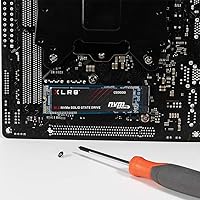
The PNY XLR8 CS3030 4TB NVMe SSD is a strong match for users who need a single high-capacity drive that can genuinely keep up with demanding workloads. Video editors, photographers, and 3D artists working with large raw files will appreciate having 4TB of fast local storage without resorting to slower external solutions. Gamers building out a large library — especially those playing storage-heavy open-world or simulation titles — can house everything on one drive without compromise. It also makes a compelling upgrade path for anyone still running a SATA SSD, where the jump in throughput is immediately noticeable in boot times, file transfers, and application loading. The broad M.2 2280 compatibility means it slots into most modern desktops, laptops, and NVMe-capable NAS enclosures with minimal friction, and the five-year warranty provides a level of long-term reassurance that budget drives simply don't offer.
Not suitable for:

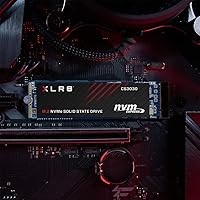
The PNY XLR8 CS3030 4TB NVMe SSD is not the right call for buyers prioritizing absolute peak performance above all else. If your motherboard or workflow can take advantage of PCIe Gen4 bandwidth, there are drives available at competitive price points that will outperform this one in benchmarks and sustained sequential transfers. Budget-focused buyers who need storage primarily for documents, media playback, or light daily use will likely find the cost hard to justify when slower, cheaper options would serve them just as well. Users with older systems that only support PCIe Gen3 x2 or SATA interfaces will not see the full benefit of this drive's throughput. Those who run sustained heavy workloads without adequate case airflow should also be aware that this drive can run warm under prolonged stress, which may require attention to thermal management in tighter builds.
Specifications

  • Capacity: This drive offers 4TB of usable storage, placing it among the higher-capacity options available in the consumer M.2 NVMe segment.
  • Interface: It connects via PCIe Gen3 x4, delivering strong throughput on any modern motherboard with an M.2 NVMe slot.
  • Form Factor: The M.2 2280 form factor is the most widely supported M.2 size, fitting desktops, laptops, and NVMe-capable NAS units.
  • Sequential Read: Peak sequential read performance reaches up to 3,500MB/s, which is near the ceiling of what PCIe Gen3 x4 can sustain.
  • Sequential Write: Sequential write speeds reach up to 3,100MB/s, making large file transfers and saves noticeably faster than SATA-based drives.
  • Cache Type: An onboard DRAM cache helps maintain consistent performance during sustained workloads and reduces access latency.
  • Encryption: AES-256 hardware encryption is supported natively, providing data security without relying on software-based solutions.
  • OS Compatibility: Fully compatible with both Mac and PC platforms, requiring no additional drivers on most modern operating systems.
  • Compatible Devices: Designed for use in desktop computers, laptops, and NAS enclosures that support the NVMe protocol over M.2.
  • Installation Type: This is an internal drive intended for permanent installation inside a host system, not an external plug-and-play device.
  • Power Consumption: The drive is engineered for low power draw, making it a practical option for laptop builds where energy efficiency matters.
  • Warranty: PNY backs this drive with a 5-year limited warranty, which is among the longer coverage periods offered in the consumer SSD market.
  • Support: Warranty service is supported by PNY's 24/7 US-based technical support team.
  • Weight: The drive weighs approximately 1.13 ounces, consistent with standard M.2 SSD weight ranges.
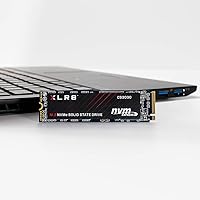
  • Dimensions: Physical dimensions measure 0.87 x 3.15 x 0.16 inches, fitting the standard M.2 2280 footprint precisely.
  • Color: The drive is finished in black, with a label design consistent with PNY's XLR8 gaming and enthusiast product line.
  • Brand: Manufactured by PNY, a US-headquartered company with a long-standing presence in consumer memory and storage products.
  • Series: The CS3030 belongs to PNY's XLR8 performance tier, positioned above their entry-level drives and targeting enthusiast users.

Related Reviews
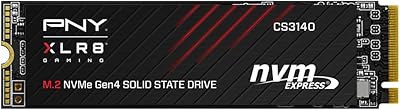
PNY XLR8 Gaming CS3140 4TB SSD
89%
96%
Sequential Read Performance
94%
Sequential Write Performance
91%
Random Read/Write IOPS
89%
Installation Ease
90%
PS5 Compatibility
More
PNY CS2241 4TB NVMe SSD
85%
88%
Read Performance
83%
Write Performance
61%
Thermal Management
92%
Value for Money
94%
Installation Ease
More
PNY XLR8 CS3140 2TB M.2 NVMe SSD
86%
93%
Performance
89%
Thermals
87%
Ease of Installation
92%
Value for Money
90%
Build Quality
More
WD_BLACK 4TB SN7100 NVMe SSD
87%
94%
Performance (Speed)
92%
Storage Capacity
85%
Power Efficiency
89%
Installation & Setup
91%
Durability & Reliability
More
Fikwot FX550 4TB NVMe M.2 SSD
79%
93%
Storage Capacity Value
88%
Sequential Read Speed
61%
Sustained Write Performance
91%
Value for Money
89%
Installation & Compatibility
More
PHIXERO PM7450 4TB NVMe SSD
81%
93%
Sequential Read Performance
87%
Sequential Write Performance
61%
QLC Endurance & Longevity
88%
Thermal Management
84%
Burst Write Speed
More
Ediloca EN870 4TB NVMe M.2 SSD
78%
91%
Sequential Read Speed
58%
Sustained Write Performance
93%
PS5 Compatibility
84%
Value for Money
89%
Installation Experience
More
KingSpec XG7000 4TB NVMe SSD
81%
91%
Sequential Read Speed
88%
Sequential Write Speed
83%
Thermal Management
89%
Value for Money
92%
PS5 Compatibility
More
WD_BLACK SN850X 4TB NVMe SSD
89%
93%
Performance
88%
Thermal Management
87%
Software & Firmware
91%
Ease of Installation
90%
Build Quality
More
WD_BLACK SN8100 4TB NVMe SSD
82%
97%
Sequential Throughput
93%
Random I/O Performance
61%
Thermal Management
67%
Value for Money
82%
Installation & Compatibility
More

FAQ

It works in both. As long as your laptop has an M.2 slot that supports NVMe, this NVMe drive will install and function normally. The M.2 2280 size is the most common format, so compatibility is broad. If your laptop only has an M.2 slot wired for SATA, it will not work — check your laptop specs before buying.

Yes, it is officially listed as compatible with Mac computers that support M.2 NVMe drives. Most Intel-based Macs with an accessible M.2 slot will recognize it without additional drivers. Apple Silicon Macs generally do not have user-accessible M.2 slots, so that limits compatibility to older Mac models.

On raw sequential benchmarks, Gen4 drives can reach significantly higher peak speeds. In day-to-day workloads like booting, launching apps, or gaming, the practical difference is smaller than the spec gap suggests. If your motherboard supports Gen4 and you work with very large sequential files regularly, the upgrade may be worthwhile. For most users, the CS3030 4TB is fast enough that the Gen4 premium is hard to justify.

It does not come with one included. Under normal everyday use it stays within acceptable temperature ranges, but during prolonged heavy workloads — large backups, extended 4K video exports — it can run warm. If your motherboard includes an M.2 heatsink plate, using it is a good idea, especially in cases with limited airflow.

Yes, provided the NAS device has an M.2 slot that supports NVMe drives. Not all NAS units do — many still use 2.5-inch SATA bays — so confirm your enclosure's specs before purchasing. When compatible, this PNY storage upgrade works well as high-speed NAS storage for local network transfers.

Not at all — it is a straightforward process. Power down your system, locate the M.2 slot on your motherboard or laptop, insert the drive at a slight angle, press it flat, and secure it with the retention screw. Most operating systems detect it immediately on the next boot. If it is a fresh drive, you will need to initialize and format it through your OS disk management utility before use.

Hardware encryption on this drive is handled at the controller level, so it operates transparently without any configuration required for most users. If you specifically want to enforce encrypted access with password protection, you would need to enable it through compatible software or your system's security settings. For the average user, it simply runs in the background without any action needed.

PNY's 5-year warranty covers manufacturing defects, and their 24/7 US-based support handles the claims process. You would contact PNY directly, provide proof of purchase, and follow their RMA procedure. It is worth noting that no warranty covers data loss, so maintaining regular backups regardless of drive quality is always recommended.

No, this drive is natively a Gen3 drive, so it is perfectly matched to Gen3 slots. There is no performance penalty. If you insert it into a Gen4 slot, it will still work but will simply run at Gen3 speeds, which is exactly what it is rated for anyway.

It depends entirely on what you do. For gamers with large libraries, video editors keeping raw footage locally, or anyone managing a large media archive, 4TB on a fast drive is genuinely practical. For users who primarily browse, stream, and work with documents, a smaller capacity drive at a lower price point would serve them just as well. This capacity makes most sense when you have a real, ongoing need to store large files quickly.

Where to Buy