


Overview

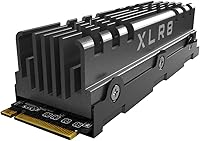
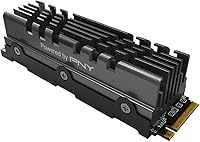
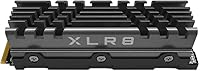
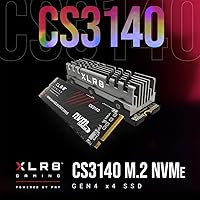
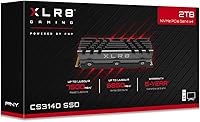
The PNY XLR8 CS3140 2TB NVMe SSD is PNY's flagship M.2 offering, aimed squarely at enthusiasts and professionals who need the fastest storage their platform can support. What sets this Gen4 NVMe drive apart from a bare M.2 card is the integrated aluminum heatsink, which ships attached and ready to work — no sourcing a separate thermal solution, no guesswork. You are paying a noticeable premium for it, and that is honest to address upfront: this is engineering-grade storage, not a budget upgrade. One critical caveat before you buy: PS5 owners should avoid this variant. Sony requires a heatsink that meets specific dimensional requirements, and PNY offers a separate non-heatsink version for console use.

Features & Benefits

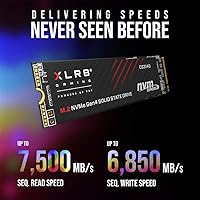
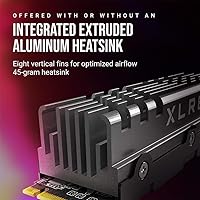
The headline figures for the CS3140 are 7,500 MB/s sequential read and 6,850 MB/s sequential write — on a Gen4 platform, that translates to Windows booting in a few seconds, AAA game load screens that barely register, and a 10GB video file moving in well under two seconds. The extruded aluminum heatsink keeps temperatures stable during the sustained transfers that would push a bare drive into thermal throttling territory. A DRAM cache contributes meaningfully to random read/write consistency, something DRAM-less drives routinely struggle with under mixed workloads. AES-256 hardware encryption adds real value for workstation and NAS setups. One thing to be straight about: plug this into a Gen3 motherboard and your speeds will drop substantially — it works, but you are leaving most of the performance on the table.

Best For

This Gen4 NVMe drive makes the most sense for a specific type of buyer. High-end PC builders and gamers running a Gen4-capable platform will extract the full value from the bandwidth on offer — faster level loads in open-world titles and near-instant asset streaming are tangible perks. Content creators working with large 4K timelines or heavy 3D project files will also feel a real difference versus mid-range alternatives. Workstation users processing large datasets or running multiple demanding applications simultaneously benefit from the low latency and sustained throughput. And for anyone who has spent time hunting down the right aftermarket cooler, the fact that a solid heatsink ships built in is a genuine convenience worth factoring into the overall cost.

User Feedback

Across roughly 190 verified ratings, PNY's XLR8 heatsink SSD holds a 4.5 out of 5 average — which, at this performance tier, reflects genuine satisfaction rather than impulse buys. The most consistent praise centers on speeds that hold up to advertised figures and a noticeably bigger jump over Gen3 than some buyers anticipated. The heatsink's build quality earns positive mentions too, with buyers calling out clean installation and no need for extra hardware. The friction point that surfaces repeatedly is price versus competition: several reviewers acknowledge the performance is there but question whether the premium over comparable Gen4 drives is justified. There is also a consistent thread of buyers caught off-guard by the speed reduction on Gen3 motherboards — something worth knowing before purchase, not after.

Pros

  • Real-world read speeds closely match the advertised 7,500 MB/s figure, which is not always guaranteed at this tier.
  • The integrated aluminum heatsink prevents thermal throttling during sustained, heavy transfers without any extra hardware.
  • Ships ready to install — no aftermarket cooler sourcing required, saving time and removing setup guesswork.
  • DRAM cache keeps random read/write performance consistent even under mixed or demanding workloads.
  • AES-256 hardware encryption makes the CS3140 a practical choice for professionals handling sensitive data.
  • A five-year limited warranty backed by US-based support provides genuine long-term confidence.
  • The 2TB capacity comfortably handles large game libraries, 4K video archives, and heavy creative project files.
  • Gen4 x4 interface delivers a tangible, real-world leap over Gen3 drives in sequential transfer and boot scenarios.

Cons

  • Priced at a significant premium over competing Gen4 drives that offer similar benchmark performance.
  • Installing on a Gen3 motherboard results in substantially reduced speeds that do not justify the flagship cost.
  • The heatsink variant is incompatible with PS5 — console upgraders must purchase a completely separate SKU.
  • Heatsink height can cause physical clearance issues in compact laptops or small form factor PC builds.
  • Buyers who only need 1TB will find the 2TB capacity adds cost without proportional practical benefit.
  • With roughly 190 ratings, the review pool is relatively thin for a drive at this price tier.
  • Everyday computing tasks like web browsing, office work, and email will see no meaningful gain from this level of performance.

Ratings

The PNY XLR8 CS3140 2TB NVMe SSD earns a 4.5-star average from a pool of roughly 190 verified buyers — the category scores below were generated by AI after analyzing that verified global feedback, actively filtering out spam, bots, and incentivized submissions. This is a high-performing Gen4 NVMe drive that earns genuine praise for speed accuracy and thermal management, but it is not without real trade-offs. Both the strengths that make it compelling for enthusiasts and the friction points — including premium pricing and platform-dependent performance — are reflected transparently in every score.

Sequential Read Speed
93%
On a compatible Gen4 platform, this drive consistently delivers speeds approaching the 7,500 MB/s ceiling, which translates to near-instant Windows boot times and noticeably faster large file transfers. Users who upgraded from Gen3 drives repeatedly describe the step-up as immediately obvious — the kind of improvement you feel during daily use rather than just in benchmarks.
These peak speeds are only achievable on a PCIe Gen4 motherboard — Gen3 systems see a substantial drop that undermines the value proposition entirely. A handful of users discovered this the hard way and expressed frustration, so verifying your platform's PCIe generation before purchasing is non-negotiable.
Sequential Write Speed
89%
The rated write speed handles intensive tasks like copying large 4K video projects or migrating multi-gigabyte game installs with minimal wait time. Content creators staging large assets between drives or archiving raw footage notice a real difference compared to the mid-range Gen3 options they previously relied on.
The margin between this drive and slightly cheaper Gen4 competitors narrows on certain write-heavy workloads when examined closely in benchmarks. Price-conscious buyers point out that paying the premium specifically for write performance is harder to justify when competing drives close the gap for less money.
Thermal Management
91%
The integrated extruded aluminum heatsink is one of the most appreciated real-world advantages here — users report sustained high-speed performance without the temperature-driven slowdowns that bare M.2 drives exhibit during prolonged gaming sessions or large batch file transfers. No extra parts, no guesswork, just consistent thermal behavior from day one.
The heatsink adds considerable height to the drive, making it incompatible with most laptop M.2 slots and any PS5 storage bay — a significant limitation that catches some buyers by surprise. Compact desktop builds with tight M.2 clearances should be verified before assuming this variant will physically fit.
Value for Money
62%
38%
Buyers who see value in an all-inclusive package — DRAM cache, integrated heatsink, and a five-year warranty bundled together — can make a reasonable case for the cost. Workstation users and serious PC builders who factor in the time and expense of sourcing thermal components separately find the premium less difficult to justify.
Price sensitivity is the most recurring friction point in user feedback — multiple reviewers directly compare the CS3140 to competing Gen4 drives delivering similar benchmark results at noticeably lower prices. For buyers who prioritize per-dollar storage performance over a complete package, the gap is genuinely difficult to ignore.
Random Read/Write
84%
The DRAM cache keeps performance consistent during the messy mixed-workload scenarios that expose DRAM-less drives — think running a game, downloading an update, and managing background applications simultaneously. Workstation users handling database operations or asset-heavy project environments particularly notice the stability compared to budget alternatives.
For light, everyday computing tasks like email, browsing, and streaming, the DRAM cache advantage is effectively invisible and the performance difference over much cheaper drives is negligible in practice. Buyers who do not regularly push their storage under sustained mixed loads are unlikely to feel the gap that justifies the cost.
Sustained Performance
87%
Unlike bare M.2 drives that throttle speed after a few minutes of continuous transfers, this drive maintains higher throughput over longer operations thanks to the heatsink keeping temperatures in check. Video editors copying full project folders and users running prolonged backup operations report far less mid-transfer slowdown.
Even with the heatsink, sustained performance in very warm chassis environments or systems with poor airflow can still degrade over extremely prolonged operations. The heatsink manages the drive's own thermal output well, but it cannot compensate for broader system cooling deficiencies.
Build Quality
82%
18%
The extruded aluminum heatsink feels solid and purposeful — users consistently describe it as well-fitted and firmly attached, with no reports of loosening or rattling after installation. It gives the drive a noticeably more premium physical impression than bare PCB competitors occupying the same price bracket.
The black aluminum finish can attract minor scuff marks during pre-installation handling, though this is entirely cosmetic and carries no functional consequence. Some buyers also note that the heatsink's bulk makes handling the drive during installation slightly more unwieldy than a standard bare M.2 card.
Installation & Setup
92%
The drive slots into any compatible M.2 socket exactly like a standard card — no separate heatsink to mount, no supplemental screws to source, and no drivers to download on modern Windows platforms. Users consistently highlight how clean the out-of-box experience is, especially builders who appreciate having one fewer step in the process.
The heatsink's added height requires a pre-purchase clearance check in compact builds — a handful of buyers only discovered the fit issue after the drive arrived. Laptop users should almost universally expect this heatsink variant to be incompatible with their available M.2 slot dimensions.
Gen3 Compatibility
44%
56%
The drive does function on PCIe Gen3 motherboards without special configuration, so it can technically serve as a plug-in replacement on an older system if needed as a stopgap during a planned platform upgrade. There are no compatibility errors or stability concerns in Gen3 operation itself.
Installing this on a Gen3 board results in a substantial speed reduction that eliminates most of the performance advantage you paid for — reviewers who went this route were visibly disappointed and called it out explicitly. Purchasing a flagship Gen4 drive for a Gen3 system is not a financially sound decision.
Warranty & Support
83%
The five-year limited warranty exceeds what most competing NVMe drives offer, and having US-based support handling claims is a practical advantage for North American buyers who would otherwise navigate overseas channels for a high-value component. It adds meaningful long-term confidence to an already significant purchase.
Like most storage warranties, this one covers hardware replacement only — not data recovery, which is often the more pressing need when a drive fails. Buyers should treat the warranty as a hardware safety net rather than data protection, and maintain independent backup routines regardless.
Storage Capacity
86%
2TB is a genuinely practical primary drive size for a high-end build — it comfortably accommodates an operating system, a full AAA game library, and active creative project files without constant space juggling. Users who previously managed multiple smaller drives appreciate having breathing room on a single fast NVMe.
The 2TB tier is also the most expensive entry point, and buyers who realistically only fill 700 to 800GB of storage are funding capacity they will never use. A 1TB variant or a competing Gen4 option would serve lighter users at significantly better per-dollar value.
Encryption & Security
76%
24%
Hardware-level AES-256 encryption is a meaningful addition for professionals in security-sensitive roles — IT administrators, healthcare workers, and legal professionals storing regulated data on a workstation or NAS device get real compliance value without a measurable performance penalty during standard operations.
Encryption must be deliberately configured through compatible software and is not active by default, meaning the vast majority of consumer buyers will never use it. For most gamers and general users, this is effectively a feature they are paying for without any practical benefit.
Speed Accuracy
88%
One of the most consistently praised aspects in verified user feedback is that real-world benchmark results on Gen4 systems closely track the advertised figures — a claim many competing drives fail to back up under actual testing. Buyers who specifically ran speed tests reported satisfaction with the alignment between marketing specs and measured results.
The critical caveat is that the advertised figures are PCIe Gen4-specific — buyers who tested on Gen3 hardware reported very different numbers and interpreted this as the drive underperforming. Clearer platform prerequisites at the point of purchase would prevent this recurring source of buyer confusion.

Suitable for:

The PNY XLR8 CS3140 2TB NVMe SSD is a strong fit for PC enthusiasts and power users who have a PCIe Gen4-capable motherboard and genuinely want to extract every bit of storage performance from their system. Gamers building or upgrading high-end rigs will notice the difference in large open-world titles where asset streaming and level loading are directly tied to drive throughput. Content creators working with uncompressed 4K footage, RAW photo libraries, or heavyweight 3D project files stand to gain the most from the drive's sequential speeds — moving a 50GB project or rendering from scratch becomes noticeably faster. Workstation professionals running demanding applications like video editing suites, simulation software, or large databases also benefit from the combination of high throughput and DRAM-cached random performance. The included aluminum heatsink is a particular bonus for buyers who want a thermally managed install without sourcing a separate cooler — especially useful in tight chassis builds or densely packed workstation setups. Anyone who values long-term reliability will also appreciate the five-year warranty and US-based support backing their investment.

Not suitable for:

The PNY XLR8 CS3140 2TB NVMe SSD is not the right call for every buyer, and it is worth being direct about who should look elsewhere. If your motherboard only supports PCIe Gen3, you will get a working drive — but sequential speeds will drop substantially, and you will be paying a flagship price for noticeably reduced performance, which simply does not add up. Buyers on a tighter budget who need reliable, fast storage for everyday computing or light gaming will find that several competing Gen4 drives offer comparable real-world results at a meaningfully lower price. PS5 owners looking to expand console storage should steer clear of this specific variant entirely — the integrated heatsink does not meet Sony's dimensional requirements, and the separate non-heatsink CS3140 is the correct choice for that platform. Laptop users should also verify their system's M.2 slot clearance and thermal envelope before purchasing, as the heatsink adds height that some chassis simply cannot accommodate. Anyone who does not need the full 2TB capacity and is prioritizing value would be better served by a smaller-capacity variant or a competing drive at a lower price point.

Specifications

  • Capacity: Provides 2TB of storage for housing large game libraries, 4K video projects, and extensive data archives.
  • Interface: Connects via the PCIe NVMe Gen4 x4 interface, offering significantly greater bandwidth than PCIe Gen3 and SATA-based alternatives.
  • Form Factor: Built to the M.2 2280 standard, measuring 22mm wide by 80mm long to fit standard M.2 motherboard slots.
  • Sequential Read: Achieves up to 7,500 MB/s sequential read speed when installed in a compatible PCIe Gen4 system.
  • Sequential Write: Achieves up to 6,850 MB/s sequential write speed when installed in a compatible PCIe Gen4 system.
  • Cache Type: Includes a dedicated DRAM cache module to sustain consistent random read/write performance under demanding and mixed workloads.
  • Encryption: Supports AES-256 hardware-level encryption for protecting sensitive data without significant impact on drive performance.
  • Heatsink: Equipped with an integrated extruded aluminum heatsink that dissipates heat to reduce thermal throttling during sustained operations.
  • Warranty: Backed by a 5-Year Limited Warranty with support handled by PNY's US-based technical team.
  • Compatibility: Compatible with desktop PCs, laptops, NAS devices, and servers equipped with an M.2 PCIe NVMe slot.
  • Installation: Designed for internal installation directly into an available M.2 slot on a compatible motherboard or PCIe expansion card.
  • Color: The drive body and integrated heatsink are finished in black.
  • Weight: The complete unit, including the attached heatsink, weighs 2.4 oz.
  • Dimensions: Measures 0.9 x 3.17 x 0.81 inches with the heatsink attached, making it taller than a standard bare M.2 drive.
  • Product Series: Part of PNY's XLR8 performance lineup, with the CS3140 designation identifying it as their flagship Gen4 NVMe offering.
  • Drive Type: A solid-state drive with no moving parts, offering silent operation and greater shock resistance versus traditional spinning hard drives.

Related Reviews
PNY XLR8 CS3030 4TB NVMe SSD
85%
88%
Sequential Read Performance
84%
Sequential Write Performance
86%
Real-World Speed Consistency
67%
Thermals & Heat Management
81%
Capacity & Storage Value
More
PNY XLR8 Gaming CS3140 4TB SSD
89%
96%
Sequential Read Performance
94%
Sequential Write Performance
91%
Random Read/Write IOPS
89%
Installation Ease
90%
PS5 Compatibility
More
PNY CS2230 2TB M.2 NVMe Internal SSD
80%
88%
Read/Write Performance
91%
Value for Money
94%
Installation Ease
67%
Thermal Management
89%
Compatibility
More
PNY CS1030 2TB M.2 NVMe SSD
77%
91%
Value for Money
83%
Read Speed Performance
72%
Write Speed Performance
88%
Boot & Load Times
94%
Installation Ease
More
PNY CS2241 2TB M.2 NVMe Gen4 SSD
83%
88%
Sequential Read Performance
83%
Sequential Write Performance
86%
Real-World Speed Gains
91%
Value for Money
67%
Thermal Management
More
PNY CS2150 2TB Gen5 NVMe SSD
80%
93%
Sequential Read Speed
91%
Sequential Write Speed
58%
Thermal Management
78%
Value for Money
88%
Installation Ease
More
SanDisk 2TB SSD Plus M.2 NVMe SSD
86%
89%
Performance
92%
Ease of Installation
88%
Reliability
91%
Value for Money
90%
Capacity
More
Fikwot FX550 2TB NVMe M.2 SSD
80%
88%
Sequential Read Speed
61%
Sustained Write Performance
86%
Value for Money
92%
Compatibility & Fit
77%
Thermal Management
More
WD_BLACK SN7100 2TB NVMe SSD
85%
93%
Read & Write Performance
88%
Gaming Load Times
86%
Power Efficiency
84%
Thermal Management
91%
Value for Money
More
GiGimundo G7400 2TB NVMe SSD
76%
88%
Read Speed Performance
54%
Sustained Write Speed
91%
Gaming Load Times
83%
Value for Money
67%
Thermal Management
More

FAQ

No, and this is worth being clear about before you buy. This specific variant ships with an integrated heatsink that does not fit within Sony's PS5 storage bay requirements. If you need a CS3140 for your console, PNY makes a separate non-heatsink version that you can pair with a PS5-compatible aftermarket heatsink instead.

The drive will function, but your speeds will drop substantially below the advertised figures — Gen3 bandwidth simply cannot support Gen4 throughput. You would be paying a premium price for mid-range performance, which is a poor trade-off unless you are planning a platform upgrade in the near future. If your board is Gen3 only, a comparably priced Gen3 drive is likely the smarter purchase.

For most modern Windows and Linux systems, no additional drivers are needed — the drive is detected natively as a standard NVMe device. If you want to activate the AES-256 hardware encryption, you will need to configure it through compatible storage management software or your system's security settings, as it is not enabled by default. For everyday use, plug it in and you are ready to go.

A few things contribute to the cost difference. The CS3140 includes a dedicated DRAM cache — something many budget Gen4 drives cut to save money — which meaningfully improves consistency under heavy workloads. It also ships with an integrated aluminum heatsink already attached, saving you the trouble and expense of sourcing one separately. The 5-year warranty with US-based support rounds it out as a more complete package, though whether that justifies the premium over competing drives is ultimately a judgment call based on your priorities.

The heatsink ships integrated with the drive, and while heatsinks on M.2 drives are often mechanically removable, taking it off the CS3140 would eliminate the thermal management benefits the drive is specifically engineered around. Before attempting any modifications, review PNY's warranty documentation carefully, as physical alterations could affect your coverage.

Almost certainly not. The heatsink adds significant height to the drive — the overall unit measures 0.81 inches tall — which far exceeds the clearance available in the vast majority of laptop M.2 slots. This variant is best suited to desktop builds, workstations with open M.2 slots, or any system where vertical clearance is not a constraint. Always check your laptop's M.2 slot specifications before ordering.

Think of it as short-term working memory for the drive. When you are doing something that mixes lots of small and large file operations — running multiple applications, downloading while playing a game, or editing a project with many assets — the DRAM cache acts as a fast buffer that keeps things smooth. DRAM-less drives handle simpler sequential tasks fine, but tend to stall or slow down noticeably under those messier, mixed conditions.

Yes, it is listed as compatible with NAS devices and servers that support M.2 PCIe NVMe slots. The AES-256 hardware encryption is a particularly useful feature in those environments for data security. That said, compatibility depends on your specific NAS unit and whether it supports NVMe drives — not all NAS devices do — so cross-reference your device's specifications before purchasing.

PNY's 5-Year Limited Warranty covers manufacturing defects and drive failures under normal operating conditions. Claims are handled through their US-based support team, which is a practical advantage over brands that route warranty support overseas. Standard warranty exclusions apply — physical damage and data recovery are not covered — so maintaining a regular backup routine alongside the drive is always advisable.

If your build includes a PCIe Gen4 motherboard and you want high sequential throughput with thermal management already handled, it is a strong candidate. Real-world speeds are well-regarded by buyers and the 2TB capacity handles modern game installations without constantly managing space. That said, it is worth benchmarking its price against two or three competing Gen4 drives, since the market is competitive and you may find comparable performance at a lower cost depending on when you buy.