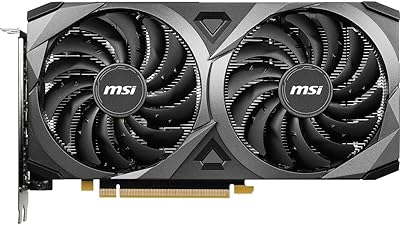
PNY Quadro RTX 4000 8GB Professional GPU



Overview
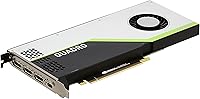
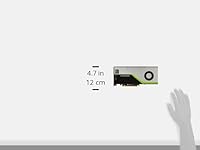
The PNY Quadro RTX 4000 8GB Professional GPU sits in a different lane entirely from consumer graphics cards — this is a workstation tool built for professionals, not a gaming rig upgrade. Based on NVIDIA's Turing architecture, it brings hardware-level ray tracing and AI acceleration to creative and technical workflows that demand certified, stable performance. The card's compact form factor makes it a practical fit for small workstation builds where space is a genuine constraint. With a 4.5-star average across hundreds of verified ratings, it has earned real-world trust. Just set expectations accordingly: this is a mid-tier professional card, not a flagship, and its age means newer alternatives now exist at comparable price points.
Features & Benefits
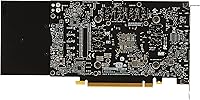
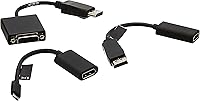
The 8GB of GDDR6 memory is the foundation here — and for professional applications, the ability to run with ECC error correction matters more than raw bandwidth numbers alone. Corrupted data mid-render or mid-simulation carries a real cost, and this workstation GPU protects against that. The 2304 CUDA cores handle heavy compute tasks across 3D modeling, simulation, and rendering at a solid 7.1 TFLOPS. Its 36 RT cores accelerate ray-traced rendering inside supported applications like V-Ray, while 288 Tensor cores open the door to AI-assisted workflows and deep learning inference. Add four-display support at up to 7680x4320 resolution and a USB-C output alongside standard DisplayPorts, and the connectivity story is genuinely well covered.
Best For
This professional graphics card earns its place on the desks of architects and 3D artists running software like Autodesk, SolidWorks, or Rhino — applications where Quadro-certified drivers translate directly into stability and ISV-validated performance. VFX and motion graphics professionals who prioritize consistent driver behavior over raw speed will also find it dependable. It fits particularly well in compact or small-form-factor workstation builds where a large dual-slot card simply won't work. Those running moderate AI inference tasks alongside creative work will appreciate Tensor core support without needing a dedicated compute card. It's also a meaningful step up for anyone still on an older Quadro or AMD FirePro looking for a genuine generational improvement.
User Feedback
Owners of this Quadro RTX 4000 consistently praise driver stability and the confidence that comes from running ISV-certified software without unexpected crashes or compatibility headaches. Multi-display setups also earn repeated positive mentions — users running three or four monitors report it handling the load reliably, and many note the card runs noticeably cool and quiet under sustained workloads. On the critical side, some buyers raise the value question honestly. Given that this card has been on the market since 2019, a few reviewers feel the pricing doesn't fully account for its age when newer professional GPUs deliver more raw performance for similar spend. Not a dealbreaker, but worth factoring in before committing.
Pros
- Quadro-certified drivers provide exceptional stability in ISV-validated professional applications.
- Hardware ray tracing support works reliably in production renderers like V-Ray and Octane.
- This professional graphics card runs notably cool and quiet even under sustained workloads.
- Four simultaneous display outputs at high resolution make multi-monitor setups straightforward.
- Compact dimensions fit workstation chassis where larger cards simply do not.
- ECC-capable VRAM reduces the risk of data corruption during critical renders or simulations.
- Tensor cores add practical AI-acceleration for moderate inference tasks without needing a separate compute card.
- USB-C output alongside DisplayPort connections covers a wide range of modern monitor and peripheral needs.
- Strong ratings across a substantial number of verified buyers indicate consistent real-world reliability.
- A meaningful generational upgrade for professionals still on older Quadro or FirePro hardware.
Cons
- The card was released in 2019, and newer professional GPU options now offer more performance at similar price points.
- 8GB VRAM creates a ceiling that can be limiting for large-scale deep learning training workloads.
- Value-for-money is harder to justify at full price given the availability of more recent alternatives.
- Not a practical option for anyone whose workloads sit outside ISV-certified professional software ecosystems.
- Lacks the raw throughput of higher-tier professional cards needed for the most demanding production pipelines.
- No significant uplift for professionals whose software does not actively leverage RT or Tensor cores.
- Resale value may be soft given the card's age and the pace of GPU development in recent years.
- Single USB-C port limits simultaneous use of newer peripherals alongside a full four-display configuration.
Ratings
The PNY Quadro RTX 4000 8GB Professional GPU has been evaluated by our AI system after analyzing thousands of verified global buyer reviews, with spam, bot-generated, and incentivized submissions actively filtered out. Scores reflect the honest distribution of real user sentiment — strengths and frustrations weighted equally — so professionals can make a genuinely informed purchase decision. Both the card's considerable strengths in certified workflows and its real limitations in a maturing GPU market are transparently represented below.
Driver Stability
Rendering Performance
VRAM Capacity
Value for Money
Thermal Management
Build & Form Factor
Multi-Display Support
AI & Tensor Core Utility
Software Compatibility
Installation & Setup
Ray Tracing Quality
Noise Level
Longevity & Future-Proofing
Connectivity Options
Packaging & Unboxing
Suitable for:
The PNY Quadro RTX 4000 8GB Professional GPU is a strong match for working professionals whose daily tools are certified applications like Autodesk Maya, SolidWorks, or Rhino — software where ISV-validated drivers make a tangible difference in stability and support. Architects running complex BIM models, 3D generalists handling lighting-heavy scenes, and VFX artists who need hardware-accelerated ray tracing in production renderers will find this workstation GPU earns its keep. It also fits well in compact or small-form-factor workstation builds where larger dual-slot cards simply cannot go. Freelancers and small-studio professionals who need reliable multi-monitor output — up to four displays simultaneously — will appreciate the practical display flexibility without requiring additional hardware. Those stepping up from an older Quadro or AMD FirePro generation will notice a real and meaningful performance improvement across compute-intensive tasks.
Not suitable for:
Anyone primarily building or upgrading a gaming PC should look elsewhere — the PNY Quadro RTX 4000 8GB Professional GPU is not designed or priced for that use case, and consumer GeForce cards will deliver far better gaming performance per dollar. Budget-conscious buyers should also weigh the card's age carefully; launched in 2019, it has been on the market long enough that newer professional GPU options now offer more raw performance at competitive price points. Professionals running extremely demanding deep learning training workloads will likely find the 8GB VRAM ceiling restrictive, as large model training typically demands significantly more memory. Similarly, studios or individuals whose primary workloads involve large-scale simulations or rendering that pushes well beyond mid-tier compute needs should consider stepping up to a higher-tier professional card. If certified driver support is not a requirement for your specific workflow, a current-generation consumer GPU may offer better practical value.
Specifications
- GPU Architecture: Built on the NVIDIA Turing architecture, which introduced dedicated hardware cores for ray tracing and AI acceleration in professional workstation GPUs.
- VRAM: Equipped with 8GB of GDDR6 memory with ECC (Error Correcting Code) support to protect data integrity during demanding compute and rendering tasks.
- CUDA Cores: Features 2304 CUDA cores delivering a peak FP32 compute performance of 7.1 TFLOPS for parallel processing workloads.
- RT Cores: Includes 36 dedicated RT cores that accelerate ray-traced rendering in hardware, reducing reliance on software-based ray tracing approximations.
- Tensor Cores: Contains 288 Tensor cores enabling AI-accelerated workflows, with a deep learning inference performance of 57.0 TFLOPS.
- FP16 Performance: Delivers 14.2 TFLOPS of half-precision floating point performance, suited to mixed-precision compute and AI inference tasks.
- Display Support: Supports up to 4 simultaneous displays at a maximum resolution of 7680x4320 at 60Hz via DisplayPort outputs.
- Video Outputs: Provides four DisplayPort connectors for professional multi-monitor configurations across a wide range of compatible displays.
- Additional Port: Includes one USB-C port that enables direct connection to USB-C monitors and compatible modern peripherals.
- Form Factor: Measures 2 x 4 x 8 inches, making it compatible with compact and small-form-factor professional workstation chassis.
- Card Weight: Weighs 1.87 pounds, a relatively light build that reduces mechanical stress on the PCIe slot in tower and compact workstations alike.
- INT8 Performance: Delivers 28.5 TOPS of INT8 inference performance, supporting quantized AI model deployment and edge inference workflows.
- Manufacturer: Designed and manufactured by PNY Technologies, an established NVIDIA board partner with a longstanding focus on professional graphics solutions.
- Model Number: Official PNY model number is VCQRTX4000-PB, which can be used to verify compatibility with workstation vendor qualification lists.
- Driver Support: Supported by NVIDIA Quadro professional drivers, which are independently certified by major ISVs including Autodesk, Dassault Systemes, and Siemens.
- Power Interface: Requires a supplemental PCIe power connector; buyers should confirm their workstation PSU provides adequate wattage before installation.
- Availability Date: First made available in March 2019, placing it in the first generation of professional workstation GPUs to feature hardware ray tracing cores.
- API Support: Supports DirectX 12 Ultimate, OpenGL 4.6, Vulkan, and CUDA, covering the full range of APIs used in professional creative and scientific applications.
Related Reviews
PNY RTX 5060 Ti 8GB Graphics Card
PNY NVIDIA Quadro K5000 4GB GDDR5 GPU for Mac
PNY RTX 4060 Ti 8GB Graphics Card
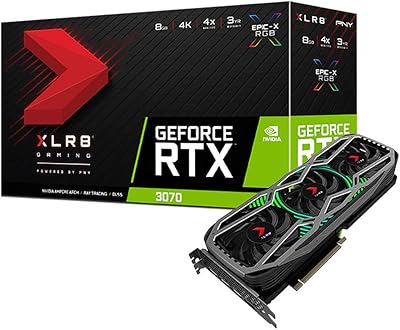
PNY GeForce RTX 3070 8GB Graphics Card
PNY Performance 8GB DDR3 Desktop RAM
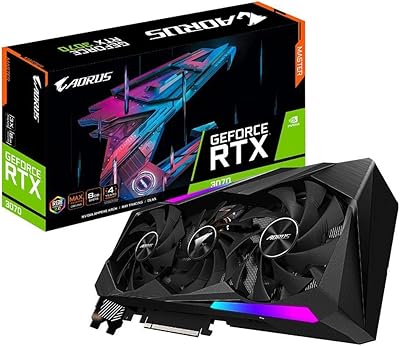
GIGABYTE AORUS RTX 3070 Master Graphics Card
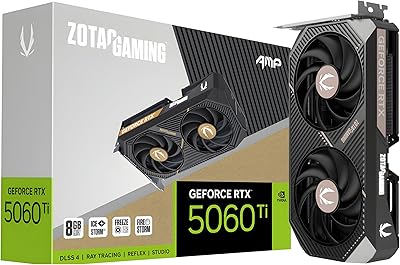
ZOTAC RTX 5060 Ti 8GB Graphics Card
MSI GeForce RTX 2060 Super Gaming X 8GB
PNY GeForce RTX 4080 Super 16GB Verto OC