Overview

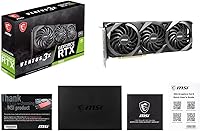
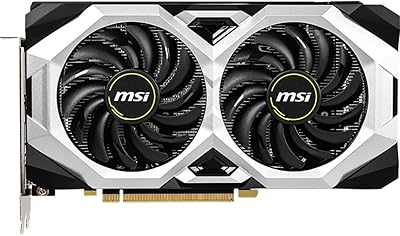
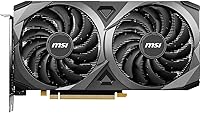
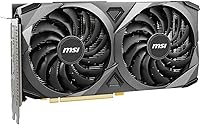
The MSI RTX 3060 Ventus 2X 8GB Graphics Card occupies an interesting spot in MSI's RTX 3060 family — it's the stripped-back sibling to the Gaming X and Gaming X Trio, trading RGB flair for a compact dual-fan design and a lower entry cost. Buyers should know upfront: this is the 8GB variant, not the more widely discussed 12GB version, which means a narrower 128-bit memory bus and tighter VRAM headroom for texture-heavy workloads. In practice, this Ampere-based GPU is built for strong 1080p performance and respectable 1440p gaming — not 4K, despite what the spec sheet implies. Think of it as a direct challenger to similarly priced AMD options rather than a high-end contender.
Features & Benefits

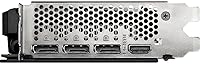
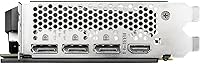
Built on NVIDIA's Ampere architecture, this Ventus 2X card brings second-generation ray tracing and DLSS 2.x support to a mid-range price point — features that were exclusive to flagship cards just a generation ago. The factory overclock pushes the boost clock to 1807 MHz, translating to a modest but real performance bump over reference designs in most gaming scenarios. The 128-bit memory bus deserves an honest mention: it is narrower than competing cards at this tier and can limit bandwidth in demanding titles. That said, three DisplayPort 1.4a outputs plus HDMI 2.1 make it a flexible option for multi-monitor setups, and the 9.3-inch PCB slots into cases where longer cards simply won't fit.

Best For

This Ampere-based GPU is a natural fit for 1080p gaming enthusiasts who want consistent high frame rates in esports titles like Valorant or CS2, and reasonable performance in AAA games at medium-to-high settings. It's also a sensible upgrade for anyone still running a GTX 1060, 1070, or older AMD card — the generational jump is substantial enough to feel meaningful. The compact 9.3-inch length makes it practical for smaller mid-tower builds where clearance is a real concern. Anyone chasing DLSS-powered frame rates without flagship spending will find it appealing. Just don't expect it to handle light video editing or 3D rendering projects much beyond an entry-level workload.

User Feedback

Across roughly 163 ratings, MSI's dual-fan RTX 3060 holds a 4.5-star average, with buyers most often praising how cool and quiet it runs under sustained gaming loads. Installation feedback is broadly positive — the card fits standard PCIe slots without drama and driver setup is straightforward. The criticism that surfaces most often centers on VRAM limitations: some users running modern open-world titles at higher settings report bumping against the 8GB ceiling, and a few explicitly recommend the 12GB variant if budget allows. Comparisons to AMD's RX 6650 XT appear occasionally, usually calling the matchup close. Overall, buyers seem satisfied with the value proposition, with complaints being specific rather than widespread.

Pros

  • Delivers strong, consistent 1080p gaming performance across a wide range of titles.
  • DLSS 2.x support provides a meaningful frame rate boost in compatible games with minimal visual trade-off.
  • Factory overclock at 1807 MHz offers a small but real performance edge over reference-clocked alternatives.
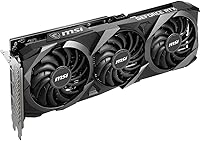
  • Dual Torx 2.0 fans keep thermals in check during extended gaming sessions without excessive noise.
  • Compact 9.3-inch length fits mid-tower and many smaller cases where larger cards simply won't clear.
  • Three DisplayPort 1.4a outputs plus HDMI 2.1 cover virtually any modern monitor or multi-display setup.
  • PCIe 4.0 interface keeps the card compatible with current and near-future motherboard platforms.
  • Second-generation ray tracing cores bring lighting and reflection effects that older Turing cards handle far less efficiently.
  • Installation is straightforward, with broad driver support and minimal compatibility friction reported by buyers.

Cons

  • The 8GB VRAM limit is a real constraint in modern AAA titles at high or ultra texture settings.
  • A 128-bit memory bus is narrower than several competing cards at this price tier, reducing available bandwidth.
  • The 12GB RTX 3060 variant offers meaningfully better longevity for only a modest price difference in many markets.
  • Ray tracing performance at 1440p can be inconsistent without DLSS enabled to compensate.
  • No RGB lighting may disappoint builders who care about aesthetics inside a windowed case.
  • Power efficiency is not a standout trait — Ampere draws more watts than AMD RDNA 2 alternatives at comparable performance levels.
  • Some users report the card runs warm in cases with restricted airflow, requiring attention to case ventilation.
  • Not competitive in GPU-accelerated professional applications where VRAM capacity and bus width matter significantly.

Ratings

The scores below for the MSI RTX 3060 Ventus 2X 8GB Graphics Card were generated by our AI engine after analyzing verified buyer reviews from global marketplaces, actively filtering out incentivized, bot-generated, and duplicate submissions to surface what real owners actually experience. With a meaningful sample of 163 ratings at the time of analysis, the results reflect both the genuine strengths and the recurring frustrations that informed buyers should weigh before purchasing. Nothing has been smoothed over — where this Ampere-based GPU earns praise, the scores reflect it; where it falls short, that is reflected just as plainly.
1080p Gaming Performance
88%
At 1080p, this Ventus 2X card handles the vast majority of modern titles at high settings with fluid, consistent frame rates. Esports titles like Valorant and Apex Legends run effortlessly, while AAA games like Elden Ring and Spider-Man Remastered stay well above playable thresholds at medium-to-high presets.
A handful of users note that in the most texture-heavy open-world games at maximum settings — Red Dead Redemption 2 being a frequent mention — frame pacing can become slightly erratic, a symptom of the 8GB VRAM ceiling being approached rather than a GPU compute limitation.
1440p Gaming Performance
67%
33%
For 1440p gaming in less demanding titles or with settings tuned to medium, this card is genuinely capable, particularly when DLSS is available to recover frame rates lost to the higher resolution. Users who pair it with a 1440p monitor and enable DLSS Quality mode report a surprisingly smooth experience in supported games.
Without DLSS to lean on, 1440p performance is inconsistent across the library — demanding titles regularly require dropping to medium presets, and the 128-bit memory bus becomes a tangible constraint as resolution increases. Buyers expecting solid native 1440p performance across modern AAA titles will be disappointed more often than not.
VRAM Adequacy
54%
46%
For its intended use case of 1080p gaming at medium-to-high settings, 8GB of GDDR6 is sufficient for most of today's game library and covers the majority of esports and mid-tier AAA titles without issue. Users who game at lower resolutions or play older titles rarely encounter memory pressure.
This is the most consistently criticized aspect across buyer reviews — modern titles like Hogwarts Legacy and Forza Horizon 5 at high or ultra texture settings can push well beyond 8GB, causing stutters or forcing texture downgrades. The growing VRAM demands of new releases make the 8GB ceiling a real concern for anyone planning to keep this card for three or more years.
Memory Bandwidth
58%
42%
At 1080p with textures kept in check, the 128-bit bus rarely becomes the limiting factor, and most buyers running the card at its intended use case will not consciously experience bandwidth constraints during typical gaming sessions.
Compared to competing cards at a similar price point — including AMD's RX 6650 XT with its 128-bit but faster GDDR6 memory — the effective bandwidth of this card is measurably lower, and it shows in synthetic benchmarks and in real scenarios involving high-resolution textures or large frame buffers. This is a hardware ceiling with no software workaround.
DLSS Performance
91%
DLSS 2.x is one of the strongest arguments for choosing this card over AMD alternatives at the same price, and users who game in DLSS-supported titles consistently report it as a standout feature. In games like Cyberpunk 2077 and Microsoft Flight Simulator, enabling DLSS Quality mode transforms the experience from borderline to genuinely smooth.
DLSS only helps when the game supports it, and a meaningful portion of the game library — particularly older titles and many indie releases — does not. Buyers whose libraries skew toward non-DLSS games will not benefit from this advantage as meaningfully as the spec sheet implies.
Ray Tracing Capability
63%
37%
The second-generation RT cores in this Ampere-based GPU represent a genuine step forward over Turing, and in games with lighter ray tracing implementations — ambient occlusion, contact shadows — the card handles them at 1080p without becoming unplayable.
Full ray tracing at quality settings in demanding titles like Control or Cyberpunk 2077 pushes this card well outside its comfort zone without DLSS as a crutch. Buyers who purchase primarily for ray tracing fidelity will find the experience compromised at any setting that looks truly impressive visually.
Thermal Performance
84%
Users consistently praise how cool MSI's dual-fan Torx cooling keeps the card during extended gaming sessions — GPU temperatures in the mid-70s Celsius under sustained load are a common report, which is well within safe and optimal operating range for the chip.
In cases with poor airflow or when ambient room temperatures are high, a small number of users report temperatures climbing closer to 83–85°C, which is still within spec but leaves less thermal headroom than some buyers prefer. The cooler design prioritizes compactness over outright thermal aggression.
Noise Levels
82%
18%
The dual Torx fans spin quietly enough during light gaming and everyday desktop use that most buyers report barely noticing the card at all. Under moderate gaming loads, the noise profile is described as a low, unobtrusive hum rather than the aggressive whine associated with blower-style coolers.
During sustained heavy gaming loads — particularly long sessions in GPU-demanding titles — the fans do ramp up to audible levels, though the consensus is that noise remains reasonable rather than distracting. Open-frame cases or users in very quiet rooms may find the fan noise more noticeable than those in typical setups.
Build Quality & Fit
79%
21%
The card feels solid and well-constructed for its market tier, and at 9.3 inches it slides into cases where competing longer cards simply will not fit. Users upgrading from older single-fan or blower-style cards frequently comment on how much more substantial the Ventus 2X feels in hand and in slot.
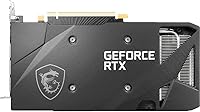
The plastic shroud, while functional, does not feel premium — buyers accustomed to higher-end MSI Gaming X cards will notice the material step-down immediately. There is also no backplate, which some users flag as a minor concern for long-term PCB protection and aesthetics.
Installation Experience
87%
Buyers across skill levels report smooth, trouble-free installations — the card drops into standard PCIe slots without drama, driver setup via NVIDIA's installer is routine, and compatibility issues are rarely mentioned across the review pool.
A small number of users note that the power connector placement can feel slightly awkward in tighter cases, requiring careful cable routing. Nothing installation-critical, but worth being aware of if working inside a compact enclosure with limited cable management space.
Display Output Versatility
83%
Three DisplayPort 1.4a outputs plus HDMI 2.1 give this card genuinely flexible multi-monitor capability, and users running dual or triple 1080p setups for productivity or sim racing report no issues. The HDMI 2.1 port also future-proofs connections to newer high-refresh-rate televisions.
Four total outputs are only usable three at a time simultaneously, which is standard for the category but can catch buyers planning quad-monitor setups off guard. There is also no VGA or DVI output for anyone still running older displays, though that limitation is increasingly irrelevant.
Value for Money
71%
29%
For buyers upgrading from GTX 10-series cards, the performance-per-dollar calculation feels reasonable — the generational jump in gaming capability, combined with DLSS access, makes this Ventus 2X card a defensible purchase for 1080p-focused builders on a tight budget.
The existence of the 12GB RTX 3060 variant at a comparable or only modestly higher price point is a persistent thorn in the value argument — many informed buyers feel that the extra VRAM and wider memory bus make the 12GB version the smarter long-term investment, leaving the 8GB variant in an awkward spot.
Longevity & Future-Proofing
59%
41%
PCIe 4.0 compatibility ensures the card slots into current and near-future platforms without interface-related bottlenecks, and DLSS 2.x support will continue to be relevant as game developers increasingly adopt NVIDIA's upscaling pipeline.
The 8GB VRAM limit and 128-bit bus are the two factors most likely to date this card prematurely — as texture budgets in new releases continue to grow, the Ventus 2X 8GB is likely to struggle at high settings within two to three years of typical use, faster than the 12GB variant would.
Driver & Software Stability
86%
NVIDIA's driver ecosystem is mature and well-supported, and buyers report stable, crash-free operation across a wide range of games and workloads. NVIDIA's GeForce Experience overlay, driver update management, and game optimization tools are cited as meaningful quality-of-life additions.
Occasionally, new NVIDIA driver releases have caused temporary instability in specific titles — a well-documented industry-wide pattern rather than a card-specific fault, but worth knowing if you rely on stability during a specific game's launch window and update promptly.

Suitable for:

The MSI RTX 3060 Ventus 2X 8GB Graphics Card is a strong match for PC gamers who primarily play at 1080p and want consistently high frame rates without overspending on a flagship GPU. It's particularly well-suited to players of esports titles and mid-demand AAA games who also want access to DLSS and ray tracing — features that meaningfully extend the card's useful life. Builders upgrading from a GTX 1060, 1070, or an older AMD card will notice a substantial performance jump that justifies the cost. The compact 9.3-inch footprint also makes this Ampere-based GPU one of the more practical choices for smaller mid-tower cases where longer cards create clearance headaches. Anyone dabbling in entry-level video editing or occasional 3D rendering work will find it competent for light tasks alongside daily gaming duties.
Not suitable for:

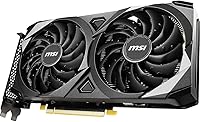
Buyers chasing serious 1440p or 4K performance should look elsewhere — this Ventus 2X card carries an 8GB GDDR6 frame buffer over a 128-bit memory bus, and that combination becomes a genuine bottleneck in texture-heavy, high-resolution workloads. If your game library skews toward modern open-world titles at maximum settings, you will likely brush against the VRAM ceiling sooner than you'd like, and the narrower bus limits how much the card can compensate through raw bandwidth. Gamers aware of the 12GB RTX 3060 variant should weigh that option carefully — the extra memory and wider bus matter more as titles grow increasingly demanding. Creative professionals needing reliable performance for high-resolution video exports, GPU rendering, or machine learning workflows will find MSI's dual-fan RTX 3060 underpowered for sustained professional use. This card is also not a fit for anyone building a future-proof rig intended to last five or more years at high settings.

Specifications

  • GPU Chip: Powered by the NVIDIA GeForce RTX 3060 on the Ampere architecture, featuring second-generation RT cores and third-generation Tensor cores.
  • Video Memory: Equipped with 8GB of GDDR6 memory for storing game assets, textures, and frame buffers during rendering.
  • Memory Interface: Operates over a 128-bit memory bus, which is narrower than some competing mid-range cards and can limit peak bandwidth in demanding workloads.
  • Boost Clock: Factory overclocked to a boost clock of 1807 MHz, a modest step above the reference RTX 3060 specification.
  • Display Outputs: Offers three DisplayPort 1.4a ports and one HDMI 2.1 port, supporting up to four simultaneous displays.
  • Max Resolution: Supports a maximum output resolution of 7680x4320 (8K), though practical gaming performance at that resolution is not intended for this card.
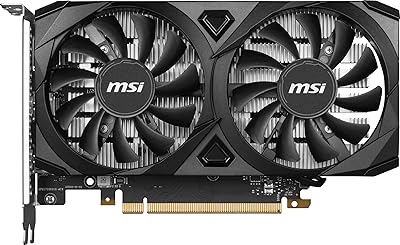
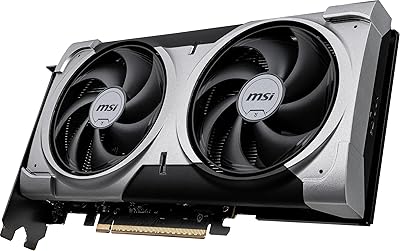
  • Cooling System: Uses a dual Torx 2.0 fan cooler with a heatsink designed to maintain stable thermals during extended gaming sessions.
  • Card Length: The PCB measures 9.3 inches in length, making it compatible with most mid-tower cases and a range of compact enclosures.
  • Card Weight: Weighs approximately 1.49 pounds, which is relatively light for a dual-fan card and reduces strain on the PCIe slot.
  • PCIe Version: Uses a PCIe 4.0 interface, ensuring full compatibility with current-generation motherboards while remaining backward compatible with PCIe 3.0 systems.
  • DLSS Support: Supports DLSS 2.x, NVIDIA's AI-based upscaling technology that can significantly boost frame rates in compatible titles with minimal visual quality loss.
  • Ray Tracing: Includes dedicated second-generation RT cores for hardware-accelerated ray tracing effects such as reflections, shadows, and global illumination.
  • Power Connector: Requires a single 12-pin or dual 8-pin power connector depending on adapter configuration; a 550W or higher PSU is recommended.
  • Series: Part of MSI's Ventus 2X lineup, which prioritizes compact dimensions and quiet operation over premium aesthetics or extreme overclocking headroom.
  • Manufacturer: Designed and manufactured by MSI, a Taiwan-based company with an established track record in discrete graphics card production.

Related Reviews
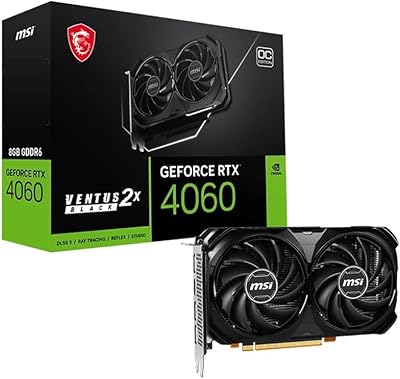
MSI RTX 4060 Ventus 2X Graphics Card
82%
88%
1080p Gaming Performance
83%
Thermal Management
91%
Noise Level
71%
1440p Gaming Performance
63%
VRAM Adequacy
More
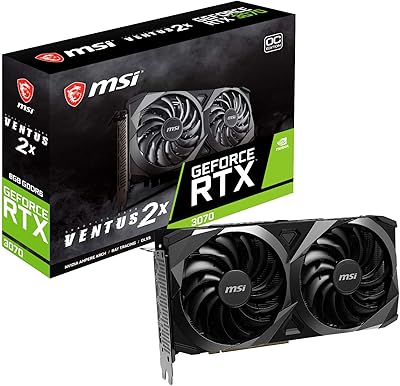
MSI RTX 3070 Ventus 2X OC GPU
79%
91%
1440p Gaming Performance
78%
Thermal Management
83%
Noise Level
62%
VRAM Adequacy
74%
Value for Money
More
MSI RTX 3050 Ventus 2X Graphics Card
76%
71%
1080p Gaming Performance
48%
Memory Bandwidth
93%
Installation Ease
79%
Thermal Management
88%
Noise Level
More
MSI GeForce RTX 5060 Ti 16G VENTUS 2X OC Plus Graphics Card
87%
92%
Gaming Performance
89%
Cooling Efficiency
87%
Build Quality
91%
Compatibility with Modern Systems
88%
Price-to-Performance Ratio
More
MSI RTX 2080 Super Ventus XS GPU
79%
88%
1440p Gaming Performance
71%
Thermal Management
83%
Noise Level
84%
Build & Physical Quality
91%
Form Factor & Compatibility
More
MSI GeForce RTX 2060 VENTUS 6G OC Graphics Card
86%
91%
Performance at 1080p
87%
Performance at 1440p
90%
Ray Tracing and DLSS Support
89%
VR Performance
88%
Cooling and Noise Levels
More
MSI RTX 5070 Ventus 3X OC 12GB
82%
88%
Gaming Performance
86%
Thermal Management
83%
Noise Levels
84%
Build Quality
79%
Value for Money
More
MSI GeForce RTX 4080 SUPER 16GB VENTUS 3X OC Graphics Card
84%
96%
Gaming Performance
91%
Cooling Efficiency
65%
Power Consumption
89%
Build Quality
94%
4K/8K Gaming Compatibility
More
MSI GeForce RTX 4070 Ventus 2X 12G OC
86%
91%
Gaming Performance at 1440p
89%
Gaming Performance at 4K
94%
Cooling Efficiency
85%
Noise Levels
92%
Value for Money
More
MSI RTX 5070 Ventus 2X Graphics Card
82%
88%
Gaming Performance
84%
Thermal Management
86%
Noise Levels
91%
Build Quality
78%
DLSS 4 & AI Features
More

FAQ

It still holds up well at 1080p. In esports titles you will have no trouble hitting high refresh rates, and in most modern AAA games you can expect solid frame rates at medium-to-high settings. Where things get tighter is in very texture-heavy open-world games at maximum settings, where the 8GB VRAM ceiling starts to bite.

The 12GB variant has more VRAM and, importantly, a wider 192-bit memory bus compared to the 128-bit bus on this Ventus 2X card. That wider bus translates to higher memory bandwidth, which matters in high-resolution or texture-heavy scenarios. If your budget allows, the 12GB version offers better longevity, especially as modern titles keep pushing VRAM requirements upward.

Almost certainly yes. At 9.3 inches long, this is a relatively compact dual-slot card that fits in the vast majority of mid-tower cases. Just double-check your case's maximum GPU length spec to be safe, especially if you have a tighter or budget-oriented enclosure.

Most users report that the dual Torx fans are noticeably quiet during light gaming and become only moderately audible under sustained heavy load. It is not a silent card, but it is far from intrusive. In a closed case with decent airflow, fan noise is unlikely to be a complaint.

MSI recommends a minimum 550W PSU for the MSI RTX 3060 Ventus 2X 8GB Graphics Card. If your system includes a higher-end CPU or multiple storage drives, stepping up to a 650W unit gives you comfortable headroom and avoids instability under peak load.

Yes, and it makes a meaningful difference. Both titles support DLSS 2.x, and enabling it at Quality or Balanced mode can recover a significant chunk of frame rate without obvious visual degradation. This Ampere-based GPU handles DLSS well, and it is one of the more compelling reasons to choose an RTX card over AMD alternatives at this price tier.

It works fine on PCIe 3.0 boards. The card uses a PCIe 4.0 interface but is fully backward compatible. The bandwidth difference between PCIe 3.0 and 4.0 has virtually no measurable impact on gaming performance at this GPU performance level.

It is a legitimate concern worth understanding before you buy. At 1080p with moderate texture settings, you likely won't notice it at all. But at 1440p or in games with very high-resolution texture packs, the narrower bus can limit how quickly the card feeds data, leading to stutters or the need to dial settings down. It is not a dealbreaker for the target use case, but it is worth knowing about.

The two cards trade blows depending on the game and resolution. AMD's option often edges ahead in raw rasterization performance and offers a wider memory bus. MSI's dual-fan RTX 3060 counters with DLSS support and NVIDIA's software ecosystem, which can tip the scales in DLSS-enabled titles. If you exclusively play games that support DLSS, this card is competitive; if not, the AMD alternative may offer slightly better value.

Yes, for entry-level creative work it is capable. GPU-accelerated exports in DaVinci Resolve or Premiere Pro will be faster than relying on a CPU alone, and Blender CUDA rendering is functional for moderately complex scenes. That said, the 8GB VRAM limit means large-resolution projects or complex 3D scenes with heavy texture maps may run into memory constraints before a 12GB or higher card would.

Where to Buy