Overview

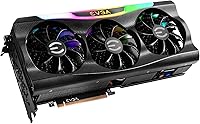
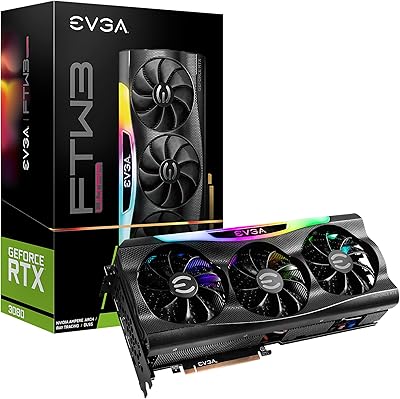
The EVGA RTX 3070 FTW3 Ultra Graphics Card arrived in mid-2021 as one of EVGA's most aggressive takes on NVIDIA's RTX 3070 — and it remains a compelling used-market find today. This is a previous-generation card, full stop, so temper expectations accordingly. It carries the LHR designation, meaning NVIDIA's mining limiter is baked in, which is largely irrelevant for gamers. What matters more: EVGA has since exited the GPU business entirely, so warranty support is gone. For 1440p gaming it still performs admirably, but anyone expecting it to muscle through demanding 4K workloads in 2024 titles will hit a ceiling. Know what you are buying.
Features & Benefits

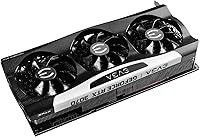
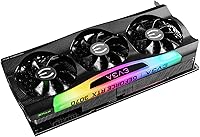
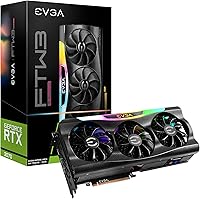
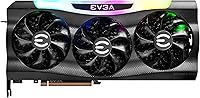
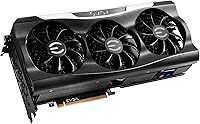
The iCX3 cooling system is what separates this card from a generic RTX 3070. Rather than relying on two or three blanket temperature reads, iCX3 uses multiple independent thermal sensors to dial each fan's behavior precisely — the practical result is a card that runs quietly under realistic gaming loads. The factory boost clock sits at 1815 MHz, a noticeable bump above the reference spec. Add an all-metal backplate, ARGB lighting with motherboard sync support, and outputs covering both HDMI and DisplayPort for multi-monitor setups. One honest caveat: the 8GB VRAM is starting to feel tight in texture-heavy modern titles at 1440p.

Best For

The FTW3 Ultra RTX 3070 makes most sense for builders chasing high-refresh 1440p performance without paying flagship prices. It is a natural fit in mid-tower or full-tower cases — at nearly 12 inches long, compact builds are simply not an option, so check clearance before committing. Noise-sensitive users will appreciate the thermal headroom this card carries; it rarely needs to spin fans aggressively during typical gaming sessions. Used-market buyers who do their homework will find strong build quality relative to its current street price. ARGB lighting is a nice bonus for aesthetics-forward builds, though it should not be the deciding factor.

User Feedback

Owners of this EVGA FTW3 Ultra are consistently vocal about two things: cooling performance and build quality. The card runs near-silent under moderate gaming loads, and the metal backplate feels genuinely premium rather than decorative. Where buyers push back is on size — several reviewers discovered too late that an 11.81-inch card simply would not fit their case. A smaller but notable group has raised concerns about long-term support, given that EVGA no longer manufactures GPUs. That is a fair worry. Still, with a 4.7-star average across close to 600 ratings, the overall satisfaction is hard to argue with for a discontinued product.

Pros

  • The iCX3 cooling system keeps temperatures well-controlled during extended 1440p gaming sessions.
  • Near-silent fan operation under moderate loads makes this card a genuine pleasure in quiet environments.
  • The all-metal backplate adds structural rigidity and prevents GPU sag over time.
  • A factory boost clock of 1815 MHz delivers real performance gains without any manual tuning required.
  • Ray tracing at 1440p with DLSS enabled produces noticeably improved visuals in supported titles.
  • ARGB lighting syncs reliably with major motherboard ecosystems for a cohesive build aesthetic.
  • Verified buyer satisfaction is exceptionally high, with a 4.7-star average across close to 600 ratings.
  • HDMI and DisplayPort outputs cover multi-monitor and high-refresh-rate setups without compatibility headaches.
  • Used-market pricing reflects the generational gap, making this card a strong value for 1440p builders on a budget.

Cons

  • No manufacturer warranty remains — EVGA exited the GPU market entirely, leaving buyers without a support safety net.
  • At nearly 12 inches long, this card simply will not fit many popular compact and mid-size cases.
  • The 8GB VRAM is increasingly tight in texture-heavy modern titles, even at 1440p ultra settings.
  • EVGA Precision X1 software is no longer actively developed, pushing users toward third-party tuning tools.
  • Power draw is noticeably higher than current-generation equivalents at similar price points.
  • Native 4K gaming at high settings in demanding 2024 titles is not a realistic use case for this card.
  • The card weighs 4.29 pounds, requiring a GPU support bracket in many builds to avoid PCIe slot stress.
  • Buyers indifferent to RGB lighting have no straightforward way to disable it without third-party software.

Ratings

The EVGA RTX 3070 FTW3 Ultra Graphics Card earns strong marks across most categories, based on AI analysis of verified global buyer reviews with spam, bot, and incentivized feedback actively filtered out. Across nearly 600 ratings, the overall picture is one of genuine satisfaction — but with a few real-world caveats around physical size, long-term support, and VRAM headroom that are worth understanding before buying. Both the strengths and the legitimate frustrations are reflected transparently in the scores below.
Thermal Performance
94%
The iCX3 cooling system is the headline feature for a reason. Multiple independent thermal sensors allow the fans to respond precisely to load conditions, and in practice, the card stays well within comfortable temperature ranges during extended gaming sessions. Buyers running intensive titles for hours report the card barely breaks a sweat.
Under sustained full-load synthetic benchmarking, temperatures climb more noticeably than in typical gaming scenarios. A small number of users in poorly ventilated cases found the card ran hotter than expected, suggesting case airflow matters as much as the cooler itself.
Noise Level
91%
At moderate gaming loads — which covers the majority of real-world use — the triple-fan setup operates at near-inaudible levels. Users watching movies, gaming at 1440p, or working in the same room consistently describe the card as quiet to near-silent, which is a meaningful quality-of-life advantage.
Push the card into a prolonged stress test or a genuinely demanding rendering job and the fans do spin up audibly. It is not disruptive, but users who expected near-silence under all conditions occasionally noted surprise at the ramp-up during peak workloads.
Build Quality
93%
The all-metal backplate is not just cosmetic — it adds real structural rigidity and prevents the kind of PCB sag that plagues heavier GPUs over time. Buyers who handle the card immediately notice the premium feel compared to plastic-backed alternatives, and long-term owners report no signs of degradation.
At 4.29 pounds, the card is heavy enough that some users with older or cheaper motherboards recommend using a GPU support bracket to avoid sag stress on the PCIe slot over time. This is a minor but practical concern for users running the card in horizontal or angled case orientations.
Gaming Performance at 1440p
88%
For high-refresh 1440p gaming, this card hits a genuine sweet spot. Titles like Cyberpunk 2077, Elden Ring, and competitive shooters run comfortably at high to ultra settings with frame rates that take full advantage of 144Hz or 165Hz monitors. It is a satisfying performer for the target resolution.
The 8GB VRAM limit is increasingly visible in newer texture-heavy titles at 1440p ultra settings, where VRAM overflow can cause stuttering. This is not a dealbreaker today, but it is a limitation that will become more relevant over the next one to two years as game demands rise.
Gaming Performance at 4K
67%
33%
The card is technically capable of 4K output and handles many older or less demanding titles at 4K with respectable results. Users running 4K at medium settings or in less VRAM-intensive games report a workable experience, particularly in esports titles or older AAA releases.
4K at ultra settings in demanding modern titles is where this card falls short. The 8GB frame buffer fills quickly at 4K, and frame rates in games like Alan Wake 2 or The Last of Us Part I drop to uncomfortable levels. Buyers should not purchase this card primarily for native 4K gaming.
Factory Overclock Value
83%
The 1815 MHz boost clock represents a genuine improvement over the reference RTX 3070 spec, and buyers get that performance without needing to touch overclocking software themselves. For users who prefer a plug-in-and-play experience, the factory OC delivers real-world gains out of the box.
Experienced overclockers note that the additional headroom beyond the factory OC is relatively modest without pushing voltage limits. Users hoping to squeeze substantial extra performance through manual overclocking may find diminishing returns compared to a reference card tuned manually.
Ray Tracing Capability
74%
26%
Ray tracing is functional and visually rewarding in supported titles at 1440p when combined with DLSS. In games designed with Ampere-era ray tracing in mind, the results genuinely improve lighting and shadow fidelity in ways that are noticeable during gameplay, not just in comparison screenshots.
Enabling ray tracing at 1440p ultra in demanding titles like Cyberpunk 2077 without DLSS puts significant strain on performance. Ray tracing at 4K is largely impractical. Users who prioritize ray tracing heavily should manage expectations and lean on DLSS to keep frame rates workable.
ARGB Lighting & Aesthetics
78%
22%
The ARGB LED implementation looks genuinely polished inside a windowed case, and sync support with major motherboard ecosystems like ASUS Aura and MSI Mystic Light works reliably for users who have invested in a coordinated lighting setup. The visual effect is bright without being garish.
Users who do not care about RGB lighting get no option to disable it without third-party software, and some report minor inconsistencies when syncing across different brand ecosystems. It is a secondary feature, but those indifferent to lighting may find it an unnecessary complexity.
Physical Fitment
58%
42%
For users with mid-tower or full-tower cases, the card installs without drama. The dimensions are clearly published, and buyers who planned ahead report a clean fit with room to spare for cable management. It is a non-issue in appropriately sized builds.
At 11.81 inches, this is a physically large card that does not fit many popular mid-size or compact cases. Multiple buyers left negative reviews specifically because they discovered the fitment issue only after purchase. This is one of the most commonly cited practical complaints across verified reviews.
Display Output Versatility
86%
HDMI and DisplayPort outputs cover the full range of modern monitor connections, and multi-monitor setups work reliably across buyer reports. Users running a primary high-refresh gaming monitor alongside secondary productivity displays report no compatibility issues across a wide range of panel brands.
The card lacks a USB-C or Thunderbolt output, which limits compatibility with certain newer monitors or VR headsets that use those connections natively. For the majority of users this is irrelevant, but it is worth checking against your specific display and peripheral setup before purchasing.
Long-Term Support & Warranty
41%
59%
For buyers purchasing new old-stock units still under the original purchase window, EVGA honored its warranty terms through its standard support channels. Used-market buyers who received cards in good condition report no hardware issues arising in normal use, suggesting the card is mechanically reliable.
EVGA has exited the GPU market entirely, meaning warranty support for this card is effectively over for most buyers. There is no manufacturer to call if something goes wrong. This is the most significant long-term risk of purchasing this card today, and it should weigh meaningfully in any buying decision.
Value for Money
79%
21%
On the used market, the FTW3 Ultra RTX 3070 represents a strong value proposition relative to its original launch price. Buyers who pick up a verified, well-maintained unit get premium cooling and build quality that was originally priced at a significant premium, now accessible at a lower entry point.
Compared to current-generation cards at similar price points — including the RTX 4060 Ti — the value equation is less clear-cut. Newer cards offer better efficiency and, critically, more VRAM. The purchase makes sense only if the pricing genuinely reflects the generational gap.
Driver & Software Stability
85%
As a well-established Ampere-generation card, driver support from NVIDIA is mature and stable. Buyers report no unusual crashes or compatibility issues with current Windows and Linux builds, and the card works out of the box with all major game engines and APIs including DirectX 12 Ultimate and Vulkan.
EVGA Precision X1 software, which was the companion tuning app for this card, is no longer actively developed following EVGA's GPU exit. Users who want deep fan curve customization or OC monitoring beyond basic tools will need to rely on third-party alternatives like MSI Afterburner instead.
Power Efficiency
63%
37%
Under typical 1440p gaming workloads, the card draws power in a range that is manageable for a quality 750W or 850W PSU. Buyers with modern, efficient power supplies report stable operation without unexpected shutdowns or rail instability during extended sessions.
By current-generation standards, the Ampere architecture is considerably less power-efficient than Ada Lovelace alternatives. Users running smaller or older PSUs close to their rated limits may encounter stability issues, and electricity-conscious buyers will notice higher idle and load consumption compared to modern equivalents.

Suitable for:

The EVGA RTX 3070 FTW3 Ultra Graphics Card is a strong match for PC builders who have settled on 1440p as their target resolution and want to run it at high refresh rates without paying current-generation flagship prices. If you own a mid-tower or full-tower case and have at least 11.81 inches of GPU clearance, the physical fitment concerns that trip up other buyers simply do not apply to you. Noise-sensitive users — those gaming in shared living spaces, streaming setups, or home offices where fan noise is a real irritant — will genuinely appreciate how quietly this card handles sustained gaming workloads. Used-market buyers who do their due diligence, verify the card's condition and purchase history, and understand there is no manufacturer warranty remaining will find a premium-grade GPU at a price that reflects its age rather than its capability. It also suits enthusiasts building an ARGB-coordinated rig who want the lighting integration to come from the GPU itself, not an aftermarket add-on.
Not suitable for:

Buyers chasing native 4K gaming at ultra settings in demanding modern titles should look elsewhere — the EVGA RTX 3070 FTW3 Ultra Graphics Card is not engineered to handle that workload comfortably, and the 8GB VRAM ceiling becomes a real constraint at 4K resolution in texture-heavy 2024 releases. Anyone building in a compact or mid-size case should measure clearance carefully before considering this card; at nearly 12 inches long, it physically will not fit a wide range of popular enclosures, and discovering that after purchase is an avoidable frustration. Buyers who prioritize peace of mind around manufacturer support need to understand that EVGA has fully exited the GPU market — there is no warranty safety net here, which is a meaningful risk for anyone uncomfortable purchasing without that protection. Power-conscious users running older or lower-rated PSUs may also find the Ampere architecture draws more than they expected, particularly compared to current-generation alternatives. Finally, anyone expecting cutting-edge generational performance should calibrate expectations: this is a previous-generation card, and newer mid-range options now trade blows with it while offering better efficiency and more VRAM.
Specifications

  • GPU Chip: Built on the NVIDIA GeForce RTX 3070 Ampere architecture, supporting DirectX 12 Ultimate, Vulkan, and OpenGL 4.6.
  • VRAM: 8GB GDDR6 memory running at 14000 MHz effective clock speed for high-bandwidth 1440p gaming workloads.
  • Boost Clock: Factory boost clock is rated at 1815 MHz, exceeding the NVIDIA reference RTX 3070 specification out of the box.
  • Cooling System: EVGA iCX3 triple-fan cooler with multiple independent thermal sensors for precise per-zone temperature and fan management.
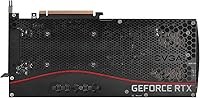
  • Backplate: Full-coverage all-metal backplate provides structural rigidity and contributes passive heat dissipation from the rear PCB.
  • Card Length: The card measures 11.81 inches (approximately 300mm) in length, requiring clearance verification in any target case.
  • Card Width: Physical width is 5.38 inches, occupying a standard dual-slot-plus profile in most ATX and extended ATX motherboard layouts.
  • Weight: The card weighs 4.29 pounds, making a GPU support bracket advisable to prevent PCIe slot stress over extended use.
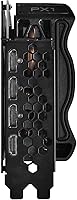
  • Display Outputs: Connectivity includes one HDMI port and three DisplayPort outputs, supporting multi-monitor configurations up to four displays.
  • Max Resolution: Supports output up to 4K (3840x2160) at 60Hz over HDMI, with higher refresh rates available via DisplayPort on compatible monitors.
  • Lighting: Addressable RGB (ARGB) LED lighting is built in with sync support for major motherboard ecosystems including ASUS Aura and MSI Mystic Light.
  • Hash Rate Limiter: This unit carries NVIDIA's Lite Hash Rate (LHR) designation, which limits Ethereum mining throughput but has no effect on gaming performance.
  • Power Connector: Requires two 8-pin PCIe power connectors; a quality 750W or higher PSU is recommended for stable operation under full gaming load.
  • API Support: Fully supports real-time ray tracing via Microsoft DXR and NVIDIA RTX, as well as DLSS 2.x for AI-assisted upscaling in supported titles.
  • Manufacturer: Designed and manufactured by EVGA, a company that has since exited the discrete GPU market, making this a discontinued product line.
  • Warranty Status: The card is officially discontinued by the manufacturer, and EVGA's GPU warranty program is no longer active for new claims.
  • Release Date: This SKU was first made available on June 25, 2021, as part of EVGA's premium FTW3 tier within the RTX 30-series launch window.
  • Model Number: The official EVGA model identifier for this card is 08G-P5-3767-KL, useful for cross-referencing driver support and compatibility databases.

Related Reviews
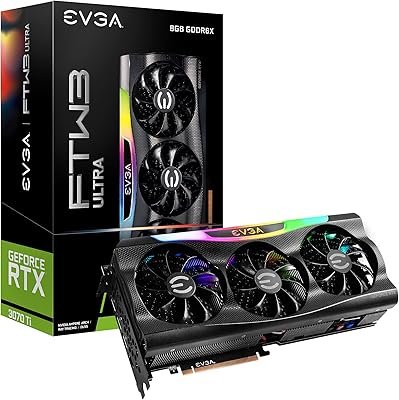
EVGA GeForce RTX 3070 Ti FTW3 Ultra Gaming 8GB GDDR6X
85%
93%
Performance in Gaming
88%
Thermal Management
91%
Build Quality
85%
Ease of Installation
78%
Compatibility with PC Cases
More
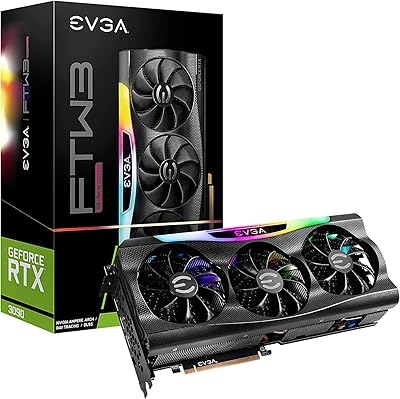
EVGA RTX 3090 FTW3 Ultra Graphics Card
79%
91%
Raw Gaming Performance
94%
VRAM Capacity
83%
Thermal Management
89%
Build Quality
67%
Noise Level
More
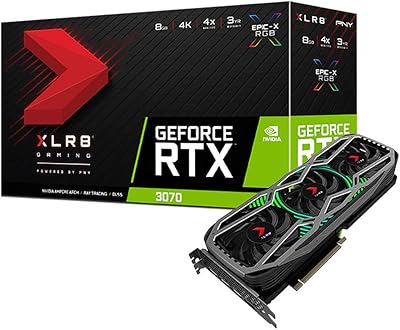
PNY GeForce RTX 3070 8GB Graphics Card
79%
91%
1440p Gaming Performance
88%
Thermal Management
86%
Noise Levels
63%
VRAM Adequacy
78%
Ray Tracing Performance
More
EVGA GeForce RTX 3080 FTW3 Ultra Graphics Card
79%
93%
Thermal Performance
88%
Acoustic Performance
89%
Gaming Performance
94%
Build Quality
71%
Value for Money
More
EVGA GeForce RTX 2080 Ti FTW3 Ultra 11GB GDDR6
87%
96%
Gaming Performance (4K)
94%
Ray Tracing & Graphics Quality
88%
Cooling & Noise Level
92%
Build Quality & Durability
91%
Overclocking Support
More
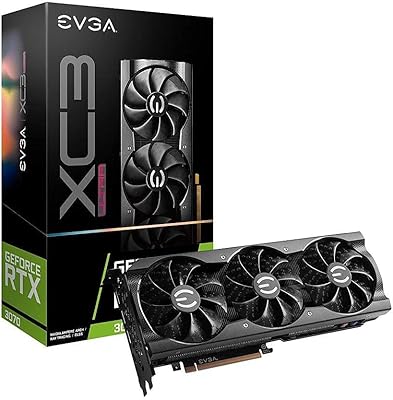
EVGA RTX 3070 XC3 Graphics Card
82%
91%
Gaming Performance
93%
Thermal Performance
88%
Noise Level
94%
Build Quality
83%
Ray Tracing Capability
More
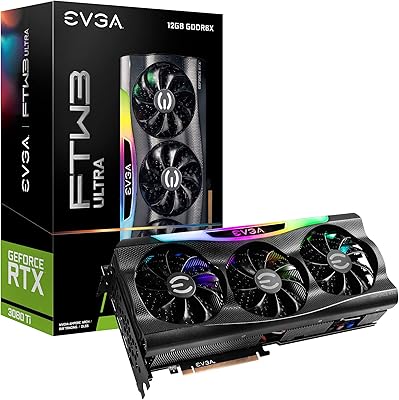
EVGA GeForce RTX 3080 Ti FTW3 ULTRA GAMING 12GB GDDR6X
87%
96%
Gaming Performance
92%
Ray Tracing Performance
94%
Cooling Efficiency
89%
Build Quality
85%
Value for Money
More
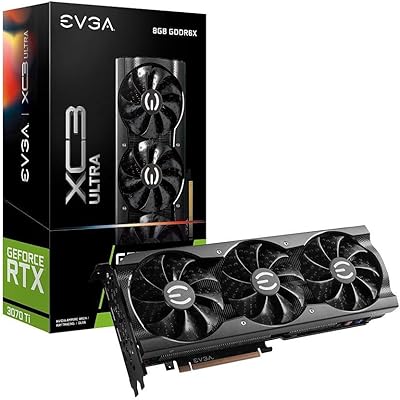
EVGA GeForce RTX 3070 Ti XC3 Ultra Gaming 8GB GDDR6X
86%
93%
Gaming Performance
91%
Cooling Efficiency
85%
Ease of Installation
88%
Build Quality
90%
Noise Level
More
EVGA GeForce RTX 2070 XC Gaming 8GB GDDR6 Graphics Card
85%
91%
Gaming Performance
88%
Cooling Efficiency
75%
Ease of Installation
78%
Power Consumption
85%
Build Quality
More
ZOTAC GeForce RTX 3070 Ti AMP Holo Graphics Card
81%
88%
Gaming Performance
91%
Cooling Efficiency
86%
Noise Levels
93%
Build Quality
84%
Thermal Management
More

FAQ

You should be fine with 310mm of clearance — the card is 11.81 inches, which works out to just over 299mm. That said, always account for cable routing near the front panel; a few buyers with exactly 300mm of rated clearance found cables were the real constraint, not the card itself.

EVGA recommended at least a 750W power supply for this card, and that is still the right baseline advice. If your system includes a high-core-count CPU or multiple storage drives, stepping up to an 850W unit gives you comfortable headroom and protects against instability under sustained full-system load.

For 1440p gaming at high to ultra settings in most titles, yes — it still performs well and handles high-refresh-rate monitors comfortably. The caveat is the 8GB VRAM, which is beginning to show its limits in a handful of newer, texture-heavy games. If your game library skews toward esports titles or games released before 2023, the value case is solid. For anyone planning to play the latest VRAM-hungry releases at ultra, you may hit stutters sooner than expected.

LHR stands for Lite Hash Rate — it is a limiter NVIDIA built into this production run to reduce the card's efficiency for cryptocurrency mining. For gaming, it makes absolutely no difference. The full GPU performance is intact for every gaming workload, frame rate, and API. You can safely ignore LHR as a gamer.

Unfortunately, no. EVGA exited the discrete GPU business in late 2022 and has wound down its warranty support program for graphics cards. Any remaining coverage depends entirely on the seller or retailer you purchase from, not EVGA directly. If warranty protection is important to you, factor that into your buying decision and buy from a seller with a strong return or replacement policy.

Under typical 1440p gaming, the card is impressively quiet — the iCX3 cooler rarely needs to spin aggressively because the thermal headroom is generous. Most users in normal gaming scenarios describe it as near-inaudible over case fans. Under synthetic full-load benchmarks or sustained rendering jobs, the fans do spin up and become noticeable, but not disruptively so.

Technically it might work at stock settings with a quality 650W unit, but it is not a setup worth risking. Under full gaming load, the card draws more than a lower-spec RTX 3070 because of the factory overclock, and pairing that with a CPU and other components leaves very little headroom. A 750W PSU from a reputable brand is the minimum we would feel comfortable recommending here.

Yes, the ARGB implementation on this card is designed to sync with major motherboard lighting ecosystems including ASUS Aura Sync, MSI Mystic Light, and Gigabyte RGB Fusion. Setup typically requires installing the motherboard manufacturer's lighting software and ensuring the card is detected as a compatible device. A small number of users have reported minor sync hiccups across different brand combinations, but the majority find it works reliably once configured.

It can output 4K and handles many titles at that resolution at medium to high settings — older games, esports titles, and less demanding AAA releases run well. The real limitation is the 8GB VRAM, which fills up quickly at 4K ultra settings in demanding modern games, causing stuttering and frame drops. Think of 4K as an occasional option rather than the primary use case this card was designed around.

At 4.29 pounds and nearly 12 inches long, a GPU support bracket is a genuinely sensible addition rather than an optional accessory. Over months of continuous use, the weight and leverage can stress the PCIe slot and cause measurable sag that is visible through a case window. Many buyers add a simple aftermarket bracket during installation, and several case manufacturers include one with mid-tower and full-tower designs.

Where to Buy