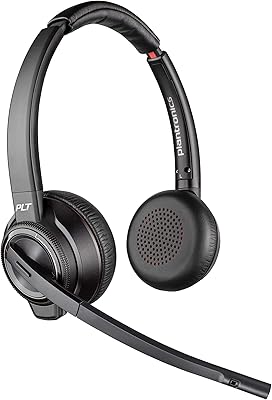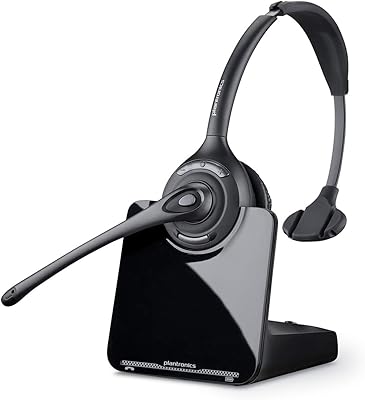
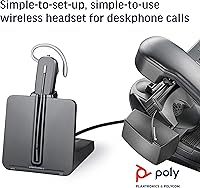


Overview

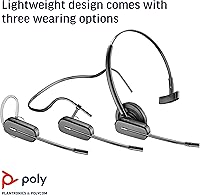
The Poly CS540 Wireless DECT Headset is a purpose-built office tool — designed specifically for professionals who live on their desk phones, not a general-purpose wireless headset for music or mobile calls. That distinction matters. DECT wireless technology operates on a dedicated radio frequency that cuts through the congestion common in open-plan offices, where Bluetooth signals frequently compete and degrade. The fact that this headset has been on the market since 2011 and continues to sell in strong numbers says something real about its reliability and enterprise-level trust. It parks in a charging base on your desk between calls — a familiar, low-friction setup for any traditional office environment.

Features & Benefits

The CS540 ships with three wearing configurations — over-ear, over-head, and behind-head — though it is worth knowing upfront that the behind-head neckband is sold separately, so only two styles are included in the box. Wireless range reaches up to 400 feet in open conditions, which in a real office with walls and interference usually covers a standard floor comfortably. The noise-canceling microphone does a solid job filtering ambient chatter from your outgoing audio, though it does nothing to block background sound on your end. Battery life is rated at seven hours of talk time, and the included charging dock keeps the unit topped up between calls — a genuinely practical arrangement for busy workdays.

Best For

This wireless office headset is an obvious fit for anyone who spends a significant part of their workday fielding desk-phone calls and needs their hands free to type, pull up documents, or move around without being tethered. It performs especially well in call center and customer service environments, where DECT's resistance to wireless interference gives it a clear edge over Bluetooth alternatives. Professionals who roam a single floor while staying on a call will appreciate the practical range. The convertible wearing design suits people who like adjusting their setup throughout the day. It is also a natural pick for teams already embedded in the Poly or Plantronics desk-phone ecosystem and looking to expand without worrying about compatibility.

User Feedback

People who use this DECT headset daily consistently praise how clean their voice sounds to callers, even in noisy open offices — the microphone earns real appreciation in that regard. Setup, however, is where frustration tends to surface: pairing with certain desk phone models requires specific adapter configurations that the documentation does not always explain clearly. Battery degradation is a genuine concern for longer-term owners, with heavily used units often delivering noticeably less talk time than the rated spec after a year or so. Wearing comfort in the over-ear style earns good marks for shorter sessions, though some users report fatigue during extended daily shifts. Range holds up well room-to-room but should not be taken at face value in larger, wall-heavy buildings.

Pros

  • DECT wireless delivers noticeably more stable, interference-resistant performance than Bluetooth in busy open-plan offices.
  • The noise-canceling microphone keeps outgoing voice audio clean and clear even in noisy call center environments.
  • Three wearing style options let users find a comfortable fit rather than being locked into one configuration.
  • The charging cradle keeps the CS540 ready to go at the start of every shift without remembering to plug in a cable.
  • Lightweight construction makes it genuinely wearable for long stretches without significant discomfort.
  • In-call controls for volume and call management sit directly on the headset, reducing desk clutter.
  • A track record spanning well over a decade signals strong reliability and continued enterprise-level support.
  • Roaming range handles most standard single-floor office layouts comfortably during active calls.

Cons

  • The behind-head neckband wearing style requires a separately purchased accessory that does not ship in the box.
  • Setup with certain desk phone models can be genuinely confusing, with adapter configuration steps that are poorly documented.
  • Battery capacity degrades over time with heavy daily use, sometimes noticeably within the first year or two.
  • Real-world wireless range in multi-room or multi-wall environments often falls well short of the advertised 400 feet.
  • Mono audio and voice-focused frequency response make it completely unsuitable for music or multimedia listening.
  • No compatibility with computers, smartphones, or softphone applications limits its usefulness outside of desk-phone-specific setups.
  • Replacement batteries and long-term spare parts availability can be an issue as the unit ages.
  • The over-ear wearing style receives mixed feedback for comfort during full eight-hour shifts, particularly for users with glasses.

Ratings

The scores below reflect an AI-driven analysis of verified global user reviews for the Poly CS540 Wireless DECT Headset, with spam, bot activity, and incentivized feedback actively filtered out to surface genuine buyer sentiment. Ratings span the categories that matter most to real office professionals — from day-to-day call clarity to long-term battery reliability — and both the strengths and the recurring frustrations are represented transparently.

Call Audio Quality
84%
For desk-phone voice calls, the audio output consistently earns praise from users who spend hours a day on the line. Callers on the other end are reported as sounding clear and well-defined, which is what matters most in a professional call environment where missed words cost time.
The frequency range is deliberately narrow and tuned for voice, so anyone who expected richer or fuller audio is regularly let down. The CS540 is not designed for anything beyond call use, and that limitation becomes obvious the moment you try to use it for anything else.
Microphone Performance
91%
This is the standout feature that earns the most consistent positive feedback across thousands of verified reviews. Users in loud open-plan offices and busy call centers report that their voice comes through clean and intelligible to callers, even when nearby conversations and keyboard noise are present.
The noise cancellation works outward only — it cleans up what the other person hears, not what you hear. Users in genuinely chaotic environments occasionally note that the microphone pickup can still catch very loud or close-range noise when office conditions are extreme.
Wireless Range
69%
31%
In single-room or open-floor setups, the range is more than adequate for walking to a printer, a nearby colleague, or a small kitchen without dropping the call. Users in straightforward office layouts report reliable, uninterrupted connectivity throughout their immediate work area.
The 400-foot specification rarely holds up inside real office buildings. Walls, floors, and dense wireless environments chip away at that figure considerably, and users in larger or multi-room spaces frequently report degraded signal or dropped connections well before reaching that theoretical limit.
Battery Life
73%
27%
For moderate call volumes, the battery holds up through a full working day without needing a mid-shift recharge, especially when the headset is returned to its cradle during breaks. The docking-station charging system means the unit is typically topped up and ready by the time the next call comes in.
Long-term battery performance is a recurring concern among users who have owned the headset for more than a year with heavy daily use. Several report a noticeable drop in talk time well before any hardware failure, and replacing the internal battery is not a simple self-service task.
Wearing Comfort
71%
29%
The lightweight build works in its favor for moderate-duration wear, and most users report that the over-head style distributes weight reasonably well for sessions of a few hours. The convertible design at least gives users the option to switch styles when one starts to feel uncomfortable.
Extended shifts tell a different story, particularly for users wearing glasses or those sensitive to pressure on the ear. The over-ear style accumulates discomfort over a full eight-hour day for a meaningful portion of reviewers, and the behind-head option requires a separate purchase that many users only discover after the fact.
Setup & Compatibility
54%
46%
With compatible Poly and Plantronics desk phones, initial setup is straightforward — dock the base, connect the cable, and the pairing process is largely automatic. Users already within the Poly ecosystem consistently report a smooth out-of-box experience with minimal configuration required.
Outside that ecosystem, setup frustration is one of the most common complaints. Certain desk phone models require specific hookswitch adapter settings that the included documentation fails to explain adequately, and multiple users report spending significant time troubleshooting a connection that should have been simple.
Build Quality
77%
23%
The materials feel appropriately durable for a professional office device, and the overall construction holds up well under daily handling, docking, and re-wearing. The headset does not feel fragile or cheap in hand, which is consistent with Poly's enterprise product positioning.
It is not a premium-feeling product in the way that some higher-tier office headsets are. Some users note that plastic components around the adjustable arm and earpiece feel somewhat light, and isolated reports of hinge or clip breakage after extended heavy use suggest durability is not bulletproof over the long term.
Charging System
88%
The charging cradle is one of the most consistently praised elements of the entire experience. Dropping the headset into the dock at the end of a call becomes second nature quickly, and users appreciate that there are no charging cables to connect manually — the headset is simply always ready.
The cradle itself takes up a dedicated footprint on the desk, which is a minor irritant in tight workstations. A small number of users have also reported that the charging contacts on either the cradle or the headset can become unreliable over time, requiring cleaning or repositioning to maintain a consistent charge.
Style Versatility
62%
38%
Having the option to switch between over-ear and over-head configurations is genuinely useful for users who find one style uncomfortable after a few hours. The convertible mechanism is straightforward to operate, and adjusting between styles takes only a few seconds.
The three-style claim in the marketing creates a real expectation mismatch because the behind-head neckband configuration is not included and must be purchased separately. For buyers who specifically wanted that wearing option, discovering this after unboxing is a meaningful frustration that surfaces repeatedly in reviews.
On-Headset Controls
78%
22%
Being able to answer calls, adjust volume, and mute directly from the headset without walking back to the desk is a practical benefit that office users genuinely appreciate. The touch-based controls are responsive enough for everyday use and reduce dependency on the physical phone.
The control layout takes some getting used to, and accidental touches — particularly when adjusting the headset position mid-call — are reported with some regularity. Users who are new to touch-based headset controls tend to mute themselves or adjust volume unintentionally during the first week or two.
Long-term Durability
61%
39%
The fact that this product has remained in active commercial use and continued selling since 2011 speaks to a baseline level of reliability that many competing products cannot claim. Units used in lower-intensity environments frequently last several years without significant issues.
Heavy daily use accelerates wear on the battery and, in some cases, the mechanical wearing components. Users who rely on this DECT headset for six-plus hours of talk time every workday tend to encounter performance degradation within 18 to 24 months, which raises the total cost of ownership over time.
Value for Money
74%
26%
For organizations that need a reliable, interference-resistant desk-phone headset with a proven track record, the price reflects a reasonable investment in a professional-grade tool. Users who have tried cheaper Bluetooth alternatives and dealt with drop-outs and interference tend to view the CS540 as worth the difference.
The value calculation weakens somewhat when factoring in the separately sold neckband, potential adapter accessories for non-standard phones, and the likelihood of battery degradation requiring replacement. Buyers who only make occasional calls may find the feature set more than their usage level justifies.

Suitable for:

The Poly CS540 Wireless DECT Headset is built for one specific type of professional: someone who spends a meaningful portion of their workday tethered to a desk phone and genuinely needs their hands free to multitask. That includes customer service agents who handle back-to-back calls, office managers who need to walk to a filing cabinet or a colleague's desk without dropping a call, and administrative staff in environments where a reliable, interference-resistant wireless signal matters more than audio versatility. DECT technology makes it particularly well-suited to open-plan offices where multiple wireless devices compete for bandwidth — it simply holds up more consistently than Bluetooth-based alternatives in those conditions. Teams already running Poly or Plantronics desk-phone infrastructure will find the compatibility and ecosystem fit especially straightforward. If your workday revolves around a landline and you want reliable, all-day hands-free operation, this is a focused tool that does exactly what it promises.

Not suitable for:

The Poly CS540 Wireless DECT Headset is not the right pick for anyone hoping to use it beyond a desk phone — it does not connect to smartphones, laptops, or tablets, and it will not work as a general-purpose audio headset for music, video calls, or remote work over a computer. If you are a remote worker using softphone applications like Zoom or Microsoft Teams through a PC, you will need a different category of headset entirely. The behind-head wearing style, often highlighted as a selling point, actually requires a separately purchased neckband that does not come in the box — something easy to overlook before buying. Buyers expecting the full 400-foot roaming range inside a typical multi-room office building may also be disappointed, as walls and interference can significantly reduce practical coverage. And if long-term battery reliability is critical, know that heavily used units have shown noticeable capacity loss after extended months of daily use, which could mean earlier-than-expected replacement costs.

Specifications

  • Connectivity: Connects to desk phones via a DECT wireless signal using an included adapter cable — no Bluetooth or USB pairing involved.
  • Wireless Standard: Uses DECT (Digital Enhanced Cordless Telecommunications) technology, which operates on a dedicated frequency band separate from Wi-Fi and Bluetooth.
  • Wireless Range: Rated up to 120 m / 400 ft in open-air conditions; real-world range in walled office environments will typically be shorter.
  • Talk Time: Rated for up to 7 hours of continuous talk time per charge under standard conditions.
  • Charging: Includes a cradle-style charging base that the headset docks into between uses, keeping it ready without manual cable connection.
  • Microphone Type: Single noise-canceling microphone, mono configuration, optimized for outbound voice clarity rather than passive sound isolation for the wearer.
  • Frequency Response: Audio frequency range spans 80 Hz to 4000 Hz, tuned for voice intelligibility rather than full-range music reproduction.
  • Impedance: Headset impedance is rated at 140 Ohm, consistent with professional office communication hardware.
  • Audio Driver: Dynamic audio driver design handles voice call audio in a single-ear (mono) format.
  • Wearing Styles: Supports over-ear and over-head configurations out of the box; behind-head neckband style requires a separately purchased accessory.
  • Form Factor: Single-ear (mono) on-ear design intended for office use where ambient awareness of the surrounding environment is often necessary.
  • Controls: On-headset touch controls handle call answer/end, volume adjustment, and mute functions without returning to the desk.
  • Weight: Headset unit weighs approximately 1.15 pounds, designed to remain comfortable during extended wear sessions.
  • Dimensions: Overall unit measures approximately 6.5 x 1.25 x 6.48 inches when assembled in its standard configuration.
  • Compatible Devices: Designed exclusively for desk phones; connection to computers, smartphones, or tablets is not supported by this headset.
  • Included Contents: Package includes the wireless headset, charging base, adapter cable, and user manual — the behind-head neckband is not included.

Related Reviews
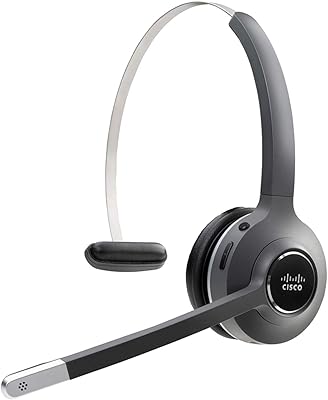
Cisco Headset 561 Wireless On-Ear DECT Headset
75%
91%
Wireless Range & Reliability
84%
Call Audio Clarity
93%
Cisco Ecosystem Integration
82%
Battery Life
67%
Comfort During Extended Wear
More
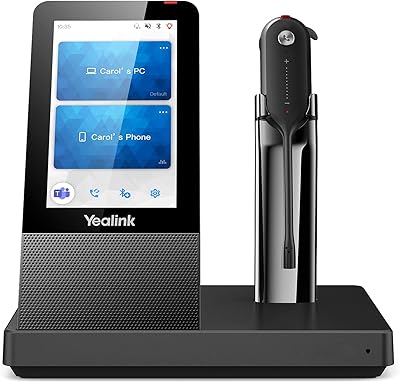
Yealink WH67 Wireless DECT Office Headset
79%
91%
Call Audio Clarity
87%
Noise Cancellation
84%
Wireless Range
83%
Comfort & Wearability
81%
Multi-Device Connectivity
More
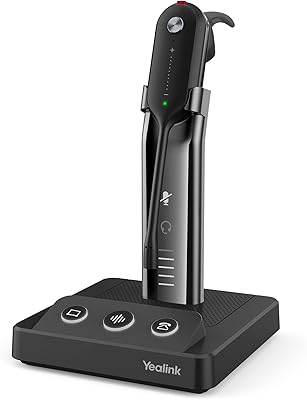
Yealink WH63 DECT Wireless Office Headset
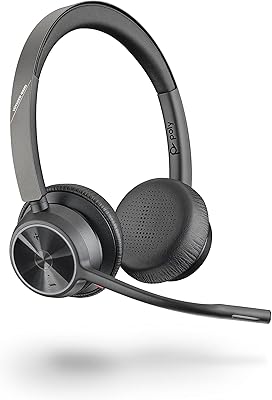
75%
88%
Call Audio Clarity
76%
Microphone Noise Cancellation
91%
Wireless Range & Reliability
69%
Battery Life
73%
Comfort & Wearing Styles
More
Poly Voyager 4310 UC Wireless Headset
86%
90%
Battery Life
85%
Noise Cancellation
88%
Comfort for Long Hours
91%
Bluetooth Connectivity
84%
Call Quality
More
Poly Voyager 4320 UC Wireless Headset
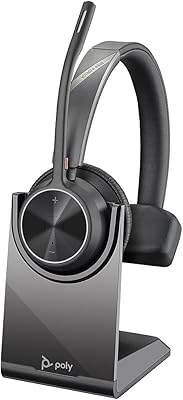
86%
88%
Audio Quality
85%
Comfort for Long Use
90%
Noise Cancellation
91%
Battery Life
87%
Connectivity and Range
More
Plantronics Savi 8220 Wireless DECT Office Headset
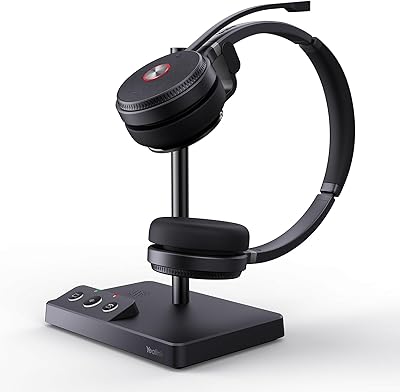
81%
93%
Wireless Connectivity Stability
91%
Microphone Clarity
88%
Active Noise Cancellation
89%
Battery Life
84%
Multi-Device Switching
More
Yealink WH64 Hybrid Mono Wireless Headset
82%
88%
Call Audio Clarity
91%
Wireless Range (DECT)
93%
Battery Life
86%
Charging Speed
83%
Multi-Device Connectivity
More
Yealink WH62 Dual UC DECT Wireless Headset
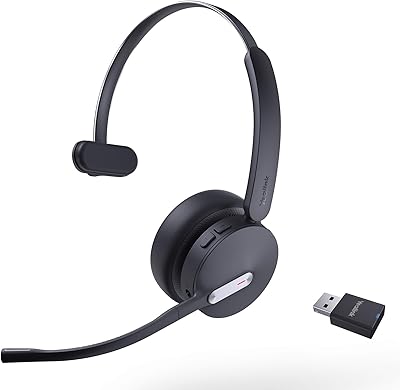
82%
92%
Wireless Range & Stability
88%
Call Audio Clarity
79%
Microphone Noise Cancellation
81%
Comfort & Wearability
87%
Battery Life
More
Dytole DY107
Dytole DY107
82%
93%
Battery Life
88%
Microphone Quality
74%
Comfort & Fit
91%
Sound Quality for Calls
86%
Connectivity & Range
More
Plantronics CS510 Wireless Office Headset
81%
93%
Wireless Range
88%
Call Clarity
86%
Comfort During Long Shifts
79%
Battery Life
68%
Desk Phone Compatibility
More

FAQ

No, it will not. The CS540 is built specifically for desk phones and uses DECT wireless technology, not Bluetooth or USB. If you need a headset for your computer or mobile device, you will need a different product category entirely.

It does not. The over-ear and over-head styles are included, but the behind-head neckband is a separately sold accessory. This catches a lot of buyers off guard, so it is worth checking before you assume all three styles are ready to use out of the box.

The rated range is up to 400 feet, but that figure applies to open-space conditions. In a typical office with walls, cubicles, and other wireless devices nearby, expect reliable coverage within a single floor or a reasonable radius around your workstation. Multi-floor coverage or large building layouts may push the limits.

The Poly CS540 Wireless DECT Headset is compatible with a wide range of desk phone models via the included adapter cable, but compatibility is not universal. It is worth verifying your specific phone model against Poly's compatibility list before purchasing, particularly if you have an older or less common phone brand.

Under normal conditions, you should get close to the rated 7 hours of talk time when the unit is relatively new. That said, users who rely on it heavily day after day have noted that battery performance can decline noticeably after a year or more of regular use, which is typical of rechargeable battery products in this category.

The standard CS540 setup supports a single headset per base. For dual-headset conferencing or training scenarios, Poly offers a separate accessory called the HL10 lifter or compatible supplemental listening adapters, but that requires additional hardware beyond what comes in the box.

Not on your end. The noise-canceling microphone is designed to reduce background noise that the person on the other end of the call hears — it cleans up your outgoing voice. It does not function as active noise cancellation for the listener, so you will still hear your office environment normally.

The charging base uses LED indicator lights to signal charging status. When the headset is docked and charging, the light is typically active; once fully charged, the indicator changes state. The user manual walks through the specific LED patterns for your unit.

For most standard desk phones, setup is straightforward: dock the base, connect the adapter cable to your phone, and the headset registers automatically. Where it gets tricky is with certain phone models that require specific hookswitch settings or adapter configurations — the included documentation does not always spell this out clearly, and a quick look at Poly's support resources or compatibility guide can save a lot of frustration.

Comfort is fairly subjective, but the lightweight build helps. Most users find the over-ear style comfortable for moderate-length sessions. For full-day wear, some users — especially those with glasses — report mild discomfort after several hours. Trying the over-head style instead can help distribute the weight more evenly in those cases.

Where to Buy