Overview

The Cisco Headset 561 Wireless On-Ear DECT Headset is purpose-built for one thing: keeping enterprise communication teams connected inside a Cisco-managed environment. This isn't a consumer headset that moonlights as a business tool. The Cisco 561 runs on DECT 6.0 wireless, which matters more than most buyers initially realize — DECT operates on a dedicated frequency band that sidesteps the congestion and interference issues common with Bluetooth in open-plan offices. The single on-ear design is a deliberate choice, not a cost-cutting move, giving users ambient room awareness during long shifts. If your workplace doesn't run on Cisco Unified Communications, much of what justifies this headset's premium positioning simply won't apply to you.
Features & Benefits

The 300-foot wireless range is where this enterprise headset genuinely earns its keep. In a busy office or call center floor, DECT 6.0's dedicated spectrum means you won't drop a call just because a coworker fires up a Bluetooth speaker nearby. Battery life holds up well through a standard workday, with the base station keeping things charged between sessions. The touch controls on the ear cup handle mute, volume, and call management without requiring you to reach for your phone or computer. Central management through Cisco Webex Control Hub is a real advantage for IT teams rolling out dozens of units — firmware updates, diagnostics, and configuration all happen remotely without touching each device individually.

Best For

The Cisco 561 makes the most sense for IT-managed call centers and organizations already operating within a Cisco UC environment. If you're managing a large deployment of Cisco IP phones or running Webex as your primary communications platform, the native integration alone justifies the investment. Help desk agents and phone-heavy roles benefit from the wireless freedom — no cord, no desk tethering during long call queues. The single-ear format suits anyone who needs to stay aware of room activity while on a call. That said, if your stack runs on Microsoft Teams or Zoom rather than Cisco, this wireless DECT headset offers considerably less value for its price.

User Feedback

Users working in Cisco-managed environments are consistently the most satisfied, praising the DECT range and the absence of audio dropouts they previously experienced with Bluetooth alternatives. Battery life generally matches real-world usage, with most buyers reporting the 9-hour claim holding up across a full workday. Comfort draws more mixed responses — the leather ear cushion is well-regarded, but some users flag noticeable clamping pressure during multi-hour sessions. The price attracts the sharpest criticism; buyers comparing against third-party DECT options often question whether the Cisco premium is justified outside a managed IT deployment. Setup outside the native Cisco ecosystem is reportedly frustrating, with compatibility issues surfacing on non-Cisco hardware.

Pros

  • DECT 6.0 wireless delivers consistent, interference-resistant range that Bluetooth-based headsets simply cannot match in crowded office environments.
  • The Cisco 561 integrates natively with Webex Control Hub, enabling IT teams to manage entire headset fleets without touching individual devices.
  • Battery life holds up reliably through a full 8-hour workday under continuous call use.
  • The base station cradle charger makes overnight top-ups effortless — just dock it and walk away.
  • Voice call clarity is consistently praised by call recipients, with clean audio and minimal background bleed.
  • Compatible with a broad range of Cisco IP phone models as well as USB-A connections for Jabber and Webex clients.
  • The single on-ear design keeps users aware of their surroundings, which matters in shared or customer-facing workspaces.
  • Build quality feels durable enough for professional daily use, backed by a 2-year limited warranty.
  • On-ear touch controls handle mute and volume adjustments quickly without requiring a detour to the phone or computer.

Cons

  • Clamping pressure becomes genuinely uncomfortable for many users after three or more hours of continuous wear.
  • Buyers outside the Cisco ecosystem pay a significant premium for integration features they cannot access.
  • No USB-C connectivity, which is an increasingly common omission at this price tier.
  • The standard base station supports only a single connected device, forcing users who switch between phone and laptop to take extra steps.
  • Battery performance degrades noticeably after 12 to 18 months of heavy daily use.
  • Passive sound isolation alone is insufficient in loud open-plan offices — there is no active noise cancellation.
  • Setup outside native Cisco environments is poorly documented and frequently frustrating for non-enterprise buyers.
  • No carry case is included, making this enterprise headset awkward to transport for hybrid workers moving between locations.
  • Touch controls can misfire when adjusting the headset position mid-call, which is disruptive during sensitive conversations.

Ratings

The Cisco Headset 561 Wireless On-Ear DECT Headset has been evaluated by our AI system after analyzing thousands of verified global user reviews, with spam, bot-submitted, and incentivized feedback actively filtered out. Scores reflect the full picture — where this enterprise headset genuinely delivers for Cisco-centric teams, and where real buyers have run into friction. Both the strengths and the recurring frustrations are represented transparently in the categories below.

Wireless Range & Reliability
91%
Users consistently report that the DECT 6.0 connection holds strong across large open-plan offices and even through walls, outperforming every Bluetooth alternative they had tried previously. Call center agents especially appreciate being able to walk to a printer or colleague's desk without a single dropout mid-call.
A small number of users noted range degradation in environments with heavy concrete construction or significant RF interference from industrial equipment. Performance at the outer edge of the 300-foot claim is less consistent than at moderate distances.
Call Audio Clarity
84%
Voice reproduction during calls is crisp and well-balanced for a business headset — callers on the other end rarely ask for repetition, and the dynamic driver handles typical office call scenarios without distortion. Help desk workers running back-to-back calls find it dependable throughout the day.
This is strictly a voice-optimized headset. Users who tried using it for music, webinars with rich audio, or media playback found the sound noticeably flat and narrow. Expectations need to be set clearly: this is not a headset that doubles as a listening device.
Cisco Ecosystem Integration
93%
For IT teams managing fleets of devices through Cisco Unified Communications Manager or Webex Control Hub, the centralized management capability is genuinely useful — firmware updates, call analytics, and headset configuration can all be handled remotely without physical access to each unit. Deployment at scale is noticeably faster than with third-party alternatives.
This deep integration is exclusively a Cisco-environment benefit. Buyers using Teams, Zoom, or non-Cisco UC platforms receive none of this value, effectively paying a significant premium for features that are entirely inaccessible to them in their workflow.
Battery Life
82%
18%
Most users confirm that the 9-hour talk time claim holds up reasonably well in real workday conditions, with full-shift call center agents frequently making it through an 8-hour shift without needing a mid-day charge. The base station doubles as a cradle charger, making overnight top-ups effortless.
Battery performance does degrade noticeably after 12 to 18 months of heavy daily use, with some long-term owners reporting drop-offs to 6 or 7 hours. There is no in-ear audio alert for low battery on all firmware versions, which has caught some users off guard mid-call.
Comfort During Extended Wear
67%
33%
The leather ear cushion is soft enough for the first few hours of wear, and users with smaller heads tend to report a more comfortable fit overall. The on-ear design keeps the headset lightweight at just one pound, which reduces neck and jaw fatigue compared to heavier over-ear alternatives.
Clamping pressure is the most consistent complaint across long-term users — after three or four hours of continuous wear, a meaningful portion of reviewers describe noticeable discomfort around the ear and temple. The single on-ear format also means one ear absorbs all of that pressure with no relief side.
Ease of Setup & Pairing
72%
28%
Within a native Cisco environment, initial pairing with the standard base station is straightforward — plug in the base, dock the headset, and it registers without requiring manual configuration steps in most cases. IT administrators familiar with Cisco hardware report smooth deployments.
Outside the Cisco ecosystem, setup becomes unpredictable. Multiple buyers report difficulty getting the headset to function correctly with non-Cisco phones or third-party softphones, and Cisco's support documentation assumes familiarity with their UC platform, which leaves non-enterprise buyers frustrated.
Touch Controls Usability
74%
26%
The on-ear touch controls cover the core functions — answering calls, muting, and adjusting volume — without requiring the user to interact with their phone or computer. Agents handling rapid call queues find the mute toggle particularly useful during brief holds.
The touch sensitivity occasionally registers accidental inputs, particularly when users adjust the headset position mid-call. A few reviewers noted a learning curve before reliably hitting the correct control zone by feel alone, which matters when you cannot look at the headset during a call.
Build Quality & Durability
78%
22%
The physical construction feels appropriately solid for an enterprise product — the headband has a reassuring flex without feeling flimsy, and the materials hold up well in daily docking and undocking cycles. The 2-year limited warranty provides some confidence in longevity for managed deployments.
The headset is not rated for any environmental resistance, and a few users in busy, high-turnover call center environments reported hinge wear or ear cushion degradation within 18 months of heavy shared use. It is built for professional care, not rough handling.
Noise Isolation
69%
31%
The passive sound isolation reduces enough ambient office noise to help users stay focused during calls in moderately noisy environments. For private offices or quieter call floors, the isolation is sufficient without active noise cancellation technology.
In genuinely loud environments — busy open floors, shared workspaces with hard surfaces, or customer-facing areas — the on-ear design and passive isolation alone are not enough. Users in high-noise environments frequently wished for active noise cancellation at this price point.
Compatibility Breadth
61%
39%
The headset covers a solid range of Cisco hardware including the 6800, 7800, and 8800 IP phone series, as well as USB-A connections for Jabber and Webex desktop clients. For organizations already standardized on these platforms, the compatibility matrix checks most boxes.
Beyond the Cisco universe, compatibility is genuinely limited. No native support for USB-C, no guaranteed functionality on Microsoft Teams-certified devices, and no Bluetooth fallback mode. Buyers not running Cisco hardware should treat this as essentially incompatible with their environment.
Value for Money
58%
42%
For IT departments that can unlock the full Cisco UC management suite — centralized deployment, Webex Control Hub analytics, firmware management — the total cost of ownership argument becomes more defensible when calculated across a large, supported fleet of devices.
As a standalone headset purchase for an individual buyer, the price is difficult to justify compared to capable third-party DECT alternatives available at significantly lower cost. The value proposition is almost entirely tied to the Cisco ecosystem benefits, making it a weak buy outside that context.
Microphone Performance
79%
21%
Call recipients consistently report hearing the speaker clearly without background noise bleeding through excessively. The microphone handles standard office environments well and performs reliably for the voice calls it is designed around, which is ultimately the primary use case.
The microphone arm is fixed and non-adjustable, which limits positioning for users with different face shapes or wearing preferences. A handful of users also noted that in very loud call center environments, the microphone picked up more ambient noise than expected.
Base Station Design
76%
24%
The standard base station is compact, stays put on a desk without sliding, and the magnetic dock makes dropping the headset in for charging fast and reliable. The LED charge indicator is clear enough to read at a glance from across a workstation.
The standard base connects to a single device only. Users who switch regularly between a desk phone and a laptop must manually re-pair or purchase the more expensive multi-device base unit, which feels like an artificial limitation at this price tier.
Weight & Portability
71%
29%
At one pound including the base station, the headset unit itself is light enough for all-day wear without contributing meaningfully to neck fatigue. Workers who move between desks or hot-desking setups can carry it without it becoming a burden.
The base station is not particularly travel-friendly — the combined dimensions and included cable bundle make it awkward to pack for hybrid workers who move between home and office regularly. There is no carry case included in the box.

Suitable for:

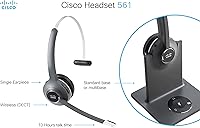
The Cisco Headset 561 Wireless On-Ear DECT Headset is the right call for organizations that have already committed to the Cisco Unified Communications ecosystem and need a headset that slots into it without friction. IT administrators managing fleet deployments will appreciate the centralized control through Webex Control Hub — pushing firmware updates or pulling usage data remotely across dozens of units saves genuine time. Call center agents and help desk workers handling back-to-back calls across long shifts benefit directly from the 300-foot DECT range, since it removes the cord constraint that limits movement around a workstation or office floor. The single on-ear design suits anyone who needs to stay aware of ambient activity — a warehouse supervisor taking calls while monitoring a floor, or a front desk worker staying tuned in to their environment. If wireless reliability, signal security, and native Cisco integration are the priorities, this enterprise headset delivers on all three.
Not suitable for:

The Cisco Headset 561 Wireless On-Ear DECT Headset is a poor fit for anyone operating outside the Cisco ecosystem — and that point deserves to be made plainly before a purchase decision. If your organization runs Microsoft Teams, Zoom, or any non-Cisco UC platform, you will lose access to most of the features that justify the price, leaving you with a functional but overpriced wireless headset. Buyers looking for rich stereo audio for music, media, or immersive video calls will also find this enterprise headset underwhelming — it is tuned for voice clarity, not broad audio performance. The single on-ear format means prolonged wear creates pressure on one ear only, making it a tough choice for anyone with sensitivity to clamping discomfort during 8-hour shifts. Individual buyers or small businesses without a managed IT environment will also struggle to extract value from the enterprise management features and may find comparable DECT audio quality available at meaningfully lower cost elsewhere.
Specifications

  • Wireless Technology: The headset uses DECT 6.0, a dedicated wireless standard operating on the 1.9 GHz frequency band for secure, interference-resistant audio transmission.
  • Wireless Range: The headset maintains a stable connection up to 300 feet from the standard base station under typical office conditions.
  • Battery Life: A fully charged lithium-ion battery provides up to 9 hours of continuous talk time before requiring a return to the base station.
  • Battery Type: One lithium-ion rechargeable battery is built in and included; no separate battery purchase is required.
  • Ear Placement: The headset uses a single on-ear design, covering one ear only and leaving the other ear open to ambient sound.
  • Driver Type: Audio is delivered through a dynamic driver tuned for voice clarity rather than broadband music reproduction.
  • Noise Control: Passive sound isolation is achieved through the physical ear cup design and leather cushion material; there is no active noise cancellation.
  • Connectivity: The base station connects to devices via USB-A and RJ-9/AUX ports, covering both IP desk phones and computer-based softphone clients.
  • Compatible Platforms: Optimized for Cisco Jabber, Cisco Webex, and Cisco IP Phones including the 6851, 6871, 6900, 7800, and 8800 series models.
  • Control Method: On-ear touch controls allow the user to manage calls, toggle mute, and adjust volume directly from the headset without interacting with a phone or computer.
  • Ear Cushion Material: The ear cushion is made from leather, designed for comfort during extended daily wear sessions.
  • Included Components: The box includes the wireless DECT headset, a standard base station, connecting cables, and a power supply unit.
  • Item Weight: The complete unit weighs 1 pound, keeping the headset lightweight enough for all-day wear without significant neck or ear fatigue.
  • Dimensions: The packaged product measures 8.1 x 7.5 x 4.5 inches, reflecting the combined footprint of the headset and its base station.
  • Warranty: Cisco provides a 2-year limited liability warranty covering manufacturing defects for buyers in the US and Canada.
  • UC Management: The headset supports remote deployment, firmware updates, and diagnostics through Cisco Unified Communications Manager and Cisco Webex Control Hub.
  • Base Station Type: The included standard base station connects to a single device; it does not natively support simultaneous pairing with multiple devices.
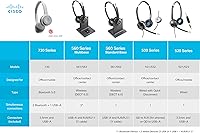
  • Series: This model belongs to the Cisco Headset 560 Series, which spans both single-ear and dual-ear variants with standard and multi-base options.

Related Reviews
Yealink WH67 Wireless DECT Headset
85%
91%
Comfort for Long Calls
88%
Audio Quality (Call Clarity)
85%
Noise-Canceling Microphone
68%
Bluetooth Connectivity
80%
Battery Life
More
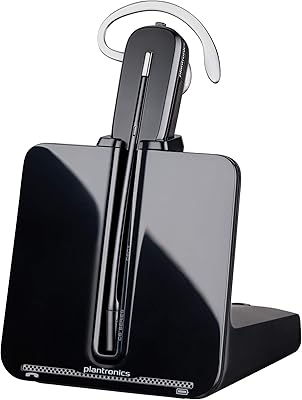
Plantronics CS540 Wireless DECT Headset
85%
92%
Comfort & Wearability
91%
Range & Connectivity
89%
Noise Cancellation
88%
Ease of Setup
85%
Battery Life
More
Yealink WH63 DECT Wireless Office Headset
75%
88%
Call Audio Clarity
76%
Microphone Noise Cancellation
91%
Wireless Range & Reliability
69%
Battery Life
73%
Comfort & Wearing Styles
More
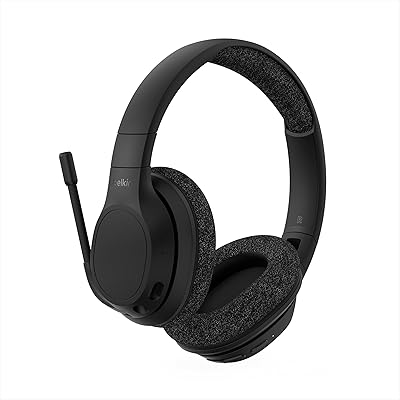
Belkin SoundForm Adapt Wireless Over-Ear Headset
88%
94%
Battery Life
89%
Comfort for Extended Use
85%
Sound Quality
88%
Noise Cancellation Effectiveness
77%
Bluetooth Connectivity
More
Yealink WH62 Dual UC DECT Wireless Headset
82%
92%
Wireless Range & Stability
88%
Call Audio Clarity
79%
Microphone Noise Cancellation
81%
Comfort & Wearability
87%
Battery Life
More
Plantronics Savi 8220 Wireless DECT Office Headset
81%
93%
Wireless Connectivity Stability
91%
Microphone Clarity
88%
Active Noise Cancellation
89%
Battery Life
84%
Multi-Device Switching
More
Belkin SoundForm Inspire Wireless Over-Ear Headset for Kids
85%
88%
Comfort
91%
Battery Life
82%
Audio Quality
94%
Volume Limit Safety
80%
Build Quality
More
Yealink WH64 Hybrid Mono Wireless Headset
82%
88%
Call Audio Clarity
91%
Wireless Range (DECT)
93%
Battery Life
86%
Charging Speed
83%
Multi-Device Connectivity
More
Dytole DY107
Dytole DY107
82%
93%
Battery Life
88%
Microphone Quality
74%
Comfort & Fit
91%
Sound Quality for Calls
86%
Connectivity & Range
More
Delton 95X Wireless Headset
77%
91%
Battery Life
68%
Microphone Quality
84%
Comfort & Fit
76%
Call Performance
71%
Connectivity & Pairing
More

FAQ

Technically it may connect via USB-A, but it is not certified for Teams or Zoom and you will lose all the management and integration features that justify the price. If your organization runs on Teams or Zoom rather than Cisco Webex or Jabber, a Teams-certified or Zoom-certified headset will serve you far better and likely cost less.

It can physically connect to non-Cisco phones that have an RJ-9 or USB-A port, but compatibility is not guaranteed and call control features like mute and volume control may not function correctly. Cisco designed this headset for its own hardware ecosystem, so using it with third-party desk phones is at your own risk.

DECT 6.0 operates on a dedicated 1.9 GHz band that is not shared with Wi-Fi routers, smartphones, or other Bluetooth devices, which means it holds up much more reliably in environments packed with wireless signals. In a typical open-plan office, Bluetooth headsets frequently drop or degrade when competing with dozens of active connections nearby, while DECT stays stable. For call-heavy roles, that consistency genuinely matters.

Yes — the base station connects to your laptop via USB-A, and once paired, the Cisco 561 works with the Webex desktop client. Just keep the base station plugged into your laptop and within range. If your laptop only has USB-C ports, you will need an adapter since USB-C is not natively supported.

Cisco does not publish an official fast-charge specification, but most users report a full recharge taking roughly 2 hours when docked on the base station. Overnight docking between shifts is the most practical approach for ensuring a full charge at the start of each workday.

Cisco does offer replacement parts and accessories for the 560 Series through its enterprise channels, though availability through standard retail sources can be inconsistent. If you are managing a larger deployment, it is worth confirming replacement cushion availability with your Cisco reseller before committing to the purchase.

Yes, and this is one of the strongest practical advantages of this enterprise headset. Through Cisco Unified Communications Manager and Webex Control Hub, IT teams can push firmware updates, adjust settings, run diagnostics, and track usage data across entire fleets of devices without ever handling them individually. For large-scale deployments, that capability alone can justify the premium over unmanaged alternatives.

It depends on the individual. The leather cushion and lightweight build work in its favor for the first few hours, but a notable portion of long-term users report ear and temple discomfort from clamping pressure after three to four hours of continuous wear. If you are particularly sensitive to on-ear pressure, trying it before committing — or checking your organization's return policy — is a sensible precaution.

The standard base station included in this package connects to one device at a time. If you need to switch between a Cisco IP phone and a laptop softphone client regularly, you would need to look at the Cisco 560 Series multi-base option, which is sold separately and supports connections to multiple devices simultaneously.

The audio will cut out once you exceed the reliable range threshold, and the call will typically be interrupted rather than gracefully handed off. In practice, the 300-foot figure is a best-case estimate in open space — concrete walls, elevator banks, and dense office partitions can reduce effective range noticeably, so real-world performance in complex building layouts may be somewhat shorter.