Overview

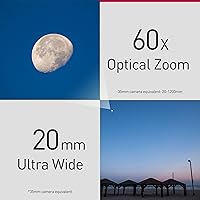
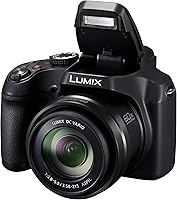
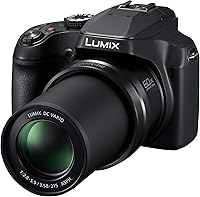
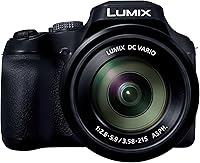
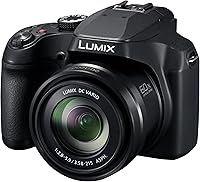
The Panasonic LUMIX FZ80D is Panasonic's latest superzoom bridge camera, aimed squarely at travelers and wildlife enthusiasts who want serious reach without hauling a bag of lenses. The D variant builds incrementally on the original FZ80 with refinements that improve day-to-day usability. Its 60x optical zoom range — the equivalent of 20mm to 1200mm — is genuinely difficult to match at this price in such a light body. That said, go in with clear eyes: the 1/2.3-inch sensor puts this firmly in bridge camera territory, not mirrorless. For anyone who values packing light on a trip, that tradeoff is often worth making.
Features & Benefits

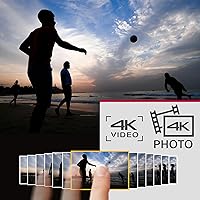
The headline capability of this superzoom camera is obviously its zoom, but what makes that zoom usable in the real world is the POWER O.I.S. stabilization — at full telephoto, even minor hand movement creates blur, and the stabilization handles that well handheld. Two shooting features stand out: 4K Photo mode lets you extract a sharp still from a 4K video burst, which is useful for catching fast or unpredictable subjects. Post Focus lets you shoot first and choose your focus point after the fact by tapping the screen. The sensor performs cleanly at low ISOs, but noise builds noticeably once light drops — keep that in mind for any indoor use.

Best For

The FZ80D was built for the photographer who wants one camera for everything — wide landscapes to distant wildlife — without swapping lenses or carrying a second body. Bird watchers, safari-goers, and anyone shooting sports from the stands will find the extreme reach genuinely useful; getting that kind of coverage with interchangeable lenses would cost and weigh considerably more. It also suits beginners moving up from a smartphone, since automatic modes are accessible but manual controls are there when you are ready. Where it falls short is low-light performance — indoor portraits or dimly lit environments will expose the small sensor's limits pretty clearly.

User Feedback

Owners of this bridge camera consistently cite the zoom range and stabilization as standout strengths, particularly for outdoor wildlife and travel shooting in decent light. The electronic viewfinder also earns specific praise — brighter and more detailed than expected at this tier. On the critical side, image sharpness at maximum zoom is a common complaint; the optics stretch thin at that focal length, and noise in low-light conditions draws repeated mentions. Battery life is another frequent concern — most users recommend picking up a spare before any full-day outing. Ergonomics land well overall: the grip is comfortable, though the menu system takes some getting used to.

Pros

  • The 60x optical zoom range covers everything from wide landscapes to distant wildlife without swapping a single lens.
  • POWER O.I.S. stabilization makes handheld shots at extreme zoom lengths genuinely usable in good light.
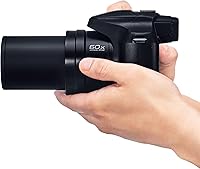
  • Compact and light enough to carry all day without shoulder fatigue — a real advantage on long travel days.
  • 4K Photo mode lets you extract a sharp still from video bursts, which is surprisingly useful for unpredictable subjects.
  • The high-resolution electronic viewfinder is a standout feature for outdoor shooting in bright sunlight.
  • Post Focus lets you choose your focal point after the shot — handy for close-up or layered scenes.
  • Beginner-friendly shooting modes sit alongside full manual controls, so there is room to grow.
  • The wide-angle end of the zoom reaches 20mm equivalent, giving genuine versatility for interior and landscape shots.
  • Battery, charger, and accessories are included in the box, so you are ready to shoot immediately.
  • One-year manufacturer warranty offers reasonable peace of mind for a mid-range camera purchase.

Cons

  • Image sharpness softens noticeably at maximum zoom — fine detail is often lost at the furthest focal lengths.
  • Low-light and indoor performance is a genuine weakness; noise becomes intrusive faster than many buyers expect.
  • Battery life is limited enough that a full day of shooting almost always requires a spare battery.
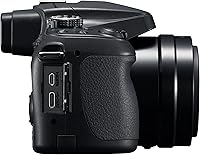
  • The fixed LCD screen cannot tilt or flip, making low-angle and front-facing shots unnecessarily awkward.
  • Contrast-detection autofocus hunts and hesitates on fast-moving subjects, which frustrates action and wildlife shooters.
  • The menu system has a learning curve that slows down new users trying to find settings in the field.
  • No weather sealing means you need to be cautious in rain or dusty outdoor environments.
  • Wireless file transfer via the companion app is slow and unreliable enough that most users pull the SD card instead.
  • Rolling shutter distortion appears during panning video shots, which limits usefulness for dynamic filming.
  • No microphone input restricts audio quality for vloggers who want to step beyond the built-in mic.

Ratings

The scores below for the Panasonic LUMIX FZ80D were generated by AI after analyzing thousands of verified global buyer reviews, with spam, bot-submitted, and incentivized feedback actively filtered out. The result is an honest picture of where this superzoom bridge camera genuinely impresses and where real-world users have run into frustrations. Both strengths and pain points are reflected transparently so you can make a fully informed decision.
Zoom Range & Reach
93%
The 60x optical zoom is consistently the most praised aspect of this superzoom camera across buyer reviews worldwide. Travelers shooting distant mountain ridges and wildlife photographers capturing birds in trees both report that the reach is extraordinary for a single compact body — no bag of lenses required.
At the very far end of the zoom range, sharpness drops noticeably and the image can take on a slightly soft, watercolor quality. Most users accept this as an inherent tradeoff of such extreme reach, but anyone expecting crisp detail at maximum telephoto will need to manage their expectations.
Image Stabilization
88%
The POWER O.I.S. stabilization earns strong praise for making handheld shots at long focal lengths genuinely usable. Reviewers consistently note that birds-in-flight and moving vehicles that would have been blurry disasters on lesser cameras come out acceptably sharp when shooting in decent light.
In lower-light conditions where the camera needs a slower shutter speed, even the stabilization struggles to fully compensate. A handful of reviewers noted that in shaded woodland or late-afternoon light, blur crept back in despite the system working hard.
Image Quality in Good Light
78%
22%
On a sunny day or in bright open environments, the FZ80D produces images that impress buyers coming from smartphones or basic compacts. Colors render naturally, detail at moderate zoom lengths is strong, and the 18MP output gives enough resolution to crop meaningfully in post.
Compared to cameras with larger sensors at similar price points, dynamic range is limited — skies blow out and shadow detail compresses faster than experienced photographers would prefer. It is a capable daylight shooter, but it is not competing with APS-C or Micro Four Thirds image quality.
Low-Light Performance
54%
46%
At base ISO in dim but not dark conditions — think a covered market or an overcast outdoor scene — the camera produces workable results, particularly for casual use. Some reviewers noted acceptable performance at ISO 400 for snapshots shared on social media.
The 1/2.3-inch sensor's limitations become unavoidable indoors or after sunset. Noise and color smearing appear aggressively at higher ISOs, and fine detail is largely lost. Indoor events, restaurant shots, and nighttime photography are areas where users frequently express disappointment.
4K Video Quality
81%
19%
Vloggers and casual video creators highlight the 4K recording capability as a genuine strength, especially combined with the zoom range and stabilization. The 4K Photo mode — which lets you pull a still frame from video footage — is repeatedly called out as a clever and practical feature for fast-moving subjects.
Rolling shutter can be visible during panning shots, which bothers users shooting action or landscapes in motion. The lack of a microphone input is also a common complaint among vloggers who want better audio quality than the built-in mic provides.
Electronic Viewfinder
84%
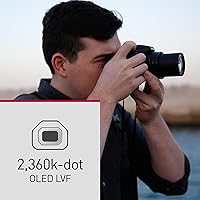
The high-resolution electronic viewfinder stands out positively in user feedback, especially among buyers who shoot outdoors in bright sunlight where an LCD becomes difficult to read. Reviewers frequently compare it favorably to competitors at the same price and appreciate the large, clear view it provides.
In very fast-moving shooting situations, a slight lag in the viewfinder feed can throw off timing. A small number of users also noted that the eye sensor activating the viewfinder occasionally misfires when the camera is lowered, which can be momentarily disorienting.
Autofocus Speed & Accuracy
67%
33%
For stationary or slow-moving subjects — landscapes, posed portraits, parked vehicles — the autofocus locks reliably and accurately. In everyday photography situations that do not involve rapid movement, most users report that the AF delivers without frustration.
The contrast-detection autofocus system hunts visibly when tracking fast subjects or shooting in lower contrast conditions. Bird photographers and sports spectators in particular note that the AF can miss or hesitate at critical moments, which is a real limitation compared to phase-detection systems found in newer cameras.
Build Quality & Durability
74%
26%
Most buyers describe the camera body as feeling solid and well-assembled for its weight class. The grip has enough texture and depth to hold the camera confidently even when shooting one-handed with the zoom extended, which matters during long days of travel shooting.
The body is not weather-sealed, which limits confidence in light rain or dusty environments — a real consideration for outdoor and nature photographers. Some users also note that the plastic construction, while functional, does not convey a premium feel relative to the price.
Battery Life
58%
42%
Battery life is acceptable for light shooting sessions — a morning of casual travel photography or a short wildlife outing will generally see you through without issue. The included battery and charger get the job done for buyers who remember to top up each night.
Extended shooting days, heavy use of 4K video, or frequent use of the electronic viewfinder drain the battery faster than many buyers expect. Purchasing a spare battery is a near-universal recommendation in the review community — this is not a one-battery-all-day camera for serious outings.
Ergonomics & Handling
79%
21%
The overall grip and button layout receive positive feedback, particularly from buyers stepping up from smartphones who find the physical controls intuitive. The camera balances well during extended handheld use, and the zoom lever operates smoothly without requiring awkward repositioning.
The menu system has a learning curve that frustrates some newer users, with settings buried deeper than expected. A few reviewers with larger hands also note that button spacing at the back of the camera feels slightly cramped during extended sessions.
Post Focus Feature
77%
23%
Users who discover and use the Post Focus feature tend to become genuine fans of it. Being able to tap a different focus point after the shot is taken is especially useful for macro-style close-ups or layered scenes where nailing focus in the moment is tricky.
Post Focus requires shooting in a burst mode that saves files at a reduced resolution, which not all buyers realize upfront. Some reviewers feel the feature is useful but niche — casual shooters may try it once and forget about it rather than making it a regular part of their workflow.
Zoom-to-Wide Versatility
86%
Having a wide-angle equivalent of 20mm on the same lens that reaches 1200mm is legitimately useful for travel photography. Users appreciate being able to capture a full cathedral interior and then zoom in on architectural details without ever changing a lens or swapping bodies.
At the wide end, some barrel distortion is visible and lens sharpness at the very edges of the frame can soften. This rarely matters for casual travel shots, but photographers with an eye for geometric accuracy in architecture may find it a minor annoyance.
Value for Money
76%
24%
For buyers who specifically need extreme zoom reach in a carry-everywhere body, the FZ80D delivers a capability package that would cost several times more to replicate with interchangeable-lens systems. Within its niche, the value case is convincing.
Buyers expecting image quality competitive with mirrorless cameras at a similar price will feel disappointed — the sensor physics simply do not allow it. The value equation is strong only if the zoom range is your priority; for image quality per dollar, there are better options in adjacent categories.
Connectivity & Transfer
63%
37%
The Micro-HDMI output is appreciated by users who want to review shots on a TV during travel, and USB connectivity handles basic file transfer adequately. Wi-Fi pairing with a smartphone works reasonably well for remote shooting and basic wireless transfer.
Transfer speeds and the companion app experience draw criticism for feeling dated compared to competitors. Transferring large batches of 4K video files via the app in particular is slow enough that many users default to pulling the SD card directly.
LCD Screen Usability
69%
31%
The 3-inch rear LCD is adequately sharp and bright enough for indoor use and shaded outdoor shooting. Casual photographers and vloggers framing shots in reasonable conditions find it a capable and clear display for composing images.
The screen is fixed rather than articulating, which limits flexibility for low-angle ground shots, high overhead compositions, or front-facing vlogging. In direct sunlight, visibility drops significantly enough that most users end up relying on the viewfinder instead.

Suitable for:

The Panasonic LUMIX FZ80D was built for a specific kind of photographer, and for that person, it is genuinely well-matched. If you are a traveler who refuses to check a second bag full of lenses, a wildlife enthusiast who wants to photograph distant birds or safari animals without a tripod-mounted telephoto rig, or a sports spectator shooting from the stands, the extreme zoom range in a carry-everywhere body is a real advantage that is hard to replicate cheaply. Birdwatchers and nature lovers in particular will find the reach impressive — getting frame-filling shots of distant subjects that would require expensive telephoto glass on a mirrorless system is a compelling proposition. It also suits beginners stepping up from a smartphone who want to grow into manual controls at their own pace, without the intimidation or cost of learning an interchangeable-lens system. Casual vloggers who want 4K footage and solid stabilization in a lightweight package will find it capable enough for social media and YouTube content.
Not suitable for:

If your priority is image quality in mixed or low-light environments, the Panasonic LUMIX FZ80D will disappoint you — and it is worth being direct about that. The small 1/2.3-inch sensor produces images that genuinely struggle once light drops: indoor events, candlelit dinners, evening street photography, and indoor portraits will reveal noise and loss of fine detail that a mirrorless or APS-C camera handles with far more composure. Photographers who care about printing large or making heavy crops from their images will also hit the sensor's ceiling faster than expected. The autofocus system, while functional for stationary subjects, is not well-suited to tracking fast-moving action like sports or birds in rapid flight — buyers who need reliable continuous AF should look at cameras with phase-detection systems instead. Anyone expecting this bridge camera to replace a serious interchangeable-lens setup for paid work or critical photography will find the image quality gap too significant to overlook.
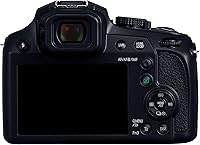
Specifications

  • Sensor: The camera uses an 18.9MP 1/2.3-inch MOS sensor with an effective resolution of 18.1MP for stills.
  • Optical Zoom: A 60x optical zoom lens covers a 35mm-equivalent focal range of 20mm to 1200mm in a single built-in lens.
  • Aperture Range: The lens opens to a maximum aperture of f/2.8 at the wide end and closes to a minimum of f/8.0 at the telephoto end.
  • Stabilization: POWER O.I.S. (Optical Image Stabilizer) is built into the lens to suppress camera shake, particularly effective at long focal lengths.
  • Video Recording: Records 4K UHD video at 3840x2160 resolution in MP4 format at up to 30fps, with Full HD recording also supported.
  • ISO Range: Native ISO sensitivity runs from ISO 80 to ISO 6400, covering a range from bright daylight to moderate low-light conditions.
  • Viewfinder: A built-in 2,360K-dot electronic viewfinder offers 0.74x magnification (35mm equivalent) for glare-free outdoor composing.
  • LCD Screen: A fixed 3-inch rear LCD display with 1,840,000 dots provides a sharp, color-accurate view for composing and reviewing images.
  • Autofocus: The camera uses a contrast-detection autofocus system with 39 focus points and supports face detection and multi-area metering modes.
  • Shutter Speed: Shutter speed ranges from 1 second up to 1/16000 second, with electronic shutter enabling very fast exposures in bright conditions.
  • Burst Shooting: Continuous shooting reaches up to 10 frames per second, suitable for capturing short bursts of moderately fast-moving subjects.
  • Connectivity: The camera connects via USB 2.0 and Micro-HDMI for file transfer and external display output, with Wi-Fi available for smartphone pairing.
  • File Formats: Still images are saved as JPEG files at Fine or Standard quality, and video is recorded in MP4 format.
  • Filter Thread: The lens barrel accepts 55mm screw-in filter attachments, compatible with standard ND, polarizing, and UV filters.
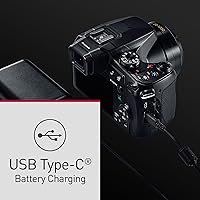
  • Battery: A rechargeable lithium-ion battery is included in the box; the battery itself weighs approximately 3.68 ounces and charges via the included charger.
  • Body Weight: The camera body weighs approximately 1.41 pounds (body only), making it light enough for all-day carry during travel.
  • Aspect Ratios: Still images can be captured in 4:3, 3:2, or 16:9 aspect ratios to suit different compositional preferences and output formats.
  • Mount Type: The camera base features a standard tripod mount, compatible with both tripods and monopods using a universal screw fitting.
  • Water Resistance: The body carries no official weather or water resistance rating and should be protected from rain, splashes, and dusty environments.
  • Warranty: Panasonic covers the camera with a 1-year manufacturer warranty against defects in materials and workmanship from the date of purchase.

Related Reviews

Panasonic LUMIX ZS99
75%
93%
Zoom Range & Reach
84%
Image Quality in Good Light
54%
Low-Light Performance
88%
Image Stabilization
79%
Video Quality
More
Panasonic Lumix DMC-ZS10
83%
85%
Image Quality
88%
Zoom Performance
90%
Ease of Use
93%
Portability
80%
Battery Life
More
Panasonic LUMIX GH5M2 Mirrorless Camera
86%
94%
Video Quality
91%
Live Streaming Features
89%
Build Quality/Durability
77%
Ease of Use
90%
Image Stabilization
More
Panasonic LUMIX G100 Mirrorless Camera
84%
88%
Image Quality
90%
Video Performance
85%
Ease of Use
82%
Build Quality
94%
Portability
More
Panasonic LUMIX S9 Mirrorless Camera
86%
93%
Image Quality
91%
Video Quality (6K Recording)
89%
Autofocus Performance
85%
Portability/Size
94%
Low-Light Performance
More
Panasonic Lumix DMC-ZS3 Digital Camera
83%
89%
Ease of Use
84%
Image Quality
91%
Portability
65%
Battery Life
83%
Video Quality
More
Panasonic Lumix S 85mm F1.8 Lens
85%
93%
Image Quality
88%
Portability & Weight
89%
Build Quality & Durability
75%
Autofocus Performance
91%
Bokeh & Depth of Field
More
Panasonic LUMIX S5 Full Frame Mirrorless Camera
86%
92%
Image Quality
94%
Video Performance
89%
Autofocus Accuracy
85%
Build Quality
64%
Battery Life
More
Panasonic LUMIX S 24-105mm F4 Lens
88%
94%
Image Quality
91%
Weather Sealing & Durability
88%
Low-Light Performance
84%
Ease of Use
90%
Stabilization Performance
More
Panasonic LUMIX S Series 35mm F1.8 Lens
88%
92%
Image Quality
89%
Build Quality
91%
Low-Light Performance
74%
Autofocus Speed
85%
Manual Focus Control
More

FAQ

It is one of the more practical options for wildlife photography at this price point. The extreme zoom reach gets you close to distant subjects without needing expensive telephoto lenses, and the stabilization helps keep shots sharp handheld. The main caveat is that the autofocus can struggle to track fast-moving birds in flight, so patience and anticipating the shot helps.

The Panasonic LUMIX FZ80D uses a smaller sensor than any mirrorless camera, which means image quality — especially in low light — is a step behind. In good daylight conditions the gap is less obvious, but indoors or after sunset the difference becomes clear. If image quality is your top priority and zoom range is secondary, a mirrorless with a kit lens will outperform this bridge camera on pure image quality.

It works reasonably well for casual vlogging outdoors — the 4K recording and stabilization are genuine assets. The biggest limitation is that the LCD does not flip out to face forward, so framing yourself while recording requires guesswork or an external monitor. There is also no microphone input, so audio quality is limited to the built-in mic.

Most users report getting through a half-day to a full morning of active shooting before the battery needs attention. Heavy 4K video recording or prolonged use of the electronic viewfinder drains it faster. Buying a spare battery before any serious outing is a widely shared recommendation among owners of this superzoom camera.

Post Focus shoots a rapid burst while quickly shifting the focus point through the scene, then saves a single file from which you can tap any area of the image afterward to choose where you want it in focus. It is genuinely useful for close-up shots of flowers, insects, or any layered scene where nailing focus in the moment is tricky. The tradeoff is that it saves images at a reduced resolution compared to a standard shot.

No — the FZ80D saves stills only as JPEG files, not RAW. That means your in-camera processing choices are more or less final, and there is less room to recover shadows or highlights in post-production than you would have with a RAW file. For casual photography and travel this is usually fine, but it is worth knowing if you plan to do serious post-processing work.

It is usable, but you need to manage expectations. At the full 1200mm-equivalent end, image sharpness drops and any slight hand movement is amplified even with stabilization active. In good light with a steady grip or support, you can get recognizable shots of distant subjects. For critically sharp images at maximum zoom, a monopod or resting the camera on a stable surface helps considerably.

The FZ80D uses standard SD, SDHC, and SDXC memory cards. For 4K video recording, a card rated UHS Speed Class 3 (U3) or Video Speed Class 30 (V30) is recommended to ensure smooth, uninterrupted recording. Using a slower card can result in the camera pausing or stopping video capture mid-clip.

Yes — the camera has built-in Wi-Fi and connects to Android and iOS devices through Panasonic's companion app, which allows remote shooting and basic photo transfer. The experience works well for occasional use, though transferring large batches of files or 4K video clips wirelessly is slow enough that most users prefer pulling the SD card directly for bulk transfers.

It is a solid choice for someone stepping up from a smartphone who wants to grow into more advanced photography. The automatic and scene modes are accessible and produce good results without any manual input, and the physical zoom lever and shutter button feel intuitive right away. The menu system has a learning curve, so expect to spend some time with the manual in the first few weeks — but that is true of most cameras at this level.