Overview

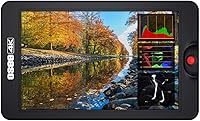
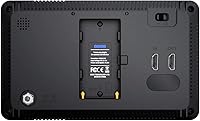
The Osee T7 7-inch Field Monitor occupies a well-defined spot in the market — capable enough for working indie DPs and on-set camera operators, but without the brand recognition of Atomos or SmallHD. Osee is a younger player, and that matters when you're deciding whether to trust a piece of gear on a paying job. What earns attention here is the 3000-nit brightness, a figure that genuinely separates this 7-inch monitor from the crowded field of 500 to 1000-nit alternatives. At 438g, the aluminum-reinforced body stays light without feeling disposable. The included ball head, D-tap cable, and AC adapter aren't afterthoughts — they're the kind of accessories that actually show up on a real shoot.

Features & Benefits

That bright panel is the obvious lead — shoot under harsh midday sun and you can actually read the image without cupping your hands around the screen. The 1920×1200 resolution on a 16:10 aspect ratio gives you slightly more vertical viewing area than a typical 16:9 panel, which is a small but real advantage when checking framing. LOG shooters get a genuinely useful LUT workflow: load custom 3D LUTs via SD card and preview your grade live on set. The scene preset system lets you build up to eight monitoring layouts and switch between them with a single joystick nudge — practical when your shooting conditions change quickly. Dual power via NP-F battery or DC-in keeps the setup flexible across different production environments.

Best For

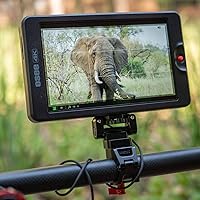
This field monitor is a natural fit for outdoor shooters — wedding videographers, documentary operators, and solo creators who deal with unpredictable light and need to trust what they see on screen. It also works well for anyone shooting LOG who wants real-time LUT preview without bolting another device onto the rig. DSLR and mirrorless users upgrading from a camera's built-in screen will notice an immediate improvement in their ability to judge focus and exposure with confidence. If portability matters but you don't want to sacrifice monitoring depth, the Osee T7 handles that trade-off well. The accessories in the box mean you can mount it and start shooting without an extra parts order.

User Feedback

With roughly 95 reviews sitting at a 4.2-star average, this 7-inch monitor is still accumulating its track record, but the pattern in early feedback is clear. Outdoor visibility and factory calibration come up repeatedly as genuine strengths — buyers frequently note that the panel arrived accurate enough to trust without adjustment. The joystick interface earns consistent praise for being intuitive under pressure. The honest criticisms are worth flagging: the glossy surface still catches reflections at steep angles, and the HDMI 1.4a input puts a ceiling on certain high-frame-rate pipelines. A handful of users find the plastic rear housing a step below what the front panel quality implies. Against Atomos and SmallHD alternatives in comparable use cases, most reviewers land on solid value.

Pros

  • 3000-nit brightness delivers genuinely usable outdoor performance, not just a spec-sheet claim.
  • Factory calibration is consistently praised — most buyers report accurate color straight out of the box.
  • The single-joystick interface keeps operation fast and manageable, even when wearing gloves on a cold shoot.
  • Scene presets let you configure up to 8 monitoring layouts and switch them instantly as conditions change.
  • Custom 3D LUT support via SD card brings real LOG-to-grade preview without extra hardware.
  • At 438g, this field monitor adds minimal weight to a handheld or shoulder rig.
  • The included ball head, D-tap cable, and AC adapter cover the accessories most shooters actually need.
  • Dual NP-F battery and DC-in power options give meaningful flexibility across run-and-gun and studio setups.
  • The 16:10 aspect ratio provides slightly more vertical frame real estate than a standard 16:9 panel.
  • At its price point, the monitoring toolset depth competes credibly with pricier alternatives from established brands.

Cons

  • HDMI 1.4a limits compatibility with high-frame-rate or advanced signal workflows from newer cameras.
  • The glossy screen surface still catches reflections at steep angles despite the high brightness.
  • Osee is a younger brand with a shorter track record and less community support than Atomos or SmallHD.
  • The plastic rear housing feels noticeably cheaper compared to the quality of the front panel and display.
  • With roughly 95 reviews, there is a smaller pool of long-term user data to draw confidence from.
  • No sun hood is included in the box, which some competing monitors at a similar price do provide.
  • The fan, while adjustable, may be audible in quiet recording environments if not managed carefully.
  • Firmware update history and long-term software support from Osee remain less documented than legacy brands.

Ratings

The following scores for the Osee T7 7-inch Field Monitor were generated by our AI review engine after analyzing verified buyer feedback from global sources, with spam, bot-submitted, and incentivized reviews actively filtered out. Ratings reflect the genuine distribution of real-world experiences — both the standout strengths and the recurring frustrations that actual shooters encounter on set. Where opinion is divided, that tension is reflected honestly in the scores.

Outdoor Visibility
93%
This is where the Osee T7 earns its strongest endorsements. Shooters working outdoor weddings, documentary runs, and event coverage consistently report that the 3000-nit panel makes the image readable in conditions where competing monitors fail outright. Many buyers note they stopped reaching for a sun hood entirely.
The glossy surface still introduces some reflection at extreme lateral angles, which a matte panel would avoid. In the harshest direct sunlight scenarios — think midday desert or snow exteriors — a sun hood remains a practical precaution even at this brightness level.
Color Accuracy
88%
Factory calibration is one of the most frequently cited positives in user reviews. Buyers note that the panel arrives with accurate, trustworthy color reproduction that holds up well against reference monitors when checking skin tones and neutral gradients on set.
A small percentage of users report slight color temperature variance between units, suggesting calibration consistency is not perfectly uniform across the production line. Those with highly critical color work may still want to verify against a calibrated reference before fully trusting it.
Monitoring Toolset
91%
The depth of built-in tools — waveform, false color, focus peaking, vectorscope, histogram, and audio meter — covers everything a working DP needs for exposure and focus decisions. Custom 3D LUT support via SD card means LOG shooters can preview a meaningful grade on set without any additional hardware.
Navigation through the full toolset via a single joystick can feel slow initially when accessing deeper menu layers. New users report a moderate learning curve before they can configure scenes and access tools quickly under the pressure of a live shoot.
Scene Preset System
84%
The ability to store up to 8 fully configured monitoring scenes and switch between them instantly is a genuine workflow benefit on dynamic sets. Shooters who move between interior and exterior setups, or between handheld and tripod work, find this especially useful for maintaining consistent monitoring without manual reconfiguration.
Eight scenes is sufficient for most single-operator workflows, but crews who share one monitor across multiple camera operators with different preferences may find the preset slots fill up quickly. There is no per-user profile or import/export system to manage scene configurations externally.
Build Quality
74%
26%
The front frame and overall structural rigidity benefit from an internal aluminum sheet, and most users report the monitor handling normal on-set wear — bag transport, cage mounting, occasional knocks — without issue. At 438g, the weight-to-sturdiness ratio is considered well-managed by the majority of buyers.
The plastic rear housing is the most divisive aspect of the build, with a noticeable quality gap between the front and back of the unit. Reviewers who have handled Atomos or SmallHD monitors at a similar weight frequently call out the rear shell as a compromise that feels inconsistent with the panel quality.
HDMI Connectivity
61%
39%
The HDMI 1.4a input and output cover the vast majority of DSLR and mirrorless camera connections in active use, and the pass-through functionality works reliably for routing signal to a second monitor or recorder without added complexity.
HDMI 1.4a is the most frequently cited technical limitation among serious users. Cameras that output high-frame-rate 1080p or 4K signals beyond 30fps hit a compatibility wall, and as cameras increasingly support HDMI 2.0 outputs, this ceiling will feel more restrictive over the monitor's usable lifespan.
Power Flexibility
86%
Support for Sony NP-F batteries, DC-in via the included AC adapter, and D-tap connectivity via the bundled cable covers virtually every common power scenario from studio setups to field production. Buyers running V-mount systems appreciate that D-tap integration is included in the box rather than sold separately.
The monitor does not include a battery in the box, which means NP-F users need to source cells separately before their first shoot. Power consumption at 16.2W is moderate, and smaller capacity NP-F batteries will deliver shorter runtimes than some buyers initially anticipate.
Joystick Control
79%
21%
Single-joystick navigation receives consistently positive remarks for its ergonomics during active shooting. The ability to operate the full interface without removing gloves is a practical detail that gets called out positively by shooters working in cold or wet outdoor conditions.
Compared to monitors with dedicated physical buttons for key functions, the joystick-only approach requires more deliberate input for less common settings. Some users also report that the joystick feels slightly less precise after extended use, raising questions about long-term mechanical durability.
Image Resolution
82%
18%
The 1920×1200 panel resolution on a 16:10 ratio provides noticeably sharp image reproduction for focus checking, and the additional vertical pixels compared to a standard 16:9 monitor give operators a slightly more complete view of the full frame without zooming.
For shooters primarily evaluating fine focus on very detailed subjects, a pixel-to-pixel zoom still reveals the limits of FHD resolution on a 7-inch panel. Users who have worked with higher-resolution reference monitors in a studio context will notice the difference under close inspection.
Portability
89%
At 438g without battery, this field monitor adds minimal burden to a handheld or shoulder rig, and its physical dimensions fit neatly within standard monitor arm ranges. Solo operators who carry full rigs in a backpack consistently rate the weight as a meaningful practical advantage over larger alternatives.
The included ball head adds some bulk to the overall package when packed, and the monitor's 24.7mm depth — while not unusual — means it does not sit as flush as ultra-slim alternatives when mounted on a compact mirrorless rig where depth clearance is limited.
Value for Money
83%
When buyers stack the Osee T7 against Atomos Ninja V or SmallHD monitors with comparable brightness and toolsets, the price delta is significant and frequently cited as a decisive factor. The accessories included in the box — ball head, D-tap cable, AC adapter — add further tangible value compared to bare-unit competitors.
Osee's shorter brand track record introduces a real risk calculus that established-brand monitors do not carry. For buyers on high-budget productions where equipment failure has outsized consequences, the price advantage may not fully offset the uncertainty around long-term reliability and support.
LUT Workflow
87%
Real-time 3D LUT preview via SD card is a meaningful capability that eliminates the need for a separate LUT box in the signal chain. LOG shooters using S-Log, C-Log, or V-Log profiles find the on-screen preview accurate enough to make confident exposure decisions without waiting for post.
The LUT management system requires loading files via SD card rather than over USB or a companion app, which is functional but less convenient than software-driven LUT management found on some competing monitors. Swapping LUTs on set requires physical card handling, which is a minor but real friction point.
Fan Noise
71%
29%
The adjustable fan speed gives users meaningful control over the cooling-noise trade-off, and at lower settings most shooters report it is inaudible when any meaningful ambient sound is present. Outdoor and event shooters rarely flag it as an issue in their working environments.
In quiet studio or interview environments where the monitor is positioned near a directional microphone, the fan can be picked up on sensitive recordings at higher speed settings. There is no fully silent passive mode, which is a limitation compared to fanless monitors designed for quiet sets.
Anamorphic Support
77%
23%
Six de-squeeze ratio options covering 1.33×, 1.5×, 1.66×, 1.8×, and 2× make this field monitor genuinely useful for anamorphic lens shooters who need accurate frame composition on set. The range covers the most common anamorphic adapters and dedicated lens lines in active use.
The de-squeeze preview is a monitoring aid only and does not affect the recorded signal, which is expected behavior but occasionally confuses buyers new to anamorphic workflows. Some users also note that the de-squeeze overlay can interact awkwardly with certain aspect ratio guide overlays when used simultaneously.
Brand Reliability
63%
37%
Osee has built a credible reputation within its niche, and the monitors that reach buyers appear to be well-tested — factory calibration is consistently praised and DOA reports are rare relative to the review volume. The firmware update pathway is supported and functional.
With a relatively short market history and a smaller global service network than Atomos or SmallHD, buyers in markets outside major production hubs face more uncertainty around warranty support and repair options. The limited review volume of roughly 95 ratings also means the long-term reliability picture is still forming.

Suitable for:

The Osee T7 7-inch Field Monitor was built for shooters who spend meaningful time working outdoors and have grown tired of squinting at a dim screen in bright conditions. Wedding videographers, documentary operators, and event cinematographers who deal with unpredictable or harsh natural light will get the most direct benefit from its 3000-nit panel — that level of brightness is not a marketing stretch, it is a practical difference you notice the moment you step outside. Solo operators running mirrorless or DSLR setups will also find the full monitoring toolset genuinely useful: waveform, false color, focus peaking, and histogram cover the core exposure and focus workflow without needing a second device. LOG shooters in particular will appreciate the ability to load custom 3D LUTs via SD card and preview a grade live on set, which eliminates the need for a separate LUT box on a lean rig. The included accessories and dual power support mean this monitor can go from a handheld run-and-gun setup to a studio configuration without much fuss.

Not suitable for:

Buyers who prioritize brand-assured reliability over value will likely find the Osee T7 7-inch Field Monitor a harder sell, especially if their work demands proven, widely-serviced equipment on high-stakes commercial productions. The HDMI 1.4a connection is a real ceiling — if your camera outputs high-frame-rate signals or you are working in a workflow that needs HDMI 2.0 throughput, this monitor will not keep up. The glossy panel surface is another honest limitation: while the brightness compensates in many outdoor situations, extreme-angle reflections remain a factor, and shooters who work in highly reflective environments may still want a matte-screen alternative or a sun hood on standby. Anyone expecting the same build finish front and back will notice the plastic rear housing, which feels like a cost compromise relative to the quality of the display itself. Studios or rental houses looking for a monitor with deep community support, extensive firmware history, and broad third-party accessories should probably look at more established names first.

Specifications

  • Screen Size: The panel measures 7 inches diagonally, offering a practical balance between portability and on-set visibility.
  • Resolution: Native resolution is 1920×1200 pixels, delivering full HD clarity across a 16:10 aspect ratio panel.
  • Brightness: Peak brightness is rated at 3000 nits, enabling direct-sunlight usability in most outdoor shooting conditions.
  • Contrast Ratio: The panel achieves a 1200:1 contrast ratio, supporting clear differentiation between shadow and highlight detail.
  • Color Depth: Displays up to 16.77 million colors, covering a wide enough gamut for accurate on-set color monitoring.
  • Video Input: One HDMI 1.4a input accepts signals up to 4K at 30fps, as well as standard 1080p and 720p frame rates.
  • Video Output: One HDMI 1.4a output allows the signal to be passed through to a second display or recording device.
  • Audio Output: A 3.5mm stereo headphone jack is included for direct audio monitoring from the connected camera signal.
  • Power Input: Accepts Sony NP-F series batteries via built-in slot, or external DC power between 11V and 17V; rated consumption is 16.2W.
  • Weight: The bare monitor body weighs 438g, keeping overall rig weight low for handheld and shoulder-mount configurations.
  • Dimensions: Physical dimensions measure 192.0mm × 116.3mm × 24.7mm, making it compact enough for most standard monitor mounting arms.
  • Mounting: Standard 1/4-inch threaded mounting points are located on both the top and bottom of the monitor body.
  • LUT Support: Supports built-in SDR and HDR LUTs, plus custom 3D LUT loading via SD card for real-time LOG footage preview.
  • Anamorphic: Offers six de-squeeze ratios — 1×, 1.33×, 1.5×, 1.66×, 1.8×, and 2× — to support common anamorphic lens formats.
  • Zoom Function: Provides 2× and 4× digital zoom with pan capability for detailed focus checking on any area of the frame.
  • Scene Presets: Stores up to 8 user-configurable monitoring scenes, each holding a different combination of active tools and display settings.
  • Monitoring Tools: Includes waveform, vectorscope, false color, zebra, histogram, focus peaking, audio meter, and image re-size overlays.
  • Fan: A built-in fan with adjustable rotation speed manages internal heat, which can be tuned to balance cooling and noise output.
  • In the Box: Package includes the monitor, a ball head mount, a D-tap to lockable pole DC cable, and an AC-to-DC power adapter.
  • Surface Type: The screen uses a glossy panel surface, which contributes to color vibrancy but may require repositioning in high-glare conditions.

Related Reviews
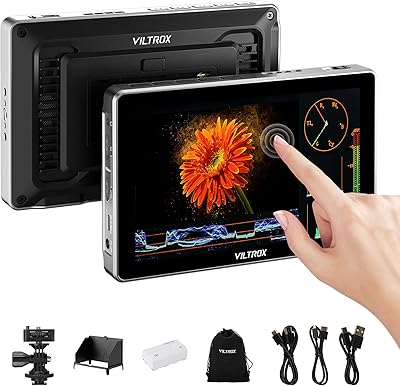
VILTROX DC-A1 7″ Camera Field Monitor
78%
93%
Outdoor Brightness
88%
Touchscreen Responsiveness
84%
Build Quality
67%
Menu & Usability
86%
3D LUT Performance
More
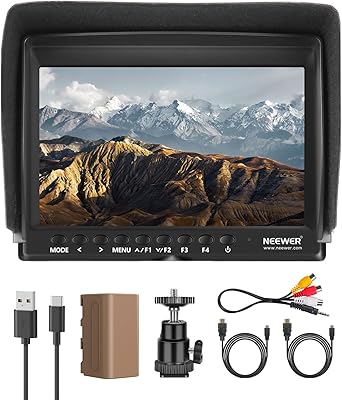
NEEWER F100 7-inch Field Monitor
78%
83%
Image Quality
66%
Outdoor Visibility
71%
Build Quality
68%
Ball Head & Mounting
78%
Battery Life
More
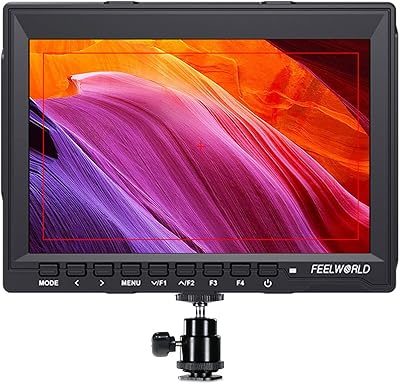
Feelworld FW759 7″ Field Monitor
72%
83%
Image Clarity
58%
Brightness & Outdoor Usability
81%
Focus Peaking Performance
89%
Portability & Form Factor
54%
Build Quality & Durability
More
VILTROX DC-L1 7-Inch Touchscreen Camera Field Monitor
87%
93%
Display Quality
89%
Portability
85%
Power Options
91%
Sunshade Effectiveness
88%
Ease of Use
More
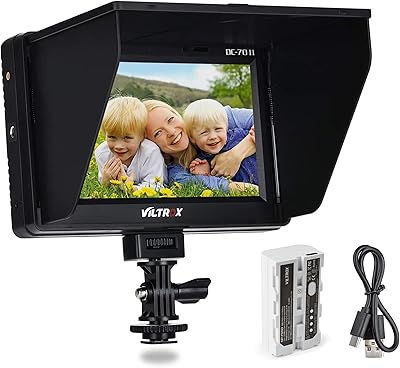
VILTROX DC-70 II 7″ Field Monitor
75%
88%
Value for Money
83%
Focus Peaking Performance
61%
Display Resolution & Sharpness
78%
Build Quality & Durability
74%
HDMI Connectivity
More
FEELWORLD FW279 7-Inch Field Monitor
77%
93%
Outdoor Brightness
88%
Panel Sharpness & Clarity
71%
Color Accuracy
67%
Build Quality & Durability
84%
Mounting Flexibility
More
Hosyond 7-inch Small Monitor
83%
92%
Portability & Size
87%
Display Quality
90%
Input Options & Connectivity
58%
Sound Quality
89%
Value for Money
More
LONCEVON 7-inch LCD Monitor
81%
88%
Portability
92%
Value for Money
75%
Display Quality
70%
Brightness
80%
Connectivity
More
LILLIPUT A7S 7″ Camera Field Monitor
84%
88%
Display Quality
91%
Portability & Weight
86%
Brightness in Outdoor Conditions
80%
Customizability of Buttons
83%
Durability & Build Quality
More
Portkeys HD7T 7″ Field Monitor
77%
91%
Outdoor Brightness
88%
Value for Money
89%
Monitoring Tool Set
67%
Touchscreen Responsiveness
72%
Panel Resolution & Clarity
More

FAQ

It genuinely holds up outdoors. At 3000 nits, the Osee T7 7-inch Field Monitor is bright enough that most shooters report not needing a sun hood in typical daylight conditions. Extreme midday sun at certain angles can still cause some wash-out on the glossy panel, but compared to monitors in the 500 to 1000-nit range, the difference is substantial and immediately noticeable.

Any camera with a standard HDMI output will work — that covers the vast majority of DSLRs, mirrorless cameras, and cinema cameras from Sony, Canon, Nikon, Fujifilm, Blackmagic, and others. The HDMI connection is version 1.4a, so if your camera outputs a signal within the supported format list (up to 4K at 30fps or 1080p at 60fps), you are good to go.

Yes. You can load custom 3D LUT files onto an SD card and insert it directly into the monitor to apply your own grade as a real-time preview overlay. This is particularly useful for LOG shooters who want to see an approximation of their final grade while on set, without needing a separate LUT box in the signal chain.

The monitor uses Sony NP-F series batteries, which slot directly into the built-in battery compartment. Runtime depends on battery capacity — a standard NP-F550 will give you roughly 1 to 1.5 hours, while a larger NP-F970 can stretch that significantly. You can also power it via the included AC adapter or a D-tap cable from a V-mount or Anton Bauer battery, which is the preferred option for longer shoots.

It is glossy, and that is worth knowing before you buy. The high brightness compensates well in most outdoor scenarios, but at sharp angles or in highly reflective environments, you will still see some glare. A number of users add a third-party sun hood as an extra precaution for critical outdoor work, even if it is not strictly necessary in typical daylight conditions.

The entire menu and monitoring tool system is controlled through a single joystick, which sounds limiting but works well in practice. You navigate menus by tilting in different directions and confirm selections by pressing in. Once you have your scene presets configured, day-to-day operation on set basically comes down to a single click to switch between layouts — it is fast enough that most users find it workable even under pressure.

Yes, the HDMI 1.4a output allows you to pass the signal through to a second device — a recorder, a second monitor, or a video switcher — while simultaneously viewing on this 7-inch monitor. Just keep in mind that both the input and output share HDMI 1.4a bandwidth, so the same format limitations apply to the downstream signal.

The front frame and screen area feel solid, reinforced with an internal aluminum sheet that adds rigidity without much weight penalty. The rear housing is plastic, which is the most common criticism from users who inspect it closely — it is not flimsy, but it does feel like a cost-saving decision relative to the front. For typical on-set handling, bag transport, and mounting on a rig, it holds up fine.

Yes, the monitor has 1/4-inch threaded mounting points on both the top and bottom, which is the standard used across virtually all camera cages, cold shoe adapters, and articulating monitor arms. The included ball head mount also gives you a flexible starting point if you want to get up and running quickly without sourcing additional mounting hardware.

The fan speed is adjustable, and at lower settings most users report it is not an issue for on-camera audio capture. If you are recording audio in a very quiet environment and the microphone is close to the monitor, it is worth testing first. For run-and-gun or outdoor shooting where ambient noise is already present, fan noise is rarely a practical concern.

Where to Buy

B&H Photo-Video-Audio
In stock $327.50