Overview

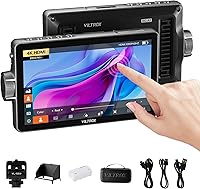
The VILTROX DC-A1 7″ Camera Field Monitor sits in an interesting spot — serious enough for professional use, priced accessibly enough that indie filmmakers and dedicated enthusiasts can justify the investment. The headline spec is 2800-nit brightness, which directly tackles one of the most frustrating realities of outdoor shooting: squinting at a washed-out screen under midday sun. A touchscreen interface at this price point is still not a given among competitors, so that inclusion adds real practical value on a busy set. VILTROX has been quietly building credibility in the camera accessories space, and this monitor reflects that upward trajectory. That said, if you need a reference-grade color panel for critical grading work, this field monitor is a production tool, not a grading display.

Features & Benefits

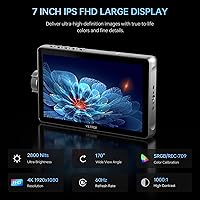
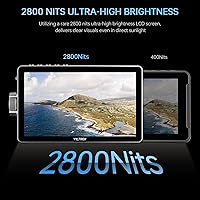
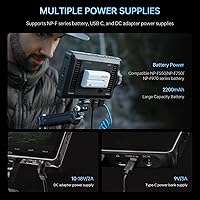
The 2800-nit IPS panel is the obvious centerpiece, and in practice it means you can actually trust what you are seeing in bright outdoor environments rather than guessing. The 170-degree viewing angle also matters on a real set, where a camera operator and a director might both be checking the frame from different positions. The HDMI 2.0 loop-out is quietly one of the most useful features here — feed signal to a client monitor without any additional splitters. For Log shooters, 3D LUT import via USB drive lets you monitor a graded image in real time, changing how you expose and light on location. The resolution is 1080p, worth noting for anyone expecting pixel-for-pixel 4K accuracy. Power options include NP-F batteries, DC input, and USB-C charging — flexible enough for most field situations.

Best For

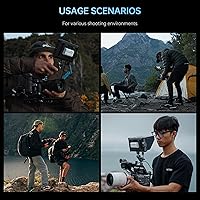
This camera monitor makes the most sense for solo run-and-gun filmmakers who need reliable outdoor visibility without hauling heavy gear. Documentary shooters, event videographers, and wedding cinematographers working in changing light will appreciate the brightness headroom. Directors of photography who regularly work with a director or client on set will find the HDMI loop-out genuinely useful — it removes a common logistical headache. Log-format shooters across Sony, Canon, Fuji, and other systems can use the LUT import to keep their monitoring workflow tight. It is also a strong pick for photographers doing tethered or live-view work who want a large, readable screen. If you are a colorist seeking a reference display, keep looking — but for production monitoring, the DC-A1 delivers.

User Feedback

Since the DC-A1 launched in mid-2025, the review pool is still growing, so treat early impressions as a directional signal rather than a settled verdict. That caveat aside, early buyers consistently highlight the outdoor brightness performance as living up to its spec, with several noting they can finally work without a separate canopy or shade. Touchscreen responsiveness also draws consistent praise. On the critical side, some users mention a learning curve with the menu system, and a few have flagged cooling fan noise as occasionally audible in quieter environments. Battery life on the included NP-F550 is considered adequate for shorter shoots, but frequent users recommend carrying a spare. Overall sentiment leans positive for this price tier.

Pros

  • Outdoor brightness is genuinely exceptional — 2800 nits holds up in direct midday sunlight without a canopy.
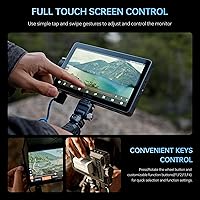
  • Touchscreen control makes menu navigation faster and more intuitive than button-only competitors in this range.
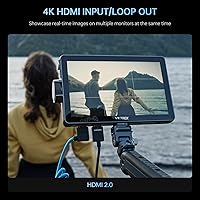
  • HDMI 2.0 loop-out removes the need for a signal splitter when monitoring for both camera op and director.
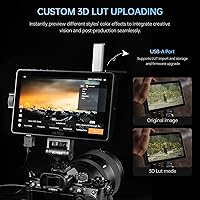
  • 3D LUT import via USB drive is a practical on-set tool for Log shooters previewing grades in real time.
  • Multiple power inputs — NP-F, DC, and USB-C — cover nearly every field and studio scenario.
  • The detachable sun hood releases in about one second, which actually matters when you are rushing between setups.
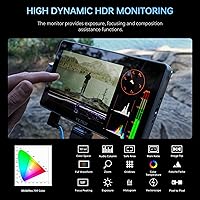
  • Professional monitoring tools including waveform, false color, and focus peaking cover the full exposure and focus toolkit.
  • Four customizable shortcut keys let experienced operators build a fast, personalized workflow.
  • At 12.2 ounces, this camera monitor is light enough to mount on a rig without creating serious balance issues.
  • The included NP-F550 battery means you can be up and running straight out of the box.

Cons

  • The 1080p panel cannot give you a true pixel-level view of 4K footage, which matters if detail accuracy is critical.
  • The built-in cooling fan can produce audible noise in quiet shooting environments or interview setups.
  • The menu system has a learning curve — new users should expect to spend time getting familiar before relying on it on a live job.
  • The included NP-F550 battery has limited capacity; longer shooting days will require a spare or a higher-capacity battery.
  • Early review data is thin given the product launched in mid-2025, so long-term reliability is still an open question.
  • Color accuracy, while calibrated to sRGB and Rec.709, falls short of professional reference monitor standards for post-production use.
  • USB-C power requires at least 9V at 3A, meaning not every USB-C cable or charger will work reliably.
  • No built-in battery status indicator beyond basic level warnings, which can catch users off guard during extended shoots.

Ratings

The scores below for the VILTROX DC-A1 7″ Camera Field Monitor were generated by our AI system after analyzing verified buyer reviews from global markets, with spam, bot-submitted, and incentivized feedback actively filtered out before scoring. Each category reflects the real distribution of praise and frustration found across authentic user experiences, so the numbers are not rounded up to seem impressive — they represent what shooters actually reported. Where this monitor genuinely excels and where it falls short are both reflected transparently.

Outdoor Brightness
93%
This is the category where the DC-A1 separates itself most clearly from competitors. Shooters working in direct afternoon sun consistently report that 2800 nits is enough to work without a canopy, which is a real operational advantage on documentary and event jobs where stopping to shade the monitor is not practical.
A small number of users in extremely reflective or high-altitude environments noted that even at peak brightness, glare from certain angles can still be challenging without the sun hood attached. The hood is included, but it adds a small amount of bulk to the overall rig setup.
Touchscreen Responsiveness
88%
Buyers frequently single out the touchscreen as feeling more like a tablet interface than the sluggish resistive panels found on older or budget-tier monitors. Quick menu navigation during active shooting — adjusting false color thresholds or switching LUTs — is genuinely fast and reliable according to multiple field reports.
A few users noted that with gloves on, or in cold outdoor conditions where fingers lose sensitivity, the capacitive panel becomes harder to operate accurately. There is also no stylus support mentioned, which could help in those edge cases.
Build Quality
84%
The physical construction draws consistent positive remarks, particularly the rigidity of the housing and the quality of the port connections. For a monitor in this price bracket, users report that it does not feel like a corner was cut on the chassis, which matters when the unit is mounted on a moving rig.
The sun hood, while functional, is made from plastic that a handful of users described as feeling lighter than the monitor body itself. Long-term durability of the hood under repeated field attachment and removal cycles is still an open question given the product's recent launch date.
Menu & Usability
67%
33%
Once operators invest the time to map the four customizable shortcut keys to their most-used functions, daily workflow becomes considerably faster. Users who shoot regularly with Log formats particularly appreciate having quick-access shortcuts for LUT toggling and waveform display switching.
The initial learning curve for the menu system is a recurring complaint, especially among users upgrading from simpler monitors. Several buyers noted it took a few dedicated sessions before the menu logic felt intuitive, and the interface design is not immediately self-explanatory for first-time users of professional monitoring tools.
3D LUT Performance
86%
Log shooters using Sony S-Log, Canon C-Log, Fuji F-Log, and similar profiles report that the on-set LUT preview is accurate enough to meaningfully inform lighting and exposure decisions in real time. The USB-A import process is straightforward once you understand the file format requirements.
The monitor requires .cube format LUTs specifically, which most professional workflows already use, but users coming from proprietary grade software may need to export or convert their files first. Some users also noted the LUT import menu could be more clearly labeled in the interface.
HDMI Loop-Out
81%
19%
Directors of photography working with a director or client monitor report that the HDMI 2.0 loop-out functions reliably without introducing signal issues in standard production setups. Eliminating the need for a separate HDMI splitter is a practical cost and weight saving for smaller crews.
A small number of users noted compatibility quirks when looping to certain older or budget downstream displays, though these appear to be edge cases rather than a systemic problem. The loop-out does not upscale or process the signal, so what goes in is what comes out.
Power Flexibility
82%
18%
The combination of NP-F battery support, DC barrel input, and USB-C PD compatibility means this camera monitor can integrate into almost any existing power ecosystem on a production, from small mirrorless rigs to larger battery-distributed setups. Users running V-mount systems via DC adapters report stable, reliable power delivery.
The USB-C power requirement of 9V at 3A catches some users off guard, as standard 5V USB-C chargers will not work. The included NP-F550 battery also has a relatively modest capacity, and most buyers who shoot full days recommend budgeting for a higher-capacity NP-F970 as an immediate accessory purchase.
Included Battery Life
61%
39%
Having a battery included in the box means you are not dead on arrival, and the NP-F550 is adequate for shorter shooting sessions or as a backup when primary power is available from a DC or USB-C source. The standard NP-F form factor is easy to source globally.
Real-world use confirms what the spec implies — the NP-F550 runs out relatively quickly under sustained full-brightness use, with some users reporting under 90 minutes of runtime at peak brightness. Most buyers treat it as a starter battery and plan for additional NP-F cells from the outset.
Cooling Fan Noise
58%
42%
The active cooling system does its job technically — there are no reports of the monitor overheating during extended shooting sessions, even in warm outdoor environments. For outdoor and run-and-gun work where ambient sound drowns out the fan, it is essentially a non-issue.
In quiet controlled environments like interview setups or studio work, the fan noise is audible and has been flagged by multiple users as a genuine irritant. Unlike some competitors that offer fan speed controls or silent modes, there does not appear to be an option to throttle or disable the fan manually.
Panel Resolution
69%
31%
For monitoring composition, exposure, and focus accuracy in the field, 1080p Full HD at 60Hz is entirely sufficient and produces a sharp, clear image that serves the core job well. The pixel density on a 7-inch panel is comfortable for extended sessions without eye strain.
In a market where 4K-capable cameras are now standard even at consumer price points, a 1080p monitoring panel means you are not seeing a true pixel-for-pixel representation of your 4K footage. This is not a dealbreaker for production monitoring, but it is a real limitation for anyone who needs to evaluate fine detail or pixel-level sharpness on set.
Color Accuracy
72%
28%
The sRGB and Rec.709 calibration covers the color spaces most relevant to video production monitoring, and users shooting in standard profiles report that the color rendering is consistent and reliable enough for confident on-set decision making. The IPS panel delivers more accurate color than TN-based alternatives at similar prices.
Critical colorists and post-production professionals consistently note that this camera monitor is not a substitute for a reference display. Color accuracy in Log modes without a LUT applied can appear inconsistent, and the panel is not calibrated to the tolerances that color-critical workflows demand.
Viewing Angle
87%
The 170-degree IPS viewing angle holds up well in practice, allowing multiple people — camera operator, director, and a script supervisor — to check the frame simultaneously without significant color shift or brightness falloff. This is a genuine advantage over narrower TN-based monitors in collaborative shoots.
At the extreme edges of the 170-degree range, some brightness reduction is present, as is typical with IPS panels. This is unlikely to affect most production scenarios but is worth noting for setups where the monitor must be viewed from very acute off-axis angles consistently.
Value for Money
78%
22%
Within the context of what this field monitor delivers — 2800 nits, touchscreen, HDMI loop-out, 3D LUT support, and active cooling — buyers generally feel the pricing is fair and competitive relative to alternatives with comparable specs. The included accessories add tangible value without feeling token.
Buyers who approach this primarily as a display device rather than a monitoring tool may feel the premium over basic field monitors is harder to justify if they do not use the LUT, waveform, or loop-out features regularly. There are cheaper monitors that cover simple monitoring needs at lower cost.
Rig Compatibility
79%
21%
The form factor and weight of the DC-A1 integrate cleanly into standard ARRI-threaded monitor mounting arms and camera cage accessories. At 12.2 ounces without battery, it does not create problematic balance issues on most mirrorless or cinema camera rigs commonly used in the field.
Some users with compact or minimalist rigs noted that combined with a larger NP-F970 battery, the overall weight and profile of the monitor becomes more significant. The exact mounting thread specifications are not prominently documented, which caused minor confusion for a handful of buyers during initial setup.

Suitable for:

The VILTROX DC-A1 7″ Camera Field Monitor is a strong match for working videographers and photographers who spend meaningful time shooting outdoors and have grown tired of fighting screen glare. Solo filmmakers doing run-and-gun documentary or event work will find the 2800-nit brightness and quick-release sun hood combination genuinely practical, not just a spec-sheet talking point. Directors of photography who need to feed a simultaneous signal to a client or director monitor will get real mileage out of the HDMI loop-out without needing additional hardware in their kit. Log shooters working with Sony S-Log, Canon C-Log, or Fuji F-Log will appreciate being able to import a 3D LUT and monitor a graded image on set, which directly informs lighting and exposure decisions in the moment. The flexible power options — NP-F batteries, DC input, and USB-C — make it adaptable across a wide range of field and studio setups without demanding a separate power solution.

Not suitable for:

The VILTROX DC-A1 7″ Camera Field Monitor is not the right tool for colorists or post-production professionals who need a reference-grade display with tightly calibrated accuracy for critical color decisions. The panel resolution is 1080p Full HD, which means you are not getting a true pixel-for-pixel representation of 4K footage — a real limitation if precise detail evaluation is part of your workflow. Shooters who prioritize near-silent operation in controlled or quiet environments may find the built-in cooling fan intrusive, depending on ambient conditions. If you are a beginner who wants a simple plug-and-play monitoring solution with a minimal learning curve, the depth of the menu system and the range of professional tools may feel like overkill and require a real time investment to navigate confidently. Budget-conscious buyers who only shoot indoors under controlled lighting may find the brightness ceiling unnecessary and could likely meet their needs with a less expensive option.

Specifications

  • Screen Size: The panel measures 7 inches diagonally, providing a large enough viewing area for critical monitoring without adding excessive bulk to a camera rig.
  • Resolution: The IPS display runs at 1920x1080 Full HD at 60Hz, delivering a sharp and detailed image for exposure and composition monitoring on set.
  • Brightness: Peak brightness is rated at 2800 nits (cd/m²), making the screen readable in direct outdoor sunlight without requiring additional shading in most conditions.
  • Panel Type: The display uses an IPS touchscreen panel with a 1000:1 contrast ratio and color calibration covering both sRGB and Rec.709 color spaces.
  • Viewing Angle: The IPS panel supports a 170-degree wide viewing angle, allowing accurate image reading from significantly off-axis positions.
  • HDMI Connectivity: The monitor features one HDMI 2.0 input and one HDMI 2.0 output for loop-through, supporting signals up to 4K 60Hz (3840x2160) and 4096x2160 at up to 30Hz.
  • 3D LUT Support: Custom 3D LUTs can be loaded onto the monitor via the USB-A port using a standard USB flash drive, enabling real-time Log footage preview with applied grades.
  • Power Options: The DC-A1 accepts power via NP-F series lithium batteries, a DC input of 10–18V at 2A, or USB-C at a minimum of 9V and 3A.
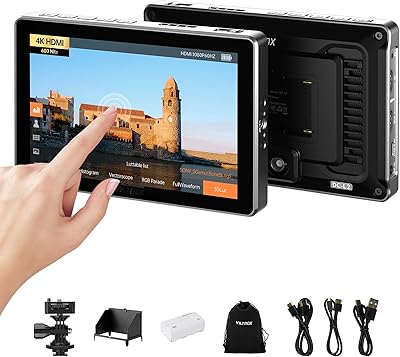
  • Included Battery: One NP-F550 lithium battery is included in the box, providing a basic power source for immediate field use out of the package.
  • Audio Output: A 3.5mm stereo headphone jack is built in, allowing real-time audio monitoring directly from the connected camera or device signal.
  • Shortcut Keys: Four physical shortcut buttons (F1 through F4) are fully customizable, letting operators assign frequently used functions for fast single-press access.
  • Monitoring Tools: Built-in professional tools include parade waveform, RGB/YUV/Y oscilloscope, vectorscope, brightness histogram, focus peaking, false color, and audio level meters.
  • Cooling System: An integrated intelligent cooling fan actively manages heat dissipation during extended shooting sessions to maintain stable performance.
  • Sun Hood: A detachable sun hood with a quick-release mechanism is included, designed to reduce ambient light interference on the screen during outdoor use.
  • Dimensions: The monitor body measures 7.4 x 4.3 x 1.12 inches, keeping the footprint compact enough for standard monitor mounting arms and camera cages.
  • Weight: The unit weighs 12.2 ounces (approximately 346 grams) without battery, which is manageable for top-mount or side-mount rig configurations.
  • USB-C Power Spec: USB-C power delivery requires a minimum output of 9V at 3A from the source; standard 5V USB-C chargers and cables will not power the monitor.
  • Manufacturer: The DC-A1 is designed and manufactured by Shenzhen Jueying Technology Co., Ltd., the parent company operating under the VILTROX brand.

Related Reviews
VILTROX DC-L2 7″ 4K Camera Field Monitor
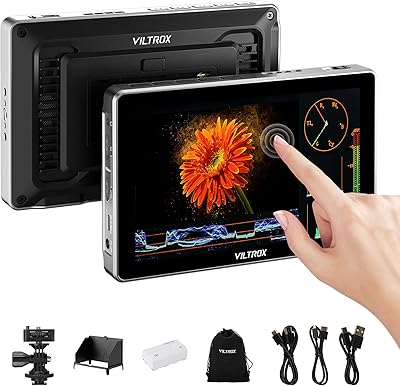
86%
93%
Display Quality
89%
Portability
70%
Battery Life
85%
Ease of Use
88%
Build Quality
More
VILTROX DC-L1 7-Inch Touchscreen Camera Field Monitor
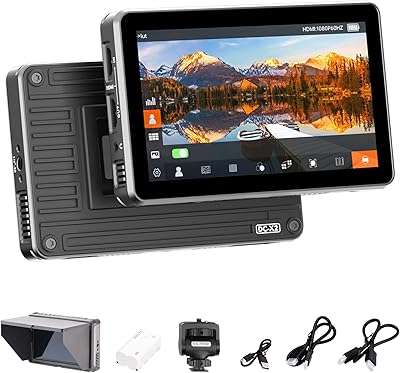
87%
93%
Display Quality
89%
Portability
85%
Power Options
91%
Sunshade Effectiveness
88%
Ease of Use
More
VILTROX DC-X2 6-inch Field Monitor
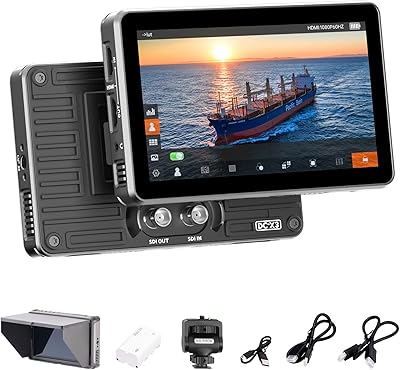
80%
93%
Outdoor Brightness
78%
Build Quality
71%
Touchscreen Responsiveness
67%
Color Accuracy
84%
3D LUT Support
More
VILTROX DC-X3 6″ Field Monitor
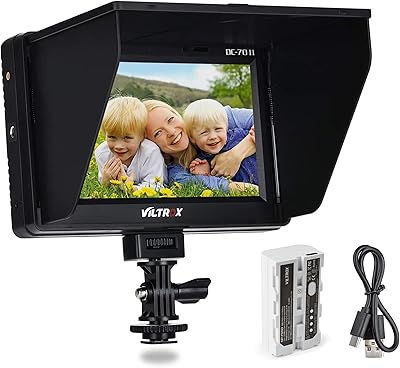
80%
93%
Brightness & Outdoor Visibility
81%
Build Quality & Durability
78%
Touchscreen Responsiveness
74%
Image Accuracy & Color Fidelity
69%
4K & SDI Connectivity
More
VILTROX DC-70 II 7″ Field Monitor
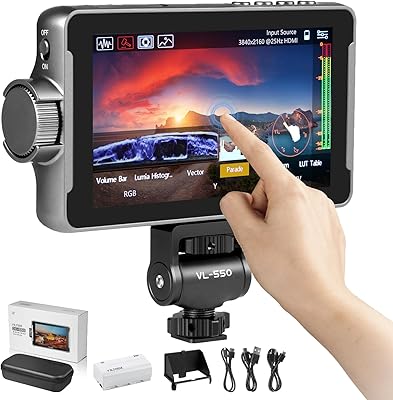
75%
88%
Value for Money
83%
Focus Peaking Performance
61%
Display Resolution & Sharpness
78%
Build Quality & Durability
74%
HDMI Connectivity
More
VILTROX DC-550 Pro 5.5-inch Touch Screen DSLR Camera Field Monitor
85%
89%
Brightness & Visibility
93%
Portability & Design
87%
Ease of Use & Touchscreen
78%
Color Accuracy & Calibration
85%
Build Quality
More
LILLIPUT A7S 7″ Camera Field Monitor
84%
88%
Display Quality
91%
Portability & Weight
86%
Brightness in Outdoor Conditions
80%
Customizability of Buttons
83%
Durability & Build Quality
More
NEEWER F700 7″ Field Monitor
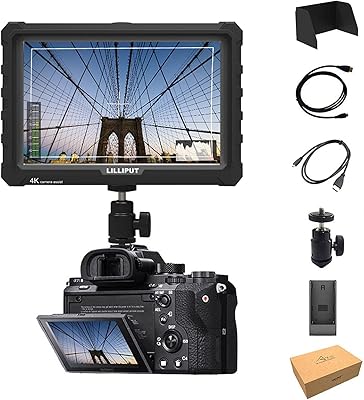
78%
91%
Outdoor Visibility
86%
Touch Screen Responsiveness
54%
Fan Noise
88%
3D LUT Support
89%
Battery & Power Versatility
More
NEEWER F100 7-inch Field Monitor
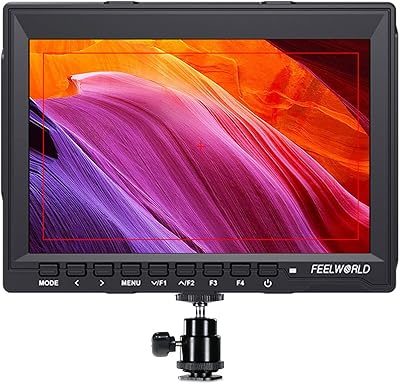
78%
83%
Image Quality
66%
Outdoor Visibility
71%
Build Quality
68%
Ball Head & Mounting
78%
Battery Life
More
Feelworld FW759 7″ Field Monitor
72%
83%
Image Clarity
58%
Brightness & Outdoor Usability
81%
Focus Peaking Performance
89%
Portability & Form Factor
54%
Build Quality & Durability
More

FAQ

In real-world outdoor conditions, 2800 nits is genuinely bright — bright enough that most shooters report being able to work without a canopy or additional shading in direct afternoon sun. It is one of the higher brightness ratings in this price tier, and early user feedback suggests it holds up in practice, not just on paper.

The monitor accepts the full NP-F series, so NP-F550, NP-F750, NP-F970, and compatible third-party equivalents will all work. The included NP-F550 is on the smaller side of the family, so if you are planning longer shooting days, picking up a higher-capacity NP-F970 is a smart move.

The HDMI 2.0 loop-out passes the signal through to a second display, which is standard behavior for this type of monitor. In typical production use, there is no meaningful quality loss, though the exact performance can depend on cable quality and the downstream display.

You copy your .cube format LUT file onto a standard USB flash drive and plug it into the USB-A port on the monitor. From the menu, you navigate to the LUT import section and select the file. It is a straightforward process, though getting familiar with the menu structure will take a short learning session the first time.

Early buyers have specifically called out the touchscreen responsiveness as a genuine strength of the DC-A1. It is not a resistive panel that requires deliberate pressure — it behaves more like a capacitive screen, which makes quick menu adjustments on a busy set realistic rather than frustrating.

Yes, as long as your V-mount or Gold Mount battery outputs via a DC cable in the 10–18V range at 2A or more, it will work through the DC input. This is a common setup for larger productions that already run V-mount power distribution.

The fan is audible in quiet environments — a handful of users have noted this. For run-and-gun or outdoor shoots with ambient noise, it is unlikely to be an issue. In a controlled indoor interview setup where the monitor is close to a directional microphone, you may want to position it carefully or monitor audio separately.

Any camera with a standard HDMI 2.0 output will work, which covers the vast majority of mirrorless, DSLR, and cinema cameras on the market today — Sony, Canon, Nikon, Fuji, Blackmagic, Panasonic, and others. There is no proprietary signal requirement; if your camera outputs HDMI, this field monitor will accept it.

It can, but the power bank needs to support USB Power Delivery output at a minimum of 9V at 3A. A lot of standard power banks top out at 5V, which will not be sufficient. Look specifically for PD-compatible power banks that list 9V or 12V output in their specs before relying on one in the field.

The quick-release hood is designed for practical field use rather than as an afterthought accessory. The one-second release mechanism means you are not wrestling with screws or friction fits when you need to pack up quickly. Build quality feedback from early users is generally positive, though like most plastic hoods, it is worth handling with care during transport.

Where to Buy