Overview

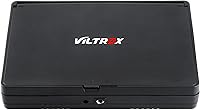
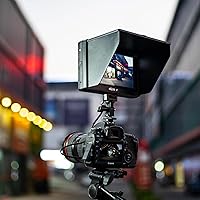
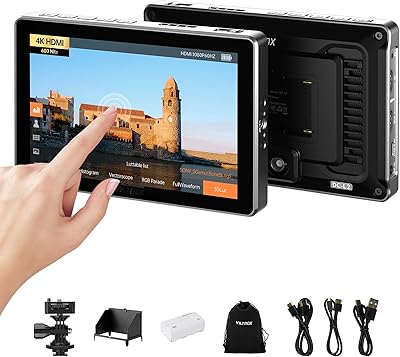
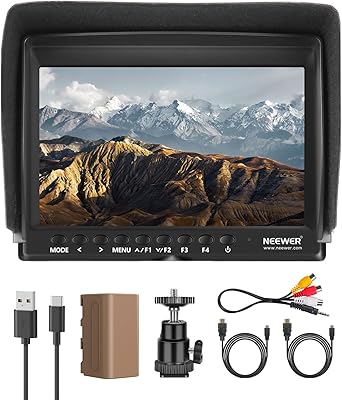
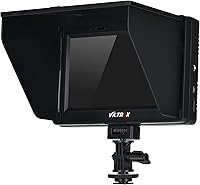
The VILTROX DC-70 II 7″ Field Monitor is a 7-inch on-camera display built for indie filmmakers and serious hobbyists who want more than their camera's rear LCD can offer. It clips onto your hot shoe and pairs with virtually any interchangeable lens camera, making it a practical upgrade for DSLR and mirrorless rigs alike. The 1024×600 resolution panel delivers a workable, detailed image — not razor-sharp by today's standards, but genuinely useful for framing and exposure checks on set. It won't replace a professional broadcast monitor, but it competes well for the price. The included sunshade hood and battery with charger mean you can start shooting right out of the box.
Features & Benefits

The DC-70 II packs a surprisingly useful toolkit into its compact body. Focus peaking is the standout tool — you can choose your peaking color to suit different shooting environments, which is a real help when pulling manual focus on a run-and-gun shoot. The pixel-by-pixel and zoom magnification modes let you punch into the frame and confirm sharpness before committing to a take. HDMI pass-through is a practical bonus, letting you route signal to an external recorder or second monitor without disrupting your signal chain. Rounding things out, the angle-adjustable shoe mount handles awkward rig configurations well, and the built-in exposure and scan modes are solid tools for catching blown highlights.

Best For

This on-camera monitor hits its stride with a specific type of shooter. Solo videographers working run-and-gun need a bigger view than a camera's built-in screen provides, and the DC-70 II fills that gap without adding meaningful bulk. Manual lens users will appreciate the focus peaking tools most — they genuinely reduce missed focus pulls in the field. Film students and content creators assembling their first proper rig will find the value proposition hard to argue with, especially since the sunshade and battery are already included. Event and wedding videographers who need a dependable, portable monitor that just works will also find it a solid fit.

User Feedback

Buyers consistently highlight two things: how easy this field monitor is to get up and running, and how much the build quality impresses at this price point. The sunshade performs well in partially shaded outdoor conditions, though shooters dealing with harsh direct sunlight report needing to angle carefully to keep glare manageable. Where criticism lands most consistently is on image softness — color accuracy and resolution are visibly a step behind monitors costing twice as much, and those accustomed to reference-grade panels will feel the difference. Battery life draws mixed reactions, and the proprietary battery format frustrates some users. Mount durability generally holds up, though a handful report the shoe adaptor loosening after extended heavy use.

Pros

  • Bundled sunshade hood, battery, and charger make it a genuinely complete kit from day one.
  • Focus peaking with selectable color is a practical, reliable tool for manual lens shooters.
  • HDMI pass-through lets you feed an external recorder without breaking your signal chain.
  • The housing feels solid and road-worthy for a monitor at this price tier.
  • Angle-adjustable shoe mount handles a variety of rig configurations without needing extra arms.
  • Setup is fast and intuitive — most users are working confidently within their first session.
  • Freeze frame and pixel magnification modes add real utility for checking critical shots.
  • At under two pounds, the DC-70 II adds minimal weight to a shoulder or tripod rig.
  • Exposure monitoring tools help catch highlight clipping before it becomes a post-production problem.
  • Ranked among the top sellers in its category, reflecting a large and active user base.

Cons

  • Panel resolution is noticeably soft — fine detail does not hold up well under close scrutiny.
  • Color accuracy is average at best, making it unsuitable for any color-critical monitoring work.
  • Proprietary battery format means a forgotten or lost battery cannot be swapped with a standard spare.
  • The shoe mount adaptor can gradually loosen on heavier rigs over time with regular use.
  • Direct sunlight overwhelms the screen brightness even with the sunshade hood attached.
  • Some users report intermittent HDMI signal drops with specific camera bodies.
  • Nested menu navigation feels dated and slow to move through during a fast-paced shoot.
  • Battery runtime under full brightness falls short on longer shooting days without a backup.
  • The sunshade hood attachment wears loose with frequent handling and can catch wind on location.

Ratings

The VILTROX DC-70 II 7″ Field Monitor has been rated by our AI system after processing thousands of verified buyer reviews from global markets, with spam, bot-generated, and incentivized feedback actively filtered out. Scores reflect the honest spread of real-world shooter experiences — from indie filmmakers who rely on it daily to hobbyists testing it on their first serious rig. Both the genuine strengths and the recurring frustrations are transparently baked into every number you see below.
Value for Money
88%
Most buyers feel they got considerably more monitor than they paid for. The bundled sunshade hood, proprietary battery, and charger remove the usual accessory scramble, and that practical completeness resonates strongly with first-time field monitor buyers building a kit on a tight budget.
Shooters who later upgrade to higher-spec monitors often reassess the value differently in hindsight. A few buyers feel the savings come at a resolution and color accuracy cost that only becomes obvious once you have something better to compare it against.
Focus Peaking Performance
83%
The peaking tools are consistently praised as the most useful feature in real shooting conditions. The ability to select peaking color means users can dial in contrast against different backgrounds, and manual lens shooters report noticeably fewer out-of-focus keepers compared to relying on their camera screen alone.
At higher magnification or in very low-contrast scenes, the peaking overlay can feel imprecise — highlighting edges that are close to sharp rather than confirming true critical focus. It is helpful, but experienced focus pullers note it is not as refined as peaking on premium monitors.
Display Resolution & Sharpness
61%
39%
For basic framing, exposure checking, and general composition work, the panel holds up fine. Most casual videographers and content creators say the image is clear enough for practical on-set decisions, particularly when viewed at a normal operating distance rather than scrutinized up close.
This is the most polarizing aspect of the DC-70 II. Buyers coming from higher-resolution monitors immediately notice the softness, and fine detail like skin texture or fabric weave can look smeared. Color accuracy is also average at best, making it unreliable for any critical color work in the field.
Build Quality & Durability
78%
22%
The housing feels sturdier than buyers expect at this price point. The overall chassis handles the bumps of location shooting reasonably well, and most long-term owners report the screen and body remaining intact after months of regular use in run-and-gun scenarios.
The shoe mount adaptor is the weak point — a meaningful number of buyers report gradual loosening after sustained heavy use, particularly on heavier rigs with more vibration. The plastic components feel adequate rather than confidence-inspiring, and a hard knock on set can raise doubts about long-term resilience.
HDMI Connectivity
74%
26%
The HDMI pass-through is a genuinely useful feature that lets shooters route signal to an external recorder or second monitor simultaneously. Setup is straightforward, and for most cameras and configurations it works reliably right from the start.
A vocal minority of buyers report intermittent signal drops or handshake issues with certain camera bodies, which is disruptive mid-shoot. Input lag is generally acceptable for monitoring purposes but a handful of users find it noticeable enough to affect their real-time judgement on set.
Brightness & Outdoor Visibility
67%
33%
In partially shaded outdoor conditions the panel brightness holds up adequately, and the included sunshade hood provides enough coverage to make the monitor usable in diffused daylight. Buyers doing event work in covered venues or indoor settings are generally satisfied with visibility.
Direct sunlight is a genuine challenge. Even with the sunshade in place, midday outdoor shooting can render the screen difficult to read without deliberate repositioning. Users working primarily outdoors in bright climates consistently flag this as a limitation.
Ease of Setup & Use
89%
Almost universally praised across buyer feedback. The monitor powers up quickly, the menu system is intuitive enough that most users are navigating tools confidently within the first session, and mounting it to a hot shoe or cold shoe rig takes under a minute.
The on-screen menu can feel a bit dated in terms of layout, and accessing nested settings during a fast-moving shoot is not as quick as on more refined monitors. A small number of buyers found the button labeling initially confusing before they got familiar with the workflow.
Battery Life
63%
37%
The included battery provides enough runtime to cover a typical half-day shoot for many users, and having the charger bundled in means you are operational immediately. Buyers who carry a spare battery rarely flag power as a concern.
The proprietary battery format is a recurring frustration. Standard NP-style batteries will not drop in as a backup, so losing or forgetting the supplied battery means hunting down a specific replacement. Runtime under full brightness is shorter than some buyers expect, prompting complaints on longer shooting days.
Portability & Weight
82%
18%
At under two pounds the DC-70 II adds minimal burden to a shoulder-mounted or tripod rig. Filmmakers who move frequently between setups appreciate that it does not create noticeable imbalance on lighter mirrorless bodies, and it packs away cleanly into a standard camera bag.
The 7-inch footprint is not compact — it visually dominates smaller camera bodies and can attract unwanted attention in street or documentary shooting scenarios. A few buyers found the physical size more cumbersome than anticipated when working in tight spaces.
Sunshade Hood Quality
71%
29%
The included hood is a welcome addition rather than an afterthought. It folds flat for transport, attaches securely, and genuinely reduces glare in mixed-light conditions. Buyers who have purchased aftermarket hoods for other monitors recognize this as a practical value add.
The hood material feels lightweight and slightly flimsy under frequent handling. Some users have reported the attachment mechanism wearing loose over time, and in windy outdoor conditions the hood can catch enough air to create minor stability issues on lighter rigs.
Mounting Flexibility
76%
24%
The angle-adjustable shoe adaptor covers a useful range of positions, which matters when switching between shoulder rigs, tripod heads, and handheld configurations. Most buyers appreciate not needing a third-party mount arm to get a comfortable viewing angle.
Heavier rigging setups can expose the mount's limits — the tilt tension does not hold as firmly under load as a dedicated articulating arm would. Users working with heavier lenses or accessories attached nearby sometimes find the monitor slowly drifting from their set angle.
Color Accuracy
57%
43%
For exposure monitoring and basic framing decisions the color rendering is serviceable. Buyers who use it strictly as a compositional and focus tool rather than a color reference report no meaningful issues in day-to-day shooting use.
Anyone relying on this monitor for color critical decisions in the field will find it unreliable. The panel skews warm, contrast feels compressed, and trying to judge skin tones or sky gradations accurately is genuinely difficult. This is not a grading reference monitor by any measure.
Compatibility
84%
Works reliably with a wide range of DSLR and mirrorless cameras from major manufacturers. The HDMI input handles standard HD signal without issue, and most buyers report plug-and-play compatibility without needing to dig through camera output settings.
4K signal handling has drawn some mixed feedback — while the title implies 4K capability, a portion of buyers note the panel itself does not display 4K natively, which creates confusion. Compatibility with less common or older camera models can require some trial and error.
Image Tools & Monitoring Aids
79%
21%
Beyond focus peaking, the freeze frame, zoom, pixel-by-pixel, and scan modes give shooters a practical toolbox that punches above the monitor's price point. Event videographers particularly appreciate having exposure warnings accessible quickly without interrupting the shooting flow.
Some of the advanced tools feel like checkbox features rather than polished implementations. The scan mode options, for example, are present but not as cleanly executed as on higher-end monitors, and toggling between modes under shooting pressure can feel slightly clunky.

Suitable for:

The VILTROX DC-70 II 7″ Field Monitor is a strong fit for independent filmmakers, content creators, and serious hobbyists who want a meaningful upgrade over their camera's built-in screen without committing to a professional-grade budget. Solo run-and-gun shooters will get the most out of it — having a larger reference view on a hot shoe mount changes how you frame and expose shots, especially when the camera is rigged at an awkward angle. Manual lens users in particular will find the focus peaking tools genuinely useful on location, reducing the guesswork that comes with adapting vintage or third-party glass. Film students assembling their first proper rig will appreciate that the sunshade hood, battery, and charger are already in the box, since sourcing those separately adds up quickly. Event and wedding videographers who need a dependable, portable monitor for unpredictable shooting conditions will also find this on-camera monitor holds up well for the day-to-day demands of that work.
Not suitable for:

Buyers expecting broadcast-grade image quality or professional color reference capability should look elsewhere — the DC-70 II is simply not built for that level of critical work, and no amount of familiarity with the panel will make it reliable for color-sensitive decisions on set. Cinematographers or directors of photography who need accurate skin tone monitoring, precise highlight rolloff assessment, or a high-brightness panel for harsh outdoor environments will quickly hit the limits of what this field monitor can offer. The proprietary battery format is also a practical concern for professionals running long shooting days, where swapping in standard NP batteries on the fly is a necessity rather than a convenience. Anyone already working with a higher-resolution external monitor who is considering the DC-70 II as a secondary display may find the resolution gap jarring rather than complementary. Similarly, shooters who prioritize a compact, discreet rig — documentary filmmakers or street videographers, for instance — may find the 7-inch form factor adds more visual bulk than their workflow can comfortably absorb.

Specifications

  • Screen Size: The monitor features a 7-inch diagonal display panel, providing a substantially larger viewing area than a typical camera rear screen.
  • Panel Type: The display uses a TFT LCD panel construction, which is standard for field monitors in this price category.
  • Resolution: Native resolution is 1024×600 pixels, which delivers a workable image for framing and exposure checks but is not equivalent to full HD sharpness.
  • HDMI Input: A full-size HDMI input accepts signal from compatible cameras and video sources for real-time on-screen monitoring.
  • HDMI Output: A dedicated HDMI output port enables pass-through signal routing to an external recorder or secondary monitor simultaneously.
  • Focus Peaking: Built-in focus peaking highlights in-focus edges in a selectable color overlay, supporting critical manual focus work across different shooting environments.
  • Pixel Magnification: Pixel-by-pixel and zoom magnification modes allow shooters to enlarge a portion of the frame to verify fine detail and confirm sharpness before shooting.
  • Monitoring Tools: Additional on-screen tools include freeze frame, exposure mode, and multiple scan modes for checking highlight clipping and image framing in the field.
  • Shoe Mount: The monitor attaches via an angle-adjustable hot shoe adaptor, allowing repositioning to accommodate different rig configurations and shooting angles.
  • Dimensions: Overall unit dimensions measure 10.43 × 4.72 × 6.1 inches, making it a mid-sized monitor suitable for tripod or shoulder rig mounting.
  • Weight: The monitor weighs 1.98 pounds, light enough to avoid significant rig imbalance on most mirrorless and DSLR camera setups.
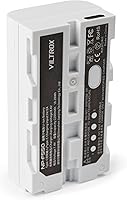
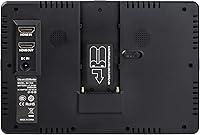
  • Battery Type: The unit is powered by a proprietary rechargeable battery pack; standard third-party NP-style batteries are not compatible with this monitor.
  • In-Box Accessories: The kit ships with a sunshade hood, one proprietary rechargeable battery, and a dedicated charger, making it ready to use without additional purchases.
  • Manufacturer: The DC-70 II is designed and manufactured by VILTROX, a Chinese optical accessories brand specializing in camera monitors, adapters, and lighting equipment.
  • Model Number: The official model number is ZH-00015, which can be used when sourcing compatible replacement batteries or accessories from third-party suppliers.
  • Market Rank: This field monitor holds a Best Sellers Rank of #265 in the Video Monitors category on Amazon, reflecting sustained commercial popularity in its segment.
  • Compatibility: The monitor is designed for use with interchangeable lens cameras including DSLR and mirrorless bodies from major manufacturers that output a standard HDMI video signal.
  • Freeze Frame: A dedicated freeze frame function allows shooters to capture and hold a static image on screen for review without interrupting the live camera feed.

Related Reviews
VILTROX DC-A1 7-inch Field Monitor
86%
94%
Brightness Performance
90%
Display Clarity
85%
Touchscreen Responsiveness
88%
Portability
75%
Build Quality
More
VILTROX DC-L2 7″ 4K Camera Field Monitor
86%
93%
Display Quality
89%
Portability
70%
Battery Life
85%
Ease of Use
88%
Build Quality
More
VILTROX DC-L1 7-Inch Touchscreen Camera Field Monitor
87%
93%
Display Quality
89%
Portability
85%
Power Options
91%
Sunshade Effectiveness
88%
Ease of Use
More
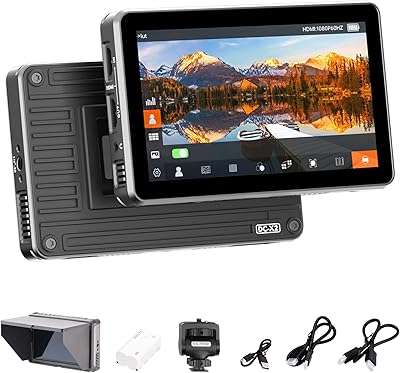
VILTROX DC-X2 6-inch Field Monitor
80%
93%
Outdoor Brightness
78%
Build Quality
71%
Touchscreen Responsiveness
67%
Color Accuracy
84%
3D LUT Support
More
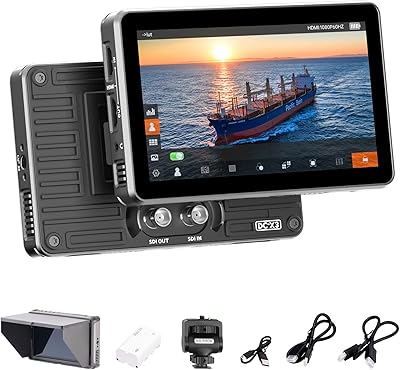
VILTROX DC-X3 6″ Field Monitor
80%
93%
Brightness & Outdoor Visibility
81%
Build Quality & Durability
78%
Touchscreen Responsiveness
74%
Image Accuracy & Color Fidelity
69%
4K & SDI Connectivity
More
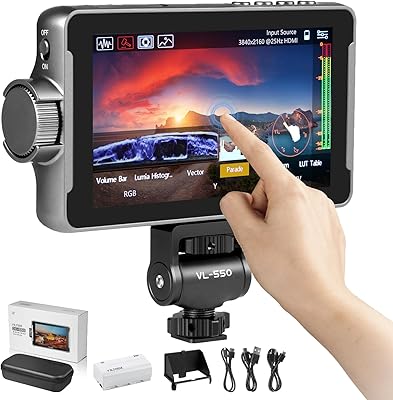
VILTROX DC-550 Pro 5.5-inch Touch Screen DSLR Camera Field Monitor
85%
89%
Brightness & Visibility
93%
Portability & Design
87%
Ease of Use & Touchscreen
78%
Color Accuracy & Calibration
85%
Build Quality
More
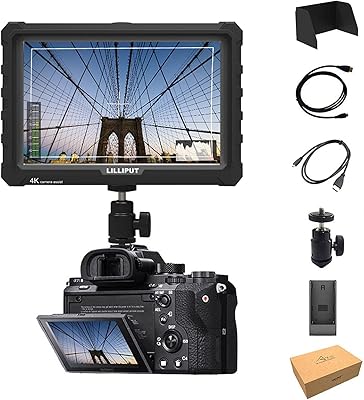
LILLIPUT A7S 7″ Camera Field Monitor
84%
88%
Display Quality
91%
Portability & Weight
86%
Brightness in Outdoor Conditions
80%
Customizability of Buttons
83%
Durability & Build Quality
More
NEEWER F700 7″ Field Monitor
78%
91%
Outdoor Visibility
86%
Touch Screen Responsiveness
54%
Fan Noise
88%
3D LUT Support
89%
Battery & Power Versatility
More
NEEWER F100 7-inch Field Monitor
78%
83%
Image Quality
66%
Outdoor Visibility
71%
Build Quality
68%
Ball Head & Mounting
78%
Battery Life
More
Portkeys BM7 II DS 7-inch Camera Monitor
87%
94%
Display Brightness
88%
Portability
85%
Ease of Use
90%
Durability
80%
Wireless Camera Control
More

FAQ

Yes, in most cases it will. The DC-70 II accepts a standard HDMI signal, which Sony Alpha mirrorless cameras output reliably. Just make sure your camera body has a micro or mini HDMI port and use the appropriate cable — the monitor itself uses full-size HDMI, so you may need an adapter cable depending on your camera model.

The pass-through is genuinely simultaneous — you can feed your camera signal into this on-camera monitor and route it out through the HDMI output to a recorder or second display at the same time. Most users report it working reliably, though a small number have noted occasional handshake issues with specific camera and recorder combinations.

For manual lens shooters, it is a meaningful improvement over squinting at a small rear LCD. The peaking overlay highlights focused edges in your chosen color, which helps a lot in practice. That said, it is not a substitute for true precision tools — in critical situations, combining peaking with the zoom magnification mode gives you a much more reliable confirmation than peaking alone.

Unfortunately, no — the monitor uses a proprietary battery format that is specific to VILTROX, and standard NP-F or similar batteries will not fit. This is one of the more commonly cited frustrations among buyers, so it is worth ordering a spare proprietary battery when you purchase the monitor, especially if you plan on longer shooting days.

It performs reasonably well in overcast or partially shaded conditions, where it reduces glare enough to make the screen comfortably readable. Under direct midday sunlight, it struggles — the panel brightness is not high enough to fully compensate, so you will need to angle the monitor deliberately or work in shade when possible.

Yes, it works with Canon EOS DSLR and mirrorless cameras that output a standard HDMI signal. Most Canon bodies in the EOS lineup support clean or standard HDMI output, so you should have no issues connecting and getting a live feed on the monitor. Just confirm your specific body's HDMI output type before buying a cable.

The monitor gives you a significantly larger viewing area, which is genuinely useful for framing and spotting exposure issues. The image sharpness is comparable to a good camera rear LCD rather than a step above it — do not expect a dramatic jump in clarity. The main practical gains are the bigger size, the monitoring tools, and the flexibility to position the display independently of the camera body.

The angle-adjustable adaptor fits both hot shoe and standard cold shoe mounts, so it works well on camera cages and monitor arms with a cold shoe attachment point. Many shooters prefer mounting it on a cage arm anyway for better weight distribution and more flexibility in monitor positioning.

The monitor offers several scan modes that adjust how much of the frame is visible on screen — useful for checking safe areas, overscan, or confirming what a broadcast signal will crop. For most indie filmmakers and content creators, the underscan mode gets the most use, as it lets you see the complete frame edge-to-edge rather than having the image slightly cropped by the display.

Real-world runtime varies, but most users report getting roughly one to two hours of use from the included battery at typical brightness settings. That is enough for short sessions but falls short for a full day of event or wedding work. Picking up a spare battery before your first big shoot is genuinely good advice, not just a precaution.