Overview

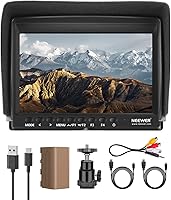
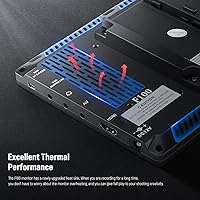
The NEEWER F100 7-inch Field Monitor sits in a sweet spot that budget-conscious filmmakers rarely find: a capable, well-equipped monitoring package that doesn't force you to choose between screen quality and accessories. At roughly the price of a decent lens filter set, you get the monitor itself, a 4400mAh battery, sunshade hood, ball head, and two HDMI cables. The chassis is just 17mm thin — noticeably slimmer than many rivals in this category — which matters when you're already balancing a loaded rig. Sitting at #8 in Video Monitors on Amazon with thousands of verified ratings, it has clearly found an audience among working indie shooters.

Features & Benefits

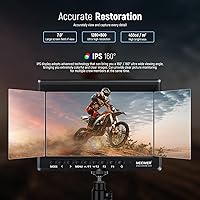
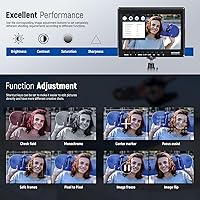
The 7-inch IPS panel delivers 1280x800 resolution at 450 nits — bright enough for shaded outdoor use, though direct sunlight will test its limits (the included hood helps considerably). The 1200:1 contrast ratio produces clean blacks for an entry-level panel, and the 16:10 aspect ratio is worth noting: it's wider than standard video formats, so expect a small letterbox when monitoring 16:9 footage. Focus Peaking and the suite of professional tools — Safe Frames, Check Field modes, Pixel-to-Pixel, Image Flip — are genuinely useful on set, not just checkbox specs. Broad format support from 1080p/60 down to 480i means it'll work with almost any camera in your bag.

Best For

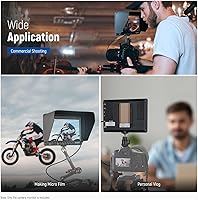
This field monitor makes the most sense for DSLR and mirrorless shooters who find their camera's rear LCD too small and too awkwardly positioned for critical focus checks. It's also a natural fit for run-and-gun videographers on gimbals or shoulder rigs — the slim build keeps the rig balanced, and the cold shoe ball head snaps on quickly. Solo vloggers who want to nail focus without an assistant will appreciate the peaking tools. Small crews shooting corporate work or short films on tight budgets will particularly value the complete kit out of the box, since sourcing a sunshade, battery, and mount separately adds up fast.

User Feedback

Across more than 3,500 ratings, the NEEWER F100 holds a 4.2-star average — solid for a budget monitor but not without valid criticism. Most satisfied buyers highlight color accuracy and the thoroughness of the included accessories as genuine standouts at this price. Where opinions split is on the ball head: some owners report the rotation lock loosens over time under heavier camera setups. Battery life claims are largely validated, though a handful of reviewers note runtime closer to three hours under continuous brightness. Outdoor visibility draws mixed responses — shooters in open sun find 450 nits marginal even with the hood, while those working in shade call it more than adequate.

Pros

  • Bundled battery, ball head, sunshade, and dual HDMI cables make this a complete kit with no immediate add-ons needed.
  • Focus Peaking works reliably and is genuinely useful for manual lens shooters pulling their own focus on location.
  • The IPS panel produces accurate, consistent color that outperforms expectations at this price tier.
  • At just 17mm thin, the monitor body adds minimal bulk to shoulder rigs, cages, and gimbal setups.
  • USB passthrough power support lets you run the field monitor off a power bank during extended shoots.
  • Broad format compatibility — from 1080p/60 down to 480i — means it pairs with virtually any camera in your kit.
  • Safe Frame presets and Check Field modes are accurate and respond without lag, useful for broadcast framing work.
  • The cold shoe ball head rotates a full 360 degrees and attaches quickly without tools during fast setup changes.
  • With thousands of verified ratings and a top-10 bestseller rank in its category, real-world adoption backs up the specs.

Cons

  • Direct sunlight visibility is a genuine problem — 450 nits is not enough for bright outdoor exteriors, hood or not.
  • The ball head rotation lock loosens noticeably after weeks of regular use, especially under heavier camera setups.
  • The 16:10 native aspect ratio displays 16:9 footage with thin letterbox bars, which disrupts Safe Frame alignment.
  • Sunshade tabs fit loosely on some units and can pop off when repositioning the monitor mid-shoot.
  • Actual battery runtime under full brightness is closer to 2.5 to 3 hours for many users, not the stated 3.5.
  • A small number of Sony and Panasonic mirrorless users report occasional signal flicker requiring a cable reseat.
  • The side-mounted menu buttons are tightly spaced and difficult to navigate when the monitor is mounted at eye level.
  • One battery is not sufficient for full-day event or documentary shoots — a spare adds extra cost to budget.
  • Backlight bleed in corner areas appears on some units at high brightness, most visible during dark scene review.

Ratings

The NEEWER F100 7-inch Field Monitor has accumulated thousands of verified global ratings, and the scores below reflect what real buyers actually experienced — not the spec sheet. Our AI analyzed confirmed purchase reviews worldwide, actively filtering out incentivized, spam, and low-credibility submissions to surface honest signal. Both the genuine strengths and the recurring frustrations are reflected transparently in every category score.

Image Quality
83%
Most buyers are genuinely surprised by how clean and color-accurate the IPS panel looks given the price tier. For reviewing exposure and composition on a gimbal or tripod, the 1200:1 contrast ratio holds up well in controlled lighting, and colors track closely enough to trust for basic grading reference.
The 1280x800 resolution, while clean, falls short when pixel-peeping fine focus on high-resolution camera outputs. A few users shooting with full-frame bodies noted that fine detail can look softer than expected when monitoring at native resolution.
Outdoor Visibility
66%
34%
With the sunshade attached, the 450-nit panel is workable in open shade and overcast conditions — conditions that cover a large percentage of real location shoots. Videographers working under trees or in doorways report the monitor is readable without squinting.
Direct sunlight is genuinely problematic, and a notable portion of buyers are candid that 450 nits is not enough for bright midday exteriors. Even with the hood fully deployed, harsh sun washes out the image to the point where critical focus checks become guesswork.
Build Quality
71%
29%
The monitor body itself feels surprisingly rigid for its 17mm profile, and the plastic chassis shows minimal flex under normal handling. Users mounting it to shoulder rigs and cages report it survives daily pack-in and pack-out without cracking or warping.
The sunshade attachment points and the ball head lock draw the most durability criticism. Several reviewers note the sunshade tabs fit loosely from the start, and the rotation lock on the ball head develops play after weeks of regular use under even modest camera setups.
Ball Head & Mounting
68%
32%
The included 360-degree ball head is a genuine convenience for solo shooters who need to reposition quickly between setups. The cold shoe attachment is compatible with a wide range of DSLR hot shoes, camcorder handles, and cage top plates, making it versatile out of the box.
Long-term durability is the consistent weak point here. The ball joint plastic wears faster than expected, and buyers using heavier mirrorless bodies with large lenses find the head drifts under load after a few months. It works well initially but is not a permanent solution for heavy rigs.
Battery Life
78%
22%
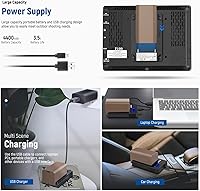
The bundled 4400mAh F750 battery performs close to its rated 3.5-hour claim in real-world use for most buyers, which is enough to cover a typical half-day shoot without hunting for a power outlet. USB passthrough support also means you can run the monitor off a power bank in a pinch.
A meaningful minority of reviewers report runtime closer to 2.5 to 3 hours at full brightness, which suggests the 3.5-hour figure assumes reduced backlight levels. For full-day documentary or event work, one battery is not enough and a spare adds cost.
Focus Assist Tools
86%
Focus Peaking works reliably and the highlight color options are adjustable enough to read clearly against most backgrounds. Solo shooters pulling their own focus — especially on manual lenses — consistently call this one of the most useful reasons to buy this monitor over a camera LCD.
The peaking sensitivity is not as granular as on higher-end monitors, and a few users working with very fast lenses found the peaking overlay too aggressive at the maximum setting, making it hard to distinguish between in-focus and near-focus areas precisely.
Format Compatibility
89%
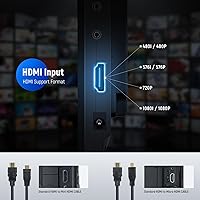
The broad input format support — from 1080p/60 down through 720p, 576i, and 480i — means this monitor pairs cleanly with everything from modern mirrorless bodies to older camcorders and even drone controllers that output legacy signals. Very few buyers report handshake issues.
A small number of users with certain Sony and Panasonic mirrorless bodies reported an occasional signal drop or brief screen flicker when first connecting, which required a cable reseat to resolve. It is not widespread but worth knowing if you shoot Sony and need rock-solid reliability.
Safe Frames & Overlay Tools
81%
19%
The Safe Frame presets and Center Marker are well-calibrated and genuinely useful for broadcast and social media framing — particularly for shooters delivering to clients who need 16:9 safe zone confirmation. Check Field modes for RGB and mono work correctly and respond without lag.
The 16:10 native aspect ratio means 16:9 footage is displayed with thin horizontal bars, which some users find distracting when relying on the Safe Frame guides for precise composition. It is a minor visual nuisance but one that takes getting used to.
Ease of Setup
91%
Virtually every reviewer agrees setup takes under five minutes. The included Mini HDMI and Micro HDMI cables cover the two most common camera outputs, the ball head attaches without tools, and the on-screen menu is navigable without reading the manual. A real plus for fast-paced run-and-gun situations.
The menu button layout on the side of the chassis is tight, and users with larger hands find it fiddly to navigate while the monitor is mounted at eye level on a rig. A few buyers wished for a joystick-style navigator rather than a row of small buttons.
Value for Money
88%
When you add up the cost of sourcing a sunshade, a quality ball head, an F750-compatible battery, and two HDMI cables separately, the bundled price looks very strong. For indie filmmakers and vloggers who need a functional monitoring kit on a constrained budget, this is one of the more honest value propositions available.
Buyers expecting performance comparable to monitors at two or three times the price will be disappointed. The value proposition works specifically because the expectations are calibrated correctly — step in expecting a reference monitor and you will walk away frustrated.
Sunshade Quality
63%
37%
When fitted correctly, the sunshade does a reasonable job blocking lateral light and reducing glare on overcast days. Users shooting under stage lighting or in mixed indoor-outdoor settings appreciate having it included rather than needing to fabricate a solution.
Fit consistency is a recurring issue — the tabs that clip to the monitor feel flimsy on some units and owners report the shade pops off unexpectedly when adjusting the monitor angle. It works as a light blocker but not as a precision outdoor hood in demanding conditions.
Weight & Portability
84%
At just under two pounds with the battery installed, this 7-inch monitor bundle is manageable on a shoulder rig or mounted to a tripod. The slim 17mm body profile keeps it from dominating the overall rig footprint, which matters when traveling light with a backpack kit.
Compared to smaller 5-inch monitors, the 7-inch form factor does add noticeable mass to gimbal builds. A handful of gimbal users note it pushed their setup over the balance threshold and required counterweight adjustment, which partly offsets the mounting convenience.
Screen Uniformity
74%
26%
For the most part, the IPS panel displays consistent brightness from center to edge under normal studio and indoor conditions. Color shift when viewing off-axis is minimal compared to TN panels in the same price range, which makes it easier to work with a crew glancing at the monitor from different angles.
A small percentage of buyers reported mild backlight bleed in the lower corners at high brightness settings — not visible in typical footage review but noticeable on dark scenes. It is the kind of quality variance that budget IPS panels occasionally exhibit at this production volume.
Audio & Volume Control
72%
28%
Having a physical volume control is a small but appreciated detail — being able to dial back monitor audio without diving into a menu is useful when you are in a quiet location and need to check playback without disturbing a set. The feature works reliably according to users who use it regularly.
The built-in audio output is adequate for quick reference checks but not for critical listening. Users monitoring audio quality for sync or ambient sound evaluation will want dedicated headphones or a separate audio monitor rather than relying on the internal speaker output.

Suitable for:

The NEEWER F100 7-inch Field Monitor is a strong fit for indie filmmakers, content creators, and solo videographers who need a proper monitoring solution without committing to a prosumer budget. If your current workflow involves squinting at a 3-inch camera LCD to check focus or exposure, stepping up to a 7-inch IPS panel with Focus Peaking will change how you shoot — especially when pulling manual focus on a gimbal or shoulder rig. DSLR and mirrorless shooters who frequently work in mixed lighting conditions, shoot interviews, or produce short-form video content for clients will find the included accessory bundle covers most of their immediate needs right out of the box. Small crews on tight production budgets also benefit here: sourcing a compatible battery, ball head, sunshade, and two HDMI cables separately adds real cost, and having all of it included at this price point is genuinely practical. Vloggers and run-and-gun creators who move between locations frequently will appreciate the slim chassis and reasonable weight, which keep the overall rig manageable during long shooting days.

Not suitable for:

The NEEWER F100 7-inch Field Monitor is not the right tool for shooters who work primarily in direct sunlight or harsh outdoor environments. At 450 nits, the panel struggles in bright midday conditions even with the sunshade fitted, and anyone doing consistent exterior work — weddings, sports, documentary — will find themselves fighting for visibility at critical moments. Professionals who need frame-accurate color monitoring for grading, broadcast delivery, or high-end commercial work should look elsewhere; this is a reference and assist monitor, not a calibrated color tool. Gimbal operators running heavier mirrorless systems with large zoom lenses may find the 7-inch form factor pushes their rig out of balance, requiring counterweights that complicate a setup that should be simple. Buyers who expect the bundled ball head and sunshade to perform at the level of dedicated third-party accessories will likely be disappointed — both are functional starting points, not permanent professional solutions. If long-term durability under heavy daily use is a priority, the build quality of the mounting hardware in particular may become a friction point within months.

Specifications

  • Screen Size: The monitor features a 7-inch IPS panel with a 16:10 aspect ratio, which displays standard 16:9 video footage with thin horizontal letterbox bars.
  • Resolution: Native display resolution is 1280 x 800 pixels, providing clear HD detail suitable for focus checking and exposure review on location.
  • Brightness: Peak brightness is rated at 450 nits, which is workable in shaded outdoor conditions but can be insufficient under direct sunlight.
  • Contrast Ratio: The panel delivers a 1200:1 contrast ratio, producing reasonably deep blacks and clean midtone separation for an entry-level IPS screen.
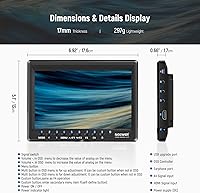
  • Chassis Depth: The monitor body measures just 17mm thin, keeping rig profiles low and reducing the footprint on shoulder mounts and gimbal setups.
  • Dimensions: Overall dimensions are 7.48 x 8.86 x 2.56 inches, encompassing the monitor body with standard mounting hardware attached.
  • Weight: The monitor weighs 1.91 pounds with the F750 battery installed, which is manageable on most tripod and cage builds but adds noticeable mass to lightweight gimbals.
  • Battery: The included 4400mAh F750 battery is rated for up to 3.5 hours of continuous use, though real-world runtime at full brightness is typically closer to 2.5 to 3 hours.
  • Power Input: In addition to the F750 battery slot, the monitor accepts USB power input, allowing operation from laptops, USB wall adapters, or portable power banks.
  • Video Input: The monitor receives signal via HDMI, and the package includes both a Mini HDMI and a Micro HDMI cable to cover the two most common camera output types.
  • Supported Formats: Accepted input formats include 1080p at up to 60fps, 1080i, 720p, 576i, 576p, 480i, and 480p, covering modern mirrorless and DSLR outputs as well as legacy camcorder signals.
  • Monitoring Tools: Built-in assist tools include Focus Peaking, Safe Frames (multiple percentage presets plus 2.35:1), Check Field (Red, Green, Blue, Mono), Pixel-to-Pixel, Center Marker, Image Flip, and Image Freeze.
  • Ball Head: The included mini ball head provides 360-degree rotation and attaches to cameras, cages, and rigs via a standard cold shoe mount without requiring additional tools.
  • Sunshade: A clip-on sunshade hood is included in the box and attaches to the monitor frame to reduce ambient glare during outdoor and mixed-light shooting.
  • AV Output: An AV cable is included alongside the HDMI cables, providing a composite output option for connecting to legacy monitors or video assist equipment on set.
  • Brand & Model: This monitor is manufactured by NEEWER under the model designation F100, a brand with broad distribution in the budget-to-midrange camera accessory market.
  • Availability: The product was first listed in June 2025 and holds a top-10 bestseller rank in the Video Monitors category on Amazon based on verified sales volume.

Related Reviews
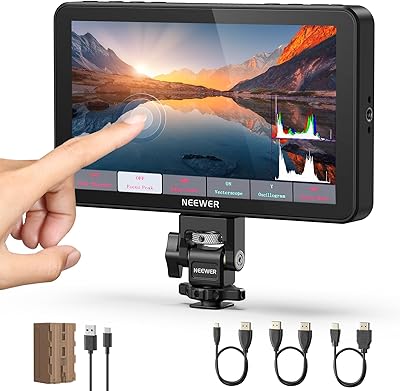
NEEWER F700 7″ Field Monitor
78%
91%
Outdoor Visibility
86%
Touch Screen Responsiveness
54%
Fan Noise
88%
3D LUT Support
89%
Battery & Power Versatility
More
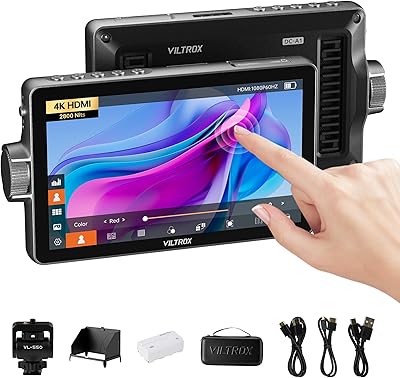
VILTROX DC-A1 7-inch Field Monitor
86%
94%
Brightness Performance
90%
Display Clarity
85%
Touchscreen Responsiveness
88%
Portability
75%
Build Quality
More
Feelworld FW759 7″ Field Monitor
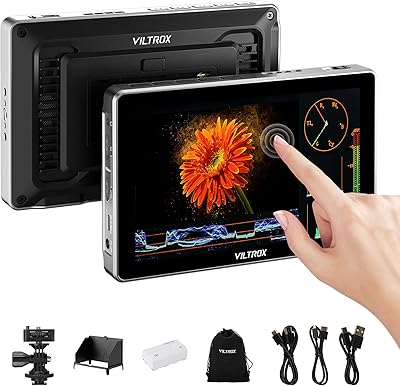
72%
83%
Image Clarity
58%
Brightness & Outdoor Usability
81%
Focus Peaking Performance
89%
Portability & Form Factor
54%
Build Quality & Durability
More
VILTROX DC-L1 7-Inch Touchscreen Camera Field Monitor
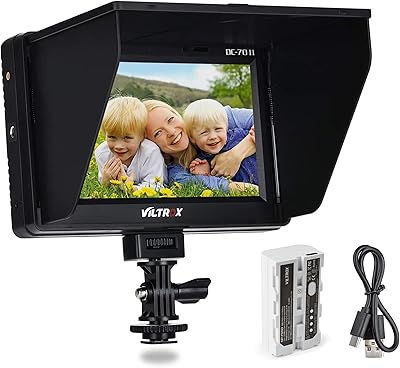
87%
93%
Display Quality
89%
Portability
85%
Power Options
91%
Sunshade Effectiveness
88%
Ease of Use
More
VILTROX DC-70 II 7″ Field Monitor
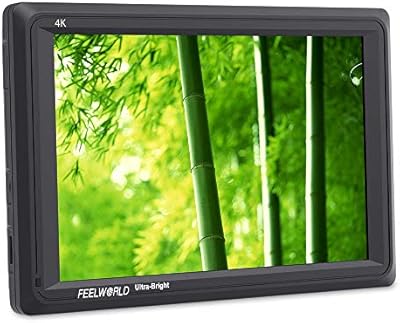
75%
88%
Value for Money
83%
Focus Peaking Performance
61%
Display Resolution & Sharpness
78%
Build Quality & Durability
74%
HDMI Connectivity
More
Osee T7 7-Inch 3000 Nits FHD DSLR Camera Field Monitor
86%
93%
Display Quality
89%
Portability
96%
Brightness
87%
Build Quality
82%
Ease of Use
More
FEELWORLD FW279 7 Inch 2200nit Ultra Bright DSLR Camera Field Monitor
85%
94%
Display Brightness
91%
Image Quality
88%
Portability
85%
Build Quality
83%
Ease of Use
More
Hosyond 7-inch Small Monitor
83%
92%
Portability & Size
87%
Display Quality
90%
Input Options & Connectivity
58%
Sound Quality
89%
Value for Money
More
LONCEVON 7-inch LCD Monitor
81%
88%
Portability
92%
Value for Money
75%
Display Quality
70%
Brightness
80%
Connectivity
More
LILLIPUT A7S 7″ Camera Field Monitor
84%
88%
Display Quality
91%
Portability & Weight
86%
Brightness in Outdoor Conditions
80%
Customizability of Buttons
83%
Durability & Build Quality
More

FAQ

Yes, it is compatible with Sony A7-series bodies. You will need the included Micro HDMI cable for most Sony mirrorless cameras. A small number of users have reported occasional signal flicker on first connection, but a cable reseat typically resolves it. Overall compatibility is solid across the Sony lineup.

It depends heavily on your environment. In open shade, overcast conditions, or indoors near windows, 450 nits is genuinely usable. In direct midday sunlight, however, the image washes out even with the sunshade attached. If most of your shoots happen outdoors in bright sun, you may find the visibility frustrating.

Yes. The USB power input lets you run the monitor from a power bank, laptop USB port, or USB wall adapter, which is handy for studio setups or interview setups near power. This also makes it easy to extend runtime beyond the battery without buying a second F750 battery immediately.

It can. At just under two pounds with the battery, this is not a light monitor, and on smaller or lighter gimbals the additional front weight may push the setup out of balance. Most users on a DJI RS 3 or RS 3 Pro can compensate with axis adjustment, but gimbal operators running sub-1kg camera bodies should factor in the counterbalance effort before buying.

Mini HDMI is the output found on many Canon DSLRs and some Panasonic Lumix bodies, among others. The Micro HDMI cable covers Sony Alpha, Fujifilm X-series, and many recent mirrorless cameras. Having both cables in the box means you can switch between cameras on set without digging through a cable bag.

A full charge from empty typically takes around 3 to 4 hours using a standard USB charger. The F750 battery uses a common NP-F750 form factor, so third-party chargers and spare batteries are widely available and inexpensive if you need to charge multiple packs simultaneously.

For static or slow-moving subjects, the Focus Peaking on the NEEWER F100 7-inch Field Monitor is reliable enough to use as your primary focus confirmation tool. For fast-moving subjects or very shallow depth-of-field work at wide apertures, it helps significantly but is not a substitute for a properly rigged follow focus system. Most solo shooters find it more than adequate for interview, product, and vlog work.

Attaching it is quick, but the fit quality varies between units. Most buyers find it clips on fine, but a meaningful number of users report that the tabs feel loose and the shade can pop off when they tilt or reposition the monitor. If you plan to shoot in windy conditions or move the monitor frequently, it is worth applying a small strip of adhesive foam tape to the contact points for a tighter fit.

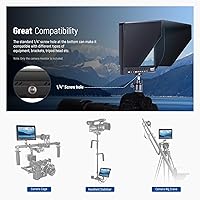
Yes, the ball head includes a standard cold shoe that fits most monitor arm adapters and magic arm clamps. As long as your arm or stand has a cold shoe or 1/4-inch thread adapter, you can position this monitor off-camera, which is useful for director monitors, teleprompter setups, or side-by-side reference viewing on a small crew.

Loosening over time is a real and commonly reported issue, particularly when the monitor is paired with heavier camera and lens combinations. The plastic ball joint wears faster than metal alternatives under daily stress. The good news is that the monitor itself has a standard cold shoe receiver, so you can swap the included ball head for any third-party monitor mount with a cold shoe or 1/4-inch stud without voiding anything — an upgrade many regular users end up making after a few months.