Overview

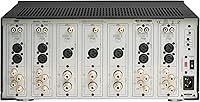
The OSD Audio Nero XMAX11 Home Theater Amplifier is built for people who treat their home theater as a real system, not just a soundbar upgrade. This amplifier runs eleven channels off Class AB circuitry, splitting its output into three high-current 310W channels for front duties and eight 135W channels meant for surrounds, wides, or height speakers. Under the hood sit dual toroidal transformers paired with a substantial capacitor bank, the kind of componentry that keeps power steady when a movie soundtrack suddenly demands a lot all at once. None of this reads like an entry-level AVR amp section. At 86 lbs in a tabletop chassis, the XMAX11 simply feels like a piece of dedicated amplification hardware rather than an accessory.

Features & Benefits

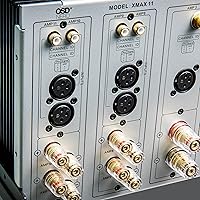
Power distribution is the headline here: three 310W channels give front left, center, and right outputs serious headroom, while eight 135W channels comfortably cover surrounds or Atmos height channels without strain. Connectivity covers both XLR and RCA inputs, so this 11-channel amp can take a balanced feed from a processor or fall back to standard unbalanced cabling depending on what the rest of the rig uses. Frequency response stretches from 5Hz to 50kHz, which translates to deep bass extension and treble that stays clean rather than thin. A remote trigger input lets it power on automatically alongside a processor or custom-install controller, cutting out one more manual step. Backing it all is a 5-year warranty, a reassuring sign for a component expected to run for years.

Best For

This amplifier makes the most sense in a dedicated theater room running a full Atmos or DTS:X speaker layout, where height channels and surrounds all need real power rather than scraps left over from a receiver's amp section. It is also a strong fit for listeners running inefficient or high-end speakers that simply do not come alive on modest wattage. Custom installers will appreciate the balanced XLR connections for multi-zone or longer cable runs where unbalanced signals tend to pick up noise. Anyone who has maxed out the built-in amplification on a typical AV receiver and wants real separation between processing and power will find this a natural upgrade path. That said, a small stereo setup or a simple two-channel listening room has no real use for this kind of output or channel count.

User Feedback

Owner feedback puts this amplifier at a 4.4 out of 5 average, with most praise centered on the sheer power headroom and having eleven channels available without needing a second amp box. People setting up large Atmos systems specifically mention how reassuring it is to know every channel has real current behind it instead of a receiver straining at higher volumes. On the downside, a handful of reviewers bring up the size and weight when planning shelf or rack space, since this is not something you tuck behind a TV stand. A few buyers also note there is no channel-bridging option for those wanting fewer, more powerful channels, and no onboard subwoofer crossover, meaning bass management has to happen elsewhere in the signal chain.

Pros

  • Three 310W channels give front speakers real, usable headroom at reference volumes
  • Eight 135W channels comfortably cover surrounds and Atmos height speakers
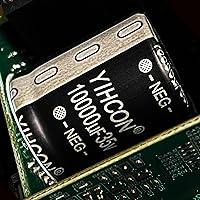
  • Dual toroidal transformers and a large capacitor bank keep power steady under load
  • Both XLR and RCA inputs offer flexibility for balanced or standard connections
  • Wide 5Hz to 50kHz frequency response supports deep bass and crisp treble
  • Remote trigger input allows automatic power-on with a processor or controller
  • OSD Audio Nero XMAX11 Home Theater Amplifier carries a reassuring 5-year warranty
  • Owners consistently praise the power reserves available across all eleven channels

Cons

  • No channel-bridging option for those wanting fewer, more powerful outputs
  • No onboard subwoofer crossover, so bass management falls on other components
  • At 86 lbs, it demands sturdy shelving or dedicated rack space
  • Bulky tabletop chassis can be awkward to fit into tighter cabinets
  • Requires a separate processor for any Atmos or DTS:X decoding
  • Overkill for small rooms or basic two-channel listening setups
  • Premium price positions it well above typical receiver-based amp sections

Ratings

The OSD Audio Nero XMAX11 Home Theater Amplifier has been evaluated using an AI-driven analysis of verified buyer reviews collected from multiple marketplaces worldwide, with spam, bot activity, and incentivized feedback filtered out before scoring. The breakdown below reflects what real owners consistently praise as well as the recurring friction points, so you get an honest picture rather than a polished sales pitch. Scores are weighted toward categories that actually influence a buying decision for a multi-channel amplifier like this one.

Power Output & Headroom
94%
Owners consistently report that the 310W front channels and 135W surround channels deliver noticeably more dynamic punch than a typical AVR amp section, especially during loud action scenes. This amplifier rarely feels strained, even when driving demanding speaker loads at reference volumes.
That much headroom is simply unnecessary for smaller rooms or modest speaker setups, where users end up paying for capability they never tap into. A few buyers also mention it takes deliberate gain-staging to avoid an overly hot signal on sensitive front channels.
Sound Clarity & Fidelity
89%
Listeners describe a clean, detailed presentation across dialogue, effects, and music, with the wide frequency response capturing both deep bass effects and crisp high-end detail. Many feel it reveals new layers in familiar movie soundtracks compared to receiver-only amplification.
A small number of users note that any gains in clarity are only obvious when paired with genuinely capable speakers and a quality processor upstream. On modest speaker setups, the improvement over a receiver's internal amp section is harder to notice.
Build Quality & Componentry
91%
The dual toroidal transformers and substantial capacitor bank give this amplifier a reassuringly solid, dense feel that reviewers associate with serious build quality. Several owners specifically call out the internal componentry as a step above typical consumer-grade amps.
The dense internals translate directly into significant weight, which a few buyers found inconvenient when unboxing or repositioning the unit alone. It is not a piece of gear you casually move around once it is installed.
Value for Money
78%
22%
Buyers investing in a dedicated multi-room Atmos setup generally feel the power-per-channel and componentry justify the cost compared to assembling several smaller amps. The included warranty adds to the sense of long-term value for a serious home theater investment.
For anyone without a true 11-channel speaker layout, several reviewers feel the price is hard to justify against simpler, lower-channel alternatives. It is clearly priced for enthusiasts rather than casual upgraders.
Connectivity & Input Flexibility
86%
Having both XLR and RCA inputs gets consistent praise, since it lets owners use balanced connections for longer runs while still supporting standard processors with RCA-only outputs. Custom installers in particular appreciate this flexibility.
A few users wish for additional connectivity options like network monitoring or app-based control, which this amplifier does not offer. It is a straightforward, connection-focused design without smart features some modern systems include.
Bass Extension & Low-End Control
88%
The 5Hz low-end extension earns praise from owners who notice tighter, more controlled bass on action movie soundtracks, particularly on channels handling front and center duties. Several describe the low end as punchy without becoming muddy.
Without an onboard crossover, getting that bass extension properly integrated with a subwoofer takes extra configuration in the processor. Buyers expecting plug-and-play bass management have to handle it elsewhere in the chain.
Noise Floor & Signal Purity
90%
The 110dB signal-to-noise rating shows up in real listening as a notably quiet background, with reviewers noting an absence of hiss even at higher volumes during quiet film scenes. This contributes meaningfully to perceived clarity.
Achieving that quiet noise floor depends on using quality cabling and proper gain-staging, and a couple of owners reported audible hum until they corrected grounding or cable routing. It is not entirely a set-and-forget result.
Size & Footprint Practicality
58%
42%
For dedicated equipment rooms or large AV racks, the substantial chassis is simply accepted as part of owning serious amplification hardware, and the tabletop design sits stably on a sturdy shelf.
At 86 lbs and a sizable footprint, multiple reviewers say it forced a rethink of shelving or cabinet plans, since it will not fit into compact AV furniture. It is genuinely awkward to move without help.
Ease of Installation/Setup
71%
29%
The remote trigger input gets specific praise for letting the amplifier power on automatically alongside a processor, removing one manual step from daily use once everything is wired correctly.
Initial setup, particularly running 11 channels of cabling and choosing between XLR and RCA per connection, takes real planning and is not beginner-friendly. Several reviewers recommend professional installation for a smooth result.
Channel Flexibility (11-Channel Layout)
83%
Having three high-power channels alongside eight standard channels in one box appeals to owners building out full Atmos layouts, since it covers front, surround, and height duties without a second amplifier.
Users running smaller layouts feel several channels go unused, and the fixed 3-plus-8 split does not suit every speaker configuration equally well. It rewards larger systems more than modest ones.
Subwoofer Integration & Bass Management
41%
59%
Owners who already handle bass management through their AV processor find this a non-issue, since the amplifier still passes through the necessary low-frequency signal cleanly to powered subwoofers.
The lack of any onboard subwoofer crossover or low-pass filter is one of the more commonly flagged gaps, forcing owners to rely entirely on external gear for proper bass integration. This is the weakest area for buyers expecting built-in convenience.
Bridging/Channel Combining Options
38%
62%
For owners who never plan to combine channels, this limitation is irrelevant, and the standard 11-channel configuration covers their needs without complication.
Buyers hoping to bridge channels into fewer, higher-powered outputs for demanding subs or towers consistently call out the absence of this feature as a real limitation versus competing amplifiers. It restricts flexibility for non-standard setups.
Warranty & Long-Term Reliability
85%
The 5-year warranty gives owners genuine peace of mind for a component expected to run for years, and early reliability reports describe stable, consistent operation under sustained home theater use.
Because the amplifier is still relatively new to the market, long-term reliability data beyond a couple of years is limited, so some buyers remain cautiously optimistic rather than fully certain.
Heat Management & Idle Efficiency
67%
33%
At a low idle current draw, reviewers note the unit stays reasonably cool during typical listening sessions and does not require active cooling for normal home theater volumes.
During extended high-volume sessions, several owners mention noticeable heat buildup that calls for good ventilation around the chassis. It is not a unit you want to enclose tightly in a sealed cabinet.

Suitable for:

The OSD Audio Nero XMAX11 Home Theater Amplifier is built for someone with a dedicated theater room and a full Atmos or DTS:X speaker layout that actually needs eleven discrete channels of real power. It suits listeners running inefficient or high-end speakers that have always sounded a bit flat off a receiver's built-in amp section, since the front three channels alone offer serious headroom. Custom installers and AV enthusiasts working on multi-zone setups will appreciate having both XLR and RCA options for balanced, low-noise runs across a rack or longer cable distances. It also fits anyone who has outgrown an AV receiver and wants to separate processing duties from amplification entirely. Buyers who plan around the included 5-year warranty as a long-term investment, rather than a quick upgrade, are exactly who this amplifier is designed for.
Not suitable for:

The OSD Audio Nero XMAX11 Home Theater Amplifier is not a good match for small rooms, apartment setups, or anyone running a simple two-channel stereo system, since that much power and channel count goes largely unused. Buyers wanting to bridge channels for fewer, higher-powered outputs will be disappointed, as there is no bridging functionality built in. It also is not the right pick for anyone hoping to skip a separate processor, since this unit handles amplification only and leaves Atmos and DTS:X decoding to outside gear. People without the rack space or shelf strength for an 86 lb chassis should think twice before buying, too. Anyone wanting onboard subwoofer crossover or bass management will need to plan for that elsewhere in their system.
Specifications

  • Amplifier Type: This is a Class AB multi-channel amplifier designed for home theater and custom install use.
  • Channel Count: The unit provides 11 total amplification channels in a single chassis.
  • High-Power Channels: Channels 1 through 3 deliver 310W each into 4 ohms for demanding front-stage duties.
  • Standard Channels: Channels 4 through 11 deliver 135W each into 4 ohms for surrounds and height speakers.
  • Power Supply: Power is supplied by dual toroidal transformers rated at a combined 2.3KVA.
  • Capacitor Bank: Energy storage includes three 4000uF capacitors and eight 2000uF capacitors for sustained dynamic output.
  • Frequency Response: Rated frequency response spans 5Hz to 50kHz at +0/-3dB.
  • Input Connections: The amplifier accepts both balanced XLR inputs and unbalanced RCA inputs.
  • Signal-to-Noise Ratio: Signal-to-noise ratio is rated at 110dB for a clean, low-noise output.
  • Remote Trigger: A 12V-style remote trigger input accepts 8 to 24V DC at 5mA for automated power-on.
  • Weight: The amplifier weighs 86 lbs.
  • Dimensions: Chassis dimensions measure 17.1″ deep by 17.6″ wide by 7.25″ high.
  • Warranty: The product is backed by a 5-year manufacturer warranty.
  • Mounting Type: This is a tabletop unit and is not designed for rack-ear mounting.
  • Bridging Support: The amplifier does not offer channel bridging for combining outputs into fewer, higher-power channels.

Related Reviews

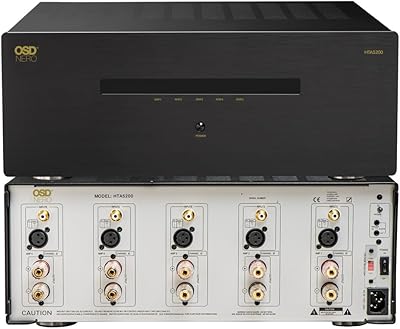
OSD Audio Nero HTA5200
80%
91%
Build Quality
88%
Power Output & Headroom
93%
Signal-to-Noise & Background Noise
86%
Input Flexibility
84%
System Integration & Automation
More
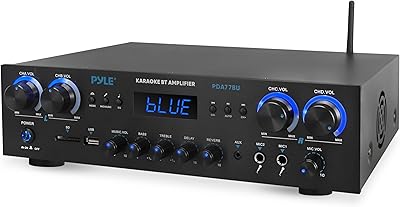
Pyle PDA77BU Bluetooth Stereo Amplifier
71%
81%
Value for Money
88%
Ease of Setup
78%
Karaoke Performance
72%
Bluetooth Connectivity
67%
Sound Quality
More
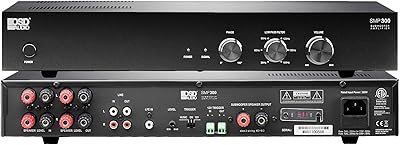
OSD Audio SMP300 Subwoofer Amplifier
76%
74%
Value for Money
88%
Input Flexibility
81%
Crossover & Tuning Controls
86%
Heat Management
83%
Ease of Installation
More
Pyle PTA66BT 6-Channel Bluetooth Stereo Amplifier
74%
83%
Value for Money
88%
Ease of Setup
79%
Bluetooth Performance
81%
Microphone Performance
58%
Power Output & Headroom
More
Pyle PCA3 Dual Channel Stereo Power Amplifier
68%
83%
Value for Money
91%
Ease of Setup
67%
Sound Quality
58%
Power Output
53%
Build Quality
More
Pyle PT260A Stereo Home Audio Amplifier
72%
83%
Value for Money
78%
Karaoke Performance
54%
Power Output
61%
Build Quality
86%
Ease of Setup
More
Polk Audio T50 Floor Standing Tower Speaker
80%
84%
Bass Performance
69%
Treble Clarity
77%
Midrange Quality
82%
Volume & Dynamics
91%
Value for Money
More
OSD Audio MX1280 Gen2
79%
88%
Audio Performance
84%
Power Output & Headroom
86%
Zone Control & Flexibility
91%
Build Quality & Durability
78%
Thermal Management
More
Pyle PFA330BT
Pyle PFA330BT
73%
88%
Value for Money
71%
Sound Quality
52%
Rated Power Accuracy
74%
Bluetooth Connectivity
67%
Build Quality
More
Dmyond AK45 Home Audio Power Amplifier
73%
88%
Value for Money
67%
Sound Quality
83%
Bluetooth Performance
91%
Connectivity & Inputs
52%
Build Quality
More

FAQ

You will still need a separate AV processor or receiver with pre-outs, since this amplifier only handles amplification rather than Atmos or DTS:X decoding. Once your processor decodes the signal, this amplifier takes over and provides the power to your speakers. Think of it as adding serious muscle to a system your processor already controls.

No, this particular model does not support channel bridging. Each of the 11 channels operates independently at its rated wattage, so if you need bridged mono channels for something like dual subwoofers, you would need a different amplifier or a separate sub amp.

There is no onboard subwoofer crossover or low-pass filter on this unit. Bass management needs to be handled by your AV processor or receiver, which is fairly standard for an amplifier focused purely on power delivery rather than signal processing.

Plan for a fairly substantial footprint, since the chassis measures about 17.1 by 17.6 by 7.25 inches and weighs 86 lbs. It is a tabletop design rather than a rack-mount unit, so you will want a sturdy shelf or dedicated amp stand rather than a flimsy media console.

Honestly, yes, for most small rooms or simple stereo listening. The OSD Audio Nero XMAX11 Home Theater Amplifier is built for larger dedicated theater rooms with full Atmos or DTS:X speaker layouts, where having real power behind every channel actually matters.

Inefficient speakers or high-end towers that tend to sound thin or strained on a receiver's built-in amp will benefit the most here. If your current setup struggles at higher volumes or loses detail during dynamic movie scenes, the extra headroom on the front channels especially should make a noticeable difference.

That depends on your processor. XLR balanced connections are generally the better choice for longer cable runs or noisy environments, since they resist interference better than RCA. If your processor only has RCA pre-outs, those will work just fine for shorter cable runs.

The internal componentry, including the dual toroidal transformers and large capacitor bank, points to a build meant for sustained heavy use rather than casual listening. The 5-year warranty also suggests the manufacturer expects this unit to hold up well over time.

Feedback sits at a strong 4.4 out of 5 stars, with most praise centered on the power headroom and having all 11 channels handled by one unit. A few owners mention the size and weight as something to plan around, but that tends to come with the territory for amplifiers in this power class.

Yes, this amplifier can absolutely handle that, since your processor assigns each channel as needed. You could run a few channels for traditional stereo or surround duty while using the rest for height or Atmos speakers, all from the same unit.