

Overview

The OSD Audio SMP300 Subwoofer Amplifier is a compact, Class D mono amp that punches reasonably well for its price bracket — a solid pick if you need dedicated bass amplification without breaking the bank. OSD Audio has carved out a niche building affordable home audio gear, and this sub amp fits squarely in that tradition. It is worth being clear upfront: this is a dedicated subwoofer amplifier, not a multi-channel solution. You are buying it to power a passive sub driver, and that narrow focus is actually a strength. Knowing what you are getting into makes the value proposition much easier to evaluate.

Features & Benefits

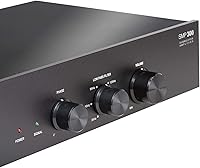
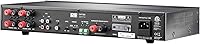
The SMP300 runs on Class D topology, which keeps the unit cool under load and sips power compared to older Class A/B designs — a real advantage if your amp sits inside a closed cabinet. Input flexibility is a genuine highlight: you get LFE, line-level, and speaker-level connections, meaning this Class D amplifier can integrate with virtually any receiver or source setup, old or new. The adjustable low-pass filter lets you dial in exactly where the bass hands off to your mains, and the variable phase control is crucial for avoiding that hollow, muddy sound that happens when sub and speakers work against each other. Dimensions sit at roughly 16.25″ wide and just 3″ tall.

Best For

This sub amp makes the most sense for a specific type of buyer. If you have a passive subwoofer driver sitting in an enclosure without power — either DIY-built or stripped from a dead plate-amp unit — the SMP300 is a practical, cost-effective way to bring it back to life. It also suits home theater integrators who need something slim enough to tuck into an AV rack without sacrificing crossover control. Budget-conscious enthusiasts who want phase and filter adjustability without climbing into premium price territory will find it genuinely useful. It is not the right fit for powered subwoofers or anyone needing multi-channel amplification.

User Feedback

With roughly 199 ratings averaging 3.9 stars, the reception for this Class D amplifier is best described as cautiously positive. Buyers consistently praise the easy installation process and the input flexibility, which made integration into existing setups straightforward. The compact size also draws frequent compliments. On the flip side, a notable portion of reviewers question whether the 500W figure represents real-world continuous output — and that skepticism is fair. Peak or max ratings rarely reflect sustained RMS performance, so temper expectations accordingly. A few users also flagged concerns about long-term build quality. Overall, the consensus lands at: dependable for the price, but approach the spec sheet with healthy skepticism.

Pros

  • Supports LFE, line-level, and speaker-level inputs, making it compatible with almost any receiver or source.
  • The Class D design runs cool even during extended use, reducing heat concerns in enclosed spaces.
  • Adjustable low-pass filter gives real control over how bass integrates with your main speakers.
  • Variable phase control helps prevent the muddy, hollow sound caused by driver misalignment.
  • Compact dimensions make it practical for tight AV rack installations where space is limited.
  • Straightforward hookup process — most buyers report getting it running without hassle.
  • Works with both 4-ohm and 8-ohm subwoofer loads, broadening driver compatibility.
  • A cost-effective solution for reviving a passive sub or powering a DIY enclosure build.

Cons

  • The 500W max rating is a peak figure; real continuous output is significantly lower and can mislead buyers.
  • Several users have flagged concerns about long-term build quality and component durability.
  • No auto-on sensing means you may need to power the amp manually or leave it running.
  • A handful of reviewers report noise floor issues, which can be audible in quieter listening environments.
  • Customer support experiences from OSD Audio appear inconsistent based on user reports.
  • At roughly 8 lbs, the unit is not particularly heavy, which can raise questions about internal component density.
  • The 3.9-star average across nearly 200 ratings suggests a meaningful minority of buyers had real frustrations.
  • No remote or smart-home integration of any kind — purely analog controls only.

Ratings

The OSD Audio SMP300 Subwoofer Amplifier scores below are generated by our AI review engine after analyzing verified global buyer feedback, actively filtering out incentivized, bot-generated, and duplicate submissions to surface genuine user sentiment. Both standout strengths and recurring frustrations are transparently reflected in every category — nothing is glossed over. Where this sub amp earns high marks, you will see why; where real buyers ran into trouble, the scores show that too.

Value for Money
74%
26%
For buyers on a budget who need crossover control, phase adjustment, and multi-input flexibility, the SMP300 delivers features that would cost significantly more from a premium brand. Most users feel they got a functional, capable amplifier without paying for a name-brand markup.
A meaningful subset of buyers feel the value proposition weakens when the amp is pushed harder or when long-term reliability is factored in. If you are comparing total cost of ownership rather than just sticker price, the calculus gets closer than it first appears.
Input Flexibility
88%
The combination of LFE, line-level, and speaker-level inputs is genuinely rare at this price point and repeatedly praised by buyers integrating the amp into mixed or legacy setups. Home theater installers in particular called this out as a key reason they chose this unit over competitors.
A few users noted the input labeling on the physical unit could be clearer, leading to initial confusion during setup. The inputs themselves perform well, but the onboarding experience for less experienced buyers is not as polished as it could be.
Crossover & Tuning Controls
81%
19%
The adjustable low-pass filter and variable phase control are real, functional tools — not token additions. Buyers who took the time to dial them in reported noticeably tighter, better-integrated bass compared to fixed-crossover alternatives at similar price points.
Neither control is detented or numerically labeled, which makes it hard to return to a specific setting once you find it. Users who share a system with others, or who regularly reconfigure their setup, found this frustrating over time.
Heat Management
86%
Class D efficiency translates directly into lower operating temperatures, and buyers consistently noted the unit stays manageable even after hours of use. Those running the amp inside enclosed AV cabinets reported far less concern about heat buildup than they expected.
While heat is not a major issue under normal listening conditions, a few users who pushed the amp hard during extended high-volume sessions noted it got warmer than anticipated. Ventilation is still advisable in fully enclosed rack installations.
Ease of Installation
83%
The majority of buyers — including those without deep technical backgrounds — got the SMP300 up and running quickly. The multiple input options meant most people could use cables they already had, and the physical layout of the rear panel was described as logical and accessible.
Users replacing a failed plate amp found the external form factor required creative mounting solutions since this unit is not designed to drop into a standard plate amp cutout. A brief but clear quick-start guide would go a long way for first-time sub amp buyers.
Build Quality
58%
42%
The chassis feels solid enough for shelf or rack placement, and the overall construction is adequate for light to moderate home theater use. Several installers noted it held up fine in wall-cabinet installations where it is not regularly handled.
A notable share of reviewers flagged concerns about internal component quality and long-term durability, particularly under sustained high-power use. Some units showed signs of wear or performance degradation earlier than buyers expected for the price, which pulls the score down meaningfully.
Noise Floor
62%
38%
Under typical home theater listening conditions — movie soundtracks, bass-heavy music — the noise floor is not an issue and most buyers never notice it. For casual use in moderate-sized rooms, the amp is quiet enough to satisfy the majority of users.
In quieter listening environments or with higher-sensitivity subwoofer drivers, a low-level hiss was reported by a recurring subset of reviewers. Audiophiles or those using the amp for music listening rather than home theater will find this more bothersome than casual movie watchers.
Power Output (Real-World)
61%
39%
For the use cases this amp is designed for — powering a single passive subwoofer in a typical home theater room — the actual output is sufficient and gets the job done without obvious strain at normal listening volumes.
The 500W max rating is a marketing peak figure and bears little resemblance to sustained RMS output, which is considerably lower. Buyers who purchased expecting near-500W continuous performance were consistently disappointed, and this gap between expectation and reality accounts for a significant chunk of the negative reviews.
Compact Footprint
91%
At roughly 16.25″ wide and just 3″ tall, the form factor is one of the most consistently praised attributes across all buyer feedback. Installers and DIYers alike called it out as a practical advantage when working in tight AV rack spaces or custom enclosure builds.
The width, while slim in height, is still a full 16-plus inches across, which can be wider than expected for buyers picturing a truly miniature unit. Measure your available shelf space before ordering, especially in pre-built entertainment centers with fixed compartment widths.
Compatibility
84%
The 4-ohm and 8-ohm impedance range covers the vast majority of passive subwoofer drivers on the market, and the multi-input design ensures it plays nicely with receivers from multiple decades. Very few buyers reported genuine compatibility dead-ends with this amp.
Users with unusual impedance loads outside the 4 to 8 ohm window will find no official guidance or support for those configurations. Additionally, buyers with fully balanced XLR-based signal chains have no balanced input option available on this unit.
Phase Control Effectiveness
77%
23%
The variable phase adjustment works as advertised, and buyers who took the time to tune it properly noticed a real improvement in bass coherence — particularly in rooms where the subwoofer placement was not acoustically ideal.
Without discrete detents or a printed degree scale, fine-tuning the phase control is more guesswork than science. Users who prefer a repeatable, measurable setup process will find this analog knob approach limiting compared to amplifiers with digital phase adjustment.
Brand Reliability
63%
37%
OSD Audio has built a recognizable name in the affordable home audio segment, and buyers who have used multiple OSD products tend to approach this amp with reasonable confidence. The brand has enough of a track record to be taken seriously in the budget-to-mid market.
Post-purchase support experiences reported by buyers are inconsistent — some received responsive help, others described difficulty getting meaningful assistance. For a product where build quality questions have surfaced, stronger and more consistent customer support would make a real difference to the overall ownership experience.

Suitable for:

The OSD Audio SMP300 Subwoofer Amplifier is a strong match for anyone dealing with a passive subwoofer driver that needs dedicated amplification — particularly DIYers who built their own enclosure or those rescuing a sub whose built-in plate amp gave out. Home theater enthusiasts working within a tighter budget will appreciate that it does not force them to choose between connectivity options and tuning flexibility, since LFE, line-level, and speaker-level inputs are all on board. Integrators and installers will find the low-profile chassis easy to slot into crowded AV cabinets where a bulkier amp simply would not fit. The adjustable crossover and phase controls also make it a reasonable pick for buyers who want hands-on control over how their bass blends into the room, without paying for a premium amplifier to get those features.

Not suitable for:

The OSD Audio SMP300 Subwoofer Amplifier is not the right tool if you already own a powered subwoofer — you do not need an external amp for that, and buying one would be redundant. Buyers who are drawn in purely by the 500W headline figure should pump the brakes: that number represents a peak or max rating, not continuous RMS output, and real-world sustained performance will land noticeably lower. If long-term build durability is a top priority and you plan to run the amp hard for years without intervention, the mixed feedback around quality control is worth taking seriously. Anyone expecting audiophile-grade refinement or dead-silent noise floors at this price tier will likely come away disappointed. This is also not suited for multi-channel setups — it is a single mono channel, full stop.

Specifications

  • Brand: Manufactured by OSD Audio, a brand focused on affordable home audio components for residential and light commercial installations.
  • Model Number: This unit carries the model designation SMP-300, part of OSD Audio's SMP series of dedicated subwoofer amplifiers.
  • Amplifier Class: Uses Class D digital amplifier topology, which prioritizes energy efficiency and low heat output over raw analog warmth.
  • Output Power: Rated at 500W max output on a single mono channel; buyers should note this is a peak figure, not a continuous RMS rating.
  • Channels: Single-channel mono configuration, designed exclusively for driving one passive subwoofer driver or subwoofer enclosure.
  • Impedance: Stable with both 8-ohm and 4-ohm subwoofer loads, giving it reasonable flexibility across common passive driver configurations.
  • Input Types: Accepts three input signal types: LFE (Low Frequency Effects), line-level RCA, and speaker-level inputs for broad source compatibility.
  • Low-Pass Filter: Features a user-adjustable low-pass crossover filter, allowing the cutoff frequency to be tuned to match the listener's room and main speakers.
  • Phase Control: Includes a variable phase adjustment control to help align bass output with main speakers and minimize acoustic cancellation.
  • Dimensions: The unit measures approximately 16.25″ wide, 3″ tall, and 9.25″ deep, making it well-suited for shelf or rack mounting.
  • Weight: Weighs 8 lbs, which is relatively light for a 500W-rated amplifier and reflects the efficiency of the Class D internal design.
  • Certifications: CE certified, indicating the unit meets applicable European safety and electromagnetic compatibility standards.
  • Mounting Type: Designed for surface mount installation, with a low-profile chassis that fits standard AV rack shelves and enclosed cabinetry.
  • Package Dimensions: Ships in a box measuring approximately 21.75″ x 12.5″ x 5.8″, with protective packaging included from the factory.
  • Availability Date: This model was first made available for purchase in April 2019, giving it several years of real-world user feedback to draw from.

Related Reviews
OSD Audio SMP500 800W Mono-Channel Subwoofer Amplifier
86%
88%
Performance
90%
Bass Enhancement
81%
Ease of Installation
93%
Heat Management
85%
Power Output
More
Fosi Audio M04 Subwoofer Amplifier
89%
94%
Bass Performance
91%
Sound Clarity
88%
Build Quality
90%
Ease of Setup
87%
Thermal Management
More
Fosi Audio M03
Fosi Audio M03
81%
91%
Audio Clarity & Distortion
74%
Power Output & Headroom
88%
Versatility & Operating Modes
93%
Value for Money
72%
Build Quality & Enclosure
More
OSD Audio IWS8 In-Wall Subwoofer
84%
89%
Bass Performance
78%
Installation Ease
93%
Space-Saving Design
84%
Sound Clarity
87%
Build Quality
More
OSD Audio IWS10 In-Wall Subwoofer 10″
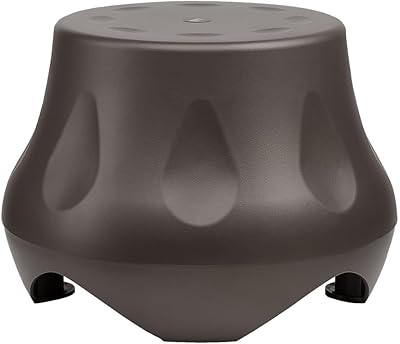
84%
87%
Sound Quality
90%
Bass Performance
78%
Ease of Installation
85%
Value for Money
92%
Design & Aesthetics
More
OSD Audio XSUB12 12″ Outdoor Subwoofer
85%
90%
Sound Quality
88%
Weather Resistance
85%
Installation Flexibility
92%
Bass Depth & Clarity
75%
Size & Dimensions
More
OSD Audio Forza 10 Outdoor Subwoofer
77%
88%
Bass Performance
91%
Build Quality
86%
Weather Resistance
58%
Ease of Setup
72%
Value for Money
More
Fosi Audio M01-BT Subwoofer Amplifier
79%
83%
Bass Output Quality
91%
Value for Money
86%
Bluetooth Connectivity
88%
Ease of Setup
74%
Build Quality & Finish
More
Fosi Audio TP-02 Subwoofer Amplifier
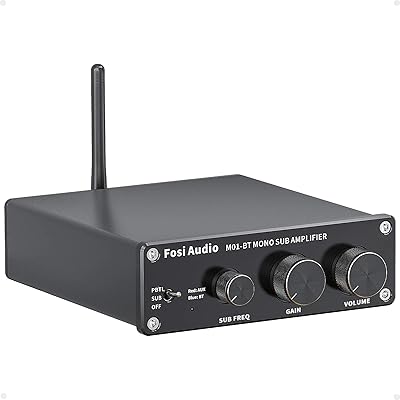
82%
88%
Sound Quality
91%
Value for Money
83%
Build Quality
61%
Real-World Power Output
86%
Crossover & Tuning Controls
More
OSD Audio Forza 8 Outdoor Subwoofer
73%
91%
Weather & Moisture Resistance
88%
Sound Dispersion
84%
Build Quality & Materials
67%
Bass Output & Performance
58%
Installation Experience
More

FAQ

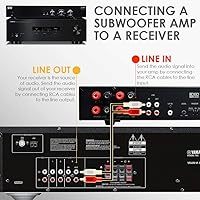
In most cases, no replacement is needed. The SMP300 accepts LFE, line-level, and speaker-level inputs, so it can tap into whatever output your receiver already provides. If your receiver has a dedicated subwoofer preout, just run an RCA cable directly to the LFE input and you are ready to go.

That 500W figure is a max or peak rating, not a continuous RMS number. In practice, sustained output power will be lower — this is standard across most consumer audio marketing and is not unique to this amp. For most home theater use cases the real-world output is still plenty capable, but do not expect it to deliver 500 watts continuously at full load.

Yes, and that is actually one of the better use cases for this sub amp. If you have a DIY enclosure with a passive driver, this unit gives you proper amplification plus the crossover and phase controls to tune it properly. Just make sure your driver is rated for 4 or 8 ohms so impedance is compatible.

It can, yes. The OSD Audio SMP300 Subwoofer Amplifier is a popular choice for exactly this scenario. You would mount or position it externally rather than dropping it into the plate amp cutout, but electrically it does the same job — driving the passive driver inside your existing enclosure.

Class D amplifiers are notably more efficient than older Class A/B designs, so heat output is much lower. Most users report the unit staying warm but not hot during normal operation. That said, some ventilation is always a good idea when mounting any amp inside an enclosed space.

Start with the low-pass filter set around 80Hz, which is a common starting point for home theater subwoofer integration. Then play music or a test tone and adjust the phase control until bass sounds fullest and most natural — you are listening for the point where the sub and your main speakers reinforce rather than cancel each other. It takes a few minutes of experimentation but is straightforward once you know what to listen for.

No, this Class D amplifier does not include auto-on or signal-sensing functionality. You will need to power it on manually or connect it to a switched outlet that ties into your main system power. It is a minor inconvenience but worth knowing ahead of purchase.

This is a single mono channel amp, so it is designed to drive one subwoofer load. You could wire two drivers in a dual-driver enclosure if the combined impedance stays within the 4 to 8 ohm range, but running two independent subwoofer cabinets from this unit is not a supported configuration.

At this price point you are getting solid core functionality — usable inputs, adjustable crossover, and phase control — but premium amps typically offer tighter tolerances, lower noise floors, and more robust internal components. For casual home theater use, the difference is often not dramatic. For critical listening or high-demand installations, the gap becomes more noticeable.

The most frequent one is mismatching impedance — make sure your subwoofer driver is 4 or 8 ohms before connecting. Another common issue is setting the crossover too high, which creates overlap with the main speakers and produces boomy, indistinct bass. Start conservative with your filter settings and tune by ear from there rather than cranking everything at once.

Where to Buy