Overview

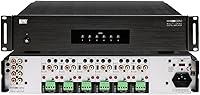
The OSD Audio MX1280 Gen2 has been a steady fixture in the multi-zone amplifier market since its original launch in 2011, and the Gen2 revision brought meaningful refinements — Class D efficiency and cleaner front-panel zone controls — that kept it competitive against established names like Sonance and Russound. Built around a 6-zone, 12-channel architecture, it targets whole-home audio distribution and light commercial installs where independently managed zones are a priority. The 2U rack-mount form factor is a practical advantage in dedicated AV closets, and at its price point it offers a compelling combination of channel count and build quality relative to what comparable units typically cost.
Features & Benefits

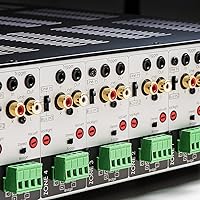
What sets this 6-zone amplifier apart from older Class A/B designs is how little heat it generates during extended operation — Class D topology keeps idle power consumption low, which matters when the unit runs continuously in a wall cabinet with limited airflow. Each zone pulls from dedicated RCA stereo inputs, giving installers the flexibility to assign different sources without a matrix switcher. Running 8-ohm speakers you get 50W per channel; drop to 4-ohm loads and that climbs to 80W. Need to push a single large zone harder? Bridged mono at 160W is available. Built-in thermal and short-circuit protection rounds out a feature set clearly built for continuous-use environments.

Best For

This multi-room amp was built with integrators and custom installers in mind, but motivated DIY buyers will find it equally accessible once the wiring basics click. It is the natural choice for new construction or whole-home retrofit projects where a single rack unit needs to drive speakers throughout an entire house. Small restaurants, retail shops, or offices that need zoned background audio without relying on app-dependent systems will appreciate how straightforwardly it operates. Home theater enthusiasts building out a 5.1 or 7.2 setup who want a dedicated power stage separate from their pre/pro will also find it a solid match.

User Feedback

With a 4.1-star average across nearly 140 ratings spanning well over a decade, the MX1280 Gen2 has earned a reputation for doing exactly what it promises. Long-term owners consistently point to a low noise floor and clean power delivery as standout qualities — no hum, no buzz, just reliable output across zones. The most common complaint is not about performance; it is about documentation. The manual is thin on detail for bridged-mono wiring, which frustrates installers trying to maximize output on a single zone. Others flag the lack of network control as a limitation in smart-home installations — though plenty of users treat that same limitation as a feature, citing fewer failure points and long-term stability.

Pros

  • Six independently switchable zones cover most whole-home and light commercial audio layouts without extra hardware.
  • Class D efficiency keeps the chassis cool and power bills lower during continuous, always-on operation.
  • Front-panel zone buttons let non-technical users manage areas without an app, remote, or controller.
  • Proven hardware longevity — verified buyers report reliable daily operation stretching back well over a decade.
  • Per-zone RCA stereo inputs give installers clean source-routing flexibility from any receiver or streamer.
  • The 2U rack-mount profile fits neatly into standard AV cabinets without sacrificing significant rack space.
  • Built-in thermal and short-circuit protection has prevented permanent damage during real-world overload events.
  • Bridged mono operation unlocks meaningful extra headroom for a single high-demand zone like a patio or great room.
  • Competitive channel-count-to-price ratio is difficult to match from Russound or Sonance at the same spend.
  • No network dependency means zero downtime risk from cloud outages, app updates, or router failures.

Cons

  • The included manual is too sparse for bridged-mono wiring and mixed-impedance speaker load configurations.
  • No IP control, RS-232, or app support makes smart-home integration effectively impossible without workarounds.
  • Per-zone volume adjustment requires separate in-wall knobs or an external controller — the amp offers no onboard gain control.
  • Weighing over 20 pounds, solo rack mounting is awkward and genuinely benefits from a second pair of hands.
  • Rear panel becomes congested once all six zones are fully wired with RCA pairs and speaker runs simultaneously.
  • The finish attracts fingerprints and shows scuffs from routine servicing more readily than some competitors.
  • A faint hiss has been reported at high-sensitivity speaker pairings when listening at very low volume levels.
  • Enclosed rack cabinets with poor airflow can cause the unit to run warmer than expected during extended continuous use.
  • Post-sale customer support response times appear inconsistent based on verified long-term buyer accounts.
  • No per-zone source selection onboard — source assignment is fixed at installation and requires external switching to change.

Ratings

Our scores for the OSD Audio MX1280 Gen2 are generated by AI after systematically analyzing verified buyer reviews from global sources, with spam, incentivized, and bot-flagged submissions actively filtered out. The result is a balanced picture that weights long-term ownership experiences — some stretching back well over a decade — just as heavily as recent installs. Both the strengths that keep this multi-room amp on integrators' short lists and the friction points that frustrate certain buyers are reflected transparently below.
Audio Performance
88%
Reviewers consistently describe a clean, low-noise output across all six zones — background music in a kitchen or retail floor comes through without the faint hum that plagues cheaper distributed amps. The full 20Hz–20kHz response holds up well on both bookshelf and in-ceiling speakers.
A handful of critical listeners note the Class D character can feel slightly lean compared to a warm Class A/B unit, particularly on classical or acoustic material at lower volumes. It is not a boutique audiophile amp — it is a workhorse, and the sound reflects that positioning.
Power Output & Headroom
84%
Driving 4-ohm in-ceiling speakers throughout a mid-size home, most installers find the available wattage genuinely sufficient — zones do not clip under normal listening levels. The bridged mono option adds meaningful headroom for a single high-demand zone like a patio or great room.
Users trying to push 8-ohm speakers in large open spaces have noted the 50W rating feels conservative. The documentation around bridged configuration is thin enough that some buyers never realize the headroom is available to them at all.
Zone Control & Flexibility
86%
The front-panel on/off buttons for each zone are a genuine practical advantage — a homeowner or restaurant manager can cut audio to a specific area without touching an app, a remote, or a controller. Installers appreciate that each zone takes its own RCA input, keeping source routing simple and reliable.
Zone-level volume control requires an external in-wall volume knob or a separate controller; the amp itself offers no per-zone gain adjustment from the front panel. For larger installs expecting finer granular control, that gap becomes a recurring workaround.
Build Quality & Durability
91%
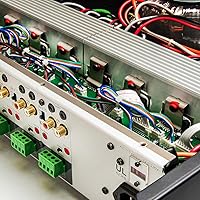
Given that many units in the field have been running continuously since the early 2010s without reported failures, the hardware clearly punches above its weight for longevity. The steel chassis feels substantial, and the rear terminal block connectors are secure enough to survive the occasional cable tug during servicing.
A few buyers found the front-panel button feel slightly cheap relative to the overall price point — functional but not confidence-inspiring to the touch. Cosmetically, the finish shows fingerprints and minor scuffs from routine rack servicing more readily than competitors in the same bracket.
Thermal Management
78%
22%
Class D topology keeps the chassis noticeably cooler than equivalent Class A/B units under sustained load, and most users report no audible fan noise during normal operation. The built-in thermal protection circuitry has caught overload events without resulting in permanent damage, according to several long-term owners.
In enclosed rack cabinets with poor ventilation, a few users noted the unit running warmer than expected during multi-hour continuous use. Adequate rack airflow is not optional — it is a real installation requirement that the manual underemphasizes.
Ease of Installation
74%
26%
Experienced AV installers describe the wiring process as straightforward — the rear panel layout is logical, the RCA inputs are clearly labeled per zone, and the 2U rack format drops cleanly into a standard AV rack without adapter hardware. DIY buyers with basic low-voltage experience generally get it running without professional help.
The included manual is widely criticized for being too sparse, particularly around bridged-mono wiring and impedance matching guidance. First-time multi-zone installers have spent unnecessary hours troubleshooting configurations that a clearer diagram would have resolved in minutes.
Smart Home & App Integration
47%
53%
The complete absence of network dependency means this multi-room amp will not go offline because of a cloud outage, a router reboot, or a discontinued app — a reliability argument that genuinely resonates with commercial customers who need consistent uptime without IT overhead.
There is no IP control, no RS-232 port for control system integration, and no native compatibility with platforms like Control4, Savant, or even basic voice assistants. For any install where smart-home automation is a client expectation, this is a hard limitation that cannot be worked around without an external relay controller.
Value for Money
82%
18%
At its price tier, the channel count and proven reliability track record are difficult to match from brands like Russound or Sonance without spending considerably more. Installers pricing out multi-zone jobs frequently cite it as one of the better cost-per-zone options available in a rack-mount form factor.
Buyers comparing it against newer streaming-integrated multi-zone amps find the value equation less clear — those alternatives offer network control and source management at competitive prices. For a purely passive power amp role, the pricing holds; for a modern all-in-one solution, it does not.
Documentation & Setup Guidance
43%
57%
The basic connection diagram covers a standard 6-zone stereo setup adequately, and users report that the labeled rear panel reduces the need to consult the manual at all for straightforward installs. OSD Audio's customer support has reportedly filled some documentation gaps for buyers who reached out directly.
The manual is genuinely poor for a product at this price level — bridged-mono configuration, impedance matching for mixed-ohm speaker loads, and recommended source-level input settings are all underexplained or omitted entirely. This is the single most consistent complaint across verified long-term reviews.
Rack Integration & Form Factor
93%
The 2U profile is compact enough to fit into crowded AV racks without consuming space that a pre/pro or media server needs, and all included rack hardware is genuinely usable rather than the afterthought screws some competitors include. Installers working in tight utility closets specifically call out the slim depth as a practical advantage.
The unit is heavier than its slim profile suggests at over 20 pounds, which makes solo rack mounting slightly awkward. Rear cable management can also become crowded once all six zones are wired with RCA pairs and speaker runs simultaneously.
Noise Floor & Signal Purity
87%
In quiet environments — a bedroom, a home office, or a library reading room — the background silence between tracks is notably clean. Users running sensitive in-ceiling speakers have not widely reported the ground hum issues that affect some lower-cost distributed amps.
A small number of reviewers have noted a faint hiss at high-sensitivity speaker pairings when driving the amp at very low listening volumes, though this appears to be an edge-case sensitivity mismatch rather than a systemic flaw in the unit itself.
Longevity & Brand Reliability
89%
OSD Audio has kept this model in continuous production since 2011, with the Gen2 revision demonstrating active product stewardship rather than a neglected catalog listing. Verified buyers reporting five-plus years of daily commercial use without service issues carry meaningful weight in the long-term reliability picture.
As the product ages, sourcing replacement units for failed installs becomes a minor concern — not urgent today, but worth factoring into long-term commercial deployment planning. Warranty and post-sale support experiences in verified reviews are mixed, with response times varying noticeably.
Commercial Use Suitability
81%
19%
Restaurants and retail spaces running background audio continuously report that the MX1280 Gen2 handles the duty cycle without complaint — it was clearly designed with always-on scenarios in mind. The front-panel zone buttons allow non-technical staff to manage audio zones without training or a dedicated controller.
The lack of any remote management capability is a real gap for multi-site commercial operators who want centralized oversight. On-site manual intervention is required for every source change or zone adjustment, which limits its appeal for anything beyond a single-location installation.

Suitable for:

The OSD Audio MX1280 Gen2 is built for buyers who need reliable, independently controlled audio across multiple rooms or zones without the complexity of a network-dependent system. Custom AV installers and integrators will appreciate the clean rack-mount form factor, the per-zone RCA inputs, and the front-panel controls that let non-technical end users manage zones without a dedicated controller or app. Homeowners undertaking new construction or whole-home audio retrofits will find the six-zone architecture covers most residential floor plans comfortably, and the Class D efficiency means the unit can run continuously in a utility closet or AV cabinet without generating excessive heat. Small commercial operators — restaurants, boutique retail shops, yoga studios — who need dependable background audio across distinct areas will also get strong mileage from this multi-room amp, particularly because its operation requires no software, subscriptions, or internet connectivity. Home theater enthusiasts who already own a capable AV pre-amplifier or processor and simply need clean, dedicated power for a 5.1 or 7.2 speaker layout will find it a practical and cost-effective fit as a standalone power stage.
Not suitable for:

Buyers expecting smart-home integration will hit a hard wall quickly — the MX1280 Gen2 has no IP control, no RS-232, no app, and no native compatibility with platforms like Control4, Savant, or voice assistant ecosystems, so anyone building a modern automated home should look elsewhere or budget for an external relay controller to fill that gap. The documentation is genuinely thin for a product at this price point, meaning buyers without prior experience wiring multi-zone audio systems or configuring bridged-mono outputs may spend frustrating hours troubleshooting configurations that better-documented competitors would walk them through step by step. Audio purists looking for warm, Class A/B character in a high-fidelity two-channel listening room will find the Class D presentation too clinical for that purpose — this is a distribution amp, not a reference-grade stereo component. Buyers in large commercial deployments spanning multiple locations or floors will also find the absence of any remote management capability a serious operational limitation, since every zone change or source switch requires someone physically present at the rack.

Specifications

  • Model: The unit carries the official model designation MX1280-GEN2, manufactured by OSD Audio.
  • Amplifier Class: Uses Class D amplifier topology for high efficiency, reduced heat output, and lower idle power consumption compared to Class A/B designs.
  • Channels: Delivers 12 total channels configured as 6 independent stereo zones for multi-room audio distribution.
  • Power at 4 Ohms: Rated at 80W RMS per channel when driving 4-ohm speaker loads at 1kHz.
  • Power at 8 Ohms: Rated at 50W RMS per channel when driving 8-ohm speaker loads at 1kHz.
  • Bridged Output: Supports bridged mono operation delivering up to 160W RMS into a single zone for high-demand speaker placements.
  • Frequency Response: Covers the full audible spectrum from 20Hz to 20kHz for accurate, full-range music reproduction.
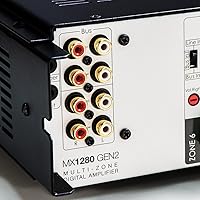
  • Inputs: Each of the six zones accepts a dedicated RCA stereo input, enabling independent source assignment per zone.
  • Zone Control: Front-panel on/off buttons allow each zone to be enabled or disabled independently without an external controller or app.
  • Rack Format: Designed for standard 19-inch equipment racks in a 2U form factor with rack-mount hardware included.
  • Dimensions: The unit measures 16.81″ long by 16.14″ wide by 3.46″ tall in its rack-mounted configuration.
  • Weight: Weighs approximately 20.5 lbs, requiring two-person handling for safe solo rack installation.
  • Protection: Built-in circuitry guards against thermal overload and short-circuit events to protect both the amplifier and connected speakers.
  • App Control: No app, IP control, or RS-232 port is included; all zone management is performed manually via front-panel controls.
  • Use Cases: Supports distributed stereo audio across up to six zones as well as 5.1 and 7.2 home theater configurations when bridged.
  • Connectivity: All audio connections use standard RCA analog inputs and binding post or terminal block speaker outputs on the rear panel.
  • Availability: First introduced in March 2011 and remains in active production as of the Gen2 revision, with no discontinuation announced.
  • Brand: Manufactured by OSD Audio, a brand specializing in residential and commercial distributed audio equipment.

Related Reviews
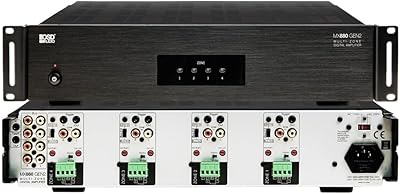
OSD Audio MX880 GEN2 4 Zone Amplifier 8Ch x 80W
83%
88%
Performance
91%
Ease of Installation
85%
Sound Quality
87%
Build Quality
92%
Value for Money
More
OSD Audio SPW8 Whole House Audio 8-Zone Speaker Distribution Panel
85%
88%
Installation Ease
85%
Build Quality
90%
Compatibility with Amplifiers
87%
Sound Distribution Performance
82%
Size & Space Efficiency
More
OSD Audio IWS8 In-Wall Subwoofer
84%
89%
Bass Performance
78%
Installation Ease
93%
Space-Saving Design
84%
Sound Clarity
87%
Build Quality
More
OSD Audio SMP300 Subwoofer Amplifier
83%
92%
Value for Money
89%
Power Output
85%
Ease of Setup
84%
Sound Quality
93%
Compactness/Size
More
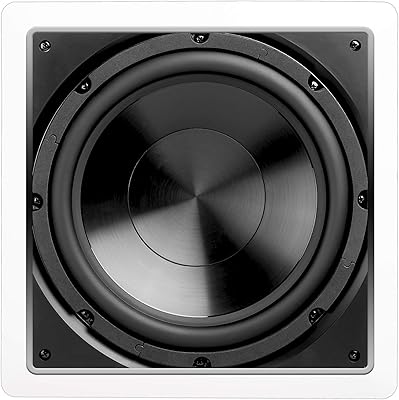
OSD Audio Forza 10 Outdoor Subwoofer
83%
91%
Bass Performance
94%
Weather Resistance
89%
Build Quality
87%
Value for Money
75%
Ease of Setup
More
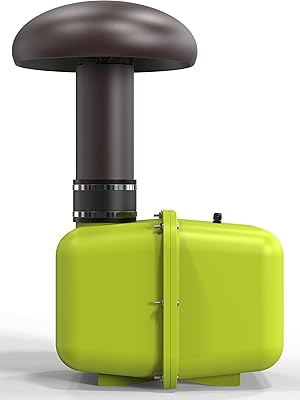
OSD Audio IWS10 In-Wall Subwoofer 10″
84%
87%
Sound Quality
90%
Bass Performance
78%
Ease of Installation
85%
Value for Money
92%
Design & Aesthetics
More
OSD Audio XSUB12 12″ Outdoor Subwoofer
85%
90%
Sound Quality
88%
Weather Resistance
85%
Installation Flexibility
92%
Bass Depth & Clarity
75%
Size & Dimensions
More
OSD Audio AP450 Outdoor Patio Speaker Pair
82%
86%
Sound Quality
90%
Build Quality & Durability
88%
Ease of Installation
91%
Weather Resistance
72%
Bass Performance
More
OSD Audio AP490 Outdoor Patio Speakers Pair
87%
88%
Sound Quality
91%
Ease of Installation
89%
Build Quality
93%
Durability (Weather Resistance)
85%
Sound Clarity Outdoors
More
OSD Audio Forza 8 Omni 250W Subwoofer
83%
88%
Sound Quality
91%
Durability in Harsh Conditions
80%
Ease of Setup
89%
Weather Resistance
84%
Value for Money
More

FAQ

Yes — each zone has its own dedicated RCA stereo input on the rear panel, so you can feed a completely different source to each one simultaneously. Zone 1 could be playing a streaming device while Zone 3 plays a TV audio output, for example. You will need a separate source component or matrix switcher to manage what feeds each input, but the amp itself handles the zone independence cleanly.

Absolutely. The MX1280 Gen2 is designed to drive both 4-ohm and 8-ohm loads — you get 50W per channel into 8-ohm speakers, which is more than adequate for background and fill audio in residential rooms. Just avoid mixing 4-ohm and 8-ohm speakers on the same zone output, as the impedance mismatch can stress the amplifier over time.

Bridged mono combines two channels of a single zone into one higher-power output, giving you up to 160W into a single speaker or a mono speaker pair in a large space — think a covered patio, a great room, or an outdoor zone that needs more punch. The setup involves specific rear-panel wiring changes that the manual unfortunately does not explain well, so checking OSD Audio's website or contacting their support team for a wiring diagram is genuinely worthwhile before attempting it.

Not natively — there is no app, no Wi-Fi, no Bluetooth, and no IP or RS-232 control port on this unit. For basic smart-home relay control you would need an external third-party trigger interface wired to the zone inputs. If deep integration with platforms like Control4 or Savant is a priority for your install, this particular amp was not designed for that use case and you would likely be better served by a different product.

Less so than a comparable Class A/B unit, thanks to the Class D design — it stays noticeably cooler under sustained load. That said, a fully enclosed cabinet with no ventilation is still a recipe for problems over time. Most installers recommend at least passive airflow or a small exhaust fan in the cabinet, especially if the amp will run continuously for many hours a day.

Yes, it can handle both configurations. For 5.1 you would use five channels for the main speakers plus a bridged pair for the subwoofer zone; 7.2 uses all available channels across the layout. You will still need a dedicated AV pre-amplifier or processor upstream to handle decoding and source selection — this amp is purely a power stage, not an AV receiver.

Each zone is a two-channel stereo output designed to drive one pair of speakers at the rated impedance. If you want to run multiple speaker pairs from a single zone, you can daisy-chain them in parallel, but you need to watch the combined impedance load carefully — dropping below 4 ohms per channel will stress the amp and may trigger the protection circuitry. In-wall impedance matching volume controls are the cleaner solution for multi-speaker zones.

For most residential open-plan spaces with standard 8-ohm in-ceiling or bookshelf speakers, 50W per channel is sufficient for full-room coverage at comfortable listening levels. Very large rooms with high ceilings or acoustically challenging layouts may benefit from using the bridged mono option on that zone to access the full 160W output, or from using higher-sensitivity speakers to get more volume from the available power.

The original model launched in 2011, making it one of the longer-tenured products in OSD Audio's lineup. The Gen2 revision brought Class D efficiency improvements and updated front-panel controls. As of now it has not been discontinued, and the fact that it has been in continuous production for well over a decade is a reasonable indicator that OSD Audio continues to support the platform.

A motivated DIYer with basic low-voltage wiring experience can absolutely install this multi-room amp — the rear panel is logically labeled, the rack hardware is included, and a standard 6-zone stereo setup does not require advanced knowledge. Where things get trickier is impedance planning for multiple speaker pairs per zone and the bridged-mono configuration, both of which the manual handles poorly. If you are comfortable reading wiring diagrams and doing some independent research, it is very manageable; if this is your first distributed audio project, budgeting for a few hours of professional consultation is worth it.