Overview

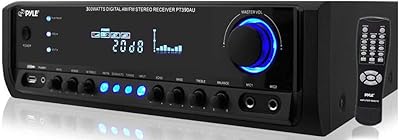
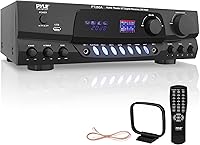
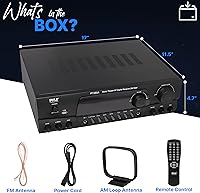
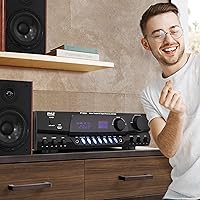
The Pyle PT260A Stereo Home Audio Amplifier has been around since 2005, and the fact that it's still selling says something worth noting. It targets karaoke fans and general home entertainment users who want a capable, wired receiver without paying premium prices. One thing to flag right away: no Bluetooth here. If wireless streaming is a priority, this stereo receiver isn't your match. But if you're comfortable with wired connections, the rack-mountable chassis fits neatly into a living room AV stack or a small event space. A remote control is included, which is a welcome addition for adjusting audio from across the room.

Features & Benefits

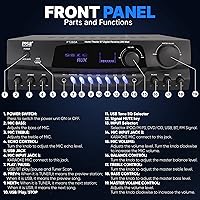
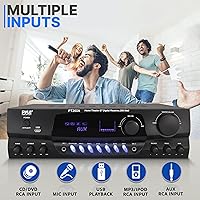
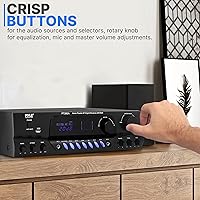
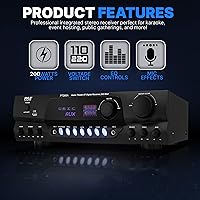
The advertised 200W figure is peak power, not continuous RMS output — real-world performance is noticeably lower, so calibrate expectations accordingly. That said, this karaoke-ready amp handles speakers rated between 4 and 16 ohms, giving you decent flexibility in pairing options. The built-in AM/FM tuner stores up to 50 station presets with auto-scan, which is a genuinely useful bonus. Dual microphone inputs come with independent echo, bass, and treble controls — functional for casual home karaoke, though not a substitute for a dedicated vocal processor. Blue LED buttons make nighttime adjustments easy, and the fluorescent display keeps you oriented. The 110/220V switch is a quiet but practical touch for international users.

Best For

This stereo receiver makes the most sense for people building a home karaoke setup or managing a modest event space — think birthday parties, community meetings, or small gatherings where you need two mics running simultaneously. It's also worth considering if you're assembling an organized AV rack and want something that slots in cleanly without a tangle of wireless adapters. Budget-conscious buyers who don't need streaming will find the feature set surprisingly generous at this price point. One caveat: anyone expecting professional-grade vocal processing from the mic inputs should look elsewhere. This is a casual-use unit, and it performs best when treated as one.

User Feedback

Across nearly 670 ratings, the Pyle amplifier holds a 4.1-star average — a respectable score that reflects genuine satisfaction, not manufactured enthusiasm. Buyers consistently praise the value for the price and the convenience of having mic controls built right in. The karaoke functionality gets positive mentions from home users who don't need a full PA system. On the downside, some buyers express frustration over the power rating, feeling misled by the 200W claim once they understand it's a peak figure. A handful of reviews mention build quality concerns, describing the chassis as feeling light for its size. Remote control range also draws mixed feedback, with a few users noting inconsistent responsiveness.

Pros

  • Dual mic inputs with echo, bass, and treble controls make home karaoke genuinely convenient right out of the box.
  • The built-in AM/FM tuner with 50 preset stations adds everyday utility well beyond karaoke use.
  • A 110/220V power switch makes this stereo receiver a practical option for international users or travelers.
  • Blue LED-illuminated buttons allow easy adjustments during dim-light events without fumbling around.
  • The rack-mountable design keeps AV setups clean and organized for users who care about cable management.
  • Speaker impedance support from 4 to 16 ohms gives reasonable flexibility when pairing with existing speakers.
  • A remote control is included, which is a practical bonus for adjusting volume or input from across the room.
  • With nearly two decades on the market and hundreds of verified ratings, the Pyle amplifier has a demonstrable track record.
  • The fluorescent digital display clearly shows active inputs and current function status at a glance.
  • For casual home use and small gatherings, this karaoke-ready amp delivers solid value relative to its price point.

Cons

  • The 200W power rating is peak, not RMS — real continuous output is significantly lower and can disappoint buyers who take the spec at face value.
  • Build quality feels lightweight for its size, with some buyers describing the chassis as less solid than expected.
  • The remote control has inconsistent range and responsiveness according to multiple user reports.
  • No Bluetooth or wireless connectivity of any kind limits how you can stream audio to this unit.
  • Mic processing is basic and functional at best — not appropriate for anyone needing professional-grade vocal control.
  • The unit is fairly heavy at nearly 12 pounds, which can make repositioning or transport more cumbersome than expected.
  • No digital audio inputs such as optical or coaxial, limiting compatibility with modern TV and media setups.
  • AM/FM tuner quality is adequate but unremarkable — not a replacement for a dedicated tuner in a serious listening setup.

Ratings

Our AI-driven scoring for the Pyle PT260A Stereo Home Audio Amplifier was built by systematically analyzing hundreds of verified global buyer reviews, actively filtering out incentivized, bot-generated, and duplicate submissions to surface what real users genuinely experienced. The scores below reflect both what this stereo receiver does well and where it falls short, without sugarcoating the trade-offs. Strengths in karaoke functionality and value are weighed honestly against recurring concerns around power rating transparency, build feel, and the absence of wireless connectivity.

Value for Money
83%
Most buyers feel they are getting a solid return on their investment, especially given the number of built-in features packed into a single unit. The combination of AM/FM tuner, dual mic inputs, echo controls, and remote — all at this price tier — is difficult to match with competing wired receivers.
A handful of users feel the value equation shifts once they realize the 200W claim is a peak figure. When real-world output is significantly lower than advertised, some buyers recalibrate their satisfaction downward regardless of the feature count.
Karaoke Performance
78%
22%
For casual home karaoke nights, this karaoke-ready amp delivers a genuinely enjoyable experience. The dual mic inputs with independent echo, bass, and treble controls let two singers perform simultaneously with enough vocal presence to feel engaging in a living room setting.
The mic processing is basic by any professional standard, and experienced users notice it quickly. Echo depth and tonal shaping are limited, and the controls lack the precision that even a modestly priced standalone vocal processor would offer.
Power Output
54%
46%
The amplifier moves enough power to comfortably fill a mid-sized living room or a small community hall at reasonable listening levels. For low-demand scenarios — background music, casual karaoke, announcements — it performs without obvious strain.
The 200W figure is peak power, not continuous RMS, and this distinction catches many buyers off guard. Real sustained output is considerably lower, and users pushing higher volumes with demanding speakers have noted audible compression and limited headroom.
Build Quality
61%
39%
The chassis is solid enough for stationary home use, and the rack-mount form factor gives it a purposeful, organized appearance. Blue LED buttons and the fluorescent display add a sense of considered design that buyers appreciate during events or dim-light settings.
Multiple reviewers describe the unit as feeling lighter and less substantial than expected for its size. The plastic and metal combination on the housing feels budget-grade up close, and a few long-term users have raised concerns about control knobs and button durability over time.
Ease of Setup
86%
Most buyers report getting the unit running within minutes of unboxing. The input layout is intuitive, the display clearly identifies active sources, and the straightforward control panel means there is almost no learning curve for users familiar with basic AV gear.
The manual is functional but thin on detail, particularly around speaker wiring configurations and the A/B output switching. Users without prior AV experience occasionally find the initial wiring step less guided than they would like.
AM/FM Tuner
74%
26%
The inclusion of a 50-station preset memory with auto-scan is a genuine convenience, and most users find the tuner locks onto local stations reliably. For buyers who still use terrestrial radio regularly, this feature adds everyday utility beyond karaoke use.
Reception quality is average and heavily dependent on antenna placement and local signal strength. In areas with weaker broadcasts, users report occasional signal drift and static that a dedicated tuner at the same price point would handle more cleanly.
Remote Control
58%
42%
Having a remote included at this price is a welcome touch, and in a compact room it functions adequately for volume adjustments and basic input switching without leaving your seat. For small setups, it covers the practical basics without issue.
Range and angular consistency are the main complaints from buyers. Several users note the remote becomes unreliable beyond a moderate distance or when used at an angle, which limits its usefulness in larger rooms or open-plan spaces where it would matter most.
Microphone Controls
72%
28%
Independent echo, bass, and treble adjustments for each mic channel give users meaningful control over how their voice sits in the mix. For birthday parties, small gatherings, or home entertainment nights, the echo effect in particular adds a fun, polished feel to casual singing.
The controls are functional but coarse — small knob adjustments can produce noticeable jumps in effect intensity rather than smooth gradual changes. Dialing in a natural, subtle echo without it sounding exaggerated takes some patience and trial and error.
Display & Interface
79%
21%
The fluorescent digital display is clear and readable from across a room, showing the active input and current function status at a glance. The blue LED button backlighting is a practical touch that makes the unit genuinely easy to operate during low-light events or karaoke nights.
The display does not provide granular feedback on EQ settings or mic levels, which means users are largely adjusting by ear rather than by reference. A more informative readout would reduce guesswork, particularly for first-time users setting up the unit.
Speaker Compatibility
81%
19%
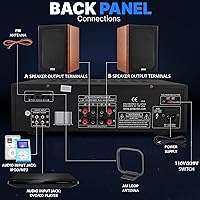
Support for speakers rated from 4 to 16 ohms is broader than many competing units at this price point, making it relatively flexible for buyers pairing it with existing speaker setups. The A/B output option adds practical versatility for users who want audio across two separate zones.
There is no protection circuitry documentation that explicitly reassures buyers about accidental mismatches, and a few users running near the impedance limits have reported uncertainty about long-term safety. Clearer guidance from the manufacturer on this front would help.
Connectivity Options
47%
53%
The wired input selection covers the basics adequately for users who run a fixed, cable-based AV setup. For those connecting a CD player, TV audio output, or other analog source, the available inputs handle everyday home use without issue.
The complete absence of Bluetooth, optical, or coaxial digital inputs is a significant limitation by today's standards. Buyers who want to stream from a phone, connect a modern TV digitally, or integrate a smart speaker ecosystem will find this stereo receiver falls meaningfully behind current expectations.
Longevity & Reliability
69%
31%
Having remained in active production since 2005, this Pyle amplifier has a longer market track record than most of its competitors at this price level. A number of long-term owners report years of dependable, uninterrupted use in home and small-venue settings.
Some buyers who have owned units for several years report wear on the rotary knobs and occasional channel imbalance developing over time. The longevity appears to be setup-dependent, with stationary home installations faring better than units moved frequently between venues.
International Compatibility
88%
The built-in 110/220V power switch is a practical and often overlooked feature that gives this karaoke-ready amp a clear advantage for international buyers or users who travel between regions. Switching voltage is straightforward and requires no external adapter.
There is minimal documentation on the acceptable frequency range beyond voltage, which leaves some international buyers uncertain about full compatibility with their local power supply specifications. A clearer technical breakdown in the manual would eliminate that uncertainty entirely.

Suitable for:

The Pyle PT260A Stereo Home Audio Amplifier is a strong fit for anyone who wants a dedicated karaoke setup at home without spending a fortune on separate components. If you regularly host friends or family for singing nights, the dual mic inputs with independent echo and tone controls make it easy to get decent vocal sound with minimal fuss. Small community spaces — think church halls, neighborhood clubs, or local event rooms — will also find it practical for announcements and basic PA duties where two microphones need to run simultaneously. Budget-conscious buyers who have already invested in wired speakers and don't need wireless streaming will get solid utility from the built-in AM/FM tuner and flexible speaker impedance support. The rack-mountable design is a real plus for anyone building a tidy, organized AV installation rather than stacking components haphazardly on a shelf.

Not suitable for:

The Pyle PT260A Stereo Home Audio Amplifier is a poor match for buyers who expect Bluetooth or any wireless audio streaming — that capability simply does not exist here, and no workaround changes that. Audiophiles or home theater enthusiasts looking for high-fidelity stereo performance will likely find the real-world power output underwhelming; the 200W figure is a peak rating, not continuous RMS, so the actual driving power is considerably more modest. Anyone planning to use this as a primary vocal processor for live performance or semi-professional events should look at dedicated PA amplifiers with proper DSP controls. If build quality and premium materials are important to you, the chassis may feel lighter and less substantial than expected at this price tier. Lastly, users in environments where remote control reliability is critical — large rooms or spaces with obstructions — should be aware that the included remote has drawn mixed feedback on consistency and range.

Specifications

  • Peak Power: This stereo receiver delivers up to 200W of peak power output, which represents the maximum momentary capacity rather than continuous RMS output.
  • Speaker Impedance: Compatible with speakers rated between 4 and 16 ohms, offering reasonable flexibility for a variety of home and small-venue speaker setups.
  • Mic Inputs: Two dedicated microphone inputs are included, each with independent controls for echo effect, bass, treble, and volume.
  • AM/FM Tuner: The built-in tuner supports both AM and FM bands with a 50-station preset memory, auto-scan, and manual previous/next station controls.
  • Display: A fluorescent digital display shows the currently active input and function status, remaining visible in low-light environments.
  • Button Lighting: Control buttons are backlit with blue LED illumination, making adjustments straightforward during dark or dim-light events.
  • Remote Control: A handheld remote control is included in the package, allowing basic audio adjustments from a distance without approaching the unit.
  • Power Supply: A built-in 110/220V voltage switch allows the unit to operate on both North American and international power standards.
  • Dimensions: The unit measures 17 x 11.5 x 4.7 inches, sized to fit standard rack-mount enclosures or sit on a shelf in a home AV setup.
  • Weight: At 11.73 pounds, the amplifier is moderately heavy for its size, which should be factored in when planning placement or transport.
  • Form Factor: The chassis is designed for rack-mount installation, making it compatible with standard AV racks used in home and small-event environments.
  • Audio Output: Audio output is stereo, with A/B speaker output options allowing connection to two separate sets of speakers.
  • Bluetooth: This unit has no Bluetooth or wireless audio connectivity of any kind; all audio sources must be connected via physical wired inputs.
  • Color: The unit is finished in black, consistent with standard rack-mount and home AV aesthetics.
  • Manufacturer: Manufactured and distributed by DJ Tech Pro USA, LLC under the Pyle brand, a company with a broad catalog of budget-to-mid-range audio equipment.
  • Model Number: The official model designation is PT260A, which distinguishes it from adjacent Pyle models such as the Bluetooth-equipped PT265BT variant.
  • First Available: This product was first listed for sale in December 2005, indicating it has maintained market presence for nearly two decades.
  • Channel Config: The amplifier operates in a 2-channel stereo configuration and does not support surround sound or multi-channel audio setups.

Related Reviews
Pyle PTA66BT 6-Channel Bluetooth Stereo Amplifier
74%
83%
Value for Money
88%
Ease of Setup
79%
Bluetooth Performance
81%
Microphone Performance
58%
Power Output & Headroom
More
Pyle PCA3 Bluetooth Home Audio Amplifier
81%
82%
Sound Quality
91%
Value for Money
68%
Bluetooth Connectivity
88%
Ease of Setup
80%
Build Quality
More
Pyle PFA330BT
Pyle PFA330BT
73%
88%
Value for Money
71%
Sound Quality
52%
Rated Power Accuracy
74%
Bluetooth Connectivity
67%
Build Quality
More
Pyle PDA77BU Bluetooth Stereo Amplifier
71%
81%
Value for Money
88%
Ease of Setup
78%
Karaoke Performance
72%
Bluetooth Connectivity
67%
Sound Quality
More
Pyle PDA22BT Compact Home Audio Amplifier with Bluetooth 5.0
84%
88%
Sound Quality
91%
Ease of Setup
90%
Bluetooth Connectivity
85%
Power Output
87%
Compact Design
More
Pyle PT390AU 4-Channel Home Audio Amplifier
70%
83%
Value for Money
67%
Sound Quality
78%
Microphone Performance
86%
Ease of Setup
58%
Build Quality
More
Fosi Audio TDA7498E
Fosi Audio TDA7498E
83%
88%
Sound Quality
93%
Value for Money
71%
Build Quality
74%
Power Output & Headroom
66%
Noise Floor & Background Hiss
More
Fosi Audio BT10A
Fosi Audio BT10A
81%
93%
Value for Money
82%
Sound Quality
91%
Noise Floor
84%
Bluetooth Performance
67%
Power Output
More
Douk Audio OK013 Mini 2.1 Channel HiFi Stereo Amplifier
75%
83%
Value for Money
71%
Sound Output & Power
77%
Build Quality
88%
Ease of Installation
58%
Thermal Management
More
Fosi Audio BT30D
Fosi Audio BT30D
78%
83%
Sound Quality
88%
Subwoofer Performance
81%
Bluetooth Connectivity
91%
Value for Money
62%
Build Quality
More

FAQ

No, it does not. The Pyle PT260A Stereo Home Audio Amplifier has no wireless connectivity whatsoever. If you want to play music from a phone or tablet, you will need a physical cable connection such as a 3.5mm aux input.

That figure reflects peak power, not continuous RMS output. In real-world use, the sustained power delivery is meaningfully lower than 200W. For a living room or small gathering space it is generally sufficient, but if you are expecting to drive large speakers at high volume for extended periods, you may find it falls short of expectations.

Yes. This karaoke-ready amp has two dedicated mic inputs, and both can be used simultaneously. Each has its own echo, bass, and treble controls, so you can adjust the two mic channels independently.

Honestly, no. The mic processing here is designed for casual home karaoke and basic announcements, not professional vocal work. The echo and tone controls are functional and fun for a home setup, but anyone needing serious vocal processing should look at a dedicated PA system or a standalone vocal processor.

It depends on your speakers' impedance rating. This stereo receiver supports speakers rated between 4 and 16 ohms, which covers most common home audio speakers. Check your speaker specs before connecting to confirm compatibility.

The chassis is sized to fit a standard 19-inch equipment rack, but you do not need a rack to use it. Plenty of buyers simply place it on a shelf or inside an AV cabinet. The rack-mount design just means the front panel width matches standard rack spacing if you do have one.

It works, but feedback from users is mixed. Some find it responsive and convenient across a normal-sized room, while others report inconsistent performance, especially at angles or greater distances. It is included as a convenience feature rather than a precision tool.

Yes. The Pyle amplifier includes a built-in 110/220V power switch, so it can be adapted for use in countries with different voltage standards. Just make sure to set the switch correctly before powering on in a new location.

Yes, it supports A/B speaker outputs, which lets you connect two separate pairs of speakers and switch between them or run both at once. This is handy if you want audio in more than one area of a home or venue.

This model has been on the market since late 2005, which is a notably long run for a consumer electronics product. As of the latest available information, it has not been discontinued by the manufacturer, suggesting ongoing availability of the unit and basic support through Pyle's customer service channels.