
Overview

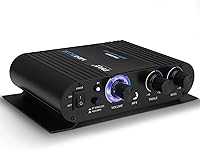
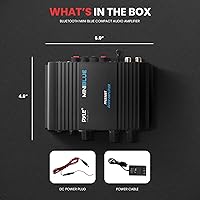
The Pyle PFA330BT is a Class-T stereo amplifier that has quietly built a loyal following since it first appeared in late 2015. Sitting at roughly 6 by 4.6 by 1.6 inches and weighing just over a pound, this mini amplifier lets you tuck it behind a bookshelf speaker or set it flat on a desk without it demanding attention. The aluminum chassis feels solid enough for daily use, and it runs off an included 12V DC adapter, so keep in mind it needs a nearby outlet to operate. For a budget-oriented receiver, nearly a decade on the market says something real about its staying power.

Features & Benefits

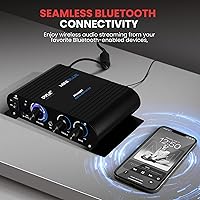
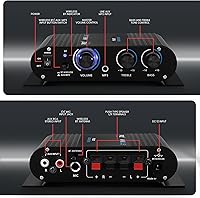
The headline spec is a 90-watt dual-channel output, but that number deserves some context. Class-T amplifiers rate power at peak conditions, so the real usable output at comfortable distortion levels is noticeably lower — perfectly adequate for a small room, less convincing if you want serious volume. On the connectivity side, Bluetooth pairing is straightforward: hold the button, find the device on your phone, and you are connected. A physical input toggle lets you flip between Bluetooth and the 3.5mm or RCA inputs without navigating any menus. There is also a microphone input for karaoke or light PA work, and the blue LED volume knob doubles as a handy power indicator.

Best For

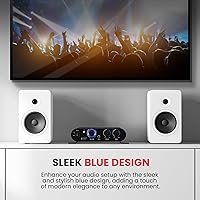
This compact stereo receiver makes the most sense for smaller spaces — a home office, workshop, garage, or bedroom — where dragging in a full-size receiver would be overkill. It is also a natural first step for anyone new to passive speaker setups, since the controls are minimal and the learning curve is essentially zero. The mic input extends its usefulness to light PA duties, small gatherings, or basic classroom announcements. If you already own older gear with RCA outputs, the wired input options give you a practical way to tie everything together while still gaining Bluetooth access. Just do not expect it to fill a large open space at high volume.

User Feedback

With over 1,500 reviews and a 4.3-star average, the Pyle amp carries one of the more robust track records in its price bracket. Buyers frequently cite easy setup and reliable Bluetooth pairing as standout strengths, with many noting clean, pleasant sound at moderate volumes. The honest caveats: Bluetooth dropout becomes noticeable beyond about 20 to 25 feet, and the rated wattage leads to disappointment for anyone expecting room-filling volume. A smaller but consistent group of long-term reviewers also flag durability concerns after months of regular use. Spending a few minutes reading the one- and two-star reviews is genuinely worthwhile — they sketch a clear picture of where this amp succeeds and where it hits its ceiling.

Pros

  • Fits almost anywhere — smaller than a hardback book and light enough to move without a second thought.
  • Setup takes under five minutes, even for buyers with no prior amplifier experience.
  • Bluetooth pairing is reliable and requires no app, driver, or account.
  • Covers Bluetooth, 3.5mm AUX, RCA, and mic input — rare versatility at this price point.
  • The aluminum chassis feels more solid than the price would suggest.
  • Clean, pleasant sound at low to moderate volumes in small room environments.
  • Built-in mic input handles light PA duties that a pure stereo amp would not touch.
  • A proven track record — over a decade on the market with a large, genuine review base.
  • The physical input toggle makes switching sources fast and reliable, with no menu diving.

Cons

  • Rated power is a peak figure — real clean output falls noticeably short of the headline spec.
  • Bluetooth dropout becomes a real issue once you move beyond roughly 20 feet.
  • A consistent subset of long-term owners report failures after 12 to 24 months of regular use.
  • Reconnecting via Bluetooth after the source device sleeps can be sluggish.
  • Cannot switch independently between AUX and RCA without manually swapping cables.
  • High-efficiency speakers may reveal a faint background hiss at low volumes.
  • The EQ controls offer limited adjustment range — do not expect significant tonal shaping.
  • No phantom power on the mic input, so condenser microphones are not an option.
  • The 12V adapter is the only power source — there is no battery backup if an outlet is unavailable.

Ratings

Our AI rating engine analyzed thousands of verified buyer reviews for the Pyle PFA330BT from global markets, actively filtering out incentivized, duplicate, and bot-generated feedback to surface what real owners consistently experience. The scores below reflect a transparent synthesis of both the strengths that keep buyers recommending this compact stereo receiver and the friction points that show up repeatedly in critical reviews. Nothing has been glossed over.

Value for Money
88%
For the asking price, this mini amplifier punches well above its weight in terms of feature count — Bluetooth, RCA, AUX, and a mic input on a single compact unit is genuinely hard to match at this tier. Many buyers describe it as the most practical audio purchase they made for a secondary room or workshop setup.
A handful of reviewers feel the value equation weakens over time, particularly those who encountered reliability issues after 12 to 18 months of regular use. If longevity is a priority, the low price starts to feel less like a bargain and more like a trade-off.
Sound Quality
71%
29%
At low to moderate listening volumes, most owners describe the audio as clean, balanced, and surprisingly pleasant for casual background music. Paired with decent bookshelf speakers in a small room, the Pyle amp holds its own without any obvious coloration or harshness.
Push the volume past the midpoint and the limitations of the amplifier class become audible — some compression and softness creep in. Buyers hoping for the kind of dynamic headroom that fills a large open space or drives demanding speakers will come away frustrated.
Rated Power Accuracy
52%
48%
The dual-channel Class-T design does deliver real amplification, and for small speakers in a contained space the output is entirely functional. Users running 4 to 8 ohm passive speakers in a bedroom or home office report getting more than enough volume for their needs.
The 90-watt rating is a peak figure, not a sustained real-world number, and many buyers feel misled once they discover this. Actual clean output at low distortion is considerably lower, and users expecting concert-level volume from a unit at this price and size will be disappointed.
Bluetooth Connectivity
74%
26%
Pairing is quick and requires no app or driver installation — most phones and laptops connect on the first attempt. For a typical desktop or bedside setup where the source device stays within 15 to 20 feet, the connection holds steady and cuts out rarely.
Range becomes a recurring complaint once you move beyond roughly 20 to 25 feet or introduce walls between the source and the amp. A few buyers also note that reconnection after the device sleeps can be sluggish, which is a minor but noticeable irritation in daily use.
Build Quality
67%
33%
The aluminum housing feels more substantial than a plastic shell would at this price point, and the physical controls have a reasonably tactile, deliberate action to them. Out of the box, the unit presents well and does not feel like a throwaway product.
Some longer-term owners report that the input toggle and volume knob show wear after extended use, and a subset of reviews mention internal failures after 12 to 24 months. The build is clearly optimized for cost, so it rewards careful handling rather than rough workshop conditions.
Ease of Setup
93%
Plug in the 12V adapter, connect your speakers, and press the Bluetooth toggle — most buyers report being up and running in under five minutes. This is one of the most consistently praised aspects across the review base, particularly among first-time amp buyers.
The included documentation is minimal, so users who want to understand input switching or optimal speaker pairing have to figure things out by trial. For experienced audio users this is a non-issue, but absolute beginners may want to watch a quick tutorial first.
Input Versatility
84%
Having Bluetooth, a 3.5mm jack, RCA inputs, and a microphone input on a unit this size covers a wide range of real use cases — connecting a turntable via RCA, a laptop via AUX, and switching to a phone wirelessly is all handled by one box. Buyers with mixed legacy and modern gear find this especially useful.
The input selector is a single toggle that only distinguishes between Bluetooth and wired sources, so you cannot quickly flip between the 3.5mm and RCA inputs independently. Users with multiple wired sources connected simultaneously will need to manually swap cables.
Bluetooth Range
58%
42%
Within a single room and in direct line of sight, the wireless connection performs reliably for most everyday listening scenarios. Users who keep their phone or laptop on the same desk or within arm's reach rarely mention any issues.
Anything beyond 20 feet or through a wall introduces noticeable dropout risk, and this comes up often enough in the reviews to be treated as a genuine limitation rather than an outlier complaint. It is not suited for whole-room or multi-room wireless scenarios.
Control Layout & Usability
79%
21%
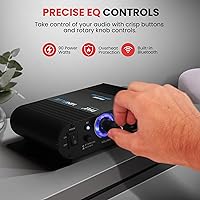
The front panel keeps things simple: a volume knob, a bass and treble control, and a physical input toggle. There is nothing confusing about the layout, and the LED indicator on the volume knob gives a quick visual confirmation that the unit is powered on.
The blue LED can wash out in brightly lit rooms, making it harder to confirm power status at a glance. A few users also wish the EQ controls offered slightly more range, noting that the bass and treble adjustments feel subtle rather than impactful.
Microphone Input Performance
63%
37%
For light PA duties — think backyard gatherings, small classroom announcements, or casual karaoke — the mic input does the job without requiring any external preamp. It is a genuinely useful addition that extends this compact stereo receiver beyond pure music playback.
The mic input is basic and not designed for anything demanding. Users attempting to use it for recorded voice or higher-quality PA work often find the gain and fidelity lacking, and there is no phantom power, which rules out condenser microphones entirely.
Size & Form Factor
91%
At just over a pound and smaller than a hardback book, this amp can sit on a shelf, mount behind a monitor, or slip into a drawer when not in use. Buyers consistently highlight how its footprint solves the clutter problem that a full-size receiver would create in a small workspace.
The compact size does mean the rear panel connections are tightly spaced, which can make plugging in bulkier RCA cables or right-angle adapters a bit fiddly. Not a deal-breaker, but worth knowing if your cable ends are on the larger side.
Long-Term Durability
61%
39%
The majority of buyers who use it at moderate volumes for background listening report no failures over one to two years. A number of reviewers have owned the unit for several years without issue, which reflects reasonably well given the price bracket.
There is a consistent minority of reviews describing failure — usually the Bluetooth module or volume control — after a year or more of heavier use. The pattern is not alarming, but it is present, and buyers relying on it daily for extended sessions should keep that in mind.
Speaker Compatibility
77%
23%
Support for 4 to 8 ohm passive speakers covers the vast majority of bookshelf and small floor-standing speakers most buyers in this segment already own. Pairing it with a set of entry-level bookshelf speakers is the most common and well-regarded use case in the review base.
Higher-impedance speakers are not supported, and buyers with less common 16-ohm speakers will need to look elsewhere. Some reviewers also note that the amp runs noticeably warm when driving lower-impedance speakers for extended periods, which warrants decent ventilation around the unit.
Noise Floor & Signal Clarity
72%
28%
At typical listening volumes in a quiet room, the background noise level is low enough that most casual listeners will never notice it. The signal-to-noise performance is genuinely acceptable for background music in a kitchen, office, or workshop context.
Sensitive high-efficiency speakers can reveal a faint hiss at low volumes, and a segment of more attentive listeners do pick up on this. It is not a deal-breaker for the average buyer, but it does confirm this is a casual-use amp rather than a reference-quality audio component.
Packaging & Included Accessories
66%
34%
The 12V adapter is included in the box, which means there is nothing extra to buy just to get started. Buyers appreciate that Pyle ships everything needed for basic operation without forcing accessory add-on purchases.
Beyond the adapter, accessories are sparse — there are no speaker wire terminals or cables included, and the documentation amounts to a basic quick-start sheet. Buyers new to passive speaker wiring may need to do some external research before their first setup.

Suitable for:

The Pyle PFA330BT is a strong fit for anyone who needs a simple, space-efficient way to drive a pair of passive bookshelf speakers without the bulk or cost of a traditional home receiver. If you are setting up a secondary audio zone — a home office, garage workshop, spare bedroom, or small retail counter — this compact stereo receiver handles that job well and without fuss. First-time amp buyers benefit particularly from its no-nonsense controls: plug in, pair your phone, and the music plays. It also works well for users who own older audio gear with RCA outputs and want to add Bluetooth streaming without replacing their whole setup. Anyone needing occasional light PA capability — a small classroom, a backyard karaoke session, or a community meeting room — will find the built-in microphone input a genuinely useful bonus that most competitors at this price simply do not include.

Not suitable for:

The Pyle PFA330BT is not the right tool if you need real, sustained high-output power. The rated wattage is a peak figure under ideal conditions — in everyday use, the clean output is considerably lower, and buyers who want to fill a large open room or drive power-hungry floor-standing speakers will hit a ceiling quickly. Audiophiles or anyone with a trained ear for critical listening will also find the performance underwhelming; this mini amplifier is tuned for convenience and practicality, not sonic accuracy. The Bluetooth range is another meaningful limitation — if your source device regularly sits more than 20 feet away or on the other side of a wall, expect periodic dropouts. Finally, buyers who need a long-term workhorse for heavy daily use should weigh the durability feedback carefully; this compact stereo receiver is designed for moderate, casual use rather than being run hard for hours on end.

Specifications

  • Amplifier Class: Class-T stereo amplification topology, designed to balance efficiency with audio fidelity in compact form factors.
  • Rated Output: 90W dual-channel peak output (real-world clean output at low distortion is considerably lower and suited to small room use).
  • Channels: 2-channel stereo configuration with independent left and right speaker terminal outputs.
  • Speaker Impedance: Compatible with passive speakers rated at 4 to 8 ohms; speakers outside this range are not supported.
  • Bluetooth Input: Built-in Bluetooth wireless receiver for cable-free streaming from smartphones, tablets, and laptops.
  • Wired Inputs: Accepts audio via a 3.5mm AUX jack, stereo RCA inputs, and a dedicated microphone input for light PA use.
  • Input Selector: Physical toggle switch on the front panel switches between Bluetooth mode and wired AUX/MP3 sources.
  • Frequency Response: Rated frequency response extends up to 20 kHz, covering the standard audible range for casual music playback.
  • Signal-to-Noise: Signal-to-noise ratio of 80 dB, providing acceptably low background noise at typical listening volumes in small spaces.
  • Power Source: Powered exclusively by an included 12V DC corded adapter; there is no internal battery or USB power option.
  • Dimensions: Unit measures 6 x 4.6 x 1.6 inches, making it one of the more compact stereo amplifiers in its category.
  • Weight: Weighs approximately 1.1 lbs, light enough to reposition easily on a shelf or desktop without tools.
  • Chassis Material: Outer housing is constructed from aluminum, providing a more rigid and heat-dissipating enclosure than a plastic alternative.
  • Volume Indicator: A blue LED ring on the volume knob serves as both a volume-level indicator and a visual power-on confirmation.
  • EQ Controls: Front-panel rotary knobs provide independent bass and treble adjustment for basic tonal shaping.
  • Model Number: Official model identifier is PFA330BT, manufactured by Sound Around under the Pyle brand.
  • Availability: First made available in October 2015 and remains in active production as of the current date.
  • Mic Polar Pattern: The microphone input is designed for unidirectional handheld or large-diaphragm microphones with standard connectors.

Related Reviews
Pyle PLMRMB2CW Marine Amplifier
86%
85%
Sound Quality
92%
Waterproof Durability
88%
Bluetooth Connectivity
80%
Power Output
87%
Installation Ease
More
Pyle PLMR57W Marine Speakers
85%
84%
Sound Quality
91%
Durability
89%
Ease of Installation
90%
Weather Resistance
75%
Bass Performance
More
Pyle PLMRS4W Marine Speakers
84%
80%
Sound Quality
90%
Build Quality
88%
Durability in Harsh Weather
85%
Installation Ease
65%
Bass Response
More
Pyle PLMRA200 Marine Amplifier
86%
94%
Waterproof Performance
88%
Ease of Installation
83%
Power Output
85%
Build Quality
90%
Size and Space Efficiency
More
Pyle PLMR652W Marine Speakers
86%
88%
Sound Quality
91%
Ease of Installation
93%
Durability (Waterproof & Weather Resistance)
87%
Build Quality
75%
Performance at High Volumes
More
Pyle PDWR30B Outdoor Speakers
85%
88%
Sound Quality
94%
Weatherproof Durability
85%
Ease of Installation
78%
Design and Aesthetics
91%
Build Quality
More
Pyle PLMRA400 Marine Amplifier
82%
85%
Overall Performance
88%
Sound Quality
90%
Durability (Waterproofing & Corrosion Resistance)
75%
Installation Ease
80%
Build Quality
More
Pyle PLMR82 Marine Speakers
84%
83%
Sound Quality
89%
Durability
90%
Ease of Installation
80%
Power Handling
87%
Build Quality
More
Pyle PVTC320U Step Up and Down Converter
84%
87%
Value for Money
85%
Performance
90%
Ease of Use
65%
Portability
91%
Safety Features
More
Pyle PLATV65BT 6.5-inch Marine Bluetooth Speaker System
76%
91%
Ease of Installation
74%
Sound Quality at Moderate Volume
54%
Bass Performance
67%
Weatherproof Durability
88%
LED Light Performance
More

FAQ

Not quite. The 90W figure is a peak rating under ideal lab conditions — the actual clean, usable output in real-world listening is considerably lower. For a small bedroom, home office, or garage, it handles background music without strain, but it will run out of headroom well before filling a large open room.

You need passive speakers (the kind without their own built-in amplifier) rated between 4 and 8 ohms impedance. Standard bookshelf or small floor-standing speakers in that range work well. Powered or active speakers already have an amp inside and are not compatible.

In an open space with direct line of sight, pairing stays stable up to around 20 to 25 feet for most users. Once you add walls or move into a different room, dropout becomes more likely. If your source device regularly sits far from the amp, a wired AUX connection is a more reliable option.

Only if your turntable has a built-in phono preamp. Most modern budget turntables do include one, in which case you can run a standard RCA cable straight into the amp. If your turntable does not have a built-in preamp, you will need a separate phono stage between the two.

Yes — it is one of the more beginner-friendly options in its category. Connect your speakers to the terminal outputs, plug in the 12V adapter, press the Bluetooth toggle, and pair your phone. Most first-time buyers report being up and running in under five minutes.

Yes, there is a dedicated mic input that works well for light PA use — small gatherings, karaoke at home, or basic classroom announcements. Keep in mind that it does not supply phantom power, so condenser microphones will not work; stick to standard dynamic microphones.

Some warmth is normal for any Class-T amplifier, particularly when driving lower-impedance speakers for extended periods. As long as the unit has adequate ventilation around it and is not enclosed in a tight cabinet, operating warmth is not a concern. Avoid blocking the sides or underside of the chassis.

You can have both devices physically connected, but the input toggle only switches between Bluetooth mode and wired sources as a group — it does not let you independently select between AUX and RCA. To switch between two wired sources, you would need to manually swap cables or use an external input switcher.

Most owners using this compact stereo receiver for moderate daily listening report trouble-free performance over one to two years or longer. A smaller but consistent group of reviewers note failures — often in the Bluetooth module or volume control — after heavy continuous use. Treating it as a casual-use amp rather than a high-duty workhorse is the best way to extend its lifespan.

The included accessories are limited to the 12V DC power adapter. No speaker wire, RCA cables, or 3.5mm cables are included. You will need to supply your own speaker wire and any interconnect cables depending on which inputs you plan to use.

Where to Buy

Target
In stock $42.99
Best Buy
In stock $45.99
Walmart
In stock $55.99
eBay
In stock $39.99
Macy's
In stock $34.99
Zoro
In stock $42.79
Neobits.com
In stock $43.99
Lowe's
In stock $46.99
Opentip.com
In stock $46.99