Overview

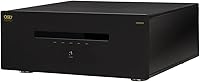
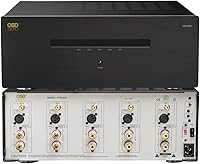
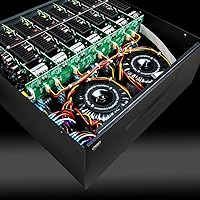
The OSD Audio Nero HTA5200 is a dedicated power amplifier built for home theater enthusiasts who are ready to move beyond all-in-one receivers. There is no HDMI, no streaming, no DSP—just amplification, handled properly. It pairs with an external AV preamp or processor, which keeps the signal chain clean and lets each component focus on a single task. The Class AB topology is a deliberate trade-off: slightly less efficient than Class D designs, but widely regarded as more musical and thermally predictable under sustained loads. At 63 pounds, this home theater amp does not arrive quietly—that weight signals a serious power transformer and a build quality you can feel before you ever connect a speaker.
Features & Benefits

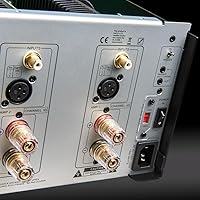
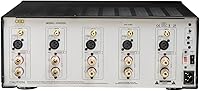
What distinguishes the Nero HTA5200 from a typical multi-channel amp is that the power ratings are measured with all channels driven simultaneously—210W per channel into 4 ohms, no asterisks. That is a meaningful number when five demanding speakers are all playing at once. Every channel includes a balanced XLR input, which significantly reduces noise pickup over longer cable runs between your processor and amp rack—a feature that often costs extra at this tier. RCA inputs are included too, so you are not limited to balanced connections. The 12V trigger automates power sequencing with your processor, and the 110 dB signal-to-noise ratio translates directly to an inaudible noise floor, even with efficient or sensitive speakers in a quiet room.

Best For

This 5-channel amplifier is built for dedicated home theater rooms where a separate AV processor is already handling signal processing and routing. It is the right match for anyone driving 4-ohm speaker loads that cause a standard receiver to throttle or distort under pressure. First-time separates buyers will find the per-channel LED indicators and automatic trigger operation make setup less intimidating. Custom installers benefit from the rack-compatible dimensions and clean input options. One thing to know upfront: there is no subwoofer output and no bass management onboard—your processor handles all of that. This is normal in a pure power amp, but worth confirming before you buy if you are new to separates-based systems.

User Feedback

With 67 ratings and a 4.4-star average, the early impressions of this home theater amp are genuinely positive, though the sample size is still modest. Recurring praise focuses on build quality, quiet thermal operation, and channel separation that holds up during demanding multichannel soundtracks. On the less enthusiastic side, buyers who underestimated the physical footprint mention the 63-pound weight as a real installation challenge—particularly for solo rack mounting. A few newcomers to separates setups note an adjustment period around processor-based bass management. Comparisons to brands like Emotiva and Outlaw Audio are favorable overall, especially on power delivery. The 5-year warranty also comes up as a genuine trust factor, not just fine print, which bodes well for long-term ownership confidence.

Pros

  • All five channels are rated at full power simultaneously—no inflated single-channel specs designed to mislead buyers.
  • Balanced XLR inputs on every channel are standard, not an upgrade option rarely found at this price tier.
  • The 110 dB signal-to-noise ratio produces a genuinely inaudible noise floor even with sensitive speakers.
  • Per-channel LED indicators make protection-mode troubleshooting fast without pulling out a manual.
  • 12V trigger automates power sequencing cleanly with most modern AV processors.
  • The Nero HTA5200 holds up favorably against Emotiva and Outlaw Audio on raw build density and input options.
  • Class AB topology runs predictably cool under sustained multichannel loads with proper ventilation.
  • A 5-year warranty is one of the most generous coverage periods in this amp category.
  • RCA inputs ensure compatibility with processors that do not offer balanced outputs.
  • Frequency response extends well beyond audible limits, meaning the amp itself is never the bottleneck.

Cons

  • At 63 pounds, solo installation into a rack or cabinet is a genuine physical challenge.
  • No subwoofer output or bass management means first-time separates buyers are often caught unprepared.
  • The total system cost including a capable AV processor is significantly higher than the amp price alone.
  • Included documentation is thin for buyers unfamiliar with gain structure and processor-level setup.
  • Only one 12V trigger input with no output loop limits daisy-chaining in multi-component installations.
  • Some units have reported faint mechanical transformer hum audible at close range in very quiet rooms.
  • No bridging capability limits flexibility for buyers who may want to reconfigure channels later.
  • The product launched in early 2024, so multi-year real-world reliability data is still limited.
  • Large physical footprint rules out most standard media consoles and shallow AV furniture.
  • Buyers without an existing separates ecosystem face a steep learning curve before getting optimal performance.

Ratings

The OSD Audio Nero HTA5200 has been scored by our AI system after analyzing verified buyer reviews from multiple global sources, with spam, bot-generated, and incentivized feedback actively filtered out. The result is a balanced breakdown that honestly reflects where this 5-channel amplifier earns its reputation—and where a handful of real-world frustrations show up. Both the strengths and the sticking points are reflected transparently in every category below.
Build Quality
91%
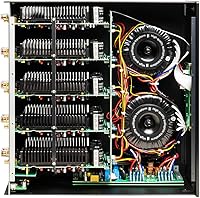
Buyers consistently note that the Nero HTA5200 feels overbuilt in the best sense—solid chassis, tight panel tolerances, and internal components that suggest a transformer sized well beyond minimum requirements. For a piece of gear intended to anchor a dedicated theater room for years, that physical confidence matters.
The sheer mass and footprint create handling challenges during initial installation, particularly for solo installers. A few buyers noted the rear panel connectors, while functional, felt slightly less refined than the chassis itself suggested.
Power Output & Headroom
88%
Reviewers driving 4-ohm speaker arrays were notably impressed that the amp did not compress or throttle under sustained multichannel loads—something receiver-based systems regularly fail at. The all-channels-driven rating holds up in practice, not just on paper.
Users with purely 8-ohm, high-efficiency speakers in smaller rooms found the headroom somewhat excessive for their use case, making the value proposition harder to justify compared to lower-powered alternatives. There is no volume attenuation onboard, so the processor must handle all level matching.
Signal-to-Noise & Background Noise
93%
The noise floor is essentially inaudible even with sensitive in-ceiling or bookshelf speakers placed near listening positions. Buyers who previously struggled with hiss from AV receiver preamp stages reported a noticeably cleaner, blacker background after switching to this amp.
A small number of users reported a faint mechanical transformer hum audible in very quiet rooms at close proximity to the unit—not through the speakers, but from the chassis itself. This appears to be unit-to-variant in nature rather than a systemic design flaw.
Input Flexibility
86%
Having both balanced XLR and unbalanced RCA inputs on every channel is genuinely practical. It means buyers are not locked into upgrading their processor immediately and can transition to balanced connections on their own timeline without buying an entirely new amp.
There is no digital input of any kind, which is expected for a pure power amp but worth stating clearly for buyers coming from integrated receivers. Those without a processor that offers per-channel balanced outputs may not fully utilize what makes this amp stand out.
System Integration & Automation
84%
The 12V trigger works reliably with a wide range of AV processors, letting the amp power up and down automatically as part of a sequenced system startup. Custom installers and rack-based setups particularly benefit from not having to manage the amp as a separate manual step.
There is only a single 12V trigger input with no output to daisy-chain additional components, which is a minor limitation in more complex multi-zone installations. Advanced users looking for RS-232 or IP control integration will need to find workarounds.
Thermal Management
89%
Operating temperatures are well-controlled even during extended high-volume sessions with demanding content. Buyers using the amp in enclosed equipment cabinets reported it ran noticeably cooler than previous Class AB amps of similar power ratings, suggesting effective heatsink design.
The unit does generate meaningful heat during extended use, so installations in tightly enclosed cabinetry without ventilation are not advisable. A few buyers had to retrofit cabinet ventilation they did not originally plan for.
Channel Separation & Stereo Imaging
87%
Reviewers using this amp in both 5.1 and 5.0 configurations praised the clarity of channel separation during complex surround mixes. Stereo imaging on the front left and right channels held up favorably against dedicated two-channel amplifiers in informal comparisons.
Some audiophiles felt the center channel performance, while clean, lacked the last degree of depth they experienced from higher-cost monoblock setups. At this price tier the comparison is somewhat unfair, but it reflects where a portion of the audience eventually wants more.
Value for Money
82%
18%
Against established competitors like Emotiva and Outlaw Audio, the Nero HTA5200 offers a strong specification set at a competitive price point—particularly the inclusion of XLR inputs across all five channels as standard rather than an upgrade. For what you are getting, the math works in most buyers' favor.
It is not an impulse purchase, and buyers who do not already own a capable AV processor will need to factor in that additional cost. The total system investment required to unlock everything this amp offers is meaningfully higher than the amp price alone.
Size & Physical Footprint
61%
39%
The substantial footprint at least matches the performance expectations—buyers building dedicated equipment racks reported it fits naturally alongside full-width processors and other separates, giving the rack a cohesive, professional look.
At 63 pounds with dimensions exceeding 17 inches in both length and width, this is genuinely difficult to place in standard media furniture or shallow AV cabinets. Multiple reviewers specifically called out the weight as a logistical challenge that required two people and advance planning.
Subwoofer & Bass Management
53%
47%
For buyers who already use a full-featured AV processor with built-in bass management and a dedicated subwoofer output, the absence of any onboard LFE handling is completely irrelevant and expected behavior for a pure power amplifier.
First-time separates buyers who assumed the amp would handle subwoofer routing were caught off guard. There is no LFE input, no bass management, and no low-pass filtering whatsoever—all of that must live in the processor, which not everyone researched beforehand.
Setup & Learning Curve
74%
26%
Experienced home theater enthusiasts reported a straightforward setup process, especially with the per-channel LED indicators helping identify any protection-mode or standby issues quickly without requiring a manual lookup.
Buyers new to the separates approach—specifically those used to all-in-one receivers—reported a steeper-than-expected learning curve around gain structure, processor output levels, and understanding why there are no speaker-level controls on the amp itself.
Warranty & Long-Term Reliability
88%
The 5-year warranty is one of the most cited trust factors in buyer reviews, with several owners specifically stating it influenced their purchase decision over competing brands offering shorter coverage. OSD Audio's warranty support reputation comes up positively in early ownership discussions.
The product has only been available since early 2024, so long-term reliability data beyond the first year of ownership is still limited. The warranty promise is encouraging, but actual multi-year durability remains to be confirmed by a broader and older owner base.
Competitor Comparison
79%
21%
Buyers who cross-shopped against Emotiva BasX A5 and Outlaw Audio Model 5000 frequently cited the Nero HTA5200 as winning on XLR input availability and build density. Several described it as feeling more substantial than similarly priced alternatives when held side by side.
Emotiva and Outlaw both carry larger, more established owner communities with years of reliability data behind them. Buyers weighing brand confidence and resale value may still lean toward those names despite the Nero HTA5200 holding its own on raw specifications.
Documentation & Out-of-Box Experience
71%
29%
The physical packaging and initial unboxing experience matched the premium price positioning—adequate protective packaging and clearly labeled inputs made first connections straightforward for those familiar with the category.
The included documentation was described by several buyers as thin relative to what a first-time separates user would need. More detailed guidance on gain structure setup and processor pairing would reduce the frequency of setup-related questions appearing in the review section.

Suitable for:

The OSD Audio Nero HTA5200 is built for home theater enthusiasts who are ready to commit to a proper separates setup and already own—or are actively planning to purchase—a capable AV processor to pair with it. If you are driving a set of 4-ohm tower speakers that your current receiver struggles to control at reference levels without compression or distortion, this 5-channel amplifier solves that problem directly and with headroom to spare. It is equally well-suited for custom installation professionals and serious DIY integrators who need reliable 12V trigger support, rack-friendly dimensions, and balanced XLR connections to maintain clean signal integrity across longer cable runs. Audiophiles making their first real move away from a receiver-centric system will find the per-channel LED monitoring and dual XLR/RCA input options genuinely helpful during the learning curve of a separates build. Anyone prioritizing honest, conservatively rated power specs over inflated marketing figures will also find this home theater amp unusually transparent by industry standards.
Not suitable for:

Buyers expecting a self-contained home theater solution should look elsewhere—the OSD Audio Nero HTA5200 is a pure power amplifier with no HDMI inputs, no built-in DSP, no room correction, and no subwoofer output or bass management of any kind. If you do not already own an AV processor capable of handling signal routing and bass management, the total system cost climbs considerably before you can even use this amp. Those living in apartments or smaller rooms with space-constrained AV furniture will also struggle: at 63 pounds and over 17 inches wide and deep, this is genuinely large equipment that demands a dedicated rack or reinforced shelf and ideally a second person during installation. Casual listeners or buyers stepping into their first home theater system on a tight overall budget will find the value proposition difficult to justify when integrated receivers offer a far lower barrier to entry. If you are expecting to bridge channels, add a subwoofer directly through the amp, or apply any onboard filtering, this 5-channel amplifier simply does not offer those capabilities by design.
Specifications

  • Amplifier Class: The unit operates in Class AB topology, balancing thermal efficiency with audio fidelity under sustained multichannel loads.
  • Channels: Five discrete amplification channels are provided, each independently powered and monitored.
  • All-Ch Output: All five channels deliver 210W RMS simultaneously into 4 ohms, or 145W RMS simultaneously into 8 ohms.
  • Single-Ch Output: A single channel driven alone produces 265W RMS into 4 ohms or 180W RMS into 8 ohms.
  • Frequency Response: The amplifier maintains full output from 5 Hz to 50 kHz, well beyond the limits of human hearing in both directions.
  • Signal-to-Noise Ratio: SNR measures 110 dB at full rated power and 105 dB at 1W, indicating an exceptionally quiet noise floor across the entire dynamic range.
  • Inputs: Each channel provides both a balanced XLR input and an unbalanced RCA input, selectable based on the connected processor.
  • Trigger: A 12V trigger input enables automatic power-on and power-off sequencing when integrated with a compatible AV processor.
  • Subwoofer Out: No dedicated subwoofer output or LFE integration is provided; all bass management must be handled by the external AV processor.
  • Bridgeable: The amplifier is not bridgeable; channel pairing to increase per-channel power output is not supported.
  • Filters: No onboard low-pass or high-pass filtering is included, as signal processing is delegated entirely to the upstream processor.
  • Channel Indicators: Each channel has a dedicated LED indicator displaying one of three states: On, Standby, or Protection mode.
  • Dimensions: The chassis measures 16.57″ in length, 17.1″ in width, and 6.3″ in height, requiring a full-width rack bay or equivalent shelf space.
  • Weight: The unit weighs 63 lbs, reflecting the substantial internal power transformer and reinforced chassis construction.
  • Warranty: OSD Audio covers the unit with a 5-year limited warranty, one of the longer coverage periods offered in the dedicated power amplifier category.
  • Model Number: The official model designation is NERO-HTA5200, as labeled on the rear panel and manufacturer documentation.
  • Manufacturer: The amplifier is designed and sold by OSD Audio, a US-based audio brand specializing in custom installation and home theater components.
  • Availability Date: The product was first made available for purchase in March 2024, making long-term ownership data still relatively early-stage.

Related Reviews

OSD Audio Nero XMAX11 11-Channel Home Theater Amplifier
85%
94%
Performance
96%
Sound Quality
88%
Build Quality
72%
Ease of Setup
93%
Power Output
More
OSD Audio SPW8 Whole House Audio 8-Zone Speaker Distribution Panel
85%
88%
Installation Ease
85%
Build Quality
90%
Compatibility with Amplifiers
87%
Sound Distribution Performance
82%
Size & Space Efficiency
More
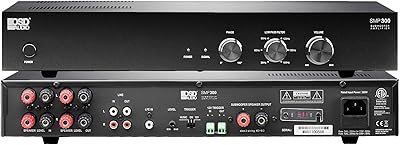
OSD Audio SMP300 Subwoofer Amplifier
83%
92%
Value for Money
89%
Power Output
85%
Ease of Setup
84%
Sound Quality
93%
Compactness/Size
More
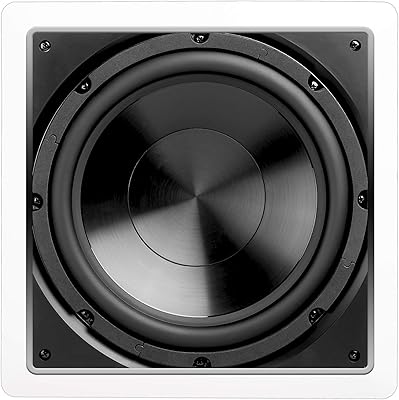
OSD Audio IWS8 In-Wall Subwoofer
84%
89%
Bass Performance
78%
Installation Ease
93%
Space-Saving Design
84%
Sound Clarity
87%
Build Quality
More
OSD Audio IWS10 In-Wall Subwoofer 10″
84%
87%
Sound Quality
90%
Bass Performance
78%
Ease of Installation
85%
Value for Money
92%
Design & Aesthetics
More
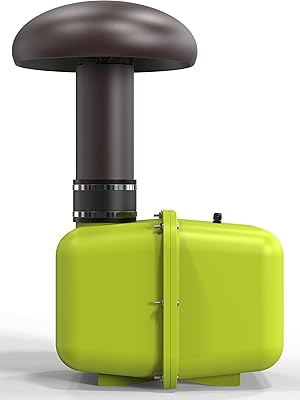
OSD Audio Forza 10 Outdoor Subwoofer
83%
91%
Bass Performance
94%
Weather Resistance
89%
Build Quality
87%
Value for Money
75%
Ease of Setup
More
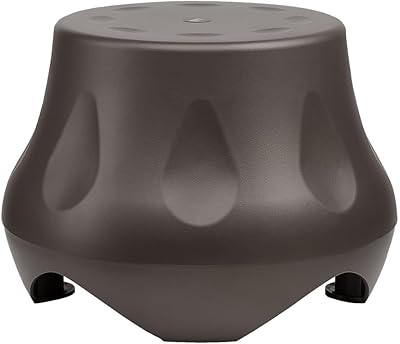
OSD Audio XSUB12 12″ Outdoor Subwoofer
85%
90%
Sound Quality
88%
Weather Resistance
85%
Installation Flexibility
92%
Bass Depth & Clarity
75%
Size & Dimensions
More
OSD Audio AP640 70V Outdoor Patio Speakers
86%
89%
Sound Quality
91%
Durability
84%
Ease of Setup
93%
Weather Resistance
87%
Installation Flexibility
More
OSD Audio ICE800WRS Weatherproof In-Ceiling Speakers Pair
86%
86%
Sound Quality
91%
Ease of Installation
94%
Weather Resistance
72%
Bass Response
89%
Durability
More
OSD Audio MX1280 Gen2
79%
88%
Audio Performance
84%
Power Output & Headroom
86%
Zone Control & Flexibility
91%
Build Quality & Durability
78%
Thermal Management
More

FAQ

Yes, absolutely. The OSD Audio Nero HTA5200 is a pure power amplifier with no preamp section, no HDMI inputs, and no volume control of its own. You will need an AV processor or a preamplifier to handle source switching, volume control, and bass management before the signal reaches this unit. It is designed to be the last stage in your signal chain, not the hub of your system.
Not directly, no. This 5-channel amplifier has no dedicated subwoofer output, no LFE input, and no onboard bass management or low-pass filtering. Your AV processor needs to handle all of that and send a dedicated line-level signal to a separate subwoofer amplifier or powered sub. This is standard behavior for a pure power amp, but it surprises buyers coming from integrated receivers.

Both input types carry the same audio signal, but balanced XLR connections reject noise and interference more effectively over longer cable runs—typically anything beyond 6 to 10 feet. If your AV processor offers balanced outputs, use XLR for the cleanest signal. If it only has RCA outputs, the RCA inputs on this amp work perfectly well; you are just not getting the added noise rejection that XLR provides.

At 145W per channel into 8 ohms with all channels driven, this home theater amp has more than enough output for most listening rooms, including larger dedicated theater spaces. Speaker sensitivity plays a big role—an 88 dB sensitive speaker will reach very high listening levels with far less than 145W. Unless you are running a genuinely large commercial-style space, headroom is unlikely to be a concern.

Class AB amplifiers do generate heat, and this one is no exception—but buyers report it runs at reasonable operating temperatures under normal home theater use with adequate ventilation. The key word there is ventilation: do not install it in a sealed cabinet. Leave at least a few inches of clearance above the unit and consider a vented rack shelf if it is going into an enclosed equipment rack.

The chassis width exceeds 17 inches, which means it will not fit in a standard 19-inch rack without modification—it is designed for furniture-style equipment racks or dedicated AV credenzas rather than the narrower professional rack format. If rack mounting is important to your installation, measure your rack's internal usable width carefully before purchasing.

The 12V trigger is a widely standardized feature in home theater equipment and is compatible with virtually all AV processors and preamps that offer a 12V trigger output—which includes most models from Denon, Marantz, Anthem, Emotiva, Arcam, and many others. When the processor powers on, it sends a 12V signal that automatically wakes the amp; when the processor powers off, the amp follows. It is a simple, reliable system.

Not at all. Each channel on this 5-channel amplifier operates independently, and the amp is rated to handle both 4-ohm and 8-ohm loads. You can mix impedances across channels without any issue. The amp will simply deliver the appropriate power level for whatever load is connected to each channel.

Honestly, plan your final placement carefully before you connect anything. At 63 pounds, repositioning is a two-person job every time, and several owners have noted that underestimating the weight made installation more stressful than expected. If your equipment rack is in a tight corner or requires the amp to be lifted above waist height, arrange for help in advance.

All three are competitive options in the same general tier of the market. The Nero HTA5200 stands out for including balanced XLR inputs as standard across all five channels, which neither the BasX A5 nor the Outlaw Model 5000 does at base configuration. The Emotiva and Outlaw brands carry longer track records and larger owner communities, which some buyers weigh heavily. On raw power delivery and build substance, early buyers of this home theater amp rate it favorably against both alternatives.