Overview

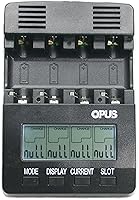
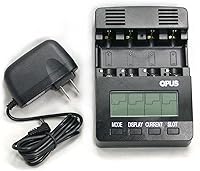
The Opus BT-C2400 Battery Charger Analyzer is not a simple set-it-and-forget-it charger — it's a proper diagnostic tool for anyone who takes their AA and AAA rechargeable batteries seriously. Where basic chargers give you a light that turns green, this charger-analyzer gives you capacity readings, voltage data, elapsed time, and current draw for every slot simultaneously. It handles both NiMH and NiCd chemistries across four independent channels, each fully configurable on its own. Hobbyists, flashlight collectors, and photography enthusiasts will find it particularly useful. Just note upfront: if you need Li-ion or 18650 support, this isn't it.
Features & Benefits

The four independent channels are where this charger-analyzer earns its keep. You can charge one battery, discharge another, run a full capacity test on a third, and refresh a fourth — all at the same time, all without interference. That matters when you're matching batteries for high-drain devices or sorting a mixed pile of old cells. The internal resistance measurement is genuinely useful: a battery showing decent capacity but high resistance is one that will disappoint under real load. The refresh cycle mode is practical for older NiMH stock that has lost capacity over time. At 6 x 4 x 1 inches and 8 ounces, it stores easily in a drawer or gear bag.

Best For

This four-channel tester is built for people who want real battery data, not just a full charge. If you manage a large collection of NiMH cells — for cameras, flashlights, radios, or remote controls — it helps you know which batteries are still performing and which ones should be retired. It's also a solid pick for anyone buying used batteries or inheriting old packs, since you can run a full test before committing them to important devices. Casual users who just want to top off a couple of cells quickly may find the charge speeds too slow for their needs. And again, if your batteries are lithium-based, look elsewhere — NiMH and NiCd only.

User Feedback

With a 4.6 out of 5 rating across over 700 reviews, this charger-analyzer has clearly built a loyal following over years of use. Buyers frequently highlight the accuracy of capacity readings and the usefulness of internal resistance data as standout strengths — things you simply don't get from a standard charger. The channel independence gets consistent praise too; running four different operations at once is something users clearly appreciate in practice. On the downside, charge speeds are a real sticking point for some — this isn't the unit you grab when you need batteries ready in an hour. A few owners also find the included manual thin on detail, so budget some time to explore the modes before your first serious use.

Pros

  • Four fully independent channels let you run different operations on each battery simultaneously.
  • Internal resistance measurement reveals battery health that capacity numbers alone cannot show.
  • Refresh mode can recover degraded NiMH cells, saving money on replacements.
  • Capacity readouts give you reliable data for sorting and matching batteries by real-world performance.
  • The backlit LCD is easy to read in dim workshops, gear rooms, or low-light conditions.
  • Compact and lightweight enough to stow in a drawer or pack into a kit bag without hassle.
  • Supports both NiMH and NiCd chemistry, covering the vast majority of common rechargeable AA and AAA cells.
  • Long-term durability is well-documented — many owners report years of consistent, reliable use.
  • A 4.6-star rating across hundreds of reviews reflects genuine satisfaction, not a short honeymoon period.

Cons

  • Charge speeds are slow — not a good fit if you regularly need batteries ready within an hour.
  • No support for Li-ion, 18650, or any chemistry outside NiMH and NiCd.
  • The included manual is thin and leaves new users to figure out several modes through trial and error.
  • No USB or wireless connectivity — data stays on the LCD and cannot be logged or exported.
  • Only handles AA and AAA sizes; C, D, or sub-C format batteries are not compatible.
  • The interface takes some getting used to; first-time setup can feel unintuitive without a guide.
  • At four channels maximum, heavy users managing large battery fleets may wish for more capacity.
  • No audible alert when a cycle completes — you have to check the display manually.

Ratings

The Opus BT-C2400 Battery Charger Analyzer earns its strong reputation through consistent, long-term performance reported by serious hobbyists and everyday rechargeable battery users alike — our AI has analyzed verified global reviews, actively filtering out incentivized, spam, and bot-generated feedback to surface what real buyers actually experience. The scores below reflect both the genuine strengths that keep this charger-analyzer in people's gear drawers for years and the honest pain points that matter before you buy.
Measurement Accuracy
91%
Users consistently report that the capacity readings align closely with manufacturer specs on known-good cells and credibly expose degraded ones. Photographers and flashlight enthusiasts in particular rely on it to sort batteries by real-world performance rather than guesswork, and most find the numbers repeatable across multiple test cycles.
A small number of users note occasional variance between channels on the same battery, suggesting minor calibration differences across slots. At this price point it performs well, but lab-grade precision it is not — results should be treated as highly useful estimates rather than certified measurements.
Internal Resistance Testing
88%
The internal resistance feature is genuinely rare at this price tier and gives users a diagnostic tool that capacity numbers alone cannot match. Knowing that a battery has high resistance helps explain why it drains faster under load, which is invaluable for anyone building matched sets for cameras, radios, or high-drain flashlights.
The manual provides little explanation of how to interpret the resistance values in practice, leaving new users to research thresholds on their own. Without that context, the feature can feel more confusing than helpful until buyers do some outside reading.
Channel Independence
93%
The ability to run four completely different operations simultaneously is one of the most praised aspects of this charger-analyzer across long-term user reports. Someone prepping a mix of old and new cells for a camping trip can charge two, refresh one, and test a fourth in a single session without any juggling.
With only four slots, users managing large battery inventories will need to run multiple back-to-back sessions, which takes significant time given the already slow cycle speeds. There is no queue or scheduling function to automate sequential batches.
Charging Speed
54%
46%
The deliberate low-rate charging approach is actually beneficial for long-term battery health, and users who plan ahead — setting up overnight charges or leaving the unit running during the workday — report no practical frustration with the pace.
For buyers who need batteries ready in two hours or less, this four-channel tester will consistently disappoint. Multiple reviewers specifically flag the slow charge rate as the single biggest drawback, and it remains the most common reason the unit is not recommended to casual or time-sensitive users.
Refresh Mode Effectiveness
83%
Many users report measurably recovered capacity after running the refresh cycle on cells that had been sitting unused for months or had developed sluggish performance. For anyone with a drawer full of aging NiMH batteries, this mode alone can justify the purchase by saving money on replacements.
Refresh mode cannot revive cells that are genuinely at end-of-life, and some users mistakenly expect it to work miracles on very old or deeply discharged batteries. The process also takes considerable time, sometimes several hours per cycle, which requires patience.
Display & Readability
79%
21%
The backlit LCD is practical and informative, showing capacity, voltage, elapsed time, and current for each channel at a glance. Users who work in dim workshops or low-light gear rooms appreciate not having to bring a flashlight just to check charge progress.
The display is functional rather than refined — text is small, and fitting data for all four channels on one screen means the layout can feel cramped. A handful of users with aging eyesight specifically mention having difficulty reading all four channels comfortably from a normal viewing distance.
Ease of Setup
72%
28%
Basic charging is genuinely plug-and-play: slot in batteries, press a button, and the unit gets to work. Users who only need the charge function rarely report any setup confusion and are up and running within minutes of unboxing.
Moving beyond basic charging into Test, Discharge, or Refresh modes involves a less intuitive button sequence that the manual does not walk through clearly enough. New buyers regularly turn to community forums and YouTube walkthroughs to fill in what the documentation omits.
Documentation Quality
46%
54%
The manual covers the absolute basics adequately, and for straightforward charging tasks most users will not need to consult it more than once. The device itself also provides on-screen mode indicators that help guide simple operations.
The included manual is widely criticized as one of the weakest aspects of the package — it lacks explanations for interpreting internal resistance values, does not clearly describe what each mode does in plain language, and offers no troubleshooting guidance. For a device with this much diagnostic depth, better documentation would significantly improve the new-user experience.
Build Quality & Durability
84%
Long-term ownership reports are notably common in user reviews, with many buyers mentioning three to five or more years of regular use without hardware failure. The unit feels solid in hand despite its light weight, and the battery contacts show minimal wear even after extensive cycling.
The plastic housing is not ruggedized and would not survive being dropped onto a hard surface without risk of damage. It is built for stable bench or drawer use, not for rough handling or field conditions where bumps and drops are likely.
Portability & Form Factor
81%
19%
At 8 ounces and a compact 6 x 4 x 1 inch footprint, this charger-analyzer is easy to tuck into a kit bag or store in a small drawer without taking up meaningful space. Users who bring it to workshops, cabins, or travel setups report it packs and unpacks without hassle.
It still requires a wall outlet and its AC adapter, which limits truly portable use. Users hoping to run it off a battery pack or car adapter will find no native support for those power sources.
Battery Chemistry Compatibility
51%
49%
For users whose entire battery inventory is NiMH or NiCd in AA and AAA sizes, the compatibility scope is perfectly sufficient and covers the most widely used rechargeable consumer formats by a significant margin.
The hard limitation to NiMH and NiCd is a genuine dealbreaker for anyone whose collection includes 18650s, Li-ion cells, or any other lithium-format batteries. Users who discover this limitation after purchase represent a notable share of lower-star reviews, underscoring how important it is to check chemistry compatibility before buying.
Value for Money
86%
For buyers who will actually use the diagnostic features, the Opus BT-C2400 delivers a lot of functional depth at a mid-range price that would cost significantly more if split across separate tools. Long ownership lifespans reported by users further strengthen the cost-per-use case.
For casual users who mainly want cells topped off and have no interest in capacity data or internal resistance readings, the price premium over a basic charger is hard to justify. The value proposition is real, but only for buyers who will genuinely engage with the analytical features.
Long-Term Reliability
87%
The density of multi-year ownership reviews is unusually high for a product in this category, suggesting the hardware holds up well under regular cycling use. Users who treat it as a semi-permanent part of their gear setup consistently report it continues working as expected years after purchase.
There are occasional reports of individual channel failures after extended use, and replacement parts or repair support are not widely available. If a channel stops working, most users end up replacing the entire unit rather than repairing it.

Suitable for:

The Opus BT-C2400 Battery Charger Analyzer is the right tool for anyone who treats rechargeable batteries as an investment rather than a convenience. Flashlight enthusiasts, photographers, and ham radio operators who cycle through large numbers of AA and AAA NiMH cells will get the most out of it — particularly the ability to sort batteries by actual measured capacity and internal resistance, which tells you far more than a simple charge indicator ever could. It's equally valuable for households trying to extend the life of their rechargeable stock, since the refresh mode can genuinely recover cells that would otherwise be thrown out. Anyone buying used batteries in bulk, or inheriting old packs, will find the test and discharge modes indispensable for figuring out what's worth keeping. If you've ever wondered why some batteries drain faster than others in a matched set, this charger-analyzer will finally give you an answer.

Not suitable for:

If your battery needs revolve around lithium-based formats — 18650 cells, Li-ion packs, or anything outside of NiMH and NiCd AA and AAA — the Opus BT-C2400 Battery Charger Analyzer simply won't help you; it does not support those chemistries at all. Users who need a fast top-up before heading out the door will also find this four-channel tester frustrating, as its charge rates prioritize battery health over speed and are noticeably slow compared to quick-charge alternatives. It's also not the best fit for complete beginners who expect plug-and-play simplicity — the manual leaves some gaps, and getting comfortable with all four modes takes a little patience. If you only own a handful of batteries and rarely think about their condition, the feature depth here is more than you'll ever use, and a simpler, cheaper charger would serve you just as well.

Specifications

  • Brand: Manufactured by Opus under the model designation BT-C2400-US.
  • Battery Types: Compatible exclusively with AA and AAA sized rechargeable batteries.
  • Chemistry: Supports NiMH (Nickel-Metal Hydride) and NiCd (Nickel-Cadmium) battery chemistries only.
  • Channels: Features four fully independent slots, each operable in a different mode simultaneously.
  • Operating Modes: Each channel can be set individually to Charge, Discharge, Refresh, or Test mode.
  • Internal Resistance: Measures the internal resistance of each battery, providing a direct indicator of cell health and age.
  • Capacity Limit: Supports battery capacity readings up to 20,000 mAh, covering the full range of consumer NiMH and NiCd cells.
  • Display: Equipped with a backlit LCD screen that shows capacity, voltage, elapsed time, and current draw per channel.
  • Dimensions: Unit measures 6 x 4 x 1 inches, providing a compact, drawer-friendly footprint.
  • Weight: Weighs 8 ounces, making it light enough to include in a travel or field kit.
  • Input Voltage: Requires a 240V AC power input via the included adapter.
  • Output Voltage: Delivers a regulated 12V DC output to the charging circuitry.
  • Current Rating: Rated at 1,400 mA total current output across all active channels.
  • First Available: Originally released on Amazon in August 2014, with a long and consistent sales history since.
  • Discontinued: As of the latest available data, this product has not been discontinued by the manufacturer.
  • Model Number: The US market variant carries the official model number BT-C2400-US.
  • ASIN: Listed on Amazon under ASIN B00MYQ8IYS for product verification and compatibility reference.

Related Reviews
Opus C3400 4-Channel Battery Charger Analyzer
79%
93%
Measurement Accuracy
91%
Multi-Channel Independence
89%
Chemistry Compatibility
88%
Capacity Test Reliability
82%
Internal Resistance Testing
More
MiBOXER C8 8-Bay Battery Charger
82%
88%
Charging Performance
91%
Battery Compatibility
93%
LCD Display Clarity
86%
Internal Resistance Measurement
89%
Safety Features
More
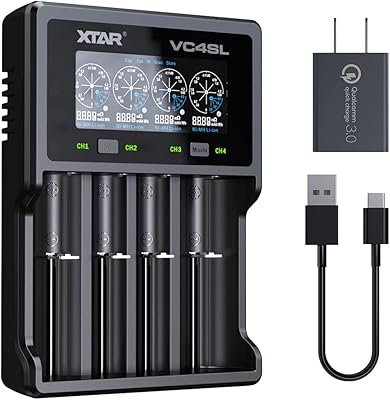
XTAR VC4SL 4-Bay Battery Charger
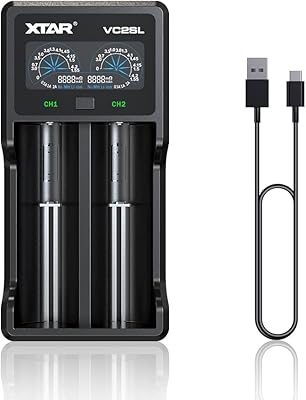
82%
88%
Charging Accuracy
91%
LCD Display Quality
93%
Battery Compatibility
84%
Grade Mode Usefulness
82%
Build Quality
More
Koshore Universal Rechargeable Battery Charger
72%
88%
Format Versatility
83%
LCD Display Clarity
61%
Build Quality
69%
Charging Speed
78%
Discharge Function
More
XTAR VC2SL Battery Charger
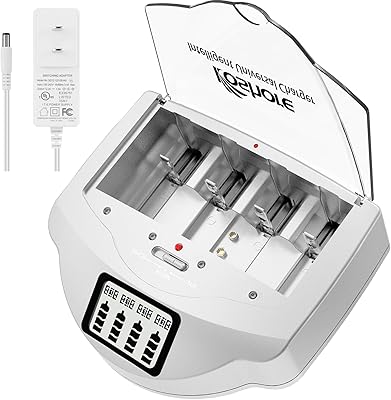
84%
85%
Charging Performance
88%
Ease of Use
80%
Build Quality
90%
Portability
92%
Battery Compatibility
More
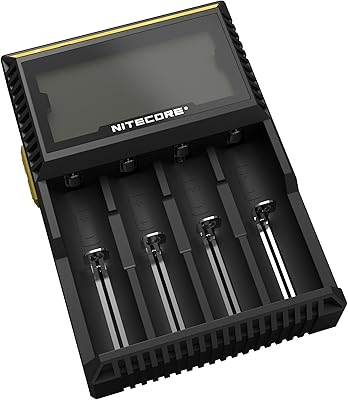
Nitecore Digicharger D4 4-Bay Battery Charger
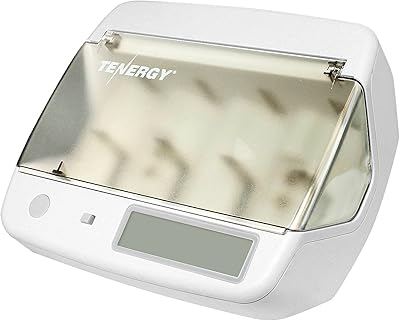
75%
93%
Independent Slot Performance
88%
LCD Display Clarity
91%
Battery Compatibility
86%
Build Quality
89%
Safety Features
More
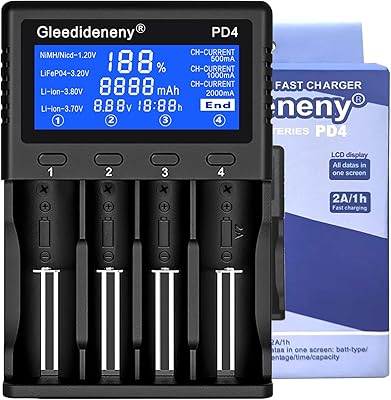
Gleedideneny PD4 18650 Battery Charger
86%
91%
Value for Money
87%
Charging Speed
90%
Display Quality
85%
Ease of Use
88%
Safety Features
More
Zanflare C4 Smart Battery Charger
86%
88%
Charging Performance
85%
Build Quality
91%
Ease of Use
77%
Charging Speed
94%
Versatility (Battery Types Supported)
More
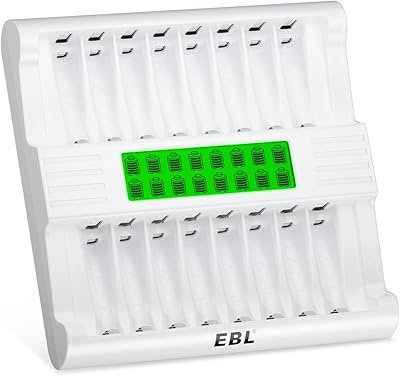
EBL 16-Bay AA AAA Battery Charger
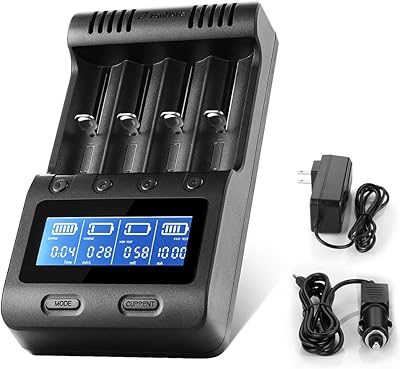
79%
91%
Charging Speed
93%
Slot Independence
78%
LCD Display Clarity
62%
Heat Management
88%
Safety Features
More
Tenergy T9688 Universal Battery Charger
78%
88%
Charging Versatility
91%
Ease of Use
86%
LCD Display & Readability
72%
Charging Speed – AA, AAA, C, D
41%
9V Charging Speed
More

FAQ

No — the Opus BT-C2400 Battery Charger Analyzer is built strictly for NiMH and NiCd chemistry in AA and AAA sizes. It will not charge, test, or recognize Li-ion, 18650, or any lithium-format cell. If your collection includes those types, you will need a separate charger designed for lithium batteries.

Refresh mode runs a controlled discharge followed by a full recharge cycle, which can help recover capacity in batteries that have been sitting unused or have developed a partial memory effect. It won't bring a genuinely dead cell back to life, but for batteries that are underperforming relative to their rated capacity, a refresh cycle often produces a measurable improvement.

Run the Test mode on each cell — it will discharge the battery fully and measure how much capacity it delivers, then display that figure in mAh. You can compare the result against the battery's rated capacity to see how much it has degraded. The internal resistance reading adds another layer of insight; a high resistance value typically means a battery will struggle under heavy load, even if its capacity still looks acceptable.

Yes, completely independently. You can be charging one battery on slot one, running a discharge test on slot two, doing a full capacity test on slot three, and refreshing an old cell on slot four — all without any interference between channels. This is one of the most practical aspects of the design for anyone managing a mixed inventory of batteries in different states.

Honestly, speed is not this device's strong suit. It prioritizes careful, low-rate charging to protect battery health over quick turnaround times. If you regularly need batteries ready in an hour or two, this four-channel tester will likely frustrate you. It's better suited to overnight or daytime cycles where you're not in a hurry.

The backlit display is clear and readable in most environments, including dim workshops, closets, and low-light rooms. Each channel shows its own data — capacity, voltage, elapsed time, and current — so you can monitor everything at a glance without scrolling through menus. In very bright direct sunlight it can be harder to read, but for typical indoor use it's quite practical.

There is a mild one, mostly because the included manual is not as thorough as it could be. The basics — slotting in batteries and starting a charge — are straightforward. Getting comfortable with the Test, Discharge, and Refresh modes and understanding what the readings mean takes a little more exploration. A quick search for community guides or YouTube walkthroughs from other users can fill in the gaps the manual leaves.

Absolutely. You can use one, two, three, or all four slots as needed — any empty slot is simply ignored. There is no requirement to fill every channel before the device operates normally.

Based on long-term user reports, the Opus BT-C2400 holds up well with regular use over several years. Many reviewers specifically mention using the same unit for three, four, or more years without hardware issues. It's not a ruggedized device, so normal handling care applies, but it is not considered fragile by the people who use it regularly.

It depends on how you use those batteries. If you want to understand their actual condition, match them for performance-sensitive devices, or extend their lifespan through proper cycling, this charger-analyzer is worthwhile even for a modest battery collection. If you just need them charged and have no interest in the diagnostic side of things, a simpler and less expensive charger would be a more practical fit.

Where to Buy