Overview

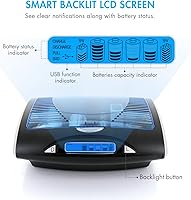
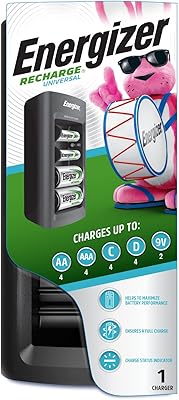
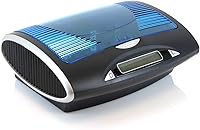
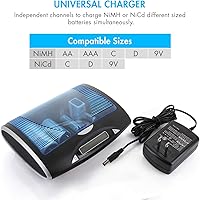
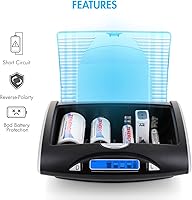
The Tenergy T9688 Universal Battery Charger sits comfortably in the mid-range of the household charger market, handling NiMH and NiCD cells in AA, AAA, C, D, and 9V formats without requiring any manual configuration. It ships with an AC adapter and can charge up to four cylindrical batteries at once, plus two 9V cells in separate dedicated slots. The blue backlit LCD shows the status of each slot independently, so you always know where things stand. This is not a speed-focused unit built for hobbyists — it targets everyday home users who want reliable, automatic charging without thinking too hard about settings or current rates.
Features & Benefits

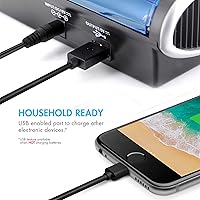
Each slot on this smart charger operates independently, meaning you can load a mismatched mix of AAs and Cs and let the unit handle current selection on its own — no jumpers, no menus. One feature that often gets overlooked is the discharge-and-recharge cycle: the charger intentionally drains a battery before refilling it, which can breathe new life into older NiMH cells that have gradually lost usable capacity. There is also a rear USB port, though at 500mA output it is better suited to powering a small device than fast-charging a phone. Short-circuit protection and bad-cell detection round out a thoughtful, safety-conscious design.

Best For

This universal NiMH charger is a natural fit for households that cycle through a lot of rechargeable AAs and AAAs — think TV remotes, kids toys, clocks, and flashlights. If you also occasionally need to charge bulkier C or D cells for lanterns or radios, having that covered in one unit saves real drawer space. It is a particularly solid pick for beginner rechargeable users who do not want to research charge rates or worry about overcharging. It also makes practical sense for anyone currently juggling two or three single-size chargers and looking to consolidate into one tidy, low-maintenance solution on the countertop.

User Feedback

Buyers consistently highlight the clear LCD readout and the fact that the charger shuts off reliably when batteries reach full — both things that matter more than they sound once you have experienced a charger that does not. The discharge-reconditioning function earns specific praise from users who have successfully revived sluggish older battery packs. On the downside, the 9V charge rate draws frequent complaints; at 30mA it is safe, but filling a 9V battery can take the better part of a day. The USB port attracts mild frustration given its limited output. Long-term durability, however, tends to hold up well through one to two years of regular home use.

Pros

  • Charges AA, AAA, C, D, and 9V batteries in a single unit with no manual setup required.
  • Each slot operates independently, so mixed battery sizes charge simultaneously without interference.
  • The automatic discharge-and-recharge cycle can revive older NiMH batteries that feel dead but still have usable capacity.
  • Reliable automatic shutoff means you can leave it charging overnight without anxiety.
  • The backlit LCD shows per-slot status clearly, even in dim rooms or low-light utility spaces.
  • Bad-cell detection automatically rejects failing batteries before wasting a full charge cycle on them.
  • Short-circuit protection adds a practical safety layer for households where children occasionally handle the charger.
  • Ships with the AC adapter included — no extra purchases needed before first use.
  • Solid durability track record through one to two years of regular weekly household use.
  • Consolidating multiple single-size chargers into one saves drawer space and reduces cable clutter.

Cons

  • The 9V charge rate of 30mA is extremely slow — expect six to eight hours or longer for a full charge.
  • No per-slot charge time estimate or mAh readout, so you cannot track how depleted a battery actually was.
  • The rear USB port outputs only 500mA, which is too weak to meaningfully charge a modern smartphone.
  • Only four cylindrical slots total; larger households will need to run back-to-back sessions for bigger battery batches.
  • The unit runs noticeably warm during D-cell charging, which can concern first-time users even though it is within safe limits.
  • No lithium-ion chemistry support, which limits long-term usefulness as Li-ion consumer formats expand.
  • The reconditioning cycle cannot be skipped, making quick top-up sessions slower than expected.
  • The instruction manual does not clearly explain the discharge function, leading some new users to mistake reconditioning for a charging error.
  • Battery contact springs may weaken over time with repeated heavy C and D cell use, causing occasional slot recognition issues.
  • No temperature monitoring per slot, which higher-end chargers in a similar price range do offer as a standard safety feature.

Ratings

Our scores for the Tenergy T9688 Universal Battery Charger are generated by AI after systematically analyzing verified global buyer reviews, with spam, bot-submitted, and incentivized feedback actively filtered out. The result is an honest snapshot of real-world satisfaction — one that captures both what this smart charger genuinely does well and where it predictably falls short for certain users.
Charging Versatility
88%
Being able to drop in a mix of AA, AAA, C, D, and 9V batteries in one session — without touching a single setting — is the core reason most buyers choose this unit. Households with diverse battery needs across remotes, toys, lanterns, and smoke detectors find it genuinely consolidating.
It does not support lithium-ion or LiFePO4 cells, which matters more as rechargeable lithium AAs become more common. Buyers who eventually want to charge those chemistries will need a second charger.
Ease of Use
91%
Plug it in, insert batteries in any order, and walk away — there are no mode buttons to cycle through or current settings to configure. Non-technical users repeatedly highlight this as the single biggest reason they trust it with their regular charging routine.
The lack of manual control is a deliberate trade-off that frustrates more experienced users. Those who want to set a slower conditioning charge rate or monitor mAh delivered have no way to access that level of detail.
LCD Display & Readability
86%
The backlit blue LCD shows each slot's status independently, which removes the guessing game of wondering whether a battery is done or still charging. Users in low-light settings — like a dim utility room or garage shelf — specifically mention the backlight as a practical convenience.
The display communicates status clearly but does not show remaining charge time or battery health percentage, which more premium chargers in this segment do offer. A few users find the icons require a quick manual consult the first time around.
Charging Speed – AA, AAA, C, D
72%
28%
The 1300mA rate for AA, C, and D cells is adequate for everyday household cycling — most standard AA batteries reach full charge overnight or within several hours during the day, which suits the typical use pattern of this charger's audience.
It is not a fast charger by any measure, and impatient users who need a battery ready in under two hours will be disappointed. Compared to dedicated speed chargers in a similar price bracket, the cylindrical cell rate is serviceable but unremarkable.
9V Charging Speed
41%
59%
The conservative 30mA charge current is genuinely safe for 9V NiMH cells and minimizes the risk of heat-related damage over the long term. Users who charge 9V batteries infrequently and plan ahead will not find this a practical problem.
At 30mA, filling a standard 200mAh 9V battery takes the better part of a day — often 6 to 8 hours or longer. Buyers who regularly depend on 9V cells for guitar pedals, smoke detectors, or wireless mics frequently flag this as a real daily frustration.
Discharge & Reconditioning Function
83%
The auto discharge-before-recharge cycle works by fully draining a cell before refilling it, which counteracts the voltage depression that causes older NiMH batteries to feel dead when they still have usable capacity. Several buyers report successfully reviving rechargeable cells they had written off entirely.
The reconditioning cycle adds significant time to a full charge session, and there is no way to skip it or run charge-only mode on demand. Users who just need a quick top-up before heading out will find the full cycle inconvenient.
Safety & Protection Features
89%
Short-circuit protection, automatic bad-cell rejection, and negative delta-V cutoff work together to prevent the charger from pumping current into a failing or already-full battery. Buyers with kids who randomly insert batteries into the charger appreciate that the unit handles errors silently and safely on its own.
The protection system is solid for normal use but does not include temperature monitoring per slot, which higher-end chargers use to catch cells that are heating abnormally mid-charge. For typical household use this is a minor gap, but it is worth noting for safety-conscious buyers.
USB Port Utility
53%
47%
Having a rear USB output is a thoughtful inclusion for a household charger — it can power a small desk fan, a basic LED light, or slowly top up a Bluetooth speaker without needing a separate adapter block nearby.
At 500mA output, it is too slow to meaningfully charge a modern smartphone and is essentially useless for tablets. Buyers who see the USB port and expect it to double as a phone charger come away frustrated — it is more of a convenience trickle port than a practical charging outlet.
Build Quality & Durability
77%
23%
The plastic housing feels solid enough for a countertop unit that rarely moves, and the spring-loaded battery contacts hold cells firmly without wobble. Most buyers report trouble-free operation through one to two years of consistent weekly use.
The casing is fully plastic and shows surface scuffs fairly easily. A small number of users report that the battery contacts begin to lose tension after extended use with heavy C and D cells, which can cause intermittent slot errors.
Value for Money
81%
19%
For buyers replacing disposables with rechargeables across five battery sizes, consolidating into one capable unit at this price point makes clear economic sense over time. The inclusion of the AC adapter and the breadth of supported formats add tangible practical value.
Shoppers comparing it against slightly pricier competitors will find options that add per-slot mAh readouts, faster 9V charging, or Li-ion support for a modest premium. The value proposition holds for casual users but weakens for those who want more data or speed.
Slot Independence & Flexibility
84%
Each channel genuinely operates on its own — charging a D cell in slot one while reconditioning an AAA in slot three without any interaction between them. This matters practically when you have batteries at different states of charge that all need attention at the same time.
With only four cylindrical slots total, larger households that cycle through eight or twelve batteries at once will need to run multiple sessions. The layout also physically limits some slot combinations when using bulkier C or D cells side by side.
Heat Management
67%
33%
For AA and AAA sessions the charger stays cool to the touch and runs quietly without any fan noise. Most buyers never notice any warmth under typical household charging loads.
During D-cell charging sessions the unit runs noticeably warm — within manufacturer tolerances, but enough that a handful of users express concern when they first feel the casing. It is not dangerous, but it does give pause to buyers who were not expecting it.
Setup & Out-of-Box Experience
92%
The AC adapter is included, the LCD lights up immediately, and the charger begins working the moment batteries are inserted — no app, no pairing, no firmware update required. First-time rechargeable battery users consistently rate the initial setup experience as completely stress-free.
The included instruction manual is brief and leaves the discharge function underexplained. A few buyers did not realize the unit was reconditioning rather than charging during their first session, which caused unnecessary concern.
Compatibility & Chemistry Support
87%
NiMH and NiCD coverage across all five common household battery sizes is comprehensive enough for the vast majority of everyday rechargeable users. The automatic chemistry detection means buyers rarely need to cross-reference whether a specific brand or capacity is supported.
The charger does not detect or reject alkaline cells with any clear warning, which means an accidental insertion of a non-rechargeable could go unnoticed by an inattentive user. It also has no path forward for newer rechargeable formats entering the consumer market.

Suitable for:

The Tenergy T9688 Universal Battery Charger is a genuinely practical pick for households that have already committed to rechargeable batteries across multiple device types — think TV remotes, kids' toys, wall clocks, handheld flashlights, and the occasional lantern or radio that takes C or D cells. If you currently own two or three single-size chargers cluttering a kitchen drawer, consolidating down to one unit that handles everything from AAA to 9V without any manual configuration is a real quality-of-life improvement. It is especially well-matched to buyers who are new to rechargeables and want a charger that just works — insert the batteries, plug it in, come back later. The automatic discharge-and-recharge reconditioning feature also makes it a smart choice for anyone sitting on a collection of older NiMH batteries that have lost noticeable capacity over time, since the unit can often recover usable runtime without any user effort. Gift buyers looking for something practical and genuinely useful for a family household will find this a thoughtful, low-fuss option.
Not suitable for:

The Tenergy T9688 Universal Battery Charger is not the right fit for buyers who depend heavily on 9V rechargeable cells and need them ready within a few hours — at 30mA, the 9V charge rate is so conservative that a full charge can take the better part of a day, which is a real scheduling problem if 9V batteries rotate frequently through guitar pedals, wireless microphones, or professional audio gear. Power users and hobbyists who want granular control — custom charge rates, per-slot mAh tracking, or temperature monitoring — will find this smart charger too hands-off; it offers no way to intervene or inspect what is happening beyond the basic LCD status indicators. The USB port, while present, should not factor into a buying decision for anyone expecting to charge smartphones or tablets from it — 500mA is barely enough to offset screen-on discharge on most modern phones. The unit also has no support for lithium-ion rechargeable cells, which matters increasingly as Li-ion AA and AAA formats gain traction. Anyone who charges eight or more batteries at a time will also hit the slot limit quickly and need to run multiple sessions.
Specifications

  • Brand: Manufactured by Tenergy, a brand specializing in rechargeable battery solutions and charging equipment.
  • Model Number: The unit is identified by model number T9688, with a secondary item model reference of 96117.
  • Compatible Chemistries: Supports NiMH and NiCD rechargeable battery chemistries only; alkaline and lithium-ion cells are not supported.
  • Supported Sizes: Accepts AA, AAA, C, and D cylindrical cells across four independent slots, plus 9V batteries in two dedicated channels.
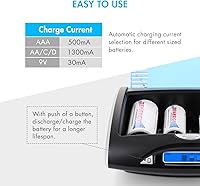
  • Charge Current – AA/C/D: AA, C, and D cells are charged at 1300mA, delivering a moderate charge rate suited to everyday household cycling.
  • Charge Current – AAA: AAA cells are charged at a conservative 500mA rate, which is gentle on smaller-capacity batteries.
  • Charge Current – 9V: 9V batteries charge at 30mA, a very low rate that is safe for the chemistry but results in significantly extended charge times.
  • Discharge Current: The discharge function operates at 400mA for AA, AAA, C, and D cells to recondition batteries before the recharge cycle begins.
  • Cutoff Method: Uses negative delta-V detection to identify when cylindrical NiMH and NiCD cells have reached full charge and stops current automatically.
  • Power Input: Requires 12V DC at 1000mA input, delivered via the included AC adapter; the charger does not operate on USB power input.
  • USB Output: A rear-panel USB port provides 5V DC at 500mA output for powering or trickle-charging small external devices.
  • Protections: Built-in safeguards include short-circuit protection, automatic bad-cell or non-rechargeable cell detection, and mechanical protection across all slots.
  • Display: Features a backlit blue LCD screen that shows real-time charging status for each individual slot independently.
  • Slot Count: Provides four independent cylindrical battery channels and two separate 9V channels for a maximum of six batteries simultaneously.
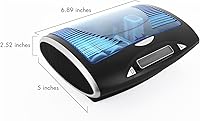
  • Dimensions: The unit measures 7″ wide by 5″ tall by 2.5″ deep, making it a compact but capable countertop charger.
  • Weight: The charger weighs 1.25 pounds including the housing but excluding the AC adapter and any batteries.
  • Included Accessories: Ships with one AC adapter required to power the unit; no rechargeable batteries are included in the box.
  • Availability: First made available for sale on December 27, 2017, and confirmed as not discontinued by the manufacturer.

Related Reviews
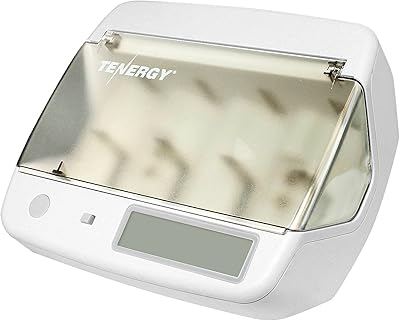
Tenergy TN299 Universal Battery Charger
87%
87%
Charging Performance
91%
Ease of Use
85%
Display Clarity
90%
Portability
92%
Versatility (Battery Types)
More
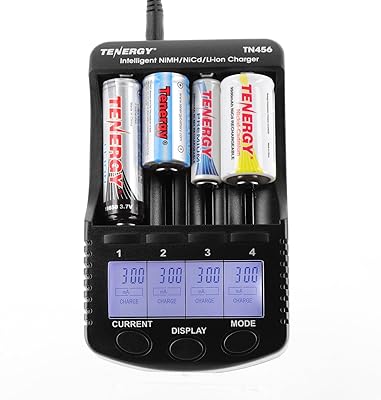
Tenergy TN456 Universal Battery Charger
82%
93%
Battery Chemistry Compatibility
91%
Independent Slot Operation
88%
LCD Display & Data Readouts
86%
Capacity TEST Mode
79%
Charging Speed & Current Control
More
Tenergy TN486U 5-Bay Universal Battery Charger
87%
91%
Value for Money
85%
Charging Performance
89%
Portability & Design
93%
Safety Features
88%
Ease of Use
More
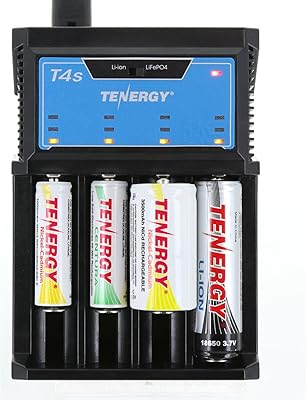
Tenergy T4s Intelligent Universal Charger
86%
96%
Battery Compatibility
75%
Charging Speed
91%
Safety Features
88%
Ease of Use
84%
Build Quality
More
Intelligence 8 Bay Universal Battery Charger
86%
90%
Charging Speed
88%
Usability
93%
Safety Features
85%
Display Clarity
87%
Build Quality
More
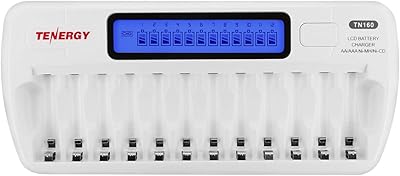
Tenergy TN160 12-Bay AA/AAA Battery Charger
83%
91%
Charging Reliability
58%
Battery Compatibility
83%
Per-Slot Display Clarity
86%
Refresh & Conditioning Function
88%
Build Quality & Durability
More
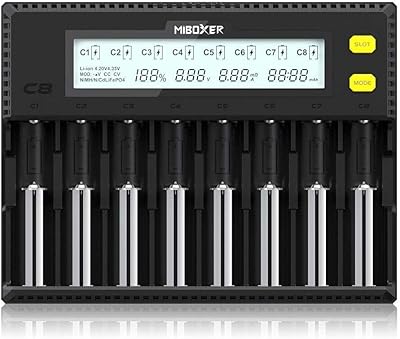
MiBOXER C8 8-Bay Battery Charger
82%
88%
Charging Performance
91%
Battery Compatibility
93%
LCD Display Clarity
86%
Internal Resistance Measurement
89%
Safety Features
More
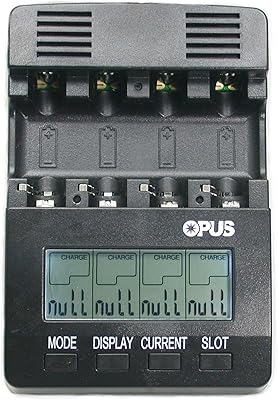
Opus BT-C2400 Battery Charger Analyzer
77%
91%
Measurement Accuracy
88%
Internal Resistance Testing
93%
Channel Independence
54%
Charging Speed
83%
Refresh Mode Effectiveness
More
XTAR VC2SL Battery Charger
84%
85%
Charging Performance
88%
Ease of Use
80%
Build Quality
90%
Portability
92%
Battery Compatibility
More
Koshore Universal Rechargeable Battery Charger
72%
88%
Format Versatility
83%
LCD Display Clarity
61%
Build Quality
69%
Charging Speed
78%
Discharge Function
More

FAQ

Yes, that is one of the more practical aspects of this smart charger. Each slot operates independently, so the unit detects the battery in each channel separately and applies the appropriate current. You can load a mix of AA, AAA, C, and D cells in any combination across the four cylindrical slots without any issues.

Realistically, plan for a full day. The 9V channels charge at only 30mA, which is extremely conservative. For a typical 200mAh to 250mAh NiMH 9V battery, that works out to roughly 8 hours or more. It is safe and will not damage your cells, but if you rotate 9V batteries frequently, you will want to plan your charging sessions the night before you need them.

The charger includes a bad-cell detection feature that is designed to flag non-rechargeable or failing cells, but it is not a guaranteed safety net for alkalines. You should never intentionally charge alkaline batteries in any NiMH charger — it is a safety risk. If you have mixed rechargeable and disposable batteries in a drawer, double-check before loading them into the unit.

The discharge function drains the battery down to a low voltage before the charger refills it from scratch. This is useful for older NiMH batteries that have developed a condition where they seem to run out of power faster than they used to — cycling them through a full discharge and recharge can partially restore their usable capacity. You do not need to use it every time; it is most beneficial for batteries that seem to be underperforming relative to their rated capacity.

No, the box includes only the charger unit and the required AC adapter. Batteries are sold separately, which is standard for chargers in this category.

Technically yes, the USB port is active independently of the charging slots. However, keep expectations realistic — at 500mA output, it will charge a phone very slowly and may not keep pace with screen-on usage on most modern smartphones. It is better suited to topping up a Bluetooth speaker, powering a small lamp, or maintaining charge on a basic wearable.

Some warmth is expected and normal, particularly during C and D cell sessions where higher-capacity batteries draw more sustained current. The unit is designed to operate within safe thermal limits, and the warmth a few buyers flag is not a sign of malfunction. That said, if the charger feels hot to the touch rather than just warm, or if you notice any smell, stop using it and contact Tenergy support.

You can absolutely charge a single battery. The slots are fully independent, so inserting one AA into a single channel while the other three slots are empty works without any issue. The charger will simply detect the one battery and ignore the empty slots.

Yes, and that is genuinely one of this universal NiMH charger's stronger selling points. C and D cells are often overlooked by budget chargers that only handle AA and AAA sizes. The cylindrical slots accommodate all four common sizes, so if you use rechargeables in lanterns, large flashlights, or old-school radios, this unit covers you without needing a separate dedicated charger.

The backlit LCD display shows the status of each slot in real time. When a battery reaches full charge, the charger automatically cuts off current using its negative delta-V detection and the display updates to reflect the completed status. You do not need to monitor it — the shutoff is automatic, which makes it safe to leave charging unattended overnight.

Where to Buy