Opus C3400 4-Channel Battery Charger Analyzer
Overview
The Opus C3400 4-Channel Battery Charger Analyzer is not the kind of device you buy because you need to top off a couple of AAs before a camping trip. Opus Instruments built this for people who take battery health seriously — hobbyists, collectors, and technicians who want real data, not just a green light. The four independent channels are the defining structural feature here; they let you run completely different operations on different cells at the same time. Positioned between budget single-channel chargers and expensive lab equipment, the C3400 fills a practical middle ground that enthusiasts have quietly appreciated for years.
Features & Benefits
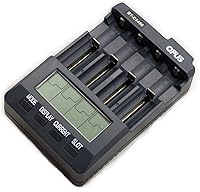
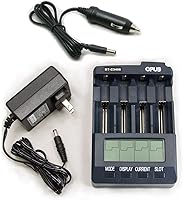
What makes this charger-analyzer genuinely useful is the combination of five operating modes and four channels that work independently of each other. Slot in an 18650 you want to capacity-test on channel one, throw a AA NiMH through a discharge-refresh cycle on channel two, and charge a couple of RCR123As on channels three and four — simultaneously. Charge current is adjustable from 200 to 2000 mA, though that ceiling drops to a shared 1000 mA across all four slots when running them together, something worth factoring in before you expect overnight turnarounds on a full load. The backlit LCD on each channel shows live voltage, capacity, current, and elapsed time, and the included car adapter makes it practical away from a wall outlet.
Best For
The C3400 is a natural fit for flashlight enthusiasts and 18650 collectors who regularly cycle through large cell inventories and need capacity numbers they can trust. Ham radio operators and RC hobbyists often rely on it before field deployments where a weak battery is not just an inconvenience. Photographers managing multiple battery sets across shoots also find the independent channels genuinely practical. And if you have a drawer full of old NiMH or NiCd packs, the discharge-refresh mode gives them a real shot at recovering usable capacity. That said, if you only charge two or three batteries a month, a simpler charger will serve you just as well for far less.
User Feedback
Owners consistently praise the capacity-testing accuracy of this four-channel unit, with many reporting that it revealed batteries rated at 3000 mAh were actually delivering far less — information that cheaper chargers simply cannot provide. The multi-chemistry flexibility earns repeat mentions too, since few devices handle Li-ion and NiMH equally well. On the downside, the shared current ceiling across all four channels frustrates users expecting full-speed charging on every slot simultaneously. A handful of buyers have noted the LCD can be difficult to read in bright daylight. Long-term durability appears solid for most, though a few flag minor software quirks. Overall, buyers who genuinely need the data feel the price is well earned; casual users sometimes wish they had gone simpler.
Pros
- Capacity-testing accuracy is genuinely reliable, consistently exposing batteries that fall well short of their rated mAh.
- Four independent channels let you run different modes on different cells at the same time — a real time-saver.
- Handles Li-ion, NiMH, and NiCd in one unit, covering virtually every common round-cell chemistry.
- Discharge-refresh mode gives old NiMH and NiCd packs a realistic chance at recovering usable capacity.
- Adjustable charge current down to 200 mA makes it safe for smaller or more delicate cells.
- The included car adapter extends its usefulness well beyond the desk or workbench.
- Quick Test mode for internal resistance helps identify weak or aging cells before they cause problems in the field.
- Wide size compatibility — from AAAA all the way up to 26650 — means it adapts as your battery collection grows.
- The per-channel LCD readout gives you live data without needing a phone app or external software.
- Build quality is reported as solid by long-term owners, with few hardware failures mentioned after extended use.
Cons
- Total charge current is capped at 1000 mA shared across all four channels, so full-speed charging on every slot at once is not possible.
- LCD visibility in bright sunlight or daylight conditions is a recurring frustration for users working outdoors.
- No USB or app connectivity means there is no way to log or export capacity data for record-keeping.
- The learning curve for new users navigating five modes across four independent channels can be steeper than expected.
- A handful of owners have reported minor firmware quirks that occasionally require a reset to clear.
- At its price point, buyers who only need a charger — not an analyzer — may feel they are paying for features they will rarely use.
- Discharge current for NiMH and NiCd tops out at 700 mA, which may feel limiting for users testing high-capacity packs.
- The unit runs warm under a full four-channel load, which some users find concerning even if it stays within safe operating limits.
Ratings
The scores below were generated by AI after analyzing verified buyer reviews for the Opus C3400 4-Channel Battery Charger Analyzer from multiple global sources, with spam, incentivized, and bot-flagged submissions actively filtered out. The result is an honest cross-section of enthusiast and hobbyist opinion, reflecting both what this charger-analyzer genuinely excels at and where real users have run into friction. Strengths and pain points are weighted equally so you can make a well-informed decision.
Measurement Accuracy
Multi-Channel Independence
Chemistry Compatibility
Capacity Test Reliability
Internal Resistance Testing
Build Quality
Display Readability
Ease of Use
Discharge Refresh Performance
Charging Speed
Value for Money
Portability
Long-Term Durability
Software and Firmware
Suitable for:
The Opus C3400 4-Channel Battery Charger Analyzer was built for people who treat batteries as tools to be managed, not disposables to be swapped out. Flashlight enthusiasts and 18650 collectors will get the most out of it, since the ability to run capacity tests on multiple cells simultaneously saves enormous time when you are sorting through a large inventory. Ham radio operators and RC hobbyists will appreciate knowing the real-world capacity of every cell before heading into the field, where a weak battery is a genuine problem. Photographers cycling through battery sets across long shoots, and anyone trying to squeeze more life out of aging NiMH or NiCd packs through discharge-refresh cycles, will also find it earns its place on the workbench. If you want one device that replaces a handful of single-channel chargers while also giving you diagnostic data, the C3400 makes a compelling case.
Not suitable for:
The Opus C3400 4-Channel Battery Charger Analyzer is straightforwardly overkill for casual users who charge a few AA batteries every few weeks. If your entire battery ecosystem consists of standard AAs for a TV remote and a couple of rechargeable packs for a kid's toy, a basic two-bay charger costing a fraction of the price will serve you just as well. The shared 1000 mA current ceiling across all four channels also means this unit is not the right choice if your priority is fast simultaneous charging on every slot — you will be disappointed by the throughput. Users expecting plug-and-play simplicity may find the five operating modes and per-channel settings more configuration than they bargained for. And if you only work with a single battery chemistry, much of what this four-channel unit offers simply goes unused.
Specifications
- Manufacturer: The C3400 is made by Opus Instruments Co. LTD, a brand with a long-standing reputation in the enthusiast battery community.
- Dimensions: The unit measures 5.5″ long by 4″ wide by 1.5″ tall, making it compact enough to sit on a workbench without taking up much space.
- Weight: The charger-analyzer weighs 1.26 pounds, which is light enough to carry in a kit bag for field use.
- Channels: Four fully independent channels can each be programmed separately, allowing different modes and chemistries to run simultaneously.
- Chemistries: Supports Li-ion, NiMH, and NiCd rechargeable round cells, covering the vast majority of consumer and enthusiast battery types.
- NiMH/NiCd Sizes: Compatible with AAAA, AAA, AA, A, C, and SubC cell formats for NiMH and NiCd chemistries.
- Li-ion Sizes: Accepts Li-ion cells ranging from 10440 up to 26650, including 18650 and protected cells up to 26 mm in diameter and 70 mm in length.
- Charge Current: Charge current is adjustable from 200 mA to 2000 mA per channel, with a maximum shared limit of 1000 mA when all four channels are active.
- Discharge Current: Maximum discharge current is 1000 mA for Li-ion cells and 700 mA for NiMH and NiCd cells.
- Operating Modes: Five modes are available per channel: Charge, Discharge, Discharge Refresh, Charge Test (capacity), and Quick Test (internal resistance).
- Charge Method: Uses CC/CV (Constant Current/Constant Voltage) for Li-ion cells and negative delta-V detection for safe full-charge cutoff on NiMH and NiCd cells.
- Display: Each channel has its own backlit LCD that shows real-time capacity in mAh, voltage, elapsed time, and charge or discharge current.
- Max Capacity: The unit supports a maximum total charging capacity of 20,000 mAh across a session.
- Wall Adapter Input: The included wall adapter accepts 100–240 VAC at 50–60 Hz, making it compatible with power outlets worldwide.
- Wall Adapter Output: The wall adapter delivers 12 V DC at 3.0 A continuous (4.0 A surge) to power the unit reliably under load.
- Car Adapter: A 5A car adapter is included in the box, allowing the C3400 to be used from a 12 V vehicle outlet in the field.
- Operating Temp: The unit is rated for use in environments between 0°C and 40°C, suitable for typical indoor and vehicle use.
- Included Accessories: The package includes the charger-analyzer unit, the wall adapter power supply, the 5A car adapter, and an operations manual.
Related Reviews
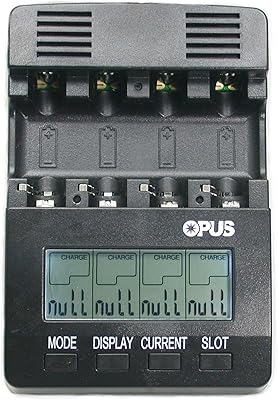
Opus BT-C2400 Battery Charger Analyzer
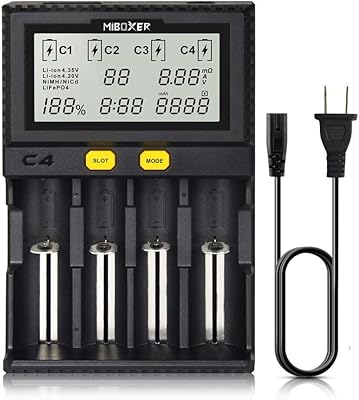
MiBOXER C4 4-Bay Battery Charger
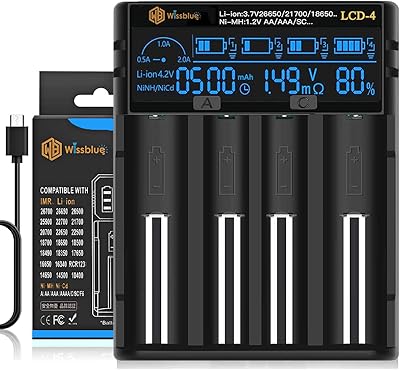
WISSBLUE LCD-4 4-Slot 18650 Battery Charger
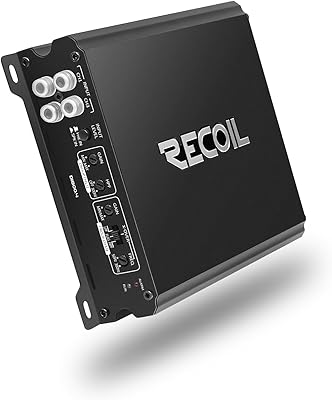
Recoil DI800.4 4-Channel Car Amplifier
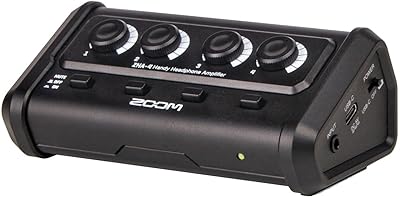
Zoom ZHA-4 Compact 4-Channel Headphone Amplifier
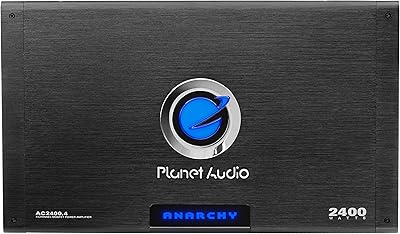
Planet Audio AC2400.4 4-Channel Car Amplifier
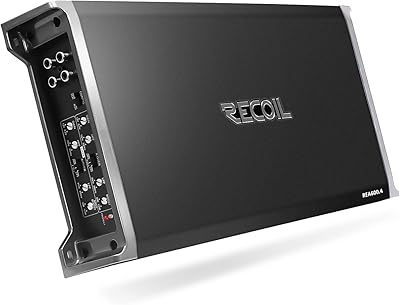
Recoil REA600.4 4-Channel Car Amplifier
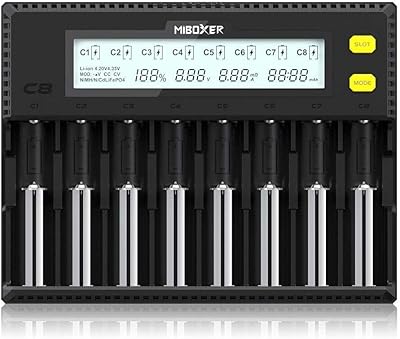
MiBOXER C8 8-Bay Battery Charger
Planet Audio PL1600.4 4-Channel Car Amplifier