Overview

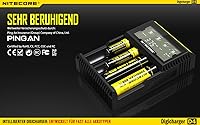
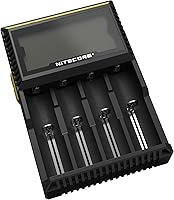
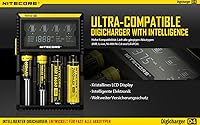
The Nitecore Digicharger D4 4-Bay Battery Charger sits in a practical sweet spot for anyone who cycles through rechargeable cells regularly — not a casual user grabbing a cheap dual-slot option, but someone who actually tracks voltage and capacity. What makes this four-bay charger stand out is the per-slot LCD display, which shows real-time charge data for each bay independently. It handles a wide chemistry range — Li-ion, IMR, LiFePO4, Ni-MH, and Ni-Cd — so one charger covers most of what you own. Four independent charging channels round out the core appeal. This is a tool for people who know what they are doing.
Features & Benefits

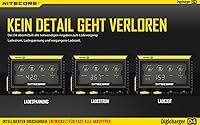
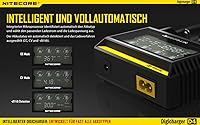
The independent slot logic is genuinely useful in practice. Drop a nearly depleted 18650 next to a half-charged cell and each bay handles its own charge curve without interference. The LCD readout per slot shows voltage, current draw, and percentage — so you always know what is happening rather than guessing. Metal battery sliders make insertion feel solid and hold up better over time than all-plastic contacts. The housing is made from fire-retardant ABS, which matters when charging lithium cells overnight. Automatic chemistry detection adjusts the charge rate appropriately, and a dedicated IMR profile optimizes the process specifically for high-drain cells.

Best For

This smart battery charger fits best in a few specific situations. If you run Fenix or Nitecore flashlights and rotate through multiple 18650s or 26650s, having four bays means your spares stay topped off without juggling chargers. Vapers who rely on IMR cells will appreciate the tailored charge profile rather than a one-size-fits-all approach. Preppers or anyone who needs several cells reliably charged overnight — for radios, headlamps, or cameras — will find the four independent bays genuinely practical. Stepping up from a basic two-bay dumb charger, the jump in diagnostic visibility alone makes this a worthwhile move.

User Feedback

Buyers who have used the Nitecore D4 over extended periods tend to land in a similar place: real appreciation for the per-slot display and independent bay behavior, with a few consistent gripes. The slider contacts hold up after hundreds of charge cycles, which long-term owners specifically call out. On the downside, the power cord included in the box is notably short — a real annoyance depending on your outlet placement. Charge speed is also modest; this charger values accuracy over throughput, so rapid-charge performance is not what you are getting. Some buyers also wish there were a USB power input to match how people charge devices today.

Pros

  • Each of the four slots charges independently, so mixing cells at different levels does not create delays or interference.
  • The per-slot LCD display shows live voltage, current, and charge percentage — genuinely useful data, not just a gimmick.
  • Broad chemistry support covers Li-ion, IMR, LiFePO4, Ni-MH, and Ni-Cd without manual configuration.
  • Metal battery sliders feel solid on insertion and hold up well through hundreds of charge cycles.
  • Fire-retardant ABS housing adds meaningful peace of mind when charging lithium cells overnight or unattended.
  • The dedicated IMR charge profile optimizes high-drain cells rather than forcing them through a generic algorithm.
  • Automatic chemistry detection means you do not need to manually select a charge mode for each cell type.
  • Long-term owners consistently report the build quality remains reliable well after the warranty period.
  • At its price tier, four independent smart bays with a display is genuinely difficult to match on value.
  • Compact enough at 6.4 ounces to store easily or pack for travel without taking up much space.

Cons

  • The included power cord is short enough to be a real inconvenience depending on outlet placement.
  • Charge current per slot is modest — this is not the right tool if fast turnaround is a priority.
  • No USB power input means it feels a step behind more modern charger designs.
  • Only the charger is included; buyers expecting bundled batteries will be disappointed by the packaging.
  • The LCD can feel like information overload for users who are unfamiliar with voltage and charge rate readings.
  • Four bays sounds like a lot until you run a larger flashlight or vaping setup that demands six or eight cells simultaneously.
  • The 2016 model year shows — newer competitors have added features like wireless connectivity or app monitoring that this unit lacks.
  • Charge rate is not user-adjustable on the fly, which limits flexibility for experienced users who want manual control.

Ratings

The scores below reflect our AI-driven analysis of verified global buyer reviews for the Nitecore Digicharger D4 4-Bay Battery Charger, with spam, bot submissions, and incentivized feedback actively filtered out before scoring. Each category is rated on real-world usage patterns — not marketing claims — so both the genuine strengths and the frustrating limitations are accounted for transparently. Whether this four-bay charger fits your needs or falls short depends heavily on what you are asking it to do, and these scores are designed to help you make that call.

Independent Slot Performance
93%
The per-slot independence is the feature buyers return to praise most consistently. Running a depleted 18650 alongside a half-charged cell causes zero interference — each bay charges at its own pace, which matters enormously when you are rotating cells across multiple flashlights or vaping devices simultaneously.
A small number of users noted that when all four bays are occupied simultaneously, the available current is distributed across the unit, which can slightly extend total charge time compared to charging fewer cells at once.
LCD Display Clarity
88%
The per-slot LCD readout wins over buyers who are tired of guessing. Seeing live voltage, milliamp charge current, and percentage for each individual cell makes it easy to catch a weak or problematic battery early, which experienced users find genuinely valuable in a way that simple LED indicators never deliver.
Buyers without a background in battery specs occasionally find the voltage and current readings more confusing than useful, especially at first. The display is informative, but it assumes a baseline level of knowledge that true beginners may not yet have.
Battery Compatibility
91%
Supporting Li-ion, IMR, LiFePO4, Ni-MH, and Ni-Cd across sizes from AA to 26650 means most users can consolidate down to a single charger for their entire collection. Photographers, preppers, and flashlight enthusiasts particularly appreciate not needing separate chargers for different cell formats.
A few niche cell sizes and less common protected cell variants can be a tight fit in the bays, and very long protected 18650s occasionally do not seat reliably. The compatibility list is broad, but edge cases exist.
Build Quality
86%
Long-term owners consistently call out the metal battery sliders as a standout detail — they hold up through hundreds of insertion cycles without the looseness or corrosion that plagues all-plastic contact designs. The overall housing feels appropriately solid for a mid-range tool that will sit on a workbench for years.
The ABS plastic shell, while fire-retardant and functional, does not feel premium to the touch. Users coming from higher-end chargers sometimes note that the fit and finish feels a step below what the feature set might suggest.
Safety Features
89%
Fire-retardant ABS housing combined with automatic charge termination gives buyers meaningful confidence when leaving cells charging unattended overnight. For anyone using high-drain IMR cells in vaping or high-output flashlight applications, the dedicated charge profile and auto-shutoff reduce the risk of overcharging.
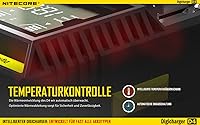
There is no active temperature monitoring display, which some advanced users feel is a missing safety layer. You cannot observe cell temperature trends in real time, so detecting an abnormally warm cell requires physically checking rather than reading a display.
Charging Speed
61%
39%
The measured charge rate is appropriate for users who prioritize cell longevity and accurate top-off over raw throughput. Overnight charging is a perfectly viable workflow here, and cells that are fully charged by this unit tend to come out well-balanced without overcharge artifacts.
Buyers who need rapid turnaround — replacing cells between sessions at an event or shoot — will find the charge current per slot noticeably modest compared to dedicated fast chargers. This is a deliberate design trade-off, but it is a real limitation if speed is your primary concern.
IMR Charge Optimization
84%
The dedicated IMR algorithm is a meaningful differentiator for vapers and high-drain device users. Rather than applying a generic lithium charge curve, the Nitecore D4 adjusts its approach specifically for manganese-based cells, which translates to better cycle life over time compared to chargers without chemistry-specific profiles.
The optimization is automatic and non-configurable, so advanced users who want to set custom charge rates or apply a storage charge mode will find the D4 limiting. There is no manual current adjustment available.
Power Cord Length
47%
53%
The included AC cord does its job when outlet placement cooperates, and the connection at the charger end is secure without any reported loosening over extended use. For users with a dedicated charging station near a convenient outlet, cord length is never a problem.
This is one of the most consistently flagged complaints across verified buyer reviews — the cord is simply too short for flexible placement. Many buyers report needing to purchase an extension cable almost immediately, which feels like an avoidable extra cost for a product at this price point.
Durability Over Time
87%
Buyers who have owned the Nitecore D4 for two or more years specifically return to note that the slider contacts and display remain fully functional. The build holds up in everyday enthusiast use without the contact corrosion or display failures that shorter-lived chargers eventually develop.
A small subset of long-term users reported that the LCD on one or more slots dimmed noticeably after extended use, though outright failures appear uncommon. Durability is generally strong, but not unconditional.
Ease of Use
78%
22%
Inserting cells is straightforward thanks to the sliding contact design, and the automatic detection means you never need to consult a manual or toggle settings just to start a charge. For users who know their batteries, the workflow from insertion to monitoring is intuitive and fast.
First-time users unfamiliar with multi-chemistry chargers occasionally feel uncertain about whether the charger has correctly identified their cell type. The lack of a simple confirmation indicator — beyond the LCD readout — can leave novice users second-guessing whether the unit is working as expected.
Value for Money
79%
21%
Four independent smart bays with per-slot LCD display, broad chemistry support, and metal contacts at this price tier represent a genuinely competitive package. Users upgrading from cheaper two-bay chargers consistently express satisfaction with how much diagnostic capability and build quality they gained for the step up in cost.
Buyers who only need to charge one or two cell types occasionally feel they are paying for compatibility breadth they will never use. At the same time, users who prioritize fast charging or modern connectivity features may feel the feature set does not fully justify the price relative to newer competitors.
Modern Connectivity
38%
62%
The wall plug connection is secure and reliable, with no reported issues around power interruption or loose adapter fit during extended charging sessions. For a stationary charger plugged into a dedicated outlet, the connection method is perfectly functional.
The absence of USB power input is a genuinely dated omission by today's standards. Buyers accustomed to USB-C charging accessories find it frustrating to need a wall outlet exclusively, and there is no option to power the unit from a power bank or USB charging hub.
Portability
72%
28%
At 6.4 ounces and compact dimensions, the four-bay charger is light enough to pack for travel without contributing meaningfully to luggage weight. Photographers and preppers who carry it as part of a field kit find the size appropriate for what it does.
The short included cord and wall-only power requirement limit where you can actually use the charger away from home. Without a USB input or car adapter option, it is not a true travel companion unless you have access to a standard AC outlet at your destination.
Packaging & Unboxing
63%
37%
The unit arrives in straightforward protective packaging that keeps it safe in transit. Buyers report that the charger itself looks exactly as described and shows no transit damage in the vast majority of cases.
The package includes only the charger and cord — no batteries, no carrying pouch, no documentation beyond a basic guide. For buyers expecting a more complete out-of-box experience at this price level, the sparse contents can feel underwhelming on arrival.

Suitable for:

The Nitecore Digicharger D4 4-Bay Battery Charger is built for people who take their rechargeable cells seriously. Flashlight enthusiasts running high-capacity 18650s or 26650s in devices like Fenix or Olight lights will immediately appreciate having four independent bays that keep a full rotation of spares topped off. Photographers relying on rechargeable lithium cells for strobes or field cameras benefit from the per-slot LCD data, which removes the guesswork about which cells are ready to shoot. Vapers using IMR cells get a dedicated charge profile rather than a generic algorithm that ignores cell chemistry. Preppers and off-grid users who need several cells charged reliably overnight — for two-way radios, headlamps, or backup power banks — will find this smart battery charger a trustworthy overnight workhorse. Anyone stepping up from a basic dumb charger who wants actual visibility into what their cells are doing will find the diagnostic display alone justifies the switch.
Not suitable for:

The Nitecore Digicharger D4 4-Bay Battery Charger is not the right pick for every buyer, and it is worth being clear about that. If you only charge standard AA or AAA batteries for TV remotes and kitchen gadgets, the compatibility is technically there but the price point and feature set are overkill. Buyers who need fast turnaround on depleted cells will be frustrated — this charger prioritizes accuracy and safety over speed, and charge times are slower than what dedicated rapid chargers offer. The included power cord is noticeably short, so if your outlet placement is inconvenient, you will need an extension cable from day one. There is no USB power input, which feels like a dated omission for anyone accustomed to modern charging accessories. Beginners who just want to plug in and forget will likely find the LCD data more confusing than helpful without some baseline knowledge of battery chemistry and voltage.
Specifications

  • Battery Bays: The charger has 4 independent slots, each managing its own charge cycle without interference from adjacent bays.
  • Chemistries: Compatible with Li-ion, IMR, LiFePO4, Ni-MH, and Ni-Cd cell types, detected automatically without manual mode switching.
  • Cell Sizes: Accommodates a wide range of cylindrical cell formats including AA, AAA, C, 18650, 26650, and other standard sizes in between.
  • Display: Each slot has its own LCD readout showing real-time voltage, charge current, and charge percentage independently.
  • Output Voltage: The charger delivers 1.49V DC output per slot, calibrated for accurate termination across supported chemistries.
  • Charge Detection: Automatic current detection identifies battery chemistry and capacity, then applies the appropriate charge rate without user input.
  • IMR Optimization: A dedicated IMR charging algorithm provides an optimized charge profile specifically for high-drain lithium manganese cells.
  • Slot Contacts: Metal battery sliders are used in place of all-plastic contacts, reducing wear and maintaining reliable connections over extended use.
  • Housing Material: The outer shell is constructed from ABS fire-retardant plastic, rated to resist ignition in the event of a cell fault.
  • Dimensions: The unit measures 5.4″ wide by 3.7″ deep by 1.4″ tall, keeping the footprint compact on a shelf or workbench.
  • Weight: The charger body weighs 6.4 ounces without batteries, making it light enough for travel or portable kit storage.
  • Package Contents: The box includes the charger unit only; no batteries, carrying case, or additional accessories are bundled in the package.
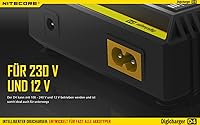
  • Power Cord: An AC adapter cord is included, though it is notably short and may require an extension cable depending on outlet placement.
  • USB Input: This unit does not feature a USB power input; it requires a standard AC wall outlet to operate.
  • Brand: Manufactured and sold under the Nitecore brand by Langlang International LLC.
  • Model Year: The Digicharger D4 was introduced in 2016 and represents a mid-generation design in Nitecore's charger lineup.
  • ASIN: The product is listed on Amazon under ASIN B00KSITEOM for reference when verifying the correct variant.

Related Reviews
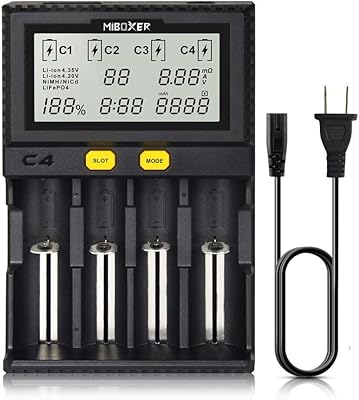
MiBOXER C4 4-Bay Battery Charger
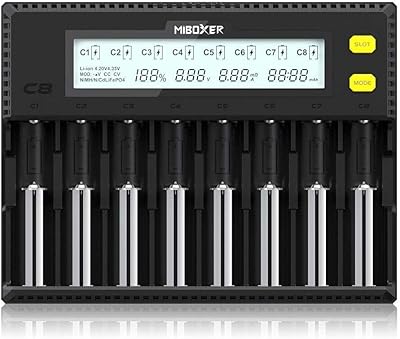
86%
88%
Charging Performance
91%
Usability & Ergonomics
89%
Battery Compatibility
85%
Build Quality
93%
Display & Visuals
More
MiBOXER C8 8-Bay Battery Charger
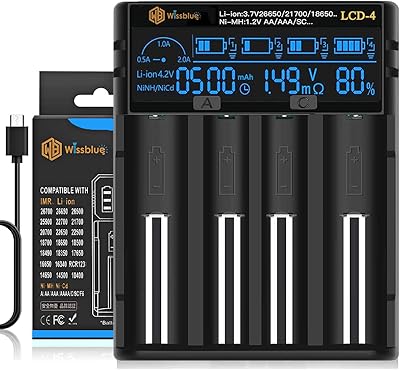
82%
88%
Charging Performance
91%
Battery Compatibility
93%
LCD Display Clarity
86%
Internal Resistance Measurement
89%
Safety Features
More
Nitecore Q6 Six Slot Battery Charger
86%
92%
Charging Performance
89%
Value for Money
88%
Build Quality
85%
Ease of Use
90%
Safety Features
More
Intelligence 8 Bay Universal Battery Charger
86%
90%
Charging Speed
88%
Usability
93%
Safety Features
85%
Display Clarity
87%
Build Quality
More
WISSBLUE LCD-4 4-Slot 18650 Battery Charger
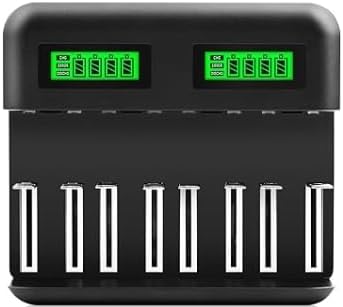
81%
88%
LCD Display Quality
86%
Charging Speed
91%
Battery Compatibility
83%
Build Quality
67%
Capacity Reading Accuracy
More
Tenergy TN160 12-Bay AA/AAA Battery Charger
83%
91%
Charging Reliability
58%
Battery Compatibility
83%
Per-Slot Display Clarity
86%
Refresh & Conditioning Function
88%
Build Quality & Durability
More
Tenergy TN486U 5-Bay Universal Battery Charger
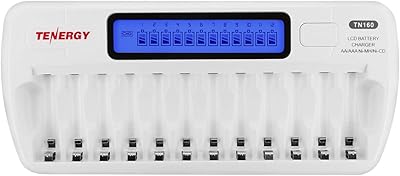
87%
91%
Value for Money
85%
Charging Performance
89%
Portability & Design
93%
Safety Features
88%
Ease of Use
More
EBL 12+2 Bay LCD Rechargeable Battery Charger
87%
91%
Charging Performance
92%
Value for Money
88%
Ease of Use
87%
Display Quality
85%
Build Quality
More
Nitecore UMS4 Intelligent USB Four Slot Quick Battery Charger
87%
91%
Charging Speed
94%
Battery Compatibility
89%
Ease of Use
88%
LCD Display Clarity
85%
Build Quality
More
Nitecore UMS2 Dual-Slot USB-C Battery Charger
81%
93%
Battery Compatibility
74%
Charging Speed
88%
LCD Display Clarity
86%
Build Quality
91%
USB-C Input Convenience
More

FAQ

Yes, 18650 is one of the most common cell sizes the Nitecore D4 is built for. Drop them in any of the four bays and the charger identifies the chemistry automatically and gets to work.

You can mix chemistries across slots — for example, a pair of 18650 Li-ion cells in two bays and a couple of AA Ni-MH cells in the other two. Each slot operates independently and applies the correct charge profile for whatever is in it.

The LCD display on each slot shows a charge percentage that counts up as the cell fills. When a slot reaches 100 percent and the current drops to maintenance level, you know that cell is done. There is no audible alert, so you rely on the display.

The fire-retardant ABS housing and automatic charge termination make this smart battery charger a reasonable choice for overnight use. That said, general best practice with any lithium charger is to avoid leaving it unattended on flammable surfaces, regardless of built-in protections.

The automatic detection system adjusts the charge current based on the cell type and capacity it reads, so larger cells may charge at a different rate than smaller ones. Keep in mind that the per-slot current is modest overall — this charger is designed for accuracy, not speed.

Each slot has its own small LCD that displays voltage, charge current in milliamps, and charge percentage. Most buyers find it easy to interpret after a few uses, though if you have no background in battery specs, the voltage and current numbers may take a little getting used to.

Yes, it is a real and frequently mentioned complaint. The included AC cord is on the shorter side, which can be limiting depending on where your nearest outlet is. Picking up a basic extension cord alongside the charger is a practical workaround most users end up doing anyway.

It works with both flat-top and button-top configurations because the metal slider contacts adjust to different cell lengths and terminal styles. Just seat the battery firmly against the contacts and the display will confirm it has made a connection.

Absolutely. You can use any combination of slots — one, two, three, or all four — and only the occupied bays will activate. Empty slots simply stay idle.

In most cases yes, though protected cells are physically longer than unprotected ones and fit can vary depending on the specific cell brand and protection circuit thickness. Most standard protected 18650s fit without issue, but very long protected cells may be tight or not seat properly in the bay.

Where to Buy