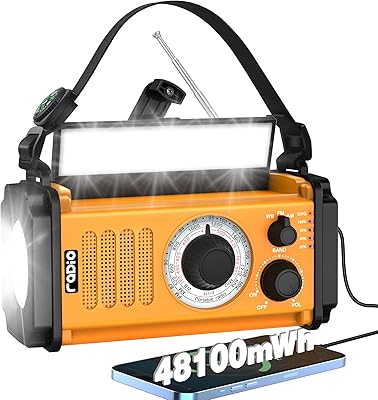
OnLyee CR1030 Emergency Weather Radio





Overview
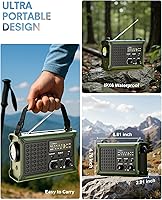
The OnLyee CR1030 Emergency Weather Radio entered the market in mid-2025, positioning itself squarely in the mid-range survival gear space where buyers expect real utility rather than shelf decoration. It sits alongside established names but brings a notably feature-dense spec sheet for the price. Compact enough to fit in a go-bag at under 1.6 pounds, the rugged green-and-black build signals its intent immediately — this is not a casual kitchen radio. Think of it as a dedicated preparedness tool, built for the moments when a hurricane cuts power or a wildfire forces a hasty evacuation and you need reliable information fast.
Features & Benefits
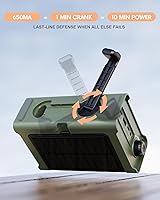
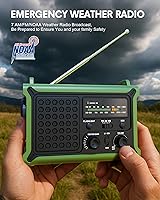
What separates this survival radio from cheaper competitors is its five independent power sources — solar, hand crank, USB-C input, replaceable batteries, and an internal 12,000mAh rechargeable cell. That redundancy matters enormously when one method fails; clouds kill solar, fatigue limits cranking, and USB requires a working grid. The monocrystalline solar panel is genuinely oversized compared to most rivals, though it still depends on direct sunlight to charge meaningfully. The hand crank is rated for extreme temperatures and heavy use cycles, which inspires more confidence than typical budget units. NOAA reception covers all seven weather channels with auto-channel lock, and the dual lighting — a bright flashlight plus a foldable reading lamp — adds real practical value during outages.
Best For
This emergency radio makes the most sense for storm preppers and campers who want one consolidated device handling communication, lighting, phone charging, and emergency signaling without carrying multiple gadgets. Families assembling a home emergency kit will appreciate that it covers so many bases in a single purchase. Off-grid travelers — cabin owners, RV enthusiasts — benefit from the solar and crank options when wall power simply isn't available for days at a stretch. It is less ideal for casual listeners who just want FM music on the patio; the feature set is purpose-built for genuine emergency readiness, and buyers who approach it that way tend to find the value proposition compelling.
User Feedback
Because the CR1030 only launched in 2025, the pool of long-term user data is still thin, so take early reviews as preliminary signals rather than settled verdicts. Early buyers generally respond positively to the build quality and crank feel, noting it seems sturdier than similarly priced options. Solar charging draws more skepticism — several users found it practical only under strong direct sun, which aligns with realistic expectations. A known quirk worth flagging: the screen has a protective film that must be removed before solar use, or heat can cause it to warp. Battery life for phone charging gets mixed marks, with results varying depending on how heavily the radio itself is used simultaneously.
Pros
- Five independent power sources mean this emergency radio stays functional even when one or two methods are unavailable.
- The hand crank feels mechanically solid and is rated for extreme temperatures, unlike the flimsy cranks on budget rivals.
- All seven NOAA weather channels are covered with auto-lock, making it fast to get critical alerts without fumbling through menus.
- The 3W flashlight is genuinely bright enough to navigate a completely dark house or campsite during a blackout.
- A foldable reading lamp adds practical ambient light that the flashlight beam alone cannot provide.
- The 120dB SOS alarm is loud enough to signal effectively from a distance in a real emergency scenario.
- IPX6 water resistance means the unit holds up to rain exposure without requiring a dry bag.
- At under 1.6 pounds, the CR1030 fits comfortably in a standard go-bag alongside other essentials.
- The large internal battery can top up a smartphone meaningfully when no other charging option exists.
- For the feature count it offers, the price sits well below what established survival brands charge for comparable specs.
Cons
- Solar charging is nearly useless in overcast, shaded, or indoor conditions — a significant limitation in many real emergency environments.
- The protective screen film must be manually removed before solar use, and missing this step can cause heat damage.
- Simultaneous use of radio, lights, and phone charging drains the battery considerably faster than the spec sheet implies.
- Button layout and mode-switching require reading the manual first, which is not ideal under stress or in the dark.
- The antenna feels noticeably less robust than the rest of the housing and could be a weak point with rough handling.
- No adjustable brightness on the flashlight means no way to conserve battery when full beam power is unnecessary.
- FM audio is mono only, which is a minor but real limitation for anyone expecting stereo sound quality.
- The alarm requires multiple button steps to activate rather than a single dedicated emergency button.
- As a brand new product, long-term reliability data simply does not exist yet — early buyers are in some sense beta testers.
- Phone charging output under real combined-use conditions underdelivers relative to what the 12,000mAh headline figure leads buyers to expect.
Ratings
The OnLyee CR1030 Emergency Weather Radio scores here reflect AI-driven analysis of verified global buyer reviews, with spam, incentivized, and bot-flagged submissions actively filtered out before scoring. Given this radio only launched in mid-2025, the dataset is still growing, but the patterns that have emerged are consistent enough to draw meaningful conclusions. Both where this survival radio genuinely impresses and where it falls short are reflected transparently in the scores below.
Power Source Redundancy
Hand Crank Durability
Solar Charging Performance
NOAA Reception Quality
Battery Capacity & Phone Charging
Build Quality & Ruggedness
LED Flashlight Performance
Reading Lamp Usability
SOS Alarm Effectiveness
AM/FM Radio Quality
Portability & Form Factor
Ease of Use & Interface
Value for Money
Documentation & Setup
Suitable for:
The OnLyee CR1030 Emergency Weather Radio was clearly designed with a specific buyer in mind, and for that buyer it delivers real value. If you live in a hurricane corridor, tornado alley, or wildfire-prone region and you want a go-bag radio that will actually work when the grid disappears for days, this survival radio checks the critical boxes. Families assembling a home emergency kit will appreciate that one compact device covers NOAA weather alerts, flashlight, reading lamp, phone charging, and an SOS alarm — reducing the number of separate gadgets to maintain and keep charged. Campers and hikers who venture far enough from civilization that cell service is unreliable will find the power redundancy genuinely reassuring; when solar fails on a cloudy day, the hand crank is there, and when your arm gets tired, the large internal battery takes over. Off-grid cabin owners and RV travelers who sometimes go days without shore power will similarly appreciate having multiple fallback charging options without needing to haul a separate power bank.
Not suitable for:
The OnLyee CR1030 Emergency Weather Radio is a poor fit for buyers who want a casual, everyday portable radio for music or news listening around the house or garden. The feature set is purpose-built for emergencies, and if you are not operating in that context, you are paying for capabilities you will never use. Ultralight backpackers who count every ounce will find the weight and bulk a real trade-off against stripped-down single-function radios that weigh a fraction as much. Buyers in consistently overcast climates or those planning to store this radio primarily indoors should also temper expectations around solar charging — it is a meaningful feature only under strong direct sunlight, and in northern regions or shaded environments it functions more as a slow trickle than a practical power source. Anyone hoping to use this as a primary phone charger during an extended outage may also be disappointed, since running the radio and lights simultaneously drains the battery faster than the headline capacity figure suggests.
Specifications
- Brand & Model: Manufactured by OnLyee under the model designation CR1030, first listed in June 2025.
- Dimensions: The unit measures 6.81″ long, 2.91″ wide, and 4.76″ tall, making it compact enough for a standard go-bag.
- Weight: The device weighs 1.59 pounds, balancing portability with the rugged build required for emergency use.
- Internal Battery: A built-in 12,000mAh rechargeable lithium cell powers the device and can also charge external devices via USB-C output.
- Power Inputs: Five charging methods are supported: solar panel, hand crank generator, USB-C input, and standard replaceable C batteries.
- Solar Panel: An 8,500mm² monocrystalline solar panel is integrated into the housing for passive charging under direct sunlight.
- Hand Crank: The hand crank generator is rated for over 10,000 cycles and operates across a temperature range of -4°F to 140°F.
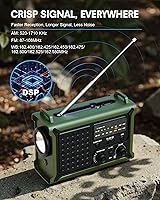
- Radio Bands: The unit receives AM, FM, and all seven NOAA Weather Radio channels with FCC-certified precision and automatic channel lock.
- Speaker: A 57mm full-range speaker delivers mono audio output for radio reception and alert playback.
- Flashlight: A 3W LED flashlight is built into the unit, providing a focused beam suitable for navigation in complete darkness.
- Reading Lamp: A secondary 2.5W foldable reading lamp provides wider, softer ambient illumination for close-range tasks during outages.
- SOS Alarm: An integrated 120dB SOS alarm with a simultaneous flashing beacon can be activated for emergency signaling.
- Water Resistance: The housing carries an IPX6 water-resistance rating, protecting against heavy rain and water jets from any direction.
- Ruggedness: The unit is rated as dustproof and shockproof in addition to its water resistance, supporting use in rough outdoor conditions.
- USB Connectivity: A USB-C port serves dual purposes, accepting charge input and providing charge output to connected devices such as smartphones.
- Included Accessories: The package includes the radio unit, a Type-C charging cable, a braided carrying strap, and an owner's manual.
- Operating Temp: The device is rated to function reliably across a temperature range of -4°F to 140°F (-20°C to 60°C).
- Color & Style: The unit is offered in a green and black colorway with a ruggedized housing styled for field and survival use.
Related Reviews
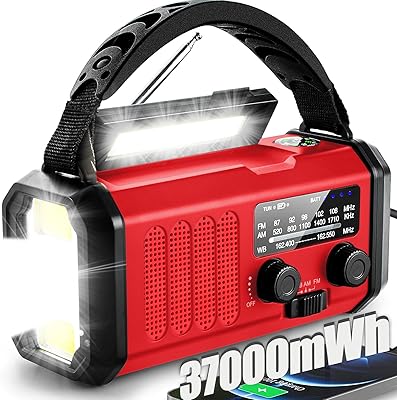
QAUYYW Emergency Weather Radio XSY330
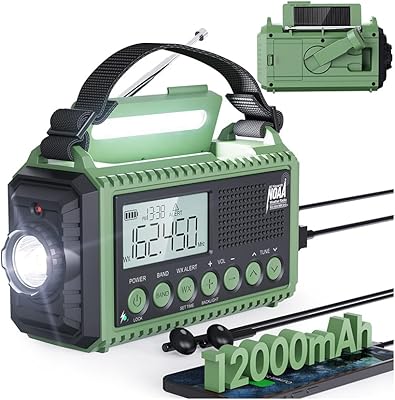
Roxicosly CR1009Ultra 12000mAh Emergency Weather Radio
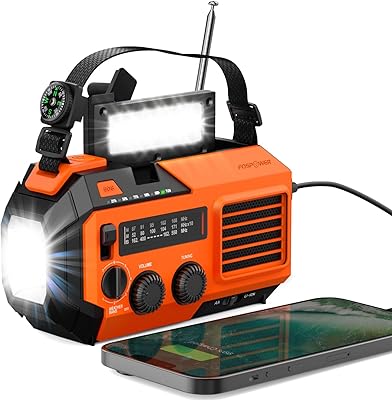
FosPower A6 5200mAh Emergency Weather Radio
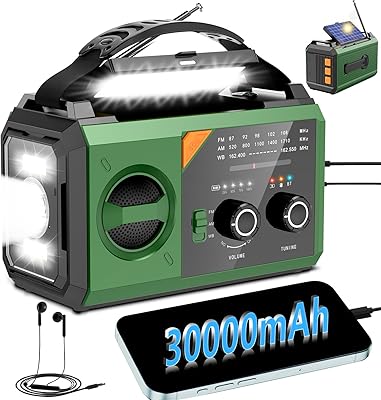
RAOUOEN H27 30000mAh Emergency Weather Radio
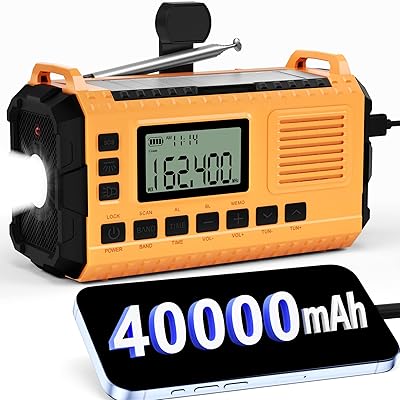
Sttfaishen F20 Emergency Hand Crank Weather Radio
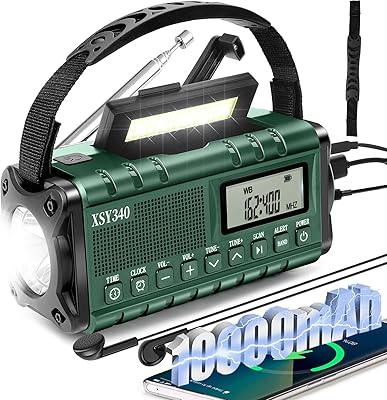
TFTDOUP Emergency Weather Alert Radio
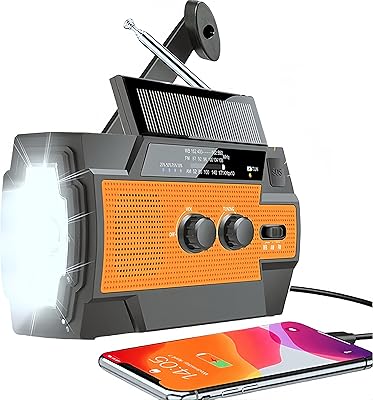
MangePagar MA-091 4000mAh Emergency Weather Radio
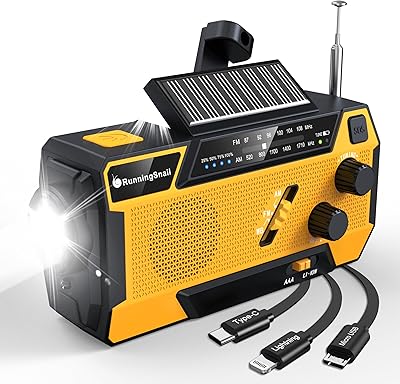
RunningSnail Emergency Crank Weather Radio
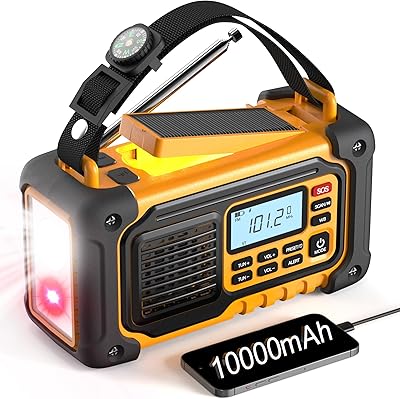
DexScout Crank Emergency Weather Radio 10000mAh