Overview

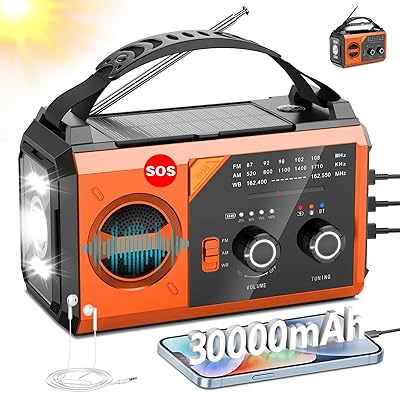
The RAOUOEN H27 30000mAh Emergency Weather Radio is less a radio and more a compact emergency preparedness hub that happens to include one. What makes it stand out at this price point is its massive battery capacity — something most comparable devices don't come close to offering. RAOUOEN is a relatively new brand, having listed this model in early 2025, so there's limited long-term track record to lean on. That said, this weather radio is clearly aimed at households in storm-prone areas, campers, and anyone building a serious go-bag. Go in with realistic expectations: this is a feature-rich budget device, and like most in that category, it involves trade-offs.
Features & Benefits

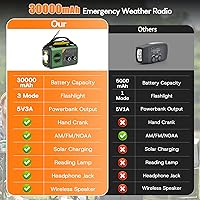
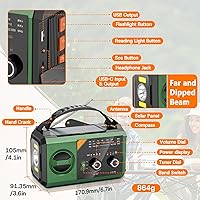
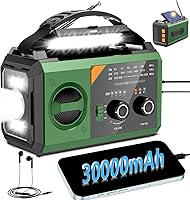
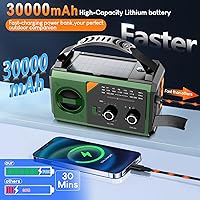
The headline spec is the 30,000mAh battery, which on paper translates to roughly six to eight full smartphone charges — though real-world usable capacity tends to run somewhat lower than the marketed figure, as is common with lithium batteries of this type. Power input options include USB-C, a hand crank, and a solar panel. The solar charging is worth addressing honestly: on a compact panel like this, expect it to function as a supplemental trickle charge rather than a fast recovery method. The 16-inch telescopic antenna pulls in AM, FM, and NOAA weather band signals with decent clarity. Bluetooth 5.3 means this weather radio doubles as an everyday wireless speaker, and the 15W fast-charge output can handle smartphones and smaller tablets with reasonable speed.

Best For

This emergency radio makes the most sense for people who want one compact device to cover several emergency needs without investing in separate gear. Households in hurricane corridors, tornado alley, or wildfire-prone regions will find it a practical addition to a home emergency kit or go-bag. It also suits casual campers and day hikers who want weather alerts and backup charging in a single item they can strap to a pack. Budget is clearly a factor in this purchase — and for buyers who prioritize breadth of features over polished build quality, the RAOUOEN hand crank radio delivers strong value. It is less suited to someone expecting a heavy-duty, professionally-built device meant to survive years of rough use.

User Feedback

With 69 ratings and a 4.4-star average as of early 2025, the feedback picture is promising — but the sample size is small enough that it shouldn't be treated as a definitive verdict. Buyers who reviewed positively tend to call out the perceived battery size and value for the price, and many appreciated how intuitive the controls are for a device with this many functions. On the critical side, some users flagged that solar charging is slower than expected, and a few noted that the plastic housing feels lighter than they'd prefer. Hand crank durability is another question mark that only time will answer, given the model only launched months ago. Long-term reliability remains an open question.

Pros

  • The large battery capacity offers multiple smartphone charges from a single fill, which is rare at this price tier.
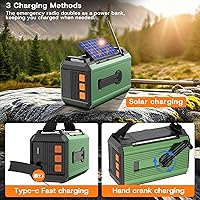
  • Three charging methods — USB-C, hand crank, and solar — mean you are rarely without a way to top up the battery.
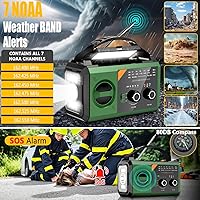
  • NOAA weather band coverage keeps you informed during storms, floods, and other fast-developing emergencies.
  • Bluetooth 5.3 makes this emergency radio genuinely useful day-to-day, not just in crisis situations.
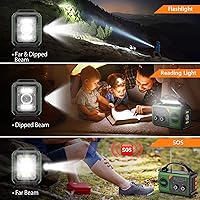
  • The built-in SOS alarm, compass, and dual lighting modes reduce the need for extra gear in a go-bag.
  • USB-C connectivity and 15W output can charge modern smartphones at a reasonably quick rate.
  • Early buyers consistently praise the intuitive controls, noting the learning curve is minimal for a multi-function device.
  • At its price point, the sheer number of included functions represents strong value for budget-conscious preppers.
  • The 16-inch telescopic antenna pulls in AM and FM signals with solid clarity in most environments.
  • A 12-month replacement guarantee provides at least a basic safety net for a newer brand.

Cons

  • Solar charging is extremely slow in practice — treat it as a last-resort trickle, not a reliable power source.
  • The real usable battery capacity is likely meaningfully lower than the 30,000mAh figure printed on the box.
  • The plastic housing feels light and somewhat hollow, which raises questions about durability under rough handling.
  • With only 69 ratings from early 2025, there is no meaningful data yet on how this device holds up over time.
  • Hand crank longevity is unproven — repeated heavy use could expose weak points in the mechanism.
  • RAOUOEN has no established brand history, making warranty support and after-sale service an unknown variable.
  • The device is too heavy and bulky to serve comfortably as an everyday carry or ultralight hiking companion.
  • No included carrying case means the antenna and controls are exposed to potential damage during transport.
  • Bluetooth speaker audio quality is adequate but unlikely to satisfy anyone with moderate expectations for sound.
  • The compass is a basic supplemental feature and should not be relied upon as a primary navigation tool.

Ratings

Our AI rating engine analyzed verified buyer reviews of the RAOUOEN H27 30000mAh Emergency Weather Radio from global sources, actively filtering out incentivized, bot-generated, and duplicate submissions to surface what real owners actually experience. With a relatively small review pool given the product's January 2025 launch date, scores reflect early ownership patterns across both enthusiastic adopters and critical voices. Strengths and pain points are weighted equally — nothing is smoothed over to make the numbers look prettier than the reality warrants.
Battery Capacity
83%
For buyers coming from smaller emergency radios, the sheer size of the battery is a genuine standout. Multiple reviewers noted being able to charge their smartphones several times during a multi-day power outage without panic-rationing their usage — a real comfort in a stressful situation.
Savvy buyers note that the 30,000mAh figure is a cell rating, not a measure of actual delivered output, which runs lower due to conversion losses. A few owners felt the gap between marketed and practical capacity was wider than expected, which tempered initial enthusiasm.
Value for Money
81%
19%
The breadth of functions packed into this price tier is genuinely difficult to argue with — replacing a standalone radio, power bank, and flashlight with a single purchase makes strong financial sense for most buyers. Early reviewers frequently cited value as the top reason they recommended it to family members.
The value equation only holds if you accept budget-level construction. Buyers who compare the feel of this weather radio to more established brands in the category will notice the difference immediately, and a few felt the price still slightly outpaced the physical quality of the unit.
Radio Reception
76%
24%
The 16-inch telescopic antenna gives this radio a real edge over shorter-antenna competitors, and most suburban and semi-rural owners report clean, stable AM, FM, and NOAA signal quality. For home emergency use during storm events, the NOAA coverage comes in clearly and reliably for the majority of reviewers.
In locations with heavy interference or significant distance from broadcast towers, signal quality degrades noticeably. A handful of reviewers in rural or mountainous areas found AM reception inconsistent, which is somewhat expected at this tier but still worth flagging for buyers in remote regions.
Solar Charging
44%
56%
The solar panel does function as advertised in bright, direct sunlight, and a few reviewers appreciated having any solar option at all — particularly campers who left the device in a sunny spot during the day as a passive trickle-charge method between radio sessions.
This is the most consistently criticized aspect across early reviews. Charge rates are extremely slow even under ideal conditions, and the panel is essentially ineffective on overcast days. Treating this as a primary charging method during an emergency would be a serious mistake — USB-C is the only practical input for meaningful recharging.
Hand Crank Usability
58%
42%
The hand crank functions reliably as an emergency power-on mechanism — a few minutes of cranking can generate enough energy to power the radio for a short listening session, which is genuinely useful when all other inputs have failed. Reviewers appreciated having the option, even if they rarely needed to use it.
The crank mechanism feels somewhat lightweight in operation, and a small number of early buyers raised concerns about long-term durability with repeated heavy use. Battery recharging via crank is impractically slow for any meaningful capacity recovery — it is realistically a last-resort listen-only tool, not a charging solution.
Build Quality
57%
43%
The unit holds together well under normal handling, and several reviewers noted it felt more solid than they expected from looking at product photos. For light to moderate use as a home emergency kit item or occasional camping companion, the construction is adequate.
The plastic housing is noticeably lightweight and produces some flex under firm grip — a few buyers used the word flimsy unprompted. There is no waterproofing, and the overall material quality is a clear reflection of the budget price point. This is not a device built for rough, sustained field use.
Flashlight Performance
74%
26%
The multi-mode LED flashlight covers the basics well — bright enough to navigate a dark house during an outage or illuminate a campsite path, with a separate reading light mode that reviewers found genuinely useful for low-light task lighting without blinding everyone nearby.
Beam distance and brightness do not compete with dedicated flashlights, which is to be expected from an integrated feature. A couple of reviewers noted the reading light mode was dimmer than anticipated, limiting its usefulness for anything beyond very close-range tasks.
Bluetooth Speaker Quality
62%
38%
Bluetooth 5.3 pairing is fast and stable, and the speaker handles voice audio — podcasts, weather radio streams from a phone, phone calls — with reasonable clarity. Several reviewers noted using it as a daily Bluetooth speaker at their desk, which speaks to its everyday utility beyond emergency scenarios.
Music listening reveals the limitations quickly — bass is thin, and volume at higher levels introduces some distortion. Anyone with even moderate expectations for audio quality will find the speaker underwhelming for music, though it performs adequately for its primary intended purpose of broadcasting voice content.
Ease of Use
79%
21%
Despite the number of functions packed into one device, most reviewers found the controls intuitive within a short orientation period. Older buyers and those less comfortable with electronics specifically called out the straightforward button layout as a positive — an important point for a device meant to be grabbed in a stressful emergency.
The user manual is functional but not detailed enough to cover every mode clearly, and a few buyers had to experiment to find all the flashlight modes or navigate between radio bands confidently. A better-written quick-start guide would meaningfully improve the out-of-box experience.
SOS Alarm
71%
29%
The SOS alarm is audibly loud and activates quickly, which is exactly what you want from a signaling feature. Reviewers who tested it outdoors confirmed it carries at a meaningful distance — useful for roadside emergencies or drawing attention at a campsite when help is needed.
There is no dedicated physical guard or cover over the SOS trigger, which a few buyers worried could lead to accidental activation during transport. For a serious wilderness safety tool, this alarm also lacks the range and power of a purpose-built personal locator beacon.
Portability
68%
32%
At 2.38 pounds, this weather radio is genuinely packable for car camping, day hikes, or go-bag storage. The included carrying strap makes it easy to grab quickly in a rush, and the compact footprint means it slides into a backpack side pocket or emergency kit bin without difficulty.
For ultralight backpackers or those who need to cover significant distance on foot, 2.38 pounds is a real consideration when added to a full pack. It is solidly portable for vehicle-based or base-camp use but sits on the heavier end for serious human-powered adventures.
USB-C Charging Speed
72%
28%
USB-C input for recharging the unit itself is a welcome modern touch, and the 15W output for powering other devices charges smartphones at a satisfying rate. Reviewers appreciated that this replaced the older micro-USB standard seen on many competing emergency radios in the category.
No wall adapter is included in the box, which means buyers need to supply their own charger — a minor but noted frustration in several reviews. Charging the full 30,000mAh battery from empty via USB-C also takes a considerable amount of time, so routine top-ups rather than full-discharge cycles are advisable.
NOAA Weather Alerts
78%
22%
Coverage of all NOAA weather band frequencies is accurate and reliable for the majority of early buyers. For the core use case of this device — staying informed during storms, floods, or rapidly developing weather emergencies — the NOAA function delivers where it counts most.
There is no automatic NOAA alert function that wakes the device from standby when a weather warning is issued, meaning users need to actively tune in. For a dedicated weather alert radio experience, standalone NOAA alert devices with this feature may serve storm-preparation households better.
Long-Term Reliability
48%
52%
Early ownership reports are mostly positive, and the 12-month replacement guarantee provides at least a short-term safety net. Buyers who have used the device for its intended purpose over several months have not widely reported functional failures, which is an encouraging early signal.
The product launched in January 2025, leaving virtually no durability data beyond a few months of ownership. The lightweight construction, unproven hand crank mechanism, and limited brand history all contribute to a genuine unknown around how this device holds up after a year or two of regular use.

Suitable for:

The RAOUOEN H27 30000mAh Emergency Weather Radio is a strong fit for households that want a single, affordable device covering the core bases of emergency preparedness without assembling a collection of separate tools. People living in hurricane corridors, tornado-prone states, or wildfire regions will get the most practical value here — the NOAA weather band keeps you informed during fast-moving emergencies, while the large battery means you can charge a phone multiple times even after an extended power outage. Campers and weekend hikers who want backup power and weather awareness in one packable item will also find this a sensible companion, especially given its manageable 2.38-pound weight. It also works well as a go-bag staple for families building emergency kits on a realistic budget, where the breadth of built-in functions genuinely replaces several single-purpose items.
Not suitable for:

Buyers expecting professional-grade build quality or validated long-term durability should look elsewhere — the RAOUOEN H27 30000mAh Emergency Weather Radio is a budget-tier device, and the materials and construction reflect that price point honestly. If your primary need is a dedicated high-fidelity weather radio with fast, reliable solar recharging, this hand crank radio will likely disappoint: solar input on a compact panel like this is a slow trickle at best, not a practical recovery method during a crisis. Those planning to use this in genuinely harsh or remote conditions over many years — think serious backcountry preparedness or marine use — should invest in a purpose-built, ruggedized radio with an established reliability track record. Similarly, buyers who want a high-wattage power station to charge laptops or larger electronics will find the output capability of this weather radio falls short of those demands.
Specifications

  • Model Number: This unit is manufactured under model designation H27 by RAOUOEN.
  • Battery Capacity: The internal lithium battery is rated at 30,000mAh, though real-world usable capacity will typically fall somewhat below this nominal figure.
  • Power Inputs: The device accepts charge via USB-C, a built-in hand crank, and an integrated solar panel.
  • Charging Output: The unit supports up to 15W fast-charge output for powering connected devices such as smartphones and tablets.
  • Radio Bands: Coverage includes AM (520–1710 kHz), FM (87–108 MHz), and NOAA Weather Band (162.4–162.55 MHz).
  • Antenna: A 16-inch telescopic antenna is included to improve AM, FM, and weather band signal reception.
  • Bluetooth: Bluetooth 5.3 is built in, enabling wireless pairing with smartphones for audio streaming and hands-free calls.
  • Lighting: The device includes a multi-mode LED flashlight and a separate LED reading light for close-range illumination.
  • SOS Alarm: A dedicated SOS alarm function emits a loud alert signal intended for use in emergency signaling situations.
  • Navigation: A basic built-in compass is included to assist with directional orientation in the field.
  • Audio Output: A standard 3.5mm earphone jack allows for private listening without Bluetooth pairing.
  • Weight: The unit weighs approximately 2.38 pounds, making it portable but not ultralight.
  • Connectivity: A USB-C charging cable is included in the box; no AC wall adapter is included.
  • Warranty: RAOUOEN provides a 12-month replacement guarantee along with stated lifetime after-sales support.
  • Availability: This model first became available in January 2025, making long-term reliability data limited at this time.
  • Package Contents: The box includes the emergency radio unit, one USB-C cable, and one printed user manual.

Related Reviews

TFTDOUP Emergency Weather Alert Radio
86%
88%
Overall Performance
85%
Battery Life
90%
Charging Options
80%
Ease of Use
87%
Build Quality
More
Roxicosly CR1009Ultra 12000mAh Emergency Weather Radio
74%
88%
Battery Life
91%
Charging Versatility
86%
NOAA Alert Performance
58%
Hand Crank Durability
44%
Solar Charging Speed
More
Sttfaishen F20 Emergency Hand Crank Weather Radio
72%
82%
NOAA Alert Reception
54%
Battery Capacity & Honesty
61%
Hand Crank Usability
57%
Solar Charging Performance
83%
USB-C Charging Speed
More
OnLyee CR1030 Emergency Weather Radio
76%
88%
Power Source Redundancy
83%
Hand Crank Durability
61%
Solar Charging Performance
79%
NOAA Reception Quality
67%
Battery Capacity & Phone Charging
More
FosPower A6 5200mAh Emergency Weather Radio
77%
91%
NOAA Reception
84%
Build Quality
67%
Power Bank Utility
53%
Hand Crank Efficiency
49%
Solar Charging
More
QAUYYW Emergency Weather Radio XSY330
86%
89%
Battery Life
85%
Ease of Use
92%
Portability
75%
Radio Reception
88%
Build Quality
More
FosPower Emergency Weather Radio A1
76%
88%
NOAA Reception Quality
74%
AM/FM Reception
58%
Hand Crank Charging
53%
Solar Panel Effectiveness
62%
Power Bank Output
More
Lanshanchu XG-098 5000mAh Emergency Weather Radio
76%
88%
NOAA Alert Performance
84%
Battery Capacity
76%
Charging Versatility
71%
Radio Reception
79%
Build Quality
More
DexScout Crank Emergency Weather Radio 10000mAh
86%
91%
Value for Money
88%
Battery Life and Charging
94%
Portability & Size
85%
Weather Alert Accuracy
90%
Build Quality and Durability
More
Leaton Emergency NOAA Weather Alert Radio
85%
88%
Battery Life & Charging Options
85%
Weather Alerts & Reception
90%
Build Quality & Durability
93%
Portability & Size
87%
Ease of Use
More

FAQ

Realistically, expect somewhere between five and seven full charges for a typical modern smartphone, depending on your phone model and how depleted the radio battery is. The marketed 30,000mAh is a nominal cell rating — usable output after conversion losses runs lower, as it does with virtually all power banks in this category. It is still a generous capacity for the price, just temper expectations slightly from the headline number.

Honest answer: treat the solar panel as a supplemental trickle-charge option rather than a primary recovery method. On a compact built-in panel like this, direct bright sunlight might add a small percentage of charge over several hours. It is genuinely useful for maintaining a partial charge during a prolonged outdoor situation, but it will not meaningfully recharge a depleted unit in a single day. For fast charging, USB-C is by far the better option.

In most cases, no. The 15W output is well-suited to smartphones and smaller tablets, but modern laptops typically require 45W to 100W or more to charge at a useful rate. You might see very slow trickle charging on some thin laptops, but for practical purposes, plan to use this weather radio for phone-sized devices only.

The SOS alarm on the RAOUOEN H27 30000mAh Emergency Weather Radio is designed to emit a high-decibel alert, and based on the product category it should be audible at a reasonable distance in open outdoor environments. That said, it is not a substitute for a dedicated personal locator beacon in serious backcountry situations. Think of it as a solid short-range signaling tool for scenarios like being stranded roadside or calling for help at a campsite.
No, and that is worth setting expectations around before you rely on it. Hand crank charging on devices like this is very slow — typically generating enough energy for a few minutes of radio use per several minutes of cranking. It is best used to power the radio directly during a listen session rather than as a way to meaningfully recharge the internal battery. Think of it as an absolute last resort when all other inputs are unavailable.

The 16-inch telescopic antenna gives this radio a real advantage over shorter-antenna competitors in the same category. In most suburban and semi-rural environments, FM and AM reception is clear and stable. In remote areas or locations with significant interference, results will vary, as with any portable radio. Fully extending the antenna and orienting it carefully makes a noticeable difference.

Yes, absolutely. The Bluetooth 5.3 speaker works independently — you can pair it with your phone and use the RAOUOEN hand crank radio as a regular wireless speaker for music or podcasts without engaging any of the emergency features. This makes it a more versatile everyday item rather than something that only comes out during disasters.

No waterproofing rating is listed for this device, so it should be treated as non-water-resistant. Keep it sheltered during rain and avoid exposing it to moisture. If you need an emergency radio for wet environments or marine use, look for a model with an IPX rating.

That figure is clearly a data entry error in the Amazon listing and should be ignored entirely. Based on the device weight of 2.38 pounds and the feature set included, this is a palm-to-forearm-sized portable unit — roughly comparable in size to a thick paperback book. It is compact enough to pack easily but substantial enough to feel like a serious piece of kit.

RAOUOEN is a relatively new entrant, with this model launching in early 2025, so there is no deep brand history to point to. They do offer a 12-month replacement guarantee and claim lifetime after-sales support. Whether that support infrastructure holds up in practice over time is genuinely unknown at this stage. For what it is worth, early buyers have not widely reported issues with customer service response, but if brand track record is important to you, that is a fair thing to weigh before purchasing.