Overview

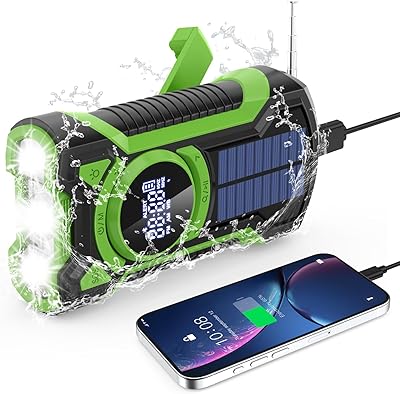
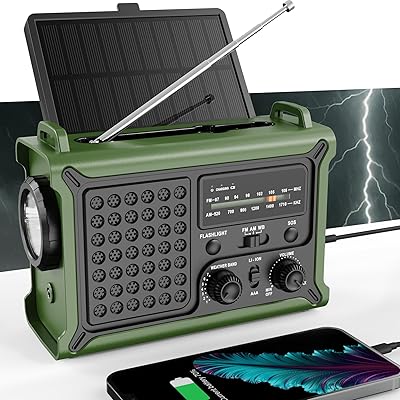
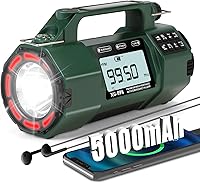
The Lanshanchu XG-098 5000mAh Emergency Weather Radio is a compact all-in-one device designed to cover weather alerts, multi-band radio, phone charging, and emergency lighting in a single unit you can grab during a power outage. Made by Shenzhen XJYG Technology, a Chinese OEM with a relatively short US track record, it carries a rugged dark green shell with IPX3 water resistance that signals genuine outdoor intent. At its price, it sits comfortably in the mid-range preparedness space. That said, this is not a pro-grade survival radio or audiophile device — temper expectations accordingly and it becomes a very capable tool.
Features & Benefits

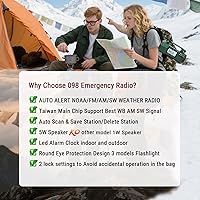
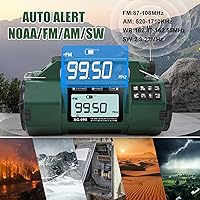
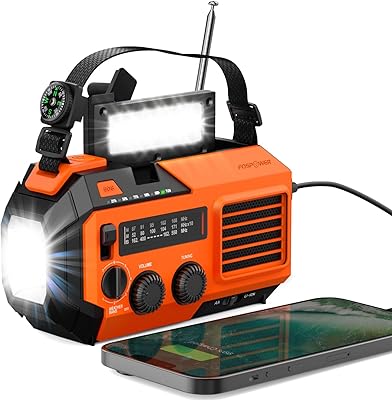
The standout feature is the automatic NOAA standby alert — the radio actively monitors for emergency broadcasts even when you are not actively listening, which means it can wake you at 2am if a tornado warning is issued for your area. Beyond that, the XG-098 covers AM, FM, shortwave, and weather band with manual and auto-scan tuning. The 5000mAh built-in battery is genuinely useful, capable of topping off a smartphone in the field. A 5W speaker delivers clear audio for a device this size. The three-mode LED flashlight, SOS siren, headphone jack, and built-in compass fill out the package without feeling like pure box-checking.

Best For

This hand crank radio makes the most sense as a bedside companion for anyone in a region prone to severe weather — hurricanes, tornadoes, ice storms. The standby NOAA alert is built exactly for that scenario: you go to sleep, the radio watches. Campers and hikers will appreciate having a solar and hand crank backup when outlets are miles away, and the power bank adds real utility for off-grid charging. It also suits RV travelers and boaters who roam beyond reliable cell coverage and want AM/FM/SW reception. For less tech-savvy users, the appeal is simple: one device covers radio, light, alarm, and emergency signaling.

User Feedback

Because this emergency weather radio only reached the US market in mid-2025, long-term durability data is still thin — worth acknowledging upfront. Based on category patterns, buyers tend to praise the standby NOAA alerting loudly, particularly those who have been caught off-guard by storms before. The AA battery backup compartment consistently earns goodwill among preparedness-minded users who want a true last-resort option. On the flip side, solar charging on the XG-098 is genuinely slow in real-world conditions — think trickle, not top-up. Hand crank output is similarly modest. Shortwave reception can also be inconsistent on budget builds in this category, so manage expectations there.

Pros

  • Automatic NOAA standby scanning can alert you to severe weather even while you are asleep.
  • The 5000mAh built-in battery is genuinely useful for topping off a smartphone during a power outage.
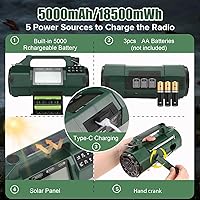
  • Six charging options — including solar, hand crank, and USB — mean you are rarely completely without power.
  • The AA battery backup compartment is a practical last-resort option that serious preppers will appreciate.
  • At just over a pound, this hand crank radio is light enough to drop into a go-bag without a second thought.
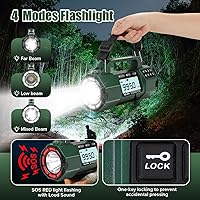
  • The 3W flashlight with three modes handles everything from tent navigation to signaling across a campsite.
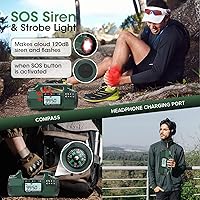
  • A dedicated SOS button triggers both a loud siren and flashing red light simultaneously, requiring no setup in a panic.
  • Four-band tuning covers AM, FM, shortwave, and weather band in one device, reducing gear redundancy.
  • IPX3 water resistance adds reasonable confidence for outdoor use in light rain or splashes.
  • The dual alarm with a radio-wake option is a thoughtful touch that makes it genuinely useful as a daily bedside device.

Cons

  • Solar charging is extremely slow in real-world conditions and should not be counted on as a primary power source.
  • Hand crank output is minimal — it provides a trickle at best and will not meaningfully charge the battery in an emergency.
  • Shortwave reception can be inconsistent, limiting the usefulness of the SW band for serious listeners.
  • The brand is new to the US market, so long-term durability and warranty reliability are still unknown quantities.
  • AA batteries required for the backup compartment are not included, which matters most when you need them urgently.
  • The speaker, while adequate, can distort at high volume — not ideal in noisy outdoor environments.
  • No built-in USB-C output for charging newer devices is a small but real limitation given current phone standards.
  • The LCD display, while functional, lacks backlighting options that would make nighttime use more comfortable.
  • Station memory management — including manual deletion — can feel fiddly without a well-translated instruction manual.

Ratings

The ratings below for the Lanshanchu XG-098 5000mAh Emergency Weather Radio were generated by AI after analyzing verified buyer feedback from global markets, with spam, bot activity, and incentivized reviews actively filtered out. Scores reflect the full picture — where this radio genuinely delivers and where it falls short — so you can make a confident, eyes-open decision.
NOAA Alert Performance
88%
The standby auto-scan is the feature buyers mention most enthusiastically, and for good reason — it works without any action from the user after initial setup. People in storm-prone regions consistently note the reassurance of having a device that monitors broadcasts overnight and wakes them if a warning is issued.
A small number of users report occasional alert lag compared to dedicated single-purpose NOAA alert radios from established brands. For most buyers this is negligible, but those in high-risk weather zones who need split-second warnings may want to consider a purpose-built alert unit as a complement.
Battery Capacity
84%
The 5000mAh built-in Li-Po battery stands out in this product category, where many competitors ship with half the capacity. Users running the radio for extended outages consistently report multi-day operation, and the ability to charge a smartphone once or twice from the same unit is frequently cited as a practical bonus.
The battery is not user-replaceable in the traditional sense without accessing the backup compartments, which some buyers find limiting for very long-duration preparedness scenarios. Battery degradation over years of infrequent charge cycles — common for emergency devices stored in closets — is also an open question given the brand's short market history.
Charging Versatility
76%
24%
Having six distinct power input options is a genuine differentiator that buyers with a preparedness mindset respond to positively. The combination of USB charging for everyday use, AA backup for absolute last resort, and solar or hand crank for off-grid scenarios means you are rarely completely without options.
Solar and hand crank charging are genuinely slow in practice — this is a consistent criticism across the category and the XG-098 is no exception. Users expecting to meaningfully recharge the battery via crank during an emergency will be disappointed; think of both methods as supplemental rather than primary inputs.
Radio Reception
71%
29%
AM and FM reception is solid for everyday use, with auto-scan station storage working reliably once users get familiar with the interface. Weather band reception is consistently described as clear and dependable, which matters most for the device's core emergency function.
Shortwave reception is the weak link, with inconsistent performance across frequency ranges that is typical of budget-tier SW radios. Users hoping to reliably tune international broadcasts or distant stations will find the XG-098 frustrating; it handles SW as a secondary feature rather than a serious listening tool.
Build Quality
79%
21%
The physical construction feels more substantial than the price might suggest, with a solid shell and reassuringly chunky buttons that work reliably without fiddly precision. The IPX3 rating and dark green housing project a field-ready impression that many buyers find confidence-inspiring for go-bag or outdoor use.
Some users note that the finish and button feel, while acceptable, have small inconsistencies that reveal the OEM origins under close inspection. There is also no multi-year real-world durability data available yet, so long-term robustness after repeated drops or temperature cycling remains an open question.
Flashlight Utility
82%
18%
The 3W LED with three selectable modes is more useful than the token flashlights found on many competing radios, and buyers report the throw is genuinely strong enough for navigating a darkened house or campsite. Having it built into an always-charged device means it is ready when a power outage actually happens.
The flashlight is not a substitute for a dedicated torch during extended outdoor use, and a few users note the highest mode can generate noticeable warmth over prolonged operation. Battery-conscious buyers should also be aware that running the flashlight alongside the radio draws down the 5000mAh reserve faster than expected.
SOS & Emergency Signaling
81%
19%
The dedicated SOS button that simultaneously fires an audio siren and flashing red light is a well-implemented feature, particularly because it requires a single press rather than a menu sequence in a high-stress moment. Campers and hikers specifically cite this as a meaningful safety addition for solo trips.
The siren volume, while loud, may not carry as far as a dedicated personal locator beacon in open terrain. The SOS function is best understood as a close-range distress signal for drawing attention in a campsite or neighborhood setting rather than a long-range wilderness rescue tool.
Audio Quality
69%
31%
For a compact emergency radio, the 5W speaker delivers cleaner and louder audio than most competitors at this price point, making weather broadcasts and AM talk stations genuinely easy to follow in a kitchen or living room during an outage. The headphone jack adds useful flexibility for private nighttime listening.
At higher volume settings some users detect distortion, and the sound profile lacks the warmth or bass depth that would make extended music listening enjoyable. This is an emergency radio first and a music device a distant second — buyers who expect FM music to sound good through the built-in speaker may be underwhelmed.
Alarm Clock Function
74%
26%
The dual-alarm setup with a choice of radio-wake or buzzer is a thoughtful design decision that elevates the XG-098 beyond a pure emergency tool into something genuinely useful as a daily bedside device. Users who set it up as their primary bedside alarm report appreciating the radio-wake option especially during morning news hours.
Setting the dual alarm can be confusing without careful reference to the manual, and the translated instructions have been flagged by several users as unclear in places. Once configured it works reliably, but the initial setup experience could be noticeably smoother.
Portability
83%
At just over a pound and with a carry handle integrated into the housing, the XG-098 is easy to move between rooms during a home outage or drop into a vehicle emergency kit. Campers particularly appreciate that the size-to-feature ratio is favorable compared to carrying multiple single-purpose devices.
The 7.4-inch height makes it slightly taller than some competing radios, which can be a minor fit issue in tightly packed go-bags. It is portable rather than pocketable — users expecting something truly jacket-pocket-sized will need to adjust expectations.
Ease of Use
72%
28%
Day-to-day radio and flashlight operation is intuitive with physical buttons that are easy to locate in the dark, which is exactly what you want from an emergency device. Less tech-savvy users and older adults report getting comfortable with the core functions quickly.
Advanced features like manual station management, alarm configuration, and switching between charging modes have a learning curve that the manual does not always resolve clearly due to translation quality. Users who skip the manual and try to figure it out intuitively will likely hit friction.
Water Resistance
67%
33%
IPX3 protection is adequate for the most common outdoor scenarios this radio will encounter — a rain shower during a camping trip, a splash near a kitchen sink during a storm, or brief exposure to drizzle while moving between buildings. It adds genuine peace of mind without inflating the price.
IPX3 is one of the lower rungs of the water resistance scale, and buyers who anticipate use near boats, kayaks, or in heavy rain should be cautious. A meaningful share of users in this product category expect higher ingress protection and may be disappointed when they read the fine print.
Value for Money
81%
19%
Measured against what you actually get — standby NOAA alerting, a 5000mAh power bank, a usable four-band radio, a strong flashlight, and an SOS function — the XG-098 represents solid value in its price tier. Most buyers who understood what they were buying report feeling the purchase was justified.
The value proposition depends heavily on not overpaying relative to more established competitors, some of which offer comparable features with stronger brand support and longer track records. Buyers who weight post-sale warranty confidence heavily may find the value calculus less compelling given the brand's short US history.
Brand Reliability
54%
46%
The hardware itself performs as advertised in early buyer experiences, and the manufacturer has equipped the device with features that indicate genuine product development effort rather than a pure commodity clone. Initial impressions of build and function are generally positive.
Lanshanchu is a brand-new entrant to the US market as of mid-2025, with no established support infrastructure, limited warranty track record, and no long-term user data to draw on. For a device you are buying specifically to rely on in an emergency, that unknown is a real and legitimate concern that buyers should weigh honestly.

Suitable for:

The Lanshanchu XG-098 5000mAh Emergency Weather Radio was built for people who take preparedness seriously but do not want to manage a bag full of separate devices. It is an especially strong fit for households in hurricane corridors, tornado-prone plains states, or anywhere severe weather can arrive overnight without much warning — the automatic NOAA standby alert means the radio is effectively on watch while you sleep. Campers, hikers, and weekend overlanders will also find genuine utility here, since the built-in power bank can rescue a dying phone when the nearest outlet is hours away. RV owners and boaters who travel beyond reliable cell coverage will appreciate having AM, FM, and shortwave reception in one portable unit. It also works well as a single consolidated device for older adults or less tech-savvy family members who want one button for light, one for radio, and one for emergencies.
Not suitable for:

The Lanshanchu XG-098 5000mAh Emergency Weather Radio is not the right choice for buyers expecting high-fidelity audio or serious shortwave reception. Dedicated shortwave listeners chasing distant international stations will find the SW performance inconsistent, as is typical of radios at this price point. If your primary goal is off-grid charging — say, keeping a tablet topped off during a multi-day backcountry trip — the solar panel and hand crank will frustrate you; neither delivers meaningful charge speed under real-world conditions, and the built-in battery, while solid for a radio, is modest compared to a dedicated power bank. Buyers who prioritize brand longevity or want confidence in post-sale warranty support should also note that this manufacturer has a very short US market history, so long-term reliability is still an open question. Professional emergency responders or survival preparedness enthusiasts with demanding standards will likely want a purpose-built unit from an established brand.
Specifications

  • Model: The unit is manufactured by Shenzhen XJYG Technology Co., Ltd. and sold under the Lanshanchu brand as model XG-098.
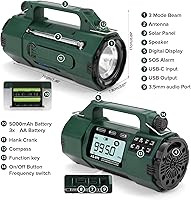
  • Dimensions: The radio measures 3 x 3.94 x 7.4 inches, making it compact enough to fit in a standard emergency go-bag or on a bedside table.
  • Weight: At 1.21 pounds, the XG-098 is light enough for extended carry without adding significant burden to a pack.
  • Built-in Battery: A 5000mAh lithium polymer battery is pre-installed and included in the box, providing the primary internal power reserve.
  • Backup Power: The unit supports three additional battery formats as backup: 3x AA cells, a flat-head lithium cell, and a 14500 lithium cell — none of which are included.
  • Charging Inputs: The radio can be recharged via solar panel, hand crank generator, or DC 5V USB input, offering redundancy when grid power is unavailable.
  • Radio Bands: Four bands are supported: AM, FM, shortwave (SW), and weather band (WB/NOAA), with both automatic and manual station scanning and storage.
  • NOAA Alerting: The device actively scans for NOAA emergency broadcasts in standby mode, triggering an audible alert without requiring the user to be actively listening.
  • Speaker: A built-in 5W speaker provides the audio output for radio playback, alarm functions, and general use.
  • Headphone Jack: A standard 3.5mm headphone jack allows for private listening without disturbing others nearby.
  • Flashlight: A 3W LED flashlight with three selectable modes offers a beam range of up to approximately 80 meters for navigation or signaling.
  • SOS Function: A dedicated SOS button simultaneously activates a loud audio siren and a flashing red light to attract attention in emergency situations.
  • Display: An LCD screen shows current battery level and tuning frequency for at-a-glance status monitoring.
  • Alarm Clock: The unit includes a dual-alarm clock that can be set to wake the user with either a radio station or a traditional buzzer tone.
  • Water Resistance: The XG-098 carries an IPX3 water resistance rating, meaning it can handle light splashes and rain but should not be submerged.
  • Compass: A built-in mechanical compass is integrated into the unit for basic directional orientation in the field.
  • Color: The radio ships in a single dark green colorway, consistent with a rugged outdoor or emergency preparedness aesthetic.
  • In the Box: The package includes the radio, a charge cable, and an owner’s manual; the built-in lithium polymer batteries are pre-installed.

Related Reviews

OnLyee CR1030 Emergency Weather Radio
76%
88%
Power Source Redundancy
83%
Hand Crank Durability
61%
Solar Charging Performance
79%
NOAA Reception Quality
67%
Battery Capacity & Phone Charging
More
RAOUOEN H27 30000mAh Emergency Weather Radio
68%
83%
Battery Capacity
81%
Value for Money
76%
Radio Reception
44%
Solar Charging
58%
Hand Crank Usability
More
TFTDOUP Emergency Weather Alert Radio
86%
88%
Overall Performance
85%
Battery Life
90%
Charging Options
80%
Ease of Use
87%
Build Quality
More
Sttfaishen F20 Emergency Hand Crank Weather Radio
72%
82%
NOAA Alert Reception
54%
Battery Capacity & Honesty
61%
Hand Crank Usability
57%
Solar Charging Performance
83%
USB-C Charging Speed
More
FosPower A6 5200mAh Emergency Weather Radio
77%
91%
NOAA Reception
84%
Build Quality
67%
Power Bank Utility
53%
Hand Crank Efficiency
49%
Solar Charging
More
Roxicosly CR1009Ultra 12000mAh Emergency Weather Radio
74%
88%
Battery Life
91%
Charging Versatility
86%
NOAA Alert Performance
58%
Hand Crank Durability
44%
Solar Charging Speed
More
QAUYYW Emergency Weather Radio XSY330
86%
89%
Battery Life
85%
Ease of Use
92%
Portability
75%
Radio Reception
88%
Build Quality
More
UMUTOO EM03 5000mAh Emergency Weather Radio
74%
88%
Value for Money
82%
NOAA Reception
79%
Battery Capacity
51%
Hand-Crank Charging
57%
Solar Charging
More
MangePagar MA-091 4000mAh Emergency Weather Radio
75%
88%
Value for Money
82%
NOAA Reception Quality
84%
Battery Capacity & Runtime
61%
Hand Crank Charging
57%
Solar Charging Performance
More
PRUNUS J-369 Emergency Weather Radio
71%
88%
Value for Money
83%
NOAA Reception
91%
Power Versatility
54%
Phone Charging Speed
47%
Hand Crank Efficiency
More

FAQ

Yes, that is the intended function and arguably the most important one this radio offers. As long as the unit is powered on or in standby mode with sufficient battery, it continuously scans for active NOAA emergency broadcasts and triggers an audible alert when one is detected. Just make sure the volume is set high enough before you go to sleep.

Honest answer: treat solar as a slow trickle supplement, not a primary charging method. Under ideal direct sunlight conditions you will get a modest top-up over several hours, but it will not meaningfully replenish the battery quickly. It is most useful during extended off-grid situations where time is not a constraint and every bit of charge helps.

The hand crank generates a very small amount of power relative to the 5000mAh battery capacity. Think of it as an emergency lifeline rather than a practical charging method — a few minutes of cranking might give you enough power for a short radio session or a brief flashlight burst, but fully charging the battery by hand crank alone is not realistic.

Yes, the 5000mAh built-in battery can charge a typical smartphone at least once, sometimes close to twice depending on the phone model. Connect your phone via the USB output using a standard cable. Just keep in mind the battery is also powering the radio itself, so the available charge for your phone depends on how much you have used the device.

No, the built-in lithium polymer battery comes pre-installed, so you can use it right out of the box after charging. However, the AA battery backup compartment — which serves as a true last-resort option when all else fails — requires three AA batteries that are not included. It is worth picking up a fresh set of AAs to store alongside the radio before you ever need them.

It depends on your expectations. If you are hoping to casually catch international broadcasts or emergency shortwave services, the XG-098 will handle that reasonably well. If you are a dedicated shortwave listener chasing weak distant signals or specific frequency ranges, the SW performance on a radio in this price category will likely feel inconsistent and limited compared to a dedicated shortwave receiver.

The IPX3 rating means it is protected against light splashes and rainfall from above, so a drizzle or brief rain shower should not damage it. That said, do not leave it sitting in standing water, submerge it, or expose it to a heavy downpour for extended periods. IPX3 is splash-resistant, not waterproof.

The SOS siren is described as loud and is paired with a flashing red light, making it designed to be noticed. Like any active alarm, it will draw more power than passive standby, so do not rely on it for extended periods if battery conservation is critical. In a genuine emergency situation, that trade-off is obviously worth it.

It is a reasonable fit for less tech-savvy users because the core functions — radio, flashlight, alarm, and SOS — are controlled with physical buttons rather than complicated menus. The LCD display keeps status simple. The one area that can get a little fiddly is managing saved radio stations, which may require consulting the manual, though day-to-day use is straightforward.

It offers a competitive feature set for its price point, particularly the standby NOAA alerting and 5000mAh battery, which are strong advantages on paper. The main difference from established US brands like Midland or Kaito comes down to brand track record and confidence in long-term support. This radio only reached the US market in mid-2025, so there is limited real-world durability data yet. If the feature list matches your needs and you are comfortable with that uncertainty, the value proposition is solid.