Overview

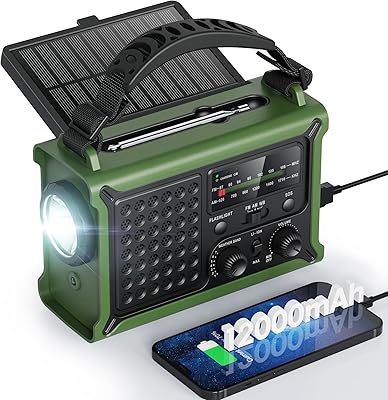
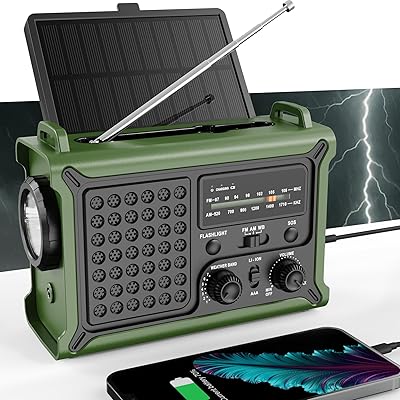
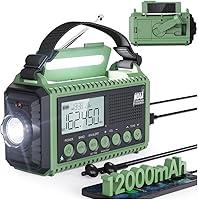
The Roxicosly CR1009Ultra 12000mAh Emergency Weather Radio is a mid-range preparedness device that packs a surprising amount of utility into a compact, hand-holdable package. Roxicosly is produced by Wuhan Luekefang, a Chinese OEM manufacturer — and while that may give some buyers pause, the hardware tells a more encouraging story than the brand recognition does. This hand-crank weather radio works as five tools in one: a full-band radio, a power bank, a flashlight, a reading lamp, and an SOS alarm. It launched in mid-2025 and has already earned a solid 4.4-star rating across nearly 400 reviews. Just keep expectations grounded — this is a capable backup device, not a high-fidelity receiver.
Features & Benefits

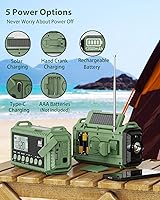
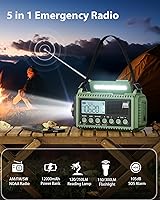
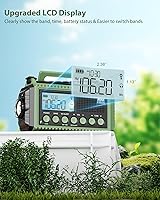
Where this emergency radio really distinguishes itself is power redundancy. Most competing radios offer two or three charging methods; this one gives you five charging methods: USB-C, hand crank, solar panel, the built-in 12000mAh battery, and three AAA batteries as a last resort. That capacity translates to a claimed 130 hours of runtime, which buyers largely confirm feels accurate. The auto NOAA weather alert triggers a loud siren and a red warning light without any manual input — useful when a storm rolls in at 3 a.m. An LCD display keeps band, time, and battery level visible at a glance, and the IPX6 waterproof rating means an unexpected rain shower won't compromise your emergency kit.

Best For

The CR1009Ultra is a natural fit for anyone living where severe weather is a recurring threat — hurricane country, tornado alley, wildfire zones. It also earns its place in a camping or overlanding kit, where carrying a multi-function device makes more sense than packing a radio, power bank, and flashlight separately. Emergency preparedness enthusiasts will value the combination of NOAA monitoring and phone-charging capability, since keeping a smartphone alive during a prolonged outage is often the more pressing concern. That said, if pristine FM reception or hobby-grade shortwave listening is your goal, this hand-crank weather radio is probably not the right tool — dedicated receivers do that better.

User Feedback

Sitting at a 4.4-star average across 393 ratings, the CR1009Ultra has built credible momentum for a listing barely a year old. Buyers consistently praise the speaker volume and note that battery life tracks closer to the advertised figure than many rivals manage. Ease of use gets mentioned often too — the controls are intuitive enough that most people skip the manual entirely. On the critical side, some users feel the hand crank feels light for its construction, raising durability questions under heavy use. Solar charging is genuinely slow, so treat it as a trickle supplement in bright sunlight rather than a real replenishment method. FM sensitivity in rural or fringe areas also draws occasional criticism.

Pros

  • Five independent charging methods — including hand crank and solar — make it nearly impossible to run out of power options in an emergency.
  • The 12000mAh battery delivers runtime that buyers describe as tracking closely to the 130-hour advertised claim.
  • Auto NOAA weather alerts trigger a loud siren and visible red light without any user action, which matters most at night.
  • Full band coverage across AM, FM, shortwave, and all 7 NOAA channels gives real broadcasting flexibility.
  • IPX6 waterproof rating adds meaningful protection for outdoor use or during storms.
  • The LCD display clearly shows band, time, and battery level — especially useful when you're stressed and need quick information.
  • Speaker volume is consistently praised by buyers; it gets loud enough to hear clearly in a noisy or windy environment.
  • At under 1.2 pounds, the CR1009Ultra is light enough to pack without thinking twice.
  • The built-in SOS alarm adds a genuine safety feature that single-purpose radios typically skip.
  • Includes practical accessories — strap, clip, and cable — so it's ready to use out of the box.

Cons

  • The hand crank feels lightweight in construction, raising questions about how it holds up under repeated heavy use.
  • Solar charging is very slow; it works as a trickle supplement in direct sunlight but won't meaningfully replenish a depleted battery.
  • FM reception in rural or signal-fringe areas is noticeably weaker than on dedicated receivers.
  • Shortwave audio quality is functional rather than impressive — not a device for serious SW listening.
  • No rechargeable AAA batteries are included, which means that fallback option requires a separate purchase.
  • The green color and housing design may feel bulky or utilitarian to users who prefer more discreet emergency gear.
  • Brand and long-term after-sales support are less established compared to names like Midland or Kaito.
  • LCD readability in direct, bright sunlight has received mixed feedback from buyers.
  • There is no built-in weather channel preset recall, so scanning through NOAA frequencies takes more button presses than expected.

Ratings

The scores below reflect AI-assisted analysis of verified global buyer reviews for the Roxicosly CR1009Ultra 12000mAh Emergency Weather Radio, with spam, bot-generated, and incentivized feedback actively filtered out before scoring. Each category captures both what real users genuinely praised and the friction points they experienced in the field — from hurricane prep to backcountry camping. Nothing has been smoothed over; if buyers found a weakness, it shows up in the numbers.

Battery Life
88%
Buyers consistently report that the 130-hour runtime claim holds up closer to real-world use than most competing radios at this price tier. Users who left the radio running on low volume through multi-day power outages were genuinely surprised it lasted as long as advertised.
Heavy use — cranking up the speaker volume, running the flashlight, and charging a phone simultaneously — burns through the battery noticeably faster. A few buyers noted they had to recalibrate their expectations once they started using all five features together rather than just the radio alone.
Charging Versatility
91%
Five independent charging methods is a real differentiator here, and buyers who lived through extended outages specifically praised having USB-C, hand crank, and solar as fallback options when one input was unavailable. The sense of never being truly stranded resonates strongly with emergency-minded users.
While the five-method story is compelling, not all inputs are equally useful — AAA batteries and solar are genuinely slow or low-yield in practice. Buyers who tested solar output in overcast conditions found it delivered almost nothing, which tempers the five-star enthusiasm for that specific feature.
NOAA Alert Performance
86%
The auto-alert function is one of the most frequently praised aspects across reviews — buyers living in tornado and hurricane zones report that the siren is loud enough to wake them from sleep, and the red warning light adds a visual layer that feels genuinely useful in chaotic situations.
A small number of buyers noted occasional sensitivity issues where the alert triggered on weak or fringe NOAA signals, producing false alarms. This was not widespread, but it is worth knowing if you live in an area with overlapping or weak broadcast coverage.
Hand Crank Durability
58%
42%
The hand crank works as intended for short emergency top-ups, and buyers who used it occasionally during camping trips or brief outages found it functional and reasonably smooth to operate. For light, infrequent use it performs without issue.
This is the most consistent pain point in the reviews. Several buyers expressed concern about the crank mechanism feeling flimsy or plasticky under sustained use, and a handful reported it loosening over time. For a device marketed heavily on its hand-crank capability, this is a meaningful weak point.
Solar Charging Speed
44%
56%
In strong, direct sunlight the solar panel does contribute a slow but real trickle of charge, which is better than nothing during a prolonged grid-down scenario where other options are exhausted. Buyers who used it as a supplemental input over long sunny days appreciated having it available.
Solar is the weakest input by a significant margin, and buyers who expected it to meaningfully recharge the battery were almost universally disappointed. In cloudy, overcast, or indirect light conditions it contributes virtually nothing, and even in ideal conditions it takes many hours to add a few percentage points.
FM & AM Reception
67%
33%
In urban and suburban environments with strong signal infrastructure, FM reception is clear and stable enough for regular listening. Buyers in well-covered areas rarely complained, and AM reception — especially for news and weather in higher-signal zones — was generally considered solid.
Rural and fringe-coverage users consistently flagged weak FM sensitivity as a frustration, and a few noted that the telescoping antenna feels fragile when fully extended. This is not a radio built for hobbyist DX listening, and buyers in low-signal areas should temper their reception expectations accordingly.
Shortwave Reception
61%
39%
Having shortwave coverage at all is an advantage over many entry-level emergency radios that skip it entirely, and buyers who needed access to international broadcasts or emergency shortwave channels found it functional for basic monitoring.
Audio clarity on shortwave is acceptable rather than impressive, with some interference and noise at the lower end of the dial. Serious shortwave listeners will find it underwhelming compared to dedicated receivers, and it is best treated as a secondary feature rather than a core capability.
Speaker Volume & Clarity
83%
Loud speaker output is one of the most frequently mentioned positives across the review pool. Buyers used it in noisy outdoor environments — windy campsites, open garages during storms — and found it could cut through ambient noise without distortion at moderate-to-high volume levels.
At maximum volume settings some buyers noticed audio harshness or slight distortion, particularly on voice-heavy broadcasts. The 16-level volume adjustment helps dial in a sweet spot, but the speaker driver is not tuned for high-fidelity output and shows its limits at the extremes.
Build Quality
63%
37%
The rubberized housing feels reasonably solid in hand, and the IPX6 waterproof rating is well-regarded by buyers who tested it in rain or wet outdoor conditions. The overall form factor is practical — not elegant, but designed for function over aesthetics.
Beyond the hand crank concern, some buyers noted that buttons feel somewhat soft and imprecise, and the overall plastic construction does not inspire confidence for drop resistance. It is durable enough for careful use in planned emergencies but probably not for rough field abuse.
LCD Display
74%
26%
For nighttime or low-light use — exactly when you are most likely to need an emergency radio — the display is clear, well-lit, and easy to read. Buyers who used it during overnight power outages specifically appreciated being able to check battery status without hunting for a flashlight.
In direct bright sunlight the display can wash out and become harder to read quickly, which is a real-world limitation for outdoor daytime use. It is not a dealbreaker, but buyers expecting tablet-quality visibility in all lighting conditions will be surprised.
Ease of Use
81%
19%
Multiple buyers noted they figured out the core functions — tuning, alert mode, charging — without opening the manual, which is a meaningful indicator of intuitive design. Controls are laid out logically, and the LCD provides enough feedback to navigate the feature set confidently.
The deeper settings, including sleep timers, band scanning increments, and alert sensitivity, take more trial and error to master. The included manual is functional but sparse, and buyers who wanted quick setup guidance for less obvious features sometimes found it lacking.
Flashlight & Lamp
78%
22%
Buyers found the flashlight genuinely bright for an emergency radio attachment, and the reading lamp mode — which diffuses light more broadly — was praised by users who used it during extended power outages for navigating rooms or reading.
Neither the flashlight nor the reading lamp is a substitute for a dedicated torch in terms of throw distance or beam control. They work well for close-range tasks, but buyers expecting headlamp-level brightness or a focused beam for outdoor navigation will find them underwhelming.
Portability
85%
At 1.15 pounds and with a carry strap and belt clip included, this hand-crank weather radio travels well. Hikers and campers praised how little space it occupies relative to the number of functions it replaces, making it a sensible consolidation tool for a go-bag or pack.
The green rubberized housing is a bit bulky for jacket pocket carry, and the clip is not rated for heavy or rough attachment scenarios. It is genuinely portable in a bag-carry sense, but not quite pocket-portable like a compact AM/FM transistor radio.
Value for Money
82%
18%
Buyers consistently frame this as a strong value proposition — five functions, five charging methods, and a large-capacity battery at a mid-range price point that undercuts premium single-purpose radios. For emergency preparedness on a practical budget, it overdelivers on paper and largely holds up in use.
The hand crank durability concern and the modest solar output do chip away at the value argument for buyers who weighted those features heavily in their purchase decision. If you buy it expecting a rugged field tool, you may feel the price justification erode faster than if you treat it as a home emergency backup.

Suitable for:

The Roxicosly CR1009Ultra 12000mAh Emergency Weather Radio is an excellent fit for households in hurricane corridors, tornado-prone regions, or wildfire zones where losing power and cell service simultaneously is a real scenario — not just a theoretical one. Its combination of NOAA auto-alert monitoring, a built-in power bank, and five independent charging methods means it can stay operational long after the grid goes down. Campers, hikers, and overlanders will appreciate being able to consolidate a radio, flashlight, and phone charger into a single 1.15-pound device rather than packing three separate items. It also makes a strong addition to any prepper or emergency kit for the same reason: fewer single-purpose devices to maintain, charge, and potentially lose track of. If you want peace of mind during outages without relying entirely on a smartphone that might itself need charging, this hand-crank weather radio covers that gap well.
Not suitable for:

The Roxicosly CR1009Ultra 12000mAh Emergency Weather Radio is not a good match for buyers who want clean, high-fidelity FM or shortwave reception — this is a backup utility device, and its audio performance reflects that. Shortwave hobbyists and anyone who cares deeply about reception sensitivity in fringe or rural areas will find dedicated receivers perform meaningfully better. The hand crank, while functional, has drawn some questions about long-term durability, so buyers planning to rely on manual cranking as a primary charging method in sustained emergencies should weigh that risk. Solar charging on this unit is genuinely slow — treat it as a trickle option in full sunlight, not a reliable way to replenish the battery quickly. Finally, buyers who already own a quality standalone power bank and a good weather radio may not find enough incremental value here to justify adding another device to their kit.
Specifications

  • Model Number: This unit is designated CR1009Ultra, manufactured by Wuhan Luekefang E-commerce Co., Ltd under the Roxicosly brand.
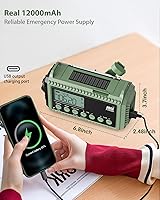
  • Dimensions: The radio measures 6.8″ long by 2.48″ wide by 3.7″ tall, making it compact enough to fit in most emergency kits or backpacks.
  • Weight: The unit weighs 1.15 pounds, which is light enough for extended carry without adding meaningful burden to a bag.
  • Battery Capacity: A built-in 12000mAh rechargeable lithium battery powers the device, with a manufacturer-rated runtime of up to 130 hours.
  • Power Inputs: Five charging methods are supported: USB-C cable input, solar panel, hand crank, the internal rechargeable battery, and three AAA batteries used as a backup fallback.
  • Radio Bands: The receiver covers AM, FM, and shortwave (SW) bands, along with all 7 official NOAA weather broadcast channels.
  • Weather Alert: An automatic WX Alert mode monitors NOAA frequencies and triggers a loud audible siren plus a red warning light when an official alert is broadcast.
  • Waterproof Rating: The housing carries an IPX6 waterproof rating, meaning it can withstand powerful water jets from any direction without damage.
  • Display: An LCD screen shows the current radio band, clock time, and battery charge status, remaining readable in low-light conditions.
  • Volume Control: Audio output is adjustable across 16 discrete volume levels via dedicated controls on the unit.
  • Sleep Timer: A programmable sleep timer can be set to automatically shut off the radio at 4, 8, 12, 16, 20, or 24 hours.
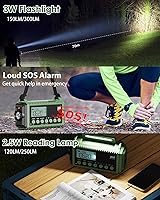
  • Lighting: The device includes both a directional flashlight and a diffused reading lamp, operable independently from the radio functions.
  • SOS Alarm: A dedicated SOS distress alarm emits a loud, attention-grabbing sound pattern intended for signaling in emergency situations.
  • Audio Output: A 3.5mm earphone jack allows private listening without requiring Bluetooth pairing or any additional accessories.
  • Connectivity: A USB output port allows the device to charge external devices such as smartphones using the internal battery as a power source.
  • Lock Function: A keylock feature disables the button controls to prevent accidental changes during storage or when the unit is secured in a bag.
  • Color: The unit is available in green, with a rubberized housing designed to provide grip and minor impact resistance.
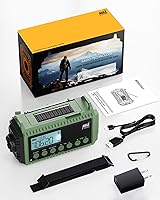
  • Included Accessories: The package includes a carry strap, a belt clip, a USB power cable, a power plug adapter, and an owner's manual.

Related Reviews
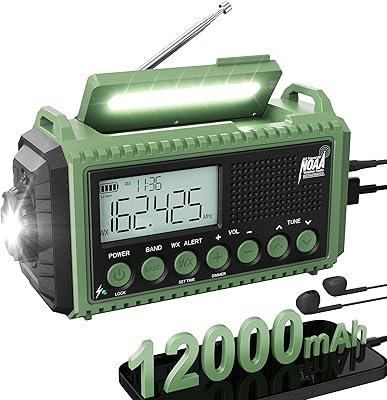
ROCAM 12000mAh Emergency Radio
86%
92%
Battery Life
89%
Portability & Size
95%
Charging Flexibility
88%
Waterproofing & Durability
90%
SOS Alarm Effectiveness
More
FosPower A6 5200mAh Emergency Weather Radio
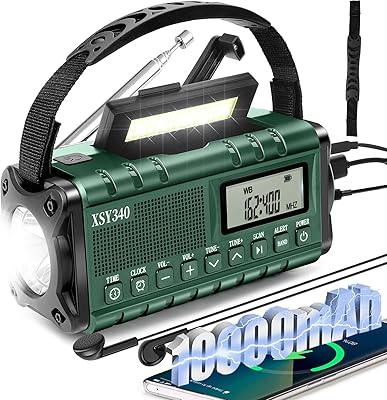
77%
91%
NOAA Reception
84%
Build Quality
67%
Power Bank Utility
53%
Hand Crank Efficiency
49%
Solar Charging
More
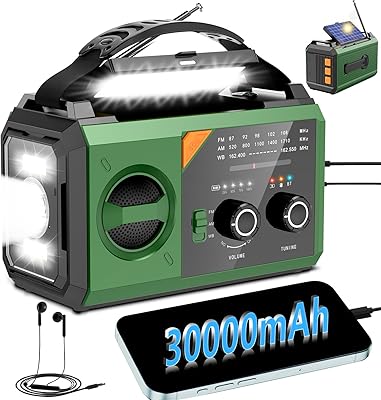
RAOUOEN 30000mAh Emergency Weather Radio
85%
89%
Battery Life & Charging
91%
Performance in Emergencies
75%
Portability & Weight
84%
Sound Quality & Reception
87%
Ease of Use
More
OnLyee CR1030 Emergency Weather Radio
76%
88%
Power Source Redundancy
83%
Hand Crank Durability
61%
Solar Charging Performance
79%
NOAA Reception Quality
67%
Battery Capacity & Phone Charging
More
Raynic NOAA Weather Radio 12000mAh
86%
88%
Performance in Emergencies
91%
Charging Options
83%
Signal Reception
89%
Flashlight & Lamp Effectiveness
85%
Ease of Use
More
Sttfaishen F20 Emergency Hand Crank Weather Radio
72%
82%
NOAA Alert Reception
54%
Battery Capacity & Honesty
61%
Hand Crank Usability
57%
Solar Charging Performance
83%
USB-C Charging Speed
More
QAUYYW Emergency Weather Radio XSY330
86%
89%
Battery Life
85%
Ease of Use
92%
Portability
75%
Radio Reception
88%
Build Quality
More
TFTDOUP Emergency Weather Alert Radio
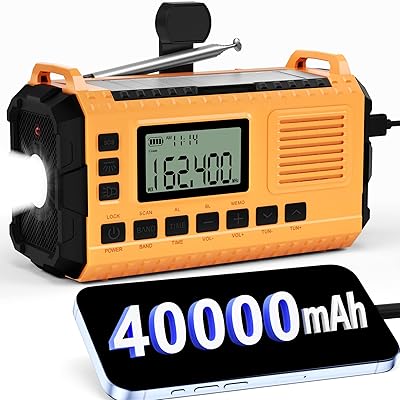
86%
88%
Overall Performance
85%
Battery Life
90%
Charging Options
80%
Ease of Use
87%
Build Quality
More
Midland ER210 Emergency Weather Radio
75%
91%
NOAA Reception Quality
83%
Power Source Versatility
78%
Battery Life
89%
Ease of Use
67%
Flashlight Performance
More
FosPower Emergency Weather Radio A1
76%
88%
NOAA Reception Quality
74%
AM/FM Reception
58%
Hand Crank Charging
53%
Solar Panel Effectiveness
62%
Power Bank Output
More

FAQ

It works automatically in the background — you just leave the WX Alert mode enabled, and if NOAA broadcasts an emergency alert, the radio triggers a loud siren and flashes a red light on its own. You do not need to be actively listening. That hands-free monitoring is one of the more genuinely useful features for overnight use during storm season.

Realistically, the hand crank is a slow emergency top-up, not a practical way to fully charge a 12000mAh battery. A few minutes of cranking will typically give you enough power for a short listening session, which is its intended purpose. Think of it as a last-resort option when all other charging inputs are unavailable, not something you would use regularly.

Yes, the USB output port lets you use the internal battery to charge phones and other small USB devices. With 12000mAh on board, there is enough capacity to recharge a typical smartphone several times before the radio itself needs replenishing.

Honestly, solar charging on this hand-crank weather radio is best treated as a trickle supplement in direct sunlight rather than a meaningful replenishment method. It can help extend runtime or slowly recover a partially depleted battery over several hours of bright sun, but do not count on it to charge the unit from empty in any reasonable timeframe.

IPX6 means the unit can handle strong, directed water jets without failing — so rain, splashing, or an accidental hose spray are not a problem. It is not rated for submersion, so dropping it in a river or leaving it submerged would likely cause damage. For camping or outdoor emergency use in wet weather, the protection level is more than adequate.

The CR1009Ultra covers all 7 NOAA weather radio broadcast frequencies, so it can receive the full range of official National Weather Service stations across the United States. You can scan through them manually or let the auto-alert mode monitor in the background.

It is decent for general use in areas with strong signals, but buyers in rural or fringe-coverage zones have noted that FM sensitivity is not on par with a dedicated tuner. For emergency listening in populated areas it works fine; for casual music listening as a primary radio it may feel underwhelming depending on your location.

The LCD screen displays a battery status indicator, so you can check the remaining charge at a glance without doing any guesswork. It is one of the more practical touches on this unit — especially useful before you actually need the radio in a real emergency.

No, the three AAA batteries that serve as the backup power option are not included in the box. You would need to purchase those separately. The unit does come with a USB cable and power plug for recharging the built-in lithium battery, so you can get started right away with the primary power source.

Yes, there is a standard 3.5mm earphone jack, and any wired earphones with a 3.5mm plug will work without any setup. Using earphones at lower volume levels will actually conserve battery compared to driving the built-in speaker at high volume, so it is a good habit for extended low-power use.