Overview

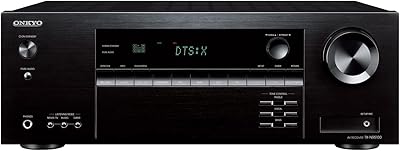
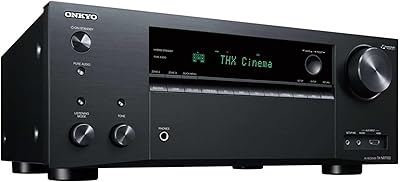
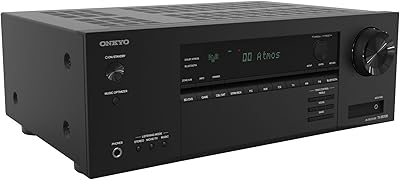
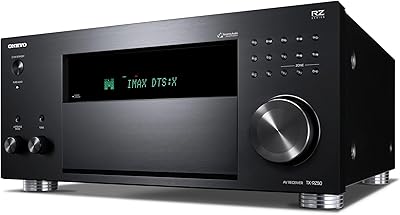
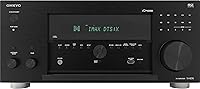
The Onkyo TX-RZ70 11.2-Channel AV Receiver sits at the top of Onkyo's lineup, built for enthusiasts who are serious about extracting every layer from a modern surround setup. At 140 watts per channel, it can drive demanding, inefficient speakers without strain — something you notice immediately when pushing a full Atmos configuration. What separates this Onkyo flagship receiver from similarly priced competition is Dirac Live Full Bandwidth included right out of the box, not as a paid add-on. Pair that with THX certification, IMAX Enhanced support, and Works with Sonos certification, and you have a receiver built around a surprisingly complete ecosystem for its class.
Features & Benefits

The centerpiece is Dirac Live room correction, which goes beyond basic microphone-and-measure calibration. It uses machine learning to analyze your room's acoustic properties across the full frequency range and builds a filter profile specific to your space — a process that genuinely changes how the system sounds in both treated and untreated rooms. ESS Sabre DACs handle digital-to-analog conversion with low noise and strong dynamic range, keeping fine detail intact at high output levels. The TX-RZ70 also supports two subwoofers with independent calibration, four THX listening modes, and IMAX Enhanced Mode, which widens the image and reduces noise for certified content. Ten HDMI ports with eARC round out the connectivity picture.

Best For

This high-end AV receiver makes the most sense for builders committing to a full Dolby Atmos or DTS:X layout with ceiling or height speakers — the 11.2-channel headroom gives real flexibility for overhead channels without forcing external amplification. Audiophiles who want one unit for both critical two-channel listening and cinematic surround will find the ESS Sabre DACs pull respectable duty on both fronts. Klipsch speaker owners get particular value here, since Klipsch Optimize Mode handles crossover settings automatically rather than requiring manual configuration. Sonos ecosystem users and Apple HomeKit households will also feel at home. That said, if you are running a modest 5.1 setup in a small room, this receiver is genuinely more than you need.

User Feedback

Owners who have lived with this Onkyo flagship receiver for several months consistently point to out-of-box Dirac Live access as the standout value — at this tier, many rivals charge separately for equivalent room correction, and the calibrated sound quality draws repeated praise. On the other side, initial setup is genuinely involved; first-time AVR buyers mention a steep learning curve getting all channels configured correctly. At nearly 58 pounds, rack placement needs planning ahead of time, and some users note the chassis runs warm under extended high-output use. The Dirac Live Bass Control firmware rollout caused early frustration, though most found it resolved cleanly. The onscreen interface divides opinion: straightforward to some, dated to others.

Pros

  • Dirac Live Full Bandwidth room correction is included at no extra cost, unlike several direct competitors.
  • Drives demanding, power-hungry speakers at reference levels without audible strain or compression.
  • Ten HDMI ports with eARC support handles complex source setups without needing an external switcher.
  • Klipsch Optimize Mode removes manual crossover configuration entirely for compatible speaker owners.
  • Four distinct THX listening modes provide real-world tuning flexibility across cinema, gaming, and music content.
  • Works with Sonos certification allows full household audio integration without a separate amplifier.
  • The TX-RZ70 supports dual subwoofers with independent calibration for large or asymmetric room layouts.
  • IMAX Enhanced Mode delivers a measurably wider image and cleaner high-frequency response with certified content.
  • ESS Sabre DAC array maintains strong detail retrieval and dynamic range even at high output levels.
  • Apple HomeKit compatibility makes this high-end AV receiver a natural fit for smart home-centric households.

Cons

  • Initial configuration is time-consuming and will overwhelm buyers without prior AVR experience.
  • The companion app receives consistently poor marks for reliability and ease of use.
  • Dirac Live Bass Control launched months late via firmware, leaving early buyers with an incomplete feature set.
  • At nearly 58 pounds, solo installation is physically difficult and rack placement requires careful advance planning.
  • The unit runs warm under extended high-output use and will throttle in poorly ventilated enclosures.
  • The onscreen interface looks and feels dated compared to the receiver's premium market positioning.
  • HDMI handshake delays when switching between 4K sources have been reported across multiple user setups.
  • Buyers not running at least a 7.2.4 configuration are paying for channel capacity they will realistically never use.
  • Full 11.2-channel operation may require additional external amplification, adding unplanned cost and complexity.

Ratings

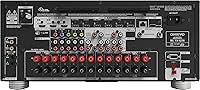
The Onkyo TX-RZ70 11.2-Channel AV Receiver earns its scores from a rigorous analysis of verified global buyer reviews, with spam, bot-generated, and incentivized feedback actively filtered out before any scoring was applied. What emerges is a picture of a genuinely capable flagship receiver that impresses experienced enthusiasts while presenting real friction points for newcomers — and both sides of that story are reflected transparently in the categories below.
Audio Performance
93%
Long-term owners consistently describe a wide, layered soundstage that holds up whether they are running a full Atmos overhead configuration or a focused two-channel session. The ESS Sabre DAC implementation keeps detail retrieval sharp at high volumes without the harshness some rival receivers introduce.
A small number of users in acoustically dry or heavily treated rooms felt the default tuning skewed slightly bright before Dirac Live calibration was applied. The difference is correctable, but it means out-of-box listening without calibration is not the receiver at its best.
Dirac Live Room Correction
91%
This is the feature owners talk about most. Getting Dirac Live Full Bandwidth included without an extra purchase — something several comparable competitors charge significantly for — is consistently cited as the primary reason buyers chose this unit over Denon or Marantz alternatives at a similar price point.
The calibration process itself takes time and patience, and users running multiple subwoofers found the Bass Control firmware update arrived later than advertised. Early adopters who purchased close to launch dealt with a months-long wait before that specific capability was fully functional.
Power & Amplification
88%
Driving a set of power-hungry floor-standers or inefficient Klipsch towers at reference levels produces no sense of strain or compression — something owners of large dedicated rooms specifically highlight. The discrete channel amplification is audibly cleaner than the shared-topology designs found in many receivers at this weight class.
The receiver runs noticeably warm after extended high-output sessions, which a portion of buyers flag as a concern for enclosed rack installations. Ventilation clearance is not optional — several users learned this after experiencing thermal throttling during long movie marathons.
Connectivity & HDMI
89%
Ten HDMI ports with eARC support is genuinely generous and a practical relief for users with complex source setups — gaming consoles, streamers, Blu-ray players, and a cable box can all live connected simultaneously without a switcher. The eARC implementation has been reliable for passing lossless audio from modern smart TVs.
A handful of buyers reported occasional HDMI handshake delays when switching between 4K sources, which required a manual input toggle to resolve. This appears intermittent and device-dependent rather than a systematic flaw, but it surfaces often enough in reviews to note.
Setup & Ease of Use
61%
39%
Buyers who have previous AVR experience generally get through the initial configuration without major issues, especially when following the Dirac Live setup guide step by step. The Klipsch Optimize Mode is a genuine time-saver for Klipsch owners who would otherwise spend hours manually dialing in crossover values.
First-time receiver buyers are vocal about the steep learning curve. The onscreen interface draws consistent criticism for feeling dated, and the companion app has mixed reviews — functional for basic control, but not intuitive enough to guide a novice through a full 11.2-channel configuration without external research.
Build Quality & Chassis
86%
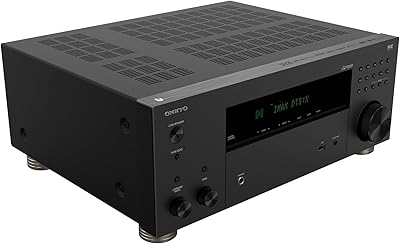
At nearly 58 pounds, the unit feels substantial and well-damped — there is no flex in the chassis and the front panel controls have a precise, quality feel that matches the premium positioning. Owners treating this as a long-term centerpiece of a dedicated home theater room appreciate the solid construction.
The sheer size and weight create real logistical challenges during installation, particularly for solo setup or rack-mounting. Several buyers flagged that the ventilation requirements mean it cannot be tucked into a standard media cabinet without modification, which was not obvious until the unit arrived.
THX Certification & Listening Modes
84%
Having four distinct THX modes — covering cinema, gaming, music, and surround EX — means the certification is genuinely practical rather than a badge-only feature. Gaming sessions in THX Game mode in particular draw positive comments from buyers running the receiver with a projector setup.
Casual listeners may find the THX processing adds a quality floor they never fully explore. Those running modest content sources noticed the THX modes are most impactful with high-quality mastered material — compressed streaming audio shows less benefit, which is worth knowing before leaning heavily on that feature.
IMAX Enhanced Mode
79%
21%
Users with IMAX Enhanced certified content — particularly 4K Blu-ray releases and compatible streaming titles — describe a noticeably wider image footprint and cleaner high-frequency reproduction during action sequences. The stretched aspect ratio feature is a talking point that converts skeptics after a first viewing session.
The benefit is largely content-dependent, and the library of IMAX Enhanced titles, while growing, remains limited. Buyers who expected broad improvement across standard streaming content were underwhelmed — the mode is at its best only with specifically mastered and certified source material.
Sonos & Smart Home Integration
77%
23%
Works with Sonos certification means the TX-RZ70 can be pulled into an existing Sonos household without a separate amplifier, which simplifies multi-room audio considerably for committed Sonos users. Apple HomeKit support layers on top of that for users running HomeKit-centric automation setups.
The smart home integration works, but it is not as fluid as a native Sonos amp. Some users report occasional dropout or lag when routing audio through the Sonos ecosystem versus direct streaming. Apple HomeKit control is limited to basic power and volume functions, stopping well short of full scene integration.
Value for Money
82%
18%
Relative to the direct competition at this performance tier, the inclusion of full Dirac Live, ten HDMI ports, THX, IMAX Enhanced, and Sonos certification in a single unit represents a strong consolidated value. Buyers who priced out separate components to match the feature set consistently found the receiver justified its cost.
At this price point, a non-trivial portion of buyers are purchasing more receiver than their room or speaker setup can realistically use. Anyone not running at least a 7.2.4 configuration in a mid-to-large dedicated space is likely paying for headroom they will never use — a real consideration before committing.
Firmware & Software Updates
67%
33%
Core firmware updates for bug fixes and feature refinements have generally applied cleanly without bricking units or introducing new issues, and Onkyo has maintained a reasonable update cadence. The eventual delivery of Dirac Live Bass Control worked as described for most users once it arrived.
The delayed rollout of Dirac Live Bass Control after the promised firmware window frustrated early buyers who made purchasing decisions partly on that specific feature. The update dependency felt like an incomplete product at launch, and that sentiment lingered in reviews posted within the first six months of release.
Heat Management
63%
37%
Under normal listening conditions at moderate output levels, the chassis stays within acceptable temperature ranges and the internal fan management is quiet enough not to distract during quiet film passages or late-night listening.
Pushing the receiver hard in a confined space is where heat becomes a real issue. Multiple long-term owners with enclosed rack installations report thermal throttling or automatic protection shutoffs during extended high-output use. Proper rack ventilation is not a recommendation — it is effectively a requirement.
Remote & App Control
58%
42%
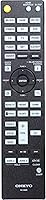
The physical remote is comprehensive and logically laid out for experienced AVR users who already know what they are looking for. Basic day-to-day operation — input switching, volume, listening modes — is handled without needing to open a menu.
The companion app receives consistently mediocre marks. Setup-oriented tasks are better handled through the onscreen interface, and the app's reliability under iOS updates has been inconsistent according to several owner reports. Given the receiver's premium positioning, the software experience feels like it belongs to a lower-tier product.
Channel Expandability
87%
The 11.2-channel architecture gives builders genuine flexibility to grow into configurations like 7.4.4 or 9.2.2 without hitting a ceiling. Buyers planning long-term room builds appreciate that the receiver can serve as the hub for years without requiring an upgrade.
Realizing the full 11.2-channel potential requires external amplification for some configurations, which adds cost and complexity that buyers focused purely on the receiver spec sheet may not anticipate. The path from receiver purchase to a fully populated 11-channel system is not as straightforward as the spec number implies.

Suitable for:

The Onkyo TX-RZ70 11.2-Channel AV Receiver is purpose-built for serious home theater enthusiasts who are either deep into a dedicated room build or actively planning one — particularly those targeting a full Dolby Atmos or DTS:X layout with overhead or height channels. Audiophiles who refuse to compromise between cinematic surround and quality two-channel listening will find the ESS Sabre DAC implementation handles both duties with genuine distinction. Klipsch speaker owners get a rare plug-and-play advantage through the built-in Optimize Mode, which removes the tedious crossover tuning that normally comes with pairing high-sensitivity speakers to a new receiver. Anyone running a Sonos household who wants the amplification hub certified and integrated — without bolting on a separate Sonos Amp — will also find this a logical fit. And if your room is acoustically tricky, irregularly shaped, or otherwise difficult to tune by ear, the included Dirac Live Full Bandwidth calibration makes this receiver worth serious consideration over rivals that charge extra for equivalent correction.
Not suitable for:

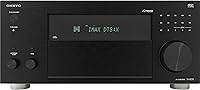
The Onkyo TX-RZ70 11.2-Channel AV Receiver is genuinely the wrong tool for buyers running a straightforward 5.1 setup in a living room or bedroom, where the overwhelming majority of its channel capacity and power headroom will go permanently unused. First-time AVR buyers without prior experience configuring surround systems should think carefully before committing — the setup process is involved, the onscreen interface has a dated feel, and the companion app is not refined enough to guide a novice through a full multi-channel configuration without considerable outside research. The physical footprint is also a real constraint: at nearly 58 pounds and with strict ventilation clearance requirements, this receiver cannot be dropped into a standard media cabinet without modification. Buyers expecting a finished feature set at launch should also know that Dirac Live Bass Control arrived via firmware update later than originally communicated, which was a source of real frustration for early purchasers. If your budget is primarily driven by the brand name rather than a genuine need for 11-plus channels and premium room correction, there are receivers at lower price points that will serve a modest setup far more efficiently.
Specifications

  • Channels: The receiver provides 11.2 channels of discrete amplification, supporting configurations up to full Dolby Atmos and DTS:X layouts with overhead height channels.
  • Power Output: Each channel delivers 140 watts of continuous power, rated under standard test conditions, providing substantial headroom for demanding or inefficient speaker loads.
  • DAC: Audio processing is handled by an ESS Sabre DAC array, chosen for its low noise floor and strong dynamic range performance across both stereo and multichannel playback.
  • Room Correction: Dirac Live Full Bandwidth room correction is included out of the box, using measurement-based machine learning to build a precise correction filter tailored to the listener's specific room and speaker placement.
  • Bass Control: Dirac Live Bass Control for single and multiple subwoofer configurations is available via firmware upgrade, enabling independent low-frequency calibration across dual subwoofer setups.
  • HDMI Ports: The unit includes 10 HDMI ports total, with eARC support for lossless audio return from compatible televisions and displays.
  • Surround Formats: The receiver supports Dolby Atmos, DTS:X, DTS:X Pro, Auro-3D, and IMAX Enhanced decoding for full compatibility with current and emerging immersive audio formats.
  • THX Certification: THX certification covers four discrete listening modes — Cinema, Gaming, Music, and Surround EX — ensuring signal fidelity is preserved regardless of source or processing chain.
  • IMAX Enhanced: IMAX Enhanced Mode applies certified noise reduction and a stretched aspect ratio for compatible content, delivering up to 26% more picture area on supported displays.
  • Klipsch Optimize: Klipsch Optimize Mode stores factory-calibrated crossover values for specific Klipsch Reference and Reference Premiere speaker models, applying them automatically upon model selection.
  • Smart Home: The receiver is compatible with Apple HomeKit for voice and automation control, and carries Works with Sonos certification for integration into existing Sonos multi-room audio ecosystems.
  • Wireless: Bluetooth is built in for wireless audio streaming from mobile devices and computers, with no additional adapter required.
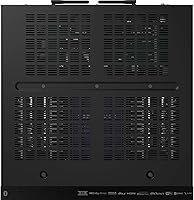
  • Dimensions: The chassis measures 17.13″ wide by 18.88″ deep by 7.94″ tall, requiring substantial rack or shelf space and mandatory ventilation clearance on all sides.
  • Weight: The unit weighs 57.8 pounds, making two-person installation strongly advisable and solo rack-mounting physically difficult without proper equipment.
  • Subwoofer Outputs: Two dedicated subwoofer pre-outputs are provided, supporting independent level, distance, and crossover calibration for dual-subwoofer configurations.
  • Connectivity: In addition to HDMI, the receiver includes multichannel analog inputs, phono input, USB port for media playback and setup, and both optical and coaxial digital inputs.
  • Network: Ethernet and built-in Wi-Fi connectivity support network streaming services, firmware updates, and IP-based control from compatible apps and control systems.
  • Audio Zones: Multi-zone output capability allows independent audio to be sent to secondary and tertiary listening areas, enabling whole-home audio distribution from a single receiver.

Related Reviews

Onkyo TX-NR7100
Onkyo TX-NR7100
78%
93%
Room Correction (Dirac Live)
91%
Gaming Performance
88%
Audio Quality
89%
Connectivity & HDMI Flexibility
79%
Sonos Integration
More
Onkyo TX-RZ30
Onkyo TX-RZ30
77%
91%
Audio Performance
89%
Room Correction (Dirac Live)
86%
Build Quality
74%
Connectivity & HDMI
83%
Sonos Integration
More
Onkyo TX-SR3100
Onkyo TX-SR3100
74%
83%
Audio Performance
91%
HDMI & Video Handling
74%
Room Calibration (AccuEQ)
86%
Setup & Ease of Use
51%
Streaming & Connectivity
More
Onkyo TX-RZ50
Onkyo TX-RZ50
78%
91%
Room Correction (Dirac Live)
88%
Audio Performance
87%
HDMI & Video Handling
63%
Setup & Usability
86%
Sonos Integration
More
Onkyo TX-NR5100
Onkyo TX-NR5100
79%
88%
Sound Quality
74%
HDMI & Video Passthrough
86%
Setup & Calibration
82%
Sonos Integration
83%
Build Quality & Design
More
Onkyo TX-SR393
Onkyo TX-SR393
71%
81%
Audio Performance
78%
Dolby Atmos & DTS:X Decoding
67%
Height Virtualization
84%
Setup & Calibration
86%
HDMI Connectivity
More
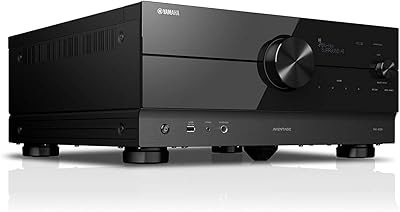
Yamaha RX-A8A 11.2-Channel AV Receiver
81%
93%
Audio Performance
91%
Build Quality
89%
Room Calibration
88%
Gaming Performance
61%
Setup Experience
More
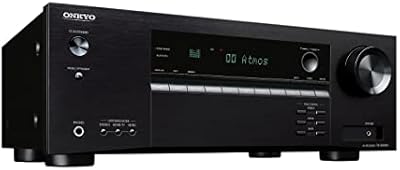
Onkyo TX-SR494 AV Receiver
85%
89%
Sound Quality
91%
4K Video Performance
87%
Ease of Setup
84%
Build Quality
83%
Bluetooth Connectivity
More
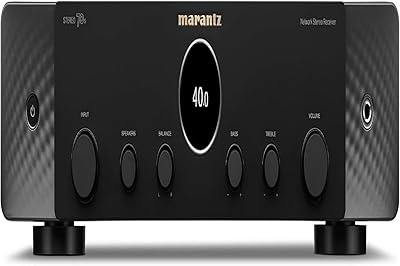
Marantz STEREO 70s 2-Channel AV Receiver
78%
91%
Sound Quality
87%
Amplifier Performance
83%
Build Quality
88%
Connectivity & Inputs
71%
Streaming & Wireless
More
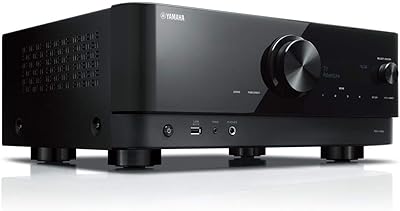
Yamaha RX-V6A 7.2-Channel AV Receiver
78%
91%
Sound Quality
74%
HDMI 2.1 Performance
88%
YPAO Room Calibration
67%
Streaming & App Integration
86%
Build Quality & Design
More

FAQ

It comes fully unlocked out of the box — no subscription, no upgrade fee. You get Dirac Live Full Bandwidth, which covers the complete frequency range rather than just the limited band that some competitors include for free. That distinction matters a lot in practice, especially for bass-heavy content or speakers with complex room interactions.

It depends on which models you have. The Optimize Mode covers a defined list of Klipsch Reference and Reference Premiere speakers, and the receiver automatically applies the factory crossover values when you select the matching model from the menu. Before purchasing, it is worth checking Onkyo's compatibility list to confirm your specific speakers are included, since not every Klipsch model in the Reference line is supported.

The TX-RZ70 can power all 11 channels internally, but the practical path to a fully populated 11-channel layout depends on your speaker configuration. Certain height channel assignments or zone configurations may benefit from or require an external amplifier depending on how you route the pre-outputs. For most 7.2.4 Atmos layouts, the internal amplification handles everything cleanly without additions.

Honestly, it is involved. The Onkyo TX-RZ70 11.2-Channel AV Receiver is not a plug-and-play device in the way a soundbar or stereo system is — running Dirac Live calibration, assigning channels correctly, and configuring speaker distances and levels all take time and attention. If you have never set up a multichannel receiver before, plan for a few hours and lean on the setup guide and online community resources. It is absolutely manageable, but going in expecting a quick install will lead to frustration.

Yes, take it seriously. This receiver generates real heat at high output levels, and enclosed cabinets with minimal airflow have caused thermal protection shutdowns for a number of owners. At minimum, you need clearance above the unit and ideally active airflow — a small rack ventilation fan can make a meaningful difference. Running it sealed in a tight cabinet is not a configuration that works reliably long-term.

The most meaningful differentiator is Dirac Live Full Bandwidth included at no extra cost, where key Denon and Marantz competitors at comparable prices either include a limited version or charge separately for full-bandwidth correction. On raw power and channel count the units are competitive. The Klipsch Optimize Mode is unique to this receiver and a genuine advantage for Klipsch owners. Where Denon and Marantz tend to score better is in the quality of their control apps and onscreen interface polish.

Yes, it has been available via firmware update for some time now. The original launch timeline slipped, which frustrated early buyers who had purchased partly on the strength of that feature. At this point, both single and multi-subwoofer Bass Control functionality is accessible through a standard firmware update, and the update process itself has been straightforward for most owners.

The Works with Sonos certification is functional rather than cosmetic — the receiver can participate in a Sonos ecosystem and receive audio from it as a certified device. That said, it is not a native Sonos product, so the integration experience is not identical to using a dedicated Sonos Amp. For most Sonos households, it works reliably for the primary use case of whole-home audio and zone control, but do not expect full Sonos app parity with first-party Sonos hardware.

It is genuinely usable for casual listening — streaming from a phone or laptop over Bluetooth sounds clean at moderate volumes, particularly because the ESS Sabre DACs handle the incoming signal well. It is not a high-resolution audio path, so dedicated audiophile listening sessions are better served through a wired or network streaming source. For everyday background music or quick playback, Bluetooth works exactly as you would expect.

A large, untreated room is precisely where Dirac Live delivers its most obvious improvement. Bare walls, hard floors, and irregular shapes create comb filtering, bass buildup, and reflection problems that are difficult to address by ear alone. Running the Dirac Live calibration in that environment and comparing before and after is genuinely striking — it tightens bass response, reduces muddiness in the midrange, and pulls imaging into focus in a way that manual EQ adjustments rarely match.

Where to Buy