Overview

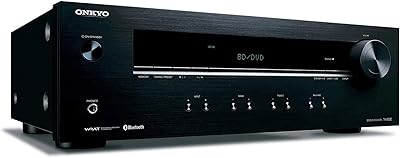
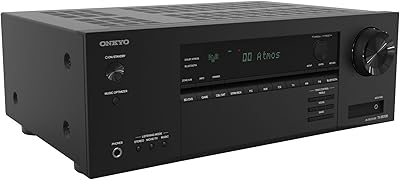
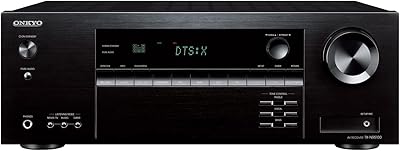
The Onkyo TX-SR393 sits at an interesting spot in the home theater market — a 5.2-channel receiver from a brand with decades of audio engineering behind it, priced where serious surround sound becomes genuinely accessible to everyday buyers. This isn't a flagship unit and it doesn't pretend to be. What it offers is a credible entry into object-based audio formats without requiring a significant financial stretch. The unit is substantial — roughly 18 pounds, wide enough to demand a dedicated shelf or rack space in your setup. Go in with realistic expectations and there is quite a lot to appreciate here.

Features & Benefits

This 5.2-channel receiver packs a surprising amount into its price tier. The rated output is 155 watts per channel, though real-world listening draws considerably less — enough for a medium-sized room without strain. What matters more for most buyers is the full Dolby Atmos and DTS:X decoding, which handles object-based audio from streaming services, Blu-ray, and consoles. No ceiling speakers? The Height Virtualizer and DTS Virtual:X modes do a respectable job simulating overhead sound. On the video side, 4K/60p passthrough with Dolby Vision and HDR10 keeps it compatible with modern displays, while five HDMI inputs and AccuEQ room calibration round out a well-considered package.

Best For

This Onkyo receiver makes the most sense for someone moving on from a soundbar who wants genuine multichannel audio without a steep learning curve. It fits well in smaller to mid-sized rooms where a 5.1 or 5.2 speaker layout is practical — larger spaces may expose the limits of its power headroom. Console gamers and cord-cutters will appreciate five HDMI inputs for juggling sources without a separate switcher. It also works well for renters or anyone who cannot mount in-ceiling speakers, since the height virtualization modes offer a meaningful improvement over flat 5.1 playback at no extra hardware cost.

User Feedback

Owners commonly praise how painless the initial setup is, with AccuEQ guiding calibration in minutes. Dialogue clarity during movies gets repeated compliments. That said, long-term reliability comes up more than occasionally — Onkyo faced genuine quality-control questions during this product generation, and that history deserves an honest mention. Bluetooth pairing has been flagged as inconsistent by a handful of users, and the companion app draws mixed reactions at best. A few buyers also note the unit runs noticeably warm during long sessions, so leaving adequate ventilation around it is worth planning for. Against similarly priced rivals, most owners still view it as solid value for the feature set.

Pros

  • Full Dolby Atmos and DTS:X decoding brings object-based surround sound to an accessible price tier.
  • Five HDMI inputs handle a full modern source lineup without a separate switcher.
  • AccuEQ room calibration makes initial setup fast and approachable for first-time receiver owners.
  • 4K/60p passthrough with Dolby Vision and HDR10 keeps it compatible with current displays.
  • Height virtualization modes deliver a meaningful upgrade over flat 5.1 without requiring ceiling speakers.
  • Dialogue clarity during movie playback is a consistent highlight in real-world owner feedback.
  • The 5.2-channel configuration supports a dedicated subwoofer pre-out for flexible bass management.
  • Multiroom support adds connectivity flexibility that rivals at this price do not always offer.
  • AccuReflex and subwoofer EQ help integrate a sub more accurately than manual guessing allows.
  • For a first home theater receiver, the overall feature-to-price ratio is genuinely competitive.

Cons

  • Long-term reliability is a documented concern — HDMI board failures have been reported across multiple owner accounts.
  • Bluetooth connectivity drops and fails to auto-reconnect after standby with frustrating regularity.
  • The companion mobile app is widely criticized for being slow, unstable, and difficult to recommend.
  • The unit runs noticeably hot during extended sessions, making ventilation planning essential, not optional.
  • Only one HDMI output limits flexibility for anyone needing to feed two displays.
  • Height virtualization results vary heavily by room and speaker placement — outcomes are inconsistent.
  • The remote control lacks backlighting, making it awkward to use in a dark home theater environment.
  • AccuEQ mid-bass corrections can be overly aggressive, often requiring manual fine-tuning afterward.
  • Customer support experiences during warranty claims have drawn repeated criticism from affected owners.
  • Practical power delivery falls short of rated specs in larger rooms with demanding speaker loads.

Ratings

Our AI-generated scores for the Onkyo TX-SR393 are based on a systematic analysis of verified global buyer reviews, with spam, bot-submitted, and incentivized feedback actively filtered out before scoring. The ratings reflect the full picture — not just the highlights — so genuine strengths and recurring frustrations carry equal weight in every number you see below. Whether this 5.2-channel receiver earns a place in your home theater setup or falls short of your expectations, the scorecard below is designed to tell you exactly where it lands.

Audio Performance
81%
19%
For a receiver in this price range, the sound staging is genuinely impressive during movie playback. Dialogue comes through with notable clarity, and the low-end extension when paired with a quality subwoofer gives action sequences real weight. Most owners in small-to-medium rooms report that it performs well above its price tier for everyday home theater use.
In larger rooms or with demanding speaker loads, the practical power output starts to feel constrained. Some users note a slight thinning of dynamics at higher volumes, particularly with complex orchestral or surround-heavy content. It is not a substitute for a higher-wattage receiver if your room size pushes beyond average.
Dolby Atmos & DTS:X Decoding
78%
22%
Having full Dolby Atmos and DTS:X decoding at this price point is a genuine advantage for buyers moving up from basic stereo or soundbar setups. Object-based audio from streaming platforms and 4K Blu-ray discs comes through with a convincing sense of space and directionality that was previously out of reach at this budget.
The immersive audio experience is noticeably better with dedicated height speakers — the decoding itself is solid, but the receiver cannot overcome the physical limitations of a standard 5.1 layout on its own. Buyers expecting Atmos to sound transformative through front-height virtualization alone may find the results more modest than anticipated.
Height Virtualization
67%
33%
The Dolby Atmos Height Virtualizer and DTS Virtual:X modes offer a real step up from flat 5.1 playback, particularly for renters or anyone who cannot install ceiling speakers. In smaller, reflective rooms, the overhead imaging can be surprisingly convincing during well-mixed movie soundtracks.
Results vary significantly depending on room acoustics and speaker placement, and many users describe the virtualized height effect as subtle rather than dramatic. Those who later added physical height speakers consistently reported a noticeable improvement, suggesting the virtualization is a useful workaround but not a long-term substitute.
Setup & Calibration
84%
AccuEQ is a genuine highlight of the ownership experience — the automated room calibration runs quickly, asks little of the user, and produces results that are noticeably better than manually guessing speaker distances and levels. First-time receiver owners specifically praise how approachable the whole initial setup process feels compared to competitors.
While AccuEQ handles the basics well, experienced enthusiasts sometimes find its EQ corrections too aggressive in the mid-bass range. The subwoofer calibration in particular has drawn some criticism for occasionally setting levels lower than users prefer, requiring manual follow-up adjustments after the automated process completes.
HDMI Connectivity
86%
Five HDMI inputs is a genuinely practical advantage for households juggling a gaming console, streaming stick, Blu-ray player, and cable box simultaneously. Not having to constantly swap cables or use a separate switcher is a quality-of-life improvement that comes up frequently in owner reviews as a standout feature at this price.
There is only one HDMI output, which limits flexibility for multi-display setups. A small number of users have also reported occasional handshake issues with certain 4K devices, requiring a source device restart or cable swap — not a widespread problem, but worth noting if you use less common HDMI peripherals.
4K & HDR Passthrough
83%
Passing 4K/60p with Dolby Vision, HDR10, and HLG support means this receiver will not become a bottleneck in a modern home theater chain. Owners with recent OLED or QLED displays report that HDR tone mapping comes through cleanly without introducing any visible processing artifacts.
A minority of users experienced compatibility hiccups with specific television models, particularly around Dolby Vision passthrough. These issues were usually resolved with firmware updates, but the initial troubleshooting process frustrated buyers who expected plug-and-play behavior out of the box.
Build Quality
62%
38%
The unit has a solid, no-frills appearance that fits naturally into a standard AV rack. The front panel controls feel functional and the overall chassis presents well for the price — it does not look or feel cheap sitting next to mid-range televisions and speakers.
The build quality concern goes deeper than cosmetics. Onkyo faced well-documented reliability issues during this product era, and a meaningful portion of long-term owners report failures — particularly HDMI board faults — appearing after one to two years of regular use. This is the single biggest risk factor potential buyers should research before purchasing.
Long-Term Reliability
54%
46%
Units that have remained stable past the two-year mark tend to keep working without issue, and some owners report years of trouble-free daily use. When it works consistently, most buyers express satisfaction with their purchase decision relative to what they spent.
The long-term reliability picture for this generation of Onkyo receivers is genuinely concerning. Reports of HDMI board failures, receiver lock-ups, and limited warranty support appear with enough frequency across forums and review platforms to warrant serious consideration. Buyers should factor in the possibility of a shorter-than-expected lifespan before committing.
Bluetooth Performance
61%
39%
For casual wireless audio — streaming a playlist from a phone while watching TV or during background listening — Bluetooth works adequately. Initial pairing is straightforward and the connection range within a typical living room is acceptable for everyday use.
Bluetooth stability is a recurring complaint among owners who use it heavily. Dropped connections, failure to reconnect automatically after standby, and occasional audio stuttering have all been reported. Users who plan to rely on Bluetooth as a primary listening source will likely find the experience inconsistent over time.
Mobile App & Smart Features
52%
48%
The multiroom capability and app control add a layer of flexibility that competitors at this price point do not always offer. For users already invested in a connected home audio setup, having receiver control from a phone is a convenience worth acknowledging.
The companion app has drawn widespread criticism for being unreliable, slow to respond, and prone to losing connection with the receiver. Most experienced users default to the physical remote quickly after setup. The app feels like an afterthought rather than a polished feature, and it lags well behind what rival brands offer.
Value for Money
76%
24%
When stacked against what you would pay elsewhere for Dolby Atmos decoding, five HDMI inputs, and automated room calibration, the price of entry here is genuinely competitive. For buyers on a strict budget who want a recognizable audio brand and a full feature set, the math works in this receiver's favor.
The value proposition weakens considerably if reliability concerns materialize — a receiver that needs replacing after 18 months delivers poor long-term value regardless of its purchase price. Buyers weighing this against slightly pricier alternatives from brands with stronger reliability track records should factor in total cost of ownership, not just upfront cost.
Remote & Physical Controls
71%
29%
The included remote is logically laid out and covers all primary functions without requiring a trip into on-screen menus for common tasks. Volume, input switching, and sound mode changes are all accessible with minimal button presses, which is what most users actually need day to day.
The remote feels plasticky and lightweight compared to what you might expect, and the button labels are small enough to cause frustration in a dim home theater environment. A backlit remote is not included, which is a noticeable omission given how frequently receivers are used in low-light conditions.
Heat Management
63%
37%
Under typical use — two to three hour movie sessions or regular gaming — the unit maintains a manageable operating temperature. Owners who leave adequate clearance above and around the chassis generally report no heat-related problems during normal viewing habits.
Extended use or pushing the receiver during warm ambient conditions causes the chassis to run noticeably hot. Several owners with receivers installed in enclosed media cabinets report accelerated issues, and a number of suspected reliability failures have been attributed to inadequate ventilation. Proper airflow around the unit is genuinely necessary, not optional.
Surround Sound Immersion
77%
23%
With a well-placed 5.1 speaker layout and a capable subwoofer, the receiver creates a convincing surround field that transforms movie watching compared to any soundbar or stereo setup. AccuEQ's distance and level calibration helps the surround channels blend naturally without obvious localization artifacts.
The immersive effect is heavily dependent on speaker quality and room setup — the receiver itself contributes solid processing, but it cannot compensate for poorly placed speakers or a subpar subwoofer. Users who expect dramatic surround results without investing in decent speakers will be underwhelmed.

Suitable for:

The Onkyo TX-SR393 is a strong match for anyone making their first serious step into home theater audio — particularly buyers who have outgrown a soundbar and want genuine multichannel surround sound without spending a fortune. It works especially well in smaller to mid-sized living rooms where a 5.1 or 5.2 speaker layout is practical and the receiver's power headroom is rarely tested. Console gamers and cord-cutters who juggle multiple source devices will appreciate having five HDMI inputs available without needing a separate switcher. Renters or homeowners who cannot install in-ceiling speakers will find the height virtualization modes a worthwhile bonus over standard flat surround. Budget-conscious enthusiasts who want automated room calibration, modern HDR passthrough, and a recognizable audio brand — all under one roof — will generally feel the value is there.

Not suitable for:

Buyers prioritizing long-term durability above all else should approach the Onkyo TX-SR393 with caution — this generation of Onkyo hardware has a documented history of reliability issues, particularly around HDMI board failures, that is too significant to dismiss. If you are outfitting a dedicated home theater room larger than average, the practical power output may leave you wanting more headroom during demanding listening sessions. Audiophiles or enthusiasts who plan to use Bluetooth as a primary daily driver will likely find the connection stability frustrating over time. Those who expect a polished smart home experience through a companion app will be disappointed — the software side of this receiver lags well behind its hardware feature list. Anyone who needs more than one HDMI output, or who intends to store the unit in a tightly enclosed cabinet with limited airflow, should also look elsewhere.

Specifications

  • Brand & Model: Manufactured by Onkyo, model TX-SR393, a 5.2-channel home theater A/V receiver introduced in June 2019.
  • Channels: Supports a 5.2-channel speaker configuration, allowing two independent subwoofer outputs alongside five full-range speaker channels.
  • Power Output: Rated at 155 watts per channel, measured under specific laboratory conditions that typically differ from real-world continuous listening levels.
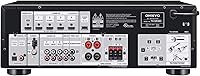
  • HDMI Inputs: Equipped with five HDMI inputs, providing enough connections for a gaming console, streaming device, Blu-ray player, and additional sources simultaneously.
  • HDMI Output: Includes one HDMI output for connecting to a display, limiting the setup to a single screen destination.
  • Video Passthrough: Supports 4K video passthrough at up to 60 frames per second, ensuring full-resolution delivery to compatible 4K displays.
  • HDR Support: Compatible with HDR10, HLG, Dolby Vision, and BT.2020 for accurate HDR signal passthrough to supported televisions.
  • Surround Formats: Decodes both Dolby Atmos and DTS:X, enabling object-based and overhead surround sound from compatible streaming services and physical media.
  • Virtualization: Includes Dolby Atmos Height Virtualizer and DTS Virtual:X to simulate overhead audio channels without requiring physical in-ceiling or upward-firing speakers.
  • Room Calibration: Features AccuEQ automatic room calibration with subwoofer EQ and AccuReflex, which measures the listening environment and adjusts speaker levels, distances, and frequency response accordingly.
  • Wireless Connectivity: Built-in Bluetooth allows wireless audio streaming from smartphones, tablets, and other compatible devices.
  • Other Connectivity: Includes USB input for direct media playback, alongside RCA analog inputs and outputs for legacy source components.
  • Connector Types: Offers HDMI and RCA as primary connection types, covering both modern digital and older analog audio and video sources.
  • Special Features: Multiroom audio support allows this receiver to distribute audio to a secondary listening zone beyond the primary home theater space.
  • Compatible Devices: Designed for use with televisions, passive speakers, and subwoofers; compatible with any HDMI-enabled source device including consoles and streaming players.
  • Dimensions: The unit measures 20.6 inches wide, 15.8 inches deep, and 9.4 inches tall, requiring a full-width shelf in a standard AV rack or media console.
  • Weight: Weighs approximately 18.08 pounds, which is typical for a mid-range receiver chassis and reflects a substantial internal power transformer.
  • Date Available: This model became available for purchase in June 2019 and represents an entry-level to mid-range position in Onkyo's receiver lineup from that era.

Related Reviews
Onkyo TX-NR6100
Onkyo TX-NR6100
77%
88%
Audio Performance
91%
Gaming Performance
86%
Sonos Integration
58%
Setup & Installation
53%
Remote & App Usability
More
Onkyo TX-SR494 AV Receiver
85%
89%
Sound Quality
91%
4K Video Performance
87%
Ease of Setup
84%
Build Quality
83%
Bluetooth Connectivity
More
Onkyo TX-8220 Stereo Receiver
79%
88%
Sound Quality
91%
Build Quality
63%
Bluetooth Performance
84%
Phono Stage Quality
86%
Input & Connectivity Options
More
Onkyo TX-RZ50
Onkyo TX-RZ50
78%
91%
Room Correction (Dirac Live)
88%
Audio Performance
87%
HDMI & Video Handling
63%
Setup & Usability
86%
Sonos Integration
More
Onkyo TX-NR5100
Onkyo TX-NR5100
79%
88%
Sound Quality
74%
HDMI & Video Passthrough
86%
Setup & Calibration
82%
Sonos Integration
83%
Build Quality & Design
More
Onkyo TX-RZ30
Onkyo TX-RZ30
77%
91%
Audio Performance
89%
Room Correction (Dirac Live)
86%
Build Quality
74%
Connectivity & HDMI
83%
Sonos Integration
More
Onkyo TX-NR7100
Onkyo TX-NR7100
78%
93%
Room Correction (Dirac Live)
91%
Gaming Performance
88%
Audio Quality
89%
Connectivity & HDMI Flexibility
79%
Sonos Integration
More
Onkyo TX-SR3100
Onkyo TX-SR3100
74%
83%
Audio Performance
91%
HDMI & Video Handling
74%
Room Calibration (AccuEQ)
86%
Setup & Ease of Use
51%
Streaming & Connectivity
More
Onkyo TX-RZ70 11.2-Channel AV Receiver
84%
93%
Audio Performance
75%
Setup and Installation
88%
Video Quality (8K Support)
78%
Ease of Use
90%
Build Quality
More
Epionce Lytic Tx 50mL
85%
89%
Effectiveness for Acne Treatment
85%
Improvement in Skin Texture
91%
Hydration & Skin Moisture
80%
Skin Sensitivity & Tolerance
88%
Absorption & Finish
More

FAQ

It does support genuine Dolby Atmos decoding — meaning it can process object-based audio from compatible 4K Blu-ray discs, streaming services like Netflix and Disney+, and gaming consoles. That said, to get the full overhead effect you ideally want dedicated height speakers. The built-in Height Virtualizer is a decent workaround, but it is not the same as having physical upward-firing or in-ceiling speakers.

You get five HDMI inputs, so you can keep a gaming console, a streaming stick, a Blu-ray player, and a couple of other sources all plugged in and switch between them from the remote. There is also a USB port and RCA inputs for older gear. The only limitation is the single HDMI output — everything feeds to one display.

It is one of the more approachable options in its price range for newcomers. The AccuEQ calibration walks you through speaker setup automatically using a included microphone, so you do not need to manually calculate speaker distances or fiddle with levels. Most first-time buyers report having it up and running within an hour.

This is a fair concern and worth taking seriously. Onkyo did face documented quality-control issues during this product generation, with HDMI board failures being the most commonly reported problem among affected units. Many owners have had trouble-free experiences, but the failure rate is high enough that it comes up consistently in long-term owner reviews. If you buy used or refurbished, be especially cautious, and check whether any remaining warranty coverage applies.

Yes, it supports Dolby Vision passthrough along with HDR10 and HLG, so you should not lose any HDR quality between your source and your display. Just make sure you are using good-quality HDMI cables rated for 4K/18Gbps bandwidth — cheap cables can cause signal issues with HDR content that are easy to mistake for a receiver problem.

You can, and many owners do exactly that. The Dolby Atmos Height Virtualizer and DTS Virtual:X use digital processing to simulate overhead sound through your existing front speakers. The effect is real and noticeable compared to standard 5.1 playback, particularly in smaller rooms with reflective surfaces — but experienced listeners typically describe it as a simulation rather than a true replacement for physical height channels.

For a small to medium room — say up to about 3,000 to 3,500 square feet — it handles everyday movie watching and gaming at comfortable volumes without strain. The rated wattage sounds impressive on paper, but real-world continuous output is lower than the spec sheet implies. Larger rooms or highly inefficient speakers will push it closer to its limits during loud action sequences.

It works for casual use, but it is one of the weaker aspects of this receiver. Pairing is generally straightforward the first time, but dropped connections, failure to reconnect after the unit goes to standby, and occasional audio stuttering are all reported by a meaningful number of owners. If wireless streaming is important to your daily routine, it is worth managing expectations on this front.

Yes, and this is more important than it might seem. This receiver runs warm under normal use and can get quite hot during long sessions or in enclosed spaces. If you plan to put it in a media cabinet, make sure there is adequate clearance above the unit — at least a few inches — and ideally some passive airflow. A number of reliability issues reported by owners have been linked to heat buildup in poorly ventilated installations.

The remote covers all the basics — input switching, volume, sound mode selection — without needing to dig into menus for routine tasks. The on-screen interface is functional if a bit dated-looking. One thing to note: the remote has no backlight, which can be annoying in a darkened home theater. Most users adapt quickly, but it is the kind of omission that feels unnecessary at this price point.