Onkyo TX-SR3100
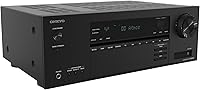
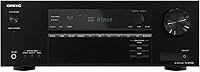
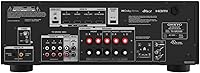
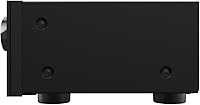
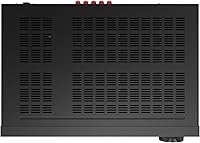

Overview
The Onkyo TX-SR3100 marks a quiet but confident return to the mid-range AV receiver market from a brand that spent several years navigating bankruptcy and restructuring. That history is worth keeping in mind — not as a red flag, but as context for why this unit feels like a deliberate reset. It targets living-room home theater builders: people who want real surround sound without dedicating an entire room to it. At its price point, it competes directly with the Denon AVR-X2800H and Yamaha RX-V6A, and one area where it genuinely pulls ahead is HDMI 2.1a support, which is rare at this tier. At 12.94 × 17.13 × 6.31 inches, it fits standard rack furniture without issue.
Features & Benefits
The headline audio features are Dolby Atmos and DTS:X decoding, meaning the receiver handles object-based surround natively from compatible Blu-rays and streaming sources — no workarounds required. The Dolby Atmos Height Virtualizer deserves an honest mention: it creates a sense of overhead sound from a conventional speaker layout, but it is a simulation, not a substitute for real ceiling speakers. AccuEQ handles room calibration automatically, which is a genuine help for anyone setting this up without technical expertise. The 4K/120 and 8K/60 pass-through via HDMI 2.1a is a practical win for PS5 and Xbox Series X owners. Bluetooth auto-reconnect and the Advanced Music Optimizer add useful everyday convenience, though the latter will not satisfy strict audiophiles.
Best For
This AV receiver makes the most sense for someone building their first real home theater in a living room or apartment. Coming from a soundbar, the jump to 5.2-channel surround is significant — and AccuEQ's guided setup means you won't need to understand crossover frequencies to get a solid result. Console gamers benefit directly from the HDMI 2.1a inputs, enabling 4K/120 without an external switcher. Klipsch Reference and Reference Premiere speaker owners get a specific bonus with the Klipsch Optimize Mode, which applies channel-tuned crossover settings automatically. Where this unit is a harder sell is for anyone expecting a full streaming platform — there is no Wi-Fi, and app support is minimal compared to rivals.
User Feedback
Across roughly 167 ratings, this Onkyo unit holds a 4.4-star average — a solid result for a category where buyers tend to be informed and critical. Praise consistently points to the approachable setup experience, build quality that feels sturdy for the price, and reliable HDMI switching between sources. The main friction points are the absent Wi-Fi and limited streaming app ecosystem, which put it at a disadvantage against Denon and Yamaha options at similar prices. AccuEQ earns good marks overall, though a share of users report needing manual speaker adjustments after the auto-calibration runs. The question of long-term brand support post-restructuring surfaces often, with most owners reporting smooth day-to-day use but genuine uncertainty about future firmware updates.
Pros
- Native Dolby Atmos and DTS:X decoding works reliably with Blu-ray and streaming sources out of the box.
- HDMI 2.1a inputs support 4K/120 and VRR, making this AV receiver a natural pairing for current-gen consoles.
- AccuEQ room calibration gets beginners to a properly balanced surround setup in under an hour.
- Build quality feels solid and well-assembled — noticeably sturdy for its price tier.
- Bluetooth auto-reconnect is a small but genuinely useful convenience for daily music streaming.
- Klipsch Optimize Mode delivers real value for Klipsch speaker owners with automatic crossover configuration.
- Four HDMI 2.1a inputs handle most living-room source setups without requiring an external switcher.
- The Dolby Atmos Height Virtualizer offers a serviceable overhead effect in spaces where ceiling speakers are not an option.
- Clean HDMI switching between sources is fast and reliable, consistently praised by multi-device users.
- Fits standard rack furniture without modification at 12.94 × 17.13 × 6.31 inches.
Cons
- No Wi-Fi means no AirPlay, Spotify Connect, or any networked audio — a significant gap versus rivals.
- Only one HDMI output rules out simultaneous TV and projector use without additional hardware.
- AccuEQ occasionally miscalibrates subwoofer crossover points, requiring manual correction afterward.
- The included remote feels cheap relative to the main unit, with no backlighting and soft button travel.
- Long-term firmware support is uncertain given the brand's recent bankruptcy and restructuring history.
- The front panel display is dim and low-resolution, making it difficult to read across a bright room.
- No equivalent speaker optimization profiles exist for non-Klipsch brands, limiting a headline feature's reach.
- Advanced Music Optimizer cannot be fine-tuned in intensity — it is simply on or off, with no middle ground.
- Competing Denon and Yamaha options at similar prices offer richer software ecosystems and better streaming integration.
- Runs noticeably warm during extended high-volume sessions, which may concern buyers in enclosed cabinet setups.
Ratings
The Onkyo TX-SR3100 earns a strong overall position in its category, and our AI-generated scores reflect a thorough analysis of verified buyer reviews from global sources — with spam, bot activity, and incentivized feedback actively filtered out. Across more than a dozen evaluated categories, both the genuine strengths and the real-world frustrations of this AV receiver are represented without softening the edges.
Audio Performance
HDMI & Video Handling
Room Calibration (AccuEQ)
Setup & Ease of Use
Streaming & Connectivity
Build Quality & Design
Gaming Performance
Value for Money
Dolby Atmos Height Virtualization
Klipsch Optimize Mode
Advanced Music Optimizer
Remote Control
Long-Term Reliability & Brand Support
Suitable for:
The Onkyo TX-SR3100 is a strong fit for anyone building their first real home theater in a living room or apartment, particularly buyers who are stepping up from a soundbar and want genuine 5.2-channel surround without a steep learning curve. AccuEQ's guided calibration routine means you can get a properly balanced setup without any prior knowledge of speaker tuning — a genuine advantage for people who just want it to work. Console gamers running a PS5 or Xbox Series X will find the HDMI 2.1a inputs directly useful, supporting 4K/120 and VRR without any external switching hardware. If you own Klipsch Reference or Reference Premiere speakers, the dedicated Klipsch Optimize Mode adds a layer of tailored tuning that most rivals in this price range simply do not offer. This AV receiver also suits buyers in rental spaces or smaller rooms where installing ceiling or upward-firing speakers is impractical — the Height Virtualizer at least provides a taste of the Atmos effect without any structural modifications.
Not suitable for:
The Onkyo TX-SR3100 is a genuinely poor fit for anyone whose listening habits revolve around network audio, streaming services, or multi-room audio systems. There is no Wi-Fi, no AirPlay, no Spotify Connect, and no built-in streaming apps — if those features are part of your daily routine, this unit will frustrate you from day one, and competitors from Denon or Yamaha at comparable price points cover that ground much more thoroughly. Serious two-channel music listeners will also find limitations here; this is a home theater receiver at heart, and while it handles movie audio with confidence, it lacks the refinement that dedicated stereo amplifiers bring to critical music listening. Buyers who plan to keep their AV receiver for six or more years should weigh the brand's post-bankruptcy history carefully — the hardware is solid, but long-term firmware support and parts availability remain open questions. Anyone needing to feed both a TV and a projector simultaneously will hit an immediate wall, since there is only one HDMI output. Finally, if your speaker collection is not Klipsch-based, you will get nothing from the Klipsch Optimize Mode, which narrows one of the unit's more distinctive features to a specific subset of buyers.
Specifications
- Channel Config: This AV receiver supports a 5.2-channel speaker layout, accommodating five full-range speakers and two subwoofers simultaneously.
- Dolby Decoding: Native decoding for Dolby Atmos and Dolby TrueHD is built in, enabling full object-based surround from compatible Blu-ray discs and streaming sources.
- DTS Decoding: DTS:X and DTS-HD Master Audio decoding are supported natively, covering the full range of current DTS formats without external processing.
- Height Virtualizer: The Dolby Atmos Height Virtualizer simulates overhead audio from a conventional speaker layout, requiring no additional ceiling or upward-firing speakers.
- HDMI Inputs: Four HDMI 2.1a inputs are provided, each supporting 8K/60 and 4K/120 pass-through along with Dynamic HDR formats including Dolby Vision.
- HDMI Output: One HDMI output is included, which limits simultaneous display to a single screen without additional switching hardware.
- Video Pass-Through: The unit supports H.264, H.265/HEVC, and VP9 video encoding formats across its HDMI signal chain.
- Room Calibration: AccuEQ automatic room calibration uses a supplied microphone to measure speaker distances, levels, and frequency response, then adjusts settings accordingly.
- Bluetooth: Bluetooth wireless connectivity is built in and features auto-reconnect, resuming playback automatically when a previously paired device comes within range.
- Wi-Fi: Wi-Fi is not included; network audio streaming, AirPlay, and app-based control are not available natively on this unit.
- Klipsch Mode: Klipsch Optimize Mode allows users to select their specific Klipsch Reference or Reference Premiere speaker models to apply pre-configured crossover settings per channel.
- Music Optimizer: The Advanced Music Optimizer DSP mode reconstructs lost data in compressed audio formats such as MP3, AAC, and WMA to approximate lossless quality.
- Dimensions: The unit measures 12.94 × 17.13 × 6.31 inches (W × D × H), fitting standard AV rack shelves and most entertainment unit compartments.
- Weight: The receiver weighs 18.04 pounds, consistent with a mid-range unit featuring a conventional transformer-based power supply.
- Controller: An infrared remote control is included; there is no companion mobile app or IP-based control interface.
- Video HDR Support: Dynamic HDR formats including HDR10, HDR10+, and Dolby Vision are passed through via the HDMI 2.1a connections without processing or degradation.
- Speaker Impedance: The receiver is compatible with 6- to 16-ohm speakers across all channels, accommodating most consumer-grade speaker systems.
- Manufacturer: The TX-SR3100 is manufactured by Onkyo, a Japanese audio brand that resumed operations under new ownership following a 2022 bankruptcy restructuring.
Related Reviews
Onkyo TX-NR6100
Onkyo TX-8220 Stereo Receiver
Onkyo TX-SR494 AV Receiver
Onkyo TX-NR5100
Onkyo TX-RZ50
Onkyo TX-RZ70 11.2-Channel AV Receiver
Onkyo TX-SR393
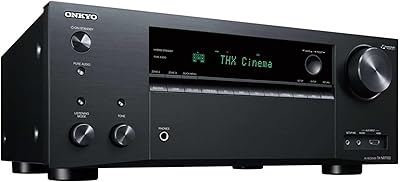
Onkyo TX-NR7100
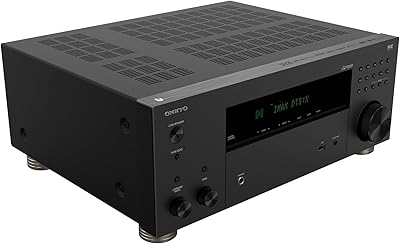
Onkyo TX-RZ30