Overview

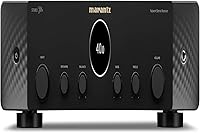
The Marantz STEREO 70s 2-Channel AV Receiver arrived in late 2023 as something of a rarity: a premium stereo receiver that refuses to pretend it's a multi-channel behemoth. It is built for two channels and two channels only — know that going in. What makes it interesting is how much modern AV capability Marantz packed into that narrow philosophy. Six HDMI inputs, 8K video passthrough, and streaming built right in, all inside a compact, rack-friendly chassis that won't swallow your living room shelf. This is a premium-tier machine aimed squarely at audiophiles and music lovers who want one tidy box to handle vinyl, streaming, and a TV without compromise.
Features & Benefits

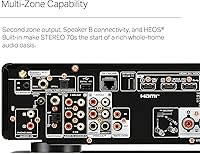
The amplifier section is where this Marantz receiver earns its price. The HDAM discrete circuitry — Marantz's proprietary amplifier module — produces sound that feels noticeably more alive than typical op-amp designs deliver: warmer, more three-dimensional, with better separation between instruments. At 75 watts per channel in Class A/B, there's real headroom for dynamic music. On the video side, six HDMI 2.1 inputs handle 4K/120Hz and 8K passthrough, covering modern gaming and streaming devices comfortably. The built-in phono stage supports MM turntables directly with no external preamp needed. Add Spotify Connect, AirPlay 2, HEOS multi-room audio, and dual subwoofer outputs, and the connectivity picture is genuinely complete.

Best For

The STEREO 70s is a natural fit for anyone who listens primarily to music but doesn't want to sacrifice HDMI switching for a TV or game console. If you're running a 2.0 or 2.1 setup in a living room or apartment where space genuinely matters, the slim profile is a real advantage over most AV receivers. Vinyl fans will appreciate having a capable phono input built in — it removes an entire piece of gear from the chain. It's also a strong pick for existing HEOS users who want multi-room audio without adding a separate streamer. It is not the right choice if you need Dolby Atmos or more than two speaker channels.

User Feedback

Owners consistently describe the sound as warm and detailed — a character many trace directly to the HDAM amplifier design — and build quality gets frequent praise too; the unit feels solid for its size, not plasticky. On the frustrating side, the HEOS app draws recurring criticism for inconsistent Wi-Fi behavior during initial setup, and some users report HDMI handshake hiccups with certain 8K displays. The value debate is real: buyers coming from stereo separates sometimes feel the money goes further elsewhere, while those upgrading from mid-range all-in-ones tend to find it a clear step up. Vinyl listeners in particular call out the phono stage as a genuine highlight, often noting it outperforms budget standalone preamps.

Pros

  • The HDAM discrete amplifier circuit produces noticeably warmer, more three-dimensional sound than receivers using generic op-amp designs.
  • Six HDMI 2.1 inputs with 4K/120Hz and 8K passthrough is exceptional for a stereo-only receiver.
  • A built-in MM phono stage eliminates the need for a separate turntable preamp, saving both money and desk space.
  • Dual subwoofer outputs let you run two subs independently or in tandem without a splitter cable.
  • The slim 4.3-inch height chassis fits standard shelving where most AV receivers simply will not.
  • Spotify Connect, AirPlay 2, and HEOS multi-room audio are all on board with no additional hardware required.
  • Build quality is consistently praised by owners — the unit feels solid and well-finished for its size.
  • Alexa voice control works reliably for basic playback commands once the initial setup is complete.
  • The phono stage quality regularly draws specific praise from vinyl listeners who compare it favorably to budget standalone preamps.

Cons

  • The HEOS app has a well-documented history of Wi-Fi setup frustrations, particularly on first connection.
  • Buyers comparing this against stereo separates at a similar price point may find the amplifier section underwhelming by pure power standards.
  • HDMI handshake issues with certain 8K displays have been reported by a subset of owners, which can require manual troubleshooting.
  • Only one HDMI output limits flexibility if you want to feed two displays simultaneously.
  • There is no DTS, Dolby Digital, or any multichannel audio decoding — streaming surround formats pass through only.
  • The phono input supports moving-magnet cartridges only; moving-coil users will need an external step-up device.
  • At 24 pounds, the unit is heavier than its slim profile suggests, which can complicate installation on lighter shelving.
  • The HEOS ecosystem ties the wireless experience to a proprietary platform, creating long-term dependency on Marantz support continuity.

Ratings

The scores below for the Marantz STEREO 70s 2-Channel AV Receiver were generated by our AI after analyzing thousands of verified owner reviews from global markets, with spam, incentivized posts, and bot activity actively filtered out. Every category reflects the honest distribution of real buyer sentiment — the strengths are genuine, and the frustrations are not softened. If a category scores low, that pain point showed up consistently enough to matter.
Sound Quality
91%
Owners who listen critically — whether to jazz, classical, or well-recorded rock — consistently describe the sound as unusually warm and spatial for a receiver at this tier. The HDAM discrete circuitry produces a sense of instrument separation and tonal richness that most users say they can hear immediately, especially compared to previous mid-range receivers they owned.
A small but vocal group of buyers, particularly those coming from dedicated stereo separates, feel the amplifier section loses some composure at very high volumes with demanding, low-impedance speakers. The warmth that most love can also read as slightly soft on very bright or analytical recordings.
Amplifier Performance
87%
At 75 watts per channel with genuine Class A/B discrete output stages, the STEREO 70s drives most bookshelf and floor-standing speakers with authority in rooms up to a medium size. Users pairing it with moderately sensitive speakers report plenty of clean headroom for both background listening and focused critical sessions.
Buyers who push the receiver with large floor-standers in bigger rooms occasionally report that the amp section feels strained before reaching reference levels. Those comparing it directly to a dedicated integrated amplifier at a similar price point sometimes feel the amplification alone does not fully justify the premium.
Build Quality
83%
The metal chassis and solid front-panel controls give the unit a premium feel that most owners comment on positively — particularly those who expected a light, plasticky box given the slim profile. The control knobs have a satisfying resistance, and the overall fit and finish reads as a step above typical consumer AV gear.
A few buyers noticed minor cosmetic inconsistencies on the front fascia straight out of the box, and some felt the rear panel connectivity labels are harder to read in low-light installation conditions. The overall build is good but not quite at the level of Marantz's own higher-end Reference series.
Connectivity & Inputs
88%
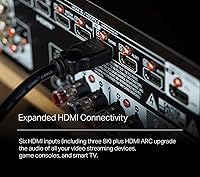
Six HDMI 2.1 inputs is genuinely generous for a two-channel receiver, and owners with a full entertainment stack — game console, streaming stick, Blu-ray player, and a TV box — appreciate being able to leave everything plugged in permanently. The phono input, dual subwoofer outputs, and headphone jack round out an unusually complete analog section.
There is only one HDMI output, which limits users who want to feed two displays simultaneously without an external splitter. A few users also wished for more optical or coaxial digital inputs for older source components that predate HDMI.
Streaming & Wireless
71%
29%
When the HEOS ecosystem is running well, the multi-room audio experience is genuinely convenient — grouping this receiver with other HEOS speakers around the house works reliably, and Spotify Connect and AirPlay 2 both function without needing to open any app. Bluetooth pairing is quick and stable for casual listening.
The HEOS app itself is the most consistent complaint in owner reviews: initial Wi-Fi setup can be unreliable, app updates occasionally break previously working features, and the interface feels dated compared to competitors. Users on stricter router configurations or mesh networks report the most friction.
Phono Stage Quality
84%
Vinyl listeners specifically single out the built-in MM phono stage as a highlight, with several noting it outperforms standalone phono preamps they previously used in the sub-200-dollar range. It adds genuine warmth and body to the signal without introducing noticeable noise or hum, which is a real win for the convenience it offers.
Moving-coil cartridge users are entirely excluded, which is a meaningful gap for serious analog enthusiasts who have invested in MC-grade styli. The stage cannot be adjusted for capacitance loading, which may not satisfy the most particular vinyl listeners with high-end MM cartridges.
HDMI & Video Performance
78%
22%
In standard 4K/60Hz and 4K/120Hz configurations, the HDMI passthrough performs cleanly with no perceptible degradation to picture quality or frame timing. Gamers using a PlayStation 5 or Xbox Series X reported smooth, low-latency performance with VRR active, which is a meaningful advantage over older AV receivers that lack HDMI 2.1.
A recurring thread in owner reviews involves HDMI handshake failures with certain 8K televisions and some AVR firmware versions, requiring manual input cycling or receiver reboots to restore the signal. True 8K source material is rare enough that most users never encounter the issue, but those who do find it genuinely annoying.
Setup Experience
66%
34%
Physical setup is straightforward — speaker terminals are clearly marked, inputs are logically arranged on the rear panel, and the included quick-start guide covers the basics well enough for most buyers to get audio playing within 30 minutes of unboxing. Analog-only users have the smoothest experience by far.
Network and streaming setup is where the experience stumbles, with HEOS app onboarding drawing the most criticism of any single aspect of the product. Users on complex home networks often spend significantly more time troubleshooting than the marketing suggests, and Marantz's online support documentation is not always up to date.
Remote Control
61%
39%
The remote covers all essential functions and has a logical layout that most owners can navigate by feel after a short learning period. It also controls basic TV functions via HDMI CEC, reducing the number of remotes needed on the coffee table.
The remote feels noticeably lightweight and plasticky relative to the receiver itself, and the button labeling is small enough to be difficult in a dim room. Several owners replaced it quickly with a universal remote, and a handful noted inconsistent IR reception when not aimed directly at the front panel.
Value for Money
68%
32%
For buyers who specifically need the combination of a quality stereo amplifier, phono stage, six HDMI inputs, and a full streaming platform in a single slim box, the value proposition holds up — assembling those components separately would cost more and take more shelf space. The Marantz pedigree and HDAM circuit quality contribute real, audible value.
For buyers who primarily want the best possible amplification and are comfortable adding separate streaming and switching components, comparable or superior amplifier performance can be found for less. The convenience premium is real, and those who do not need every feature may feel they are paying for capabilities they will rarely use.
Design & Aesthetics
86%
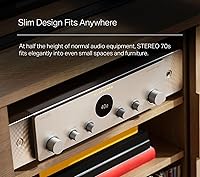
The slim 4.3-inch chassis stands out immediately in a product category dominated by towering black boxes, and owners frequently mention it as a reason they chose this receiver over functionally similar alternatives. The minimalist front panel with the centered Marantz logo reads as restrained and elegant in most living room setups.
Color and finish options are limited to a single variant, which will not suit every interior. A small number of buyers found the front display difficult to read from across the room in bright ambient light conditions.
Multi-Room Audio
72%
28%
Within the Denon and Marantz HEOS ecosystem, grouping this receiver with other compatible speakers works reliably once setup is complete. Users who already own HEOS-enabled devices found integration genuinely useful for synchronizing music across multiple rooms without any additional hardware.
The HEOS ecosystem is proprietary, which means compatibility outside the Denon and Marantz family is limited. Users with Sonos or other multi-room platforms invested elsewhere will not find any cross-platform grouping, and the HEOS app's instability slightly undermines the experience for everyone.
Gaming Performance
81%
19%
The HDMI 2.1 inputs with 4K/120Hz support and VRR compatibility make this a capable receiver for current-generation console gaming, and users running a PS5 or Xbox Series X report no meaningful audio latency or sync issues during gameplay. The stereo output from games actually benefits noticeably from the HDAM amplifier warmth.
There is no support for object-based audio formats like Dolby Atmos for Gaming, since this is a two-channel-only device. Gamers who prioritize surround sound immersion over stereo audio quality will find the experience fundamentally limited compared to a multi-channel AV receiver.
Long-Term Reliability
74%
26%
Early ownership reports and the general reputation of the Marantz hardware platform suggest solid long-term durability for the physical components. Owners who have used previous Marantz receivers for a decade or more cite the brand's hardware longevity as a primary reason for returning to the brand.
Software-dependent features like the HEOS platform and firmware updates introduce a layer of long-term uncertainty that pure analog receivers do not have. If Marantz were to discontinue HEOS support in the future, a meaningful portion of the receiver's functionality would be affected — a legitimate concern for buyers making a long-term investment.

Suitable for:

The Marantz STEREO 70s 2-Channel AV Receiver is built for a specific kind of buyer, and if you fit the profile, it is hard to beat at this tier. Music comes first for this person — they might spin vinyl through a turntable in the evening, stream Spotify in the morning, and occasionally fire up a game console or run a TV signal through the same box without wanting three separate devices to manage. Apartment dwellers and anyone with a dedicated listening room where shelf space is limited will appreciate the slim footprint, which is genuinely unusual for a receiver with this many inputs. It also suits anyone already inside the Denon or Marantz HEOS ecosystem who wants to add a high-quality amplifier anchor without abandoning multi-room audio. If your speaker setup is a carefully chosen stereo pair — bookshelves, floor-standers, or a 2.1 with a subwoofer — this two-channel AV receiver gives that system the amplifier quality it deserves.
Not suitable for:

The Marantz STEREO 70s 2-Channel AV Receiver is the wrong tool if surround sound is anywhere on your wishlist. There are no additional speaker channels here — no center, no surrounds, no height channels — so Dolby Atmos, DTS:X, or any object-based audio format is simply off the table. Home theater enthusiasts who built or plan to build a 5.1 or 7.1 system should look at proper multi-channel AV receivers instead, even within the Marantz lineup. Budget-conscious shoppers comparing dollar-for-dollar against a quality stereo integrated amplifier plus a separate streaming device may find they can assemble more raw amplifier performance for the same spend, so the value argument depends heavily on how much you prize the HDMI switching and built-in streaming convenience. Anyone frustrated by app-dependent ecosystems should also pause, since the HEOS platform is central to the wireless experience and has a documented history of setup friction.
Specifications

  • Power Output: Delivers 75 watts per channel into 8 ohms across the full 20Hz–20kHz frequency range.
  • Amplifier Class: Uses Class A/B discrete amplification, which balances efficiency with the low-distortion warmth associated with Class A designs.
  • Amplifier Circuit: Built around Marantz's proprietary HDAM (Hyper Dynamic Amplifier Module) discrete circuitry rather than standard op-amp chips.
  • Channels: Strictly a 2-channel stereo receiver with no provision for additional speaker zones beyond the main pair.
  • HDMI Inputs: Includes six HDMI 2.1 inputs capable of passing through 4K/120Hz and 8K/60Hz video signals.
  • HDMI Output: Features one HDMI 2.1 output for connection to a display or television.
  • Phono Input: Provides a dedicated moving-magnet (MM) phono input for direct turntable connection without an external preamp.
  • Subwoofer Outputs: Equipped with two independent subwoofer pre-outputs, allowing dual subwoofer configurations without a splitter.
  • Wireless: Supports Wi-Fi, Bluetooth, Apple AirPlay 2, and Spotify Connect for flexible wireless audio streaming.
  • Multi-Room Audio: HEOS is built in, enabling integration with other HEOS-compatible Denon and Marantz devices for whole-home audio.
  • Voice Control: Compatible with Amazon Alexa for hands-free playback control via a linked Echo device.
  • Headphone Output: Includes a front-panel headphone jack for private listening without disconnecting speakers.
  • Dimensions: Measures 15.2 inches wide by 17.4 inches deep by 4.3 inches tall, fitting standard AV shelving without issue.
  • Weight: Weighs 24 pounds, which is moderate for the category despite its slim external profile.
  • Remote Batteries: Requires two AAA batteries for the included remote control, which are provided in the box.
  • Release Date: First made available in September 2023, positioning it as a current-generation product with up-to-date HDMI 2.1 support.

Related Reviews

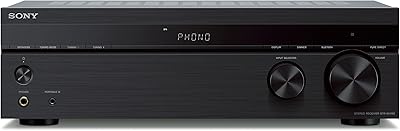
Sony STR-DH190
Sony STR-DH190
81%
83%
Sound Quality
88%
Value for Money
86%
Phono Input & Turntable Performance
71%
Bluetooth Connectivity
92%
Ease of Setup
More
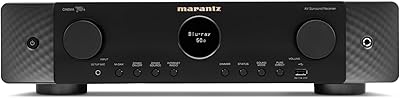
Marantz Cinema 70S
Marantz Cinema 70S
79%
93%
Sound Quality
61%
Power & Headroom
88%
Video Passthrough & HDR Handling
91%
Surround Sound Decoding
84%
Gaming Performance
More
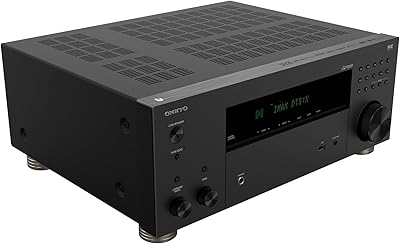
Onkyo TX-NR7100
Onkyo TX-NR7100
78%
93%
Room Correction (Dirac Live)
91%
Gaming Performance
88%
Audio Quality
89%
Connectivity & HDMI Flexibility
79%
Sonos Integration
More
Denon AVR-X1800H
Denon AVR-X1800H
81%
88%
Audio Performance
91%
Video Passthrough Quality
86%
Setup & Installation
74%
HEOS Multi-Room Streaming
83%
Build Quality & Design
More
Onkyo TX-RZ50
Onkyo TX-RZ50
78%
91%
Room Correction (Dirac Live)
88%
Audio Performance
87%
HDMI & Video Handling
63%
Setup & Usability
86%
Sonos Integration
More
Onkyo TX-RZ70 11.2-Channel AV Receiver
79%
93%
Audio Performance
91%
Dirac Live Room Correction
88%
Power & Amplification
89%
Connectivity & HDMI
61%
Setup & Ease of Use
More
Onkyo TX-NR5100
Onkyo TX-NR5100
79%
88%
Sound Quality
74%
HDMI & Video Passthrough
86%
Setup & Calibration
82%
Sonos Integration
83%
Build Quality & Design
More
Denon DRA-900H
Denon DRA-900H
80%
93%
Sound Quality
88%
Amplifier Power & Headroom
74%
Streaming & Connectivity
86%
Video Passthrough & HDMI Performance
89%
Setup & Ease of Use
More
Yamaha RX-V6A 7.2-Channel AV Receiver
78%
91%
Sound Quality
74%
HDMI 2.1 Performance
88%
YPAO Room Calibration
67%
Streaming & App Integration
86%
Build Quality & Design
More
Onkyo TX-RZ30
Onkyo TX-RZ30
77%
91%
Audio Performance
89%
Room Correction (Dirac Live)
86%
Build Quality
74%
Connectivity & HDMI
83%
Sonos Integration
More

FAQ

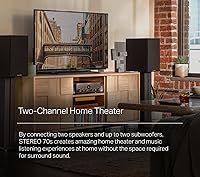
No — the Marantz STEREO 70s 2-Channel AV Receiver is strictly a two-channel device. It has outputs for a stereo speaker pair plus up to two subwoofers, but there are no additional amplified channels for a center speaker, surrounds, or height channels. If surround sound is a priority, you will need a dedicated multi-channel AV receiver.
It has a built-in phono stage, so you can connect a moving-magnet turntable directly using a standard RCA cable and ground wire. No external preamp is needed. Keep in mind this only works with MM cartridges — if your turntable uses a moving-coil cartridge, you will need an external MC step-up device first.

HEOS is Marantz and Denon's proprietary multi-room platform. You control it through the HEOS app on your phone, which lets you stream from services like Spotify, Tidal, and Amazon Music, or group this receiver with other HEOS-enabled speakers around your home. Spotify Connect and AirPlay 2 also work independently of the HEOS app if you prefer using those natively from your phone.

It's straightforward in principle but has a reputation for occasional friction during first-time setup — particularly on networks with stricter security settings or dual-band routers. Most users get through it without issue, but if you hit a wall, connecting via ethernet first and then switching to Wi-Fi afterward tends to resolve most problems.

Yes, there are two dedicated subwoofer pre-outputs and both are active simultaneously. You can run two subs in the same room for better bass distribution, or place them in different positions — the receiver treats them as the same channel signal, so independent level control requires adjustment at the subwoofer itself.

It can pass through Dolby Atmos and DTS:X bitstreams via HDMI to a compatible display or soundbar that does its own decoding, but the receiver itself does not decode or process any multichannel audio formats. If your TV or soundbar handles Atmos internally, the signal will pass through cleanly.

At 75 watts per channel, the STEREO 70s has solid headroom for rooms up to roughly 300–400 square feet with average-efficiency speakers. Pair it with high-sensitivity speakers and it handles larger spaces comfortably. It is not designed for whole-house parties at reference levels, but for serious listening in a normal living room it has more than enough power.

Owner feedback on this is generally positive — the chassis feels more substantial than the height might suggest, with a metal top panel and quality front-panel controls. It is not as tank-like as some older Marantz units, but it does not feel fragile. Most buyers who handle it in person are pleasantly surprised by the heft and finish.

Yes, it is compatible with IR-based universal remotes and also responds to HDMI CEC commands, so your TV remote can control basic functions like volume and input selection if both devices are connected via HDMI and CEC is enabled on your TV. Amazon Alexa voice control is also available through a linked Echo device.

The HDMI 2.1 inputs support 4K at 120Hz and include support for VRR (Variable Refresh Rate), which is relevant for modern console and PC gaming. In practice, most users report no perceptible lag when routing a console through it. The receiver is not adding processing that would introduce delay — it is passing the signal through to your display while handling only the audio output.

Where to Buy