Overview

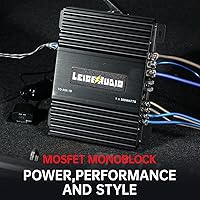
The LEIGESAUDIO 500W Class D Monoblock Car Amplifier enters the budget car audio space with a straightforward pitch: decent subwoofer power without draining your wallet. One thing worth flagging upfront — the product title says 500W, but the actual spec sheet lists 900W RMS at 1 ohm, which is a common marketing quirk in this segment. It doesn't disqualify the amp, but buyers should know what they're actually getting. As a Class D design, this mono amp prioritizes efficiency and a compact footprint over audiophile-grade output. The brand is a Chinese OEM with limited history, but it has built a growing Amazon presence with a reasonable track record at this price tier.

Features & Benefits

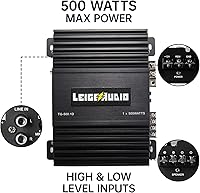
What actually stands out about this budget subwoofer amplifier is the 1-ohm stable design. Many cheaper amps claim low-impedance compatibility but overheat under sustained loads — this one is built to handle it continuously, which matters when you're running a dual voice coil sub wired down to 1 ohm. The variable subsonic filter is a practical touch; it keeps your woofer from bottoming out on ultra-low frequencies your enclosure simply wasn't built for. The adjustable low-pass crossover adds useful flexibility. Both high and low level inputs are on board, so you can wire it directly to a factory head unit without an adapter. A remote bass knob is included, letting you dial the output from your seat.

Best For

This mono amp hits the right marks for someone building their first car audio setup on a limited budget. If you're mounting a single 8-inch or 10-inch subwoofer in a hatchback or compact sedan, the small chassis — just under 8 inches long — fits neatly in tight spaces. The high-level input makes it particularly useful for anyone stuck with a factory head unit that has no RCA preamp outputs. Buyers who need reference-quality bass or plan to run multiple drivers should look elsewhere. But for a casual listener who wants noticeably better low-end than stock, this budget subwoofer amplifier offers a solid starting point without requiring a deep investment in gear or installation time.

User Feedback

Owner reviews paint a fairly consistent picture. The bass output gets regular praise from buyers who pair this amp with modestly rated subs, with many noting it delivers more punch than expected at this price point. On the flip side, the amp tends to run warm during extended listening sessions, so installing it in a ventilated spot — not buried under cargo — is genuinely important. Terminal labeling is clear, which first-timers appreciate. The wattage discrepancy between the title and the specs does surface in reviews; some buyers feel misled. Quality control isn't perfectly consistent either, though the LEIGESAUDIO amp's Amazon warranty appears to resolve most unit defects without major friction.

Pros

  • Genuine 1-ohm stability lets you wire a dual voice coil subwoofer in parallel without worrying about thermal shutdown.
  • The variable subsonic filter is a genuinely useful feature that protects your woofer from dangerous over-excursion.
  • High and low level inputs make this mono amp compatible with virtually any head unit, factory or aftermarket.
  • The compact chassis fits easily in tight trunk builds or behind rear panels without major fabrication work.
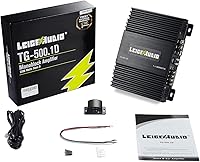
  • A remote bass knob is included in the box — no extra purchase needed to adjust output from the driver seat.
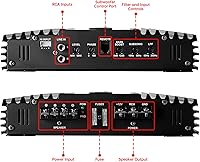
  • Terminal labels are clear and well-organized, which cuts down on wiring mistakes for first-time installers.
  • Class D efficiency means less heat generated per watt compared to older amplifier topologies.
  • At its price point, the bass output surprises most first-time buyers in a positive way.
  • The one-year Amazon warranty provides a low-friction resolution path if a unit arrives defective.

Cons

  • The wattage in the product title does not match the RMS figures in the actual spec sheet, which creates real confusion before you even buy.
  • The amp runs noticeably warm during extended high-volume sessions, making ventilation a non-optional installation consideration.
  • Quality control is inconsistent — some buyers receive units that perform well, others report early failures.
  • Peak power figures are heavily inflated relative to what the amp realistically sustains under normal listening conditions.
  • Brand support infrastructure is limited compared to established audio manufacturers, so troubleshooting help outside of Amazon returns can be sparse.
  • The bass boost circuit, while included, can introduce distortion if pushed aggressively on lower-quality source material.
  • Long-term durability data is thin given the brand's relatively short market history.
  • Not a strong fit for larger subwoofers that demand sustained high-current delivery over time.

Ratings

Our AI rating system analyzed verified global buyer reviews for the LEIGESAUDIO 500W Class D Monoblock Car Amplifier, actively filtering out incentivized, bot-generated, and spam feedback to surface what real installers and everyday listeners actually experienced. Scores reflect both the genuine strengths that keep buyers recommending this mono amp and the honest pain points that caused frustration — nothing is glossed over. The result is a transparent, balanced scorecard designed to help you make a confident decision before you buy.

Value for Money
83%
For buyers on a tight budget, this budget subwoofer amplifier consistently punches above its price class in terms of raw bass output and feature count. Getting adjustable crossovers, a subsonic filter, and a remote knob at this price point is genuinely uncommon, and most owners feel the purchase was worth it.
The value calculus shifts if you receive a defective unit, since dealing with a replacement eats time and shipping hassle. A small but consistent subset of buyers feel the advertised wattage figures inflate the perceived value in a way that feels misleading once the amp is installed and measured.
Power Output Accuracy
51%
49%
At 1 ohm, the amp does deliver meaningful headroom for a single subwoofer in a daily driver setup, and casual listeners notice a genuine improvement over no amplification. Buyers running modest 8-inch or 10-inch woofers at moderate volumes tend to be satisfied with the output they actually get.
The gap between the product title claiming 500W and the spec sheet listing 900W RMS is a real credibility problem that shows up repeatedly in reviews. Real-world output under sustained load falls short of even the RMS figures, which frustrates buyers who sized their subwoofer expecting those numbers to hold.
Thermal Management
58%
42%
Under light-to-moderate listening sessions — think daily commutes at reasonable volume — the amp stays manageable and does not trigger protection mode. The Class D topology does inherently generate less heat per watt than older designs, which helps in typical use cases.
Under sustained heavy loads, particularly with bass-heavy music played loud over long drives, the chassis gets noticeably warm. Several buyers reported the amp going into thermal protection when installed in sealed or poorly ventilated locations, which is a real planning concern that the product literature undersells.
1-Ohm Stability
78%
22%
For buyers wiring a dual voice coil subwoofer in parallel down to 1 ohm, the amp genuinely holds up under normal listening conditions without constant thermal shutdowns. This is one of the more dependable features relative to the price, and installers running 1-ohm loads day-to-day report consistent performance.
A minority of users pushing the amp hard at 1 ohm for extended periods did encounter heat-related shutdowns, suggesting the stability has limits that the marketing does not fully acknowledge. The amp is 1-ohm capable, but it is not built to the same standard as purpose-engineered competition-grade 1-ohm amplifiers.
Build Quality
61%
39%
The chassis feels solid enough for the price tier, and the overall fit and finish is acceptable for a budget install that lives tucked away in a trunk. The heatsink design is adequate for moderate use, and the unit does not feel flimsy when handling during installation.
Quality control inconsistency is the most repeated complaint in this category — some buyers receive units that perform well for years, while others encounter failures within weeks of install. The internal component tolerances appear to vary between production batches, which is a known limitation of value-tier OEM manufacturing at this price point.
Ease of Installation
86%
Terminal labeling is clear and logically organized, which first-time installers specifically call out as a genuine help during wiring. The compact form factor fits into spaces where larger amps simply will not go, and the lightweight chassis makes positioning and mounting a one-person job.
The included documentation is minimal and assumes a basic level of wiring knowledge that true beginners may not have. A few buyers noted the RCA input connectors felt less secure than expected, requiring careful seating to avoid intermittent signal loss.
Input Flexibility
84%
Having both high-level and low-level inputs on a single amp at this price is a practical advantage that significantly widens compatibility. Buyers upgrading from a factory head unit without RCA outputs can wire this mono amp directly to speaker leads without any additional adapter hardware.
The high-level input sensitivity is not adjustable on this unit, which can cause gain-matching challenges when the factory head unit outputs a stronger-than-average signal. Some users reported needing to carefully manage gain settings to avoid introducing distortion through the high-level input path.
Subsonic Filter
81%
19%
The variable subsonic filter is a standout inclusion for a budget amp, giving installers a practical tool to protect ported enclosure builds from dangerous low-frequency over-excursion. Buyers running ported boxes specifically mention that it made a noticeable difference in driver longevity and output quality.
The filter's tuning range and adjustment resolution are not documented precisely, so dialing it in accurately requires trial and listening rather than any technical reference point. Buyers using sealed enclosures often find the filter less critical, meaning its value depends heavily on the specific build.
Low-Pass Crossover
77%
23%
The adjustable low-pass crossover gives installers meaningful control over the frequency handoff between the subwoofer and the main speakers, which matters for achieving clean, integrated bass rather than a boomy or disconnected sound. Most buyers find the sweep range adequate for typical 8-inch to 12-inch subwoofer applications.
The crossover does not provide a steep enough roll-off slope for demanding audio setups where tight frequency separation is important. Buyers coming from higher-end amplifiers with 24 dB per octave slopes will notice the difference in how cleanly the crossover handles the transition region.
Remote Bass Control
79%
21%
The included remote knob works reliably and gives front-seat access to bass level adjustments without touching the amp itself, which is genuinely convenient when switching between music genres or sharing the car with passengers who prefer less bass. Most buyers appreciate that it is included rather than sold separately.
The remote control cable length may not reach the driver position in larger vehicles without extension wiring. A small number of buyers reported the remote knob developing a scratchy feel over time, suggesting the potentiometer quality is adequate but not built for a decade of heavy use.
Bass Boost Circuit
66%
34%
For listeners who want a quick low-frequency boost without adjusting head unit EQ settings, the onboard bass boost provides a convenient option that works reasonably well at moderate settings. In daily commuter setups where the listener just wants more presence from a modest subwoofer, it does the job.
Pushing the bass boost aggressively introduces audible distortion, particularly at high gain settings — a pattern that shows up consistently in more critical listener reviews. The circuit lacks the precision of a dedicated equalizer, and experienced installers generally recommend using the head unit EQ instead and leaving the onboard boost minimal or off.
Brand Reliability
57%
43%
LEIGESAUDIO has built enough of an Amazon track record that buyers can reference a meaningful volume of real owner feedback before purchasing. The brand is responsive enough through Amazon's warranty channel that most defective unit situations do get resolved without extended battles.
Outside of Amazon's return window, the support infrastructure is thin compared to established brands. There is limited independent repair support, no widely available service network, and product documentation that does not match the thoroughness buyers expect from brands like Rockford Fosgate or Pioneer at comparable prices.
Warranty Experience
72%
28%
The one-year Amazon warranty provides a functional safety net, and buyers who needed to use it generally describe the replacement process as straightforward. The fact that warranty claims route through Amazon rather than directly through the brand reduces friction compared to dealing with overseas OEM support channels.
One year is on the shorter end for electronics warranties, and coverage does not extend to damage from installation errors or improper ventilation — both of which are common causes of failure with this amp. Buyers who want longer-term peace of mind will find the warranty period insufficient compared to multi-year offerings from competing brands.

Suitable for:

The LEIGESAUDIO 500W Class D Monoblock Car Amplifier is a practical pick for first-time car audio builders who want a real performance upgrade without committing to a high-budget setup. If you're running a single 8-inch or 10-inch subwoofer in a compact car, hatchback, or small SUV, this mono amp has the footprint and output to do the job without overwhelming your install space or your fuse panel. It's especially well-matched for drivers upgrading from a stock factory head unit, since the high-level inputs let you tap speaker wires directly — no aftermarket receiver required. The 1-ohm stability also makes it a reasonable choice for anyone wiring a dual voice coil sub in a parallel configuration, which is a common beginner setup. Casual listeners who want noticeably more bass presence for everyday driving will likely get solid value here.
Not suitable for:

Buyers who prioritize verified, measured power output should approach this budget subwoofer amplifier with realistic expectations — the wattage figures in the product title and the actual spec sheet don't align cleanly, and real-world output will land below the peak numbers regardless. If you're building a competition-grade or high-fidelity system and need consistent, reliable power delivery, the LEIGESAUDIO 500W Class D Monoblock Car Amplifier is not the right foundation for that build. Enthusiasts pairing large 12-inch or 15-inch subwoofers that demand sustained high current will likely find this amp running hot and potentially throttling under load. Installations in sealed, unventilated enclosures like underseat cavities without airflow should also be reconsidered. And if brand reputation and long-term durability are priorities over price, established names in this segment offer tighter quality control even at comparable price points.
Specifications

  • Amplifier Class: This is a Class D monoblock amplifier, meaning it uses a switching output stage that converts power more efficiently than Class A/B designs, generating less heat for a given output level.
  • RMS Power @ 1Ω: The amplifier delivers a continuous RMS output of 900W when driving a 1-ohm load, which represents its real-world sustained power capability.
  • RMS Power @ 2Ω: When driving a 2-ohm load, the continuous RMS output is rated at 600W, suitable for most standard single voice coil subwoofer configurations.
  • Peak Power @ 1Ω: Maximum (burst) power at 1 ohm is rated at 2200W, though this figure reflects short-duration peaks rather than sustained listening levels.
  • Peak Power @ 2Ω: Maximum (burst) power at 2 ohms is rated at 1400W, again representing momentary peaks under ideal laboratory conditions.
  • Channels: This is a single-channel (monoblock) amplifier, purpose-built for powering one subwoofer or a single subwoofer system rather than full-range speakers.
  • Impedance: The amplifier is rated as 1-ohm stable, allowing it to continuously drive subwoofer loads as low as 1 ohm without triggering thermal protection or shutdown.
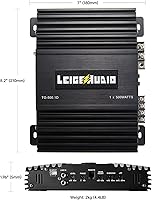
  • Dimensions: The chassis measures L7″ × W8.2″ × H1.96″, making it compact enough for trunk installs, underseat mounting, or space-constrained builds.
  • Weight: The unit weighs 3.88 pounds, which is lightweight for its output class and simplifies single-person installation.
  • Input Types: Both high-level (speaker wire) and low-level (RCA preamp) inputs are supported, allowing compatibility with factory head units and aftermarket receivers alike.
  • Low-Pass Filter: A variable low-pass crossover filter is included, letting the installer set the upper frequency cutoff to match the subwoofer and enclosure being used.
  • Subsonic Filter: A variable subsonic filter is built in to block frequencies below the subwoofer's usable range, protecting the driver from dangerous over-excursion.
  • Bass Boost: An onboard bass boost control is included for adding low-frequency emphasis, though it should be used conservatively to avoid introducing distortion.
  • Remote Control: A remote subwoofer level control is included in the package, allowing the driver to adjust bass output from the front seat without reaching the amp.
  • Operating Voltage: The amplifier is designed to operate on a standard 12V DC vehicle electrical system.
  • Mounting Type: The unit uses surface-mount installation, meaning it sits flat on a mounting surface such as a trunk floor board or enclosure panel.
  • Warranty: LEIGESAUDIO provides a 1-year warranty for purchases made through Amazon.com, handled via the Amazon reseller warranty process.

Related Reviews

Audiobank P6001 Monoblock Car Amplifier
61%
74%
Value for Money
38%
Power Accuracy
56%
Build Quality
52%
Thermal Management
78%
Installation Ease
More
TORO TECH R3 Monoblock Car Amplifier
77%
88%
Power Accuracy
83%
Bass Output Quality
81%
Installation Ease
62%
Thermal Management
76%
Build Quality
More
Hifonics ZXX-1200.1D Monoblock Car Amplifier
80%
88%
Value for Money
83%
Bass Output Quality
91%
Ease of Installation
86%
Thermal Management
74%
Build Quality
More
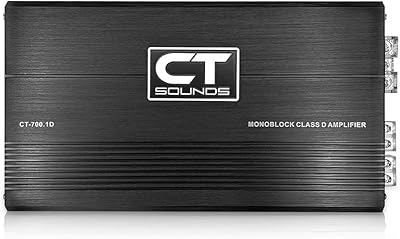
CT Sounds CT-700.1D Monoblock Amplifier
80%
91%
Value for Money
88%
Bass Output
86%
Thermal Performance
87%
Ease of Installation
74%
Build Quality
More
BOSS Audio Systems PD5000 Phantom 5000-Watt Class D Monoblock Car Amplifier
87%
94%
Power Output
91%
Sound Quality
88%
Ease of Installation
93%
Bass Performance
63%
Thermals/Heat Dissipation
More
CT Sounds CT-2000.1D Monoblock Amplifier
77%
88%
Value for Money
74%
Power Output
71%
Build Quality
69%
Thermal Management
86%
Ease of Installation
More
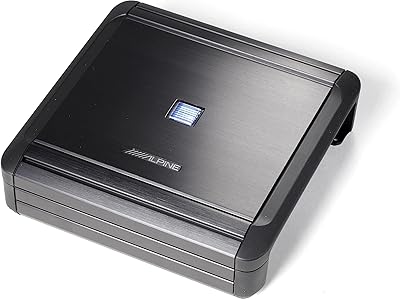
Alpine MRV-M500 500W V-Power Series Class D Monoblock Digital Amplifier
84%
90%
Power Output
88%
Efficiency
87%
Size and Fit
85%
Reliability
80%
Sound Quality
More
CT Sounds CT-1000.1D Monoblock Car Amplifier
77%
88%
Value for Money
79%
Power Output
84%
Thermal Management
72%
Build Quality
71%
Installation Ease
More
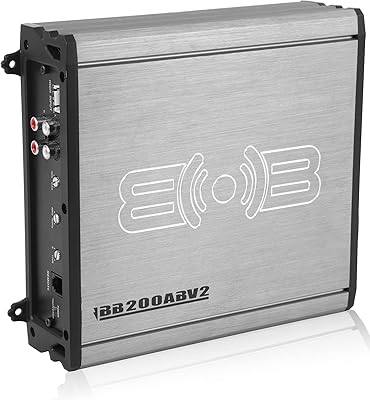
Belva BB200ABv2 Monoblock Car Amplifier
76%
88%
Value for Money
79%
Bass Output Quality
91%
Ease of Installation
61%
Thermal Management
67%
Build Quality
More
NVX VAD10001 v2 Monoblock Class D Amplifier
81%
88%
Value for Money
83%
Power Output
86%
Build Quality
84%
Marine & Environment Durability
71%
Installation Experience
More
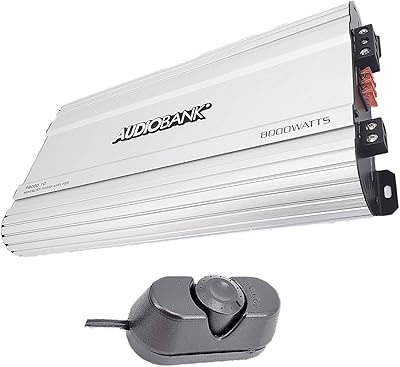
Audiobank P8001 Monoblock Car Amplifier
63%
74%
Value for Money
31%
Power Accuracy
81%
Ease of Installation
57%
Build Quality
53%
Thermal Management
More

FAQ

It means the amp can continuously drive a 1-ohm load without overheating or shutting down. This matters most if you're wiring a dual voice coil subwoofer in parallel — that configuration typically presents a 1-ohm load to the amp, and not every amplifier can handle it reliably for extended periods.

This is a genuine inconsistency in how this amp is marketed. The 900W RMS figure is the more meaningful number — it reflects what the amp actually sustains during real listening. The 500W figure in the title appears to be a conservative or mislabeled reference that doesn't match the spec sheet. Focus on the RMS numbers when sizing your subwoofer match.

Yes. The LEIGESAUDIO 500W Class D Monoblock Car Amplifier includes high-level inputs, so you can tap directly into the factory speaker wiring from your head unit. This is one of its more practical features for buyers who don't want to swap out their stock receiver.
It will work, but the output power drops significantly at 4 ohms compared to 1 or 2 ohms. The amp's sweet spot is 1 to 2 ohms. If you only have a single 4-ohm driver, this mono amp will still power it — you just won't be getting anywhere near the rated output figures.

It runs noticeably warm under sustained heavy use, which is common for Class D amps in this price range but worth planning around. Give it adequate airflow — don't bury it under carpet or pack it tightly between panels with no ventilation. A trunk floor mount with open air around it is a much better choice than sealing it inside an enclosure.

An 8-inch or 10-inch subwoofer with an RMS rating in the 300W to 600W range is the sweet spot for this budget subwoofer amplifier. You can pair it with a 12-inch sub, but make sure the subwoofer's RMS rating is close to what the amp delivers at your chosen impedance — a significant mismatch in either direction can cause problems.

It genuinely does, especially if you're running a ported enclosure. Frequencies below around 25Hz can cause your subwoofer cone to over-travel without producing audible bass, which stresses the driver. Setting the subsonic filter to match your box's tuning frequency prevents that and extends the life of your woofer.

It depends on your listening habits. If you switch between bass-heavy music and podcasts or calls, the remote knob is actually quite handy. If you mostly listen to one genre at a consistent volume, dialing the amp in once and leaving it alone is fine and avoids accidentally overdriving the subwoofer.

Based on buyer feedback, returns and replacements through Amazon tend to go smoothly under the standard Amazon process. Direct contact with LEIGESAUDIO for technical support is more limited compared to established brands — so if something fails, going through Amazon's return or replacement system is the most reliable path.

For a first build, this mono amp is a reasonable starting point. The terminal labeling is clear, the wiring inputs are flexible, and the price keeps your learning curve from being expensive. Just go in with realistic expectations about output power, plan your ventilation carefully, and make sure your vehicle's electrical system — fuse, wiring gauge, and ground — is properly sized for the amp's draw.