

Overview

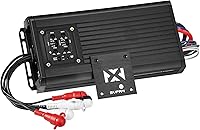
The NVX MVPA4 4-Channel Marine Amplifier has been a steady fixture in the powersports audio market since 2013 — which, in a category where products turn over quickly, is genuinely meaningful. This marine amp targets serious boaters, ATV riders, and motorcycle enthusiasts who need verified, honest power rather than inflated spec-sheet claims. It is not a general car audio unit adapted for outdoor use; it was built from the ground up for wet, vibration-heavy environments. Critically, it carries CEA-2006 certification, meaning its rated output reflects real measured performance. That kind of transparency matters when you are making a considered purchase at this price tier.

Features & Benefits

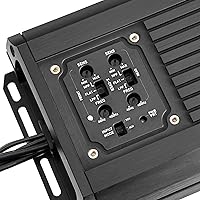
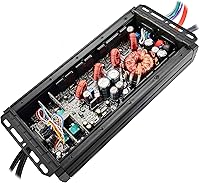
At its core, the MVPA4 puts out 600W total RMS — 100W per channel at 4 ohms, 150W at 2 ohms, or 300W bridged per side — and those numbers are honest because of CEA-2006 compliance. The spec that earns its keep in real-world use is the IPX67 waterproof rating, backed by a conformal-coated four-layer PCB. That is not splash resistance — it means the board can survive genuine submersion. The ultra-compact footprint (9.7″ × 4.4″ × 1.7″) is small enough to fit inside a motorcycle fairing or beneath a UTV seat where most amps simply will not go. A variable crossover (40–400 Hz) and included bass remote knob add real tuning flexibility without requiring an external processor, and both RCA and Aux inputs handle different source units cleanly.

Best For

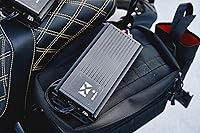
This compact powersports amplifier is purpose-built for a specific crowd: boaters who want discreet waterproof power without mounting a full-size amp in an exposed compartment, and off-road riders — whether on an ATV, side-by-side, or motorcycle — working with severely limited space. It also makes strong sense for anyone stepping up from a basic single-zone marine head unit and wanting to run multiple speakers with proper gain staging and crossover control. If you are chasing inflated peak wattage numbers, look elsewhere. But if you want CEA-rated honest output and a unit that will actually hold up over a full season on the water or the trail, the MVPA4 is a very practical choice.

User Feedback

Across 157 verified ratings, this marine amp holds a 4.1-out-of-5 average — a respectable score that reflects real satisfaction without hiding genuine trade-offs. Buyers consistently praise sound clarity and build quality for the price, and several note it surviving full seasons of saltwater exposure without issue. That said, some users flag concerns about heat management at sustained high volume, particularly in enclosed mounting locations with limited airflow. Installation documentation has been called out as thin by a handful of reviewers, which could frustrate less experienced installers. On the upside, the unit's decade-plus track record means meaningful long-term durability data exists — pontoon owners, Harley builders, and side-by-side riders have all weighed in favorably over the years.

Pros

  • IPX67 waterproof rating and conformal-coated PCB provide genuine, tested protection against moisture and submersion.
  • CEA-2006 compliant power ratings mean the output specs are honest, not inflated peak-watt figures.
  • The compact 9.7″ × 4.4″ × 1.7″ footprint fits in mounting spots where full-size amps simply cannot go.
  • Flexible ohm configurations — 4Ω, 2Ω, and bridged — give real wiring options for different speaker setups.
  • Built-in variable crossover (40–400 Hz) removes the need for a separate processor in most builds.
  • An included bass remote knob lets you adjust low-end on the fly without touching the amp directly.
  • Both RCA and Aux inputs accommodate a wider range of head units and source devices.
  • Thermal, short circuit, and voltage protection add a meaningful layer of long-term reliability.
  • Over a decade on the market with a consistent top-20 sales rank speaks to real buyer confidence.
  • Sound clarity at moderate-to-high volume levels draws consistent praise across verified owner reviews.

Cons

  • Heat buildup at sustained high volume has been flagged by users, making airflow planning during installation critical.
  • Included documentation is thin for the price, which can slow down less experienced installers during setup.
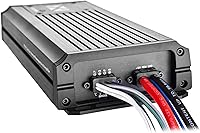
  • The wiring harness quality has drawn occasional criticism, suggesting aftermarket connectors may be worth considering.
  • No onboard Bluetooth or digital signal processing means added cost if you want those features.
  • Running all four channels at peak draw simultaneously in a confined space can stress thermal performance.
  • At this price point, the lack of updated installation guides or any companion app feels like a missed opportunity.
  • Bridged mode reduces the channel count to two, which limits flexibility for complex multi-zone speaker layouts.
  • The product design has not seen a major hardware revision since launch, which may give some buyers pause.

Ratings

The scores below reflect our AI-driven analysis of verified global buyer reviews for the NVX MVPA4 4-Channel Marine Amplifier, with spam, bot-submitted, and incentivized feedback actively filtered out before scoring. Each category is rated on real-world performance patterns drawn from owners across marine, motorcycle, ATV, and UTV applications. Both the standout strengths and the recurring frustrations are represented transparently — nothing has been smoothed over to flatter the product.

Waterproof Protection
91%
Owners consistently report that the IPX67 rating holds up in practice, not just on paper. Boaters running in rough chop and ATV riders caught in downpours describe the unit surviving conditions that would have killed a standard amp. The conformal-coated PCB appears to genuinely resist corrosion over multiple seasons.
A small number of reviewers note that while the amp itself survives moisture, the wiring connections at the terminals are only as waterproof as the installer makes them — and the included hardware does not always make that easy. The protection is real but demands a careful, fully sealed installation to realize its full potential.
Power Accuracy
88%
CEA-2006 compliance is a meaningful differentiator here, and buyers who understand what that certification means consistently reward it. The rated output figures match what owners actually measure when they bench-test or run the amp against calibrated speakers, which builds genuine trust in the spec sheet.
Some buyers coming from inflated-wattage budget amps express initial disappointment that the honest numbers feel less impressive on paper, even though they deliver equivalent or better real-world performance. The amp will not outperform its ratings, which is exactly the point — but managing expectations upfront matters.
Build Quality
84%
The four-layer PCB and surface-mount component design hold up well under vibration and temperature swings, which is exactly what matters in powersports and marine contexts. Owners who have had the unit for multiple seasons regularly note that it continues performing without degradation in sound quality or connectivity.
The wiring harness and terminal hardware have drawn the most consistent criticism in this category. Several owners describe the connectors as feeling underbuilt relative to the rest of the unit, and a few have replaced them with aftermarket alternatives as a precaution against corrosion at the junction points.
Sound Quality
83%
Across a wide range of speaker pairings — from marine coaxials on pontoon boats to component sets on motorcycle fairings — owners praise the clarity and balance of the output at moderate to high volumes. The onboard crossover adds real value here, allowing users to tailor the sound without external processing.
At maximum volume for sustained periods, a handful of reviewers notice a subtle compression in dynamics that suggests the amp is working near its thermal limits. This is not a distortion issue so much as a headroom issue — most users will never push it that far, but it is worth knowing for those who do.
Compact Form Factor
92%
This is where the MVPA4 genuinely stands apart from competitors in its class. Motorcycle builders cite it as one of the only four-channel amps that actually fits inside a fairing without modification, and UTV riders appreciate being able to tuck it into a storage compartment without losing usable space.
The compact size does come with a trade-off: terminal spacing is tighter than on a full-size amp, which makes wiring in confined installations fiddlier than it needs to be. Owners with larger hands or thicker gauge wiring describe the connector area as cramped and occasionally frustrating during initial setup.
Thermal Management
67%
33%
Under normal operating conditions — moderate volume, reasonable ventilation, typical marine or powersports duty cycles — the amp runs warm but stable. Owners who mount it with adequate airflow and do not push all four channels to their limits simultaneously report no thermal shutdowns across full-day use.
Heat management is the most cited functional complaint in the review pool. Sustained high-volume use in sealed or poorly ventilated mounting locations triggers thermal protection shutdowns in a notable minority of cases. This is a real design constraint, not an installation anomaly, and it should factor into mounting location decisions.
Installation Ease
63%
37%
The top-mounted controls and multi-input design simplify the initial wiring layout, and owners with prior amp installation experience generally describe the process as straightforward. The bass remote connection is plug-and-play, and the crossover controls are clearly labeled and easy to reach once the unit is mounted.
The included documentation is consistently described as minimal — adequate for someone who has done this before, but not enough to guide a first-timer through gain structure, crossover setup, or impedance matching. Several owners recommend downloading a third-party wiring guide or watching installation videos before starting.
Value for Money
76%
24%
For buyers who specifically need waterproof four-channel amplification with honest power ratings in a compact package, the MVPA4 occupies a relatively uncrowded segment where the price-to-capability ratio is defensible. Long-term owners who have avoided replacing the unit after multiple seasons view the upfront cost as justified.
Buyers comparing the raw spec sheet against dry-use car audio amps at a similar price point will find the dollar-per-watt math unfavorable. The premium is real — you are paying for IPX67 protection, CEA compliance, and compact engineering — but it is not the right value proposition for every buyer or every installation scenario.
Crossover Functionality
79%
21%
The variable high-pass and low-pass crossover spanning 40 to 400 Hz is a genuinely useful range for most marine and powersports speaker configurations. Owners appreciate not needing a separate signal processor to achieve basic speaker protection and bass management, which also simplifies the overall wiring layout.
The crossover is functional but not surgical — audiophile-level precision tuning is outside its scope. Buyers who want steep slopes, parametric EQ, or time alignment will need to add an external DSP regardless. For basic multi-speaker setups it is more than adequate; for complex builds it becomes a limiting factor.
Bass Remote Control
74%
26%
Owners who mount the amp in a hard-to-reach location — under a seat, behind a panel, inside a fairing — find the bass remote knob a practical convenience rather than a novelty. Adjusting low-end response on the water or on the trail without reaching for a buried amp is a legitimate quality-of-life improvement.
The remote is a simple level knob, not a DSP-linked control, so its effect varies depending on how the onboard crossover is set. A few owners describe the range of adjustment as narrower than expected, and the control cable length may not reach the preferred mounting position in all vehicle configurations without an extension.
Input Flexibility
81%
19%
Supporting both RCA and Aux inputs without requiring adapters covers the connection types used by virtually all marine and powersports head units currently on the market. This gives the MVPA4 broad compatibility out of the box, which matters when you are sourcing components across brands and model years.
There is no high-level speaker input option, meaning vehicles with head units that lack preamp outputs require an add-on line output converter — an extra cost and extra wiring step that some buyers do not anticipate. It is a common amp limitation, but worth flagging for buyers upgrading from OEM factory radio setups.
Long-Term Durability
82%
18%
With a launch date of 2013 and consistent sales across more than a decade, there is genuine multi-season ownership data available — which is unusual for this product category. Owners who have run the unit through three or more seasons in saltwater environments report no significant degradation when the installation was properly sealed.
The product has not seen a confirmed hardware revision since launch, meaning any design-level trade-offs baked in at the time of original engineering remain present today. While this is not a dealbreaker for most buyers, it does mean the unit lacks features — onboard DSP, Bluetooth control — that newer competing designs have introduced since 2013.
Protection Circuits
85%
Short circuit, thermal, and voltage protection all appear to function as designed based on owner accounts. Several reviewers describe the amp recovering cleanly from accidental wiring faults during installation, which suggests the protection circuits are robust rather than cosmetic.
The thermal protection, while effective, activates noticeably quickly in high-heat scenarios — which some owners interpret as the amp being overly conservative rather than genuinely overheating. In practice, this means the unit will protect itself before damage occurs, but it can interrupt listening sessions in demanding thermal conditions.

Suitable for:

The NVX MVPA4 4-Channel Marine Amplifier is an ideal fit for anyone building or upgrading a serious audio system in a water-exposed or vibration-heavy environment. Boaters running pontoons, bass boats, or center consoles will appreciate the genuine IPX67 protection that holds up through spray, rain, and humidity without babying the unit. ATV, UTV, and side-by-side riders who have struggled to find an amp small enough to tuck under a seat or behind a panel will find the compact footprint genuinely practical — not just a marketing claim. Motorcycle builders putting together a multi-speaker fairing setup also land squarely in this amp's wheelhouse, especially where space is tight and every cubic inch counts. Powersports enthusiasts who have been burned by inflated peak-watt marketing will respect the CEA-2006 compliance, which means the rated output is what you actually get. If you are stepping up from a stock marine head unit and want real crossover control and per-channel tuning without adding a separate processor, this compact powersports amplifier covers that ground cleanly.

Not suitable for:

The NVX MVPA4 4-Channel Marine Amplifier is not the right tool for every audio build, and being honest about that matters. Buyers expecting to run it at sustained high volume in a sealed, poorly ventilated enclosure should know that heat management has come up in user feedback — airflow around the unit is not optional, it is a real installation consideration. Anyone looking for a general-purpose car audio amplifier will find this marine amp over-specified for dry indoor use and potentially over-priced compared to non-waterproof alternatives with similar output. Installers who need detailed, hand-holding documentation may find the included materials thin; this unit assumes a baseline level of experience with gain structure and crossover setup. Buyers chasing very high sustained power for large speaker arrays — say, six or eight drivers — will hit the ceiling of what four channels can realistically deliver here. Finally, anyone on a strict entry-level budget should weigh whether the waterproofing premium aligns with their actual exposure conditions, since paying for IPX67 protection makes little sense in a fully enclosed, dry install.

Specifications

  • Total RMS Power: The amplifier delivers 600W total RMS output, rated and verified under CEA-2006 standards for honest, real-world accuracy.
  • Channel Configuration: Four fully independent channels support operation at 4Ω, 2Ω, or in bridged mode at 4Ω for two-channel output.
  • Power Per Channel: Output is rated at 100W per channel at 4Ω, 150W per channel at 2Ω, and 300W per channel when bridged at 4Ω.
  • Waterproof Rating: The unit carries an IPX67 rating, meaning it is protected against both dust ingress and temporary submersion in water up to one meter.
  • Dimensions: The amplifier measures 9.7″ wide × 4.4″ long × 1.7″ tall, making it one of the more compact four-channel marine amps available.
  • Weight: The unit weighs 3.13 pounds, light enough for flexible mounting without significant structural reinforcement requirements.
  • PCB Construction: The four-layer PCB uses surface mount components and is conformal coated to resist corrosion, moisture, and vibration over time.
  • Crossover Range: A variable high-pass and low-pass crossover is adjustable from 40 Hz to 400 Hz, allowing speaker-level tuning without an external processor.
  • Frequency Response: The amplifier handles a full audio range of 20 Hz to 20 kHz, covering the complete spectrum of audible frequencies.
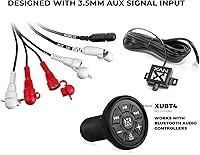
  • Input Types: Both RCA and auxiliary (Aux) inputs are supported, providing compatibility with a wide range of marine and powersports head units.
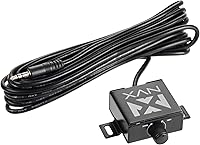
  • Bass Control: A dedicated bass remote control knob is included in the box, allowing real-time low-frequency adjustment from the driver or operator position.
  • Protection Systems: Onboard protection circuits guard against short circuit faults, thermal overload, and voltage irregularities to protect both the amp and connected speakers.
  • Status Indicators: Power and protection LED indicators are mounted for at-a-glance monitoring of operational status during use.
  • Compliance Standard: The MVPA4 is CEA-2006 compliant, which independently verifies that published power figures reflect actual measured performance rather than peak estimates.
  • Mounting Type: The unit is designed for surface mounting and fits standard marine, motorcycle, and powersports installation configurations.
  • Available Since: This model was first made available in October 2013, giving it over a decade of real-world field data across marine and powersports applications.
  • Brand and Model: Manufactured by NVX under model number MVPA4, this amp sits within the company's Marine-V Series lineup of outdoor audio components.
  • Sales Ranking: As of the most recent data available, the unit holds the #14 position in the Marine Amplifiers category on Amazon with a 4.1-star average from 157 ratings.

Related Reviews
NVX VAD10004 v2 4-Channel Amplifier
87%
88%
Sound Quality
94%
Power Output
91%
Build Quality & Durability
85%
Ease of Installation
89%
Versatility
More
Pyle PLMRMP4A 4-Channel Marine Amplifier
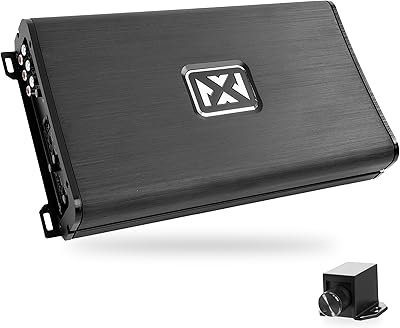
64%
61%
Value for Money
53%
Build Quality
67%
Waterproofing
58%
Power Output
79%
Ease of Installation
More
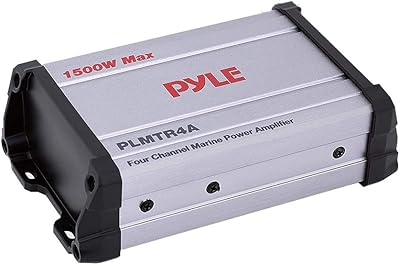
Pyle PLMTR4A 4-Channel Marine Amplifier
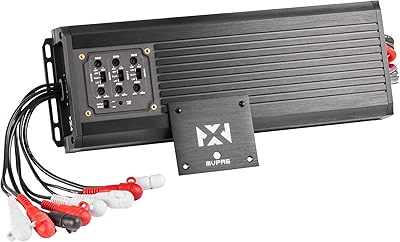
69%
78%
Value for Money
73%
Weatherproof Durability
41%
Power Accuracy
58%
Build Quality
86%
Installation Ease
More
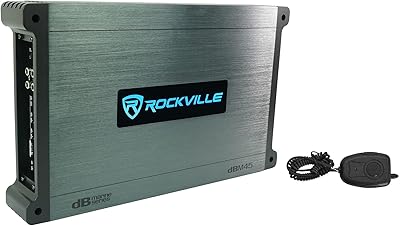
Rockville DBM45 4-Channel Marine Amplifier
71%
78%
Sound Quality
74%
Build Quality
71%
Waterproofing
69%
Power Delivery
57%
Thermal Management
More
NVX MVPA6 6-Channel Marine Amplifier
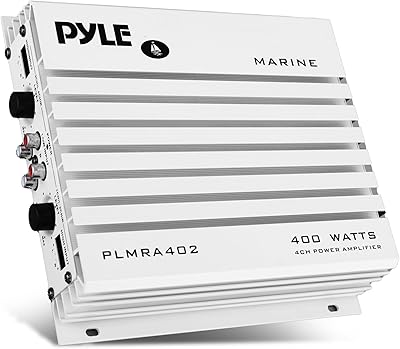
77%
91%
Weatherproofing & Durability
93%
Compact Form Factor
67%
Real-World Power Output
74%
Installation Experience
83%
Audio Clarity & Fidelity
More
Pyle PLMRA402 4-Channel Marine Amplifier
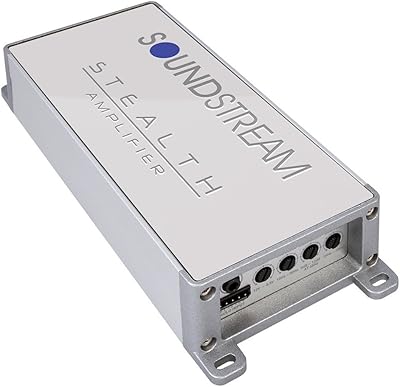
69%
83%
Value for Money
81%
Ease of Installation
67%
Sound Quality
49%
Power Accuracy
62%
Build Quality
More
Pyle PLMRMB4CB 4-Channel Marine Amplifier
67%
78%
Value for Money
54%
Power Output
63%
Bluetooth Connectivity
61%
Water Resistance
58%
Build Quality
More
Soundstream SM4.1000D 4-Channel Marine Amplifier
87%
93%
Power Output
88%
Sound Quality
90%
Build Quality
91%
Weather Resistance
87%
Ease of Installation
More
Velex VX-505 Marine Bluetooth Amplifier 4-Channel
86%
88%
Sound Quality
91%
Durability
85%
Ease of Installation
94%
Waterproof Rating
82%
Power Output
More
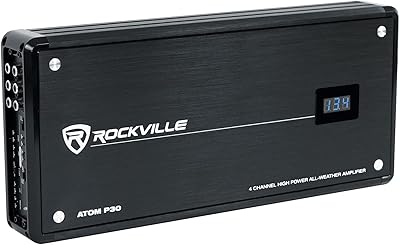
Rockville ATOM P30 2400W 4-Channel Marine Amplifier
84%
94%
Power Output
90%
Build Quality
88%
Waterproof Performance
80%
Ease of Installation
85%
Sound Quality
More

FAQ

IPX67 is a defined international standard, not a loose claim. It means the unit has been tested to withstand submersion in up to one meter of water for 30 minutes. That said, it is not designed for continuous underwater use — think heavy rain, splash, and accidental brief submersion, not permanent mounting below the waterline.

In most cases, yes. The amp accepts both RCA and Aux inputs, which covers the output options on the vast majority of marine and powersports head units on the market. If your head unit only has speaker-level outputs with no RCA, you would need a line output converter between the two.

The footprint is 9.7″ × 4.4″ × 1.7″, so it fits in spaces where conventional amps cannot. That said, leave some breathing room around it — airflow matters for thermal management, especially if you run it hard for extended periods. A sealed, zero-clearance install is asking for trouble at high volume.

It is one of the more practical choices for that application specifically because of its slim profile and genuine waterproofing. Many four-channel amps are simply too large for fairing cavities. Just make sure your wiring is clean and the unit has some airflow — motorcycle installs can trap heat if you are not careful.

The CEA-2006 certification is the key here. That standard requires power figures to be measured under defined, honest test conditions — not the inflated peak ratings you see on budget amps. So 600W total RMS on this unit is a legitimate figure, not a best-case scenario number.

If you have done a basic car or marine audio install before — run power wire, set gains, configure a crossover — you should be fine. The controls are on top and reasonably intuitive. Where people run into friction is documentation: the included manual is minimal, so having some prior experience or supplemental resources helps.

Yes, bridging two channels gives you 300W into a 4Ω load, which is workable for a single subwoofer in a marine or powersports context. Just make sure your sub is rated for the power level and wired to present the correct impedance — bridging into a 2Ω sub load is not supported and risks damaging the amp.

The conformal-coated PCB is specifically designed to resist the corrosive effects of salt air and moisture. Long-term owner feedback — and this unit has been on the market since 2013, so there is actual multi-year data out there — is generally positive on durability in saltwater contexts, provided the wiring connections are properly sealed and the unit is not mounted in standing water.

It functions as a straightforward level control for the low-frequency output, which is useful on a boat or ATV where ambient noise changes constantly and you want to adjust bass without reaching behind a panel. It is not a sophisticated DSP tool, but for what it does — quick, intuitive bass adjustment — it works reliably.

The design has stayed consistent, which is a double-edged point. On one hand, it means the product has not kept pace with modern features like Bluetooth control or onboard DSP. On the other hand, a decade of sales at a consistent market rank suggests the core design does its job well and holds up. If your priority is waterproof, compact, honest-powered amplification, the age of the platform is not a meaningful drawback.

Where to Buy