Overview

The Blaupunkt AMP1704P 4-Channel Car Amplifier carries a name that longtime car audio fans will recognize — Blaupunkt has roots going back to the early days of in-car entertainment, and while the brand now operates firmly in the budget-to-mid segment, that heritage still means something to buyers who want a familiar name on their gear. This amp targets drivers tired of their factory sound system's thin, underpowered output. One thing worth flagging upfront: the 1700W peak figure splashed across the listing is marketing math. Real-world continuous power sits at 110W per channel into 4 ohms — still plenty for most street setups, but a very different story from what that headline number implies.
Features & Benefits

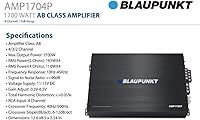
Class AB is a practical choice for a car amp at this price point — it runs cooler than pure Class A and sounds warmer than most Class D designs, which matters when you're pushing door speakers all day. The AMP1704P supports 4/3/2-channel configurations, so you can run four speakers, or bridge two channels to drive a subwoofer alongside a stereo pair. That kind of flexibility is genuinely useful. The frequency response stretches from 10Hz to 45kHz, and the signal-to-noise ratio clears 90dB, keeping things quiet at normal listening volumes. The adjustable gain input — ranging from 0.3V to 6.5V — means it plays nicely with a wide range of head units, including older OEM decks.

Best For

This 4-channel amplifier hits a sweet spot for two types of buyers: the first-time installer who wants a straightforward setup without a steep learning curve, and the budget-conscious driver who needs real improvement over factory audio without spending on a boutique rig. The compact dimensions — 12.6 by 8.5 inches — make it easier to tuck behind a seat or under a cargo panel in smaller cars and hatchbacks. It also suits anyone running a simple system: four door speakers, or two speakers plus a bridged mono sub. If you are chasing audiophile-grade sound, this Blaupunkt amp is not your destination. But as an honest entry point into aftermarket audio, it fits the brief well.

User Feedback

Buyers who go in with realistic expectations tend to come away satisfied. The most consistent praise centers on easy installation — many first-timers report getting it running without professional help, and the jump in clarity over stock speakers is described as immediately noticeable. The sticking point for some is the power marketing: a handful of reviewers express frustration after expecting 1700W in any meaningful sense. Build quality gets mixed remarks — it feels solid enough out of the box, but long-term durability over several years of heavy use is harder to confirm from available feedback. Warranty and support experiences appear average for this category, with no widespread issues standing out.

Pros

  • Class AB design runs cooler and sounds more natural than budget Class D alternatives at similar price points.
  • Channel flexibility lets you run four speakers or bridge channels for a subwoofer without buying a second amp.
  • The compact 12.6 by 8.5-inch footprint fits under seats and in tight trunk corners most larger amps cannot.
  • Variable gain input from 0.3V to 6.5V makes it compatible with a wide range of aftermarket and OEM head units.
  • First-time installers consistently report getting the Blaupunkt AMP1704P 4-Channel Car Amplifier up and running without professional help.
  • Signal-to-noise ratio above 90dB keeps background hiss minimal at everyday listening volumes.
  • The improvement over factory audio is immediately noticeable — fuller bass, cleaner mids, better overall presence.
  • Blaupunkt brand recognition lowers the perceived risk for buyers new to the aftermarket audio space.
  • At its price tier, the value-to-performance ratio is hard to argue with for a simple four-speaker setup.

Cons

  • The 1700W headline power figure is peak-only; continuous RMS output is dramatically lower and frequently misleads buyers.
  • No RCA cables or power wiring included — budget for additional accessories before your install day.
  • Long-term durability after a year or more of heavy use has drawn criticism from multiple reviewers.
  • Bridging instructions in the manual are vague enough that beginners risk impedance mismatches without outside research.
  • Thermal shutdowns have been reported when the amp is installed in poorly ventilated or very hot enclosures.
  • At higher volumes, stereo imaging softens and some coloration becomes noticeable — it has a clear ceiling.
  • Ground loop interference was reported by users who did not invest in quality RCA cables or careful routing.
  • No built-in crossover flexibility beyond gain adjustment, so precise frequency control requires an external processor.

Ratings

The scores below for the Blaupunkt AMP1704P 4-Channel Car Amplifier were generated by our AI engine after processing verified purchase reviews from buyers worldwide, with spam, bot-submitted, and incentivized feedback actively filtered out before any scoring was applied. Each category reflects what real drivers experienced after installation — not spec-sheet promises — and both the genuine strengths and the recurring frustrations are weighted transparently into every number you see.

Value for Money
81%
19%
For a budget-tier car amp, most buyers feel they got more than their money's worth. Drivers upgrading from stock head unit output reported a clear and immediate improvement in volume and clarity without breaking the bank.
A segment of buyers felt misled by the 1700W peak power marketing and reconsidered the value after realizing actual continuous output is far lower. For those who did the research beforehand, the price-to-performance ratio holds up; for those who didn't, it felt like a bait-and-switch.
Ease of Installation
84%
First-time installers consistently praised how straightforward the wiring layout is. The clearly labeled terminals and flexible gain input range make it accessible even without prior experience, and many buyers got it running in an afternoon without professional help.
The included documentation could be more detailed for true beginners. A few users reported confusion around bridging channels for subwoofer use, wishing the manual walked through real-world wiring scenarios rather than just specs.
Sound Quality
72%
28%
Compared to factory audio, the improvement is real and noticeable — fuller mids, tighter bass response, and better overall separation at moderate volumes. For everyday commuters who just want music that sounds alive, this 4-channel amplifier delivers that step up convincingly.
Audiophiles or anyone coming from a higher-end amp will notice the ceiling fairly quickly. At higher volumes, some coloration creeps in and stereo imaging loses definition. It is competent for its tier, but not a unit that rewards critical listening.
Build Quality
63%
37%
Out of the box, the chassis feels reasonably solid and the heatsink finish looks clean. For casual daily use in a controlled environment, most buyers reported no issues in the short term.
Long-term durability is a genuine concern flagged by multiple reviewers. Some units showed signs of wear or thermal issues after a year or more of consistent use, and the internal component quality does not inspire confidence for high-demand applications.
Power Accuracy & Transparency
44%
56%
The amp does deliver usable, real-world power — 110W per channel into 4 ohms is honest performance for the category, and at typical listening volumes it handles four speakers without strain.
The 1700W peak figure is the single most criticized aspect across all user feedback. Buyers who took that number at face value felt genuinely misled, and it remains a consistent source of one-star reviews from otherwise satisfied users who simply expected more headroom.
Channel Flexibility
78%
22%
The ability to run this amp in 4-channel, 3-channel, or bridged 2-channel mode is a practical advantage that many buyers took advantage of. Running door speakers on three channels and bridging the fourth to a sub is a common and well-reviewed configuration.
Bridging instructions are vague in the documentation, and a handful of users reported impedance mismatches when bridging without doing prior research. The flexibility is real, but it needs cleaner guidance to be fully accessible for beginners.
Thermal Management
67%
33%
Under normal conditions and at moderate volumes, the heatsink does its job without the amp going into protection mode. Mounted in a reasonably ventilated spot, most users reported stable operation during daily drives.
In tight, poorly ventilated enclosures or during extended high-volume sessions in hot climates, thermal shutdowns have been reported. The amp runs noticeably warm, and installation location matters more with this unit than with heavier-built competitors.
Signal-to-Noise Performance
76%
24%
At everyday listening levels, background noise is minimal and the 90dB signal-to-noise rating holds up in practice. Buyers using quality RCA cables reported a clean, quiet signal that let the music take center stage.
Ground loop hiss was reported by some users, though this is often an installation issue rather than a fault of the amp itself. Buyers who skimped on cable quality or routing experienced more interference than those who invested in proper shielding.
Frequency Response
74%
26%
The 10Hz to 45kHz response range means this amp is not artificially limiting what your speakers can do. Bass extension felt natural to most users running it with a subwoofer, and high-frequency detail was noticeably better than factory amplification.
At the extremes of the frequency range, performance thins out slightly compared to higher-grade amps. This is expected at this price tier, but users running high-sensitivity tweeters noted a subtle softness in the upper registers at louder volumes.
Compatibility with Head Units
79%
21%
The variable gain input ranging from 0.3V to 6.5V gives this amp a wide compatibility window. Buyers using aftermarket head units and even some factory OEM decks reported dialing in a clean signal without issue.
Users with very low-output OEM head units occasionally had to push the gain higher than comfortable, introducing more noise into the signal path. Pairing with a line output converter helped in those cases, but that is an added step not reflected in the base setup.
Physical Footprint
82%
18%
At 12.6 by 8.5 inches and just over 2 inches tall, this is a genuinely compact unit that fits under seats, in trunk corners, or behind rear panels in smaller cars. Buyers with limited mounting real estate appreciated having options.
The 6.8-pound weight is not an issue for most installs, but the surface-mount design means you need a flat, stable surface. A couple of users found the mounting tabs awkward in very cramped spaces where angled access was required.
Brand Reputation & Trust
69%
31%
The Blaupunkt name carries real weight with buyers who grew up seeing it in cars across Europe and North America. That brand recognition lowers the perceived risk of trying a budget amp, which matters to first-time buyers.
Blaupunkt today is a licensed brand applied to products quite different from its heritage engineering. Informed buyers know this, and some feel the name carries more nostalgia than it does quality assurance. Expectations set by legacy reputation can lead to disappointment.
Gain & Tuning Controls
71%
29%
Having an adjustable gain on a sub-hundred-dollar amp is genuinely useful. Buyers were able to match the amp's sensitivity to their source unit without needing external processors, which simplifies the whole system.
The tuning controls are functional but basic. There is no built-in crossover flexibility beyond what the gain allows, and users wanting precise frequency management had to add an external processor, which adds cost and complexity to what was supposed to be a simple setup.
Packaging & Out-of-Box Experience
73%
27%
The amp arrived well-packaged in the majority of reported cases, with no transit damage flagged as a widespread issue. Basic hardware is included, and the unit looks presentable enough that buyers felt they received something reasonably premium on first unboxing.
Accessories are minimal — do not expect RCA cables or power wiring in the box. A few buyers were caught off guard by how little is included, requiring an immediate additional purchase before installation could begin.

Suitable for:

The Blaupunkt AMP1704P 4-Channel Car Amplifier is a practical match for drivers who are done tolerating the flat, lifeless output of a factory-installed system and want a real upgrade without committing to a complex, expensive build. It works especially well for beginners tackling their first aftermarket install — the adjustable gain range, flexible channel configuration, and straightforward terminal layout make the learning curve manageable. Owners of compact cars, hatchbacks, or any vehicle with limited under-seat or trunk space will appreciate how easily this 4-channel amplifier tucks into tight spots. It also suits anyone who wants a single unit to handle both door speakers and a subwoofer, since bridging two channels into mono is a supported and commonly used configuration. Budget-conscious buyers who recognize that 110W per channel of continuous power is genuinely useful for everyday listening — and who are not chasing competition-level output — will find this amp delivers exactly what it promises at its price point.

Not suitable for:

Anyone expecting the Blaupunkt AMP1704P 4-Channel Car Amplifier to deliver anywhere near 1700W of usable power should stop and reconsider before purchasing — that figure is peak marketing math, and the real continuous output is a fraction of it. Enthusiasts building a high-output system for loud, competition-style listening or long highway drives at high volume will quickly find the ceiling and feel limited by what this amp can sustain. If long-term durability is a priority — say, you drive in a hot climate, push the system hard daily, or plan to keep the build for several years — the build quality at this price tier introduces real risk that more robustly constructed amps at a higher cost would not. Audio purists or anyone migrating from a mid-range or premium amplifier will likely notice the difference in sound staging and high-volume composure almost immediately. This 4-channel amplifier is also not the right call for anyone who does not want to source additional wiring and cables separately, since the box includes only the bare minimum to get started.

Specifications

  • Amplifier Class: The AMP1704P operates in Class AB, a design that balances thermal efficiency with audio fidelity, making it better suited for extended daily use than pure Class A designs.
  • Channel Config: Supports 4-channel, 3-channel, and 2-channel bridged operation, giving installers flexibility to power door speakers, a subwoofer, or a combination of both from a single unit.
  • Peak Power: Maximum peak output is rated at 1700W total, a figure that reflects instantaneous burst capacity rather than sustained, continuous listening power.
  • RMS at 4 Ohms: Continuous RMS output is 110W per channel into a 4-ohm load, which represents the real-world power available during normal listening conditions.
  • RMS at 2 Ohms: When driven into a 2-ohm load, continuous RMS output increases to 165W per channel, useful for lower-impedance speaker configurations.
  • Frequency Response: The amplifier reproduces audio across a 10Hz to 45kHz range, covering deep sub-bass extension through the upper limits of high-frequency detail.
  • Signal-to-Noise: Signal-to-noise ratio is rated at 90dB or above, which translates to a clean, low-hiss background at moderate to high listening volumes.
  • Gain Input Range: The variable gain input accepts signals between 0.3V and 6.5V, providing broad compatibility with aftermarket head units and some factory OEM source units.
  • Voltage Supply: The unit operates on a DC voltage supply between 11V and 15V, compatible with standard 12V automotive electrical systems.
  • RCA Inputs: Four RCA input channels are provided, allowing direct connection from a head unit with pre-amp outputs without the need for a line output converter in most setups.
  • Dimensions: The amplifier measures 12.6 by 8.5 by 2.24 inches, a compact footprint that fits under seats or in shallow trunk panels in most passenger vehicles.
  • Weight: The unit weighs 6.8 pounds, light enough for single-person installation without requiring additional mounting hardware beyond what is included.
  • Mounting Type: Surface mount installation is required, meaning the unit needs to be secured to a flat, stable surface using its integrated mounting tabs.
  • Certification: The AMP1704P carries FCC certification, confirming it meets United States federal standards for electromagnetic interference and radio frequency emissions.
  • Brand Origin: Blaupunkt is a German-heritage audio brand with decades of history in the car audio segment, now operating as a licensed brand across consumer electronics categories.
  • Package Dimensions: The shipping box measures 16.14 by 9.61 by 3.03 inches, relevant for buyers planning to ship or store the unit before installation.
  • UPC: The UPC for this unit is 815592027041, which can be used to verify authenticity or cross-reference the listing across different retail channels.

Related Reviews
Blaupunkt AMP1904D 4-Channel Car Amplifier
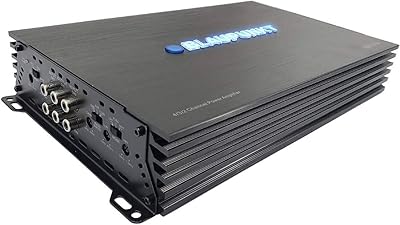
70%
81%
Value for Money
47%
Power Output Accuracy
74%
Sound Clarity
83%
Ease of Installation
61%
Thermal Management
More
Blaupunkt AMP1404 4-Channel Car Amplifier
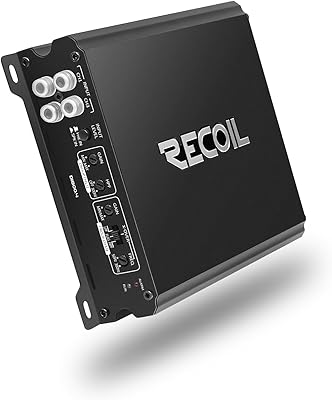
74%
83%
Value for Money
76%
Sound Quality
68%
Power Output
58%
Heat Management
88%
Ease of Installation
More
Recoil DI800.4 4-Channel Car Audio Amplifier
83%
88%
Sound Quality
92%
Power Output
65%
Thermal Management
84%
Build Quality
91%
Ease of Installation
More
Planet Audio AC2400.4 4-Channel Car Amplifier
84%
95%
Power Output
89%
Sound Clarity
87%
Bass Performance
82%
Ease of Installation
65%
Thermals/Heat Management
More
Recoil DI550.4 4-Channel Car Audio Amplifier
74%
91%
Value for Money
78%
Power Output
86%
Ease of Installation
74%
Sound Quality
67%
Build Quality
More
Planet Audio PL1600.4 4-Channel Car Amplifier
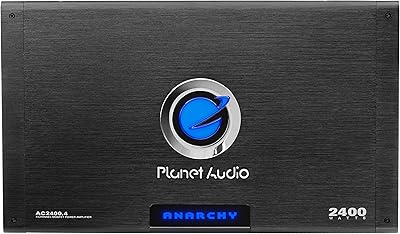
72%
88%
Value for Money
84%
Ease of Installation
74%
Sound Quality
58%
Power Output (Real-World)
61%
Build Quality
More
Recoil REA600.4 4-Channel Car Audio Amplifier
84%
89%
Audio Performance
91%
Ease of Installation
85%
Sound Quality at High Volumes
62%
Heat Management
90%
Power Output
More
Planet Audio AC1600.4 Anarchy Series 4-Channel Car Amplifier
82%
94%
Power Output
88%
Sound Quality
70%
Ease of Installation
92%
Value for Money
85%
Build Quality
More
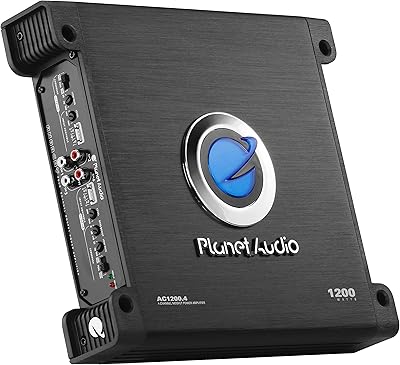
Planet Audio AC1200.4 4-Channel Car Amplifier
73%
88%
Value for Money
67%
Power Output
83%
Installation Ease
74%
Sound Quality
61%
Build Quality
More
Soundfy SA 400.4 4-Channel Car Amplifier
71%
78%
Value for Money
72%
Sound Quality
63%
Power Output
58%
Build Quality
81%
Thermal Management
More

FAQ

The honest answer is 110 watts per channel into 4 ohms, or 165 watts per channel into 2 ohms — those are the continuous RMS figures that matter for everyday listening. The 1700W number on the box is a peak rating that reflects a momentary burst under ideal lab conditions, not something you will ever hear sustained during actual music playback. Going in with that understanding will save a lot of frustration.

Yes, and this is actually one of the most common ways buyers use this 4-channel amplifier. You can run two channels to your front or rear speakers and bridge the remaining two channels together to drive a mono subwoofer. Just make sure your sub's impedance is compatible with the bridged output before wiring it up.

For most beginners, yes. The terminal layout is clearly labeled, the gain adjustment is forgiving enough to dial in without precision equipment, and the flexible channel configuration means you are not locked into one wiring scenario. The main thing to sort out ahead of time is sourcing the correct power and ground wiring gauge, since nothing beyond the amp itself is included in the box.

In many cases, yes, but it depends on your specific vehicle. If your OEM head unit has RCA pre-amp outputs, you can connect directly. If it does not — which is common in factory setups — you will need a line output converter to step down the speaker-level signal to RCA level before it reaches the amp. That is an inexpensive add-on but an important one to budget for.

For an amp in this power range, a 4-gauge power and ground wire is typically the right starting point, with an inline fuse of around 40 to 60 amps placed close to the battery. That said, always cross-reference with the specific installation instructions included in the box, since manufacturer recommendations take precedence over general guidance.

This 4-channel amplifier does generate noticeable heat during extended use, which is normal for Class AB designs. Where you mount it matters — avoid fully enclosed spaces with no airflow, like a sealed compartment with no ventilation. Under a seat with some breathing room, or in a trunk with space around the unit, works well for most installations.

Yes, the amp supports 2-channel bridged operation, which would give you two higher-power outputs for driving two subwoofers or a stereo sub configuration. Just be mindful of impedance — bridging effectively halves the load the amp sees, so running 4-ohm subs in a bridged config presents a 2-ohm load per channel, which is within spec for this unit.

The amp itself and basic mounting hardware are included, but do not expect RCA cables, power wire, ground wire, or speaker wire to be in the package. Most buyers need to purchase a complete amp wiring kit separately before they can complete the installation. It is worth picking one up before your install day so you are not waiting on a second delivery.

The difference is real and noticeable for most drivers. Factory amplifiers are built to minimum cost specs, and even a modest aftermarket amp like this one tends to deliver more dynamic range, better bass control, and cleaner midrange at higher volumes. It is not a high-end audiophile experience, but compared to stock, most people notice the improvement within the first few minutes of listening.

It is reasonable for the price tier, but not exceptional. For casual daily driving in a temperate climate, most buyers report no issues in the short to medium term. Where concerns tend to surface is after a year or more of hard use, particularly in hot environments. If you plan to push the system regularly or live somewhere with extreme summer heat, it is worth factoring that into your decision.

Where to Buy