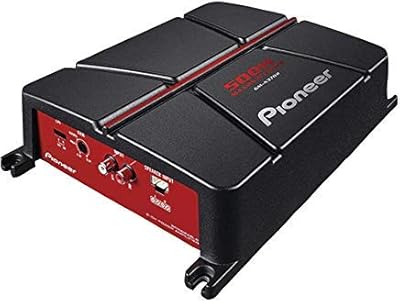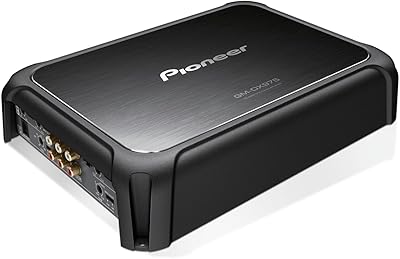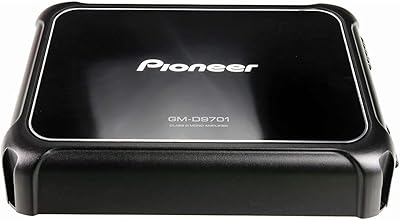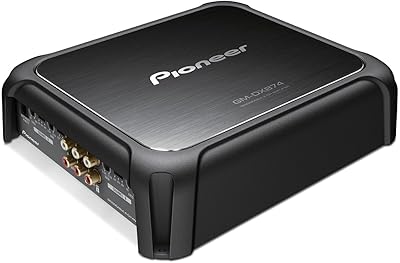

Overview

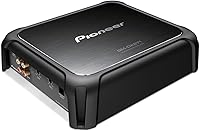
The Pioneer GM-DX871 sits comfortably within Pioneer's performance-oriented GM series — a lineup that has earned genuine respect among car audio builders over the years. This mono amp targets drivers who want real bass impact without dedicating half their trunk to equipment. It occupies a sensible mid-range price position, competing honestly against stripped-down budget options while staying well clear of boutique-tier pricing. Critically, it carries a CEA-2006 compliant rating, which means the power figures aren't inflated marketing numbers. That kind of verifiable spec matters when you're planning a build around specific power requirements.

Features & Benefits

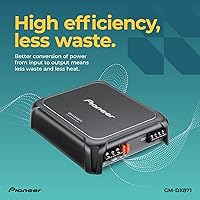
The headline number is 1,600 watts max output, but honest buyers should focus on the RMS power rating — that's what the amp sustains continuously, and it tells you far more about real-world performance than peak figures ever will. Class-D design keeps heat manageable and draws power efficiently from your vehicle's electrical system. The variable low-pass filter spans 40 to 240 Hz, a genuinely wide range that accommodates different subwoofer types and enclosure designs. The remote bass boost knob mounts within reach of the driver's seat, letting you dial in more punch for certain tracks without ever touching your head unit. The aluminum housing doubles as a passive heat sink throughout.

Best For

This Pioneer subwoofer amplifier makes the most sense for daily drivers who want noticeably better bass but can't commit to a full-size install. Under-seat placement is realistic given the compact footprint, opening up builds that otherwise wouldn't work in smaller cars or crossovers. It's also a natural fit for anyone stepping up from a factory system or a cheap entry-level amp for the first time — brand reliability matters to that buyer, and Pioneer's track record in this category carries real weight. If your plan involves a single subwoofer rather than a multi-driver array, a dedicated mono amp like this is simply the right tool.

User Feedback

With a 4.3-star average built on nearly 1,000 ratings, this mono amp has clearly landed well with most buyers. The most consistent praise centers on compact size accuracy — people say it fits exactly where they hoped it would, which isn't always a given with amps that advertise small dimensions. Installation gets positive marks from experienced installers, though buyers with no prior wiring experience found the process trickier than expected; if that's you, budgeting for a professional install is worth considering. A smaller number of users questioned whether real-world output fully matches the advertised peak figure, which is a fair concern. Long-term durability reports are generally encouraging, with few complaints about units failing after extended use.

Pros

  • CEA-2006 compliant rating means the power figures have real independent credibility behind them.
  • Compact dimensions are accurate and confirmed by buyers — it fits where Pioneer says it will.
  • Class-D efficiency keeps current draw manageable on stock electrical systems during normal use.
  • The variable low-pass filter spans 40 to 240 Hz, covering a genuinely useful range for most subwoofer types.
  • Remote bass boost gives the driver real-time control without touching the head unit mid-drive.
  • Built-in protection circuit monitors voltage, temperature, and current draw to prevent unexpected shutdowns.
  • Pioneer's brand accountability adds peace of mind that off-brand alternatives at this price simply can't offer.
  • The textured aluminum enclosure handles everyday heat dissipation better than plasticky budget rivals.
  • A 4.3-star average across nearly 1,000 ratings reflects consistently solid real-world satisfaction.
  • This mono amp is well-matched for first upgrades — it delivers a clear, noticeable improvement over factory audio.

Cons

  • The gap between peak and RMS power output can mislead buyers who plan their build around the 1,600W headline figure.
  • Included documentation is thin and leaves first-time installers without enough guidance on gain structure and impedance matching.
  • Impedance matching for dual-voice-coil subwoofers is not well addressed in the manual, creating setup confusion.
  • Thermal protection triggers under sustained high-volume use in warm, poorly ventilated install locations.
  • Buyers pushing the amp hard may need upgraded grounding or a capacitor to prevent voltage sag on factory electrical systems.
  • The remote boost knob cable length can fall short in vehicles with longer dashboard-to-trunk runs.
  • Post-purchase customer support experiences have been inconsistent according to buyers who needed assistance.
  • The control dial for the low-pass filter lacks precision detents, making repeatable fine-tuning harder than it should be.

Ratings

The Pioneer GM-DX871 has been scored by our AI system after analyzing verified buyer reviews from multiple global markets, with spam, bot-submitted, and incentivized feedback actively filtered out before any scoring was applied. Ratings reflect the full spectrum of real ownership experiences — not just the highlights — so both consistent strengths and recurring frustrations are represented honestly. Whether this mono amp earns a place in your build comes down to priorities, and these scores are designed to help you weigh exactly that.

Power Output & Performance
78%
22%
Most buyers report satisfying bass impact in daily driving conditions, and the CEA-2006 compliance means the rated figures have at least some independent grounding. For a single subwoofer build in a mid-size vehicle, the output lands in a range that genuinely moves air without straining the electrical system.
The gap between peak and RMS figures causes frustration for buyers who expected continuous high-output performance matching the advertised maximum. Some users running demanding loads felt the amp throttled back more noticeably than expected during extended listening sessions.
Build Quality
83%
The textured aluminum enclosure feels solid and substantial for a mid-range amp — it doesn't have the thin, flexing shell you sometimes find at this price tier. Several buyers noted the housing stays relatively cool even after prolonged use, which speaks to the material doing its job as a passive heat sink.
A handful of reviewers felt the terminal connections and smaller hardware components didn't quite match the quality of the main enclosure. Nothing catastrophic, but a few users reported that connector fits required more care than expected during install.
Compact Form Factor
91%
This is where the GM-DX871 consistently earns genuine praise. Buyers repeatedly confirm the published dimensions are accurate, and many successfully installed it under seats or in tight enclosure spaces where a conventional amp simply wouldn't fit. For smaller vehicles, this is a real, practical advantage.
The compact body does mean less surface area for heat dissipation under sustained high-volume use. A small number of buyers running the amp hard in warmer climates reported occasional thermal protection triggers, suggesting the size trade-off has limits in extreme conditions.
Installation Experience
69%
31%
Experienced car audio installers consistently describe the wiring layout as logical and the labeling as clear enough to work with efficiently. The remote bass boost connection is straightforward, and the overall process is described as no more complicated than comparable amps in this class.
First-time installers ran into real difficulty, particularly around impedance matching and gain setting. Several beginner buyers reported confusion during setup that required outside research or professional help, suggesting the included documentation could do more to guide newcomers through the process.
Low-Pass Filter Range
86%
The 40 to 240 Hz sweep is wider than many competitors at this price point, giving builders genuine flexibility to tune for different subwoofer types and enclosure designs. Buyers running ported versus sealed boxes both found usable settings without feeling boxed in by a narrow adjustment range.
The filter adjustment itself is a simple dial without detents or markings precise enough for methodical fine-tuning. Some audiophile-leaning buyers wanted finer resolution to dial in a specific crossover point, and found the control imprecise compared to higher-end units.
Remote Bass Boost Control
84%
Buyers who use the remote knob regularly appreciate having real-time control over bass levels without reaching for a phone app or head unit menu. It's particularly useful on commutes where bass-heavy tracks need to be tamed for traffic but opened up on open roads.
The remote control cable length works fine in most standard installs, but buyers with longer dashboard-to-trunk runs occasionally found it restrictive. A few users also noted the knob itself feels a bit plasticky relative to the rest of the amp's build.
Thermal Management
74%
26%
Under typical daily driving conditions — moderate volume, average ambient temperatures — the amp handles heat competently. The aluminum chassis does absorb and dissipate warmth reasonably well, and most buyers never encounter the protection circuit triggering under normal use.
Push this amp in a hot trunk during summer with the volume up for extended periods and the protection circuit becomes a recurring visitor. Buyers in hotter climates specifically flagged this as a consistent issue, and it suggests installation location matters more with this unit than with bulkier designs.
Value for Money
81%
19%
Against similarly priced no-name or white-label amps, buyers feel they're paying for genuine brand accountability and a more predictable ownership experience. The feature set — CEA-2006 compliance, variable LPF, remote boost — holds up well when compared line by line against the competition at this tier.
A few buyers felt the gap between this and Pioneer's own higher-end GM series models wasn't large enough to justify stopping here rather than stretching the budget further. For buyers who end up wanting more headroom, the upgrade cost differential can feel like money left on the table.
Long-Term Reliability
77%
23%
The majority of owners reporting back after 12 or more months describe trouble-free operation, which is a meaningful signal at this price level. Pioneer's track record in car audio gives buyers reasonable confidence the unit won't develop mysterious gremlins after the return window closes.
A subset of reviews — not a majority but enough to notice — describe units that developed issues within the first year, including intermittent signal drops and protection circuit lockouts that didn't resolve without a reset. Post-purchase support experiences were described as inconsistent by the affected buyers.
CEA-2006 Compliance
88%
This certification distinguishes the GM-DX871 from the sea of unverified power claims in the car audio space. Buyers who understand what CEA-2006 means tend to view it as a meaningful trust signal, particularly when planning a build where power matching actually matters.
For casual buyers, the compliance rating is largely invisible because the documentation doesn't clearly explain what it means in practice. Several reviewers admitted they didn't understand its relevance until after purchase, suggesting Pioneer could do more to communicate why it matters.
Compatibility with Subwoofers
73%
27%
For standard 4-ohm single-voice-coil builds, pairing is relatively straightforward and the amp delivers consistent results. Buyers running common subwoofer configurations found the power delivery well-matched without needing advanced electrical knowledge to get things working.
Dual-voice-coil configurations and lower-impedance loads created more problems than expected, with some buyers reporting impedance mismatch confusion that led to suboptimal performance or protection circuit activation. The documentation doesn't adequately address these scenarios for less experienced builders.
Electrical System Demand
71%
29%
Under typical factory alternator setups, most daily drivers report stable operation without voltage sag symptoms at moderate output levels. The Class-D efficiency does help keep current draw in check compared to older amplifier topologies, which is a genuine benefit for stock electrical systems.
Buyers pushing the amp harder, particularly those running upgraded subwoofers, found that a stock electrical setup started showing strain. Several reviewers needed a capacitor or upgraded ground wiring to eliminate dimming headlights and voltage dip artifacts under heavy bass hits.
Documentation & Setup Guidance
58%
42%
The physical layout and terminal labeling are intuitive enough that experienced installers rarely need to open the manual. For anyone who has installed an amp before, the learning curve is essentially flat.
The included documentation is thin in a way that genuinely hurts first-time buyers. Gain structure, impedance matching, and subsonic filter setup are not adequately explained, and several beginners reported spending hours troubleshooting issues that clearer instructions could have prevented entirely.
Aesthetic & Visual Design
76%
24%
The textured aluminum finish looks professional in an exposed install scenario, and the overall aesthetic is clean and understated rather than aggressively styled. Buyers who care about visible components in their builds were generally satisfied with how it presents.
There's nothing distinctive enough about the visual design to excite buyers who treat amplifier aesthetics as part of their build's identity. Compared to some rival brands that invest more in distinctive styling and LED accents, this amp reads as functional rather than expressive.

Suitable for:

The Pioneer GM-DX871 is a strong fit for daily drivers who want a meaningful bass upgrade but are working with real-world space constraints — a compact sedan trunk, an SUV with a spare tire taking up real estate, or even an under-seat install in a pickup cab. If you're moving up from a factory system or a cheap entry-level amp and want a recognizable brand behind the hardware, this mono amp sits in a practical sweet spot between throwaway budget options and serious high-end gear. It works best in single-subwoofer builds where a dedicated Class-D mono amp is the right tool from the start, rather than a multi-channel unit pressed into bass duty. The wide low-pass filter range gives you genuine tuning flexibility regardless of whether your subwoofer is running in a ported or sealed enclosure. Buyers who plan to mount the remote bass boost knob within arm's reach will get real everyday value from it — it's one of those features that sounds minor until you actually use it on a daily commute.

Not suitable for:

Buyers chasing maximum continuous output for competition-level builds or extended high-volume listening should look past the Pioneer GM-DX871 — the peak power figure is the headline, but sustained RMS performance is what actually matters in those scenarios, and this amp is tuned for daily driving rather than pushing limits. If you're planning a dual-subwoofer setup or a more complex multi-driver configuration, a single-channel mono amp is architecturally the wrong starting point regardless of brand. Beginners with zero wiring experience may find the install process more demanding than the straightforward reputation suggests, and without solid documentation to lean on, the learning curve can be genuinely frustrating; in that case, factoring a professional install into the budget is a smarter move than hoping for the best. Drivers in consistently hot climates who plan to mount the amp in a poorly ventilated space — a sealed trunk with no airflow — will run into thermal protection triggers under sustained loud listening. Finally, buyers who want their amp to make a visual statement in a glass-panel build might find the understated aluminum aesthetic a little plain compared to more design-forward competitors.

Specifications

  • Brand & Model: Manufactured by Pioneer Corporation under the model designation GM-DX871, part of the performance-focused GM amplifier series.
  • Amplifier Class: Class-D topology, which converts input power into output power more efficiently than Class-A or Class-AB designs, resulting in reduced heat generation.
  • Channels: Single-channel (mono) configuration, purpose-built for driving one subwoofer or a pair of subwoofers wired to a single load.
  • Max Power Output: Rated at 1,600 watts maximum power output under CEA-2006 compliant testing conditions.
  • Low-Pass Filter: Variable low-pass filter adjustable from 40 Hz to 240 Hz, allowing frequency crossover tuning to match different subwoofer and enclosure combinations.
  • Remote Bass Boost: Includes a wired remote bass boost control that mounts in the cabin, allowing the driver to adjust bass output level without accessing the amplifier directly.
  • Protection System: Onboard protection circuit continuously monitors input voltage, current consumption, and operating temperature to automatically adjust output and prevent damage.
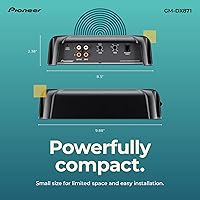
  • Dimensions: The amplifier measures 8.5 × 9.88 × 2.38 inches (L × W × H), enabling installation in compact spaces including under-seat locations.
  • Weight: Unit weighs 6 pounds, which is notably light for an amplifier at this output tier, aiding installation handling.
  • Material: Enclosure is constructed from high-quality textured aluminum bonded to a tough frame, providing passive heat dissipation and structural rigidity.
  • Operating Voltage: Designed to operate on a 12-volt DC electrical system, standard in virtually all passenger vehicles and light trucks.
  • Supply Current: Maximum supply current draw is rated at 133.33 amps, which should be factored into fuse sizing and wiring gauge decisions during installation.
  • Mounting Type: Surface mount design allows the unit to be secured to flat surfaces such as trunk floors, enclosure exteriors, or under-seat panels.
  • Compliance: CEA-2006 compliant, meaning power output figures have been verified under a standardized automotive amplifier measurement protocol rather than unaudited manufacturer claims.
  • Input Voltage Range: Both minimum and maximum supply voltage are specified at 12 volts DC, indicating the unit is optimized for standard 12V automotive electrical systems.

Related Reviews
Pioneer GM-A6704 4-Channel Amplifier
87%
88%
Sound Performance
94%
Power Output
85%
Ease of Installation
92%
Build Quality
70%
Heat Dissipation
More
Pioneer GM-DX975 5-Channel Car Amplifier
86%
88%
Sound Quality
90%
Bass Control
85%
Power Output
92%
Energy Efficiency
67%
Ease of Installation
More
Pioneer GM-A3702 2-Channel Bridgeable Amplifier
82%
92%
Value for Money
87%
Sound Quality
75%
Ease of Setup
80%
Build Quality
85%
Connectivity
More
Pioneer GM-D8701 1600W Class D Mono Amplifier
83%
88%
Bass Performance
90%
Power Output
85%
Installation Process
89%
Compact Design
62%
Heat Management
More
Pioneer GM-D9701 2400W Mono Class D Amplifier
84%
91%
Bass Performance
89%
Ease of Installation
85%
Compact Design
88%
Power Output Versatility
90%
Signal Clarity
More
Pioneer GM-DX874 1,200 Watts 4-Channel Amplifier
86%
90%
Power Output
91%
Sound Quality
87%
Build Quality
83%
Ease of Installation
95%
Size & Portability
More
Pioneer MVH-S320BT
Pioneer MVH-S320BT
86%
88%
Ease of Installation
91%
Bluetooth Connectivity
89%
Smartphone Integration
80%
Sound Quality
85%
Touchscreen Usability
More
Pioneer DEH-S1200UB
Pioneer DEH-S1200UB
89%
94%
Sound Clarity
87%
Ease of Installation
90%
Build Quality
88%
Connectivity Options
92%
USB & AUX Compatibility
More
Radioddity GM-30 GMRS Radio
84%
89%
Range & Performance
85%
Ease of Use
78%
Battery Life
82%
Build Quality
91%
Weather Alerts
More
Pioneer TS-WX1210A 12″ Subwoofer
86%
92%
Bass Performance
94%
Ease of Installation
88%
Sound Clarity
90%
Value for Money
85%
Build Quality
More

FAQ

Pioneer lists 1,600 watts as the maximum (peak) figure, but the RMS — or continuous — output is what matters for real-world performance and matching with a subwoofer. Pioneer specifies the RMS rating in the full product documentation, and you should match that figure to your subwoofer's RMS handling capacity, not the peak. Running a subwoofer undermatched or overmatched on RMS is where most pairing problems originate.

Potentially yes — the dimensions are 8.5 × 9.88 × 2.38 inches, which is genuinely compact for a mono amp at this output level. Many buyers have confirmed successful under-seat installs in sedans, crossovers, and trucks, but you should measure your specific clearance before purchasing since cab floor geometry varies considerably between vehicles.

Yes, it can, but you need to wire the DVC subwoofer correctly to present the right impedance load to the amp. Whether you wire the coils in series or parallel will change the final ohm load, and the amp's output will vary accordingly. If you're not confident about impedance wiring, it's worth consulting an installer or a car audio forum before committing to a wiring configuration.

That's almost certainly the built-in protection circuit triggering. The most common causes are a voltage drop from a weak ground connection, an undersized power wire, or genuine electrical system strain on a stock alternator. Start by checking your ground wire quality and connection point, then verify your power wire gauge is appropriate for the current draw. In some cases, adding a capacitor or upgrading to a higher-output alternator is the right long-term fix.

You can wire two subwoofers to this mono amp as long as the combined impedance load stays within the amp's stable operating range. The key is making sure the final wired load — whether you wire them in series or parallel — doesn't drop below the minimum impedance the amp supports. Check the full spec sheet for the minimum stable ohm load before wiring two drivers together.

The safest approach without test equipment is to set the gain conservatively — start low, play a bass-heavy track at the volume level you normally listen at, and gradually increase the gain until you hear distortion, then back it off slightly. This won't be as precise as measuring with a DMM or using a reference tone, but it prevents you from clipping the signal and damaging your subwoofer. If you want it done properly, a car audio shop can set it with the right tools in under 30 minutes.

No — the box includes the amplifier and the remote bass boost control, but wiring is sold separately. You will need to source a wiring kit that includes a power cable, ground cable, RCA interconnects, a remote turn-on wire, and an in-line fuse holder. Make sure the kit's wire gauge is appropriate for the amp's current draw rating of 133.33 amps.

Under typical daily driving conditions at moderate volume, the aluminum enclosure gets warm but not alarmingly so — that's the Class-D design and the housing material doing their jobs. If you're installing it in a sealed, unventilated space or pushing it hard in a hot climate, you may notice the protection circuit stepping in more frequently. A bit of airflow around the amp goes a long way toward keeping temperatures stable.

It's a reasonable choice from a hardware standpoint, but the installation process itself may be more involved than a complete beginner expects. The amp's layout is logical and experienced installers find it easy, but the included documentation doesn't do much to walk newcomers through gain setting, impedance matching, or grounding best practices. If this is your first install, budgeting for a professional to do the wiring is honestly a smart call — a bad ground or incorrect gain setting can underperform or damage equipment.

This mono amp is generally most efficient and produces its strongest continuous output into a 1-ohm or 2-ohm load, depending on the specific impedance ratings published in Pioneer's full spec sheet. Running a higher impedance load — like 4 ohms — will result in lower output, which may or may not matter depending on your subwoofer's sensitivity. Always match the amp's rated output at a given impedance to the subwoofer's RMS power handling at that same impedance for best results.