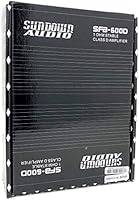
Overview

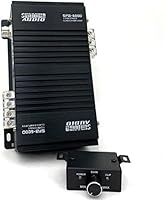
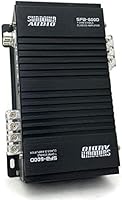
The Sundown Audio SFB-600D Monoblock Amplifier sits in a competitive corner of the car audio market where builders want real brand credibility without committing to a high-end budget. Sundown Audio has earned genuine respect among enthusiasts — particularly in the subwoofer community — so this monoblock carries more brand equity than most similarly priced competitors. The compact form factor matters during installation when every inch of trunk space counts. What really distinguishes this Sundown mono amp from cheaper alternatives is 1-ohm stability, a capability that unlocks more usable power from a single subwoofer. Solid daily-driver performance is the promise here, not competition-grade output.

Features & Benefits

Class-D amplification is the right topology for a dedicated subwoofer amp, and the SFB-600D puts it to practical use. Running far cooler than Class-AB designs, it handles tight install environments without constant thermal protection trips. The real draw, though, is 1-ohm stability — wire a dual voice coil sub down to its lowest impedance and you get access to the full 600W RMS rating, rather than the diminished output you'd see at 2 or 4 ohms. The onboard variable filters — both low-pass and high-pass — let you set crossover points without a separate processor. The 50 Hz bass boost is worth having for ported box builds, but keep it conservative; heavy-handed boosting invites distortion faster than most people expect.

Best For

This Class-D monoblock makes the most sense for builders putting together their first real car audio system who want a brand with an actual following behind it. A single 10-inch or 12-inch subwoofer running off a properly wired 2-ohm DVC coil — dropped to 1 ohm — is the ideal pairing. The small physical footprint, roughly the size of a hardback book, is a genuine advantage in hatchbacks, sedans, and compact SUVs where trunk enclosures leave little room for hardware. It's also a logical upgrade for anyone stuck with a factory head unit and no sub amp at all — the wired remote and straightforward gain structure keep setup from becoming overwhelming for people without installer experience.

User Feedback

Owners consistently praise the SFB-600D for clean output at everyday listening levels, and the installation experience draws fewer complaints than you might expect at this tier. Most builders get it running without drama. Where opinions diverge is around real-world wattage — the amp performs well, but enthusiast forums frequently note that the 600W RMS figure, tested under ideal voltage conditions, doesn't always translate identically in a real vehicle. The clipping indicator on the remote gets mentioned positively by people who actually use it for gain-setting, though casual installers sometimes ignore it entirely. Customer service feedback is mixed, with some reporting smooth warranty resolution and others finding the process slower than expected.

Pros

  • 1-ohm stability lets you wire a DVC subwoofer to its lowest impedance and pull maximum power from the amp.
  • Class-D efficiency keeps heat output low, which matters in cramped install spaces with limited airflow.
  • The chassis is genuinely compact, making it easy to fit around most enclosures in a typical trunk.
  • Onboard variable low-pass and high-pass filters remove the need to budget for a separate crossover processor.
  • The clipping indicator on the wired remote makes accurate gain-setting accessible even without dedicated test equipment.
  • Four-way protection circuitry addresses thermal, voltage, DC offset, and speaker short conditions automatically.
  • Sundown Audio has a genuine enthusiast following, giving the SFB-600D more real-world credibility than no-name alternatives.
  • Most users report clean, controlled bass at everyday listening volumes with no obvious distortion.
  • The variable bass boost at 50 Hz is practical for dialing in ported enclosures without an external equalizer.
  • Gain controls and filter adjustments are intuitive enough for a first-time installer to configure correctly.

Cons

  • The 600W RMS rating is measured under ideal voltage conditions; expect lower real-world output in a typical vehicle.
  • Gain matching requires patience — the input sensitivity range can cause issues when pairing with certain head units.
  • An 86 dB signal-to-noise ratio is adequate for daily use but falls short of what critical listening builds demand.
  • No built-in subsonic filter means ported enclosure owners need an external solution to protect the driver at very low frequencies.
  • The bass boost is fixed at a 50 Hz center frequency, which won't align with every enclosure tuning.
  • Running at 1 ohm increases thermal load; poor ventilation around the amp will trigger more frequent protection trips.
  • Customer service and warranty resolution from Sundown Audio have drawn mixed feedback, with some owners reporting slow turnaround.
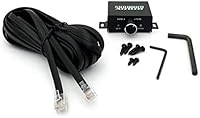
  • The wired remote requires routing an additional cable through the cabin, which adds an install step some buyers overlook entirely.

Ratings

The scores below for the Sundown Audio SFB-600D Monoblock Amplifier were generated by an AI model trained to analyze verified buyer reviews from global retail platforms, actively filtering out incentivized submissions, spam, and bot-driven feedback to surface only genuine ownership experiences. Each category reflects the full spectrum of real-world sentiment — from the features users consistently praise to the recurring frustrations that honest reviewers don't hold back on. Both strengths and pain points are represented as they appear in verified feedback, without editorial softening.

Sound Quality
78%
22%
For a Class-D amp in this tier, the SFB-600D reproduces bass with more clarity than most buyers expect — daily commuters particularly notice how tight and controlled the low end stays at moderate volume. Casual listeners consistently praise the absence of audible distortion when the gain is properly set.
Enthusiasts pushing the amp hard at high volumes report a degree of compression and dynamic limiting that wouldn't surface in a more expensive amplifier. It is not built for critical listening at reference levels, and that ceiling becomes apparent in more demanding builds.
Power Output Accuracy
67%
33%
At typical running voltages around 13.8V, most owners find the amp delivers enough output to satisfyingly drive a 10-inch or 12-inch subwoofer for everyday listening. The available headroom is genuinely usable for the intended daily-driver use case.
The 600W RMS rating is tested under peak lab conditions at 14.4V, and real-vehicle measurements by more technically inclined owners consistently land lower — often in the 400W to 500W range under realistic electrical conditions. Buyers expecting the spec sheet figure in practice may feel misled.
Build Quality
82%
18%
The chassis feels noticeably more solid than what you'd encounter at the low end of the market — the heatsink has real mass to it, and the terminal connections are snug and well-machined. Most owners note the unit arrives well-packaged with no rattles or flex in the housing.
At this price tier, finish and component tolerances show their limits on close inspection — the board is not potted, and a few users note the RCA input jacks feel slightly less robust than the rest of the build. Nothing that affects daily performance, but it is a visible reminder of the value price point.
Value for Money
84%
The combination of genuine brand credibility, 1-ohm stability, and onboard filtering at this price is hard to match in the single-subwoofer category. Buyers upgrading from generic no-name amps almost universally report that the step up in performance and long-term reliability is worth the spend.
Buyers who compare real-world delivered wattage against similarly priced competitors sometimes feel the value proposition weakens — you are partly paying for the Sundown name, which carries less weight at this tier than it does in their higher-end lineup. That trade-off is worth knowing going in.
1-Ohm Stability
88%
This is one of the clearest differentiators between the SFB-600D and cheaper amps in its tier — running a dual voice coil subwoofer wired to 1 ohm is reliable and does not produce the instability or overheating complaints that plague lower-cost alternatives attempting the same load. Enthusiast forums consistently cite this as a dependable characteristic.
While the amp holds 1-ohm loads, running at that impedance continuously increases thermal demand — owners without a well-ventilated install location report more frequent protection trips during extended high-volume sessions. It is 1-ohm capable, but performs most consistently and runs coolest at 2 ohms.
Installation Ease
86%
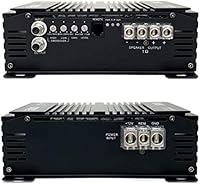
Most installers — experienced or first-timers — report getting this Sundown mono amp running cleanly in under two hours. The terminal layout is logical, crossover control labeling is clear, and the compact chassis makes positioning in a tight trunk straightforward without compromising enclosure placement.
Users with head units outputting low preamp voltage found gain-matching fiddly — the input sensitivity range requires careful adjustment to avoid a noisy signal floor at rest. Routing the wired remote cable neatly through the cabin also adds a step that first-timers sometimes underestimate when planning their install.
Heat Management
83%
The Class-D topology's efficiency advantage is tangible in practice — owners who previously ran Class-AB amps in the same location consistently note the chassis runs far cooler under comparable load. At 2-ohm loads, the amp operates comfortably through extended listening sessions without thermal protection trips.
Pushing the amp at 1 ohm in a poorly ventilated mounting spot — flush against a box wall, for example — generates enough sustained heat to trigger thermal protection during long high-volume sessions. A few inches of clearance above the chassis solves it, but it requires forethought that some installers skip.
Crossover Flexibility
74%
26%
Having both variable low-pass and high-pass filters onboard removes the need to budget for a separate crossover processor in a basic build — that is a real cost and complexity saving. The low-pass range is wide enough to blend cleanly with most speaker configurations a typical installer would encounter.
The absence of a built-in subsonic filter is the standout gap, particularly for users running ported enclosures at high volumes where unfiltered sub-bass content can stress the driver unnecessarily. The 12 dB/octave filter slopes are also less steep than what a dedicated DSP or external crossover would offer.
Bass Boost Usability
71%
29%
The 50 Hz center point suits ported enclosures tuned in the typical 35Hz to 55Hz range well — a conservative 4 to 6 dB boost adds real low-end punch without requiring head unit EQ adjustments. Owners running ported boxes consistently rate this feature as a practical daily convenience.
The fixed 50 Hz center frequency limits the boost's usefulness for sealed enclosures and ported boxes tuned notably lower, where the center point simply does not land where it is needed. The absence of a shelving EQ option also narrows how broadly applicable this control is across different system configurations.
Clipping Indicator
79%
21%
From a practical installer's perspective, having a clipping indicator at this price point takes a significant amount of guesswork out of gain-setting for buyers who do not own a multimeter or oscilloscope. Users who actively engage with it during setup consistently report more accurate gain levels than those who skip it.
Routing the wired remote cable cleanly from the amp to the dash adds an install step that some first-timers find more involved than expected. A handful of users also report the indicator can lag slightly during fast transient peaks, making it a useful but imperfect real-time clipping monitor at the limits.
Protection Circuit
85%
The four-way protection system earns consistent praise from owners who have inadvertently stressed the amp — several report it survived short-circuit events and voltage spikes during installation without permanent damage, recovering cleanly once the fault was resolved. That kind of resilience builds genuine confidence for daily use.
A subset of users report the protection circuit is overly sensitive in certain conditions — particularly at low impedance loads in warm climates — triggering protection mode at volume levels that should not require it. There is also no visual differentiation between which protection mode fired, making diagnosis a process of elimination.
Form Factor
91%
At roughly the footprint of a standard hardback book, this Class-D monoblock genuinely earns its compact billing — it tucks comfortably beside most subwoofer enclosures in sedan and hatchback trunks without requiring a dedicated mounting board or sacrificing meaningful cargo space. Owners of smaller vehicles rate this as a significant practical advantage.
The compact chassis limits heatsink surface area, which means thermal management relies more heavily on ambient airflow than larger amps with bigger cooling fins. In installs where the amp ends up partially obstructed — under a seat or against a box wall — this trade-off becomes more apparent over extended listening periods.
Signal-to-Noise Ratio
69%
31%
For everyday commuting and casual listening at normal volumes, the 86 dB rating is transparent enough that most buyers never encounter a noticeable noise floor — background hiss does not appear as a common complaint at moderate gain settings. With careful gain-matching, the amp performs quietly under typical real-world conditions.
Audiophiles and enthusiasts building systems where background noise at idle is scrutinized will find 86 dB limiting — it falls noticeably short of what amplifiers at higher price points or with refined topologies deliver. Users with sensitive, efficient tweeters in the same system sometimes report a faint audible noise floor at rest.
Customer Support
61%
39%
Sundown Audio does stand behind their products with a manufacturer warranty, and owners who contact support through official channels with clear documentation report that straightforward defect cases do get resolved. Purchasing from an authorized dealer noticeably improves the overall support experience according to consistent community feedback.
The support experience is inconsistent enough to be a genuine concern — a meaningful share of user reports describe slow response times, communication gaps, and resolution timelines that stretch longer than expected. This is a recurring thread in enthusiast forums and remains the most consistently cited weakness that sits outside the product itself.

Suitable for:

The Sundown Audio SFB-600D Monoblock Amplifier is a strong match for anyone building their first dedicated subwoofer system who wants a legitimate brand behind them without spending at the upper end of the market. If you're running a single 10-inch or 12-inch driver — particularly a dual voice coil sub you plan to wire down to 1 ohm — this amp gives you meaningful headroom over cheaper alternatives that top out at 2 ohms. The compact chassis makes it genuinely practical for sedans, hatchbacks, and compact SUVs where space around the enclosure is tight and larger amps simply won't fit cleanly. It's a natural step-up for anyone currently relying on a factory head unit with no dedicated bass amplification, since the onboard crossover controls are straightforward enough to configure without professional help. Daily listening at moderate to high volumes is where this Class-D monoblock is most comfortable, and for that scenario it delivers reliably clean output.

Not suitable for:

The Sundown Audio SFB-600D Monoblock Amplifier is not the right choice if you're building for serious output levels, competition use, or planning to push a high-excursion subwoofer rated well above the amp's real-world delivery ceiling. The 600W RMS rating reflects ideal test conditions — in a typical vehicle with standard electrical, actual output will fall short of that figure, which matters when you're matching power to a demanding driver. Anyone planning to run multiple subwoofers, a multi-driver array, or a setup requiring sub-1-ohm impedance loads will need to look at higher-current options. If signal purity is a priority for a competition sound quality build, the 86 dB signal-to-noise ratio sits below what that discipline typically demands. Buyers who want a built-in subsonic filter — useful protection for ported enclosures pushed hard at very low frequencies — will find its absence here a gap that requires an external fix.

Specifications

  • Amplifier Class: Class-D monoblock topology delivers high efficiency and lower heat output compared to traditional Class-AB designs, making it well suited for dedicated subwoofer applications.
  • 1-Ohm Output: Rated at 600W RMS into a 1-ohm load, tested at 14.4V with all channels driven.
  • 2-Ohm Output: Rated at 350W RMS into a 2-ohm load, tested at 14.4V.
  • 4-Ohm Output: Rated at 250W RMS into a 4-ohm load, tested at 14.4V.
  • Impedance Stability: Stable down to a 1-ohm load, allowing dual voice coil subwoofers to be wired in parallel for maximum power delivery without risking amplifier instability.
  • Low-Pass Filter: Variable low-pass filter adjustable between 80Hz and 20kHz with a 12 dB/octave slope, enabling subwoofer crossover integration without a separate external processor.
  • High-Pass Filter: Variable high-pass filter adjustable between 15Hz and 1kHz with a 12 dB/octave slope for flexible signal routing.
  • Bass Boost: Variable bass boost ranging from 0 to 12 dB, centered at 50Hz with a 9 dB/octave slope, designed primarily for ported enclosure tuning.
  • Signal-to-Noise: Signal-to-noise ratio rated at 86 dB, suitable for everyday listening but below the threshold typically required by competition sound quality applications.
  • Input Sensitivity: Maximum input sensitivity of 5V, compatible with standard RCA preamp outputs from aftermarket head units and OEM sources paired with a line output converter.
  • Operating Voltage: Designed to operate within a 10.5V to 15.5V range, covering standard 12V automotive electrical systems under both engine-off and engine-running conditions.
  • Fuse Rating: Manufacturer-recommended fuse rating of 60A; a fuse holder of this rating should be installed within 18 inches of the battery terminal on the positive power run.
  • Dimensions: Chassis measures 7.25″ x 5.00″ x 2.50″, placing it among the more compact options available in its rated power class.
  • Weight: Weighs 3.45 pounds, making it straightforward to handle and position during installation in tight spaces.
  • Protection Circuit: Four-way protection system monitors and automatically responds to thermal overload, voltage irregularities, DC offset, and speaker short conditions.
  • Remote Control: Includes a wired bass remote control with an integrated clipping indicator LED that signals when the amplifier is approaching its headroom ceiling during playback.

Related Reviews
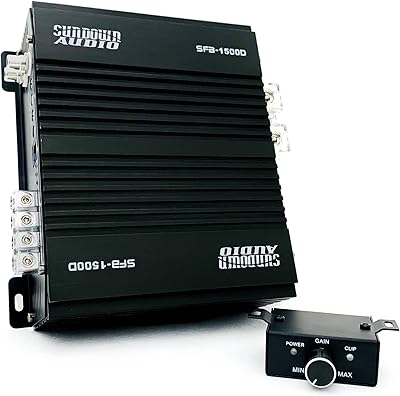
Sundown Audio SFB-1500D
87%
96%
Power Output
94%
Bass Performance
89%
Build Quality
87%
Heat Management
91%
Electrical Stability
More
LKC PHF450D Car Audio Monoblock Amplifier
88%
91%
Power Output (2 Ohms)
87%
Power Output (4 Ohms)
93%
Heat Dissipation
88%
Build Quality
85%
Ease of Integration
More
Blaupunkt AMP1500M Monoblock Car Amplifier
73%
81%
Value for Money
63%
Real-World Power Output
88%
Ease of Installation
77%
Audio Clarity
58%
Build Quality
More
Planet Audio AC1500.1M Monoblock Car Amplifier
75%
91%
Value for Money
78%
Bass Output Quality
86%
Ease of Installation
61%
Thermal Management
67%
Build Quality
More
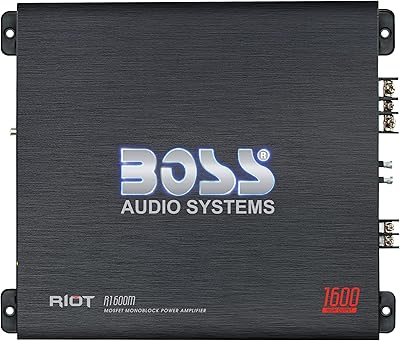
BOSS Audio R1600M Monoblock Car Amplifier
72%
83%
Value for Money
88%
Ease of Installation
79%
Bass Output
61%
Build Quality
86%
Signal Flexibility
More
Planet Audio AC2500.1M Monoblock Car Amplifier
85%
92%
Performance
95%
Bass Output
85%
Ease of Installation
65%
Thermal Performance
88%
Build Quality
More
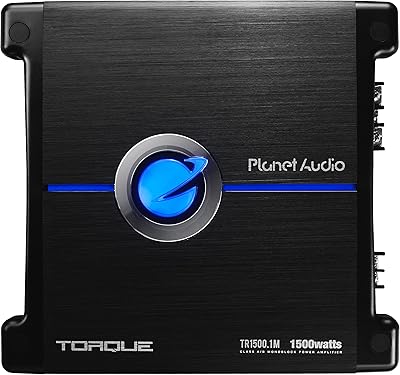
Planet Audio TR1500.1M Monoblock Car Amplifier
70%
88%
Value for Money
79%
Bass Output & Performance
83%
Ease of Installation
63%
Build Quality
57%
Thermal Management
More
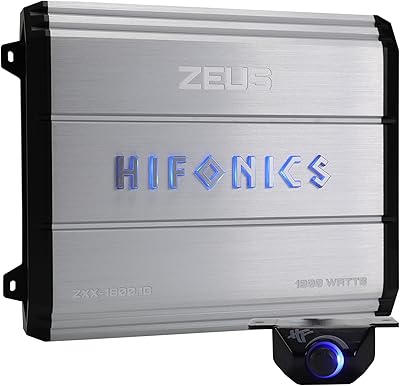
Hifonics Zeus ZXX 1800 Watt Monoblock Car Audio Amplifier
86%
88%
Performance
90%
Build Quality
85%
Ease of Installation
89%
Heat Management
84%
Sound Clarity
More
Polk Audio PA D1000.1 Class D Monoblock Amplifier
86%
94%
Power Output
88%
Build Quality
90%
Bass Performance
78%
Ease of Installation
91%
Thermal Protection
More
Hifonics ZXX-1200.1D Monoblock Car Amplifier
80%
88%
Value for Money
83%
Bass Output Quality
91%
Ease of Installation
86%
Thermal Management
74%
Build Quality
More

FAQ

Running at 1 ohm is where the SFB-600D delivers its full rated output, so that is the target if your subwoofer supports it. A single dual voice coil driver with 2-ohm coils wired in parallel gets you there cleanly. At 2 ohms you are looking at around 350W RMS, and at 4 ohms closer to 250W — still useful, but you are not using all the headroom the amp has to offer.

Yes, but you will most likely need a line output converter to adapt the factory speaker-level signal into an RCA signal the amp can accept. Some OEM head units do include a dedicated subwoofer preamp output — check your vehicle's owner manual before buying a converter. Once the signal adapter is in place, the rest of the install is straightforward.

Start with the gain turned fully down, then play a bass-heavy track at around 75% of your head unit's maximum volume. Slowly raise the gain until the clipping indicator on the wired remote begins to flicker, then back it off just until it stops activating. That puts you right at the edge of clean power without crossing into distortion. For a more precise result, using a multimeter to measure output voltage against your target wattage is the professional approach.

The manufacturer-recommended fuse is 60A, which pairs well with 4-gauge power and ground wiring for most standard installs. If your positive run from the battery exceeds roughly 15 feet, stepping up to 2-gauge helps minimize voltage drop and keeps the amp performing at its best. Always install a fuse holder within 18 inches of the battery terminal on the positive cable.

It will not damage the amp, but pushing the boost to its 12 dB maximum puts a significant extra demand on your subwoofer, especially at high playback volumes. Most experienced installers recommend starting at 6 dB or less and adjusting by ear from there. If your enclosure is already well-tuned and the bass sounds controlled without any boost, leaving it off entirely is often the better call.

You can, as long as the combined impedance does not drop below 1 ohm. Two 4-ohm subs wired in parallel gives you 2 ohms — that works fine. Two 2-ohm subs in parallel lands at exactly 1 ohm, which is at the amp's rated limit but within spec. Going below 1 ohm will push the amp beyond what it is designed to handle and will likely trigger protection mode repeatedly or cause damage over time.

Yes, it works with either enclosure type. Sealed boxes produce tighter, more linear bass and typically need little to no boost dialed in. Ported enclosures can benefit from the 50 Hz bass boost to add output near the port tuning frequency. One thing worth noting for ported builds: this amp does not include a built-in subsonic filter, so frequencies below the port tuning point can cause excessive cone excursion at high volumes — an external processor or DSP with a subsonic filter is worth adding if you plan to push the system hard.

Class-D amplifiers inherently run far cooler than Class-AB designs at comparable power levels, so heat management is less of a concern here than with older amp topologies. That said, mounting the amp in a completely sealed cavity with no airflow will still trigger thermal protection eventually. Mounting it on a flat surface with at least a couple of inches of clearance above the chassis is sufficient for the vast majority of daily-driver installs.

For a straightforward single-subwoofer build, the onboard filters cover enough range to blend cleanly with most main speaker setups without any external processing. If you are tuning a more complex multi-way system where precise slope alignment, time correction, and phase adjustment matter, a DSP is worth the investment — but that is a different tier of build entirely. Most people running a single sub off this Class-D monoblock will never need anything beyond what is already on the board.

Sundown Audio backs the SFB-600D with a manufacturer warranty, though the specific terms are worth confirming with the seller at the time of purchase. Owner feedback on the support experience is mixed — some report quick and smooth resolution, while others have found the process slower than expected. Purchasing from an authorized dealer and keeping documentation of your install setup, including fuse rating and impedance load, puts you in the strongest position if you ever need to make a warranty claim.

Where to Buy