Overview

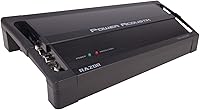
The Power Acoustik RZ1-3500D Monoblock Car Amplifier sits in a competitive corner of the car audio market where value and practicality carry more weight than brand prestige. The Class D design is a meaningful advantage here — it runs cooler and draws less current than older Class AB amps, which matters when you're working with a modest vehicle electrical system. The chassis is genuinely compact, making it viable for installs where space is tight. One thing worth flagging upfront: the 3500W figure is peak, not continuous — the rated RMS output is 900W, and that is the number that actually reflects real-world performance.
Features & Benefits

The MOSFET PWM power supply is the backbone of this amp's consistency — it maintains stable voltage delivery even when pushed hard, which translates to cleaner, more reliable bass. Being a single-channel monoblock, it does one job well: drive your subwoofer. That focus is a feature, not a shortcoming. The 3-way protection circuitry covering thermal, overload, and short-circuit events is a practical safeguard that can spare both the amp and your vehicle's electrical system from real damage. At just one pound and under 17 inches long, this Power Acoustik unit fits in spaces where bulkier amps simply won't go.

Best For

The RZ1-3500D makes the most sense for first-time builders putting together a basic subwoofer setup without a large budget. If you're working with a cramped trunk or want to tuck an amp under a seat, the slim profile solves a genuine installation problem. It is strictly a one-subwoofer solution — anyone planning a multi-channel system or wanting to power full-range speakers should look at different hardware entirely. Also worth noting: there is no wireless remote and no stated warranty, which are real trade-offs. DIYers comfortable with standard amp wiring who do not need those extras will find this a capable, no-fuss option.

User Feedback

Across more than 260 ratings, this monoblock amp holds a 4.4-star average, which is solid for its price bracket. Buyers frequently call out the bass output as a pleasant surprise — more punch than the physical size implies. Installation ease comes up repeatedly, with most users describing the wiring process as refreshingly uncomplicated. On the negative side, the gap between the marketed 3500W peak and the actual 900W RMS frustrates buyers who did not read the specs carefully before purchasing. A smaller number of reviews flag heat buildup concerns during extended heavy use, though this seems to be the exception rather than a consistent pattern.

Pros

  • Class D topology keeps heat output low, which is a meaningful advantage in tight install spaces.
  • At just one pound and under 17 inches long, the RZ1-3500D fits where most amps cannot.
  • The MOSFET PWM power supply provides stable, consistent power delivery even under sustained load.
  • 3-way protection circuitry — covering thermal, overload, and short-circuit events — adds real peace of mind.
  • Buyers consistently report stronger bass output than the compact size and price point would suggest.
  • Installation is straightforward; first-timers with basic wiring knowledge regularly complete the job without issues.
  • A 4.4-star average across more than 260 reviews reflects reliable satisfaction for the price tier.
  • Surface-mount design keeps the install clean and accessible without requiring custom brackets or complex mounting solutions.

Cons

  • The 3500W peak figure is misleading — real continuous output is 900W, and that gap catches many buyers off guard.
  • No warranty is stated, which is a genuine risk for an electronics component in a demanding vehicle environment.
  • No wireless remote is included, so adjusting bass levels on the fly requires manual access to the amp.
  • Some users report heat buildup during extended high-volume sessions, suggesting it is not ideal for aggressive daily use.
  • Single-channel monoblock design limits this unit to subwoofer duty only — it cannot grow with a more ambitious system.
  • Build quality, while adequate for the price, does not inspire the same confidence as mid-range or premium competitors.
  • Buyers pairing this unit with a high-RMS subwoofer may find the 900W continuous output falls short of expectations.

Ratings

The scores below reflect an AI-driven analysis of verified global user reviews for the Power Acoustik RZ1-3500D Monoblock Car Amplifier, with spam, bot activity, and incentivized feedback actively filtered out before scoring. Each category is weighted against real-world usage patterns reported by actual buyers — not marketing claims — so both the genuine strengths and the recurring frustrations are represented without sugarcoating.

Bass Output
84%
Buyers consistently describe the bass punch as a genuine surprise given the unit's size and price tier. For daily commuters running a single 10-inch or 12-inch sub in a small trunk, the low-end output holds up well at moderate listening volumes and adds satisfying depth to a stock or entry-level head unit setup.
At higher volumes or with a demanding 2-ohm load, some users report the bass loses a bit of tightness and control. Those expecting audiophile-level accuracy or slam comparable to higher-wattage RMS amps will likely find the headroom insufficient for serious listening sessions.
Value for Money
81%
19%
For a first car audio build on a tight budget, the RZ1-3500D delivers a competitive feature set — Class D efficiency, protection circuitry, and compact size — at a price point where most alternatives cut more corners. Buyers who do their homework on RMS matching often walk away feeling they got a fair deal.
The absence of any stated warranty undermines the value equation for buyers thinking long-term. If the unit fails after a few months of use, there is no safety net, which makes the per-dollar value feel less reliable than it initially appears on paper.
Installation Ease
88%
This is one of the most consistently praised aspects across user reviews. The surface-mount design, lightweight build, and standard terminal layout make it accessible for first-timers doing a trunk or under-seat install without professional help. Most buyers report completing the wiring in under two hours.
The lack of a wiring diagram or detailed instruction sheet frustrates some buyers who are genuinely new to car audio. A small number of users also note that the terminal connectors feel a bit flimsy, requiring extra care when torquing down power and ground connections.
Thermal Management
69%
31%
Class D operation inherently generates less heat than Class AB amplifiers, and in typical daily-driving scenarios with normal volume levels, the RZ1-3500D stays warm rather than hot. Users who give it adequate airflow in their install report no unexpected shutdowns during regular use.
Extended high-volume sessions — long road trips or bass-heavy listening for an hour or more — have led to thermal shutdowns for a notable subset of buyers. Units installed in poorly ventilated enclosures or tight trunk corners with minimal airflow are especially prone to this issue.
Wattage Accuracy
47%
53%
The amp does deliver meaningful power relative to its size, and buyers who understood the 900W RMS rating before purchasing generally report results that match their expectations. Within the context of budget Class D amps, the actual output is competitive.
The 3500W peak headline is genuinely misleading and represents the most common complaint across reviews. Many buyers sized their subwoofers around that figure and were disappointed by the real-world performance. This gap between marketed and actual output is a recurring source of negative feedback and returns.
Build Quality
66%
34%
The chassis feels solid enough for the price, and the overall construction holds up under standard installation conditions. At just one pound, it handles the physical stresses of vehicle vibration reasonably well in the short to medium term for most users.
Compared to mid-range competitors, the housing material and terminal block quality feel noticeably budget-grade. A handful of long-term users report cosmetic wear and minor connector loosening after six to twelve months of continuous use, raising questions about durability over a multi-year lifespan.
Protection Circuitry
79%
21%
The 3-way protection covering thermal, overload, and short-circuit events works as advertised in most user scenarios. Several buyers credit the protection system with saving their subwoofer during accidental wiring errors during initial setup, which is a real-world benefit worth acknowledging.
A few users report the amp occasionally triggers protection mode under conditions that should not exceed its rated limits, suggesting the protection thresholds may be conservatively set. This results in unexpected cutouts during moderate listening sessions, which is more annoying than harmful but still a frustration.
Compact Form Factor
91%
The physical size is a standout advantage that buyers return to repeatedly. Fitting it under a rear seat in a sedan or along the side wall of a small hatchback trunk is genuinely easy, and the lightweight build means it can be bracket-mounted without worrying about sag or stress on the mounting surface.
The compact chassis does limit heat dissipation surface area, which connects directly to the thermal management concerns noted by some users. There is also no room for onboard crossover adjustment knobs beyond the basics, so fine-tuning options are more limited than on physically larger amps.
Signal Clarity
72%
28%
At moderate gain settings, the audio signal feeding the subwoofer is clean with no notable background noise or hiss. Buyers who set their gain properly using a multimeter or by ear report a satisfying, distortion-free bass response that integrates well with factory head units.
When the gain is pushed higher or the RCA input signal is weak, a faint noise floor becomes noticeable during quiet passages. This is more of an issue with factory stereos that have lower preamp voltage output, and it suggests the onboard signal processing has limits under less-than-ideal source conditions.
Crossover Flexibility
63%
37%
The built-in low-pass crossover handles standard subwoofer filtering duties adequately, letting users dial in a basic rolloff point without needing an external processor. For a straightforward single-sub setup, the included filter controls are sufficient to get a balanced sound.
The crossover adjustment range and precision are limited compared to even modestly priced competitors with variable subsonic filters or bass boost control. Buyers trying to fine-tune their system for specific subwoofer alignments — sealed versus ported — will quickly find the onboard options too basic for nuanced tuning.
Long-Term Reliability
61%
39%
A reasonable portion of buyers report the unit functioning without issues through its first year of regular use, particularly those who installed it with proper ventilation and matched it sensibly to a subwoofer within its actual RMS range. Short-term reliability is generally not a concern.
Beyond the one-year mark, reliability data from user reviews becomes more mixed. The lack of any warranty compounds this uncertainty — buyers who experience a failure after the return window closes have no recourse, which pulls the long-term reliability score down relative to the initial impressions.
Package Contents
53%
47%
The unit itself arrives intact and ready to mount in the vast majority of reported cases. Packaging is functional and provides adequate protection during shipping, with very few reports of damage on arrival.
No wiring kit, no bass remote, no installation manual worth reading, and no warranty card — the box is bare beyond the amplifier itself. Buyers who are new to car audio will need to budget separately for a full wiring kit, RCA cables, and any mounting hardware, which adds cost that is not obvious at the point of purchase.

Suitable for:

The Power Acoustik RZ1-3500D Monoblock Car Amplifier is a practical choice for budget-conscious car audio enthusiasts who want to add real bass to their setup without overcomplicating the build or overspending. It suits DIYers tackling their first subwoofer install — particularly those working in compact spaces like a small trunk, a hatchback cargo area, or under a rear seat where a bulkier amp simply would not fit. The Class D design runs cool relative to older technologies, so heat management is less of a headache in confined install environments. If you are pairing a single subwoofer with a modest head unit and want a plug-and-play style experience without chasing advanced tuning features, this monoblock amp delivers a straightforward path to better bass. Buyers who understand the difference between peak and RMS wattage — and are sizing their subwoofer accordingly against the 900W continuous rating — will set themselves up for a genuinely satisfying result.

Not suitable for:

Serious car audio builders or anyone planning a multi-component system should look elsewhere before considering the RZ1-3500D. This unit has a single channel and is designed exclusively for subwoofer duty — it cannot power full-range speakers, tweeters, or a multi-amp configuration. The absence of any stated warranty is a real concern for buyers who want long-term protection on their investment, especially for an electronics component exposed to vehicle vibration and temperature swings. There is no wireless remote included, which matters if remote bass control is a priority for your daily driver experience. Buyers who take the 3500W headline figure at face value without understanding that real-world continuous output is 900W may feel misled, so anyone who has not done the math on matching amp output to subwoofer RMS ratings should pause before purchasing. High-demand users who push their system hard for extended periods have occasionally reported heat buildup, making this a less confident recommendation for heavy daily use at sustained high volumes.

Specifications

  • Amplifier Class: This is a Class D amplifier, which operates with higher switching efficiency and produces less heat than traditional Class AB designs.
  • Configuration: Single-channel monoblock layout, purpose-built for driving one subwoofer rather than multiple full-range speakers.
  • Peak Power: Rated at a peak power output of 3500W, which represents the maximum instantaneous power under ideal, non-continuous conditions.
  • RMS Output: Continuous rated output is 900W RMS, which is the reliable, real-world figure to use when matching this amp to a subwoofer.
  • Power Supply: Uses a MOSFET PWM (Pulse Width Modulation) power supply for consistent voltage regulation and stable performance under sustained load.
  • Dimensions: The unit measures 16.75 x 5.25 x 2 inches, making it one of the more compact monoblock options available at this power level.
  • Weight: Weighs just 1 pound, which is unusually lightweight for a monoblock amplifier and contributes to easy handling during installation.
  • Mounting Type: Designed for surface mounting, allowing straightforward installation in a trunk floor, enclosure side panel, or under-seat location.
  • Protection: Equipped with 3-way protection circuitry covering thermal overload, electrical overload, and short-circuit events to protect both the amp and connected components.
  • Transistors: Utilizes audiophile-grade transistors in the signal path, intended to maintain cleaner power delivery relative to standard-grade components.
  • Wireless Remote: No wireless bass remote control is included in the package; manual adjustment at the amplifier is required for gain and filter tuning.
  • Warranty: No warranty terms are stated by the manufacturer, which is a notable gap buyers should factor into their purchase decision.
  • Brand: Sold under the Power Acoustik brand, which is a budget-to-mid-range car audio label with a broad product lineup in the amplifier and subwoofer categories.
  • Manufacturer: Manufactured by Epsilon Electronics Inc., a company that produces several car audio brands across different price tiers.
  • Chassis Size: Features a compact 4.75-inch chassis profile, specifically designed to fit in tight install environments where full-size amps would not clear.
  • UPC: The product UPC is 709483050228, which can be used to verify the exact unit when cross-referencing retailer listings.

Related Reviews
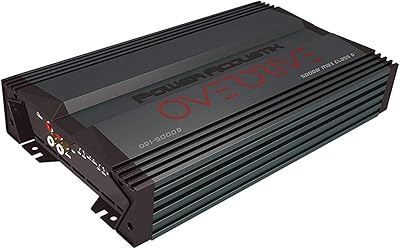
Power Acoustik OD1-5000D Car Amplifier
87%
91%
Performance
95%
Power Output
88%
Build Quality
60%
Ease of Installation
90%
Thermal Protection
More
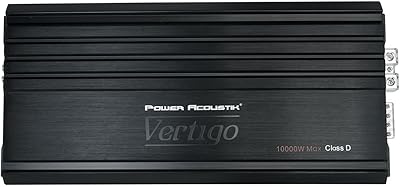
Power Acoustik VA1-10000D Monoblock Car Amplifier
65%
76%
Value for Money
83%
Bass Output
41%
Power Accuracy
48%
Thermal Management
71%
Build Quality
More
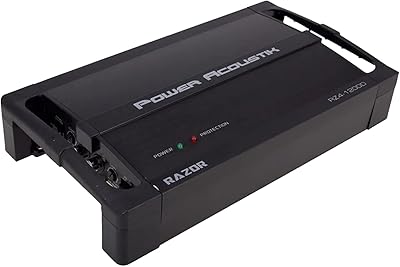
Power Acoustik RZ4-1200D 4-Channel Car Audio Amplifier
82%
88%
Sound Quality
91%
Power Output
84%
Build Quality
75%
Installation Ease
90%
Efficiency (Class D Technology)
More
Power Acoustik VA4-1800D Vertigo Series 4-Channel Car Amplifier
85%
88%
Performance
85%
Sound Quality
80%
Heat Management
90%
Build Quality
82%
Ease of Installation
More
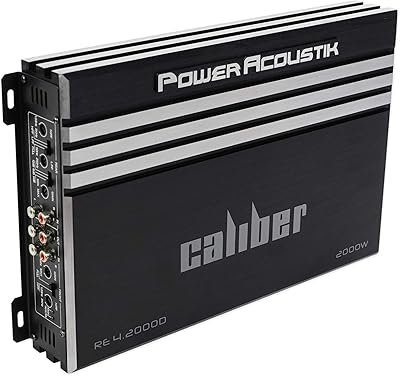
Power Acoustik RE4-2000D 2000 Watt 4-Channel Car Stereo Amplifier
86%
89%
Sound Quality
92%
Power Output
84%
Thermal Protection
88%
Ease of Installation
80%
Durability
More
Belva BB200ABv2 500W Monoblock Car Amplifier
85%
88%
Bass Performance
91%
Installation Ease
85%
Sound Clarity
89%
2-Ohm Stability
82%
Build Quality
More
LKC PHF450D Car Audio Monoblock Amplifier
88%
91%
Power Output (2 Ohms)
87%
Power Output (4 Ohms)
93%
Heat Dissipation
88%
Build Quality
85%
Ease of Integration
More
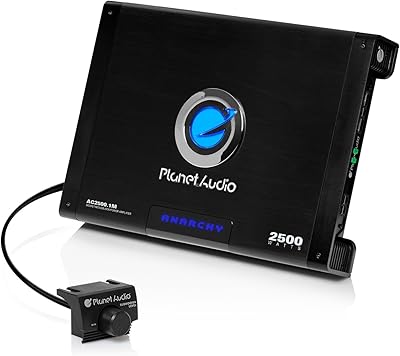
Planet Audio AC1500.1M Monoblock Car Amplifier
75%
91%
Value for Money
78%
Bass Output Quality
86%
Ease of Installation
61%
Thermal Management
67%
Build Quality
More
Rockville RWS12CA 12″ Amplified Powered Car Subwoofer
88%
91%
Sound Quality
94%
Bass Performance
89%
Ease of Installation
88%
Build Quality & Durability
87%
Value for Money
More
BOSS Audio R1600M Monoblock Car Amplifier
72%
83%
Value for Money
88%
Ease of Installation
79%
Bass Output
61%
Build Quality
86%
Signal Flexibility
More

FAQ

No, 3500W is the peak figure, which represents a brief maximum under perfect lab conditions. The number you should build around is 900W RMS — that is the continuous, real-world output. When shopping for a subwoofer to pair with the Power Acoustik RZ1-3500D Monoblock Car Amplifier, match its RMS handling rating to 900W for the most accurate system design.

No — this is a monoblock amplifier with a single channel, which means it is only suitable for driving a subwoofer. For door speakers or tweeters you would need a separate 2-channel or 4-channel amplifier.

It very likely will. At 16.75 x 5.25 x 2 inches and just one pound, this monoblock amp is genuinely compact compared to most units in its power class. That said, measure your available clearance before committing — seat rails and floor contours vary a lot between vehicles.

No, a wireless or wired bass remote is not included with this unit. If on-the-fly bass adjustment matters to you, you would need to either purchase a compatible remote separately or be comfortable reaching the amp directly to make changes.

Most buyers report the install as manageable for someone with basic car audio knowledge — connecting power, ground, remote turn-on, and RCA inputs is fairly standard. If you have never wired an amp before, a quick tutorial video and a proper wiring kit will go a long way. The surface-mount design also keeps things accessible.

The RZ1-3500D is a Class D monoblock that is typically designed to work at 1 ohm or 2 ohm loads, which is standard for most aftermarket subwoofers. Always verify the impedance specs on both the amp and the sub before wiring to avoid mismatches that can cause protection shutdowns or damage.

Class D amps are inherently more efficient and run cooler than Class AB units, so heat is less of a concern here than it would be with older amp designs. That said, a small number of users have noted warmth during extended heavy use. Making sure the amp has adequate airflow around it — not buried under carpet or foam — is good practice regardless.

Unfortunately, no warranty terms are stated by the manufacturer, which is one of the real trade-offs at this price point. If warranty coverage is important to you, this is a legitimate concern to weigh before buying, especially since car amplifiers face ongoing heat and vibration stress.

For a 900W RMS amplifier, a 4-gauge power wire with an inline fuse of around 80 to 100 amps near the battery is a common and safe starting point. Always consult a wiring gauge chart based on your cable run length to confirm the correct sizing for your specific install.

It can be a solid entry point, yes. The install is not overly complex, the size works well in a range of vehicles, and real buyers consistently report satisfying bass output for the price. Just go in with accurate expectations about the 900W continuous output rather than the 3500W headline number, and pair it with a single sub that matches that RMS rating.

Where to Buy