Overview

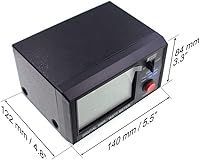
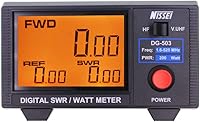
The NISSEI DG-503 Digital RF SWR Power Meter is a mid-range instrument that has earned a quiet, steady following among amateur radio operators and RF technicians. NISSEI isn't a flashy brand, but within the RF measurement niche they have a solid reputation for building reliable, no-nonsense gear. What sets this dual-band SWR meter apart from older analog alternatives is its 3.5-inch LCD display, which makes readings genuinely easy to parse at a glance. It covers both HF and VHF/UHF bands in a single housing — a practical convenience rather than a luxury. If you need lab-grade precision, look elsewhere. For field work and hobbyist bench use, it delivers.
Features & Benefits

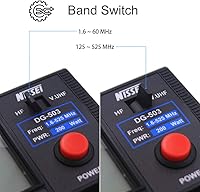
The dual frequency coverage is the DG-503's most practical selling point — HF from 1.6 to 60 MHz on one end, VHF/UHF from 125 to 525 MHz on the other, all handled by one box instead of two. A single button pull brings up forward power, reflected power, and VSWR on the LCD simultaneously, which saves real time during antenna tuning sessions. The power range tops out at 200W, covering most amateur and commercial two-way radio applications comfortably. Accuracy sits at plus or minus 5% on average — perfectly workable for field antenna work, though you wouldn't lean on it for precise lab measurements. Insertion loss is rated under 0.3 dB, which is negligible in practice.

Best For

This RF power meter makes most sense for ham radio operators who spend time tuning HF antennas across the shortwave bands, and for technicians who verify or troubleshoot VHF/UHF two-way radios in commercial or public safety environments. It's also a smart pick for hobbyists who'd rather own one dual-band meter than buy two separate instruments. Portable field use is a genuine strength — the battery operation means you're not hunting for a power outlet at a remote antenna site. Anyone stepping up from a basic analog SWR meter will appreciate the clarity of the digital readout. It's not overkill for a licensed ham, and it's not too entry-level for a working technician.

User Feedback

Owners of the DG-503 consistently point to display legibility and build quality as highlights — the large LCD earns specific praise from users who have grown tired of squinting at needle-based meters. The dual-band range also draws positive comments from operators who appreciate consolidating their kit. On the downside, there is a recurring complaint worth taking seriously: no-load startup can destroy the unit, and a number of buyers have learned this the hard way. Always connect an antenna or dummy load before powering on. Calibration consistency gets mixed marks — most users find the readings reliable enough for practical tuning, but a handful have noted drift over extended use. Overall sentiment leans favorable.

Pros

  • Covers both HF and VHF/UHF bands in one device, eliminating the need to own two separate meters.
  • The 3.5-inch LCD is noticeably easier to read than traditional analog needle meters, especially outdoors.
  • Forward power, reflected power, and VSWR all appear on screen simultaneously with a single button press.
  • Battery-powered operation makes this RF power meter genuinely portable for field antenna work.
  • The 1–200W power range comfortably handles typical amateur and two-way radio output levels.
  • Insertion loss under 0.3 dB means the meter has negligible impact on the signal path during testing.
  • Build quality earns consistent praise from users; the unit feels solid and does not feel cheap for its price tier.
  • A lithium-ion battery is included in the box, so you can start using it right away without extra purchases.

Cons

  • Powering on without a connected antenna or dummy load can permanently destroy the unit — a serious risk for first-time users.
  • Plus or minus 5% accuracy is adequate for tuning but falls short for any application requiring precise power measurement.
  • A small number of users have reported calibration drift after extended use, raising questions about long-term consistency.
  • The 200W power ceiling rules this meter out for anyone running high-power HF amplifiers.
  • No PC connectivity or data logging means all readings must be noted manually during testing sessions.
  • The startup warning about load connection is easy to miss in the documentation, yet the consequences of missing it are severe.
  • At its price point, some buyers expect a more comprehensive accessory kit; connector adapters are not included.
  • Frequency coverage gaps exist below 1.6 MHz and between 60–125 MHz, which can catch operators off guard.

Ratings

Our AI rating engine analyzed verified global user reviews for the NISSEI DG-503 Digital RF SWR Power Meter, actively filtering out incentivized, bot-generated, and spam submissions to surface what real buyers actually experience. Scores across 12 categories reflect both the genuine strengths and the recurring frustrations that show up consistently in honest owner feedback. Nothing has been smoothed over — where pain points exist, they are reflected directly in the numbers.

Display Clarity
91%
The 3.5-inch LCD earns some of the strongest praise in all user feedback, with operators consistently noting how easy it is to read VSWR, forward power, and reflected power simultaneously during an active tuning session. Users who previously relied on analog needle meters describe the digital readout as a meaningful quality-of-life improvement, especially when working outdoors or in cramped shack spaces.
A small number of users in very bright direct sunlight have noted contrast limitations, and there are occasional mentions that the backlight brightness could be stronger for low-light field deployments. These are minor complaints relative to the overall positive reception, but worth knowing if outdoor use is a primary scenario.
Dual-Band Versatility
88%
Covering both HF and VHF/UHF in a single instrument is the DG-503's most practically useful attribute, and users who work across both bands consistently highlight it as the reason they chose this meter over cheaper single-band alternatives. Technicians servicing mixed fleets of HF and VHF/UHF two-way radios particularly appreciate not having to carry or switch between two separate meters.
The frequency gap between 60 MHz and 125 MHz is a real coverage hole that catches some buyers off guard, particularly those who assumed continuous coverage across the full range. Operators working 6-meter band (50–54 MHz) are fine, but anyone needing measurements in the 60–124 MHz window will find this meter simply does not apply there.
Measurement Accuracy
74%
26%
For the intended use case — antenna tuning, VSWR checks, and general power verification on amateur or commercial two-way radios — the plus or minus 5% average accuracy is more than sufficient. Most operators use SWR readings directionally rather than as absolute figures, and in that context the DG-503 consistently delivers readings that align with expectations and practical outcomes.
Anyone expecting tighter tolerance will be disappointed; this is not a calibrated lab instrument and should not be used as one. A handful of users have noted that readings at the low end of the power scale (below 5W) can feel less stable and repeatable, which matters if you are doing QRP work or low-power signal verification.
Build Quality
83%
The physical construction of this RF power meter receives consistently positive comments — users describe the housing as solid and well-assembled, with connector ports that feel secure and properly aligned. For a mid-range instrument, the fit and finish is noticeably above what buyers typically expect, and the black-and-orange color scheme has a professional, purposeful look rather than a toy-like appearance.
Some users have noted that the unit feels slightly heavier than expected at 750 grams, which is a minor consideration for backpack-based portable operations. There are isolated reports of paint wear and minor cosmetic scuffs after extended field use, though structural integrity complaints are rare.
Setup & Safety Risk
54%
46%
Once users are aware of the no-load startup requirement, the physical setup process itself is genuinely straightforward — connect your antenna or dummy load, connect power, and the meter is operational almost instantly with no complex configuration required. Experienced RF operators who already work with similar equipment adapt to this workflow without difficulty.
The mandatory dummy-load-first requirement is responsible for a disproportionate share of negative reviews, with multiple buyers reporting that their unit was destroyed on first use before they had read the caution note. The warning is present in the documentation but is not prominently communicated at the point of setup, and the consequence — a permanently damaged meter — is severe enough that this category cannot score higher.
Portability
81%
19%
Battery-powered operation is a genuine advantage for operators who do field work, portable amateur radio activations, or on-site commercial radio servicing where AC power is not available. Users doing SOTA activations or antenna farm maintenance in remote locations specifically mention the self-contained power as a key factor in their purchase decision.
At 750 grams the DG-503 is not ultralight, and combined with the coaxial cables needed to put it inline, the total carried weight adds up noticeably. Battery life documentation is sparse, and users doing extended field sessions have flagged the lack of clear runtime guidance as a minor but real inconvenience for trip planning.
Value for Money
77%
23%
Buyers who come to this meter specifically wanting dual HF and VHF/UHF coverage in one unit tend to feel the price is justified, since the alternative would mean purchasing two separate instruments. The build quality and display quality together make the overall package feel reasonably proportionate to what is being charged.
Users who only need single-band coverage — exclusively HF or exclusively VHF/UHF — sometimes feel the price is harder to justify against cheaper single-band alternatives that perform just as well for their specific use case. Calibration drift concerns reported by a minority of long-term owners also create some doubt about multi-year durability relative to the investment.
Ease of Use
82%
18%
The one-button operation for cycling through measurement modes is consistently praised as intuitive, especially by users coming from older multi-switch analog meters. Once installed inline, reading forward power, reflected power, and VSWR requires no menu navigation or complex interaction — the display shows everything you need at a glance.
The initial setup learning curve is steeper than it needs to be, primarily because of the no-load power requirement that is not immediately obvious to new users. The instruction manual is functional but sparse, and first-time buyers without an RF background may benefit from seeking out online setup guides before their first power-on.
Insertion Loss
89%
The sub-0.3 dB insertion loss is an objectively excellent specification for an inline meter at this price tier, and technically minded users frequently call this out as one of the strongest engineering decisions in the product. In practical terms, leaving the DG-503 inline during normal operating sessions has a negligible effect on transmitted signal strength.
While the specification is strong, independent verification at the higher end of the power range is limited in user-sourced feedback, so operators consistently pushing close to 200W may want to verify performance in their specific setup. No significant complaints exist here, but the score reflects a small gap in long-term real-world data.
Frequency Range Coverage
72%
28%
The two defined windows — 1.6 to 60 MHz for HF and 125 to 525 MHz for VHF/UHF — cover the vast majority of amateur radio band allocations as well as most commercial two-way radio frequencies used in public safety, business, and land mobile radio applications. For the target buyer, the coverage map is well-matched to real-world needs.
The gap between 60 and 125 MHz is a documented blind spot that eliminates coverage of the VHF low band (roughly 66–88 MHz), which is relevant for some public safety and legacy commercial radio systems. Users who discover this limitation after purchase tend to express frustration, particularly if they assumed the meter offered continuous wideband coverage.
Long-Term Reliability
68%
32%
The majority of owners who have used the DG-503 for a year or more report that it continues to perform consistently and holds up physically under regular use. The build quality noted at purchase tends to translate into reasonable durability in practice, with no widespread reports of structural failures under normal operating conditions.
A recurring theme in longer-term owner reviews is mild calibration drift — readings that feel slightly less consistent over time compared to when the unit was new. This does not affect most users who use the meter for directional tuning decisions, but it is a meaningful concern for anyone relying on the DG-503 for repeatable, precise power logging over an extended period.
Power Range Coverage
78%
22%
The 1 to 200W measurement range covers the output of virtually every standard amateur radio transceiver as well as most commercial two-way radio equipment, making it a practical fit for the majority of intended users without any need for external attenuators or range adapters. Users running 100W HF transceivers and 50W VHF mobiles find the range entirely adequate.
The 200W ceiling is a real limitation for users who run linear amplifiers on HF, and this group consistently identifies the power ceiling as the primary reason the DG-503 does not meet their needs. Low-power QRP operators also occasionally note that sub-5W readings feel less precise than mid-range readings, though this is typical behavior for wattmeters at the bottom of their range.

Suitable for:

The NISSEI DG-503 Digital RF SWR Power Meter is a strong fit for licensed amateur radio operators who regularly tune HF antennas across shortwave bands and want clear, reliable readings without lugging around multiple instruments. It covers both HF and VHF/UHF in a single unit, which makes it genuinely useful for technicians who service two-way radios across different frequency bands — public safety, commercial dispatch, or amateur repeater work. Hobbyists who are stepping up from a basic analog needle meter will find the large LCD a welcome change, especially when working outdoors or in low-light conditions. The battery-powered design adds real value for anyone doing field deployments, portable operations, or site surveys away from a bench. If your work or hobby lives somewhere in the 1.6–525 MHz range and you need forward power, reflected power, and VSWR in one readable display, this meter is a practical, no-fuss choice.
Not suitable for:

The NISSEI DG-503 Digital RF SWR Power Meter is not the right tool for anyone who needs laboratory-grade measurement accuracy — a plus or minus 5% tolerance is workable for antenna tuning in the field, but it won't satisfy engineers requiring tight calibration for compliance testing or scientific work. Users operating above 200W will hit a hard ceiling with this meter, so high-power HF amplifier users should look at instruments rated for higher wattage. It also won't serve operators who work outside its two defined frequency windows, such as those working MW broadcast or microwave frequencies. Complete beginners with no RF background should take the startup procedure seriously — powering this unit without a connected antenna or dummy load is a known failure mode that voids any goodwill toward the product. And if you need a fully standalone bench instrument with PC logging, data export, or advanced sweep capabilities, the DG-503 is simply not built for that workflow.
Specifications

  • Manufacturer: This meter is manufactured by NISSEI, a brand with an established presence in the RF measurement instrument market.
  • Model Number: The official model designation is NISSEI DG-503.
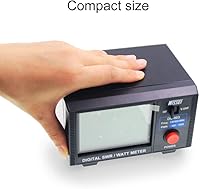
  • Display: A 3.5″ LCD panel shows forward power, reflected power, and VSWR readings simultaneously on a single screen.
  • HF Range: The HF frequency range covers 1.6 MHz to 60 MHz, suitable for shortwave and amateur HF band operation.
  • VHF/UHF Range: The VHF/UHF frequency range spans 125 MHz to 525 MHz, covering common two-way radio and amateur VHF/UHF bands.
  • Power Range: The instrument measures RF power from 1W up to a maximum of 200W across both supported frequency ranges.
  • Measurement Modes: Three measurement modes are supported: forward power, reflected power, and VSWR ratio, all accessible via a single button.
  • Accuracy: Average measurement accuracy is rated at plus or minus 5%, which is appropriate for field antenna tuning but not precision laboratory work.
  • Insertion Loss: Insertion loss is specified at under 0.3 dB, meaning the meter introduces negligible signal attenuation into the transmission line during use.
  • Power Source: The unit is battery-powered and requires a minimum operating voltage of 13.5V DC.
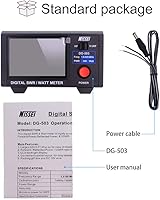
  • Battery: One lithium-ion battery is included in the package, so the meter is ready to use upon arrival.
  • Item Weight: The meter weighs 750 grams (approximately 1.65 pounds), making it manageable for portable field use.
  • Dimensions: Package dimensions measure 7.99 x 7.36 x 4.13 inches, giving a sense of the unit's compact but solid physical footprint.
  • Color: The unit is finished in black and orange, which is consistent with NISSEI's standard instrument color scheme.
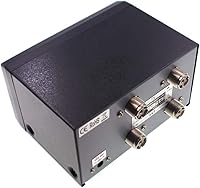
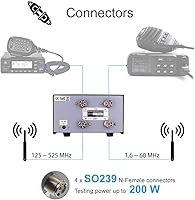
  • Connector Type: The DG-503 uses standard RF coaxial connectors on both the transmitter and antenna ports for straightforward inline installation.
  • Setup Requirement: An antenna or dummy load must be connected to the meter before the power supply is connected; operating without a load risks permanent damage to the unit.

Related Reviews

LATNEX PM-120W VHF UHF RF Power Meter
74%
88%
Measurement Accuracy
67%
Display Readability
91%
Ease of Setup
14%
Digital Mode Compatibility
86%
Value for Money
More
Mcbazel SURECOM SW-111 CB Radio SWR Meter
75%
91%
Ease of Setup
78%
SWR Measurement Accuracy
71%
Power Measurement Accuracy
88%
Display Readability
63%
Build Quality
More
Daiwa CN-901 Professional Series SWR & Power Meter
88%
91%
Overall Performance
94%
Accuracy of Measurements
88%
Portability
90%
Ease of Use
89%
Durability
More
Mcbazel Surecom SW-33 Plus Power SWR Meter
73%
93%
Ease of Use
81%
Measurement Accuracy
67%
Build Quality
94%
Portability
88%
Frequency Coverage
More
Dr.meter LX1330B Digital Lux Meter
82%
83%
Measurement Accuracy
91%
Ease of Use
67%
Build Quality
74%
Display Readability
92%
Measurement Range
More
Ludger LUDX-RF Refrigerator Surge Protector
78%
88%
Compressor Protection Logic
82%
Voltage Monitoring Accuracy
91%
LED Status Indicators
94%
Ease of Installation
74%
Build Quality
More
AMTAST LX-90 Digital Lux Meter
76%
88%
Sensor Design
74%
Measurement Accuracy
91%
Ease of Use
83%
Display & Readability
58%
Build Quality
More
BTMETER BT-881D Digital Lux Meter
82%
83%
Measurement Accuracy
91%
Measurement Range
88%
Sensor Design
89%
Ease of Use
74%
Build Quality
More
SatLink ST-7000 HDMI to RF Modulator
75%
88%
Signal Quality & HD Retention
57%
Ease of Setup
91%
Output Standard Compatibility
83%
Build Quality & Enclosure
86%
RF Channel Assignment Flexibility
More
Nobsound NS-03G
Nobsound NS-03G
74%
83%
Bass Output Quality
91%
Value for Money
78%
Build Quality
74%
Ease of Setup
44%
Compatibility Clarity
More

FAQ

It is not just a precaution — it is a hard requirement. The NISSEI DG-503 Digital RF SWR Power Meter can be permanently damaged if the power supply is connected before an antenna or dummy load is in place. This is one of the most common reasons for early unit failures reported by buyers, so treat it as the first step every single time you set it up.
Yes, that is exactly the kind of scenario this dual-band SWR meter is designed for. It covers HF from 1.6 to 60 MHz and VHF/UHF from 125 to 525 MHz, so you can switch between measuring your HF antenna and checking the VSWR on a VHF/UHF antenna without swapping instruments.

For practical antenna tuning — finding the frequency with the lowest VSWR and confirming your antenna is in a reasonable match range — plus or minus 5% is completely workable. Where it falls short is in applications that require tight, repeatable measurements, such as compliance testing or calibration work. For everyday ham radio use, most operators find it more than adequate.

The meter uses standard SO-239 (UHF-type) coaxial connectors, which are common on most amateur HF and VHF/UHF radios. If your radio uses BNC or N-type connectors, you will need the appropriate adapters, which are not included in the box.

Battery life will vary depending on how often the display is active and the ambient temperature, but users generally report reasonable runtime for field sessions. Since it runs on a single lithium-ion cell at 13.5V DC, keeping a spare battery on hand is a smart idea if you plan on extended portable operations.

The insertion loss is rated under 0.3 dB, which is low enough that leaving it inline during normal operation is generally acceptable for most amateur and two-way radio applications. That said, some operators prefer to remove it after tuning just to keep the signal path clean, especially at higher power levels near the 200W ceiling.

No. The DG-503 is rated to a maximum of 200W across its supported frequency ranges. Running 250W through it risks damaging or destroying the instrument. If you regularly operate at power levels above 200W, you will need a meter rated for higher wattage.

Yes to both. 28 MHz falls well within the HF range of 1.6 to 60 MHz, and 144 MHz sits inside the VHF/UHF range of 125 to 525 MHz. Both are comfortably within spec for this meter.

A minority of users have mentioned noticing some drift in readings after extended use, though it does not appear to be a widespread or systematic issue. The majority of owners report consistent, repeatable readings over time. As with any instrument in this price tier, periodic spot-checking against a known reference is a sensible habit if accuracy is important to your application.

It sits somewhere in between. The DG-503 is certainly capable enough for a technician doing field verification, basic troubleshooting, or antenna checks on VHF/UHF commercial radios. However, a professional shop requiring certified, traceable accuracy would typically use calibrated bench equipment. As a portable, quick-check instrument for a working technician, it performs well within its stated specs.