Overview

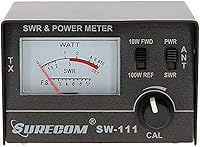
The Mcbazel SURECOM SW-111 CB Radio SWR Meter is a no-frills analog instrument built specifically for the 26.965–27.405 MHz CB band — and that narrow focus is actually its strength. Sold under the Mcbazel brand but manufactured by SURECOM, this SWR meter sits at an accessible price point that makes antenna verification practical for anyone just getting started. The FWD/REF switching is clearly labeled, so the basic tuning workflow clicks immediately even if you have never touched a meter before. One thing to flag right away: this CB antenna meter has nothing to do with VHF or UHF frequencies, and it will not work on general HF bands either. Buy it for CB, use it for CB.
Features & Benefits

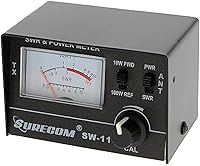
The SW-111 offers two selectable power ranges — 10W and 100W — so it can handle both a modest stock radio and a slightly beefier rig without pegging the needle. Accuracy comes in at ±5% for SWR and ±10% for power; that is honest, practical precision, not something you would find in a calibration lab. The analog needle is surprisingly easy to read at a glance, and there is no screen to wash out in direct sunlight. The unit can be wired in-line permanently with no measurable signal loss, and its compact 84×59×52 mm body fits just about anywhere. The included manual even has a power-loss chart — a useful reference when you are deciding how much that 2:1 SWR reading actually costs you.

Best For

This CB antenna meter punches above its weight class for certain types of users. Truckers and mobile operators doing a quick roadside antenna check will appreciate how fast the analog display responds, while CB hobbyists setting up a new base station can leave it permanently wired in the transmission line. If digital meters have ever left you second-guessing the readout, the straightforward needle here removes that friction entirely. The dual power range also means operators running anything from a factory-rated radio up to a higher-output rig can use it without switching to a different tool. It is not built for amateur radio or scanner use — strictly 27 MHz CB only.

User Feedback

Buyers tend to come away satisfied with how quickly this SWR meter gets them up and running — the most consistent praise centers on clear needle movement and the simplicity of the setup process. That said, one frustration shows up regularly: the PL-259 jumper cable needed to connect the meter in-line is not included in the box, which catches some first-time buyers off guard. Build quality draws mixed reactions; the plastic housing feels adequate for the price but not particularly rugged. On accuracy, most users find the readings reliable enough for practical CB tuning, even if the meter will not satisfy anyone chasing laboratory-grade results. Compared to similar budget analog meters, the SW-111 generally holds its own.

Pros

  • Tuning a CB antenna is genuinely straightforward — switch to FWD, key up, and adjust until the needle settles.
  • The analog display is easy to read in bright sunlight or a dim truck cab without any screen glare issues.
  • Selectable 10W and 100W power ranges cover everything from a stock radio to a higher-output CB rig.
  • This SWR meter can be permanently wired in-line with no measurable impact on transmitted signal strength.
  • The included manual features a power-loss chart that actually helps beginners understand why SWR tuning matters.
  • Compact dimensions mean the SW-111 fits in tight dashboard spaces without requiring a custom bracket or major rework.
  • No batteries or power source required — the analog meter is always ready the moment you key up.
  • At its price point, it is hard to find a purpose-built CB SWR meter with a more intuitive workflow.
  • The 52-ohm impedance matches standard CB coax systems without any adaptation needed.

Cons

  • The required PL-259 jumper cable is not included, which catches many first-time buyers completely off guard.
  • Power measurement tolerance of ±10% makes wattage readings more of an estimate than a reliable figure.
  • The plastic housing feels noticeably lightweight and raises questions about durability in hot or high-vibration environments.
  • Scale markings are small enough that some users need to lean in for a confident reading, especially on the 100W range.
  • No backlight means the display is difficult to read in low-light conditions without an external lamp.
  • Connector bodies feel thin-walled and may loosen over time when subjected to persistent road vibration.
  • Customer support experiences after receiving a defective unit are inconsistent and sometimes slow to resolve.
  • The meter is useless outside the CB band — buying it for any other frequency range is a guaranteed disappointment.

Ratings

The scores below reflect what real CB radio operators around the world have reported about the Mcbazel SURECOM SW-111 CB Radio SWR Meter — synthesized by AI after analyzing verified purchase reviews globally, with spam, bot-generated, and incentivized feedback actively filtered out. Both the genuine strengths and the recurring frustrations are represented here without sugarcoating. If this meter consistently delights truckers but annoys buyers who missed the compatibility fine print, that reality shows up in the numbers.
Ease of Setup
91%
Most users — including complete beginners — report having the SW-111 connected and producing their first SWR reading within minutes. The labeled FWD/REF switches and straightforward PTT-and-adjust workflow remove most of the guesswork that makes antenna tuning feel intimidating to newcomers.
A handful of first-time buyers hit a wall immediately because the required PL-259 jumper cable is not in the box, turning a five-minute setup into an unplanned hardware store trip. The manual, while helpful, assumes you already own the right connectors.
SWR Measurement Accuracy
78%
22%
For everyday CB antenna tuning — dialing in a new whip on a pickup truck or setting up a base station — the readings are consistent and repeatable enough to get you to a solid 1.5:1 SWR or better. Users appreciate that the needle stays stable rather than jumping around during a transmission.
The rated ±5% SWR tolerance means this is not a precision instrument, and technically minded users who cross-checked it against calibrated meters noted occasional discrepancies at the edges of the scale. It is a practical tuning tool, not a substitute for lab-grade measurement.
Power Measurement Accuracy
71%
29%
The selectable 10W and 100W ranges mean the meter gives a reasonable relative power reading across a wide range of CB radios, and most users find the 100W scale accurate enough for confirming their rig is transmitting at expected output.
The ±10% power tolerance is the weakest spec on this unit, and some experienced operators noted the power readings felt more like ballpark estimates than reliable figures. For anyone obsessing over exact wattage, this meter will leave them wanting more.
Display Readability
88%
The analog needle is genuinely easy to read in real-world conditions — dashboard glare, dim cab lighting, or a cluttered workbench. Several truckers specifically called out how much easier it is to glance at a moving needle than to interpret a flashing digital readout while managing a rig.
In very low light without a cab interior light on, the scale markings can be hard to distinguish, and there is no backlight option. A few users also mentioned that the needle deflection on the lower end of the 100W scale compresses readings and makes fine adjustments harder to judge.
Build Quality
63%
37%
The unit is compact and feels solid enough for permanent in-line installation where it will mostly just sit there undisturbed. The connectors thread on smoothly and hold position well once tightened, which matters when the meter is mounted behind a dashboard.
The plastic housing is the most common complaint in user reviews — it feels noticeably lightweight and several buyers expressed doubt about its long-term durability in a hot vehicle cab or outdoor installation. The overall construction quality reflects the budget price tier rather than hiding it.
Value for Money
86%
At its price point, this CB antenna meter is difficult to argue against for someone who just needs a reliable way to tune an antenna and move on. Users repeatedly frame it as the right tool bought at the right price — not a luxury, but not a disappointment either.
The omission of the PL-259 jumper cable stings a little when you factor in the total cost to get operational, particularly for buyers who did not realize they needed one. A few reviewers felt that including even a basic cable would have justified the purchase more cleanly.
Frequency Compatibility
55%
45%
Within the 26.965–27.405 MHz CB band it is designed for, the SW-111 performs exactly as advertised. Users who understood the product before buying have zero complaints on this front, and the focused design means no wasted circuitry on frequencies it will never handle.
This is the biggest source of negative reviews overall — a significant portion of one-star ratings come from buyers who did not realize the meter is CB-only and tried to use it on VHF, UHF, or broader HF frequencies. The incompatibility is stated in the listing but clearly not conspicuously enough.
Installation Flexibility
82%
18%
The compact dimensions make permanent in-line mounting genuinely practical — it tucks behind a dash, fits on a narrow shelf, or sits neatly between a radio and antenna without demanding a dedicated bracket or extra workspace. No measurable insertion loss is a real benefit for a permanently installed unit.
The lack of any mounting hardware or bracket in the box means you are on your own for securing it, which some mobile installers found frustrating. It also requires a short PL-259 jumper on each side, adding connection points that a few users felt introduced unnecessary risk of RF leakage if not tightened carefully.
Included Documentation
74%
26%
The manual is more useful than what typically ships with budget RF accessories — the power-loss reference chart is a practical touch that helps beginners understand why chasing a lower SWR actually matters. Having that context printed in the box saves a web search.
The documentation is thin beyond the basics, and intermediate users looking for calibration guidance or troubleshooting tips will find it insufficient. A few buyers also noted the manual reads like a translation, which occasionally makes specific steps harder to follow precisely.
Analog vs Digital Design Choice
79%
21%
Users who actively prefer analog meters love the immediate, intuitive feedback of a moving needle during a live transmission. There is no boot time, no mode menu, and no battery — the display is always ready the moment power hits the coax.
Buyers who expected a digital display based on product photos or category browsing were occasionally disappointed, and a small number returned the unit for that reason alone. The analog format is a genuine strength for its target audience but a dealbreaker for users accustomed to numeric readouts.
Connector Quality
61%
39%
The SO-239 ports thread consistently without cross-threading, and users doing repeated connect-disconnect cycles during mobile installs reported the connectors hold up reasonably well over time. The 52-ohm impedance match is correct for standard CB coax systems.
The connector bodies feel thin-walled compared to more expensive meters, and a couple of long-term users noticed minor loosening at the port housing after months of vibration in a vehicle environment. Nothing catastrophic, but it is a part of the unit worth keeping an eye on.
Size & Portability
87%
At roughly the size of a large deck of cards, the SW-111 is easy to toss in a tool bag for field use or tuck into a permanent mount without consuming real estate. Mobile operators particularly appreciate being able to move it between vehicles without reworking a whole installation.
The compact size means the scale markings are smaller than on larger meters, which some older users found slightly difficult to read without leaning in. There is a minor ergonomic trade-off between portability and comfortable at-a-glance readability.
Brand & Support Reliability
66%
34%
SURECOM has a reasonable track record in the budget RF accessories space, and units that arrive working tend to keep working without issues. The Mcbazel reseller channel has generally positive fulfillment feedback, and the product has been available long enough to build a meaningful review base.
Customer support experiences are inconsistent — users with defective units report difficulty getting timely help, and warranty resolution stories in reviews are mixed. For a low-cost accessory this is somewhat expected, but it is worth knowing before assuming a replacement will be painless.

Suitable for:

The Mcbazel SURECOM SW-111 CB Radio SWR Meter is a practical, no-nonsense tool built for one job, and it does that job well for the right audience. CB radio hobbyists setting up a new antenna for the first time will find the analog display and clearly labeled FWD/REF switches remove almost all of the confusion from the tuning process. Truckers and mobile operators benefit particularly from the at-a-glance needle readout, which works reliably without squinting at a digital screen in a bright cab or cluttered dashboard environment. Home base operators who want a permanently wired-in monitoring solution will appreciate that the meter sits quietly in the transmission line without introducing any measurable signal loss. Anyone running a standard CB rig — or one pushing toward the higher end of legal output — can cover their needs with the selectable 10W and 100W power ranges. If your goal is simply to confirm your CB antenna is tuned properly and your coax is not burning off transmitted power, this SWR meter delivers exactly that without overcomplicating things.
Not suitable for:

Buyers outside the CB radio world should stop here — the SW-111 is strictly engineered for the 26.965 to 27.405 MHz CB band, and it will not function correctly on VHF, UHF, or broader HF frequencies regardless of how the connections are made. Amateur radio operators working on 10 meters or other HF bands, scanner enthusiasts, and GMRS users will need a different tool entirely. Technically demanding operators who need laboratory-grade accuracy will also find this CB antenna meter falls short; the ±5% SWR and ±10% power tolerances are workable for practical tuning but not acceptable for any kind of precision RF measurement work. Anyone expecting a complete, ready-to-install kit should know upfront that a PL-259 jumper cable is required to connect the meter in-line but is not included in the box — an easy thing to overlook and an annoying extra purchase if you are not prepared for it. Finally, buyers prioritizing long-term rugged durability over affordability may find the plastic housing underwhelming, particularly for harsh outdoor or high-vibration vehicle installations.

Specifications

  • Frequency Range: Covers the CB radio band from 26.965 to 27.405 MHz only; it is not compatible with VHF, UHF, or general HF frequencies.
  • Power Ranges: Offers two selectable measurement ranges — 10W for lower-output radios and 100W for standard to higher-power CB rigs.
  • SWR Accuracy: Standing Wave Ratio readings carry a rated accuracy of ±5%, which is adequate for practical CB antenna tuning but not laboratory-grade measurement.
  • Power Accuracy: RF power readings are accurate to within ±10%, making them best used as reliable estimates rather than precise wattage figures.
  • Display Type: Features a traditional analog needle meter that responds instantly to transmitted RF without requiring any power source or boot time.
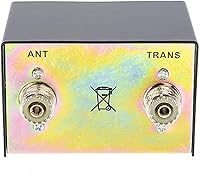
  • Switching: Dedicated FWD (forward) and REF (reflected) buttons allow the user to measure both transmitted power and reflected power independently.
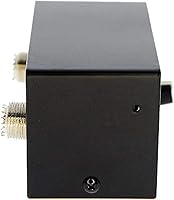
  • Dimensions: The unit measures 84×59×52 mm (approximately 4.13″ × 3.39″ × 3.15″), making it compact enough for dashboard or shelf mounting.
  • Weight: The meter weighs 8.8 ounces, light enough for easy repositioning between mobile installations without any specialized mounting hardware.
  • Impedance: Designed for 52-ohm impedance systems, which matches the standard coaxial cable and connector configurations used in CB radio antenna setups.
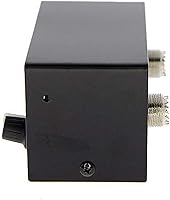
  • Connector Type: Uses SO-239 ports compatible with PL-259 connectors; a short PL-259 jumper cable is required for in-line installation but is not included in the box.
  • Insertion Loss: When permanently installed in a transmission line, the SW-111 introduces no measurable insertion loss, preserving full antenna system efficiency.
  • Installation Type: Supports both permanent in-line installation and temporary portable use, giving operators flexibility depending on their setup.
  • Color: Available in black with a standard analog meter face and clearly printed scale markings for SWR and power readings.
  • Manufacturer: Manufactured by SURECOM and sold under the Mcbazel brand through authorized retail and online distribution channels.
  • Compatibility: Strictly compatible with CB radio systems operating in the 27 MHz band; not suitable for amateur radio, GMRS, scanner, or any VHF/UHF application.
  • Included Manual: The package includes a printed user manual featuring a power-loss reference chart that correlates SWR values to percentage of power lost during transmission.
  • Housing Material: The outer enclosure is constructed from molded plastic, keeping the unit lightweight but making it less suited to harsh outdoor or high-vibration environments long term.

Related Reviews
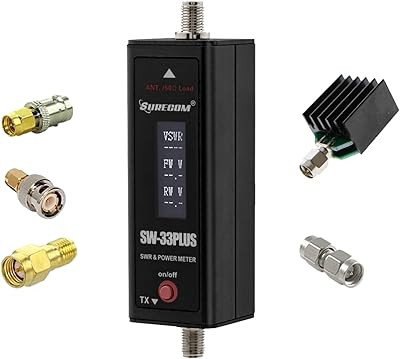
Mcbazel Surecom SW-33 Plus 100W Power & SWR Meter
84%
94%
Accuracy
91%
Ease of Use
89%
Portability
83%
Build Quality
87%
Compatibility with Radio Systems
More
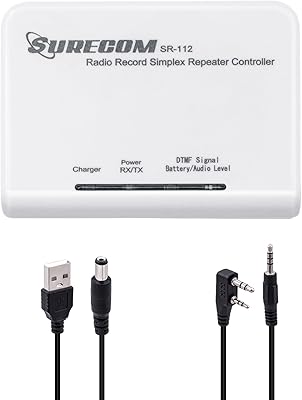
Mcbazel Surecom SR-112 Cross Band Radio Simplex Repeater Controller
85%
91%
Value for Money
88%
Ease of Setup
94%
Portability
86%
Battery Life
72%
Range Performance
More
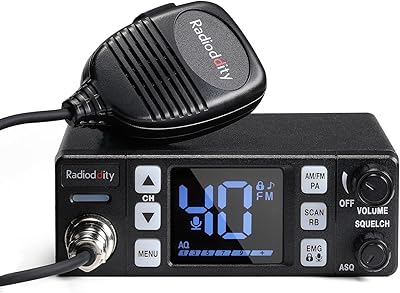
Radioddity CB-606 CB Radio
76%
88%
Ease of Installation
86%
Display Readability
67%
Audio Clarity & Speaker Output
63%
Microphone Quality
81%
Squelch Performance
More
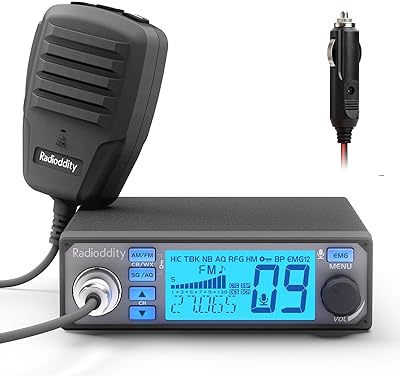
Radioddity CB-900 PRO AM/FM CB Radio
78%
83%
Audio Clarity & Receive Quality
74%
Transmit Quality & Microphone Performance
78%
Noise Reduction Effectiveness
69%
AM/FM Dual-Mode Operation
86%
NOAA Weather Alert Reception
More
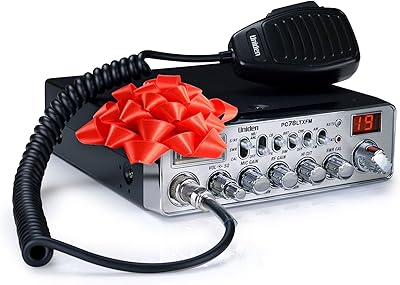
Radioddity CB-500 CB Radio Mobile Transceiver
79%
88%
Audio Clarity
86%
Noise Reduction Performance
67%
Transmission Range
83%
Ease of Installation
63%
Menu Navigation & Usability
More
Uniden PRO538HHFM Handheld/Mobile CB Radio
72%
83%
Dual-Mode Versatility
58%
Real-World Range
81%
NOAA Weather Alerts
54%
Battery Life
61%
FM Mode Performance
More
Uniden PRO510XL 40-Channel CB Radio
82%
86%
Audio Clarity
83%
Noise & Interference Control
91%
Ease of Installation
74%
Build Quality
88%
Value for Money
More
Uniden PRO520XL 40-Channel CB Radio
81%
86%
Audio Clarity
83%
Noise Reduction
78%
Build Quality
91%
Ease of Installation
67%
Microphone Quality
More
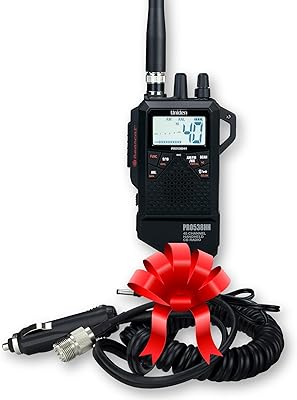
Uniden PC78LTXFM 40-Channel AM/FM CB Radio
79%
88%
Audio Clarity
71%
Transmission Range
84%
Build Quality
82%
Ease of Installation
86%
Built-in SWR Meter
More
Jazmm Portable AM/FM/SW Pocket Radio
74%
83%
FM Reception Quality
54%
Shortwave Performance
88%
Battery Life
71%
AM Reception Quality
62%
Build Quality & Durability
More

FAQ

No, and this is worth being very clear about before purchasing. The SW-111 is engineered exclusively for the 27 MHz CB radio band. If you key up a VHF, UHF, or ham radio HF rig through it, you will not get a valid reading and you risk damaging the meter. Pick up a wideband SWR meter if you need coverage beyond the CB band.

You will need a short PL-259 jumper cable — one to connect your radio to the meter and another to connect the meter to your antenna. These are not included in the package, which is one of the most common complaints from first-time buyers. Pick up two short PL-259 to PL-259 patch cables before you start your installation to avoid a frustrating delay.

The process is straightforward. Connect the meter between your radio and antenna using PL-259 jumper cables, then set the power switch to the range that matches your radio output. Switch to FWD mode, key up your microphone briefly, and note the needle position. Then switch to REF mode and key up again to read the reflected power and calculate your SWR. Adjust your antenna length and repeat until the SWR reading drops as close to 1:1 as possible — ideally under 1.5:1.

Yes, that is actually one of the practical strengths of this CB antenna meter. It introduces no measurable insertion loss when wired in-line, so your signal is not being degraded by having it in the circuit. Many truckers and home base operators leave it permanently connected so they can do a quick SWR spot-check any time without swapping cables.

For the vast majority of CB users — including serious hobbyists and mobile operators — the ±5% SWR accuracy is more than sufficient to get your antenna tuned well and confirm your system is performing correctly. Where it falls short is precision RF measurement work; the ±10% power tolerance in particular means the wattage reading is best treated as a reliable ballpark rather than an exact figure.

The 100W maximum power range covers standard CB radio output and somewhat elevated power levels, but if you are running a linear amplifier pushing significantly beyond 100W, this meter is not rated for that and you should look for a higher-capacity unit. Exceeding the rated input power on any SWR meter risks permanently damaging the detector element.

It holds up reasonably well against competing units at a similar price. The dual power range is a practical advantage over single-range budget meters, and the build quality is on par with what the price tier typically delivers. Users who have tried multiple budget analog meters generally rate it as competitive, though none of these meters — including this one — will match the accuracy or durability of mid-range or professional-grade instruments.

The most common cause is a connection issue rather than a faulty meter. Check that all your PL-259 connectors are fully threaded and making solid contact — even a slightly loose connector can kill your reading. Also confirm you have the power range set correctly; if you are running a 4-watt stock CB radio on the 100W range, the needle deflection will be minimal and hard to read accurately. Switch to the 10W range for low-power radios.

It is a fair concern. The housing is molded plastic and while it handles normal in-cab temperatures without issue for most users, prolonged exposure to extreme heat — like sitting on a black dashboard in direct summer sun — could potentially warp it over time. Most operators mount it in a shaded spot behind or below the dash, which keeps it well within safe operating conditions.

Not really. If you can screw on a PL-259 connector, you can install this meter. The only tools you might need are a wrench to snug up the connector nuts if you want a really solid mechanical connection. The FWD/REF switching and the tuning workflow are intuitive enough that most people get their first valid SWR reading within a few minutes of unboxing.

Where to Buy