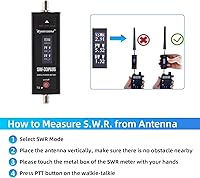
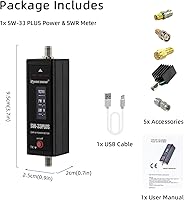
Overview

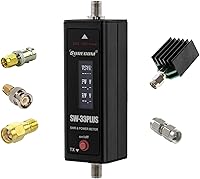
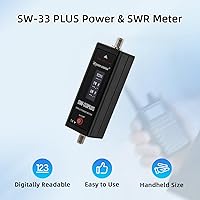
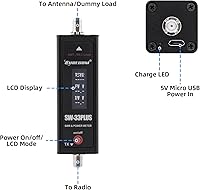
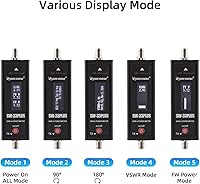
The Mcbazel Surecom SW-33 Plus Power SWR Meter is a compact, handheld instrument built squarely for amateur radio operators who need to check antenna performance across the VHF and UHF bands. It handles frequencies from 125 to 525 MHz and measures power up to 100W — enough to cover most handheld and mobile rigs. The digital readout displays both forward and reflected power with no calibration step required, which is genuinely refreshing. It ships with a practical bundle of SMA and BNC adapters, a small dummy load, and a micro USB charging cable. At its mid-range price point, it sits comfortably within reach of hobbyists and newly licensed hams alike.

Features & Benefits

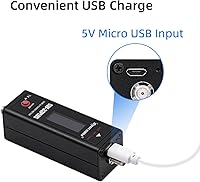
What makes this SWR meter genuinely useful day-to-day is how little friction it creates. Plug it in, key up, and you have an instant VSWR reading — no fiddling with needle adjustments or reference power levels. The included SMA and BNC adapters mean connecting to a Baofeng, Yaesu, or most other VHF/UHF handhelds takes seconds. The rechargeable battery charges via standard micro USB, so one less battery type to stock in your go-bag. Worth flagging clearly: this handheld power meter is designed for analog signals only. If you are running DMR or any other digital mode, it will not deliver valid readings — that is a hard limitation, not a minor footnote.

Best For

This handheld power meter earns its place in a few specific scenarios. Licensed hams regularly tuning 2-meter or 70-centimeter antennas on HTs or mobile rigs will find it covers exactly the frequency window they need. Field day operators and SOTA activators will appreciate how easily it slips into a shirt pocket between contacts. It is also a solid pick for anyone building homebrew antennas who wants a quick sanity check without hauling bench equipment outdoors. Beginners benefit most — there is no calibration ritual to learn, just connect and read. Technicians prepping a repeater site will also find it handy for a fast efficiency check before final installation.

User Feedback

Across more than 650 ratings, the SW-33 Plus holds a strong 4.6-star average, and reading the reviews reveals a consistent pattern. Most owners are satisfied with the accuracy of readings, with several confirming the numbers hold up well against far pricier bench meters. That said, treat it as a reliable field tool rather than a precision instrument. A recurring complaint involves the SMA connector feeling less sturdy after repeated plug-and-unplug cycles, so handle it with some care. The included dummy load also has a firm 20W ceiling — exceed that and damage is likely. On balance, buyer sentiment is genuinely positive for what this meter is designed to do.

Pros

  • Instant digital VSWR and power readings with zero calibration required — just plug in and measure.
  • Covers 125 to 525 MHz, making it practical across both the 2-meter and 70-centimeter amateur bands.
  • Ships with a full adapter set including SMA and BNC connectors, compatible with most handheld radios out of the box.
  • Rechargeable via micro USB, so there is no need to carry spare AA or AAA batteries into the field.
  • Compact enough to slip into a shirt pocket, which genuinely matters on a field day or activation hike.
  • A 5 to 20W dummy load is included, giving beginners a safe way to bench test without connecting a live antenna.
  • Readings have been confirmed reliable by users who cross-checked against significantly more expensive meters.
  • At its price point, the accessory bundle alone represents solid value for a new ham building out a kit.
  • A 4.6-star average across more than 650 reviews reflects consistently positive real-world satisfaction.

Cons

  • Completely incompatible with DMR and other digital radio modes — a critical limitation not always clear at first glance.
  • The included dummy load is rated only to around 20W, which restricts its usefulness for higher-power testing scenarios.
  • The SMA connector shows signs of wear for users who connect and disconnect it frequently over time.
  • No water or weather resistance of any kind, limiting usefulness in rain-prone outdoor environments.
  • Maximum measurable power of 100W means it cannot serve operators running amplifiers or higher-power base stations.
  • Some buyers report the manual lacks sufficient detail for users who are entirely new to SWR measurement concepts.
  • The single-channel design offers no simultaneous multi-band monitoring capability for more complex setups.
  • Not a precision instrument — field-grade accuracy is adequate for most hams but unsuitable for technical or compliance measurements.

Ratings

Our AI-generated scores for the Mcbazel Surecom SW-33 Plus Power SWR Meter were produced by analyzing verified global user reviews, with spam, bot-submitted, and incentivized feedback actively filtered out before scoring. Each category reflects the honest distribution of real buyer experiences — strengths are credited where they are genuine, and recurring frustrations are weighted fairly rather than buried. The result is a transparent snapshot of how this handheld power meter actually performs across a broad range of amateur radio use cases.

Ease of Use
93%
The calibration-free digital readout is consistently cited as the standout experience for new buyers. Operators at every skill level — from first-time Technician licensees to experienced hams — report being able to take their first meaningful SWR reading within minutes of opening the box, with no manual fiddling required.
A small number of users who come from analog meter backgrounds initially find the lack of a sweep needle disorienting, preferring a visual reference point they are already familiar with. The printed manual has also been flagged as sparse for absolute beginners who have never used any SWR meter before.
Measurement Accuracy
81%
19%
Multiple reviewers have placed the SW-33 Plus side by side with bench meters costing several times more and found the readings to be closely aligned across the VHF and UHF bands. For field use and antenna tuning on handheld radios, the accuracy is more than sufficient to make confident adjustments.
It is not a calibrated laboratory instrument, and buyers who need traceable measurement accuracy for technical compliance work will be disappointed. At higher power levels approaching the 100W ceiling, a handful of users note slight inconsistency compared to reference meters, though this is rarely an issue for typical HT and mobile rig operation.
Build Quality
67%
33%
The overall housing feels solid and reasonably well-constructed for its price tier, and most users report no issues with the unit itself over normal periods of use. The compact form factor holds up well in a shirt pocket or kit bag across field days and portable activations.
The SMA connector is a documented weak point — users who regularly swap the meter between multiple radios report the connector loosening noticeably after several months of cycling. This is the single most common durability complaint across the review base and is worth taking seriously if frequent connection changes are part of your workflow.
Portability
94%
At 160 grams and barely over two inches tall, this handheld power meter is genuinely pocketable in a way that most SWR meters simply are not. SOTA activators and field day operators in particular highlight how little it adds to a carry load, making it easy to justify packing even when weight is a constraint.
There is no protective case or holster included, so the exposed SMA connectors are vulnerable to damage if the unit rattles around loose in a bag. Users heading into rough outdoor environments will want to source a small pouch or case independently to avoid connector wear from incidental contact.
Frequency Coverage
88%
The 125 to 525 MHz span covers the two most commonly used amateur bands — 2 meters and 70 centimeters — in a single unit, which is the practical sweet spot for VHF/UHF handheld and mobile operators. Most buyers find this range maps precisely onto their day-to-day radio activity.
The meter offers no coverage below 125 MHz, ruling out HF operators or those working in the lower VHF range. Users who also want to test equipment in the 6-meter band or below will need a separate instrument, as this one is narrowly focused on the VHF/UHF window.
Adapter & Compatibility Kit
86%
The bundled adapter set — covering SMA male-to-male, SMA male-to-female, SMA female to BNC female, and SMA male to BNC male — means the vast majority of VHF/UHF handheld radios can be connected without a separate trip to the parts bin. Buyers consistently mention this as genuine added value that competing units at similar prices do not include.
The adapters themselves are functional but feel lightweight, and a few users have noted they are not the most confidence-inspiring pieces of hardware for repeated use. For heavy rotation, it may be worth replacing them with higher-quality third-party equivalents rather than relying on the included hardware long-term.
Included Dummy Load
62%
38%
Having a 5 to 20W dummy load in the box is a genuinely useful inclusion, particularly for beginners who want to test a radio on the bench without needing a connected antenna. It removes one more barrier for new operators getting started with RF testing.
The 20W ceiling is a real limitation — operators running even modestly powered mobile rigs will exhaust the dummy load's safe range quickly. Several reviewers have damaged or destroyed the included load by not reading the fine print, which points to a need for clearer labeling and more prominent warnings in the product documentation.
Digital Display
84%
The direct digital readout for both forward and reflected power is clean and easy to read at a glance, even in bright outdoor lighting conditions. Users who have previously struggled to interpret needle deflection on analog meters genuinely appreciate having a concrete number rather than a relative position on a scale.
There is no backlight on the display, which creates real usability issues in low-light situations — inside a vehicle cab at dusk, or at an evening club event. This is a notable omission that a handful of reviewers specifically flagged as something they wish had been addressed in the Plus revision.
DMR/Digital Compatibility
14%
86%
There is effectively nothing positive to say here for digital mode operators. For the analog-only users this meter is designed for, the limitation is simply irrelevant and causes no friction whatsoever in their day-to-day use.
The incompatibility with DMR and other digital radio modes is the most significant buyer dissatisfaction point in the review base. Users who operate on digital modes receive no valid readings, and the limitation is not prominently flagged in the product listing, leading to frustrated returns and one-star reviews from buyers who did not realize the restriction before purchasing.
Battery & Charging
79%
21%
The micro USB rechargeable design means one less consumable to manage in a field kit, and the charging cable is included in the box. Operators who charge their radios and accessories the night before a portable activation find the USB workflow fits naturally into an existing routine.
Mcbazel does not publish official battery life figures, which makes it hard to plan for extended field deployments with confidence. A small number of users report the battery depleting faster than expected after six or more months of ownership, suggesting the internal cell may degrade noticeably over time with regular use.
Value for Money
89%
Considering the accessory bundle, the calibration-free digital readout, and the real-world measurement reliability users report, the SW-33 Plus delivers an unusually complete package at its mid-range price point. For a new ham setting up their first test kit, the per-dollar return is hard to beat among compact VHF/UHF meters.
Buyers who later outgrow the 100W power ceiling or need DMR compatibility will find themselves shopping for a replacement sooner than they hoped, which slightly undercuts the long-term value proposition. The connector durability concern also means some users end up spending extra on replacement hardware that ideally should not have been necessary.
Setup & First Use
91%
Unboxing to first measurement typically takes under five minutes, with no software installation, firmware updates, or configuration steps involved. The included adapter kit means most users can connect their specific radio on the first attempt without sourcing additional parts.
The manual is widely described as too brief and text-light, particularly for users unfamiliar with SWR concepts. A short illustrated quick-start card would significantly improve the out-of-box experience for the beginner segment this meter is clearly designed to serve.
Weather Resistance
22%
78%
For purely indoor bench testing or use in dry, sheltered conditions, the lack of weather sealing is entirely irrelevant and has no effect on the unit's core performance.
With no water or dust resistance rating whatsoever, the SW-33 Plus is genuinely vulnerable in typical outdoor amateur radio environments. Rain during a field day or dusty terrain on a portable activation are realistic scenarios where operators would need to actively protect the unit, adding friction that a sealed or weather-resistant design would eliminate.

Suitable for:

The Mcbazel Surecom SW-33 Plus Power SWR Meter is an excellent fit for licensed amateur radio operators who regularly work in the 2-meter and 70-centimeter bands and want a portable, no-fuss way to verify antenna performance in the field. Newly licensed Technicians who find traditional analog SWR meters intimidating will appreciate the instant digital readout — there is simply nothing to calibrate or interpret beyond the number on screen. Field day participants and SOTA activators benefit from how compact and pocket-friendly the unit is, especially when every gram of carry weight matters. Homebrew antenna builders will find it invaluable for rapid iteration, letting them test and adjust without committing to a full bench setup. It also makes sense for repeater technicians doing a quick pre-deployment efficiency check on a portable rig before a permanent installation is finalized.

Not suitable for:

The Mcbazel Surecom SW-33 Plus Power SWR Meter is a poor choice for anyone operating on digital modes, particularly DMR — the meter simply cannot produce valid readings on digital signals, and this is a firm technical limitation rather than a minor quirk. Operators running high-power HF rigs or amplifiers pushing well beyond 100W will need a meter with a higher power ceiling, as this unit is not designed for those levels. The included dummy load tops out at around 20W, so users who routinely test at higher power levels will need to source a separate, appropriate load. Those expecting lab-grade measurement precision should look elsewhere — while real-world users confirm it compares favorably to pricier meters for field use, it is not a substitute for a calibrated bench instrument. Anyone who connects and disconnects frequently at high throughput may also find the SMA connector shows wear over time, which is worth factoring into long-term reliability expectations.

Specifications

  • Manufacturer: This meter is made by Mcbazel, a brand specializing in amateur radio accessories and test equipment.
  • Model Number: The exact model designation is SW-33 Plus, identifying this as the updated variant in the Surecom SW-33 line.
  • Frequency Range: The unit measures SWR and power across a continuous range of 125 to 525 MHz, covering VHF and UHF bands.
  • Max Power: The meter can handle and display forward power readings up to a maximum of 100W.
  • Display Type: Readings are shown on a direct digital display for both forward and reflected power, with no needle or analog scale to interpret.
  • Calibration: No calibration procedure is required before use; the unit is factory-set and ready to measure straight out of the box.
  • Dimensions: The body measures approximately 0.98 by 0.98 by 2.36 inches, making it one of the most compact SWR meters in its class.
  • Weight: The complete unit weighs 160 grams (5.6 oz), light enough for comfortable one-handed operation and easy packing.
  • Battery: Power comes from a single built-in rechargeable cell that charges via a standard micro USB cable, which is included in the box.
  • Input Voltage: The charging circuit operates at 5V DC, compatible with any standard USB power adapter or power bank.
  • Connector Types: The meter body uses SMA-type connectors, with included adapters expanding compatibility to BNC male and female interfaces.
  • Included Adapters: The package contains four adapters: SMA male to SMA male, SMA male to SMA female, SMA female to BNC female, and SMA male to BNC male.
  • Dummy Load: A 5 to 20W dummy load is included for bench testing, allowing safe RF transmission checks without connecting a live antenna.
  • Radio Compatibility: This meter is compatible with analog VHF and UHF radios only; it does not produce valid readings when used with DMR or other digital-mode transceivers.
  • Water Resistance: The unit carries no water or weather resistance rating and should be kept dry during use and storage.
  • Channels: The meter operates as a single-channel instrument, measuring one signal path at a time.
  • Included Accessories: In addition to adapters and the dummy load, the box includes a micro USB charging cable and a printed user manual.
  • Best Sellers Rank: At the time of this review, the SW-33 Plus holds a rank of approximately 227 in the Portable FRS Two-Way Radios category on Amazon.

Related Reviews
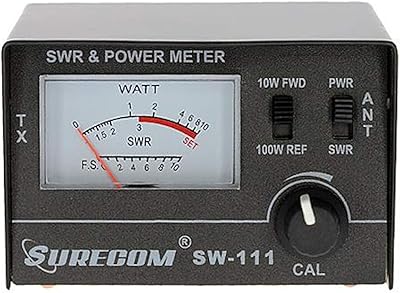
Mcbazel SURECOM SW-111 CB Radio SWR Meter
75%
91%
Ease of Setup
78%
SWR Measurement Accuracy
71%
Power Measurement Accuracy
88%
Display Readability
63%
Build Quality
More
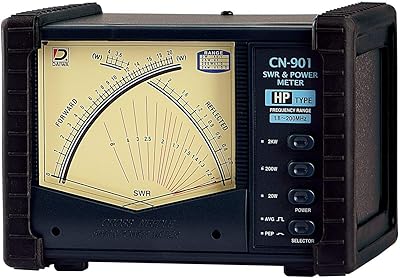
Daiwa CN-901 Professional Series SWR & Power Meter
88%
91%
Overall Performance
94%
Accuracy of Measurements
88%
Portability
90%
Ease of Use
89%
Durability
More
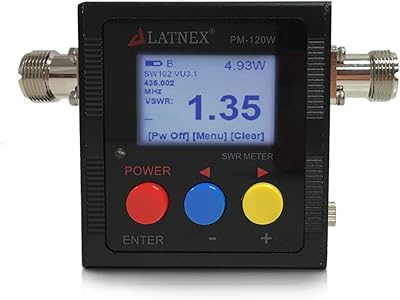
LATNEX PM-120W VHF UHF RF Power Meter
74%
88%
Measurement Accuracy
67%
Display Readability
91%
Ease of Setup
14%
Digital Mode Compatibility
86%
Value for Money
More
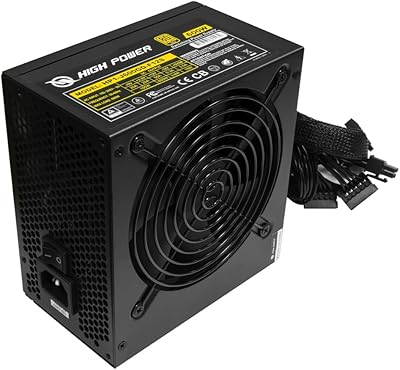
High Power 600W Gold ATX Power Supply
76%
88%
Energy Efficiency
84%
Noise Level
82%
Power Stability
81%
Value for Money
51%
Cable Management
More
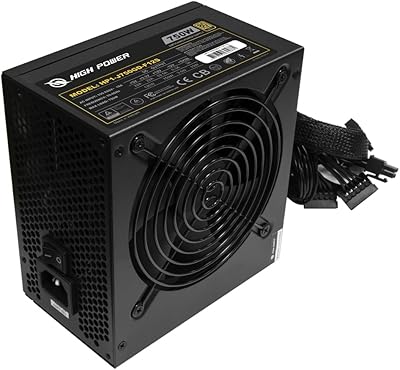
High Power 750W 80 Plus Gold Certified PC Power Supply
86%
94%
Energy Efficiency
88%
Noise Level
85%
Ease of Installation
91%
Build Quality
89%
Power Delivery Stability
More
NISSEI DG-503 Digital RF SWR Power Meter
78%
91%
Display Clarity
88%
Dual-Band Versatility
74%
Measurement Accuracy
83%
Build Quality
54%
Setup & Safety Risk
More
Dorco Pace 6 Plus Power Razor System
84%
88%
Shaving Performance
85%
Comfort and Smoothness
80%
Ease of Use
91%
Vibration Effectiveness
83%
Skin Sensitivity and Irritation
More
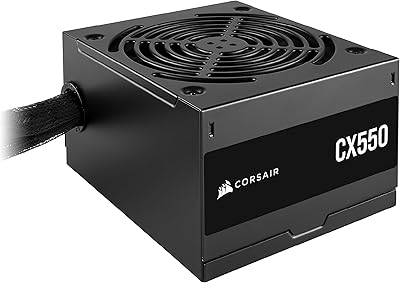
Corsair CX550 550W ATX Power Supply
80%
91%
Value for Money
93%
Power Stability
88%
Noise Level
54%
Cable Management
82%
Build Quality
More
Corsair CX750 ATX Power Supply
82%
93%
Power Reliability
88%
Noise Level
91%
Value for Money
58%
Cable Management
84%
Build Quality
More
Corsair SF850 80 Plus Platinum SFX Power Supply
89%
94%
Energy Efficiency
91%
Build Quality
89%
Noise Performance
88%
Compatibility with Next-Gen Hardware
85%
Installation Ease
More

FAQ

Yes, it works well with Baofeng handhelds and most other analog VHF/UHF radios. The included SMA adapters mean you can connect directly without hunting down separate hardware. Just make sure you are transmitting an analog FM signal, not a digital one.

No, and this is worth being direct about. The SW-33 Plus is not compatible with DMR or any other digital radio mode. If you key up on a DMR channel, the readings will not be valid. It is designed exclusively for analog VHF/UHF operation.

For field use, most owners find it performs surprisingly well. Several users have cross-referenced its readings against significantly more expensive instruments and found them to align closely. That said, it is not a calibrated laboratory instrument, so if you need traceable measurement accuracy for technical or compliance work, you should use a dedicated bench meter.

No, the included dummy load is rated for a range of roughly 5 to 20W. Pushing more power through it risks damaging the load. If you regularly test at higher output levels, pick up a separate dummy load rated for your actual transmit power before you start.

Not at all. That is genuinely one of the more convenient things about this meter. It comes factory-ready — just connect it between your radio and antenna, key up briefly, and read the numbers directly off the display.

The meter itself has SMA connectors, but the included adapter kit covers SMA male-to-male, SMA male-to-female, SMA female to BNC female, and SMA male to BNC male configurations. Most handheld and mobile radios in the VHF/UHF space use one of those connector types, so you should be set without buying anything extra.

Charge time and runtime are not officially specified, but the built-in battery charges via a standard micro USB cable, which is included. Because it is a rechargeable internal cell, you do not need to carry spare batteries — just top it up from any USB source before a field day or activation.

It is actually a natural fit for that use case. The unit is small enough to fit in a shirt pocket, weighs only around 160 grams, and requires no external power source beyond its built-in battery. Many SOTA and portable operators specifically value how little bulk it adds to a field kit.

Unfortunately, yes. A recurring theme in user feedback is that the SMA connector can feel less secure after repeated plug-and-unplug cycles. It is not universal, but it is worth being intentional about connecting and disconnecting carefully rather than forcing or torquing the connector. If longevity is a concern, using an intermediate pigtail adapter as a sacrificial connector is a common workaround.

It displays both forward power and reflected power (used to calculate VSWR) directly on the digital readout without requiring you to toggle between modes. That makes quick checks much faster, since you get the full picture from a single brief transmission.

Where to Buy