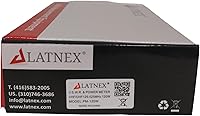
Overview
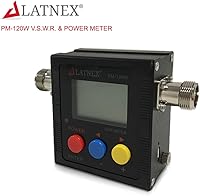
The LATNEX PM-120W VHF UHF RF Power Meter is a compact, practical tool aimed squarely at ham radio operators who need reliable, real-time SWR and power readings on VHF and UHF bands. Where most entry-level meters top out at 2m or struggle with 70cm, this inline SWR meter covers 125 to 525 MHz — a range that actually matches how many operators work. It connects via standard SO-239 ports, so it drops into most existing setups without hunting for adapters. A built-in rechargeable Li-ion battery means you can run it in the field without tethering it to a bench supply. That said, this is a mid-range hobbyist instrument — solid for its price, but not a replacement for calibrated lab equipment.
Features & Benefits
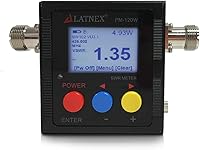
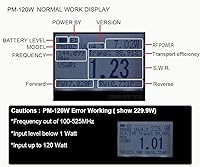
One of the more practical aspects of this VHF/UHF power meter is that it shows forward and reflected power as direct digital readings — no calibration tables, no needle interpretation, just numbers on screen. The built-in frequency counter is a genuine extra; it displays your operating frequency live, which turns this from a one-trick watt meter into something slightly more useful on the bench or in the field. Insertion loss sits at 0.3 dB or less, low enough that you can leave it inline full-time without worrying about signal degradation. It handles up to 120 watts, covering handhelds, mobile rigs, and lighter base setups. The backlit display, power-save mode, and compact size round out a package that travels well.
Best For
This inline SWR meter is a natural fit for licensed hams who spend time tuning antennas on the 2m or 70cm bands and want a fast, readable check without setting up a full test bench. It works particularly well for portable and mobile operators — the rechargeable battery eliminates the need for an external power source, and the small footprint means it tucks into a kit bag without fuss. Technicians who need to spot-check repeater output or trace feedline issues will also find it useful. Beginners moving away from analog needle meters will appreciate how much easier the digital display is to read. One firm boundary: this meter is incompatible with digital radios, and it won't cover anything below 125 MHz or above 120W.
User Feedback
Across roughly 380 reviews, the LATNEX PM-120W holds a 4.5-star average — solid, and earned rather than inflated. Most positive feedback centers on how the meter performs right out of the box: operators report reliable, consistent readings without any setup headaches, and several mention the frequency counter as a welcome surprise. On the other side, the viewing angle draws regular complaints — the display is noticeably harder to read unless you're positioned squarely in front of it. Battery longevity gets mixed notices; field users generally find it acceptable, but it isn't exceptional. The most important caveat echoed across reviews: digital mode incompatibility is real and has tripped up more than a few buyers who didn't read carefully before purchasing.
Pros
- Covers 125 to 525 MHz, hitting both the 2m and 70cm bands that most VHF/UHF operators actually use.
- Digital readout shows forward and reflected power instantly — no calibration steps, no charts, no guesswork.
- The built-in frequency counter is a genuine bonus, providing a live frequency display without needing a second instrument.
- Insertion loss of 0.3 dB or less is low enough to leave this VHF/UHF power meter inline permanently without signal concerns.
- Standard SO-239 connections mean it plugs straight into most ham setups without hunting for adapters.
- Rechargeable Li-ion battery makes it fully self-contained for field use, SOTA activations, and mobile installs.
- Backlit display with auto-off stays readable in dim conditions without draining the battery unnecessarily.
- At its price tier, few competing meters bundle both a watt meter and frequency counter in one compact package.
- Rated 4.5 stars across nearly 400 real-world reviews, reflecting consistent satisfaction from working operators.
- No calibration required out of the box — install it, power it on, and start reading immediately.
Cons
- Completely incompatible with digital mode radios — DMR, D-STAR, and similar protocols are a hard no.
- Display viewing angle is a recurring complaint; readings become noticeably harder to read from any off-axis position.
- Frequency range starts at 125 MHz, leaving HF-band operators with zero useful measurement capability.
- A 120-watt power ceiling rules out amplified base-station setups and any high-power mobile configuration.
- Battery endurance is adequate but unremarkable; heavy field use may require more frequent charging than expected.
- No protective carrying case or pouch is included, which feels like an oversight for a device marketed toward field use.
- For operators who split time between HF and VHF/UHF, this inline SWR meter covers only part of the picture, requiring a second meter.
- The digital radio incompatibility is easy to miss if you skim the product listing, and returns suggest it catches buyers off guard regularly.
- No data logging or computer interface means all measurements have to be recorded manually during a testing session.
Ratings
The LATNEX PM-120W VHF UHF RF Power Meter has been evaluated by our AI rating system after processing verified buyer reviews from operators worldwide, with spam, bot-generated, and incentivized feedback actively filtered out before scoring. The categories below reflect a balanced synthesis of real-world experiences across skill levels, from first-time licensees to seasoned field technicians. Both the genuine strengths and the recurring frustrations documented by actual buyers are transparently represented in every score.
Measurement Accuracy
Display Readability
Ease of Setup
Digital Mode Compatibility
Value for Money
Frequency Counter
Battery Life
Portability
Insertion Loss
Build Quality
Power Range Coverage
Connector Quality
Power Save & Auto-Off
Documentation
Suitable for:
The LATNEX PM-120W VHF UHF RF Power Meter is well suited to licensed ham radio operators who regularly work the 2m and 70cm bands and want a fast, readable way to verify antenna SWR and transmitter output without a complicated setup. If you tune homebrew antennas, check feedline performance after a connector replacement, or just want a sanity check before keying up at full power, this VHF/UHF power meter delivers exactly that kind of quick, reliable answer. Mobile and portable operators benefit most from its self-contained rechargeable battery — there is no need to tap into a vehicle circuit or haul a bench supply just to get a reading. SOTA activators and field-day participants will appreciate how little space it takes up in a kit bag. Technicians doing informal repeater checks or feedline diagnostics will also find it practical: it drops straight into any SO-239-equipped run without adapters and adds virtually no signal loss to the path.
Not suitable for:
The LATNEX PM-120W VHF UHF RF Power Meter is simply the wrong tool if your operating focus is anywhere on HF — its frequency coverage begins at 125 MHz, so 40m, 20m, 17m, and everything below that is completely outside its range. Digital mode operators running DMR, D-STAR, System Fusion, or any similar protocol need to know upfront that the meter is explicitly incompatible with those radio types — this is not a minor caveat but a firm technical limitation that has genuinely surprised more than a few buyers. Anyone running a linear amplifier or any setup that pushes past 120 watts will also hit a hard ceiling. If you need certified, traceable measurement accuracy for professional RF work or equipment testing, this inline SWR meter is not in that league — it performs reliably for hobbyist and field use, but it does not replace a calibrated lab instrument. Finally, operators who want a single meter to cover both HF and VHF/UHF will need a second device.
Specifications
- Brand: Manufactured by LATNEX, a brand focused on RF measurement tools for amateur and hobbyist radio applications.
- Model: Designated PM-120W, a model identifier that directly references the 120-watt maximum power measurement capacity.
- Frequency Range: Covers VHF and UHF frequencies from 125 MHz to 525 MHz, encompassing both the 2m and 70cm amateur bands.
- Max Power: Measures forward and reflected power up to a maximum of 120 watts across its full frequency range.
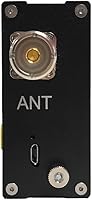
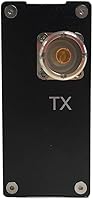
- Connector Type: Equipped with standard SO-239 (UHF-style) connectors on both input and output ports, accepting PL-259 plugs directly.
- Insertion Loss: Signal insertion loss is rated at 0.3 dB or less, low enough to permit permanent inline installation without degrading transmission quality.
- Frequency Counter: Includes a built-in frequency counter that displays the active operating frequency in real time alongside power measurements.
- Display: Features a digital readout with backlight, simultaneously showing forward power, reflected power, and live operating frequency.
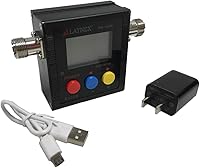
- Battery: Powered by a rechargeable 3.7V Li-ion cell (one A-size battery included) with no external power supply or bench connection required.
- Dimensions: Physical footprint measures 1.46 × 2.6 × 2.68 inches, compact enough for both portable kit bags and permanent mobile installations.
- Weight: Weighs approximately 10.6 oz (0.3 kg), making it light enough to carry without adding meaningful load to a field kit.
- Power Save: Incorporates an adjustable power-save mode and an auto-off function to conserve battery charge during extended field sessions.
- Calibration: No user calibration is required; the meter delivers direct digital readings immediately upon powering on, straight out of the box.
- Digital Modes: Explicitly not compatible with digital radio protocols including DMR, D-STAR, and System Fusion — analog FM and SSB use only.
- Water Resistance: Rated as waterproof, offering basic protection against moisture exposure during outdoor or field operation.
Related Reviews
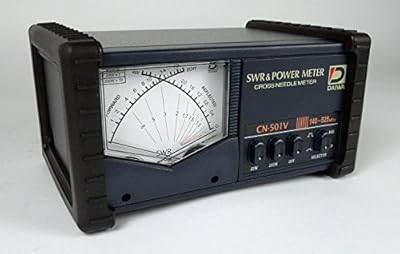
Daiwa CN-501V VHF/UHF SWR/Power Meter
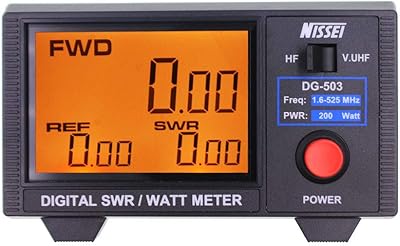
NISSEI DG-503 Digital RF SWR Power Meter
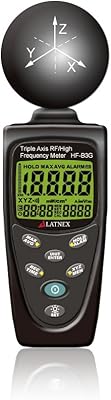
LATNEX HF-B3G EMF Meter
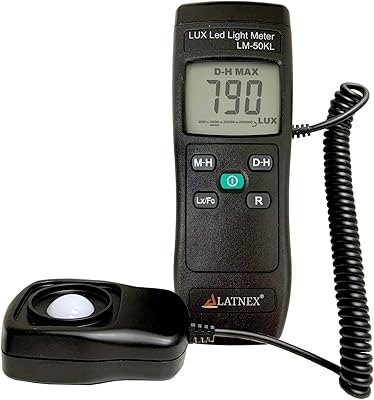
LATNEX LM-50KL Digital Lux Light Meter
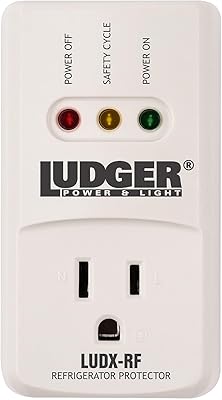
Ludger LUDX-RF Refrigerator Surge Protector
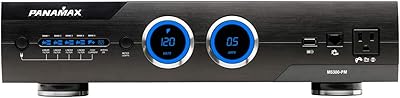
Panamax M5300-PM Home Theater Power Conditioner
Panamax M5400-PM Power Conditioner
Mcbazel SURECOM SW-111 CB Radio SWR Meter
Meiyue Adjustable Power Supply 3V-24V 5A 120W