





Overview

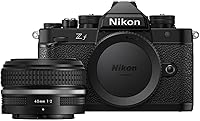
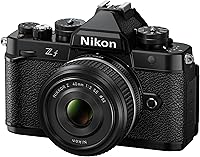
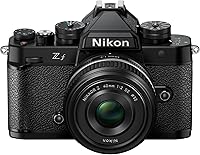
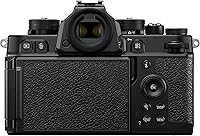
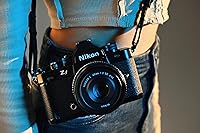
The Nikon Z f is the kind of camera that stops people on the street before you've even raised it to your eye. Wrapped in a body that channels the tactile charm of film-era SLRs, it pairs physical exposure dials with a thoroughly modern full-frame sensor and processor. The bundled Special Edition 40mm f/2 lens fits the aesthetic perfectly — compact, understated, and genuinely capable. In-body stabilization makes handheld shooting far more forgiving than the retro styling might suggest. This isn't a nostalgia prop; it's a fully capable enthusiast camera that happens to look fantastic doing its job.

Features & Benefits

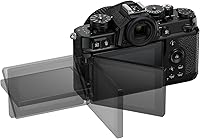
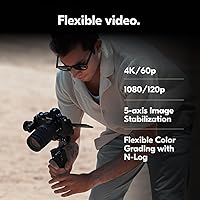
The 24.5MP BSI sensor produces files with genuinely impressive latitude — you can push shadows in post without things falling apart. EXPEED 7 drives the autofocus system, which recognizes nine different subject types and locks on with real confidence in everyday situations. On the video side, 4K/30p is oversampled from a 6K readout for excellent detail, while 4K/60p is also available, though shooters should verify crop factor specifics for their use case. 10-bit N-Log recording gives colorists meaningful flexibility. The Pixel Shift mode is a niche but impressive trick for landscape or product shooters who need maximum resolution from a perfectly static scene. The vari-angle touchscreen with Touch Fn rounds things out nicely for low-angle work.

Best For

Street photographers will feel right at home here. The dial-driven control layout means you can adjust exposure without diving into menus, which matters when moments happen fast. Travel shooters benefit from the relatively compact full-frame package — especially paired with the included 40mm prime, which covers everyday focal lengths without bulk. Hybrid creators who need usable stabilized footage but don't want to carry a dedicated video rig will find this retro mirrorless camera punches well above its size. It also makes a compelling step-up for anyone already invested in Nikon Z glass. Action or wildlife photographers expecting serious burst-mode depth or telephoto reach should look elsewhere.

User Feedback

Owners consistently praise the build quality and shutter feel, and the retro aesthetic earns genuine admiration rather than the skepticism that novelty cameras sometimes attract. The bundled SE lens is frequently singled out as a strong inclusion. On the downside, battery life comes up repeatedly — it's workable, but carrying a spare is sensible advice for full-day outings. Ergonomics split opinion: shooters with smaller hands find the grip perfectly adequate, while those with larger hands miss more body depth. N-Log footage earns praise, but newer users warn that grading it properly takes real time to learn. Autofocus tracking in cluttered scenes occasionally draws criticism, though everyday subject recognition is broadly well-regarded.

Pros

  • Physical exposure dials make shooting faster and more intuitive without touching any menus.
  • The 24.5MP BSI sensor produces files with wide dynamic range that hold up well in post-processing.
  • In-body stabilization genuinely expands handheld shooting options in low-light environments.
  • The bundled SE 40mm f/2 lens is a capable, well-built prime — not a throwaway kit optic.
  • Nine-subject AF recognition handles everyday people, pets, and vehicle subjects reliably.
  • 4K/30p oversampled from 6K delivers notably detailed and clean video footage.
  • Ten-bit N-Log and HLG recording give serious videographers real color grading flexibility.
  • The retro mirrorless camera draws consistent praise for build quality that feels premium and durable.
  • Dual card slots add a practical backup safety net that working photographers will appreciate.
  • The vari-angle touchscreen with Touch Fn is a genuinely useful feature for low-angle and overhead work.

Cons

  • Battery life requires carrying at least one spare for any full-day shooting commitment.
  • The shallow grip depth is a recurring ergonomic complaint from photographers with larger hands.
  • N-Log footage has a steep enough learning curve to frustrate newer video shooters early on.
  • The 4K/60p mode introduces a crop factor that surprises buyers who did not research it beforehand.
  • The companion app for wireless transfer is inconsistent and slower than most users expect.
  • Autofocus tracking can lose confidence in cluttered scenes or against complex backgrounds.
  • The menu system depth takes meaningful time to learn, especially for photographers new to Nikon.
  • High ISO performance above 12800 degrades noticeably and limits practical low-light ceiling.
  • The leatherette exterior shows surface scuffs more visibly than some competing bodies over time.
  • There is no built-in flash, which occasionally frustrates buyers who want a basic fill option.

Ratings

Our scores for the Nikon Z f are generated by AI after analyzing thousands of verified global buyer reviews, with spam, bot-submitted, and incentivized feedback actively filtered out. The result is an honest composite that reflects where this full-frame Nikon genuinely excels and where real-world users have run into friction. Both the highlights and the frustrations are represented transparently below.

Build Quality & Design
93%
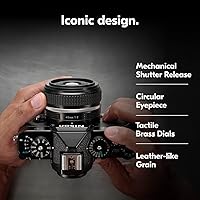
Owners are consistently impressed by how the retro mirrorless camera feels in hand — the metal top plate and physical dials give it a solidity that stands apart from plasticky competitors at this tier. The aesthetic isn't just decorative; the control layout genuinely speeds up shooting by keeping key settings accessible without a single menu dive.
A notable minority of buyers with larger hands find the shallow body depth uncomfortable during extended sessions, and a few users report the leatherette covering shows scuffs more visibly than expected over time.
Image Quality
91%
The 24.5MP BSI sensor consistently produces files with wide dynamic range and clean midtones — landscape and portrait shooters routinely push shadows two or three stops in post without unpleasant noise. Colors out of camera are well-regarded, and the full-frame rendering with the bundled 40mm lens draws frequent praise for natural subject separation.
At very high ISOs above 12800, fine detail starts to soften noticeably, which limits low-light performance compared to some newer full-frame rivals. Pixel Shift mode, while impressive on paper, requires a completely static subject and tripod setup that many buyers find too restrictive for regular use.
Autofocus Performance
82%
18%
For everyday subjects — people on a busy street, a dog in a park, a cyclist approaching head-on — the 9-subject recognition system locks fast and holds reliably. Users switching from older DSLR bodies consistently highlight the AF as one of the most noticeable improvements in their daily shooting experience.
In cluttered or layered scenes, such as subjects against busy backgrounds or overlapping foliage, tracking occasionally loses confidence and hunts briefly. Sports and wildlife shooters expecting the persistence of flagship mirrorless systems will find the Z f's AF ceiling lower than its price might suggest.
Video Capabilities
76%
24%
The 4K/30p oversampled output looks genuinely detailed and usable for professional-grade content without heavy sharpening. Ten-bit N-Log recording gives colorists real latitude, and the 1080/120p slow-motion mode is frequently praised by travel vloggers for adding production value with minimal extra effort.
The 4K/60p mode applies a crop that catches some buyers off guard after purchase, and N-Log footage has a steep enough learning curve that beginners often underexpose it badly in early sessions. Dedicated video shooters also flag the lack of waveforms and limited audio monitoring options as genuine workflow limitations.
In-Body Stabilization
84%
Handheld shooting at slower shutter speeds — think architecture interiors or dimly lit cafes — benefits noticeably from the sensor-shift IBIS. Travel photographers specifically mention being able to shoot sharp frames at speeds they would never have risked on an unstabilized body, which genuinely expands creative options without adding a gimbal to the bag.
In demanding conditions like walking shots or strong wind, the stabilization has its limits and occasional jello-like artifacts appear in video. A few users also note that the IBIS effectiveness rating feels optimistic compared to real-world results at focal lengths beyond the bundled 40mm.
Battery Life
61%
39%
For a focused half-day shoot — a morning walk in a new city or a portrait session in a studio — the battery holds up well enough without constant anxiety. Shooters who carry a spare EN-EL15c and manage the EVF versus LCD usage sensibly tend to rate it as workable rather than problematic.
Full-day event photographers and travel shooters covering busy itineraries repeatedly flag the need for at least one spare battery as non-negotiable. The power draw from continuous AF, 4K recording, and the vari-angle touchscreen together drains the cell noticeably faster than many buyers anticipated from a camera in this class.
Bundled Lens Value
89%
The Special Edition 40mm f/2 is broadly considered a genuinely good lens rather than a throwaway kit option — it renders with pleasing sharpness across the frame and the nine-blade aperture produces smooth out-of-focus backgrounds at wider settings. The SE silver finish matches the body aesthetically in a way that feels intentional and complete rather than an afterthought.
At 40mm, the field of view is narrower than a classic 35mm street lens and wider than a traditional portrait 50mm, leaving some buyers wishing the bundle had shipped with one or the other. A small group of reviewers also note that the lens hood sold separately feels like an omission at this price point.
Ergonomics & Handling
71%
29%
Photographers with medium-sized hands generally settle into the grip quickly and appreciate how the physical dials reduce reliance on the touchscreen during active shooting. The weight distribution with the 40mm lens attached feels balanced enough for all-day carry without a bag.
The shallow grip depth is a recurring complaint from users with larger hands, and extended telephoto lenses noticeably expose this imbalance. Some buyers also find the button layout requires a re-learning period if they are migrating from a different camera brand with different muscle memory.
Touchscreen & Interface
81%
19%
The vari-angle touchscreen is responsive and the Touch Fn feature — which lets you reposition focus points with your thumb while keeping your eye to the viewfinder — is genuinely useful and quickly becomes part of normal shooting muscle memory. Low-angle and overhead shots benefit directly from the articulating panel.
The menu system retains some of the depth and complexity that Nikon systems are known for, which can feel overwhelming to photographers new to the brand. A handful of reviewers also note that the touchscreen occasionally registers accidental inputs when the camera is stored against clothing.
Electronic Viewfinder
79%
21%
The EVF is bright and detailed enough for confident manual focus and exposure preview in most outdoor conditions. Street photographers transitioning from optical viewfinders tend to warm up to it quickly once they appreciate the live histogram and exposure simulation overlay.
In very bright sunlight, some users find the EVF loses clarity compared to higher-resolution finders on competing bodies. Blackout between shots, while brief, is noticeable to photographers coming from optical finders and takes adjustment during fast-moving scenes.
Connectivity & Workflow
74%
26%
Built-in Wi-Fi and Bluetooth allow wireless image transfer to a smartphone reasonably reliably, which travel bloggers and social media shooters find practical for posting without pulling a card. The dual memory card slots add a layer of backup flexibility that professionals specifically appreciate.
The companion app experience receives mixed reviews — transfer speeds over Wi-Fi are slower than many users expect, and initial pairing can be fiddly on certain Android devices. USB transfer is faster but requires a cable that not all buyers have readily available.
Retro Aesthetic Appeal
94%
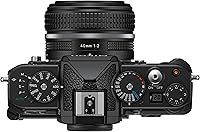
Among buyers who care about how a camera looks and feels as an object, this full-frame Nikon earns near-unanimous admiration. The top-plate shutter speed dial, the exposure compensation dial, and the overall proportions feel considered rather than applied as a cosmetic exercise, and it photographs beautifully as a lifestyle accessory.
The retro form factor means the camera draws attention in public, which some street photographers actively prefer to avoid. A few pragmatic buyers also feel the design emphasis led to ergonomic trade-offs — particularly the grip depth — that a purely functional design brief would not have accepted.
Value for Money
73%
27%
When the bundled SE lens is factored in as a standalone purchase, the overall package represents a reasonable proposition for enthusiasts who want a capable full-frame kit without assembling it piece by piece. The sensor and processor combination genuinely punches at a high level for the asking price.
Buyers comparing the body-only cost against competing full-frame mirrorless cameras from other brands occasionally feel the premium for the retro styling is meaningful. Users who already own Z-mount glass sometimes find the bundle less compelling and wish a body-only option were more aggressively priced.
Noise Performance at High ISO
77%
23%
Up to ISO 3200 and comfortably through ISO 6400, the BSI sensor handles indoor available-light situations well — wedding reception candids, restaurant interiors, and dimly lit urban scenes all come back with clean shadows and manageable noise texture. The EXPEED 7 noise reduction is effective without over-smoothing fine detail at moderate sensitivities.
Pushing to ISO 12800 and beyond introduces luminance noise that requires careful processing to keep portrait skin tones from looking muddy. Night photographers who regularly shoot long exposures in very dark environments may find the expanded ISO ceiling of 51200 a better marketing figure than a practical working range.

Suitable for:

The Nikon Z f is a natural fit for enthusiast photographers who want a full-frame camera they actually enjoy picking up every day — not just for its output, but for the experience of using it. Street photographers in particular will appreciate the physical shutter speed and exposure compensation dials, which let you make critical adjustments by feel without breaking eye contact with a scene. Travel shooters who want one compact body and one quality prime lens will find the bundled 40mm f/2 covers a surprising range of situations, from tight cafe interiors to wider environmental portraits. Hybrid creators who shoot occasional video alongside stills will get genuinely usable 4K footage and 10-bit log recording without needing a separate cinema rig. Photographers already invested in the Nikon Z lens ecosystem will find the upgrade path especially compelling, since every existing Z-mount lens carries over with full functionality.

Not suitable for:

The Nikon Z f has real limitations that make it the wrong tool for certain buyers, and it is worth being honest about those before committing. Photographers who shoot sports, wildlife, or any fast-action subject professionally will find the autofocus tracking, while solid in everyday conditions, lacks the tenacity and depth of dedicated action-focused mirrorless bodies at this price tier. Videographers planning to rely heavily on 4K/60p should research the crop factor carefully before purchasing, and anyone hoping to color grade N-Log footage immediately should budget time for a real learning curve. Buyers with larger hands frequently discover the shallow grip becomes genuinely fatiguing during long shoots, which is not a minor nuisance when you are carrying the camera for six or eight hours. Budget-conscious photographers who already own Z-mount glass may also find the bundled lens makes the kit less financially efficient than a body-only purchase would be if one were more accessibly priced.

Specifications

  • Sensor: Full-frame 24.5MP BSI CMOS sensor delivers broad dynamic range and clean files across a wide sensitivity range.
  • Processor: EXPEED 7 image processor handles subject recognition, noise reduction, and high-speed data throughput for both stills and video.
  • Stabilization: 5-axis in-body sensor-shift stabilization (IBIS) compensates for camera shake across all compatible Z-mount lenses.
  • Autofocus: 273-point hybrid phase/contrast detection AF system recognizes nine subject types including people, animals, and vehicles with 3D tracking support.
  • Video Resolution: Records 4K/30p oversampled from a 6K readout, 4K UHD/60p with crop, and 1080p at up to 120fps for slow-motion output.
  • Video Format: Internal recording in MOV or MP4 containers with 10-bit H.265 encoding, supporting SDR, N-Log, and HLG color profiles.
  • Pixel Shift: Pixel Shift composite mode combines multiple exposures to produce a single 96MP still image with reduced noise and maximum detail.
  • Viewfinder: Electronic viewfinder with diopter adjustment ranging from +1 to -4, providing live exposure and histogram preview.
  • Screen: 3.2″ vari-angle LCD touchscreen with Touch Fn support, allowing simultaneous focus control while shooting through the viewfinder.
  • ISO Range: Native ISO range with expanded maximum of 51200 covers low-light shooting across a broad range of ambient conditions.
  • Shutter Speed: Mechanical shutter operates from 900 seconds (30 minutes) up to a maximum of 1/8000 sec, with flash sync at 1/200 sec.
  • Memory Slots: Dual card slots support SDHC/SDXC media with write speeds up to 300 MB/s for fast buffer clearing during continuous shooting.
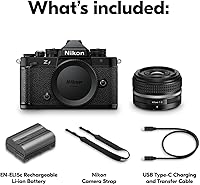
  • Bundled Lens: Includes NIKKOR Z 40mm f/2 Special Edition lens constructed from 6 elements in 4 groups with a 52mm filter thread and 9-blade aperture.
  • Connectivity: Built-in Bluetooth and Wi-Fi enable wireless image transfer and remote camera control via the Nikon smartphone companion app.
  • Ports: One USB port and one HDMI video output port are provided for wired data transfer and external monitor or recorder connection.
  • Battery: Powered by an EN-EL15 series lithium-ion cell; battery and charger are included in the retail package.
  • File Formats: Stills are saved as JPEG (Basic, Fine, or Normal compression) or RAW, with a maximum image output of 12,000 pixels on the long edge.
  • Shooting Modes: Exposure modes include full Auto, Program (P), Shutter-priority (S), Aperture-priority (A), and Manual (M) with physical top-plate dials for direct control.
  • Audio: Stereo WAV or MP3 audio recording is supported internally, with external microphone input available for improved sound quality.
  • Warranty: Covered by a one-year limited manufacturer warranty from Nikon USA, applicable to the camera body and included accessories.

Related Reviews
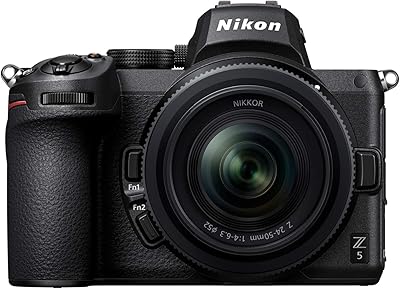
Nikon Z 5 with NIKKOR Z 24-50mm f/4-6.3 Lens
85%
94%
Image Quality
84%
Autofocus Performance
88%
Video Quality
91%
Portability
89%
Build Quality
More
Nikon NIKKOR Z 20mm f/1.8 S
89%
94%
Low-Light Performance
91%
Autofocus Speed & Accuracy
88%
Build Quality & Durability
93%
Optical Quality
86%
Bokeh Quality
More
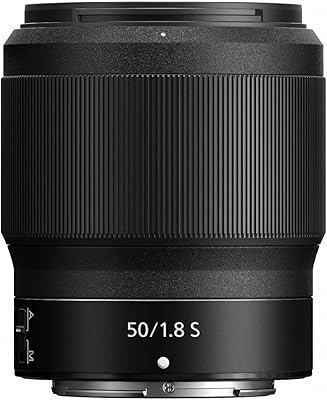
Nikon NIKKOR Z 50mm f/1.8 S
87%
91%
Image Quality
89%
Low-Light Performance
86%
Autofocus Speed and Accuracy
94%
Build Quality
92%
Portability and Size
More
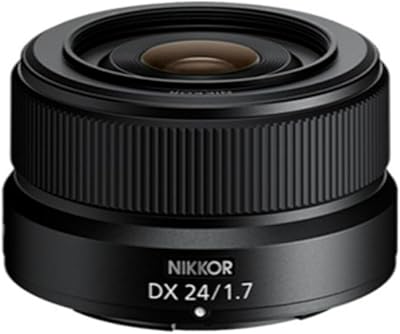
Nikon NIKKOR Z DX 24mm f/1.7
87%
91%
Image Sharpness
89%
Low-Light Performance
93%
Autofocus for Video
87%
Build Quality
95%
Portability/Size
More
Nikon NIKKOR Z 85mm f/1.8 S
88%
94%
Image Quality
85%
Autofocus Performance
90%
Build Quality
91%
Bokeh Quality
88%
Low-Light Performance
More
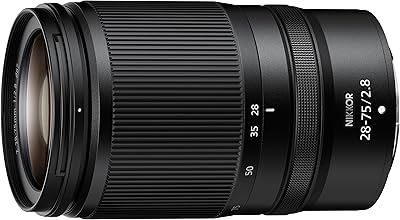
Nikon NIKKOR Z 28-75mm f/2.8
87%
91%
Image Quality
85%
Autofocus Performance
92%
Portability & Size
88%
Value for Money
83%
Low-Light Performance
More
Nikon NIKKOR Z MC 50mm f/2.8
88%
91%
Macro Performance
94%
Portability & Size
89%
Image Clarity
72%
Autofocus Speed & Accuracy
76%
Low Light Performance
More
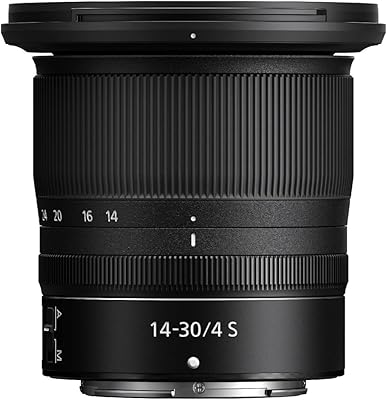
Nikon NIKKOR Z 14-30mm f/4 S
87%
91%
Image Quality
95%
Portability
89%
Autofocus Performance
85%
Build Quality
88%
Versatility
More
Nikon NIKKOR Z 50mm f/1.2 S
89%
94%
Image Quality
92%
Autofocus Performance
95%
Low-Light Performance
88%
Build Quality
90%
Weatherproof Design
More
Nikon NIKKOR Z 24-70mm f/4 S
88%
91%
Image Quality
88%
Autofocus Performance
90%
Build Quality
93%
Portability
87%
Optical Stabilization (VR)
More

FAQ

There is a crop applied when shooting 4K at 60fps, which effectively narrows your field of view compared to full-width 4K/30p. If wide-angle coverage at high frame rates matters to your work, factor that in before purchasing. Most stills-first users find the full-width 4K/30p mode covers the majority of their video needs comfortably.

It is genuinely practical once you are used to it. Having dedicated shutter speed and exposure compensation dials on the top plate means you can feel where your settings are without pulling the camera away from your eye. Street photographers especially tend to appreciate this once muscle memory kicks in after a few shooting sessions.

Not natively — the Z f uses the Nikon Z mount, which is not directly compatible with older F-mount glass. However, Nikon makes the FTZ II adapter, which allows most AF-S and AF-P F-mount lenses to work on the body with autofocus support. Manual focus F-mount lenses can also be adapted, though without electronic communication.

It is real but manageable. For a half-day shoot or a focused session, a single charge is typically sufficient. For all-day travel or event shooting, packing a spare EN-EL15c battery is genuinely advisable rather than optional. The good news is the battery is widely available and relatively affordable compared to proprietary cells in other systems.

It records 10-bit internally via H.265, which is a genuine advantage over cameras that require an external recorder for log footage. N-Log and HLG are both available without any additional hardware, which keeps the rig lightweight. Just be aware that editing 10-bit H.265 is more processor-intensive than H.264, so an older editing computer may struggle.

It is capable enough for a beginner, but the design is really aimed at enthusiasts who want hands-on control rather than automated simplicity. The menu system has a lot of depth, and features like N-Log grading or Pixel Shift mode are not beginner-friendly. Someone just starting out might find a more menu-driven camera with stronger guided shooting modes easier to learn on.

Most users who shoot with it regularly end up keeping it. The optical performance is solid across the frame, the nine-blade aperture produces pleasing background blur at wider settings, and it is compact enough that it barely adds to the overall package size. It does not replace a dedicated portrait prime or wide-angle lens, but as a single walk-around lens it earns its place.

IBIS functions with any lens mounted on the Z f, but the effectiveness varies depending on whether the lens communicates focal length data to the camera body. Native Nikon Z-mount lenses do this automatically. For adapted or manual lenses without electronic contacts, you can usually enter the focal length manually in the menu to optimize stabilization behavior.

This comes up often and it is worth taking seriously. The grip is shallower than on most contemporary mirrorless bodies because the retro design prioritizes a flatter profile. Photographers with larger hands frequently report that extended shooting sessions become fatiguing without an optional battery grip or hand strap to add depth. If possible, try the camera in person before committing.

The dual card slots accept SDHC and SDXC cards, so standard UHS-II SD cards work well and are widely available. For video recording in 4K with 10-bit output, a card rated V60 or V90 is recommended to avoid buffer slowdowns. The camera supports write speeds up to 300 MB/s, so investing in a fast card pays off noticeably when shooting bursts or continuous video.