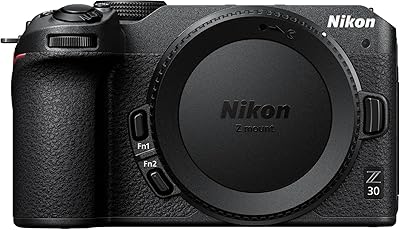
Overview

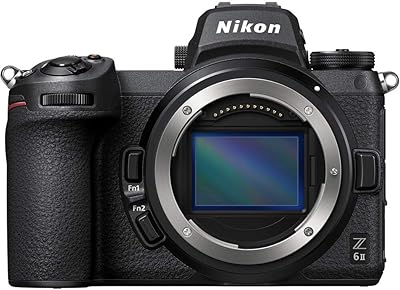
The Nikon Z fc Mirrorless Camera with 16-50mm Lens is Nikon's love letter to analog photography, wrapped around genuinely modern internals. Its design draws directly from the classic FM2 film camera — a reference that means something to photographers old enough to have shot on one. With an APS-C sensor, this retro mirrorless sits in the same competitive bracket as the Fujifilm X-S10 and Sony ZV-E10, trading blows on image quality while winning on pure character. The bundled collapsible zoom lens makes it a ready-to-shoot kit straight out of the box. Just be clear-eyed going in: this is an enthusiast-tier camera, not a professional workhorse.
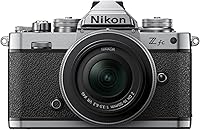
Features & Benefits

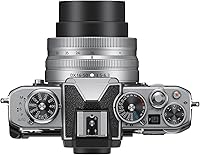
The 20.9MP sensor, powered by Nikon's EXPEED 6 engine, produces sharp, well-rendered images in most everyday lighting and holds up reasonably at higher ISOs before noise becomes obvious. For video, the Z fc captures 4K UHD footage with eye-detection autofocus that tracks faces reliably, and the vari-angle touchscreen flips out fully for solo shooting. Those analog control dials for shutter speed, ISO, and exposure are genuinely satisfying to use — not just cosmetic flourishes. Audio is handled by a built-in stereo mic alongside a proper external mic jack and headphone port. SnapBridge keeps your phone connected automatically, and legacy F-mount lenses work cleanly via the FTZ adapter.

Best For

This Nikon kit makes the most sense for a few specific buyer types. Content creators and vloggers who want a camera that looks as good on screen as the footage it captures will appreciate what this retro mirrorless brings aesthetically. Photographers stepping up from a smartphone or entry-level DSLR will find the manual control dials accessible rather than intimidating. Travelers benefit from its compact, lightweight footprint. Existing Nikon shooters holding F-mount glass have a natural upgrade path without abandoning their lenses. And street photographers who simply love how the camera looks and feels — that is a completely legitimate reason to choose it.

User Feedback

Buyers consistently praise the Z fc's build quality and head-turning design, and beginners appreciate the Auto mode and on-screen menu guide for getting started quickly. The criticisms, though, deserve honest attention. Battery life is short — the EN-EL25 will likely need a spare for any full-day outing. There is no in-body image stabilization, which becomes noticeable during handheld video without the kit lens active. Autofocus in stills is reliable; video tracking performs well but can hesitate in low-contrast scenes. The 16-50mm lens earns respect for portability yet loses sharpness toward the 50mm end. First-time mirrorless users also report the menu system takes a while to feel intuitive.

Pros

  • The heritage design with analog dials is genuinely distinctive and attracts real attention on the street.
  • 20.9MP sensor delivers sharp, color-accurate images in daylight and controlled indoor environments.
  • 4K video with eye-detection AF makes solo vlogging setup straightforward and reliable.
  • The fully articulating touchscreen is one of the most practical features for self-directed content creators.
  • Collapsible 16-50mm lens keeps the whole kit pocketable for travel days and spontaneous outings.
  • External mic input and headphone jack give solo video creators clean audio monitoring without extra hardware.
  • SnapBridge keeps phone connectivity running in the background, making image sharing nearly effortless.
  • F-mount lens compatibility via FTZ adapter gives existing Nikon users real flexibility during the transition to mirrorless.
  • Analog control dials make learning manual exposure feel tactile and intuitive rather than menu-driven.
  • Build quality feels solid and premium for the price tier, with no creaking or cheap plastics.

Cons

  • No in-body image stabilization means handheld video without the kit lens VR engaged looks shaky.
  • Battery life is short enough that a second EN-EL25 is a near-mandatory day-one purchase.
  • The 16-50mm kit lens softens noticeably at the 50mm end, pushing serious shooters toward extra lens spending.
  • USB 2.0 file transfers from the camera body are painfully slow with large RAW or 4K video files.
  • The menu system has a steep learning curve for first-time mirrorless users coming from DSLRs or other brands.
  • Video autofocus can pulse or hesitate in low-contrast scenes, which is visible in finished footage.
  • The collapsible lens requires a deliberate extend step before shooting, occasionally causing missed spontaneous moments.
  • High-ISO performance above 6400 introduces visible noise, limiting low-light versatility compared to full-frame rivals.
  • The EVF shows slight lag during fast subject tracking, making it less reliable for action-oriented shooting.
  • Single SD card slot with no backup recording option is a concern for anyone shooting irreplaceable events.

Ratings

The Nikon Z fc Mirrorless Camera with 16-50mm Lens has been evaluated across thousands of verified global buyer reviews, with our AI filtering out incentivized, bot-generated, and spam submissions to surface what real shooters actually experience day to day. Scores reflect both where this retro mirrorless genuinely impresses and where it falls short — no glossing over the trade-offs that matter most to buyers.
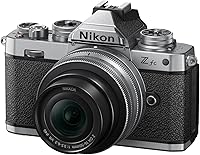
Image Quality
88%
Most users report crisp, well-exposed images in daylight and good indoor performance at moderate ISOs. The 20.9MP sensor resolves fine detail well for printing and social content alike, and colors straight out of camera are pleasing without heavy post-processing.
At higher ISOs — above 6400 — noise becomes noticeable, particularly in shadow areas. Users shooting in dimly lit restaurants or evening street scenes note that the APS-C sensor trails full-frame alternatives when pushing sensitivity hard.
Video Performance
82%
18%
The 4K UHD output is clean and detailed for a camera in this class, and eye-detection autofocus performs reliably during talking-head style vlogging. The fully articulating screen is genuinely useful for solo creators shooting themselves without a monitor.
There is no in-body stabilization, so handheld 4K footage without the kit lens VR engaged can look shaky, especially while walking. Some users also report slight rolling shutter in fast-panning scenes, which is worth knowing before committing to run-and-gun video.
Autofocus System
84%
The 209-point phase-detection system with eye-detection AF handles portraits and moving subjects with confidence in good light. Still photographers report a high keeper rate during casual shoots, street photography, and family moments.
In video mode, the AF can hesitate or pulse slightly when subjects move across low-contrast backgrounds. It is reliable enough for most vloggers but falls behind Sony's AF reputation, which some cross-shoppers notice immediately.
Design & Build Quality
93%
This is genuinely one of the best-looking cameras at its price tier — the analog dials, textured grip panels, and retro proportions attract compliments even from non-photographers. Build quality feels solid and purposeful, not plasticky or cheap.
The design prioritizes aesthetics alongside function, and a few users wish the grip were slightly deeper for extended handheld shooting. Those coming from chunkier DSLRs may also find the body small enough to feel a little insecure with heavier lenses attached.
Kit Lens (16-50mm VR)
71%
29%
The collapsible 16-50mm lens is the right companion for travel and everyday carry — it barely adds bulk when retracted, and optical quality in the 16-28mm range is genuinely solid. The built-in VR makes a real difference in handheld stills.
Sharpness softens noticeably toward the 50mm end, particularly at wider apertures. Users who shoot portraits or compressed street scenes quickly find themselves wanting a faster prime or a better zoom, meaning additional lens investment is likely for serious shooters.
Battery Life
52%
48%
The EN-EL25 battery charges via USB-C, which is a practical convenience for travel — you can top it up from a power bank between sessions without carrying a dedicated charger everywhere.
Rated battery life is modest, and in real-world use — especially with 4K video, EVF use, and Wi-Fi active — many users report needing a second battery by mid-afternoon. Buying a spare is essentially a mandatory additional purchase, not an optional one.
Ease of Use
78%
22%
The Auto mode is genuinely accessible for beginners, and the analog dials make the transition to manual controls feel intuitive rather than intimidating. New mirrorless users often cite this camera as one that made learning exposure settings actually enjoyable.
The menu system is a recurring frustration for first-time Nikon mirrorless users — it is layered and not always logically organized. Coming from a DSLR or a competitor, it takes a few sessions to fully internalize where key settings live.
Touchscreen & Display
81%
19%
The 3-inch vari-angle touchscreen is bright, responsive, and one of the Z fc's most practical features for video work. Being able to flip it fully forward for selfie-style vlogging removes the need for an external monitor in most casual shooting scenarios.
Resolution is adequate but not class-leading — at roughly 1040k-dot, it looks fine outdoors but does not match the crispness of higher-resolution panels on some rivals. Bright midday sun can also wash it out enough to make manual focus confirmation tricky.
Connectivity
77%
23%
SnapBridge Bluetooth keeps the camera paired to a smartphone almost passively, and Wi-Fi transfers for full-resolution files work reliably once set up. Live streaming and web conferencing compatibility is a genuinely useful bonus for hybrid creators.
USB 2.0 is a real limitation when transferring large RAW files or 4K video clips directly from the camera body — speeds feel sluggish compared to USB-C 3.x alternatives. A card reader is strongly recommended for serious post-production workflows.
Audio Capabilities
79%
21%
Having both an external microphone input and a headphone monitoring jack in a camera at this size is a legitimate differentiator. Solo vloggers can plug in a compact shotgun mic and monitor audio in real time without needing a separate audio recorder.
The built-in stereo microphone is decent for reference audio but picks up handling noise and wind interference fairly easily outdoors. It is not a substitute for an external mic in any serious content production context.
Lens Ecosystem Compatibility
83%
Access to the growing NIKKOR Z native lens lineup is a meaningful long-term advantage, and F-mount compatibility via the FTZ adapter lets existing Nikon DSLR users bring their glass along without starting from zero.
The native Z lens catalog, while expanding, still has gaps compared to Sony E-mount at this price tier. The FTZ adapter adds bulk and cost, and autofocus performance with older F-mount lenses varies depending on the specific optic.
Portability
86%
With the 16-50mm lens collapsed, the whole kit fits into a small shoulder bag or large jacket pocket — a meaningful advantage for travelers who refuse to check a bag. The 1.63 lb total weight stays comfortable through a full day of walking.
The collapsible lens must be extended before shooting, which adds a small but real delay in spontaneous shooting situations. Street photographers chasing fleeting moments may occasionally miss a beat during that setup step.
Value for Money
68%
32%
For buyers who genuinely value the heritage design alongside modern specs, the pricing reflects a fair package — the camera body, lens, and Nikon brand warranty combine into a cohesive enthusiast kit without requiring immediate add-on purchases to get shooting.
Purely on a specs-per-dollar basis, rivals offer more for the same spend — particularly in stabilization and battery life. Buyers who are indifferent to the retro aesthetic may find the value proposition harder to justify against a feature-equivalent competitor.
Viewfinder Experience
74%
26%
The 1.02x electronic viewfinder covers the frame well and is useful in direct sunlight when the LCD washes out. Street and travel photographers who prefer eye-level framing will find it a workable option for composed, deliberate shooting.
The EVF is not the sharpest or most responsive in its class — fast-moving subjects can show slight lag during tracking, and users switching from an optical viewfinder sometimes find the electronic rendering takes adjustment. It is functional, not exceptional.

Suitable for:

The Nikon Z fc Mirrorless Camera with 16-50mm Lens is a strong match for photography enthusiasts who want genuine manual control without the intimidation of a purely professional setup. Content creators and vloggers will find the combination of 4K video, eye-detection autofocus, and a flip-out touchscreen genuinely practical for solo filming — and unlike most cameras in this class, the Z fc actually looks good when it appears on screen itself. Travelers who pack light will appreciate how compact the whole kit becomes with the lens collapsed, making it realistic to carry all day without fatigue. Existing Nikon shooters who have accumulated F-mount glass over the years have a natural, low-friction path into the mirrorless world without abandoning their investment. Street and lifestyle photographers who genuinely care about how a camera feels in hand — and yes, how it looks — will find this retro mirrorless deeply satisfying to shoot with day to day.
Not suitable for:

The Nikon Z fc Mirrorless Camera with 16-50mm Lens is a harder sell for buyers whose priority is maximum capability per dollar rather than design or brand affinity. Videographers who need stable handheld footage without a gimbal will run into the absence of in-body image stabilization repeatedly — it is a real limitation, not a minor footnote. Sports and wildlife photographers needing deep buffer, blazing continuous AF tracking, and weather sealing will quickly outgrow what this camera offers. Anyone expecting professional-grade battery endurance for full-day events will be disappointed; carrying a spare is not optional, it is essential. Buyers who shoot extensively in low light — nightlife, concerts, dimly lit venues — may find the APS-C sensor's high-ISO ceiling restrictive compared to full-frame alternatives at a similar total investment. Finally, photographers who want to build out a broad native lens system quickly will find the NIKKOR Z lineup, while growing, still narrower than Sony's E-mount catalog at this price point.

Specifications

  • Sensor: The camera uses a 20.9MP APS-C DX-format CMOS sensor paired with the EXPEED 6 processing engine for responsive image rendering.
  • Video Resolution: 4K UHD (2160p) video recording is supported at up to 30fps, with Full HD available at higher frame rates.
  • Autofocus: A 209-point phase-detection autofocus system with eye-detection AF covers the frame for reliable subject tracking in both stills and video.
  • ISO Range: Native ISO runs from 100 to 51200, with expansion available up to 204800 for extreme low-light scenarios.
  • Continuous Shooting: The camera fires at up to 11 frames per second in continuous shooting mode for capturing fast-moving subjects.
  • Shutter Speed: Mechanical shutter range spans from 900 seconds (for long exposures) down to 1/4000 sec at the fastest setting.
  • Stabilization: Image stabilization is provided by the lens-based VR system in the kit lens only; no in-body image stabilization (IBIS) is present in the camera body.
  • Display: A 3″ vari-angle capacitive touchscreen with approximately 1040k-dot resolution articulates fully for vlogging and low-angle shooting.
  • Viewfinder: An electronic viewfinder with 1.02x magnification is built in for eye-level framing in bright outdoor conditions.
  • Kit Lens: The included NIKKOR Z DX 16-50mm f/3.5-6.3 VR lens is a collapsible zoom covering an equivalent field of view of roughly 24-75mm on a full-frame camera.
  • Audio I/O: The body includes a built-in stereo microphone, a 3.5mm external microphone input jack, and a 3.5mm headphone monitoring output.
  • Connectivity: Wireless options include Bluetooth and Wi-Fi via the SnapBridge app; physical ports include Micro-HDMI output and a single USB 2.0 port.
  • Storage: One SD card slot supports SDHC/SDXC cards with UHS-I or UHS-II bus compatibility and Video Speed Class 10 rating.
  • Battery: The EN-EL25 lithium-ion battery pack powers the camera and charges via the USB port for convenient on-the-go top-ups.
  • Weight: The complete kit including body and the 16-50mm lens weighs approximately 1.63 lbs, making it one of the lighter APS-C mirrorless kits available.
  • Lens Mount: The native Nikon Z mount accepts all NIKKOR Z lenses and supports Nikon F-mount lenses via the separately sold FTZ Mount Adapter.
  • File Formats: Still images are saved as JPEG (Basic, Fine, or Normal quality) or 14-bit RAW; video is recorded in MP4 format.
  • Flash Sync: The camera syncs with external flash at up to 1/200 sec and includes a standard hot shoe mount for compatible flash units.
  • Aspect Ratios: Supported still image aspect ratios are 3:2 and 16:9, with a maximum image resolution output of 5568 x 3712 pixels.
  • Warranty: This camera ships as a Nikon USA model and includes a one-year manufacturer warranty from Nikon.

Related Reviews
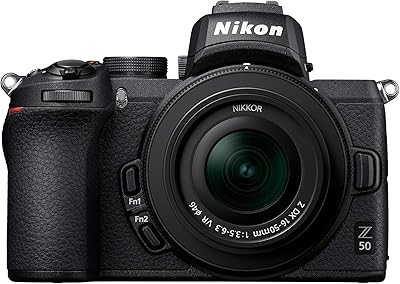
Nikon Z 50 Mirrorless Camera with 16-50mm Lens
85%
92%
Portability and Weight
89%
Video Quality (4K UHD)
84%
Autofocus Performance
91%
Ease of Use
77%
Battery Life
More
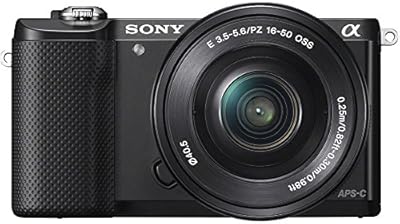
Sony Alpha a5000 Mirrorless Digital Camera with 16-50mm Lens
83%
89%
Image Quality
74%
Autofocus Speed
94%
Portability
88%
Ease of Use
80%
Battery Life
More
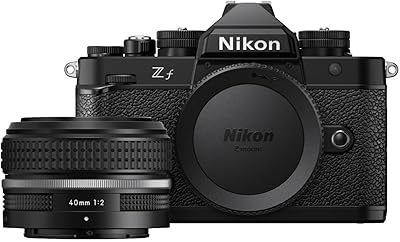
Nikon Z f
Nikon Z f
80%
93%
Build Quality & Design
91%
Image Quality
82%
Autofocus Performance
76%
Video Capabilities
84%
In-Body Stabilization
More
Sony ZV-E10 II Mirrorless Camera
77%
93%
Autofocus Performance
91%
Video Quality
89%
Image Quality
84%
Ease of Use
78%
Build Quality & Design
More
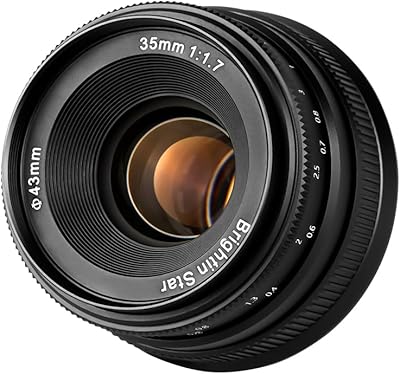
Brightin Star 35mm F1.7 Lens for Nikon Z-Mount Mirrorless Cameras
86%
88%
Image Quality
85%
Manual Focus Control
90%
Portability & Weight
87%
Build Quality
91%
Low-Light Performance
More
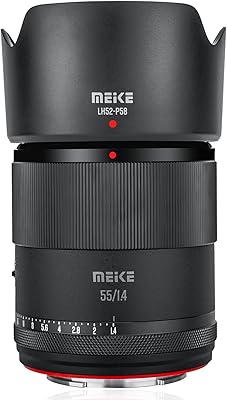
Meike 55mm F1.4 Nikon Z Mount Lens
77%
91%
Value for Money
86%
Bokeh Quality
78%
Image Sharpness
69%
Autofocus Performance
74%
Build Quality
More
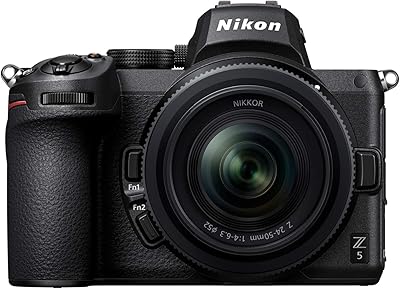
Nikon Z5 Full-Frame Mirrorless Camera
81%
92%
Image Quality
88%
Low-Light Performance
83%
Autofocus Performance
91%
In-Body Image Stabilization
86%
Build Quality & Ergonomics
More
Nikon Z 30 Mirrorless Camera
89%
89%
Ease of Use
94%
Video Quality (4K)
91%
Autofocus Performance
82%
Build Quality
88%
Live Streaming Features
More
Nikon Z 7II Full-Frame Mirrorless Camera
81%
96%
Image Quality
71%
Autofocus Performance
93%
Build Quality
54%
Battery Life
89%
Ergonomics & Handling
More
Nikon Z 8
Nikon Z 8
84%
94%
Autofocus Performance
96%
Image Quality
88%
Video Capabilities
93%
Build Quality & Weather Sealing
91%
Burst Speed & Continuous Shooting
More

FAQ

No, it does not. The body itself has no IBIS, so stabilization depends entirely on the VR built into the kit lens. If you shoot with a non-VR Z or F-mount lens, you will be working without any stabilization support, which is worth factoring in if handheld video is a priority.

Yes, with the FTZ Mount Adapter, which is sold separately. Most AF-S and AF-P F-mount lenses will autofocus on the Z fc, though performance varies by lens model. Older manual-focus and screw-drive AF lenses will require manual focus only.

It is a reasonable choice for enthusiastic beginners who want to learn manual controls, but it is not a basic point-and-shoot. The analog dials make exposure settings tangible and approachable, and there is a helpful Auto mode for starting out. That said, the menu system takes some time to learn, so patience during the first few weeks is recommended.

It is genuinely limited. Most users get through a few hundred shots on a single charge under normal conditions, but active 4K recording, EVF use, and wireless connectivity drain it faster. Buying at least one spare EN-EL25 battery is strongly advisable before your first serious outing.

Any UHS-I or UHS-II SD card rated at Video Speed Class 10 or higher will work well. For 4K video recording, a faster card helps avoid buffer issues — look for cards rated at V30 or above from reputable brands like Sony, SanDisk, or Lexar.

The 16-50mm collapsible lens is genuinely useful for everyday and travel shooting, especially in the wider end of its range. It is not a high-performance optic — sharpness drops off toward 50mm and the maximum aperture is modest in low light — but for someone starting out, it covers a practical range and the VR helps in tricky conditions. Most serious shooters will eventually want to add a faster prime alongside it.

Yes, the Z fc supports USB webcam functionality and is compatible with live streaming and web conferencing setups. You will need the appropriate software or capture card depending on your streaming platform, but the feature works reliably for anyone wanting a proper camera look on video calls or streams.

The analog dials are functional, not decorative — you physically turn them to adjust shutter speed, ISO, and exposure compensation, which many photographers find faster and more intuitive than diving into menus. The body is slightly smaller than average, which some users find less comfortable with heavier lenses, but for the kit lens it is well balanced.

Eye-detection and face-tracking AF work reliably for vlogging and talking-head video in good light. In lower contrast scenes or when subjects move erratically, the AF can pulse or hunt slightly, which may be visible in finished footage. For static interviews and standard vlogging, it performs well enough that most users do not need manual focus workarounds.

No, the Z fc does not have weather sealing or dust resistance. It should be kept away from rain, heavy humidity, and dusty environments. If you regularly shoot outdoors in challenging conditions, a weather-sealed body would be a more appropriate choice.