Overview

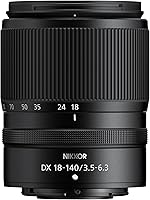
The Nikon NIKKOR Z DX 18-140mm VR Lens is Nikon's practical answer to a question many Z-mount APS-C shooters ask themselves: can one lens handle a whole day out? Covering the equivalent of 27mm to 210mm on a full-frame body, this all-in-one zoom handles wide café interiors in the morning and compressed street portraits by afternoon — without ever touching your bag. At just 11 ounces, it slips onto a Z50 or Zfc and barely registers on your shoulder. It won't replace dedicated glass for critical work, but that's not the point. Convenience is the priority here, and on that front, it delivers.
Features & Benefits

The 7.8x zoom ratio is where this DX travel lens earns its keep. At the wide end, you have enough reach for tight room shots or a full landscape sweep; zoom to 140mm and you can pull a subject in from a comfortable distance without physically moving. The built-in Vibration Reduction system helps at the long end — handy when light drops, though it's not a substitute for good technique. A minimum focus distance of just 7.9 inches at wide angle adds genuine close-up utility. The customizable control ring is a nice touch for tactile shooters, and the quiet stepping motor makes the lens genuinely usable for video without distracting focus noise.

Best For

If you own a Z30, Z50, or Zfc and find yourself reaching for a different lens every half hour, the 18-140mm VR was essentially built for you. It's the kind of optic that shines on a packed travel day — shoot the hotel lobby at 18mm, frame a street vendor at 50mm, and reach out for a candid at 100mm, all without changing anything. Beginners stepping up from a kit lens will find the extra reach and close-focus ability opens up a lot of creative options. Vloggers benefit from the near-silent autofocus and flexible framing. That said, if you're chasing optical perfection at every focal length, this all-in-one zoom will leave you wanting more.

User Feedback

With around 88 ratings and a 4.5-star average, buyer sentiment leans clearly positive, though it's worth keeping perspective on the sample size. Many buyers highlight how sharp the lens is at the wide end, and autofocus speed gets consistent praise for everyday and event shooting. A recurring theme is portability — people regularly mention pairing it with a Z50 or Zfc for travel and family outings. On the critical side, some users notice softness when shooting at 140mm wide open, which is a fair and expected trade-off for a lens this versatile. A few buyers also note the build quality feels more consumer-grade than professional, and the absence of weather sealing is worth knowing before heading into rough conditions.

Pros

  • Covers a 27-210mm full-frame equivalent range in a single, carry-anywhere package.
  • Weighing just 11 ounces, this all-in-one zoom barely adds bulk to compact Z-series bodies.
  • Wide-end sharpness is genuinely impressive for a zoom with this much range.
  • Ultra-quiet stepping motor makes it a practical choice for video recording in any setting.
  • A 7.9-inch minimum focus distance at wide angle adds useful close-up flexibility.
  • The assignable control ring gives tactile, on-the-fly adjustments without diving into menus.
  • Smooth iris transitions make mid-clip exposure changes cleaner during video work.
  • Optical VR helps stabilize handheld shots, especially at the longer focal lengths.
  • Well-matched to Z30, Z50, and Zfc bodies both physically and in terms of intended use.
  • Autofocus speed earns consistent praise from buyers shooting events and everyday moments.

Cons

  • Noticeable softness at 140mm when shooting wide open is a recurring buyer complaint.
  • The f/3.5-6.3 aperture range struggles in low light, especially when zoomed in.
  • No weather sealing limits its usability in rain, dust, or rough outdoor conditions.
  • Build materials feel more budget-oriented than the price point might suggest.
  • Chromatic aberration and corner softness can appear in high-contrast wide-angle shots.
  • Not an ideal choice if you ever plan to move to a full-frame Z body as your primary shooter.
  • The 18-140mm VR lacks the rendering character that dedicated primes bring to portrait work.
  • Relatively modest aperture means the VR system is doing a lot of heavy lifting in dim conditions.
  • With around 88 ratings available, long-term reliability data is still somewhat limited.
  • Buyers expecting pro-grade construction for the asking price may feel underserved.

Ratings

Our AI-generated scores for the Nikon NIKKOR Z DX 18-140mm VR Lens are built by analyzing verified buyer reviews from multiple global markets, with spam, bot activity, and incentivized feedback actively filtered out before any score is calculated. Every category below reflects the honest distribution of real user experiences — the genuine strengths and the friction points that actual owners encounter in the field. Both sides of the story are represented here so you can make a genuinely informed decision.
Focal Range Versatility
93%
Many buyers describe this as the single biggest reason they purchased the 18-140mm VR — the ability to shoot a wide hotel lobby, a crowded street market, and a distant mountain peak without ever changing glass. For travel days where swapping lenses isn't realistic, that range is a practical asset that users consistently celebrate.
A small segment of buyers note that 140mm still feels limiting when trying to photograph wildlife or subjects at a significant distance, and wish the telephoto end stretched further. Those coming from super-zoom bridge cameras in particular tend to find the ceiling a little low.
Image Sharpness
76%
24%
At the wide end, sharpness holds up well and many users are pleasantly surprised by the center resolution in daylight conditions — family shots, architectural details, and landscapes tend to look clean and well-defined at 18mm to around 50mm.
The recurring pain point is telephoto sharpness. Shooting at or near 140mm wide open produces noticeably softer results that buyers frequently flag, particularly when comparing to dedicated telephoto lenses. Stopping down helps, but that is an extra step that not all users think to take.
Autofocus Performance
88%
Buyers shooting family events, casual portraits, and street scenes consistently report that autofocus is quick, confident, and rarely hesitates in good light. The tracking behavior on Z50 and Zfc bodies pairs naturally with the lens, and many users feel it locks on faster than they expected for a zoom in this price tier.
In lower light or when tracking erratically moving subjects, a handful of users report occasional hunting before the lens settles. It is not a systematic complaint, but it does surface often enough in event and indoor shooting scenarios to be worth flagging.
Portability & Size
91%
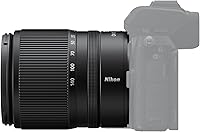
At 11 oz, this all-in-one zoom consistently earns praise from buyers who want a capable kit that doesn't punish their shoulders on a long day of walking. Paired with a Z30 or Zfc, the combined rig slips into a small shoulder bag without any creative packing required.
A minority of buyers note that the lens extends when zoomed, which adds some length to what feels like a compact package at first glance. It's not a serious complaint, but those expecting a truly pocketable form factor at 140mm may be mildly surprised.
Video Capability
84%
The stepping motor's near-silent operation is a genuine win for vloggers and casual video shooters — users frequently mention that focus pulls are smooth and the lens doesn't announce itself on the audio track. Smooth iris transitions also make exposure adjustments mid-clip look far less jarring than on older lens designs.
Some video-oriented users point out that at 140mm with the aperture narrowing to f/6.3, shooting in anything but bright conditions becomes a challenge without pushing ISO higher than they'd like. It is a functional video lens for outdoor and well-lit shooting, but less so for indoor filmmaking.
Vibration Reduction
78%
22%
Buyers shooting handheld in late afternoon light or during city walks report that VR provides a meaningful buffer against minor shake, particularly in the 50mm to 100mm range where it is most perceptible. Users generally agree it extends the usable handheld shutter speed range by a couple of stops in practice.
At 140mm in dim conditions, VR alone isn't enough to consistently rescue shots, and some buyers had higher expectations than the system delivers. A few users note that without a fast shutter speed to complement the stabilization, keepers at the long end in low light remain elusive.
Build Quality
67%
33%
For everyday casual use, the build holds up fine — buyers using it on holidays and weekend trips generally report no issues with normal handling. The zoom and focus rings move smoothly, and the overall assembly feels consistent without obvious play or wobble.
The plastic-heavy construction is a recurring comment, and buyers comparing it to higher-end Nikon glass note the difference immediately. The absence of weather sealing is the most cited complaint, with several users expressing frustration after finding out the hard way that the lens is not suited for shooting in drizzle.
Low Light Performance
61%
39%
At 18mm, the f/3.5 maximum aperture gives the lens a reasonable starting point for indoor shots with decent ambient light — think museums, cafes, and indoor family gatherings where the lighting is at least moderate.
As you zoom in, f/6.3 at 140mm is genuinely limiting in anything but bright conditions, and many buyers note this is where the lens shows its budget-conscious design. Combined with the APS-C sensor's moderate high-ISO performance on Z30 or Z50 bodies, indoor telephoto shots often require compromises in noise or shutter speed.
Close-Focus Ability
82%
18%
The 7.9-inch minimum focus distance at the wide end consistently surprises buyers in a positive way — users shooting food, product flat lays, or flower details while traveling find it covers close-up territory they didn't expect from an all-purpose zoom. It adds a layer of creative flexibility without needing a macro lens.
Close-focus capability drops off considerably as you zoom toward the telephoto end, and buyers hoping to shoot frame-filling close-ups at distance will hit the lens's limits quickly. It's a wide-angle close-focus strength, not a macro replacement at any focal length.
Customization & Controls
83%
The assignable control ring wins quiet praise from buyers who enjoy hands-on shooting — assigning it to exposure compensation or aperture means key adjustments happen without ever going into the camera menu. It adds a tactile dimension that users coming from entry-level kit lenses genuinely appreciate.
New users occasionally report a learning curve in discovering and configuring the ring's function, as it requires navigation through the camera body's menu system rather than the lens itself. The ring is also relatively narrow, which some users with larger hands find slightly awkward to operate precisely.
Value for Money
79%
21%
For buyers who want a single lens that covers their everyday and travel shooting without purchasing two or three separate optics, the value proposition holds up — the range and feature set deliver genuine utility relative to what comparable travel zooms cost in this format.
Buyers who pixel-peep or regularly compare results against prime lenses tend to feel the optical performance doesn't fully justify the asking price. If you're primarily shooting landscapes or portraits where sharpness and rendering matter above convenience, the value equation shifts noticeably.
Compatibility & Ecosystem Fit
89%
On Z30, Z50, and Zfc bodies the lens feels like it belongs — the size, balance, and control layout complement these cameras naturally. Buyers upgrading from a kit lens on any of these bodies report an intuitive transition with no friction around compatibility or handling.
On full-frame Z bodies, the automatic DX crop mode kicks in and limits the effective sensor area, which leaves FX users feeling the lens underserves their hardware. It is not a flaw in the lens per se, but buyers who plan to upgrade their body to full-frame later should factor this in now.
Color & Contrast Rendering
77%
23%
In well-lit outdoor conditions, buyers consistently report pleasing color reproduction that pairs naturally with Nikon's in-camera Picture Profiles. Contrast at mid-range focal lengths tends to look punchy and natural without heavy post-processing, which suits casual shooters who want good out-of-camera results.
Chromatic aberration at the wide end in high-contrast scenes — bright sky against dark architecture, for example — appears in buyer photo samples more often than a lens at this price point should perhaps allow. It's correctable in post, but buyers shooting JPEG-only may find the fringing more frustrating.
Bokeh & Background Separation
58%
42%
At 140mm and closer focusing distances, the DX travel lens produces enough subject separation to render backgrounds recognizably soft for casual portrait use — family shots and travel portraits at the long end generally look pleasant and natural.
The variable aperture limits how much background blur is achievable in practice, and buyers hoping for the smooth, creamy bokeh of a fast prime will be disappointed. Several users note that at typical portrait distances the background rendering looks slightly busy rather than cleanly separated.

Suitable for:

The Nikon NIKKOR Z DX 18-140mm VR Lens was practically designed for the photographer who wants to travel light without constantly second-guessing their lens choice. If you own a Z50, Z30, or Zfc and spend most of your time shooting holidays, weekend trips, family gatherings, or city walks, this all-in-one zoom removes the friction of the whole experience — one lens on the camera, bag stays closed. Beginners who have outgrown their kit lens will find the extra reach and close-focus capability open up a noticeably wider creative range without the learning curve of managing multiple primes. Casual video creators and vloggers will also appreciate the near-silent autofocus motor, which means you can shoot in quieter environments without the lens giving itself away on the audio track. Essentially, if your priority is showing up ready to shoot anything in front of you without overthinking your kit, this DX travel lens is a very sensible choice.
Not suitable for:

If you are chasing the sharpest possible image quality at every focal length, the Nikon NIKKOR Z DX 18-140mm VR Lens will eventually frustrate you — particularly at the 140mm end where wide-open shots can look noticeably soft compared to a dedicated telephoto. Wildlife or sports photographers who need consistent, fast apertures in variable light will find the f/3.5-6.3 aperture range a real limitation, especially when zoomed in. The build quality is consumer-grade and there is no weather sealing, so anyone who regularly shoots in rain, dust, or demanding outdoor conditions should look elsewhere. Studio or portrait photographers who rely on a specific focal length and maximum sharpness across the frame will likely prefer a dedicated prime. In short, the 18-140mm VR is a lens built around convenience, and buyers who prioritize optical performance or environmental durability over versatility will feel that trade-off acutely.
Specifications

  • Focal Length: Covers 18mm to 140mm on DX format, equivalent to 27mm to 210mm on a full-frame body.
  • Zoom Ratio: Offers a 7.8x optical zoom ratio, spanning wide-angle to moderate telephoto in a single lens.
  • Max Aperture: Variable maximum aperture of f/3.5 at 18mm, narrowing to f/6.3 at 140mm.
  • Min Focus Distance: Focuses as close as 7.9 inches (20cm) when set to the wide-angle position.
  • Stabilization: Built-in optical Vibration Reduction (VR) helps reduce camera shake during handheld shooting.
  • Autofocus Motor: Uses an ultra-quiet stepping motor (STM) designed to minimize focus noise during video recording.
  • Lens Mount: Nikon Z-mount, compatible with all current Nikon Z-series mirrorless camera bodies.
  • Format Coverage: Optimized for DX (APS-C) sensors but physically mounts on FX full-frame Z-series bodies as well.
  • Weight: Weighs 11 oz (315g), making it one of the lighter options for its focal range class.
  • Dimensions: Measures 3.6 inches in length and 2.9 inches in diameter when retracted.
  • Control Ring: Features a customizable control ring that can be assigned to aperture, ISO, focus, or exposure compensation.
  • Video Features: Supports smooth iris transitions and minimized focus breathing, aiding cleaner footage during exposure changes.
  • Filter Thread: Accepts 62mm screw-on filters for ND, UV, or polarizing filter use.
  • Lens Construction: Built with 16 elements arranged in 12 groups, including aspherical and ED glass elements to manage aberrations.
  • Diaphragm Blades: Uses a 7-blade rounded diaphragm designed to produce smoother out-of-focus backgrounds.
  • Weather Sealing: Does not include weather or dust sealing, so caution is advised in wet or dusty shooting environments.
  • Availability: First became available in October 2021 as part of Nikon's expanding Z DX lens lineup.
  • Model Number: Official Nikon model number is 20104, sold as a Nikon USA model with domestic warranty coverage.

Related Reviews
Nikon NIKKOR Z DX 12-28mm PZ Lens
79%
88%
Image Stabilization
82%
Power Zoom Mechanism
74%
Optical Sharpness
61%
Distortion Control
69%
Build Quality
More
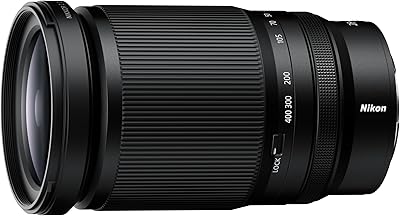
Nikon NIKKOR Z 24-200mm VR Zoom Lens
80%
93%
Zoom Range Versatility
88%
Image Stabilization (VR)
71%
Optical Sharpness
82%
Autofocus Performance
84%
Build Quality & Handling
More
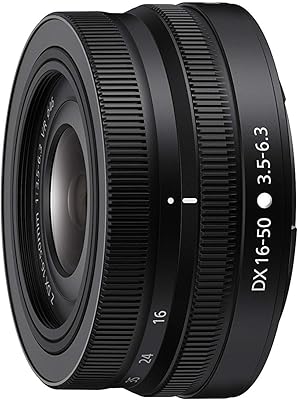
Nikon NIKKOR Z DX 16-50mm VR
87%
88%
Image Quality
85%
Build Quality
92%
Portability/Size
90%
Image Stabilization (VR)
78%
Autofocus Speed
More
Nikon NIKKOR Z 100-400mm VR S Telephoto Lens
84%
93%
Autofocus Performance
91%
Image Sharpness
89%
Vibration Reduction Effectiveness
88%
Build Quality & Weather Sealing
74%
Value for Money
More
Nikon NIKKOR Z 28-400mm f/4-8 VR Lens
79%
96%
Zoom Range Versatility
91%
Image Stabilization (VR)
78%
Optical Sharpness
76%
Autofocus Performance
73%
Build Quality & Durability
More
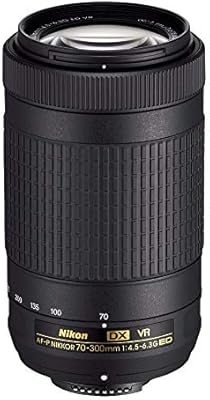
Nikon AF-P DX NIKKOR 70-300mm Telephoto Lens
78%
91%
Autofocus Performance
78%
Image Sharpness
86%
Vibration Reduction (VR)
47%
Camera Compatibility
72%
Build Quality & Handling
More
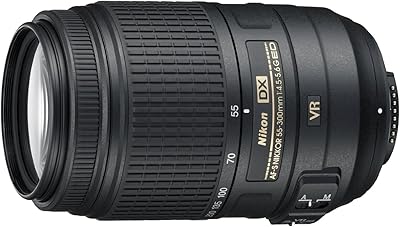
Nikon AF-S DX NIKKOR 55-300mm Zoom Lens
71%
78%
Image Sharpness
67%
Autofocus Performance
84%
Vibration Reduction
54%
Aperture Range
61%
Build Quality
More
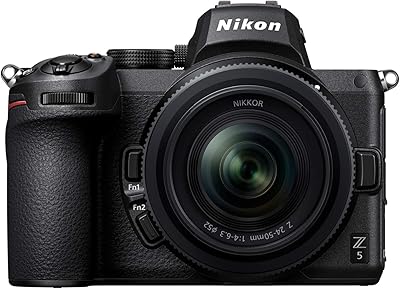
Nikon Z5 Full-Frame Mirrorless Camera
81%
92%
Image Quality
88%
Low-Light Performance
83%
Autofocus Performance
91%
In-Body Image Stabilization
86%
Build Quality & Ergonomics
More
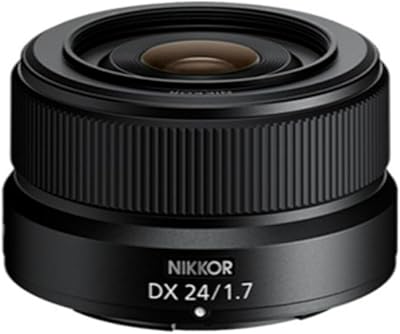
Nikon NIKKOR Z DX 24mm f/1.7
87%
91%
Image Sharpness
89%
Low-Light Performance
93%
Autofocus for Video
87%
Build Quality
95%
Portability/Size
More
Nikon NIKKOR Z 26mm f/2.8 Pancake Lens
85%
94%
Portability & Size
88%
Image Quality & Sharpness
85%
Build Quality & Durability
92%
Value for Money
90%
Compatibility with Nikon Z Series
More

FAQ

It will physically mount on any Nikon Z-series body, including full-frame models like the Z5 and Z6. However, when used on an FX body, the camera will automatically apply a DX crop, so you won't be using the full sensor area. It's really designed around DX bodies like the Z50, Z30, and Zfc.

Yes, it's one of the more logical upgrades if you want more reach without buying multiple lenses. The standard kit zoom typically stops at 50mm, so jumping to 140mm opens up a noticeably wider range of subjects — candid portraits, distant scenery, even some casual wildlife. Just keep in mind the trade-off is aperture; fast primes will outperform it in low light.

At 140mm shot wide open at f/6.3, some softness is real and worth acknowledging. Stop down to f/8 or f/11 and the results tighten up considerably. For casual travel and family photography it's rarely a dealbreaker, but if you're pixel-peeping or printing large, a dedicated telephoto will give you noticeably crisper results at that end of the range.

Yes, the stepping motor is genuinely quiet in normal use, and most buyers report it doesn't bleed into audio even with the built-in camera mic. If you're using an external mic directly on the hot shoe, you're very unlikely to have any issues. It's one of the stronger practical arguments for this lens in a video context.

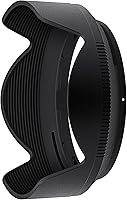
Nikon includes a bayonet-style lens hood (HB-107) in the box. It's worth keeping it on whenever possible, as it helps reduce flare when shooting toward bright light sources and offers a bit of physical protection for the front element.

It helps, but set realistic expectations. At 140mm you're working with a fairly narrow field of view, and VR can compensate for minor camera shake but won't save a poorly held shot. In good light, most people can get consistently sharp results handheld. In dim conditions, you'll want to watch your shutter speed and not lean entirely on stabilization to do the work.

Yes, the filter thread is 62mm, which is a fairly common size. A circular polarizer or ND filter screws on without any adapter needed. Just note that at the wide end there can be minor vignetting with very thick filter rings, so slim-profile filter versions are worth considering.

No, and this is one of the more important things to know before buying. There is no dust or moisture sealing on this lens. Light drizzle is probably fine in practice, but shooting in rain, blowing sand, or very humid jungle conditions carries real risk. If weather sealing is a priority, you'll need to look at other options in the Z lineup.

The ring can be assigned to control aperture, ISO, exposure compensation, or manual focus depending on your preference and the mode you're shooting in. In practice, once you set it to something like aperture or exposure compensation, it becomes quite natural to adjust on the fly without pulling your eye from the viewfinder. It's a small feature that makes a real difference for photographers who like physical controls.

The honest answer is that two dedicated lenses will almost always outperform this one optically, particularly at the telephoto end. What you give up in optical performance, you gain back in simplicity — no lens swaps, no missed moments, lighter overall kit if you're only carrying one body. For travelers and casual shooters, the convenience argument is genuinely strong. For anyone who regularly needs the best image quality at specific focal lengths, the two-lens approach makes more sense.

Where to Buy