Overview

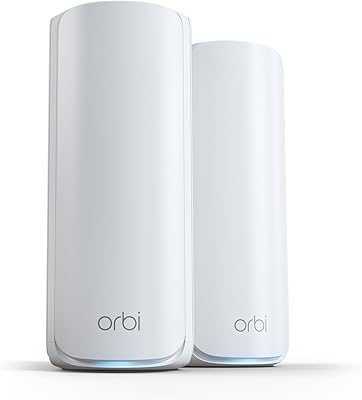
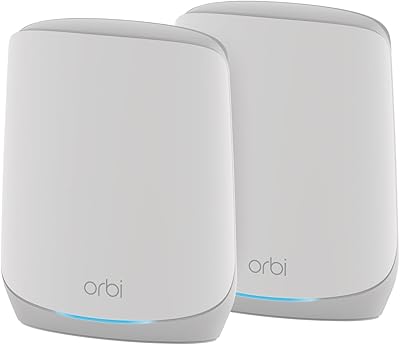
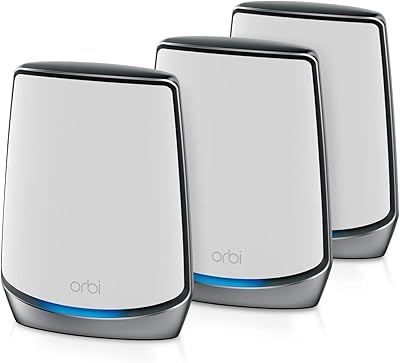
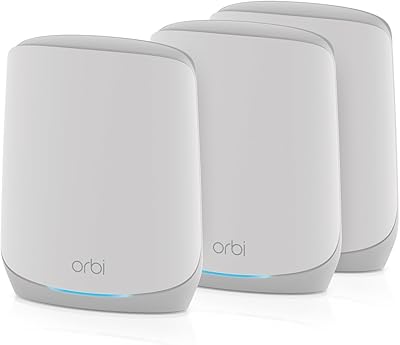
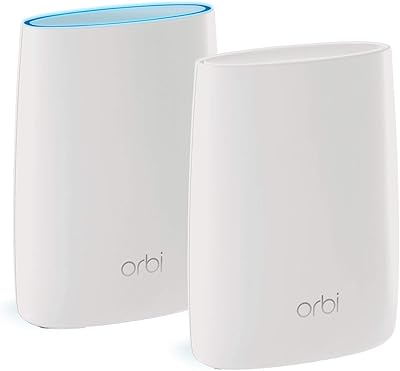
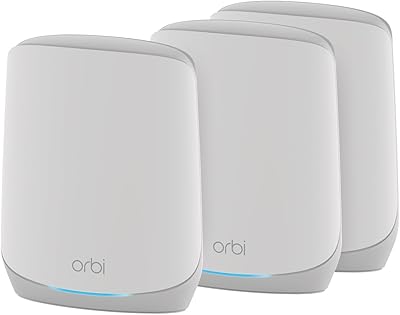
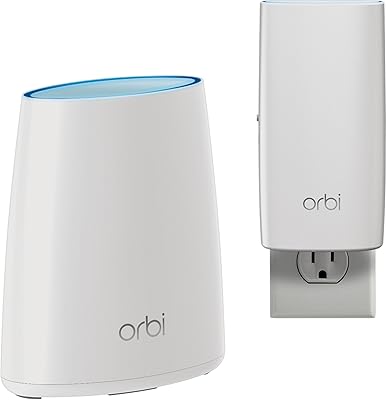
The NETGEAR Orbi 770 RBE773 arrived in mid-2024 as one of the first serious WiFi 7 mesh systems built for real homes rather than lab benchmarks. This three-unit kit — one router and two satellites — targets houses where a single router has always fallen short, covering up to 8,000 square feet with one consistent network. It sits at the premium end of the mesh market, squaring off against the Eero Max 7 and TP-Link Deco BE85. The cylindrical units are understated enough to sit on a shelf without drawing complaints from anyone sharing the house.

Features & Benefits

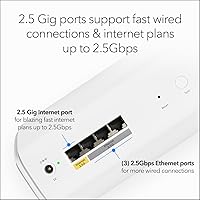
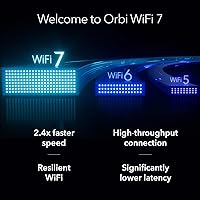
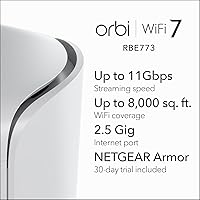
The Orbi 770 system runs on the 802.11be standard, which means tri-band WiFi 7 with up to 11 Gbps aggregate across the kit — a real step up if your ISP already delivers multi-gig speeds through the 2.5 Gbps WAN port. Seven 2.5 Gbps LAN ports spread across the three units give you wired options for consoles, a NAS, or a wired backhaul run between floors. The dedicated backhaul channel is what keeps satellite performance honest when 50-plus devices are active. Security coverage includes WPA3, IoT network isolation, parental controls, and VPN — though the advanced features require a subscription after the trial ends, which is worth knowing upfront.

Best For

The RBE773 setup makes the most sense for homeowners dealing with large or awkward floor plans — think multi-story colonials, ranch homes over 3,500 square feet, or houses with thick concrete walls. It also suits households juggling dozens of devices: smart home gear, streaming boxes, laptops, and gaming consoles all coexisting without one starving the others. Remote workers who need reliable uptime and built-in security without calling an IT person will find the Orbi app management genuinely practical. One honest caveat: if your devices are still WiFi 5 or 6, the WiFi 7 throughput gains will be limited until your hardware catches up.

User Feedback

Across a broad base of reviews, the most consistent praise centers on dead zone elimination in homes that stumped previous mesh setups, with many buyers noting their speeds held up in garages and backyard offices for the first time. App-based setup earns positive marks, though a portion of users hit satellite pairing snags that required a reset or two. The subscription model for the full security suite draws recurring criticism — people feel the price of the kit should cover more. A smaller but notable group mentions the units run noticeably warm and recommend keeping them in open, ventilated spots rather than inside cabinets.

Pros

  • Eliminates dead zones in large, obstacle-heavy homes where previous mesh kits fell short.
  • Tri-band WiFi 7 delivers noticeably faster speeds for households already on multi-gig internet plans.
  • Seven 2.5 Gbps LAN ports across three units handle wired consoles, NAS drives, and desktops without a switch.
  • Dedicated backhaul channel keeps satellite performance stable even when dozens of devices are active.
  • The Orbi app makes setup and day-to-day management accessible without any browser-based configuration.
  • Automatic firmware updates patch security vulnerabilities without any action needed from the owner.
  • IoT network isolation keeps smart home devices from affecting primary network performance or security.
  • Backward compatible with older WiFi devices, so nothing in your home gets left behind.
  • Cylindrical design is understated enough to place openly in living spaces without looking out of place.
  • Wired backhaul option via 2.5 Gbps Ethernet offers a meaningful performance upgrade for multi-floor homes.

Cons

  • Full security features — parental controls, VPN, advanced threat protection — require a paid subscription after the trial.
  • Units run noticeably warm and should not be placed inside cabinets or enclosed media consoles.
  • Satellite pairing failures during initial setup are a recurring issue for a meaningful minority of buyers.
  • Closed ecosystem means you cannot expand the network by adding satellites from any other brand.
  • WiFi 7 performance gains are limited today because most consumer devices still use WiFi 6 or older standards.
  • App lacks depth for advanced troubleshooting, making it difficult to self-diagnose intermittent connectivity issues.
  • No 10 Gbps port on the router, which bottlenecks buyers with high-speed NAS or workstation connections.
  • Customer support wait times draw consistent complaints, especially frustrating during initial setup problems.
  • The three-unit kit occupies significant physical space and requires open, ventilated placement in multiple rooms.

Ratings

The NETGEAR Orbi 770 RBE773 earns a strong overall reception among buyers, though the picture is nuanced — particularly around pricing and the real-world payoff of WiFi 7 for most households today. These scores were generated by AI after analyzing verified global user reviews, with active filtering applied to remove incentivized, bot-generated, and outlier submissions. Both the standout strengths and the recurring frustrations are reflected honestly below.
Wireless Coverage
93%
Buyers with large, obstacle-heavy homes consistently report that dead zones they had accepted as permanent simply disappeared after installing the Orbi 770 system. Multi-floor houses, detached garages, and sprawling ranch layouts all get strong signal without needing additional hardware.
A small number of users in homes with unusual construction — heavy concrete walls or metal framing — found one satellite insufficient for full coverage and wished a third unit were more affordable to add.
Network Speed & Throughput
88%
Users who upgraded to multi-gig fiber plans noticed the most dramatic improvement, with the 2.5 Gbps WAN port finally letting their ISP speeds actually reach their devices. Streaming 4K to multiple TVs simultaneously while gaming no longer caused the slowdowns that plagued their previous setups.
For households still on standard gigabit or slower plans, the raw speed gains are harder to feel day-to-day. WiFi 7 client devices remain rare, so most users are not yet extracting the theoretical ceiling this mesh kit can offer.
Setup & Installation
84%
The Orbi app walks through initial configuration clearly, and the majority of buyers report going from box to fully operational network in under 20 minutes. Automatic satellite placement guidance in the app is genuinely useful for first-timers.
A consistent minority of reviewers ran into satellite pairing failures during setup that required factory resets and a second attempt. This is not universal, but it is frequent enough to be a real risk for less patient or less technical buyers.
Device Capacity & Management
89%
Households running 50 to 80 connected devices — smart bulbs, thermostats, security cameras, phones, laptops, and gaming consoles all at once — report noticeably more stable performance compared to prior routers. The IoT network isolation feature helps keep smart home devices from dragging down primary network traffic.
Managing individual device prioritization through the app is functional but not especially granular. Power users who want deep per-device QoS controls may find the interface less flexible than dedicated router firmware like OpenWrt or even some competitors.
Value for Money
61%
39%
For buyers who genuinely need to cover 5,000-plus square feet with reliable WiFi 7 performance, the three-unit kit represents reasonable cost-per-square-foot compared to buying a high-end router plus separate extenders. The included 2.5 Gbps wired backhaul option adds tangible long-term flexibility.
The asking price is a hard sell for anyone whose home is under 3,000 square feet or whose devices are still WiFi 5 or 6. The additional subscription cost for the full security feature set compounds the frustration — buyers feel that security should be included given what they already paid.
Backhaul Performance
91%
The dedicated wireless backhaul channel means the band connecting the router to its satellites does not compete with client devices for bandwidth. Users in multi-floor homes notice that speeds stay consistent at the satellite units rather than dropping sharply as they do with cheaper mesh kits.
Realizing the best backhaul performance requires either a clean line-of-sight between units or a physical Ethernet run between floors. In homes where neither is straightforward, backhaul speeds can still degrade under heavy load.
Security Features
72%
28%
WPA3 encryption, automatic firmware updates, and IoT network segmentation are all active out of the box without any configuration needed. For households with a mix of trusted and untrusted devices, the network isolation alone adds meaningful protection.
The parental controls, VPN support, and enhanced threat protection all sit behind a paid subscription that kicks in after a trial period. This recurring cost frustrates buyers who view these as baseline features at this price tier, not premium add-ons.
App Experience
78%
22%
Day-to-day network management through the Orbi app is clean and accessible, covering speed tests, device lists, guest network toggles, and firmware update triggers without requiring any browser-based interface. Most users find it reliable for routine tasks.
Advanced users report the app lacks depth for troubleshooting — log access is limited, and diagnosing intermittent connectivity issues often requires reaching out to support rather than self-serving through the app.
Hardware Build Quality
86%
The cylindrical form factor feels solid and looks far more intentional than the typical black spider-leg router aesthetic. The units are heavy enough to feel premium and light enough that repositioning them on a shelf is no effort.
Several users report that the units run noticeably warm during sustained heavy use. While this appears to be within normal operating range, it means enclosed spaces like media cabinets are a poor choice for placement and could raise long-term reliability questions for some buyers.
Ethernet Port Availability
88%
Seven total 2.5 Gbps LAN ports spread across the three units is a genuinely useful layout, allowing wired connections for a gaming console at one satellite, a NAS at another, and a desktop at the main router without any switches needed in most homes.
All ports run at 2.5 Gbps rather than mixing in a 10 Gbps port on the router, which means buyers with 10 Gbps NAS devices or workstations will still hit a bottleneck at the router itself.
Compatibility & Interoperability
83%
The RBE773 setup works with any ISP and handles the transition from older WiFi 4, 5, and 6 devices without any manual configuration. Existing smart home ecosystems slot in without needing firmware tweaks or workarounds.
The system is a closed ecosystem — NETGEAR satellites only, no mixing with third-party mesh nodes. Buyers who want to incrementally expand with a cheaper satellite from another brand are locked out entirely.
WiFi 7 Future-Proofing
77%
23%
For buyers planning to keep their network infrastructure for five or more years, the 802.11be standard provides genuine headroom as client devices catch up. Multi-link operation support means future devices will benefit from lower latency connections automatically.
The honest reality today is that consumer WiFi 7 client devices — laptops, phones, consoles — are still rare on the market. Most buyers will not feel the difference over a well-configured WiFi 6E system for at least another year or two.
Router & Satellite Design
82%
18%
The uniform cylindrical design across the router and both satellites means the units look like a matched set no matter where they are placed in the home. Several buyers specifically called out how well they blend into modern or minimalist interiors.
The cylindrical shape means the units cannot be wall-mounted without third-party accessories, which limits placement options in homes where shelf or floor space near the ideal network location is not available.
Customer Support Experience
63%
37%
NETGEAR provides phone, chat, and community forum support, and firmware updates arrive automatically without user intervention. The automated update system prevents many common security vulnerabilities before buyers even know they exist.
Wait times for live support draw consistent complaints, and troubleshooting scripts are often described as generic rather than helpful for technical edge cases. Users with satellite pairing failures during setup report that resolution sometimes takes multiple contacts.

Suitable for:

The NETGEAR Orbi 770 RBE773 is built for households where WiFi has genuinely been a source of frustration — large homes over 3,000 square feet, multi-story layouts, or properties with thick walls and awkward floor plans that defeat single-router setups. It makes the most sense for buyers who have already tried and outgrown a mid-range mesh kit and need something that can actually hold consistent speeds across every corner of their space. Families or households running 40 or more connected devices simultaneously — smart TVs, security cameras, voice assistants, laptops, gaming consoles — will notice the difference in stability under load. Remote workers and small business owners who need reliable uptime and basic security infrastructure without hiring IT support will find the built-in WPA3, IoT isolation, and automatic firmware updates genuinely useful. Tech-forward buyers who plan to upgrade to WiFi 7 client devices over the next few years will also be making an investment that grows with their hardware rather than one they will need to replace.

Not suitable for:

The NETGEAR Orbi 770 RBE773 is a hard sell for anyone whose home is under 2,500 square feet and whose device count is modest — a good WiFi 6 or 6E mesh kit at half the price will cover that scenario without leaving money on the table. Buyers whose current devices are all WiFi 5 or 6 should also be realistic: the WiFi 7 throughput advantages are largely theoretical until client hardware catches up, which means the premium paid today is mostly a forward-looking bet. Those who expect a complete security suite to be included at this price tier will be disappointed to learn that parental controls, VPN, and advanced threat protection require an ongoing subscription after the trial period ends. Anyone looking for a deeply configurable router with granular per-device controls, custom DNS options, or open-source firmware compatibility will find this mesh kit too closed and app-dependent for their needs. Finally, renters or buyers in smaller apartments who want something unobtrusive should look elsewhere — the three large cylindrical units demand prominent open placement and are not designed for tight or enclosed spaces.

Specifications

  • WiFi Standard: The system uses 802.11be (WiFi 7), the latest wireless standard offering improved throughput, lower latency, and multi-link operation compared to WiFi 6 and 6E.
  • Band Configuration: Tri-band architecture with one 2.4 GHz band and two 5 GHz bands, allowing client traffic and backhaul traffic to operate on separate channels simultaneously.
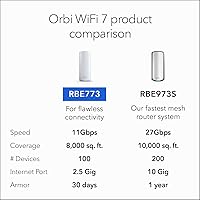
  • Max Aggregate Speed: Combined theoretical throughput across all three bands reaches up to 11 Gbps, though real-world speeds depend on client device capabilities and network conditions.
  • Coverage Area: The three-unit kit is rated to cover up to 8,000 square feet of living space when units are positioned optimally throughout the home.
  • Unit Count: Each package includes one Orbi WiFi 7 Router (RBE771) and two Orbi WiFi 7 Satellites (RBE770), totaling three units in the kit.
  • WAN Port: The router includes one 2.5 Gbps WAN port, supporting multi-gig internet service plans from fiber and cable providers up to 2.5 Gbps.
  • LAN Ports: Seven 2.5 Gbps Ethernet LAN ports are distributed across the three units, enabling wired device connections and optional wired backhaul between units.
  • Backhaul Options: The system supports both dedicated wireless backhaul and a wired 2.5 Gbps Ethernet backhaul option for users who can run a cable between units on different floors.
  • Concurrent Devices: The network is designed to handle up to 100 simultaneously connected devices without significant performance degradation under typical mixed-use household conditions.
  • Security Features: Out-of-the-box security includes WPA3 encryption, automatic firmware updates, IoT network isolation, and VPN support, with advanced parental controls and threat protection available via subscription.
  • Setup Method: Initial configuration and ongoing network management are handled through the Orbi mobile app, available for both iOS and Android, without requiring a browser-based interface.
  • Firmware: The units run NETGEAR's proprietary firmware built on a Linux base, with automatic over-the-air updates delivered without requiring manual intervention from the owner.
  • Wireless Protocol: The system is fully backward compatible with WiFi 6, 6E, 5, and 4 client devices, so older hardware connects without any special configuration or performance penalties beyond their native capabilities.
  • Package Dimensions: The retail package measures 15 x 11.2 x 9 inches and weighs 11.23 pounds, containing all three units, three power adapters, one 2-meter Ethernet cable, and a quick start guide.
  • Model Number: The full kit carries the model designation RBE773-100NAS, with the router unit identified as RBE771 and each satellite unit identified as RBE770.
  • Operating Temperature: Units are designed for indoor use and run warm under sustained load, requiring open-air ventilation — enclosed cabinet placement is not recommended by NETGEAR or experienced users.
  • ISP Compatibility: The Orbi 770 system works with any internet service provider and does not require a specific modem type, supporting both multi-gig cable and fiber connections natively.
  • Date Available: The RBE773 kit became commercially available on July 1, 2024, making it one of the earlier consumer WiFi 7 tri-band mesh systems to reach the retail market.

Related Reviews

NETGEAR Orbi 770 Series Tri-Band WiFi 7 Mesh System RBE772
86%
91%
Overall Performance
94%
WiFi Speed & Reliability
89%
Coverage Area
85%
Ease of Setup
88%
Security Features
More
NETGEAR Orbi RBK663 WiFi 6 Mesh System
87%
93%
WiFi Performance
90%
Coverage Area
85%
Ease of Setup
88%
Security Features
82%
App Experience
More
NETGEAR Orbi RBK752P WiFi 6 Mesh System
80%
88%
Coverage & Range
79%
WiFi Speed & Throughput
91%
Ease of Setup
83%
Device Handling
85%
Wired Connectivity
More
NETGEAR Orbi RBK853 WiFi 6 Mesh System
85%
93%
WiFi Coverage
89%
Speed & Performance
85%
Setup & Installation
92%
Security Features
80%
Value for Money
More
Netgear Orbi RBK50 Whole Home Mesh WiFi System
87%
88%
Performance
91%
Setup & Installation
90%
Wi-Fi Coverage
84%
App Management
85%
Device Compatibility
More
NETGEAR Orbi RBK753P WiFi 6 Mesh Network System
85%
89%
Performance
92%
Coverage Area
88%
Ease of Setup
85%
Security Features
80%
Device Support
More
NETGEAR Orbi RBK30 Whole Home Mesh WiFi System
82%
88%
WiFi Coverage
91%
Ease of Setup
85%
Performance Stability
89%
App Functionality
87%
Alexa Compatibility
More
NETGEAR Orbi 4G LTE Mesh WiFi Router LBR20
84%
88%
Setup & Installation
81%
WiFi Speed & Performance
84%
Coverage & Range
90%
App & Software Experience
89%
Security Features
More
NETGEAR Orbi RBK13 Whole Home Mesh WiFi System
84%
88%
Wi-Fi Coverage
83%
Performance (Speed & Stability)
91%
Ease of Setup
84%
App Management Experience
85%
Security Features
More
NETGEAR Orbi CBK40 Mesh WiFi System with Built-in Modem
86%
88%
Performance
80%
Ease of Setup
93%
WiFi Coverage
90%
Speed and Stability
85%
App Experience
More

FAQ

Honestly, if your devices are mostly WiFi 6 or older, you will not feel the full difference today — WiFi 7 client hardware is still rolling out. That said, the Orbi 770 system still outperforms most WiFi 6E mesh kits in real-world coverage and multi-device stability, so you are buying performance headroom rather than paying purely for a spec sheet number.

Yes, the RBE773 setup is compatible with any ISP — cable, fiber, DSL, or fixed wireless. You connect it to whatever modem or gateway your provider supplied, and it takes over routing from there. The 2.5 Gbps WAN port means it will not bottleneck multi-gig plans either.

WPA3 encryption, IoT network isolation, automatic firmware updates, and basic network management are all free with no ongoing cost. The features that fall behind a paywall after the trial period are the advanced parental controls, VPN service, and enhanced threat protection. It is a legitimate frustration at this price tier and worth factoring into your total cost of ownership.

NETGEAR recommends keeping each satellite within about 40 to 50 feet of the next unit for reliable wireless backhaul, though open floor plans can stretch that further. For multi-floor homes, the wired backhaul option via Ethernet cable between units is the more reliable path if you can run a cable between floors.

Yes, the NETGEAR Orbi 770 RBE773 supports adding additional RBE770 satellite units later through the Orbi app. The caveat is that you are locked into the NETGEAR Orbi ecosystem — satellites from other brands or older Orbi generations are not compatible with this system.

It comes up frequently enough in reviews to be worth knowing about ahead of time. The most reliable fix is to keep the satellite close to the router during initial pairing, then move it to its permanent location afterward. If pairing still fails, a factory reset of the satellite unit and a fresh attempt through the app resolves it for most buyers.

They run warm but not dangerously so — this is within normal operating parameters for high-performance networking hardware. The practical concern is sustained heat affecting the unit's longevity over years if trapped in an enclosed space. Keep them on open shelves or elevated surfaces with airflow and you should be fine.

The app is the primary and most feature-complete management interface, and NETGEAR has moved away from the traditional web GUI that older Orbi systems used. A basic web interface is still technically accessible for some settings, but for everyday management, guest network control, and speed tests, the app is the practical path.

Concrete and masonry walls absorb 2.4 GHz and 5 GHz signals significantly, and no mesh system is immune to that physics. The Orbi 770 system handles it better than most due to its dedicated backhaul and higher-powered antennas, but buyers in very dense construction should consider running the wired Ethernet backhaul option between units rather than relying on wireless for inter-unit links.

You can, but it would be a poor use of money — the router unit is sold separately at a lower price if all you need is a single node. The three-unit kit is priced and designed around the full deployment. If your home is under 2,000 square feet, a single router or a cheaper two-unit mesh system from any brand will serve you better without the cost premium.