



Overview

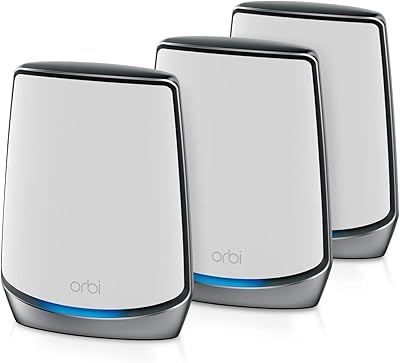
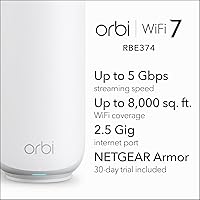
The NETGEAR Orbi 370 RBE374 WiFi 7 Mesh System is NETGEAR's push into the WiFi 7 mesh space for large homes, arriving as a 4-pack — one router and three satellites — which gives real flexibility when spreading coverage across multiple floors or an awkward layout. Three satellites is a meaningful starting point for homes approaching 8,000 square feet, though real-world results will vary based on construction materials and building shape. The hardware itself has had a visible refresh; the towers look considerably cleaner and more modern than older Orbi generations. Worth stating upfront: this is a dual-band system, and at this price, that distinction matters when tri-band rivals are in the same conversation.

Features & Benefits

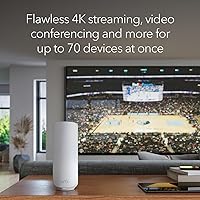
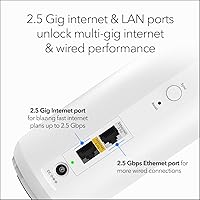
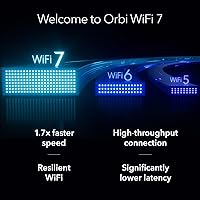
WiFi 7 delivers tangible real-world gains over WiFi 6 — reduced latency and far better handling of many simultaneous connections, so a home running 4K streams, video calls, and gaming at once actually holds up. The Enhanced Backhaul technology is worth understanding honestly: NETGEAR squeezes more efficiency from the dual-band connection than older systems managed, but a dedicated tri-band backhaul channel still has a structural edge in bandwidth-heavy scenarios. The 2.5 Gbps WAN port is a genuine plus for multi-gig fiber or cable subscribers. Four 2.5G LAN ports across the system let you hard-wire demanding devices directly. Automatic firmware updates handle security quietly, and the Orbi app covers setup, parental controls, and device prioritization without needing any technical background.

Best For

This WiFi 7 mesh kit is built for homeowners whose layouts consistently defeat single-router setups — open-plan houses over 3,000 square feet, multi-story builds with dense flooring, or properties with detached structures. Households running 20 or more devices simultaneously — cameras, consoles, phones, smart speakers, laptops — will appreciate the headroom this system provides without things grinding to a halt. It's also a strong fit for anyone on a multi-gig fiber plan who has been underutilizing their connection speeds. Home office users who need stable peak-hour throughput will find it dependable. That said, buyers who want to extract maximum backhaul performance should compare tri-band alternatives at this price point before deciding.

User Feedback

With over 3,000 ratings settled around 4.2 stars, the RBE374 4-pack earns consistent praise for coverage reliability in large homes and for how straightforward the app-guided setup is. Owners of multi-story homes specifically note a real improvement over single-router or older mesh setups. The main recurring criticism: some users feel the dual-band backhaul constrains peak throughput when satellites are spread far apart, and tri-band competitors get cited in those comparisons. A recurring concern among reviewers is that the full security feature set pushes toward a paid subscription — worth knowing, though core protections function without one. Against earlier Orbi generations, most buyers agree the hardware and network stability have taken a noticeable step forward.

Pros

  • WiFi 7 support delivers noticeably lower latency and better multi-device handling than WiFi 6 setups.
  • Four-node coverage handles large or multi-story homes that consistently defeat single-router solutions.
  • The 2.5 Gbps WAN port finally lets multi-gig fiber subscribers use the bandwidth they are paying for.
  • App-guided setup is approachable enough that non-technical users get the network running without frustration.
  • Four 2.5G LAN ports across the system allow wired connections for gaming rigs, smart TVs, or NAS drives.
  • Automatic firmware updates keep the network patched without requiring the owner to think about it.
  • This WiFi 7 mesh kit handles 4K streaming, video calls, and gaming running simultaneously without visible degradation.
  • The updated industrial design is cleaner and less obtrusive than older Orbi hardware.
  • Works with any ISP and any modem, so there is no ecosystem lock-in on the internet service side.
  • Owners upgrading from older mesh generations consistently report a meaningful improvement in overall stability.

Cons

  • Dual-band backhaul can become a throughput bottleneck when satellites are spread across very large or spread-out spaces.
  • Advanced security features push users toward a paid subscription, adding ongoing costs beyond the purchase price.
  • At this price tier, several tri-band competitors offer a structural backhaul advantage worth comparing before buying.
  • The Orbi app has drawn occasional criticism for connectivity hiccups and inconsistent behavior during initial setup.
  • Coverage claims assume favorable conditions; dense construction materials or unusual layouts will reduce real-world range.
  • No tri-band option in this product line means buyers cannot upgrade the backhaul without switching to a different system entirely.
  • The RBE374 4-pack is a significant investment that is hard to justify for homes under 2,500 square feet.
  • Some users report that device prioritization settings in the app do not always hold reliably after network restarts.

Ratings

The NETGEAR Orbi 370 RBE374 WiFi 7 Mesh System scores here reflect AI analysis of thousands of verified global buyer reviews, with spam, bot activity, and incentivized feedback actively filtered out before scoring. Every category below captures both what real users praised and where genuine frustrations surfaced — nothing has been softened or glossed over.

Coverage & Range
88%
Owners of large two-story homes consistently report that dead zones they had battled for years simply disappeared after deploying the three satellites strategically across floors. Multi-story layouts and sprawling open-plan homes are where this kit earns its strongest user praise.
A meaningful minority of reviewers in homes with older brick construction or concrete-heavy builds found the rated coverage did not translate fully to their situation. Real-world range is sensitive to wall materials, and a handful of users in particularly dense structures needed to adjust satellite placement significantly to fill gaps.
Network Speed
84%
Users on multi-gig fiber plans finally reported hitting speeds closer to what their ISP was delivering, thanks to the 2.5 Gbps WAN port unlocking what previous routers had bottlenecked. WiFi 7 clients in particular saw noticeably faster file transfers and lower latency during gaming sessions.
Speeds at satellite nodes placed furthest from the router drew some criticism, with users noting throughput dropped more than expected at longer distances — a pattern tied to the dual-band backhaul sharing bandwidth with client devices simultaneously. Non-WiFi 7 clients, which make up most households today, see more modest gains.
Multi-Device Handling
86%
Households running 30 or more simultaneous connections — smart home devices, gaming consoles, phones, and laptops all active at once — consistently reported that the network held steady during evening peak hours without the slowdowns they experienced on previous systems. This is arguably where the RBE374 4-pack earns its keep most clearly.
A segment of power users pushing the theoretical device ceiling reported occasional instability when many bandwidth-intensive devices competed simultaneously. The system handles mixed traffic well, but extremely dense, high-demand environments can expose the limits of dual-band backhaul more readily than tri-band alternatives.
Setup Experience
82%
18%
The Orbi app-guided setup process received consistent praise from buyers who described themselves as not particularly technical — most had all four nodes running and devices connected within 20 to 30 minutes. The step-by-step satellite placement guidance in the app was called out specifically as genuinely useful.
A recurring thread among reviewers involved the app losing connection to the router mid-setup, requiring a restart of the process. A smaller group reported that the app occasionally failed to detect satellites that were already powered on and in range, adding friction to what should have been a smooth experience.
App & Management
73%
27%
Day-to-day network management tasks — setting up a guest network, applying parental controls, or checking which devices are connected — are genuinely accessible through the Orbi app without needing to touch a web interface. Device prioritization for a gaming PC or work laptop is straightforward to configure.
The app drew consistent criticism for sluggishness when loading network status screens, and some users found that device priority settings did not reliably persist after the router rebooted. A few reviewers noted the app felt less polished than the hardware itself, which is a frustrating disconnect at this price tier.
Backhaul Performance
71%
29%
For most typical home deployments — satellites placed one to two rooms apart across reasonable distances — the Enhanced Dual-band Backhaul performed well enough that users did not notice any meaningful throughput penalty compared to their previous tri-band systems. NETGEAR's backhaul optimization is genuinely better than older dual-band implementations.
Users who placed satellites at far ends of large homes, or who stress-tested the system with simultaneous high-bandwidth transfers across multiple nodes, noticed the dual-band architecture more acutely. Competing tri-band mesh systems at a similar price point have a structural advantage in these specific scenarios that reviewers were candid about.
Security Features
69%
31%
Automatic firmware updates are genuinely hands-off and received positive mentions from buyers who appreciated not having to remember to patch their network hardware. Basic threat protection is active without requiring any subscription or configuration, which is more than many competing systems offer out of the box.
The subscription push for advanced security features was one of the most consistently mentioned buyer frustrations, with many feeling misled about what was included versus paywalled. Users who assumed a premium-priced system would include a full security suite without ongoing fees were noticeably disappointed when they discovered the full picture post-purchase.
Hardware Design
83%
The updated physical design received genuine compliments from buyers who had lived with older Orbi towers — the newer units are described as sleeker and far less likely to draw attention or clash with home decor. Several reviewers specifically mentioned placing satellites in living rooms without feeling the need to hide them.
The units are not small, and in tighter spaces like apartments or compact home offices, fitting four nodes discreetly can be a challenge. A small number of buyers also noted the white finish showed dust more visibly than expected, requiring more frequent cleaning to keep them looking presentable.
Value for Money
67%
33%
For buyers in the target use case — large homes, many devices, multi-gig internet — the 4-pack configuration delivers a lot of hardware relative to buying individual nodes separately or patching together a patchwork system. Users who needed this scale of coverage largely felt the investment was justified by the results.
Buyers comparing this WiFi 7 mesh kit directly against tri-band competitors at the same or slightly higher price point struggled to justify the dual-band trade-off. The subscription security costs also factor into the long-term value equation, and several reviewers concluded that comparable or better value was available elsewhere at this price.
Connection Stability
81%
19%
Long-term users reported that the network stayed reliably connected over weeks and months of daily use without requiring manual reboots, which had been a persistent frustration with their previous mesh systems. Video call quality and streaming consistency were frequently highlighted as noticeably improved over predecessor hardware.
A cluster of reviews described occasional random disconnects during the first few weeks of use that resolved after a firmware update, suggesting some early firmware builds had stability rough edges. Users who did not have automatic updates enabled were disproportionately represented in these complaints.
ISP Compatibility
91%
Buyers from a wide range of ISPs — including major cable, fiber, and DSL providers — reported no compatibility issues getting the system online. The hardware-agnostic approach means there is no hunting for specific modem pairings or worrying about provider lock-in.
Users whose ISPs require specific VLAN tagging or custom PPPoE configurations noted that the Orbi app does not surface these advanced settings as easily as a traditional router web interface would. Getting those setups working sometimes required a call to NETGEAR support.
Wired Device Support
79%
21%
Having 2.5G LAN ports distributed across multiple nodes — not just on the main router — was called out as a practical advantage by buyers who wanted to hard-wire devices in different rooms without running long cables back to a central router location. NAS drives and gaming PCs benefited most from this arrangement.
The total number of wired ports across the full 4-pack system is limited for users with many wired devices, and buyers who needed more than four total connections had to add a switch. The port count works for most home setups but felt restrictive to anyone coming from a traditional router with more LAN ports.
Upgrade from Previous Gen
86%
Owners who came to this system from older Orbi hardware — particularly the WiFi 5 and WiFi 6 generations — described the upgrade as a meaningful jump in both real-world speed and overall network reliability. The improvement in app responsiveness and node communication speed was noted even without WiFi 7 client devices.
Buyers upgrading from the Orbi Pro or higher-end tri-band Orbi lines occasionally felt the step to this dual-band system represented a lateral or even slightly backward move on backhaul architecture, even accounting for the WiFi 7 generation jump. The upgrade experience is best for those coming from mid-range or entry-level previous systems.

Suitable for:

The NETGEAR Orbi 370 RBE374 WiFi 7 Mesh System is genuinely well-matched to homeowners dealing with coverage problems that a single router simply cannot solve — think sprawling single-story ranch homes, multi-level houses where the signal dies between floors, or open layouts with thick interior walls. The 4-pack configuration means you have real placement flexibility, and the system handles a household running dozens of devices simultaneously without the kind of slowdowns that plague older mesh setups under load. Families with busy connected homes — multiple 4K TVs, a gaming PC, several phones, smart home hubs, security cameras — will feel the difference in consistent throughput during peak evening hours. It also makes strong sense for home-office workers who need reliable video call quality while the rest of the household is active on the network. Anyone on a multi-gig fiber or cable plan who has been capped by their router's WAN port will finally be able to push closer to what they are actually paying their ISP for.

Not suitable for:

The NETGEAR Orbi 370 RBE374 WiFi 7 Mesh System is not the right call for buyers in smaller homes or apartments where a single capable router would handle everything without the added cost of a multi-node system. If you are comparing this directly against tri-band mesh systems at a similar price, be aware that the dual-band backhaul — however well-engineered — can become a limiting factor when satellites are placed far apart and the network is under heavy, simultaneous load; power users who prioritize absolute peak throughput in large, spread-out deployments may find tri-band competitors edge ahead in those specific conditions. The security feature set is worth scrutinizing before purchase: while basic protections are included automatically, some of the more advanced features are tied to an ongoing subscription, which adds a recurring cost that is not immediately obvious from the product listing. Buyers looking for the most budget-conscious path into WiFi 7 should also know that this is a premium-tier system, and if your home and device count do not genuinely demand this scale, there are more appropriately sized options available for less.

Specifications

  • WiFi Standard: This system uses the 802.11be standard, commonly known as WiFi 7, which is the current generation of wireless networking technology.
  • Band Config: The system operates as a dual-band network, broadcasting on both the 2.4 GHz and 5 GHz frequency bands simultaneously.
  • Max Throughput: Combined maximum theoretical throughput across both bands reaches up to 5.0 Gbps under ideal conditions.
  • Coverage Area: NETGEAR rates this 4-pack system for coverage up to 8,000 square feet, though real-world results depend on building materials and layout.
  • Pack Contents: The box includes one Orbi WiFi 7 router (RBE371), three Orbi WiFi 7 satellites (RBE370), four power adapters, one Ethernet cable, and a quick start guide.
  • Device Capacity: The system is rated to support up to 70 concurrently connected devices across the entire mesh network.
  • WAN Port: The router unit features a single 2.5 Gbps WAN port for connecting to a modem or gateway, compatible with multi-gig fiber and cable internet plans.
  • LAN Ports: A total of four 2.5G Ethernet LAN ports are distributed across the router and satellite units for wired device connections.
  • Backhaul Tech: Nodes communicate using NETGEAR's Enhanced Dual-band Backhaul, which dynamically allocates wireless bandwidth between client traffic and inter-node communication.
  • Setup Method: Initial configuration and ongoing network management are handled through the Orbi mobile app, available for iOS and Android devices.
  • Security: The system includes automatic firmware updates and NETGEAR Advanced Router Protection, with core protections active out of the box and additional features available via subscription.
  • ISP Compatibility: This mesh kit works with any internet service provider and does not require a specific modem brand or gateway type.
  • Model Number: The retail model number for this 4-pack configuration is RBE374-100NAS.
  • Dimensions: The full package measures approximately 14.33 x 9.72 x 7.95 inches and weighs 5.96 pounds as shipped.
  • Color: All units in the system ship in a white finish designed to blend into residential and home-office environments.
  • Wireless Standard: The system is fully backward compatible with older WiFi devices operating on WiFi 5 (802.11ac) and WiFi 6 (802.11ax) standards.
  • App Features: The Orbi app supports parental controls, device prioritization, guest network creation, and real-time network activity monitoring.
  • First Available: This product became available for purchase in late July 2025, making it among the earlier consumer WiFi 7 mesh systems to reach the market.

Related Reviews
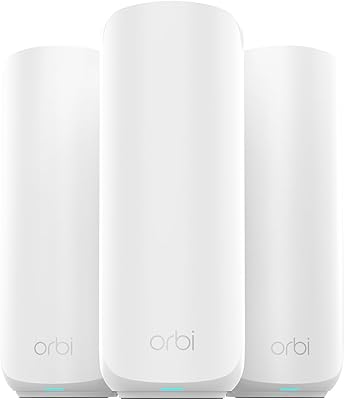
NETGEAR Orbi 370 RBE373 WiFi 7 Mesh System (3-Pack)
84%
88%
Wireless Performance
91%
Coverage & Range
93%
Setup & Installation
79%
App Experience
87%
Multi-Device Handling
More
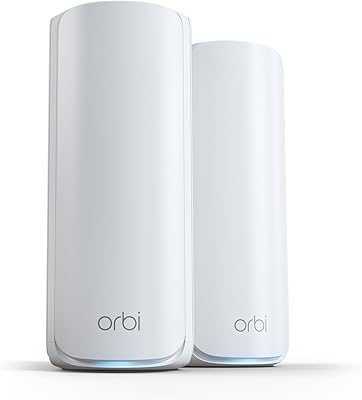
NETGEAR Orbi 770 Series Tri-Band WiFi 7 Mesh System RBE772
86%
91%
Overall Performance
94%
WiFi Speed & Reliability
89%
Coverage Area
85%
Ease of Setup
88%
Security Features
More
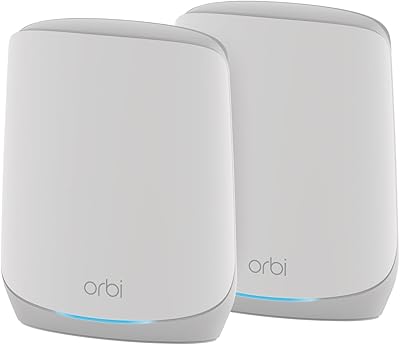
NETGEAR Orbi RBK853 WiFi 6 Mesh System
77%
83%
Signal Coverage
86%
Network Speed
88%
Device Handling
81%
Setup Experience
74%
App & Management
More
NETGEAR Orbi RBK663 WiFi 6 Mesh System
80%
88%
Coverage & Range
83%
Network Performance
91%
Setup Experience
81%
Device Handling
67%
Satellite Stability
More
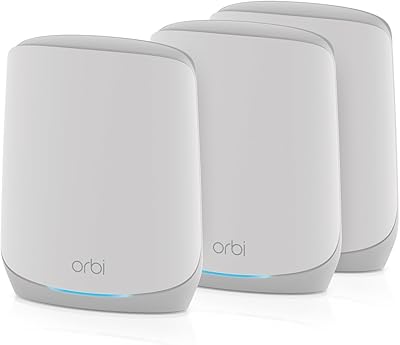
NETGEAR Orbi RBK752P WiFi 6 Mesh System
80%
88%
Coverage & Range
79%
WiFi Speed & Throughput
91%
Ease of Setup
83%
Device Handling
85%
Wired Connectivity
More
NETGEAR Orbi CBK40 Modem Mesh WiFi System
74%
82%
Coverage & Range
74%
WiFi Speed Performance
88%
Modem Integration
83%
Setup & Onboarding
77%
App Experience
More
NETGEAR Orbi RBK13 Mesh WiFi System
77%
88%
Coverage & Dead Zone Elimination
91%
Ease of Setup
67%
WiFi Speed & Throughput
83%
Roaming & Band Switching
74%
Multi-Device Performance
More
NETGEAR Orbi RBK753P WiFi 6 Mesh System
77%
88%
Coverage & Range
84%
WiFi Speed & Performance
91%
Setup & Installation
67%
App Experience
63%
Value for Money
More
NETGEAR Orbi RBK30 Whole Home Mesh WiFi System
82%
88%
WiFi Coverage
91%
Ease of Setup
85%
Performance Stability
89%
App Functionality
87%
Alexa Compatibility
More
Netgear Orbi RBK50 2-Pack Mesh WiFi System
72%
88%
Coverage & Range
83%
Signal Consistency
91%
Setup & Installation
84%
Ease of Daily Use
62%
Value for Money
More

FAQ

Most buyers report that setup is straightforward. The Orbi app walks you through connecting the router to your modem, powering on the satellites, and placing them around your home step by step. You do not need to log into any web interface or configure anything manually unless you want to. The whole process typically takes under 30 minutes.

Your older devices will work just fine. The system is fully backward compatible with WiFi 5 and WiFi 6 hardware. Devices that do not support WiFi 7 will simply connect at the fastest speed their wireless chip supports, so there is no downside to having a mixed household of old and new gadgets.

Not entirely. Core security features, including automatic firmware updates and basic network protection, are included at no extra cost. The subscription unlocks more advanced features like deeper content filtering and enhanced threat intelligence. It is an upsell, not a requirement, but it is worth knowing about before you buy if you were expecting a fully featured security suite out of the box for free.

The 8,000 square foot figure assumes reasonably open layouts without a lot of interference. In a two-story home around 5,500 square feet, you should have solid coverage, but placement of the satellites matters a lot. Concrete floors, brick interior walls, and older construction materials will reduce range. Placing satellites on each floor rather than clustering them helps significantly.

This is worth understanding honestly. Tri-band systems dedicate an entire separate band exclusively to satellite-to-router communication, which keeps that channel clear of client device traffic. This system uses NETGEAR's Enhanced Backhaul to share the available bands more intelligently, and in most home environments the real-world difference is minor. Where it can show up is when satellites are placed at longer distances with many devices hammering the network simultaneously — that is when a dedicated backhaul channel has a structural edge.

Yes, the 2.5 Gbps WAN port means you can pull close to your full 2 Gbps connection into the router, which is something older routers with standard 1 Gbps ports could not do. You will need a device with a 2.5G or multi-gig Ethernet port to see those speeds wired, and wireless clients will be limited by their own WiFi chip capabilities.

Yes, the Orbi system is designed to be expandable. You can add compatible Orbi WiFi 7 satellites to your network through the app. Just make sure any satellite you add is compatible with the RBE371 router in this kit before purchasing separately.

That is actually a solid fit. A lot of smart home devices — thermostats, bulbs, plugs, sensors — are relatively low-bandwidth individually, but they still each hold a connection slot on the network. Combine those 45 devices with active phones, laptops, and streaming, and you are in the range where this Orbi 370 mesh system genuinely helps by managing all those concurrent connections without things getting congested.

It works with virtually any modem or gateway from any provider, including Comcast, Cox, Spectrum, AT&T, and others. You simply connect the router unit to your existing modem via Ethernet. If your ISP uses a modem-router combo unit in bridge mode, that works too — though setting bridge mode on some ISP gateways does require a call to your provider.

Owners upgrading from older Orbi generations consistently report better stability, faster app responsiveness, and noticeable improvements in how the network handles many simultaneous devices. The hardware design has also been updated and looks considerably more refined. The jump to WiFi 7 is the main technical headline, but the overall system polish feels meaningfully improved compared to earlier Orbi hardware.