Overview

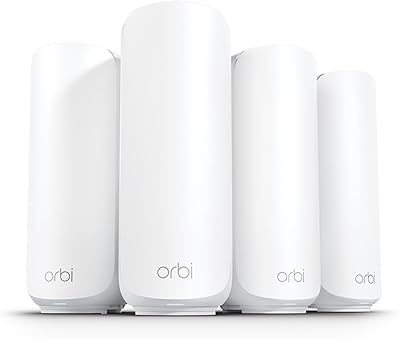
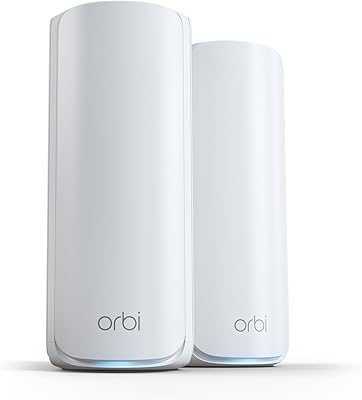
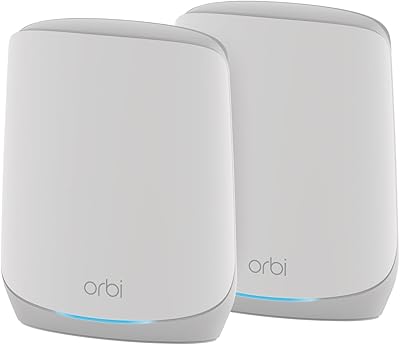
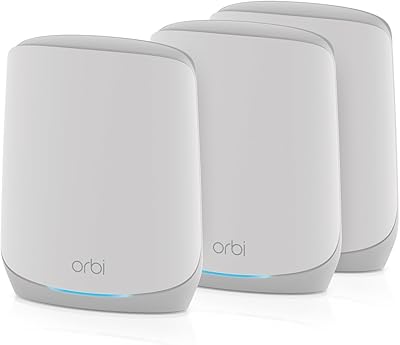
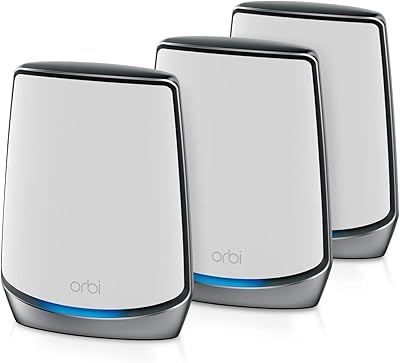
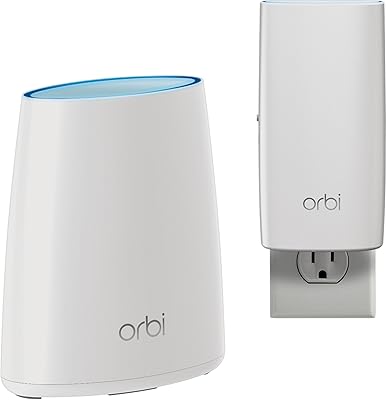
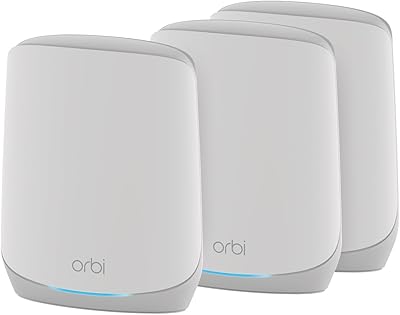
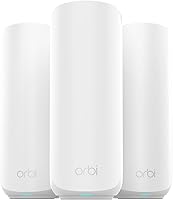
The NETGEAR Orbi 370 RBE373 WiFi 7 Mesh System (3-Pack) represents NETGEAR's most accessible path into the WiFi 7 generation — one router paired with two satellites covering up to 6,000 sq. ft. It runs on dual-band architecture, which sets it apart from the pricier tri-band Orbi lines. That distinction matters: dual-band handles backhaul and client traffic on shared spectrum, whereas tri-band dedicates a full band to satellite communication. For most households, that difference is barely noticeable. The redesigned hardware is noticeably cleaner than older Orbi units, with internal 360-degree antennas tucked inside a compact, understated enclosure that blends into a home without looking like networking equipment.
Features & Benefits

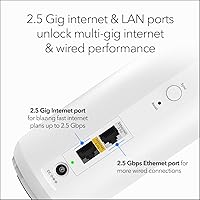
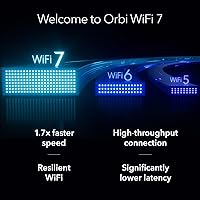
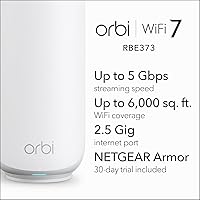
Running the 802.11be standard, this Orbi mesh setup delivers up to 5 Gbps of aggregate throughput — a meaningful jump over WiFi 6 in real-world congested environments. The 2.5 Gbps WAN port is a practical inclusion; if your ISP offers a multi-gig fiber plan, this system won't become the bottleneck. Each unit also provides three 2.5 Gbps LAN ports, useful for wired TVs, gaming consoles, or desktop PCs that benefit from a direct connection. Security is handled through automatic firmware updates by default, with an optional Advanced Router Protection subscription layering on deeper threat monitoring. Setup runs through the Orbi app, which walks through installation without requiring any router knowledge.

Best For

This WiFi 7 mesh setup makes the most sense for households still running WiFi 5 or older WiFi 6 gear who want a meaningful upgrade without jumping to a tri-band flagship system. It handles homes in the 3,000 to 6,000 sq. ft. range particularly well — think split-levels, older construction with thick walls, or homes with a detached garage or basement office. Families with 50 or more connected devices will appreciate the headroom. It also suits anyone who just signed up for a multi-gig internet plan and needs hardware that can actually use that speed. People who dislike manual router configuration will find the app-driven experience refreshingly low-friction.

User Feedback

Buyers consistently highlight easy setup as a standout experience — most report being up and running in under 20 minutes. Range improvements over older routers draw frequent praise, particularly from users who previously had dead zones in back bedrooms or garages. On the critical side, some users in apartments or densely packed neighborhoods report that the dual-band backhaul can struggle with interference, leading to occasional satellite dropouts. The optional security subscription draws mixed reactions — those who skip it feel the base router is fine; others feel the upsell is unnecessary for a system at this price. Satellite placement sensitivity is a recurring note, with a few buyers needing to reposition units to maintain stable backhaul performance.

Pros

  • WiFi 7 support future-proofs your home network against devices releasing over the next several years.
  • The 2.5 Gbps WAN port actually uses your multi-gig internet plan instead of throttling it at the router.
  • Setup through the Orbi app takes most buyers under 20 minutes with no networking knowledge required.
  • Three 2.5 Gbps LAN ports per unit give wired devices a fast, stable connection at each node location.
  • Automatic firmware updates run silently in the background, keeping security current without manual effort.
  • Coverage across 6,000 sq. ft. handles large homes, multiple floors, and tricky layouts without extra hardware.
  • The redesigned enclosure is compact and unobtrusive — it does not look like networking equipment on a shelf.
  • Handles 50-plus simultaneous connected devices during peak hours without measurable slowdown for most households.
  • Backward compatibility means every older device reconnects to the new network without any manual reconfiguration.

Cons

  • Dual-band backhaul shares spectrum with client devices, which limits throughput compared to dedicated tri-band systems.
  • Satellite placement is more sensitive than expected — a poor location meaningfully degrades backhaul performance.
  • The Orbi app can be slow to reflect real-time changes after reboots or when adding new devices.
  • Advanced security features require a paid subscription rather than being fully included at this price tier.
  • Limited manual configuration options make this a poor fit for users who need deep network customization.
  • Units run noticeably warm under sustained heavy load, requiring attention to airflow in enclosed spaces.
  • In high-interference wireless environments, satellite speeds can drop unpredictably and require repositioning to resolve.
  • Long-term firmware support history raises questions for buyers planning to use this system beyond four or five years.

Ratings

The NETGEAR Orbi 370 RBE373 WiFi 7 Mesh System (3-Pack) scores are generated by AI after analyzing thousands of verified global buyer reviews, with spam, incentivized submissions, and bot activity actively filtered out. The results reflect a clear-eyed picture of where this Orbi mesh system genuinely delivers and where real users have run into friction. Both the strengths and the recurring pain points are represented honestly in every category below.
Wireless Performance
88%
Users upgrading from WiFi 5 or older WiFi 6 routers consistently report a noticeable jump in speed and stability across the home. Video calls from a basement or back bedroom that used to buffer now hold steady, and multiple 4K streams running at once no longer cause lag for anyone else on the network.
In apartments or densely occupied neighborhoods with heavy wireless interference, the dual-band backhaul shows its limits — a handful of users report speed inconsistencies on satellites further from the router. Those in RF-congested environments may not see the full performance potential this system is capable of delivering.
Coverage & Range
91%
The 3-pack configuration handles large homes convincingly, with most buyers in the 3,000 to 5,500 sq. ft. range reporting solid signal in previously dead zones like detached garages, back patios, and upstairs bedrooms at the far end of the house. The internal antennas do a better job of pushing signal through walls than many buyers expect from such a compact unit.
A subset of users in homes with unusual layouts — long narrow floor plans or heavy concrete construction — find that satellite placement is more sensitive than expected. Positioning a satellite even a room off from the ideal spot can meaningfully impact backhaul stability, requiring some trial and error during initial setup.
Setup & Installation
93%
The Orbi app-guided setup is one of the most frequently praised aspects across reviews. Most buyers report being fully connected in under 20 minutes with no prior networking knowledge required. The app walks through each step clearly, and the system correctly identifies satellites automatically without any manual pairing steps.
A small number of users with more complex home networks — static IP configurations, specific VLAN needs, or ISP-provided modem-router combos in bridge mode — report running into friction during setup. The app experience is optimized for plug-and-play use rather than advanced configuration, which can frustrate power users.
App Experience
79%
21%
For everyday tasks like checking connected devices, running a speed test, setting up a guest network, or applying parental controls, the Orbi app is clean and easy to navigate. Most family users appreciate having a visual map of their network without needing to log into a browser-based admin panel.
A recurring complaint is that the app can be slow to reflect real-time network changes — rebooting a satellite or adding a new device sometimes takes several minutes to show up correctly in the interface. Occasional login session drops and app refresh glitches are noted across both iOS and Android users.
Multi-Device Handling
87%
Households with 30 or more active devices — smart TVs, phones, tablets, smart home sensors, gaming consoles — report that the network stays stable without any noticeable slowdown during peak evening hours. The WiFi 7 standard handles concurrent connections more gracefully than older mesh systems many buyers replaced.
At the upper end of the claimed 70-device capacity, a small number of power users in larger households notice some degradation in per-device throughput. This is less a failure of the hardware and more an inherent ceiling of the dual-band architecture when every device is competing for bandwidth simultaneously.
Build Quality & Design
84%
The redesigned enclosure is a clear improvement over older Orbi hardware. It is compact enough to sit on a shelf without looking out of place, and the matte finish does not attract dust or fingerprints the way glossy networking gear often does. Buyers frequently comment that guests do not recognize it as a router.
The units feel slightly lighter than expected for the price tier, and a few buyers question the long-term durability of the plastic housing. There are no ventilation slots visible externally, and some users in warmer climates report the router running noticeably warm under sustained heavy load.
Backhaul Reliability
74%
26%
Under typical home conditions — a two-story house, moderate interference, satellites placed within reasonable range of the router — the Enhanced Dual-band Backhaul maintains a stable connection between nodes. Most buyers in suburban single-family homes report no dropped satellite connections after initial placement.
This is where the dual-band limitation surfaces most clearly in user feedback. In environments with significant 5 GHz interference or walls that attenuate signal heavily, the backhaul link degrades and satellite speeds can drop substantially. Tri-band Orbi systems handle this more gracefully by dedicating a separate band entirely to backhaul traffic.
Value for Money
82%
18%
Compared to tri-band WiFi 7 mesh systems at significantly higher prices, the Orbi 370 kit lands in a practical middle ground. Buyers who do not need the absolute maximum backhaul throughput find this system gives them genuine WiFi 7 capability and whole-home coverage at a price that does not require a long internal debate.
Some buyers feel the dual-band architecture at this price point is a compromise that should be priced lower. Awareness that a modest additional spend unlocks dedicated backhaul in higher-tier systems leaves a portion of buyers feeling they are paying near-premium pricing for a mid-tier internal design decision.
Security Features
76%
24%
Automatic firmware updates happen silently in the background, which is a meaningful baseline protection that many cheaper routers skip entirely. Users who simply want their network protected without thinking about it appreciate that NETGEAR pushes patches consistently and without requiring manual action.
The more robust threat monitoring, intrusion detection, and content filtering sit behind an optional paid subscription, which divides buyer opinion sharply. Several reviewers feel that a system at this price tier should include at least a year of advanced protection rather than treating it as an add-on from day one.
ISP & Port Compatibility
89%
The 2.5 Gbps WAN port is a genuinely practical inclusion for buyers who have already upgraded to a multi-gig fiber or cable plan. Unlike older mesh systems that cap incoming speeds at 1 Gbps, this Orbi 370 kit does not create a hardware bottleneck between the modem and the rest of the network.
Buyers on standard gigabit or slower plans will not notice any difference from this port upgrade, making it a feature that only a subset of current users can utilize. Additionally, those needing more than three wired LAN connections per unit may need a separate switch, which adds cost and complexity.
Wired Device Support
81%
19%
Three 2.5 Gbps LAN ports per unit is a strong offering, allowing wired connections for smart TVs, gaming consoles, desktop PCs, or network-attached storage devices at each node location. Buyers with home offices or media rooms that rely on wired connections find this particularly useful without needing additional hardware.
Power users running rack-style home lab setups or needing 10 Gbps wired throughput will find the LAN port spec underwhelming. There is also no link aggregation support mentioned, which limits throughput headroom for high-demand wired workloads on a single port connection.
Backward Compatibility
92%
Every older device in the house — WiFi 4 smart plugs, aging laptops, older smartphones — connects without issue. Buyers migrating from a previous mesh system report that all their existing devices reconnected automatically to the new network with no manual reconfiguration required on individual gadgets.
There are no meaningful cons here from a compatibility standpoint; this is a broadly well-handled aspect. A very small number of users report older IoT devices occasionally preferring the 5 GHz band over 2.4 GHz after migration, requiring a manual band preference adjustment in the app.
Firmware & Long-Term Support
78%
22%
NETGEAR has a reasonably consistent track record with Orbi firmware updates, and buyers who have owned Orbi systems for multiple years report that performance improvements have arrived via updates over time. The automatic update system means most users stay current without actively managing their router software.
Some longtime NETGEAR customers express concern about how long WiFi 7 support will be actively maintained, citing the brand's history of sunsetting older product lines sooner than competitors. A few advanced users also note that beta firmware access and community update transparency lag behind brands like Asus in the enthusiast space.
Noise & Heat Management
83%
The units run quietly with no audible fan noise, which matters when a satellite is placed in a bedroom or home office. Under typical mixed-use conditions, the hardware stays at a comfortable operating temperature and does not require any special ventilation considerations during placement.
Under sustained heavy network load — large file transfers, continuous 4K streaming to multiple devices simultaneously — the router unit runs noticeably warm to the touch. While no thermal failures are reported in current reviews, buyers in warm climates or enclosed entertainment centers should ensure adequate airflow around the units.

Suitable for:

The NETGEAR Orbi 370 RBE373 WiFi 7 Mesh System (3-Pack) is a strong fit for households that have outgrown a single router and need reliable whole-home coverage without hiring a network consultant to set it up. If your home sits anywhere between 2,500 and 6,000 sq. ft. — split across two floors, a finished basement, or a layout with thick interior walls — this Orbi mesh system addresses dead zones with minimal fuss. Families where multiple people are simultaneously streaming, video calling, and gaming will find the network holds up during peak evening hours far better than most older mesh systems. It is especially well-matched for anyone who recently upgraded to a multi-gig fiber or cable plan and wants hardware that can actually take advantage of that speed at the router level. Remote workers who need a dependable connection in a home office that sits far from the main router will also benefit from the satellite coverage. And if you simply want a network you can set up in an afternoon and not think about again, the app-driven experience is genuinely built for that kind of buyer.

Not suitable for:

The Orbi 370 kit is not the right choice for every buyer, and it is worth being direct about where it falls short. Networking enthusiasts who want deep manual control — custom DNS, VLAN segmentation, advanced QoS tuning, or granular firewall rules — will find the app-centric interface limiting compared to open-source firmware options or enterprise-grade alternatives. Anyone living in a densely packed apartment building with heavy 5 GHz wireless interference may find that the dual-band backhaul struggles to maintain consistent satellite speeds, and a tri-band system with a dedicated backhaul channel would serve them better. Buyers who specifically need more than three wired LAN connections at a single node location will need to budget for an additional switch. If your home is under 2,000 sq. ft. or you live alone with a handful of devices, this is simply more hardware than your situation requires. Finally, buyers sensitive to ongoing subscription costs should know that the more advanced security features sit behind a paid tier — the base system is solid, but the full protection stack is not included by default.

Specifications

  • WiFi Standard: This system operates on the 802.11be standard, commonly known as WiFi 7, and is fully backward compatible with WiFi 6, 6E, 5, and 4 devices.
  • Band Configuration: The system uses a dual-band architecture, operating across both the 2.4 GHz and 5 GHz frequency bands simultaneously.
  • Max Throughput: Aggregate wireless throughput reaches up to 5 Gbps across both bands under optimal conditions.
  • Coverage Area: The 3-pack configuration is rated to cover up to 6,000 sq. ft. of living space, including multi-floor homes.
  • Pack Contents: The kit includes one Orbi WiFi 7 router (RBE371), two Orbi WiFi 7 satellites (RBE370), three power adapters, one Ethernet cable, and a quick start guide.
  • WAN Port: The router features a single 2.5 Gbps internet (WAN) port, compatible with multi-gig fiber and cable broadband plans.
  • LAN Ports: Each unit provides three 2.5 Gbps Ethernet LAN ports for wired device connections at every node location.
  • Concurrent Devices: The system is rated to handle up to 70 simultaneously connected wireless devices across the entire mesh network.
  • Backhaul Type: Inter-node communication uses Enhanced Dual-band Backhaul, sharing the 5 GHz band between client traffic and satellite-to-router communication.
  • Antenna Design: All units use internal omnidirectional antennas designed to deliver 360-degree wireless coverage without exposed external antenna elements.
  • Setup Method: Initial configuration and ongoing network management are handled through the Orbi mobile app, available for iOS and Android.
  • Security: The system includes automatic firmware updates as a standard feature, with optional Advanced Router Protection available as a paid subscription for enhanced threat monitoring.
  • ISP Compatibility: The Orbi 370 kit works with any internet service provider and does not require a proprietary modem or gateway.
  • Model Number: The full kit carries model number RBE373-100NAS, with the router designated RBE371 and each satellite designated RBE370.
  • Package Dimensions: The complete retail package measures 13.82 x 9.76 x 6.93 inches.
  • Package Weight: The full kit weighs 4.55 lbs as packaged, inclusive of all units, cables, and power adapters.
  • ASIN: The Amazon product identifier for this kit is B0FH39S1XJ.
  • Availability Date: This product was first made available for purchase on July 29, 2025.
  • Manufacturer: The system is designed and manufactured by NETGEAR, headquartered in San Jose, California.

Related Reviews

NETGEAR Orbi 370 Series WiFi 7 Mesh System RBE374
88%
92%
Performance
89%
Ease of Setup
93%
Coverage Area
88%
Speed/Throughput
87%
Security Features
More
NETGEAR Orbi 770 Series Tri-Band WiFi 7 Mesh System RBE772
86%
91%
Overall Performance
94%
WiFi Speed & Reliability
89%
Coverage Area
85%
Ease of Setup
88%
Security Features
More
NETGEAR Orbi RBK663 WiFi 6 Mesh System
87%
93%
WiFi Performance
90%
Coverage Area
85%
Ease of Setup
88%
Security Features
82%
App Experience
More
NETGEAR Orbi RBK853 WiFi 6 Mesh System
85%
93%
WiFi Coverage
89%
Speed & Performance
85%
Setup & Installation
92%
Security Features
80%
Value for Money
More
NETGEAR Orbi RBK752P WiFi 6 Mesh System
80%
88%
Coverage & Range
79%
WiFi Speed & Throughput
91%
Ease of Setup
83%
Device Handling
85%
Wired Connectivity
More
NETGEAR Orbi RBK753P WiFi 6 Mesh Network System
85%
89%
Performance
92%
Coverage Area
88%
Ease of Setup
85%
Security Features
80%
Device Support
More
Netgear Orbi RBK50 Whole Home Mesh WiFi System
87%
88%
Performance
91%
Setup & Installation
90%
Wi-Fi Coverage
84%
App Management
85%
Device Compatibility
More
NETGEAR Orbi RBK30 Whole Home Mesh WiFi System
82%
88%
WiFi Coverage
91%
Ease of Setup
85%
Performance Stability
89%
App Functionality
87%
Alexa Compatibility
More
NETGEAR Orbi CBK40 Mesh WiFi System with Built-in Modem
86%
88%
Performance
80%
Ease of Setup
93%
WiFi Coverage
90%
Speed and Stability
85%
App Experience
More
NETGEAR Orbi RBK13 Whole Home Mesh WiFi System
84%
88%
Wi-Fi Coverage
83%
Performance (Speed & Stability)
91%
Ease of Setup
84%
App Management Experience
85%
Security Features
More

FAQ

Not at all — it works with any ISP and any standard gigabit plan. That said, the 2.5 Gbps WAN port really shines if you are on a multi-gig fiber or cable plan, since it removes the router as a bottleneck. If you are on a standard 500 Mbps or 1 Gbps plan, you will still get excellent whole-home coverage, just without needing that port speed.

Yes, the NETGEAR Orbi 370 RBE373 WiFi 7 Mesh System (3-Pack) works with virtually any cable or fiber modem. You plug your existing modem into the 2.5 Gbps WAN port on the router unit and the system takes it from there. If your ISP provided a modem-router combo unit, you may need to put it into bridge mode first, which is a straightforward process most ISPs can walk you through.

Setup is genuinely one of the easier mesh systems to get running. Download the Orbi app, plug in the router, follow the step-by-step instructions, and then place and power on the satellites when prompted. Most people finish the whole process in under 20 minutes. The app handles satellite discovery automatically — there is no manual pairing or configuration required.

Yes, everything should connect without any issues. WiFi 7 is fully backward compatible with older WiFi standards, so your WiFi 4 and WiFi 5 devices connect just as they always have. You will not see a speed improvement on those older devices themselves, but they also will not interfere with the performance of your newer WiFi 6 or WiFi 7 capable devices.

The core difference is how the satellites communicate back to the router. In this dual-band system, the 5 GHz band handles both your device connections and the inter-node backhaul traffic simultaneously. In tri-band models, a dedicated third band handles only backhaul, keeping that link completely separate from client traffic. For most homes, the dual-band setup works great. In very interference-heavy environments or extremely large homes where satellites are far from the router, a tri-band system has an edge in maintaining consistent backhaul speeds.

Yes, the Orbi system is designed to be expandable. You can add compatible Orbi WiFi 7 satellites to extend coverage beyond the initial 6,000 sq. ft. footprint. Just add the additional satellite through the Orbi app the same way you set up the originals.

The base system is not unprotected — automatic firmware updates are included at no extra cost, which is genuinely important for keeping the router patched against known vulnerabilities. The paid Advanced Router Protection subscription adds deeper features like real-time threat monitoring and content filtering. Whether that extra layer is worth the subscription cost depends on your household. Plenty of buyers skip it entirely and feel comfortable with the baseline protection.

A good rule of thumb is to place each satellite roughly halfway between the router and your farthest coverage area, while still within solid signal range of the router. Avoid tucking satellites behind large appliances, inside cabinets, or in corners. If you have two floors, placing one satellite near the top of the stairs and another toward a far room on the main floor usually works well. The Orbi app provides signal strength feedback during placement to help you dial in the positioning.

The system is rated for up to 70 concurrent devices, and real-world feedback suggests it handles 30 to 50 active devices comfortably during peak hours — think an evening when multiple people are streaming, on video calls, and gaming at the same time. You may start to notice some per-device throughput reduction at the very upper end of that capacity, but for typical household usage, headroom is not a concern.

Yes, local network communication between devices connected to the mesh continues to function even when your internet connection is down. Devices on the same network can still share files, communicate with a local NAS, or stream from a local media server. The only thing that stops working is anything that requires an active internet connection.