Overview

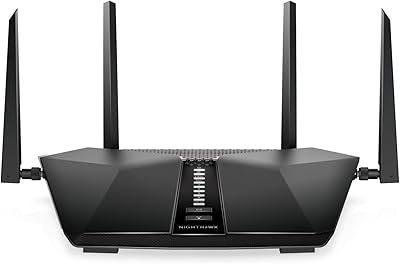
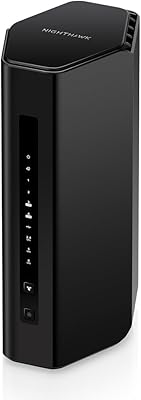
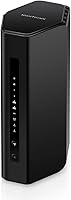
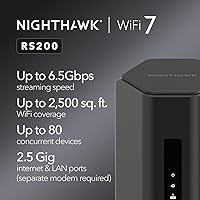
The NETGEAR Nighthawk RS200 arrived in late 2024 as one of the more accessible entry points into WiFi 7 home networking. It covers up to 2,500 sq. ft. and handles as many as 80 connected devices simultaneously — solid numbers for a mid-range router. The chassis is noticeably more compact than older Nighthawk models, which is a welcome change for anyone tired of bulky antenna towers hogging shelf space. One critical thing to flag upfront: no modem is included. If you are on cable internet, you will need a separate modem with a coax input before this router does anything useful at all.
Features & Benefits

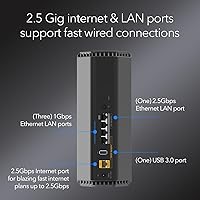
WiFi 7's 802.11be standard is the headline here, promising theoretical speeds up to 6.5 Gbps — though real-world throughput will sit well below that ceiling, as it does with every router spec sheet. What actually matters day-to-day is how it handles congestion, and the dual-band architecture (2.4 GHz and 5 GHz) manages that cleanly without the added cost of a tri-band design. The 2.5 Gbps WAN port is genuinely useful if your ISP offers a multi-gig plan, and the LAN side gives you one 2.5G port plus three standard gigabit ports for wired devices. Setup runs through NETGEAR Genie; functional, if not flashy.

Best For

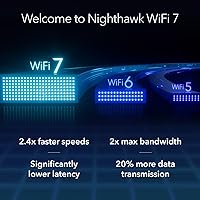
This Nighthawk router hits its stride in medium-sized homes where occupants are upgrading from WiFi 5 or WiFi 6 and want noticeably faster speeds without over-engineering the setup. Gamers and 4K streamers will appreciate the consistent low latency that WiFi 7 delivers, especially in households juggling 20 or more devices across smart TVs, phones, and laptops. The 2.5G WAN port makes it a smart pick for anyone on a high-speed fiber or cable plan. That said, if your home stretches past 3,000 sq. ft. across multiple floors, or you need mesh expansion capability, this router's coverage ceiling will likely leave you wanting more.

User Feedback

With over 750 ratings and a 4.4-star average, the RS200 has built a reasonably strong community endorsement. Most buyers highlight quick, painless setup and a noticeable speed improvement over their previous routers. The criticisms, though, are consistent enough to take seriously: coverage in multi-story homes often falls short of the advertised 2,500 sq. ft., and the NETGEAR Genie app draws recurring complaints about its dated interface. A handful of reviewers were caught off guard by the separate modem requirement — worth knowing before checkout. Competing WiFi 7 options at similar price points do surface in buyer comparisons, so researching alternatives beforehand is a reasonable move.

Pros

  • WiFi 7 delivers noticeably faster, more stable connections compared to aging WiFi 5 and WiFi 6 hardware.
  • The 2.5G WAN port ensures the router keeps pace with multi-gig fiber and cable internet plans.
  • Setup is quick and beginner-friendly — most users are online within minutes of unboxing.
  • Handles up to 80 simultaneous devices without significant congestion during peak household usage.
  • Compact, updated chassis fits discreetly on a shelf without dominating the room.
  • One 2.5G LAN port gives wired gaming rigs and NAS drives a real throughput advantage.
  • Built-in internet security adds a layer of network protection without an immediate extra subscription cost.
  • Strong 4.4-star rating across 750-plus verified reviews signals consistent real-world reliability.
  • Compatible with any ISP — no lock-in, no proprietary modem pairing requirements.
  • Priced accessibly for a WiFi 7 router, making next-gen networking reachable for average households.

Cons

  • A separate cable modem is required — an extra cost many buyers do not anticipate before checkout.
  • Real-world coverage in multi-story homes regularly falls short of the advertised 2,500 sq. ft.
  • The NETGEAR Genie app feels dated and draws repeated complaints about its interface and reliability.
  • Only four LAN ports total, which gets tight fast in homes with multiple wired devices.
  • Dual-band architecture puts more load on the 5 GHz band versus a tri-band alternative.
  • Long-term firmware support and update cadence for this model is still unproven.
  • The 2.5G WAN port only delivers full value if your modem is also 2.5G-capable — many are not.
  • Competitors at a comparable price occasionally offer more mature software ecosystems or tri-band options.
  • No native mesh expansion means coverage gaps cannot easily be addressed without replacing the router.
  • Advanced users seeking granular network controls will find the firmware options limited.

Ratings

The NETGEAR Nighthawk RS200 earns a strong overall standing based on AI analysis of hundreds of verified global user reviews, with spam, bot-submitted, and incentivized feedback actively filtered out before scoring. Across categories from raw wireless performance to app usability, the RS200 shows clear strengths in speed and setup simplicity — but also a few recurring frustrations that any honest assessment has to surface. The scores below reflect both what buyers genuinely loved and where this WiFi 7 router falls short of expectations.
Wireless Speed & Performance
88%
Buyers upgrading from WiFi 5 or older WiFi 6 hardware consistently describe a tangible speed boost, particularly when streaming 4K content or running video calls alongside gaming sessions. The WiFi 7 standard handles multiple simultaneous high-demand devices noticeably better than its predecessors in real-world conditions.
The advertised 6.5 Gbps is a theoretical ceiling that no home environment will reach — real throughput is considerably lower. A subset of users on mid-tier ISP plans noted the speed gains were less dramatic than expected, suggesting the router outpaces many home internet connections.
Coverage & Range
71%
29%
For single-story homes or open-plan apartments under 2,000 sq. ft., the RS200 delivers reliable, consistent signal across the whole space. Users in those environments rarely report dead zones or significant drop-off near the edges of coverage.
Multi-story homes are where the cracks show. Several reviewers in two-floor houses found signal degradation on upper levels, and the real-world effective range fell noticeably short of the stated 2,500 sq. ft. in layouts with thick walls or multiple floors.
Setup & Installation
91%
Getting the RS200 running is one of its clearest strengths. The majority of users reported being online within minutes, with the guided setup process handling band configuration automatically. Even buyers with limited networking experience found the initial install straightforward.
A recurring frustration is the modem-not-included situation — a meaningful number of buyers were caught off guard at setup when they realized a separate cable modem is required. Those expecting a plug-and-play all-in-one solution faced an unexpected extra step and potential added cost.
App & Firmware Experience
63%
37%
The NETGEAR Genie app covers the basics well enough — parental controls, device management, and guest network setup are all accessible without digging through dense menus. For users who just want a working network and minimal tinkering, it is adequate.
The app interface feels dated compared to rivals, and multiple reviewers flagged occasional sync issues between the app and the router. Advanced users who want granular QoS controls or detailed traffic analytics will find the firmware limiting relative to competing platforms.
Value for Money
82%
18%
Positioned as one of the more affordable WiFi 7 routers currently available, the RS200 gives buyers genuine next-generation wireless without paying flagship prices. For households on multi-gig internet plans, the 2.5G WAN port alone justifies a meaningful portion of the asking price.
Competitors at a similar price point occasionally offer tri-band configurations or more mature app ecosystems, which makes the value equation less clear-cut for buyers who do their homework. The separate modem requirement also adds hidden cost that shoppers should factor in upfront.
Build Quality & Design
79%
21%
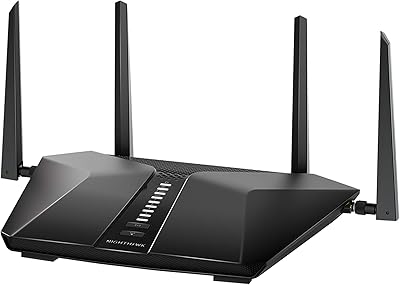
The updated chassis is a genuine improvement over older, more aggressive-looking Nighthawk designs. It sits flat and relatively discreetly on a shelf or entertainment unit, and the build feels solid without any cheap flex or creaking plastic.
At 3.36 pounds with dimensions of roughly 10.8 x 7.1 x 7 inches, it is not exactly small — just smaller than predecessors. Buyers expecting a truly compact router may still find it bulkier than some competing designs in this category.
Device Handling & Congestion Management
84%
With support for up to 80 simultaneous devices, the RS200 handles busy smart homes well. Users with a mix of phones, smart TVs, security cameras, and laptops reported stable connections across the board during peak household usage hours.
Dual-band architecture, while efficient, means the 5 GHz band carries a heavier load compared to tri-band routers that can split high-bandwidth devices across an additional channel. Power users with very dense device environments may notice more competition for bandwidth.
Wired Connectivity
86%
The LAN port configuration — one 2.5G and three standard gigabit ports — gives desktop users and NAS owners real flexibility. The 2.5G LAN port is particularly useful for wired gaming rigs or workstations where maximum throughput matters.
Four LAN ports total is on the lean side for households with multiple wired devices, gaming consoles, and a home office setup all competing for direct connections. A managed switch becomes a near-necessity in those scenarios.
Internet Security Features
74%
26%
Built-in security scanning provides a layer of protection that many comparable routers charge extra for or omit entirely. Buyers appreciate not having to immediately invest in a third-party security subscription just to get basic network protection.
There is ambiguity around the long-term availability and depth of the security feature — whether it eventually requires a paid subscription for full functionality is not immediately transparent from the product listing, and some users flagged this uncertainty in reviews.
Latency & Gaming Performance
83%
Gamers in the review pool report reliable, low-latency connections during online multiplayer sessions. WiFi 7's improved handling of simultaneous data streams translates to fewer lag spikes, especially when other household members are streaming or video calling at the same time.
Latency performance, while strong over WiFi 7, still does not fully match a dedicated wired connection. Users in gaming-focused households who push competitive online titles may still prefer wired setups for the most critical sessions.
Compatibility & ISP Flexibility
88%
The RS200 works with any internet service provider and supports a wide range of modem pairings. Buyers on fiber, cable, and DSL plans all reported successful setups without compatibility headaches, which is not always a given with newer-standard routers.
The 2.5G WAN port's full potential is only unlocked with a 2.5 Gbps-capable modem — a detail that catches some cable internet users off guard, as many standard ISP-provided modems top out at 1 Gbps and create a bottleneck.
Streaming & Media Performance
87%
4K streaming on multiple TVs simultaneously is where this WiFi 7 router visibly outperforms older home network hardware. Reviewers noted that buffering events dropped significantly after upgrading, even in households running three or four concurrent streams.
Streaming performance in rooms at the far edges of coverage — or on lower floors while the router sits upstairs — was flagged as inconsistent by a handful of reviewers, reinforcing the range limitations noted elsewhere.
Long-Term Reliability
76%
24%
Most buyers who have used the RS200 over several months report stable uptime with minimal reboot requirements. The Nighthawk platform has a reasonably long track record in home networking, which gives buyers more confidence than a newer, untested brand might.
The product launched in late 2024, so the long-term reliability picture is still forming. Some users noted occasional firmware-related hiccups that required manual reboots, and the update cadence from NETGEAR on this model is still being established.

Suitable for:

The NETGEAR Nighthawk RS200 is a strong fit for households that are ready to step into WiFi 7 without paying flagship prices or wrestling with enterprise-level configuration. If you are coming from a WiFi 5 or aging WiFi 6 router, the speed and congestion improvements you will notice day-to-day are real and meaningful — particularly in homes where multiple people are simultaneously streaming, video calling, or gaming. It works especially well in single-story homes or open-plan apartments up to around 2,000–2,200 sq. ft., where the dual-band coverage holds up consistently. Buyers on high-speed ISP plans — think 500 Mbps and above, including multi-gig fiber tiers — will also get genuine value from the 2.5G WAN port, which ensures the router does not become the bottleneck. Households running 20 to 60 connected devices across smart home gadgets, phones, tablets, and laptops will find the RS200 handles that load comfortably without the complexity of a mesh system.

Not suitable for:

Buyers expecting a completely self-contained internet solution should know upfront that the NETGEAR Nighthawk RS200 does not include a modem — if you are on cable internet, that is a required separate purchase that adds real cost to the equation. Larger homes with square footage above 3,000 sq. ft., or two-story layouts with dense construction, will likely find the coverage falls short of the advertised spec, based on consistent feedback from multi-floor households. If you need mesh expansion capabilities or want satellite nodes to extend coverage, this router does not support that use case out of the box. Power users who want deep QoS customization, granular traffic analytics, or a polished app experience may find the NETGEAR Genie platform frustrating compared to rivals. Anyone still on a basic 100–200 Mbps ISP plan will also see limited real-world benefit from WiFi 7 at this stage — the hardware will outlast your current plan, but the upgrade might feel premature today.

Specifications

  • WiFi Standard: The RS200 uses the 802.11be (WiFi 7) standard, the latest generation of wireless networking technology available for home routers.
  • Band Configuration: Dual-band design covers both the 2.4 GHz and 5 GHz frequency bands, keeping legacy and modern devices connected on appropriate channels.
  • Max Speed: Theoretical maximum combined wireless throughput is 6.5 Gbps, though real-world speeds will be significantly lower depending on environment and device capabilities.
  • Coverage Area: Rated for up to 2,500 sq. ft. of WiFi coverage under ideal open-plan conditions; multi-story or wall-dense homes may see reduced effective range.
  • Concurrent Devices: Supports up to 80 simultaneously connected devices across both wireless bands.
  • WAN Port: One 2.5 Gbps internet (WAN) port enables full use of multi-gig fiber and cable internet service plans.
  • LAN Ports: Four wired LAN ports are included: one 2.5 Gbps port and three standard 1 Gbps ports for flexible wired device connections.
  • Dimensions: The router measures 10.8 x 7.1 x 7 inches (LxWxH), with a lower-profile footprint compared to previous Nighthawk generations.
  • Weight: Unit weighs 3.36 pounds, making it stable on a shelf without requiring wall mounting in typical home setups.
  • Power Supply: Powered by an included 12V / 2.5A external power adapter; no internal battery or PoE support is provided.
  • Modem Requirement: This router does not include a built-in modem — a separate cable or fiber modem with the appropriate WAN connection is required for internet access.
  • Firmware: Runs on NETGEAR Nighthawk firmware managed via the NETGEAR Genie app, available for iOS and Android devices.
  • Security Feature: Built-in internet security functionality is included to provide basic network-level threat protection for connected devices.
  • Color: Available in Black only; no alternate color variants are currently offered for this model.
  • In the Box: Package includes one WiFi 7 dual-band router, one 2-meter Ethernet cable, one 12V/2.5A power adapter, and a printed quick start guide.
  • Wireless Protocol: Backward compatible with WiFi 6 (802.11ax), WiFi 5 (802.11ac), and earlier wireless standards, so older devices connect without issue.
  • ISP Compatibility: Works with any internet service provider in the United States and is not locked to a specific carrier or modem brand.
  • Operating Region: Designed and certified for use in the United States only; international use is not supported or recommended by the manufacturer.

Related Reviews

Netgear Nighthawk AX5200 Router
87%
92%
Wi-Fi Performance
89%
Range & Coverage
84%
Setup & Installation
88%
Reliability & Stability
91%
Gaming & Streaming Experience
More
Netgear Nighthawk AX12 AX11000 Router
87%
92%
Wi-Fi Performance
89%
Speed & Latency
85%
Ease of Setup
88%
Build Quality
90%
Security Features
More
NETGEAR Nighthawk R7350 AC2400 Router
82%
88%
Performance for Gaming
85%
Streaming Performance
91%
Ease of Setup
82%
Wi-Fi Range and Coverage
84%
Reliability
More
NETGEAR Nighthawk CM1200
75%
88%
Internet Speed Performance
83%
Setup & Installation
63%
Long-Term Reliability
79%
Value for Money
71%
Compatibility & ISP Support
More
NETGEAR Nighthawk CAX30
79%
88%
Setup & Installation
83%
WiFi Speed & Performance
71%
WiFi Coverage & Range
91%
Modem Reliability & Uptime
78%
Value for Money
More
NETGEAR Nighthawk MK63S WiFi 6 System
87%
91%
Performance with Multiple Devices
88%
Coverage and Range
94%
Ease of Setup and Installation
89%
Security Features
84%
App and Software Experience
More
NETGEAR Nighthawk RS90 WiFi 7 Router
79%
84%
Wireless Performance
67%
Coverage & Range
91%
Setup & Ease of Use
83%
Value for Money
78%
Build Quality & Design
More
NETGEAR Nighthawk AC2600 Smart WiFi Router
83%
88%
Performance for Gaming
86%
Speed Consistency
82%
Wi-Fi Range
72%
Ease of Setup
91%
Traffic Management (QoS)
More
NETGEAR Nighthawk BE9300 WiFi 7 Router
88%
94%
Wireless Performance
91%
Coverage Area
88%
Device Capacity
85%
Setup & Installation
90%
Security Features
More
NETGEAR Nighthawk RAXE500 WiFi 6E Router
86%
92%
WiFi Coverage
89%
Speed Performance
90%
Setup and Installation
86%
Security Features
91%
Device Support Capacity
More

FAQ

It does not include a modem. The NETGEAR Nighthawk RS200 is a router only, so you will need a compatible standalone modem to connect to your internet service. If you are on cable internet, look for a DOCSIS 3.1 modem with a 2.5G Ethernet port to get the most out of the router's WAN port.
Yes, the RS200 is fully backward compatible with WiFi 5, WiFi 6, and even older WiFi 4 devices. They just connect to whichever band suits them best. Only devices that natively support WiFi 7 will take advantage of the newest features, but everything else continues to work normally.

Not quite — 6.5 Gbps is the theoretical combined maximum across both bands under lab conditions. Real-world speeds depend heavily on your ISP plan, the distance from the router, wall materials, and how many devices are active at once. Most households will see a fraction of that number, which is still a meaningful improvement over older hardware.

That is where you need to be cautious. The 2,500 sq. ft. rating assumes a relatively open, single-floor layout. Many buyers in two-story homes report that signal quality on the upper floor drops off more than expected. For a two-story 2,800 sq. ft. home, coverage may be inconsistent in far rooms, and you might need a WiFi extender or a different solution entirely.

Not at all. Even on a standard 300–500 Mbps plan, you will notice improvements from WiFi 7's better congestion handling — especially if you have many devices running simultaneously. The multi-gig WAN port is there for future-proofing, but it does not limit how useful the router is on a more typical internet plan.

Setup is one of this router's genuine strengths. You connect it to your modem, power it on, and follow the NETGEAR Genie app prompts on your phone. Most users report being fully online in under ten minutes. You do not need to configure anything manually unless you want to dig into advanced settings.

Basic security functionality is built in and included with the router. However, NETGEAR has historically offered a more comprehensive Armor security subscription (powered by Bitdefender) as an optional paid upgrade on Nighthawk devices. It is worth checking the current NETGEAR site for the latest details on what is free versus subscription-based for this specific model.

No, the RS200 does not support mesh networking out of the box. It is a standalone router. If you need mesh capability to extend coverage across a larger home, you would be better served by a dedicated mesh system like NETGEAR Orbi or a competing mesh platform.

It covers the essentials — guest network setup, parental controls, device monitoring, and basic security settings — without much friction. That said, the app interface is a common complaint in user reviews; it feels less polished than some competitor apps. If you only check the app occasionally to tweak settings, it is fine. If you want a slick, regularly updated management experience, it may frustrate you.

For most gamers in medium-sized homes, this WiFi 7 router delivers noticeably lower latency and more stable connections compared to older hardware — especially in busy households where multiple people are competing for bandwidth. Dedicated competitive gamers who want the absolute lowest latency will still prefer a wired Ethernet connection, but for everyday online gaming over WiFi, it performs well.