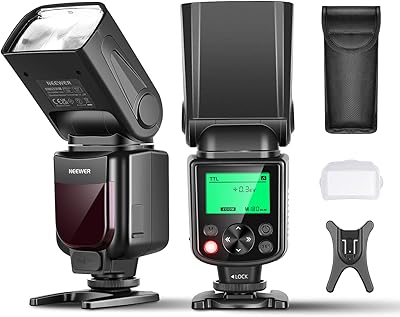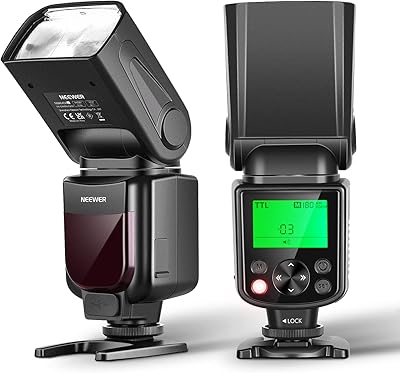
Overview

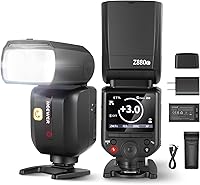
The NEEWER Z880-C TTL Camera Flash Speedlite is a capable mid-range option for Canon shooters who want a real upgrade without crossing into professional-tier pricing. Two things stand out immediately: the redesigned UI and the dedicated TCM quick-switch, both of which make this feel like a genuine step forward from earlier NEEWER models. The built-in 2.4G wireless system adds meaningful value for anyone building a multi-flash setup. With 76Ws output and a GN60 guide number, this Canon speedlite holds its own at outdoor events and on location. One important note upfront — it does not support the Canon RP or R50, so verify your body before committing.

Features & Benefits

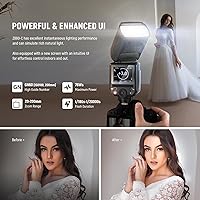
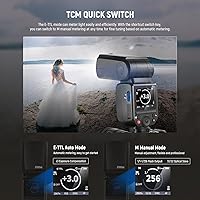
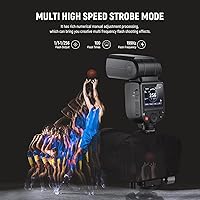
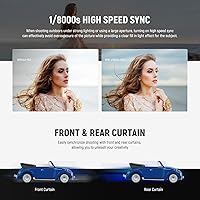
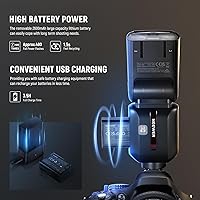
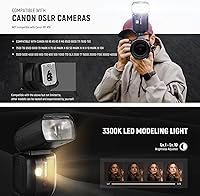
The HD LCD screen and overhauled menu layout make setup fast, even if you're relatively new to off-camera flash. The real highlight, though, is the TCM quick-switch — one button toggles between TTL and Manual instantly, which matters when light conditions shift mid-shoot. The adjustable LED modeling lamp, with 10 dimming levels, gives you a reliable look at how the flash will fall before you fire a single frame. For outdoor work, 1/8000s HSS lets you shoot wide open in harsh sunlight without clipping. The stroboscopic RPT mode handles creative motion work up to 199Hz. The 2600mAh battery is rated for 480 full-power flashes — comfortably enough for a full event day.

Best For

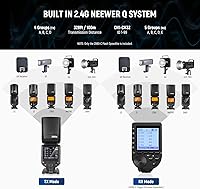
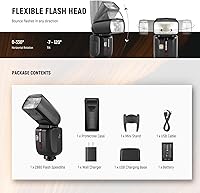
This NEEWER flash hits a clear sweet spot for intermediate photographers stepping past basic on-camera flash. Portrait and event shooters will appreciate the flexible bounce head, which tilts from -7° to 120° and rotates up to 330°, covering nearly every bounce angle practically needed. If you're assembling a wireless kit, the built-in Q system makes adding triggers and additional units straightforward. Outdoor photographers shooting wide apertures will rely on HSS regularly. It's less suited for complete beginners unlikely to use manual controls, and it's not the right pick for Canon RP or R50 users — full stop.

User Feedback

Buyers consistently highlight build quality as a positive surprise, noting the Z880-C flash feels solid and well-constructed rather than budget-grade. The refreshed interface draws steady praise from photographers who found earlier NEEWER menus tedious. Battery longevity also earns positive mentions, with real-world flash counts reportedly tracking close to the rated spec. On the downside, several users flag that wireless range degrades meaningfully when walls or obstacles enter the picture — the 100m figure genuinely requires clear line-of-sight. A small number of buyers switching from other mid-range brands mention a brief adjustment period with the Q system pairing process. The overall sentiment is solidly positive, with most criticisms being situational rather than fundamental.

Pros

  • TTL metering performs reliably across a wide range of Canon mirrorless and DSLR bodies.
  • The TCM quick-switch between TTL and Manual is fast and genuinely practical mid-shoot.
  • 1/8000s HSS lets you shoot wide-open apertures in direct sunlight without compromise.
  • 480 full-power flashes per charge is competitive and holds up in real extended shooting days.
  • The redesigned LCD menu is noticeably more intuitive than earlier NEEWER flash interfaces.
  • Built-in 2.4G wireless removes the need for a separate trigger in basic multi-flash setups.
  • The bounce head covers -7° to 120° tilt and 330° rotation — nearly every angle you will ever need.
  • Stroboscopic RPT mode up to 199Hz opens creative options rarely found at this price tier.
  • The 10-level LED modeling lamp is bright enough to be useful at typical portrait working distances.
  • Build quality consistently exceeds buyer expectations for a flash in this price bracket.

Cons

  • Canon RP and R50 owners are entirely locked out — no exceptions and no workarounds exist.
  • Wireless range drops sharply indoors or around obstacles, far below the stated 100-meter figure.
  • TTL accuracy requires manual compensation in high-contrast or strongly backlit situations.
  • The flash head rotation detents feel loose, and the head can drift slightly between shots.
  • Sustained rapid-fire shooting at full power triggers automatic cooldown pauses at inconvenient moments.
  • The LCD screen becomes genuinely hard to read under bright direct sunlight outdoors.
  • Stroboscopic mode drains the battery significantly faster and requires cool-down after long sequences.
  • Initial Q system pairing has a learning curve that frustrates photographers used to competing wireless ecosystems.
  • Cold weather noticeably reduces battery performance below what the rated spec suggests.
  • Low manual power settings produce a slight color temperature shift that color-critical shooters will need to correct.

Ratings

The NEEWER Z880-C TTL Camera Flash Speedlite earns its place near the top of the mid-range speedlite category based on AI analysis of verified global buyer reviews, with spam, bot activity, and incentivized submissions actively filtered out before scoring. The ratings below reflect where this Canon flash genuinely delivers and where real photographers have run into friction — no category has been softened to protect the overall impression.

Build Quality
83%
Most buyers are genuinely surprised by how solid this flash feels straight out of the box. The housing has a reassuring density to it, and the hot shoe mount shows no wobble even after repeated mounting cycles. Photographers using it across full wedding days report no creaking or structural complaints.
A handful of users noted that the flash head rotation mechanism feels slightly stiff when cold, which can be mildly annoying when you need to reposition quickly between shots. The plastic finish, while sturdy, does show fine scuff marks after bag use.
TTL Accuracy
88%
In typical portrait and event scenarios — mixed indoor lighting, bounce off white ceilings — the TTL metering lands well without constant manual correction. Canon shooters on R5 and 5D bodies in particular report consistent exposures across multi-shot bursts, which builds real confidence during fast-paced work.
In high-contrast or backlit situations, TTL occasionally overexposes by a noticeable margin, requiring dialed-in exposure compensation to correct. A small but consistent group of users flags that TTL performance on older Canon DSLRs is slightly less reliable than on current mirrorless bodies.
HSS Performance
86%
Outdoor portrait photographers using this Canon speedlite at f/1.8 or wider in full sun report that 1/8000s HSS sync holds up reliably, keeping backgrounds properly exposed without flash dropout artifacts. The transition into HSS mode is automatic and does not require a separate menu dive.
At maximum HSS shutter speeds, effective flash power drops noticeably, as is expected with any speedlite using HSS — but some buyers were caught off guard by how significant that power reduction feels at distance beyond about 10 feet. This is a physics limitation, not a defect, but it warrants awareness.
Wireless Reliability
74%
26%
Within a single room with clear sightlines, the 2.4G Q system pairing is fast and the connection stays stable across multiple flashes in a group trigger scenario. Photographers using it as a slave in a two or three-light portrait setup consistently report solid triggering with minimal misfires indoors.
The stated 100-meter range is very much a best-case figure. Real-world testing through walls, around corners, or across crowded event halls tells a different story, with range dropping to roughly 15 to 20 meters in typical indoor environments. Several users switching from competing wireless systems noted the Q system pairing process has a steeper initial learning curve.
Battery Life
91%
The rated 480 full-power flashes per charge tracks closely with what buyers report in actual use — one full wedding reception, a portrait session, and still capacity remaining is a commonly cited experience. The included lithium-ion pack charges quickly and is rated for a healthy number of recharge cycles.
At sustained rapid-fire shooting near full power, heat buildup can trigger a brief automatic rest period, which a few event photographers found frustrating during high-volume sequences. Battery performance in cold outdoor environments (below 5°C) drops more noticeably than the specs imply.
Recycle Time
85%
A 1.5-second recycle at full power is competitive for this price tier, and buyers confirm the flash keeps pace well during portrait sessions and small group shots. Dropping to half or quarter power brings recycle time down to nearly instant, which is ideal for documentary-style event coverage.
At maximum output during rapid burst shooting, a small number of users observed the recycle time stretching slightly beyond the rated figure, particularly after extended sequences. This is not unique to this flash but can catch photographers off guard during high-pressure moments.
UI & Controls
89%
The redesigned HD LCD screen and updated menu structure is one of the most consistently praised improvements over earlier NEEWER models. New flash users find the layout logical without needing the manual, and the TCM quick-switch between TTL and Manual is genuinely useful in practice — not just a spec bullet point.
Users with large hands find the button layout slightly cramped during gloved outdoor shooting. A small number of reviewers also note that the LCD is difficult to read in very bright direct sunlight, which is ironic given that outdoor shooting is one of the primary use cases.
Modeling Lamp Usefulness
71%
29%
The 10-level LED modeling lamp gives solo shooters a practical way to preview light fall-off and catch catchlights before committing to a full flash exposure. At closer portrait distances, it is bright enough to be genuinely useful rather than purely decorative.
Without a separate trigger, remote control of the modeling lamp is not possible, which limits its usefulness in multi-light setups unless you are standing at the flash itself. Several buyers also note that at distances beyond about 6 feet, the modeling lamp output becomes too dim to read shadow behavior accurately.
Head Flexibility
87%
The combination of -7° to 120° tilt and up to 330° rotation covers virtually every practical bounce angle a working photographer needs. The negative tilt is a small but appreciated detail for bouncing light downward in low-ceiling environments or when shooting downward at a subject.
The head lock mechanism does not click into detents as firmly as some competing flashes at this price tier, meaning the head can drift slightly under vibration or when carried in a bag between shots. This is a minor ergonomic issue rather than a functional failure.
Canon Compatibility Range
78%
22%
The Z880-C flash covers an impressively wide Canon body list spanning current R-series mirrorless through older DSLR generations, giving it real longevity as photographers upgrade bodies over time. TTL communication functions correctly across all confirmed compatible bodies without firmware workarounds.
The explicit exclusion of the Canon RP and R50 — two popular and widely owned entry-level bodies — is a meaningful limitation that catches buyers off guard if they do not read the fine print. No adapter or firmware fix is available for these bodies, making this a hard incompatibility.
Value for Money
92%
At this price tier, the feature density — HSS, wireless TTL, stroboscopic mode, modeling lamp, and high-capacity battery all included — is difficult to match from competing brands. Photographers upgrading from a basic kit flash consistently describe it as feeling like a significant jump in capability without a disproportionate price increase.
Users who have owned premium-brand speedlites at two or three times the price will notice that build tolerances and TTL consistency do not quite reach that level. For buyers making a direct comparison to top-tier Canon or Godox flagship units, the value framing shifts somewhat.
Manual Mode Precision
84%
Eighty-one levels of manual output adjustment from 1/256 to full power gives working photographers granular control that rivals much more expensive units. Studio shooters who prefer manual-only workflows find the output steps fine enough to dial in exposure precisely without frustrating jumps between levels.
A few technically experienced users note that actual measured output at some mid-range manual settings deviates slightly from what the labeled power fractions imply, requiring personal calibration if consistent reproducibility across sessions is critical. This is a minor issue for most but relevant for technical studio work.
Stroboscopic Mode
76%
24%
The RPT mode handling up to 100 flashes at 199Hz opens up creative motion-freezing and blur work that most flashes at this price point simply do not offer at all. Dance photographers and creatives exploring multi-exposure effects report that the mode works as advertised when used in a controlled environment.
Stroboscopic mode drains the battery significantly faster than standard use, and the flash requires a cool-down period after sustained RPT sequences. Real-world stroboscopic performance at maximum frequency settings occasionally shows inconsistent flash intervals, which requires some trial and error to manage.
Color Consistency
81%
19%
The 5600K ±200K output is stable enough that mixing multiple Z880-C units in a group setup produces consistent color across the frame without visible tonal mismatch. Photographers shooting tethered to a calibrated monitor note that the color temperature holds well across the full power range.
At very low manual power settings, a small but measurable color shift toward warmer tones has been noted by color-critical shooters who post-process under tight white balance constraints. This is a known characteristic of most speedlites at low output levels but worth flagging for precision work.

Suitable for:

The NEEWER Z880-C TTL Camera Flash Speedlite is a strong match for intermediate Canon photographers who have outgrown their kit flash and want a meaningful upgrade without committing to flagship-brand pricing. Portrait and event photographers will get the most out of it — the reliable TTL metering, fast 1.5-second recycle time, and wide bounce head range make it a practical workhorse across weddings, headshot sessions, and small-venue events. Outdoor shooters who regularly work wide open in bright conditions will find 1/8000s HSS genuinely useful rather than a checkbox feature. Anyone building a multi-flash wireless setup on a budget will appreciate the built-in 2.4G Q system, which removes the need to buy a separate transmitter for basic configurations. The 480-flash battery capacity also makes it a reliable choice for long shooting days where stopping to recharge simply is not an option.

Not suitable for:

The NEEWER Z880-C TTL Camera Flash Speedlite is simply not the right tool for Canon RP and R50 owners — there is no workaround, no firmware fix, and no adapter that resolves that incompatibility, so checking your body against the confirmed list before purchasing is non-negotiable. Photographers who demand the tightest possible TTL consistency across challenging backlit or high-contrast scenes may find themselves compensating more frequently than they would with a premium-brand unit costing significantly more. Complete beginners who just want a point-and-shoot flash experience might find the menu system and wireless pairing process more involved than expected, even with the improved UI. Professionals who regularly shoot at extreme wireless distances — across large venues or outdoors with obstacles in the path — should treat the 100-meter range figure with real skepticism, as real-world performance in those conditions falls well short. Finally, color-critical studio shooters who work at consistently low manual power settings may notice a slight warm color shift that requires careful white balance correction in post.

Specifications

  • Maximum Output: The flash delivers a maximum output of 76Ws with a guide number of GN60, making it competitive for indoor event and outdoor portrait work.
  • Color Temperature: Output is rated at 5600K ±200K, providing consistent cool daylight-balanced light suitable for mixing with natural light or other daylight-balanced sources.
  • Flash Duration: Flash duration ranges from 1/180s to 1/20000s depending on output level and mode, offering flexibility for both ambient blending and motion-freezing applications.
  • Recycle Time: At full power, the flash recycles in approximately 1.5 seconds, with faster recycle times available at reduced power settings.
  • HSS Sync Speed: High-speed sync is supported up to 1/8000s, allowing use of wide apertures in bright outdoor conditions beyond the standard sync speed limit.
  • Battery: The unit runs on an included 7.4V 2600mAh rechargeable lithium-ion battery rated for approximately 480 full-power flashes per charge.
  • Focal Coverage: The zoom head covers 20–200mm and can be set to track focal length automatically or adjusted manually for precise light spread control.
  • Head Movement: The flash head tilts from -7° to 120° and rotates from 0° to 330°, covering virtually all practical bounce and off-axis angles.
  • Wireless System: The built-in NEEWER 2.4G Q System supports 32 channels, 99 IDs, 4 master groups, and 5 slave groups with a line-of-sight range of up to 328ft / 100m.
  • Exposure Control: TTL mode supports ±3 EV exposure compensation across 19 levels; Manual mode offers 81 output levels from 1/256 to full power.
  • Stroboscopic Mode: RPT stroboscopic mode supports up to 100 consecutive flashes at frequencies up to 199Hz for multi-exposure and motion-blur creative effects.
  • Modeling Lamp: An adjustable LED modeling lamp with 10 dimming levels is built in, allowing light preview and shadow assessment before capturing a frame.
  • Sync Options: The flash supports front curtain sync, rear curtain sync, and both S1 and S2 optical slave modes for use without a dedicated wireless trigger.
  • Flash Modes: Three primary operating modes are available: TTL (automatic metering), M (fully manual), and RPT (stroboscopic), all selectable from the main menu or via the TCM key.
  • Dimensions: The unit measures 7.8″ x 2.8″ x 2.3″ (199 x 72 x 58mm), consistent with a standard full-size speedlite form factor.
  • Weight: The flash weighs 18.7oz / 530g including the battery, which is within the typical range for a feature-complete speedlite at this output level.
  • Compatibility: Designed exclusively for Canon cameras with a standard hot shoe, supporting a broad range of EOS R-series mirrorless and DSLR bodies — but explicitly incompatible with the Canon RP and R50.
  • Package Contents: The package includes the flash unit, one 7.4V 2600mAh lithium-ion battery, and associated accessories; the QPRO-C wireless trigger is sold separately.
  • Mounting: The flash mounts via a standard ISO hot shoe foot and is compatible with Canon's multi-function hot shoe interface on supported bodies.
  • BSR Ranking: As of its listing data, the unit holds a Best Sellers Rank of #152 in the Shoe-Mount Flashes category on Amazon, indicating strong sustained market traction.

Related Reviews
NEEWER 750II TTL Camera Flash Speedlite
84%
88%
Flash Power & Performance
85%
Ease of Use
72%
Build Quality
90%
TTL Functionality
80%
Portability & Weight
More
NEEWER NW635II-S TTL Camera Flash Speedlite
86%
88%
Value for Money
91%
Performance
75%
Build Quality
85%
Ease of Use
92%
Portability
More
NEEWER Z2-F 2.4G TTL Camera Flash Speedlite for Fujifilm
86%
88%
Performance
85%
Ease of Use
91%
Wireless Connectivity
83%
Battery Life
90%
Flash Power Output
More
NEEWER NW645II-S TTL Flash Speedlite
81%
86%
TTL Accuracy
83%
High-Speed Sync Performance
78%
Build Quality
61%
Optical Slave Reliability
81%
Recycle Speed
More
NEEWER Z2PRO-N TTL Round Head Flash Speedlite
82%
91%
TTL Accuracy
88%
Light Quality
86%
Battery Life & Charging
79%
Wireless Reliability
84%
Build Quality
More
NEEWER Z1-N TTL Speedlite for Nikon
78%
91%
Light Quality
78%
TTL Accuracy
86%
High-Speed Sync Performance
71%
Wireless Reliability
83%
Battery Life
More
NEEWER Z1-S Round Head Flash Speedlite
83%
91%
Light Quality
83%
Build Quality
72%
TTL Accuracy
93%
Battery Life
88%
Recycle Time
More
NEEWER Z160 Camera Flash
81%
94%
Portability & Form Factor
83%
Build Quality
61%
Flash Output Power
88%
Battery Life & Charging
86%
Recycle Time
More
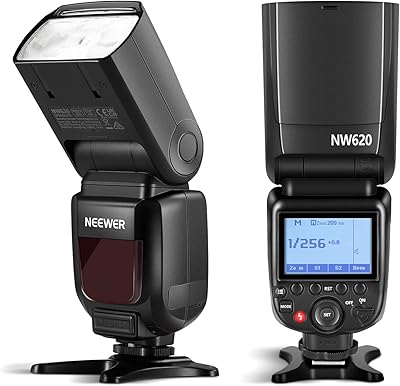
NEEWER NW620 Speedlite Flash
75%
88%
Value for Money
84%
Flash Output & Power
79%
Build Quality
91%
LCD Display & Controls
62%
Recycling Time
More
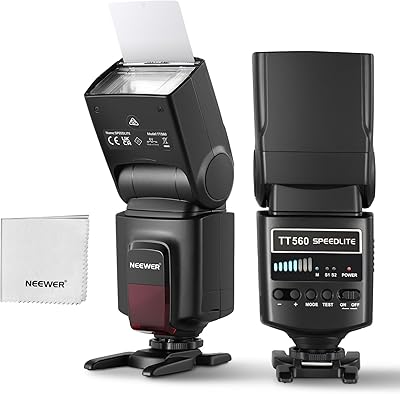
NEEWER TT560 Speedlite Flash
75%
91%
Value for Money
74%
Ease of Use
83%
Build Quality
78%
Compatibility
77%
Light Output & Power Range
More

FAQ

No, it does not. The Canon RP and R50 are explicitly listed as incompatible, and there is no firmware update or adapter that resolves this. If you own either of those bodies, this flash will not communicate correctly with your camera, so you should look at alternatives before purchasing.

Not necessarily. This Canon speedlite has a built-in 2.4G Q system receiver and transmitter, so it can function as both a master and a slave unit without any additional hardware in basic setups. If you want full remote control from the camera position, you will need the QPRO-C trigger, which is sold separately.

The TCM key is a dedicated button that switches the flash between TTL and Manual modes instantly, without navigating any menus. In practice it is genuinely useful — if you are shooting in a changing environment and want to lock exposure manually for a specific setup, one button press gets you there. It is one of the more practical physical controls on the unit.

Fairly realistic, actually. Most buyers report getting through a full event or portrait session without needing to recharge, which aligns with the spec. Keep in mind that the 480-flash figure is at full power — if you mix in lower-power shots, you will likely get more. Cold weather does reduce capacity noticeably, so factor that in if you shoot outdoors in winter.

Only under ideal conditions — meaning flat open ground with no walls, people, or objects between the flash and trigger. In a typical indoor venue, you should realistically expect somewhere in the range of 15 to 20 meters of reliable triggering range. It is a capable wireless system for normal multi-light work, but treat the maximum range claim as a laboratory figure rather than a practical guarantee.

No. This version is built specifically for Canon's TTL communication protocol and hot shoe interface. Using it on a Sony, Nikon, or Fujifilm camera in TTL mode will not work correctly. NEEWER does make equivalent versions of this flash for other camera systems, so make sure you are buying the Canon-specific variant.

At close portrait distances — roughly 6 feet or less — the modeling lamp is bright enough to give you a useful read on light direction and shadow placement. Beyond that distance, it becomes too dim to assess the light accurately. It is a helpful tool for single-light setups close to your subject, but do not expect it to replace a dedicated continuous light for previewing complex multi-light arrangements.

The flash offers three main modes: TTL for automatic metering, Manual for full output control across 81 power levels, and RPT stroboscopic mode for multi-flash creative effects up to 199Hz. You also get front and rear curtain sync options, flash exposure compensation and bracketing in TTL, and both S1 and S2 optical slave modes if you want to trigger it from another flash without any wireless hardware.

Buyers consistently report that it feels more solid than expected for a mid-range unit — the housing has real density to it and the hot shoe mount seats firmly without wobble. It is not at the level of a professional Canon or Godox flagship in terms of material finish, but for everyday portrait and event use it holds up well. The flash head rotation is one area where a few users have noted slightly looser detents compared to more expensive units.

It is a real feature, but it is situational. Photographers doing dance photography, motion-blur art work, or multi-exposure effects will find it genuinely useful and appreciate having it built in at this price tier. For standard portrait or event work you will likely never touch it. Just be aware that sustained stroboscopic use heats the flash quickly and requires a cool-down period, so it is not something you can run continuously for long bursts.

Where to Buy