Overview

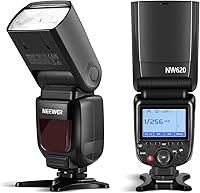
The NEEWER NW620 Speedlite Flash sits in an interesting spot — it's a manual-only unit that punches well above its price class in raw output. With a GN60 guide number and 76W of power, this speedlite offers more reach than most flashes at this price tier. The catch worth knowing upfront: no TTL support. Every exposure adjustment is done manually, which suits photographers who already understand flash fundamentals but will frustrate anyone expecting the camera to handle metering automatically. It fits standard hot shoes across Canon, Nikon, Fujifilm, and Pentax bodies, and also supports the Sony MI hot shoe via adapter, making it broadly compatible.
Features & Benefits

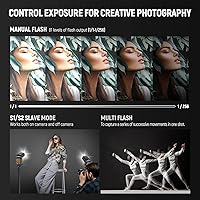
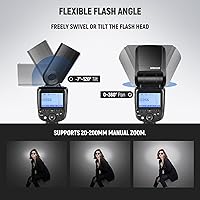
The NW620's manual zoom range — 20mm to 200mm — is one of its more practical strengths. You can tighten the beam for a distant subject or spread it wide for a group, all dialed in by hand. The flash head tilts from -7° to 120° and rotates a full 360°, so bouncing light off a ceiling or side wall is straightforward. The stroboscopic multi-flash mode fires up to 100 times in a single exposure, useful for freezing motion phases in one frame. S1 and S2 optical slave modes let you trigger it wirelessly just by having another flash fire nearby — no radio transmitter needed. A USB-C port allows firmware updates down the line.

Best For

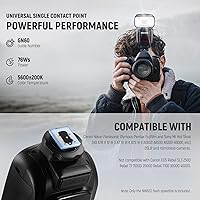
This manual flash unit makes the most sense for photographers actively learning how flash exposure works and wanting hands-on control over every variable. It's a solid pick for portrait and product shooters working in controlled environments where setting power manually isn't a burden. Hobbyists building a two-light setup on a tight budget will find it a dependable secondary unit. Content creators shooting static subjects — flat lays, food photography, tabletop work — are also a natural fit. One important note: if your camera is an EOS Rebel SL3, Rebel T7, or Rebel T100, check compatibility carefully before buying, as those bodies are excluded from support.

User Feedback

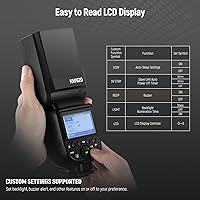
With 78 ratings and a 3.8-star average, the feedback on this speedlite is mixed but honest. Buyers consistently highlight the LCD display clarity — easy to read in low light and logically laid out. Build quality draws surprisingly positive comments given the price point. On the critical side, recycling time at full power can feel slow, and that sluggishness worsens noticeably with low-capacity batteries, so investing in quality AAs matters. A few buyers were caught off guard by the Canon Rebel incompatibilities, which is avoidable if you read the specs. The absence of TTL is the most cited reason for dissatisfaction — but for buyers who know what they're getting, value for money comes up repeatedly.

Pros

  • GN60 output delivers real reach for portraits and indoor events, outperforming most flashes at this price tier.
  • Manual zoom from 20mm to 200mm lets you precisely match flash coverage to your lens without guessing.
  • Full 360-degree rotation and 120-degree tilt make bounce flash off ceilings and walls genuinely easy.
  • S1 and S2 optical slave modes enable two-light setups without spending on radio triggers.
  • The backlit LCD is clearly laid out and easy to read even in dim shooting conditions.
  • USB-C firmware update port is an unusual bonus that adds long-term usability.
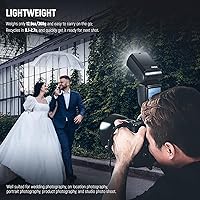
  • At roughly 1.21 pounds, the NW620 is light enough to use on mirrorless bodies without straining the hot shoe.
  • Multi-flash stroboscopic mode opens up creative motion photography that few flashes offer at this cost.
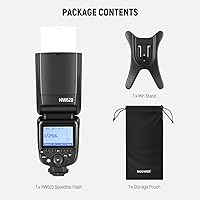
  • The included mini stand makes off-camera optical triggering possible right out of the box.
  • Output consistency at mid-power settings is frequently praised by users doing controlled studio-style work.

Cons

  • No TTL support at all — every shot requires manual power adjustment, which is a hard limitation in unpredictable light.
  • Recycling time at full power can exceed two seconds with standard alkaline batteries, causing missed shots.
  • Explicitly incompatible with several popular Canon Rebel bodies, including the SL3, T7, and T100 series.
  • Optical slave triggering becomes unreliable outdoors or in bright ambient light conditions.
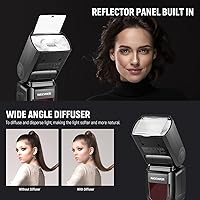
  • The wide-angle diffuser and catchlight panel feel flimsy and can dislodge accidentally mid-shoot.
  • Zoom adjustment is fully manual with no motor assist, which slows down repositioning under time pressure.
  • Battery consumption is higher than some users expect, making quality NiMH rechargeables a near-necessity.
  • Flash head tilt lock can loosen over time, leading to slight drift when the head is angled steeply upward.
  • The included instruction manual is thin on detail, leaving users to figure out advanced modes through trial and error.
  • With only 78 ratings at time of review, the feedback pool is too small to draw fully confident conclusions.

Ratings

The scores below were generated by AI after analyzing verified buyer reviews for the NEEWER NW620 Speedlite Flash from multiple global marketplaces, with spam, bot-submitted, and incentivized feedback actively filtered out. The result reflects a realistic cross-section of real-world experiences — from hobbyist portrait shooters to content creators and photography students. Both the genuine strengths and the recurring frustrations are represented honestly in every category.
Value for Money
88%
For what you pay, the output specs are difficult to argue with. Buyers who compared it against other flashes in this range consistently noted that the guide number and build both outperform expectations. It sits comfortably as one of the better-equipped budget speedlites available for beginners.
A handful of users feel the missing TTL functionality lowers the effective value, since stepping up to an entry-level TTL flash doesn't cost drastically more. If auto-exposure flash is part of your workflow, the price advantage starts to look thinner.
Flash Output & Power
84%
The GN60 rating gives this speedlite real reach for indoor portraits, small event coverage, and product shots — noticeably more than the GN40-50 range common at this tier. At mid-power settings, output is reported as consistent and stable across extended shoots.
At full 1/1 power, some users report slight output variance between bursts before the unit fully recycles. It's rarely a dealbreaker for static subjects, but fast-paced event photographers have flagged it as something to plan around.
Build Quality
79%
21%
Reviewers are repeatedly surprised by how solid the NW620 feels in hand. The hot shoe mount mechanism draws specific praise — it locks on firmly without the wobble that cheaper flashes sometimes develop after repeated use. The body feels intentional rather than hollow.
The plastic used on the flash head and zoom mechanism isn't premium, and a few long-term users mention the zoom collar loosening slightly over time. It holds up well under light regular use, but it's clearly not engineered for heavy daily professional workloads.
LCD Display & Controls
91%
This is one of the NW620's most consistently praised features. The backlit LCD is readable in dim studio conditions and the button layout is logical enough that most users report navigating flash modes without consulting the manual after the first session.
The display itself is small, and users with larger hands or impaired vision find the text tight to read at a glance. There's no touch interface, and the button feedback is soft enough that some users occasionally double-press without realizing it.
Recycling Time
62%
38%
At lower power settings — say 1/8 to 1/32 — the recycling speed is genuinely quick, hovering around 0.1 to 0.5 seconds, which is competitive. For product photography or posed portraits where you control the pace, this is rarely an issue.
At full power with standard AA alkaline batteries, recycling crawls noticeably — sometimes exceeding two seconds. Multiple reviewers specifically recommend using 2500mAh NiMH rechargeable batteries to get acceptable performance, which is an added cost and consideration buyers should factor in upfront.
TTL Compatibility
33%
67%
The manual-only design is actually a deliberate feature for buyers who want precise, repeatable flash output. Photography students learning exposure fundamentals often prefer this, and studio shooters using optical triggers value the predictability of fixed manual settings.
The complete absence of TTL is the single most-cited reason for negative reviews. Buyers shooting weddings, street events, or kids will find the manual-only workflow frustrating in unpredictable light. It's a hard limitation with no workaround, and some buyers clearly didn't register this before purchasing.
Zoom Range & Flexibility
83%
Manual zoom from 20mm to 200mm is wider and longer than many competing flashes at this price. Being able to dial the beam in to 200mm for tight environmental portraits, then quickly spread it to 20mm for a wide group shot, gives real creative flexibility without any additional accessories.
The zoom is entirely manual with no motorized assist, which means you're turning the head collar by hand each time. Under time pressure — like repositioning quickly between shots at an event — it's slower than auto-zoom flashes found on pricier models.
Bounce & Rotation
86%
The full 360-degree pan combined with a -7° to 120° tilt range is one of the more generous movement specs in this class. Bouncing off a ceiling for soft ambient fill, or angling down slightly for a catchlight reflector, both work smoothly and the head holds its position well.
A small number of users report the tilt lock feeling slightly loose after extended use, particularly when the head is held at steep upward angles. It's not a structural failure, but it can result in slight head drift when shooting handheld.
Camera Compatibility
74%
26%
The single-contact hot shoe design covers the vast majority of Canon, Nikon, Fujifilm, Panasonic, Olympus, and Pentax cameras out of the box. Sony mirrorless shooters can use the included MI adapter without issue, which broadens the usable audience considerably.
The documented incompatibility with Canon EOS Rebel SL3, Rebel T7, Rebel T100, and related budget Canon bodies has caught several buyers off guard. These are extremely popular beginner cameras, and the exclusion list isn't prominently communicated during the buying process for everyone who encounters it.
Optical Slave Performance
77%
23%
S1 and S2 modes work reliably in controlled indoor environments. Buyers using this as a secondary triggered flash in a simple two-light portrait setup report solid, consistent triggering without needing to invest in radio transmitters.
In mixed ambient light or bright outdoor conditions, the optical slave can miss triggers or fire inconsistently. It's a line-of-sight dependent system, and reviewers who tried using it outdoors or across larger spaces found the reliability dropped off meaningfully.
Multi-Flash Mode
71%
29%
The stroboscopic multi-flash mode is a legitimate creative tool for freezing multiple phases of motion in a single frame. Dance photographers and hobbyists experimenting with motion blur effects mention it as an unexpectedly fun capability for a flash at this price.
It requires very precise timing and a dark environment to work effectively, and the learning curve discourages casual users from ever exploring it. There's also a lack of detailed guidance in the included manual, so most users figure it out through trial and error.
Power Supply Options
73%
27%
The dual power supply design — four AA batteries or an external pack via the CP-E4 port — gives photographers some flexibility. Event shooters who carry a belt-mounted external power pack will appreciate having that option without needing an adapter workaround.
The CP-E4 power port requires a separately purchased external battery pack, which adds cost. Running on standard AAs exclusively limits performance at high power settings, and the flash goes through batteries faster than some users anticipated during longer shoots.
Portability & Size
82%
18%
At 1.21 pounds and with a slim profile, the NW620 sits comfortably on a mirrorless body without making the rig feel front-heavy. Travel photographers and those shooting from a bag-light kit appreciate that it fits easily into a pouch alongside other gear.
It's slightly longer than some competing flashes at 7.95 inches, which can make it feel a touch unwieldy on smaller mirrorless bodies. Not a dealbreaker, but worth noting if you're pairing it with a compact camera for street or travel use.
Included Accessories
68%
32%
The mini stand is a practical inclusion — it lets you set the flash on a flat surface and trigger it optically as an off-camera light without buying a separate stand adapter. The storage pouch keeps it protected in a bag and is a genuinely useful addition.
The wide-angle diffuser and catchlight panel are thin and feel like afterthoughts. Several users report the diffuser dislodging accidentally during shoots. A more robust accessory package would round out the kit, especially for beginners who rely on these attachments.
Firmware & Longevity
72%
28%
The USB-C firmware update port is an unusual and welcome feature at this price point. It signals that NEEWER intends to support the unit post-launch, and the availability of updates gives buyers some confidence the flash won't become obsolete quickly.
At the time of most reviews, the firmware update process wasn't clearly documented, and some users weren't sure whether updates were even available or necessary. The feature is a net positive in principle, but its practical value remains somewhat unproven in buyer experience.

Suitable for:

The NEEWER NW620 Speedlite Flash is a strong fit for photographers who are ready to move beyond their camera's built-in pop-up flash and want to start learning how to control light deliberately. Photography students working through manual exposure concepts will find it a genuinely useful teaching tool — setting power by hand, adjusting zoom to match a focal length, and bouncing light off a ceiling are all skills this speedlite actively encourages. Hobbyist portrait shooters who work in predictable environments like home studios or indoor sessions will get consistent, reliable output without overspending. Content creators doing product photography, flat lays, or food shots on a budget will appreciate the repeatable manual settings and the optical slave modes that allow a simple two-light setup without additional radio triggers. It also works well as a secondary or backup flash for anyone who already owns a TTL unit and wants an affordable fill light to round out a small lighting kit.
Not suitable for:

The NEEWER NW620 Speedlite Flash is genuinely the wrong tool for photographers who shoot fast-moving or unpredictable subjects and rely on TTL metering to keep up — wedding photographers, event shooters, and parents photographing active kids will likely find the manual-only workflow more frustrating than rewarding. The recycling time at full power, while manageable with high-capacity NiMH batteries, is slow enough to cause missed shots in fast-paced situations. Buyers shooting on a Canon EOS Rebel SL3, Rebel T7, Rebel T100, or related budget Canon bodies should avoid this unit entirely — these cameras are explicitly unsupported, and compatibility workarounds are not available. Anyone expecting a polished, premium build that holds up to daily professional use through thousands of cycles may find the construction underwhelming over time. If your shooting style demands the camera and flash work together intelligently — adjusting exposure automatically as lighting conditions shift — this manual flash unit will feel limiting rather than liberating.
Specifications

  • Guide Number: Rated GN60 at ISO 100 and 200mm zoom, providing strong flash reach for portraits, indoor events, and product photography.
  • Power Output: Delivers 76W of flash power, positioning this speedlite well above the typical output of entry-level flashes in its class.
  • Color Temperature: Produces a stable 5600K ±200K daylight-balanced output, ensuring consistent, neutral color across extended shooting sessions.
  • Flash Modes: Supports four modes: Manual (M), Multi stroboscopic, S1 optical slave, and S2 optical slave for flexible shooting setups.
  • Manual Range: Output is adjustable from full power (1/1) down to 1/256 in 0.1-stop increments, giving precise exposure control in manual mode.
  • Zoom Range: Flash zoom is manually adjustable from 20mm to 200mm, allowing the beam angle to be matched to the shooting lens focal length.
  • Head Movement: The flash head tilts from -7° to 120° and rotates a full 360°, enabling bounce flash off ceilings, walls, and reflectors.
  • Recycling Time: Recycles in approximately 0.1 to 2.7 seconds depending on power level and battery type, with faster speeds at lower power settings.
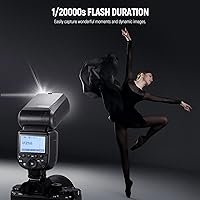
  • Flash Duration: Flash duration ranges from 1/300s to 1/20000s, with shorter durations available to help freeze fast motion when powered by 2500mAh NiMH batteries.
  • Power Source: Accepts four AA NiMH batteries internally, or connects to an external battery pack via a CP-E4 port for faster recycling times.
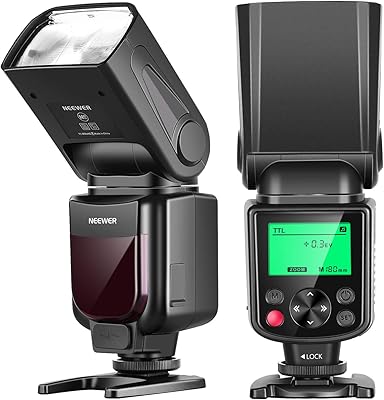
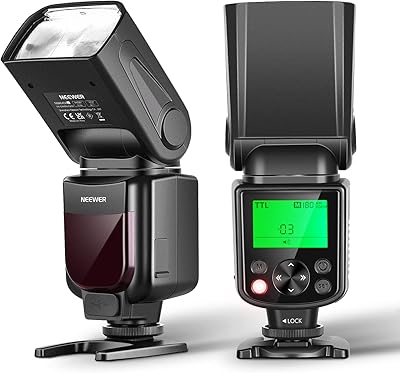
  • Display: Features a backlit LCD screen that clearly shows current flash settings including mode, power level, and zoom position.
  • Connectivity: Includes a USB Type-C port for firmware updates and a standard PC sync port for wired studio trigger connections.
  • Hot Shoe: Uses a single-contact hot shoe for broad camera compatibility, plus built-in support for Sony Multi Interface (MI) hot shoe cameras.
  • Dimensions: Measures 7.95 × 2.17 × 2.80 inches, making it a standard-sized speedlite suitable for use on most DSLR and mirrorless camera bodies.
  • Weight: Weighs 1.21 pounds without batteries, which is manageable on larger DSLRs but worth considering on smaller mirrorless systems.
  • Flash Count: Supports approximately 100 to 1500 flashes per battery charge, depending on the output level and battery capacity used.
  • Multi-Flash Mode: In Multi mode, the flash fires up to 100 times per exposure at frequencies up to 199Hz for stroboscopic motion photography.
  • Compatibility: Compatible with Canon, Nikon, Panasonic, Olympus, Pentax, and Fujifilm standard hot shoe cameras, and Sony MI hot shoe mirrorless cameras; not compatible with Canon EOS Rebel SL3, T7, T100, or related budget Canon bodies.
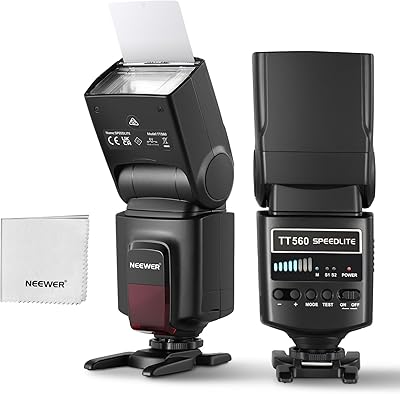
  • Included Items: Package includes one NW620 flash unit, one mini stand, one storage pouch, one wide-angle diffuser, one catchlight reflector panel, and one instruction manual.
  • Sync Speed: Compatible with camera sync speeds from 1/60s up to 1/250s or faster, in line with standard focal-plane shutter flash sync specifications.

Related Reviews

NEEWER TT560 Speedlite Flash
75%
91%
Value for Money
74%
Ease of Use
83%
Build Quality
78%
Compatibility
77%
Light Output & Power Range
More
NEEWER NW645II-S TTL Flash Speedlite
81%
86%
TTL Accuracy
83%
High-Speed Sync Performance
78%
Build Quality
61%
Optical Slave Reliability
81%
Recycle Speed
More
NEEWER 750II TTL Camera Flash Speedlite
84%
88%
Flash Power & Performance
85%
Ease of Use
72%
Build Quality
90%
TTL Functionality
80%
Portability & Weight
More
NEEWER NW635II-S TTL Camera Flash Speedlite
86%
88%
Value for Money
91%
Performance
75%
Build Quality
85%
Ease of Use
92%
Portability
More
NEEWER Z1-N TTL Speedlite for Nikon
78%
91%
Light Quality
78%
TTL Accuracy
86%
High-Speed Sync Performance
71%
Wireless Reliability
83%
Battery Life
More
NEEWER Z2PRO-N TTL Round Head Flash Speedlite
82%
91%
TTL Accuracy
88%
Light Quality
86%
Battery Life & Charging
79%
Wireless Reliability
84%
Build Quality
More
NEEWER Z880-C TTL Camera Flash Speedlite
83%
83%
Build Quality
88%
TTL Accuracy
86%
HSS Performance
74%
Wireless Reliability
91%
Battery Life
More
NEEWER Z1-S Round Head Flash Speedlite
83%
91%
Light Quality
83%
Build Quality
72%
TTL Accuracy
93%
Battery Life
88%
Recycle Time
More
NEEWER Z2-F 2.4G TTL Camera Flash Speedlite for Fujifilm
86%
88%
Performance
85%
Ease of Use
91%
Wireless Connectivity
83%
Battery Life
90%
Flash Power Output
More
NEEWER Z160 Camera Flash
81%
94%
Portability & Form Factor
83%
Build Quality
61%
Flash Output Power
88%
Battery Life & Charging
86%
Recycle Time
More

FAQ

No, the NEEWER NW620 Speedlite Flash is a manual-only unit. Your camera will not meter or adjust the flash power automatically. You set the output level yourself, which is great for learning or controlled work, but makes it less practical for fast, unpredictable shooting scenarios where you'd want auto exposure assistance.
Unfortunately, no. The Canon EOS Rebel T7, SL3, T100, and a few closely related budget Canon bodies are explicitly listed as incompatible. If your camera is one of those models, you'll need to look at a different flash to avoid compatibility problems. Double-check your specific body against the exclusion list before purchasing.

Yes, that's one of the NW620's more practical features. The S1 and S2 optical slave modes let it fire automatically when it detects another flash going off — including your camera's built-in pop-up flash if it has one. It works reliably indoors, though bright outdoor light can interfere with the optical sensor.

Stick with high-capacity NiMH rechargeable AA batteries — ideally 2500mAh or higher. Standard alkaline AAs will work, but recycling time at full power slows down significantly and battery life is noticeably shorter. Investing in a quality set of NiMH rechargeables and a good charger is strongly recommended if you plan to use this speedlite regularly.

No, it's fully manual. You physically turn a zoom collar on the flash head to set the focal length between 20mm and 200mm. There's no motor and no automatic tracking of your lens. It takes a little getting used to, but it gives you direct control over how wide or tight the light beam is, which is actually useful for creative work.

Yes, it is. Sony cameras that use the Multi Interface (MI) hot shoe are supported. The single-contact hot shoe design is compatible with Sony MI shoes directly, so you can mount it and trigger it without an adapter in most cases. TTL is still not available, so you'll be working in manual mode regardless.

Yes, the flash includes a standard hot shoe mount and can be placed on a mini stand off-camera, making it compatible with a wide range of modifiers. It doesn't have a Bowens mount natively, so you'd need an S-type bracket to attach most softboxes, but those are widely available and inexpensive.

The NW620 has a USB-C port specifically for firmware updates, which is a thoughtful feature at this price. The process involves downloading the update file from NEEWER's website and connecting the flash to a computer via a USB-C cable. Documentation around this isn't the most thorough in the box, so checking NEEWER's support page or community forums for a step-by-step walkthrough is advisable.

Multi mode fires the flash multiple times in rapid succession during a single long exposure, capturing several phases of movement in one frame — think a dancer mid-spin or a golf swing frozen in multiple positions. It requires a dark room and a longer shutter speed to work well. It's a creative feature more than an everyday one, but it's genuinely fun to experiment with once you understand the basics.

At low to mid power settings, recycling is quick — well under a second — and you can shoot at a reasonable pace without frustration. At full or near-full power, it slows down, and you may wait up to 2.7 seconds between shots. For a relaxed portrait session where you're not rushing, this is manageable. If you're trying to capture quick expressions or candid moments, shooting at 1/2 or 1/4 power is a practical workaround that keeps recycling fast.